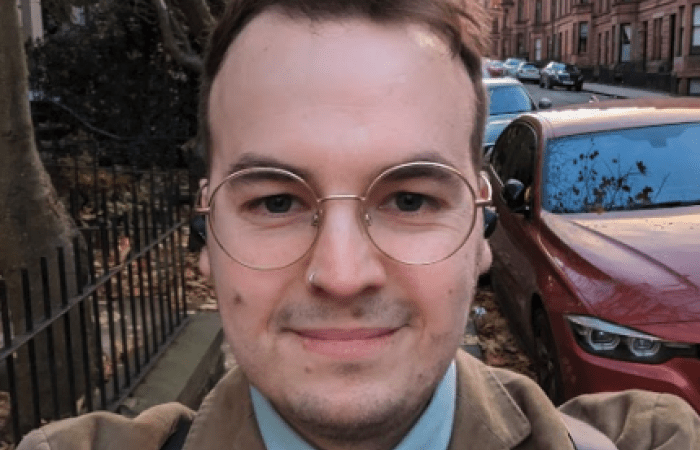
Dr. Fraser McMillan is a Career Launch Fellow in Territorial Politics at the University of Edinburgh’s School of Social and Political Science. He holds a PhD from the University of Strathclyde (2019) and has conducted postdoctoral research at the University of Glasgow before joining Edinburgh in January 2024. His research focuses on campaign pledges, Scottish voting behavior, and electoral dynamics, with a particular emphasis on the Scottish political landscape. McMillan is a core member of the Scottish Election Study team, leading the development of the Scottish Opinion Monitor, a longitudinal polling initiative launched in 2021. His work bridges academic research and public engagement, with analyses featured in media discussions on Scottish electoral trends, political scandals, and national identity. He is affiliated with the Territorial Politics Research Group and contributes to the Governance & Democracy research theme. Key research areas include: Campaign pledge fulfillment and its electoral consequences Scottish electoral behavior and voting patterns Comparative analysis of devolution in Scotland and Wales Institutional trust and political accountability McMillan’s recent publications explore ministerial roles in pledge fulfillment, vertical contagion in multilevel governance, and trans-exclusionary feminist framing. He actively engages with public discourse via media commentary, addressing topics like the Scottish National Party’s strategy, Tory defectors, and the implications of political scandals. He is contactable at fraser.mcmillan@ed.ac.uk and tweets at @frasmcm . His office is located in Room 4.13 of the Chrystal Macmillan Building, Edinburgh.
Dr. Gareth Evans is a Lecturer in Law at the Hillary Rodham Clinton School of Law, Swansea University. He joined in March 2020 from Staffordshire University. Holding an LLB and PhD in Law from Aberystwyth University, his research focuses on constitutional theory applied to UK devolution, particularly in Wales. His work examines the constitutional status of devolution, electoral reforms, and legal challenges to UK federalism. Teaching modules include Welsh devolution law, Canadian constitutional law, and UK legal systems. His notable research includes analyses of the UK Internal Market Act's impact on devolution, post-Brexit policy challenges, and the 2021 Senedd election's constitutional implications. Evans' expertise spans political history, territorial constitution frameworks, and public law dynamics. His office is located at the Richard Price Building, Singleton Campus. He is available for postgraduate supervision and maintains an ORCID profile (https://orcid.org/0000-0003-0366-7604).
Simon Hoffman is a Professor of Law at Swansea University's Hillary Rodham Clinton School of Law. He specializes in international human rights law, with a focus on poverty's impact and devolution's role in policy. He co-founded the Children's Human Rights Observatory, a high-impact research center contributing to children's rights recognition in law and policy globally. His research often bridges theory and practice, engaging with community networks to drive policy reforms. Teaching areas include human rights law, socio-economic rights, and devolution. He supervises PhD students on topics like asylum seekers' rights, mental health law, and youth justice systems. Key projects include 'Strengthening Equality & Human Rights in Wales' (2020) and evaluating the Welsh Government’s Child Rights Impact Assessment (2015). His work spans collaborations with Shelter Cymru and Tai Pawb on housing rights, as well as advisory roles for the Children's Commissioner for Wales and the Older People's Rights Initiative. Grants include £90k from the Welsh Government for equality/human rights projects and £20k from EHRC on child rights integration.
Gwyn Griffith is a Lecturer in Criminology at Aberystwyth Law School, University of Aberystwyth. Previously, they worked as a Probation Officer and Youth Offending Team Service Manager, transitioning into academia. Their research focuses on modeling the criminal justice system, evaluating interventions to reduce offending, youth justice, and contributions to UN SDGs such as reducing inequalities and promoting justice. Research Interests: Psychological and sociological factors influencing criminal behavior Effectiveness of probation and youth justice programs Historical and contemporary crime trends in the UK Legal support systems for veterans and mental health outcomes Key Projects: Lead Investigator on the All-Wales Data Sharing Project (2023) Contributor to the Probation Development Group’s work on devolving Wales’ probation service Collaborations: Co-authored research with experts like Charlotte Johnson (Aberystwyth Law School) Engaged with Welsh policy networks on criminal justice reform Grants & Funding: Externally funded All-Wales Policing Academic Collaboration (AWPAC) project (2023)
Dr. Daniel Evans is a Lecturer in Criminology at Swansea University's School of Social Sciences, within the Department of Criminology, Sociology and Social Policy. He holds a PhD and has extensive professional experience working with offenders and the criminal justice system, including a 5-year hiatus as a complex needs support worker with rough sleepers in Cardiff. His research focuses on political sociology, sociological theory, and their intersections with British/Welsh politics, trade unions, critical military studies, and ethnographic methods, with a unifying interest in social class dynamics. Teaches modules on criminology, criminal justice systems, and social/environmental harms. Published in Nations and Nationalism , Capital and Class , and British Politics . Authored A Nation of Shopkeepers (2023) and edited The Welsh Way (2021). His research explores topics like Welsh national identity, devolution, and the socio-political impact of the petty bourgeoisie. He appears regularly on BBC News, BBC Radio Wales, and other platforms for political analysis.
Ella Rabaiotti is a Lecturer in Criminology at Swansea University, focusing on probation service reform, social justice, and community safety. She convenes the Wales Center for Crime and Social Justice's Probation Service Development Group and serves on the board of Swansea University's Local Challenges Research Office. With over 20 years in criminal/social justice, she holds a qualified Probation Officer status and has led projects in Integrated Offender Management and Restorative Justice. She pioneered Crimestoppers’ youth initiative 'Fearless' and founded the Wales Safer Communities Network. Educationally, she teaches modules like Media, Crime & Criminal Justice (ASC218), Study Skills in Social Sciences (SPC113), and Probation and Community Justice (SPC301). Her research spans probation service devolution, inclusion health for probationers, and Crimestoppers' role in crime reporting. Notably, her work was honored at the 2015 Wales Leadership Awards for improving ex-offenders' employability through a service-user led charity. Her recent publications (2023–2025) address professional probation standards in Wales, health interventions for probationers, and community safety partnerships. She collaborates with organizations like Public Health Wales and the St David’s Medical Foundation on health equity projects targeting criminal justice populations. Ella is a Welsh speaker (basic level) and active in public engagement, including podcast discussions on community safety and panel roles at the Llandeilo Literature Festival. Her work bridges academic research with practical policy implementation, emphasizing user-centric solutions for marginalized groups.
Carl Emery is a Senior Lecturer at the Manchester Institute of Education, University of Manchester. He holds a Doctorate in education policy and emotions, a BA in Conflict Management, PGCE, and an MSc in Educational Research. His research focuses on education policy, wellbeing in schools, socio-economic disadvantage, and critical discourse analysis. He has contributed to national frameworks such as the Welsh Assembly Government’s social and emotional framework and the Personal Learning and Thinking Skills Programme (QCA). Current research includes UK education policy devolution, social-emotional learning, and Anchor initiatives. Awards include the Making a Difference Award (2018) and Research Staff Strategy Group Excellence Award (2020). Key projects include the Local Matters initiative, examining poverty and urban disadvantage in schools. Collaborations span institutions like the Home Office, Department for Education, and international partners. His work emphasizes place-based education and rethinking globalized poverty discourse.
Sophie Wynne-Jones is a Lecturer in Human Geography at Bangor University's School of Environmental and Natural Sciences. Her research focuses on sustainable agriculture, rural environmental governance, and rewilding, with a strong emphasis on socio-cultural, political-ecological, and participatory dimensions. She is actively involved in policy-related research, including co-leading the Net Zero Transition Thematic Group under the UKRI-funded Rural Wales Local Policy Innovation Partnership and having completed an ESRC-funded Policy Fellowship with the Welsh Government. Her research interests include: Net Zero and Sustainable Agriculture: behavioral insights on farmer decision-making, land-use policy, and governance changes. Rural/Environmental Knowledge Controversies: stakeholder interactions around tree planting, rewilding, and landscape futures. Human-Nature Relations: more-than-human geographies, socio-cultural underpinnings, and political-ecological implications of rewilding. Her recent publications reveal a strong trend toward interdisciplinary research at the intersection of environmental policy, human geography, and sustainability science. She frequently examines the social dimensions of conservation and agricultural policy, with a focus on Wales and the UK, but also engages in European and global collaborations. Her work often involves participatory methods and stakeholder engagement, reflecting her commitment to public scholarship. Sophie has been involved in several key research projects, including: Rural Wales Local Policy Innovation Partnership (Net Zero Transition Thematic Group co-lead) ESRC Funded Policy Fellowship with Welsh Government Summit to Sea Project KESS II PhD project with Woodland Trust ‘Rewilding in a Changing Europe’ (Ser Cymru grant) She has published extensively in journals such as Conservation Biology , Land Use Policy , Journal of Rural Studies , and Area . She also contributes to public discourse through platforms like The Conversation and the Zoological Society of London’s podcasts. Sophie supervises undergraduate, Master’s, and PhD students, with known advisees including Heli Gittins. She teaches courses such as Governing Society and Environment, Introducing Human Geography, and Environmental Data and Analysis. Her work contributes to multiple UN Sustainable Development Goals, particularly those related to climate action, sustainable cities and communities, life on land, and partnerships for the goals.
Anwen Jones is a Lecturer in Drama and Theater Studies at Aberystwyth University, with a BA from the University of Bristol in Comparative French and English Literature, a PGCE, and an MPhil from Aberystwyth focusing on Paul Claudel’s work. They have taught at Trinity College, Carmarthen and Aberystwyth University for 13+ years. Their research focuses on National Theater in Wales within a European context, French drama (especially Paul Claudel), and Welsh-language theater. Key works include studies on Welsh playwrights, post-devolution theater policies, and collaborative international performances. Education: BA Honors, Comparative French and English Literature, University of Bristol PGCE (qualification) MPhil, Aberystwyth University (Paul Claudel studies) Research Interests: Comparative European theater with emphasis on Wales French playwright Paul Claudel’s spiritual themes Welsh-language theater’s role in national identity Devolution’s impact on cultural policy Performance practices in non-traditional spaces Awards: Recipient of Adnodd Cyfrwng Cymraeg, Gwobrau’r Darlithwyr Cysylltiol (2020) Supervision & Grants: Currently overseeing four PhD projects on topics like theater archives, technology in youth theater, and new writing methodologies. Active in grant-funded projects linking academia with theater companies like Theatr Genedlaethol Cymru and Arad Goch. Labs/Teams: Collaborates with National Theater Wales and international groups like Junoon Theatre Mumbai on cross-cultural performance projects. Involved in initiatives like the Performance Nationhood project exploring global theater networks.
Anne Hellegouarc'h-Bryce serves as a Lecturer in English at the Breton and Celtic Research Center (CRBC, EA 4451) within the Faculty of Arts and Humanities at the University of Brest. Her academic work bridges Celtic studies, cultural representation, and interdisciplinary approaches to coastal communities, with sustained focus on Wales and Brittany across historical periods from the 16th to 21st centuries. Her research centers on Welsh cultural identity formation, dual culture dynamics, and autogenous/allogenous representations of Celtic nations. She investigates how coastal environments shape cultural expressions, emphasizing art-science synergies in projects like Hands Across the Sea . This work examines Wales' evolving visibility, language loss impacts in Brittany, and comparative studies of Celtic regions including Cornwall and Scotland through historical, sociolinguistic, and media lenses. Her publication trajectory reveals deepening engagement with interdisciplinary methodologies, evolving from historical analyses of Welsh nationalism to contemporary explorations of coastal cultures and art-science collaborations. Recent work integrates environmental humanities with cultural studies, reflecting broader scholarly trends while maintaining core focus on Celtic identity politics. Academically, she directs the Master's program Langues et Sociétés: Langues et cultures celtiques en contact since 2019, previously co-directing the English Department (2017-2018) and managing international relations for the Faculty. She leads the Hands Across the Sea research project through SEA-EU, organizing conferences like Bretagne/Amérique du Nord while serving on editorial boards for Studia Celto-Slavica and scientific committees for Celtic studies initiatives. Her institutional presence includes membership in CRBC research axes, coordination of Erasmus exchanges with Welsh/Scottish universities, and jury responsibilities for national teaching certifications. She actively disseminates research through conference keynotes on coastal cultures, Breton identity, and Celtic representations, extending scholarly impact beyond academia through media engagements.
Dr. Joseph Janes is a Lecturer in Criminology and Employability Lead at Swansea University's School of Social Sciences. He holds a PhD in Criminology from Swansea University, focusing on youth justice system dynamics. His research emphasizes harm reduction strategies, substance use policy, and Welsh devolution impacts. He collaborates with organizations like the Global Drug Policy Observatory (GDPO) on initiatives such as 'Spike on a Bike' and Public Health Wales' hidden substance user mapping. His work prioritizes welfare-based approaches, including drug testing at festivals through partnerships with iTHINC Wellbeing Services. Education: PhD in Criminology (Swansea University). Research Interests: Harm Reduction, Substance Use Policy, Welsh Policy Analysis, Youth Justice, and Public Health Advocacy. Current Projects: Spike on a Bike (Hywel Dda Health Board collaboration), Mapping Hidden Populations (Public Health Wales), and UK Festival Drug Testing (with iTHINC). Collaborations: GDPO, Public Health Wales, Hywel Dda Health Board, Dyfed Drug and Alcohol Service, and iTHINC Wellbeing Services. Teaching: Modules on Crime/Drugs/Alcohol, Social/Environmental Harms, and Youth Justice Policy.
Adrien Rodd serves as Lecturer in British and Commonwealth Civilizations at the University of Versailles Saint-Quentin-en-Yvelines, affiliated with the Institute of Cultural and International Studies (IECI) and Department of Languages. He is a core member of the Center for the Cultural History of Contemporary Societies (CHCSC) laboratory and teaches courses spanning Contemporary United Kingdom, Political History of the UK, From British Empire to Commonwealth, and Civilizations of Oceania. His research focuses on the contemporary political history of Oceanic states emerging from the British Empire, with particular expertise in Pacific geopolitics, Commonwealth evolution, and UK foreign policy in the Pacific region. Rodd's work examines sovereignty transitions, great power rivalries in Oceania, and postcolonial political developments across Commonwealth realms. Rodd maintains an active publication record with significant contributions to journals including Contemporary British History , Island Studies Journal , and The Round Table . His recent work analyzes British diplomatic re-engagement in the Pacific, Australia's strategic positioning, and sovereignty evolution following Queen Elizabeth II's reign. He has edited special issues on Pacific geopolitics in the 'Asian Century' and coordinated thematic volumes on Oceania. As an academic commentator, Rodd regularly contributes to major media outlets including Libération, Marianne, France Culture, France 24, RFI, and TF1, providing expert analysis on Commonwealth affairs, Pacific geopolitics, and post-Brexit UK international relations. His media appearances frequently address contemporary issues such as the future of the Commonwealth after Queen Elizabeth II's death and Australia's strategic positioning amid US-China competition. Rodd has held significant administrative roles including Director of the Languages Department (2018-2020), responsibility for the LLCER English license, and co-head of L1 LLCER English until August 2023. He supervises tutoring units in LLCER English and has co-organized international academic conferences on topics including republicanism in the Anglosphere.
Professor Thomas Horsley is a Professor of Law at the University of Liverpool, part of the School of Law and Social Justice within the Faculty of Humanities and Social Sciences. He holds a LL.B (Hons), LL.M, and PhD (Edinburgh) and specializes in constitutional and comparative law, with a focus on UK and EU legal systems. His research explores the UK constitution's conceptual foundations, post-Brexit legal impacts, and EU internal market law. He leads a UK in a Changing Europe-funded project analyzing the UK Internal Market Act 2020's impact on Welsh law (2023-2024). Education: LL.B (Hons) LL.M PhD (Edinburgh) Research Interests: UK Constitutional Law EU Law (Court of Justice, Internal Market, Fundamental Rights) Comparative Constitutional Law Legal Transplants and Constitutional Theory Recent Publications Trends: Focus on post-Brexit constitutional challenges, UK Internal Market Act implications, and devolution dynamics across the UK nations. His work bridges legal theory and policy analysis, emphasizing transnational legal frameworks. Awards: Fellow of the Institute of Advanced Studies (Hebrew University of Jerusalem, 2019) Arts and Humanities Research Council Awards (2007-2011) Invited Judicial Visit (Court of Justice of the EU, 2017) Advising & Grants: Supervised PhDs on EU integration and parliamentary roles. Lead researcher on the UK Internal Market Act project. Served as External Examiner at University of Bristol and University of Leicester. Labs/Teams: Co-Director of the Liverpool European Law Unit (2013-2016), contributing to EU law research and policy engagement.
Stephen Clear is a Lecturer in Constitutional and Administrative Law, and Public Procurement at Bangor University's School of History, Law and Social Sciences. Originally from London, he has been teaching Law at Bangor since 2011. He graduated from the University of Wales in 2010 with a First Class Honours LLB and completed an LLM by Research at Bangor University in 2012. From September 2021 until January 2024, he served as the Law Subject Lead in the School of History, Law, and Social Sciences, and prior to that, he was Bangor Law School's Senior Tutor from 2016 until 2021. He currently serves as Director of Mooting, Personal Tutor, and School Field Trips Coordinator within the School. Stephen's research spans three interconnected areas: Public Law : His constitutional and administrative law research focuses on the future of the UK Union, devolved administrations' relationship with Westminster, fundamental constitutional principles (Rule of Law, Separation of Powers, Parliamentary Sovereignty), Human Rights, and Judicial Review. His work has been published in European Public Law, European Politeia, Legal Studies, and Pouvoirs. Public Procurement Law : His procurement research, often in collaboration with Dr. Ama Eyo, appears in European Public Law and European Procurement & Public Private Partnership Law Review. He co-authors Sweet and Maxwell's leading reference work 'Public Procurement Law and Practice' and was appointed Co-Consultant Editor of Halsbury's Laws of England for Volume 85A on Procurement Law in November 2023. Legal Education and Mooting : His pedagogical research addresses internationalization, employability, wellbeing, community building, and the expectation-reality gap between legal education and practice. His work has been published in The Law Teacher, Journal of Commonwealth Law and Legal Education, and Euroempleo Journal. Stephen's publications show consistent scholarly output across constitutional law, with particular attention to Welsh devolution, the UK Union, and constitutional monarchy. His recent work increasingly addresses wellbeing in legal education and the practical implications of constitutional developments for Wales. His research demonstrates interdisciplinary connections between constitutional law, public procurement, and legal education. His notable awards include: Santander Universities Mobility Award (2020) Ernest Walder Scholarship by Gladstone's Library (2019) Bangor University Teaching Fellowship (2022) Stan Marsh Best Poster Prize by the Association of Law Teachers (2017) Edward Elgar Publishing 'Best Poster Prize' by the Society of Legal Scholars (2014) Numerous teaching awards including recognition from the Speaker of the House of Commons Stephen actively supervises undergraduate and master's dissertation students and has developed strong connections with courts and legal institutions to enhance student learning. He has served as External Examiner for Law at Manchester University (2020-2024) and University of Essex (2025-2029). His media engagement is extensive, with appearances on BBC Politics Wales, LBC News, and Sputnik News, and contributions to The Guardian, The Independent, and numerous international media outlets. His work for The Conversation has reached an international readership exceeding 700,000. As Director of Mooting, Stephen has built Bangor Law School's mooting program from its inception in 2008-2009, establishing internal competitions like the McLaren Criminal Law Moot and Cwpan Griffiths Welsh Moot. He has led teams to success in national competitions including Lexis Nexis Welsh National Mooting Competition and international competitions including the KK Luthra International Criminal Law Moot Competition in New Delhi, India. He has fostered strong links with courts including Caernarfon's Criminal Justice Centre, Manchester's Crown Court, and Salford's Magistrates' Court.
Marco Hauptmeier is Professor of Work and Employment and Pro Dean for Doctoral Studies at Cardiff Business School, Cardiff University. His research centers on international and comparative employment relations, with a focus on collective actors like trade unions and employers' organizations. He investigates how collective action fosters collaborative benefits in labor markets. His research interests include: Employment relations and trade union strategies Employers' organizational resilience and adaptation Transnational labor governance in the EU Recent publications analyze trends in labor mobilization, digital/green transitions in industries, and territorial divergence in UK employment relations. His work emphasizes policy innovation and coalition-building in labor movements. Awards: ESRC Future Research Leader grant He leads the Cardiff Public Uni initiative, where academics present research to the public, enhancing community engagement.