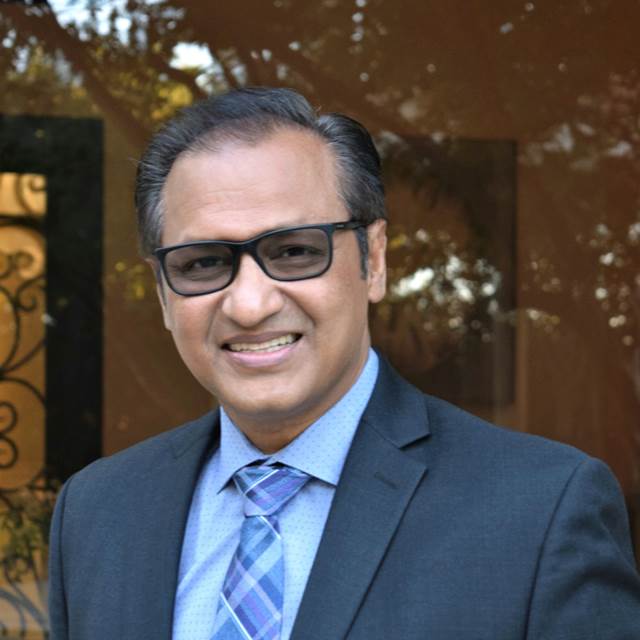
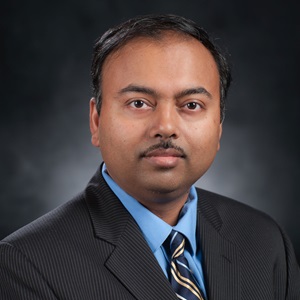
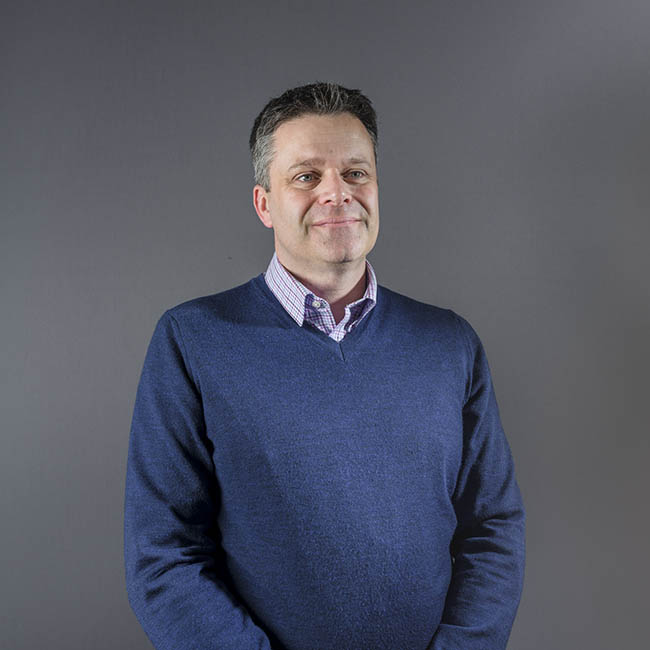
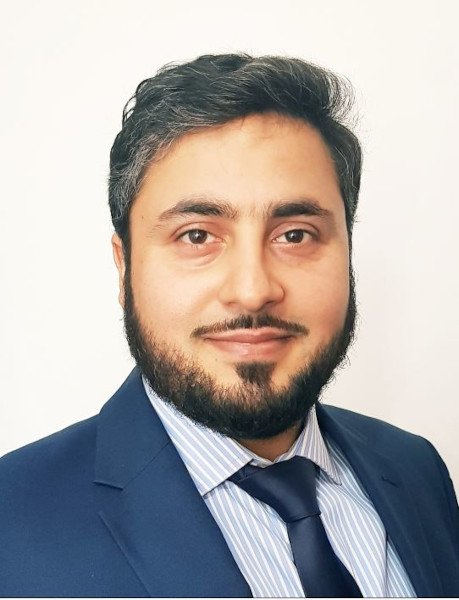
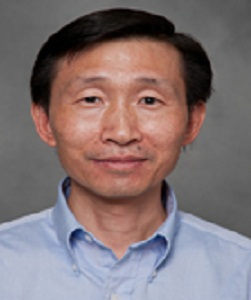
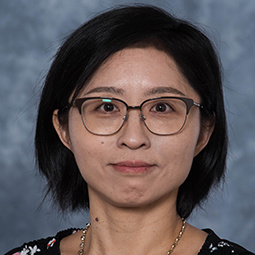
Dr. Carl Sorensen is a Professor in Mechanical Engineering at Brigham Young University's College of Engineering, concluding a 36-year career. He earned his Ph.D. in Materials Science from MIT after a B.S. in Physics from BYU. His research focuses on engineering design processes and industrial applications. Sorensen co-founded BYU's nationally renowned Capstone program, which has grown from 20 to 350 students. His research interests include developing engineering design processes for real-world applications and friction stir welding innovations. He has contributed significantly to manufacturing process control and product architecture evaluation. Professionally, Sorensen emphasizes the integration of faith and engineering, advising students to 'take counsel from your faith, not your fears.' He maintains an active engineering workshop for personal projects and outdoor pursuits.
Troy Munro is an Associate Professor in the Department of Mechanical Engineering at Brigham Young University (BYU), part of the College of Engineering. His research focuses on thermal engineering, advanced materials, and microfluidics, with applications in nuclear energy, microgravity fluid dynamics, and biomedical systems. He holds a joint PhD in Mechanical Engineering and Physics from Katholieke Universiteit Leuven (KU Leuven) and Utah State University (2016), and has led research initiatives in thermal property measurement, friction stir welding, and quantum dot-based temperature sensors. Education includes: PhD (2016): Joint program at KU Leuven and Utah State University MS (2012): Mechanical Engineering, Utah State University BS (2012): Mechanical Engineering, Utah State University Research interests emphasize interdisciplinary approaches to thermal systems, including: Development of novel thermal measurement techniques (e.g., 3D-printable microscopes, needle probes) Thermal behavior of nuclear fuels and molten salts Microfluidic device design and temperature control Material characterization of bio-inspired fibers and composites His work integrates machine learning for data analysis, such as neural networks applied to quantum dot thermometry and microfluidic temperature reconstruction. He has contributed to over 30 peer-reviewed publications and has been an Assistant Professor at BYU since 2016. Advising and grants include leading the BYU Mechanical Engineering Graduate Research Program and collaborations with institutions like the U.S. Department of Energy on nuclear fuel research. His lab develops innovative solutions for thermal challenges in energy, aerospace, and biomedical fields.
Gautam Das is a distinguished academic serving as the Associate Dean for Research in the College of Engineering and a Distinguished University Chair Professor in Computer Science and Engineering at the University of Texas at Arlington (UTA). He also directs the Center for Artificial Intelligence and Big Data (CARIDA) and the Database Exploration Laboratory (DBXLAB). Prior to UTA, he held roles at Microsoft Research, Compaq Corporation, and the University of Memphis. He earned a B.Tech from IIT Kanpur and a Ph.D. from the University of Wisconsin-Madison. His research spans computational geometry, graph theory, and modern big data challenges, including database systems, machine learning, and fairness in AI. Notable contributions include keyword search in databases, time series mining, and approximate query processing. He has authored over 200 publications, with awards such as the IEEE Fellow distinction and multiple conference recognitions. Education: PhD, Computer Science, University of Wisconsin-Madison (1990) B.Tech, Computer Science, Indian Institute of Technology Kanpur (1983) Key Roles: General Chair, ACM SIGMOD/PODS 2018 Editorial Board Member, ACM Transactions on Database Systems Dr. Das’s work is funded by NSF, DoD, and industry grants. His recent focus includes fairness in AI systems and explainable data management. He has advised numerous students and contributed to interdisciplinary research in environmental science and healthcare through collaborations.
Indrajit Charit is Professor and Department Chair of Nuclear Engineering & Industrial Management at University of Idaho's College of Engineering. His research focuses on nuclear materials, advanced manufacturing, and high-temperature mechanical behavior, with applications in reactor design and nuclear fuel systems. Research explores processing-microstructure-property relationships in extreme environments, including radiation effects on materials and additive manufacturing techniques. Current projects investigate fuel cladding performance, accident-tolerant fuels, and materials for space nuclear propulsion. Recent publications demonstrate advances in nuclear materials characterization, with emphasis on machine learning applications for materials analysis and innovative manufacturing processes for extreme environments. Work consistently bridges experimental materials science with computational approaches. University of Idaho Presidential Mid-Career Award (2016-2018) ASM-IIM Visiting Lectureship Award (2014-2015) Outstanding Faculty Award, College of Engineering (2013-2014) Alumni Award for Excellence in Mentoring (2013) Outstanding Young Faculty Award (2008-2009) Leads research on DOE-funded projects in nuclear fuel development and advanced manufacturing. Provides outreach through tours and demonstrations for prospective engineering students.
Dr. Ayodele Olofinjana is a Senior Lecturer in Engineering Materials at the University of the Sunshine Coast (Queensland, Australia). He holds a PhD from the University of Sheffield (1992) and has over 20 years of international experience in academia and research, including roles at the University of Brunei where he established an energy research group. His expertise spans metallic glass characterization, non-equilibrium materials processing, and sustainable construction materials. Research Focus: Dr. Olofinjana’s work centers on rapid solidification of alloys, structural characterization of metallic glasses, and eco-friendly materials. Key areas include energy materials, construction composites, lead-free solders, and recycled materials. His contributions include advancing nano-indentation techniques for material analysis and optimizing multi-stream casting processes for high-strength wires. Teaching: He teaches core courses such as ENG225 Engineering Materials, ENG202 Engineering Design, and ENG301 Materials Technology. His pedagogical approaches emphasize practical applications of material science principles. Technical Contributions: Notable projects include the development of high-strength Cu-Cr alloys, failure analysis of metallic components, and improving thermal stability in wire casting. His work bridges fundamental material science with industrial applications in energy, construction, and electronics.
Jesper Henri Hattel is a Professor and Head of Section in the Department of Civil and Mechanical Engineering at the Technical University of Denmark (DTU). His research focuses on numerical modelling of manufacturing processes such as casting, 3D printing, moulding, and welding, involving metallic and polymer materials. He specializes in multi-physics modelling, encompassing Computational Fluid Dynamics (CFD), heat transfer, materials science, and solid mechanics. His work contributes to UN Sustainable Development Goals, particularly in advancing sustainable manufacturing technologies. Research interests include process optimization for additive manufacturing, residual stress analysis, and material behavior under extreme conditions. He has pioneered hybrid AI and physics-guided approaches to enhance process predictability in polymer-based additive manufacturing. Recent work emphasizes accelerated parameter selection for laser-based processes and thermal-mechanical analysis of microsystems. Awards: IIW Kenneth Easterling Best Paper Award (2018) Education: MSc, PhD, Dr. Techn. Supervises PhD projects on topics like topology optimization for heat pipes, laser welding for battery packs, and multi-scale simulation of metal additive manufacturing. Active in collaborative research networks, with projects funded through DTU and industry partnerships.
Dr. Arunprabhu Arunachalam Sugumaran is a Researcher at the Materials and Engineering Research Institute (MERI) at Sheffield Hallam University since 2014. His expertise lies in advanced surface engineering techniques, particularly High Power Impulse Magnetron Sputtering (HIPIMS), for developing thin film coatings in biomedical, industrial, and aerospace applications. He holds a PhD in Surface Engineering from Sheffield Hallam University (2014), following a Postgraduate in Materials Science and a Bachelor's in Physics. Research Interests: DC magnetron sputtering and HIPIMS technologies Monolithic/multilayer thin film coatings Surface analysis via SEM, AFM, XRD, and tribological testing Corrosion and wear-resistant coatings for biomedical devices (e.g., CoCrMo alloys) Forging die coatings and industrial surface treatments Collaborations: Works with industry partners such as Ionbond, TWI, Zimmer Biomet, and Innovate UK on applied materials research. His recent publications focus on HIPIMS-derived coatings for enhancing tribocorrosion resistance, improving forging die lifespan, and advancing plasma synthesis monitoring techniques. Lab/Team: Active in the National HIPIMS Technology Centre, part of MERI, focusing on cutting-edge PVD processes and functional material development.
Dr Hywel Jones is a Principal Research Fellow at the Materials and Engineering Research Institute (MERI) of Sheffield Hallam University. He specializes in solving industrially relevant problems through materials science, with a focus on ceramic composites, tribology, and recycling. He co-founded XeraCarb Ltd and Mikana Innovations Ltd to commercialize research outputs. His work has been funded by UK research councils, MoD, and private companies. Education: BSc Physics, University of Warwick (1988–1991) MSc Physical Methods of Materials Characterisation, University of Warwick (1992–1993) PhD in 'Synthesis and Tribology of Sialon/TiB2 Ceramic Composites', University of Warwick (1993–1997) Research Interests: Hywel’s work spans ceramic composites, tribology, armor development, precious metals, friction stir processing, and electronic waste recycling. He has pioneered innovations like anti-tarnish silver alloys and lightweight defense materials. His expertise includes failure analysis, materials characterization (SEM/EDX, XRD, ESEM), and wear testing. Awards & Impact: Recipient of the Pfeil Prize (2002) and Venture Prize (2012). Managed the £1m R2i program to boost South Yorkshire industry. Delivered over 400 consultancy projects, saving/generating millions for clients across automotive, biomedical, and energy sectors. Acts as an expert witness in legal cases involving materials failure. Media Engagement: Regular contributor to TV, radio, and online media on topics like e-waste (‘What’s In My Stuff’) and ballistics. Active in public science communication.
Dr. Ashfaq Khan is a Senior Lecturer and Course Leader for Mechanical Engineering (Top-up) at Sheffield Hallam University. He holds a PhD in Mechanical Engineering from the University of Manchester (2011), focusing on laser micro/nano-manufacturing and finite element analysis. Previously, he served as a Research Associate at the University of Sheffield. His research emphasizes laser-based additive manufacturing, energy-efficient materials, and FEA. He has secured grants for industrial collaborations and PhD studentships, and has over 30 journal publications. Dr. Khan is a recipient of the 2024 Sheffield Hallam University Inspirational Teaching Award and co-inventor of the world’s first optical nanoscope (published in Nature Communications ). He also designed a selective laser melting system for the jewelry industry. Teaching focuses on mechanical design, materials, solid mechanics, CAD/CAM, and advanced manufacturing technologies. He leads academic management for the Mechanical Engineering course and supervises undergraduate/postgraduate projects. His expertise bridges academic research and industry applications in manufacturing innovation.
Professor Cevdet Kaynak is a distinguished faculty member at Middle East Technical University (METU) in Ankara, Turkey, with appointments in the Materials & Metallurgical Engineering Department (METE), Polymer Science & Technology Department (PST), and Micro & Nanotechnology Department (MNT). His extensive research portfolio spans polymer science, composite materials, and nanotechnology, with particular expertise in biopolymers, nanocomposites, and advanced polymer processing techniques. Professor Kaynak's research focuses on developing sustainable polymer materials, particularly polylactide (PLA) based biocomposites and nanocomposites. His work encompasses cellulose nanocrystals/nanofibrils, POSS nanocomposites, flame retardancy, 3D printing of polymers, weathering degradation studies, and surface treatments for composite joining. His research integrates fundamental materials science with practical engineering applications, addressing challenges in renewable materials, composite manufacturing, and performance enhancement. His recent publications reveal a strong emphasis on biopolymer nanocomposites, with significant work on cellulose reinforcement in PLA, electrospinning techniques, and 3D printing of sustainable materials. He has also made important contributions to surface engineering for composite joining, particularly plasma and laser treatments for thermoplastic composites. His research demonstrates a consistent focus on both fundamental understanding and practical applications of advanced polymer systems. With an impressive publication record of over 90 journal papers and numerous conference proceedings, Professor Kaynak has garnered substantial recognition in his field, reflected in his citation metrics (H-Index of 29 in Web of Science/Scopus, 35 in Google Scholar, and over 2400 total citations as of December 2024). Professor Kaynak has successfully supervised numerous graduate students, including 10 PhD candidates and over 30 MS students, reflecting his commitment to academic mentorship. His research has been supported by multiple national projects, including TUBITAK, SANTEZ, and BOREN grants, focusing on biopolymer applications, flame retardancy, and advanced composite development. His work bridges fundamental polymer science with practical engineering solutions for sustainable materials development.
Xiaomin Deng is Professor of Mechanical Engineering at the University of South Carolina's Molinaroli College of Engineering and Computing. His research encompasses nanomechanics, fracture mechanics, and manufacturing process simulation including friction stir welding, metal cutting, and thermal analysis. Recent publications investigate biomechanical tissue properties, manufacturing process optimization, and dynamics of mechanical systems. Work integrates experimental characterization with advanced computational methods like finite element analysis and inverse boundary techniques.
Dr. Lingyu Yu is a Professor of Mechanical Engineering at the University of South Carolina's Molinaroli College of Engineering and Computing, with cross-appointments in Nuclear and Aerospace Engineering. She directs the Civic Laboratory for Environmental Action Research (CLEAR), developing advanced structural health monitoring methodologies. Her research creates non-destructive evaluation systems using ultrasonic guided waves, piezoelectric sensors, and scanning laser vibrometry. Current innovations include non-contact air-coupled transducer systems for nuclear infrastructure, adversarial transformer networks for damage pattern detection, and engineered composite repair solutions. Applications span aerospace, nuclear safety, and civil infrastructure. Recent publications demonstrate advancements in Lamb wave imaging techniques for composite delamination mapping, stress corrosion cracking detection, and thickness measurement in harsh environments. Her work emphasizes field-deployable solutions for industrial challenges. Laboratory Leadership: Heads the CLEAR laboratory, focusing on field instrumentation, sensor network development, and signal processing algorithms for structural diagnostics.
Dr Wenhan Zeng is a Principal Research Fellow at the Centre for Precision Technologies and EPSRC Future Metrology Hub within the University of Huddersfield 's School of Computing and Engineering . With over 20 years in Surface Metrology and Precision Engineering , he specializes in Signal/Image Processing and Machine Learning applications for Additive Manufacturing and 3D Surface Characterization . Education: BEng in Mechanical Engineering, Huazhong University of Science and Technology (HUST), China MEng in Precision Instrumentation, HUST PhD in Surface Metrology, HUST (2005), awarded Best Dissertation in 2005 Research Focus includes developing ISO GPS Standards , creating Reference Algorithms for Surface Filtration , and pioneering Intelligent Metrology Systems with Deep Learning integration. His work spans XCT Data Processing , Freeform Surface Characterization , and Smart Manufacturing for high-value components. Recent Publications demonstrate trends in Additive Manufacturing Metrology , Laser Processing , and Surface Denoising using Deep Learning Architectures and Optimization Algorithms . He actively supervises 11 Current PhD Students and has completed 3 PhD Supervisions , contributing to fields like Freeform Optics and AM Surface Analysis . Awards and Recognition: EPSRC Project 'New Geometrical Filtration' Assessed Outstanding EPSRC Project 'Third Generation Wavelet' Assessed Outstanding EPSRC Project 'Novel Metrology-based Control Algorithms' Assessed Outstanding Best Dissertation, HUST (2005) PhD Supervision includes groundbreaking work on Laser Welding Defects , On-Machine Quality Control , and XCT Calibration . His team collaborates with industry leaders like Taylor-Hobson and DIGITAL SURF SARL , securing £12.5M+ in Funding across projects such as the Future Advanced Metrology Hub and Manufacturing in the UK for High Gradient Cavities .
Johnson Samuel is a Professor in the Department of Mechanical, Aerospace and Nuclear Engineering at Rensselaer Polytechnic Institute (RPI). He serves as Director of the Nano/Micro-scale Manufacturing and Material Design Lab (NanoM3 Design Lab), focusing on advanced manufacturing and material design. His research is funded by NSF, NYSERDA, DOD, and industry partners. He holds a PhD from the University of Illinois Urbana-Champaign (2009), advised by Prof. Shiv Kapoor and Prof. Richard DeVor. Research interests span nanoscale manufacturing, biocompatible materials, and sustainable production systems. He develops novel composites for energy harvesting, biomedical applications, and additive manufacturing. Key innovations include graphene-enhanced cutting fluids, multi-robot WAAM systems, and bio-inspired hydrogel scaffolds. Notable achievements include the NSF CAREER Award (2014), World Economic Forum Young Scientist recognition (2016), and Rensselaer's Research Excellence Award (2016). Teaching accolades include the 2014 Class of 1951 Teaching Award and 2015 Engineering Education Innovation Award. Lab: NanoM3 Design Lab at RPI Outreach: Lego-based manufacturing education modules for K-12 students Key Sponsors: NSF, NY State Energy Research and Development Authority, DARPA, Boeing Research outputs include over 80 peer-reviewed articles and 4 patents, with work featured in journals like Advanced Materials and International Journal of Machine Tools and Manufacturing .
Dr. Daryush Aidun is a Professor of Mechanical & Aerospace Engineering at Clarkson University's Coulter School of Engineering & Applied Sciences. He holds a Ph.D. in Materials Science & Engineering from Rensselaer Polytechnic Institute and multiple master's degrees from Syracuse University. His research focuses on welding metallurgy, dissimilar metal welding, automated welding processes, and additive manufacturing. Key contributions include developing the Automated Dual Torch Arc Welding System (ADTAWS) and the Multi Gravity Research Welding System (MGRWS), as well as establishing a welding laboratory with advanced equipment. He is a Fellow of the American Society of Mechanical Engineers (FASME) and the American Welding Society (FAWS), and a Licensed Professional Engineer in Metallurgy & Materials Engineering (TN). Dr. Aidun's research interests encompass corrosion and mechanical properties of weldments, thermal modeling of additive manufacturing processes, and reliability engineering. His work has led to awards such as the AWS Charles H. Jennings Award and the AWS McKay-Helm Award. He actively contributes to academic publishing, teaching courses like Welding Metallurgy (ME492/590) and Additive Manufacturing Processes (ME390/503). His laboratory infrastructure, funded through grants and gifts, supports hands-on education and advanced research in welding technologies. Notable achievements include pioneering studies on residual stress reduction in dissimilar welds and advancing automated welding techniques to enhance productivity. His research also explores high-G environments' impact on welding processes, bridging fundamental science with industrial applications. Dr. Aidun's interdisciplinary approach integrates material science, mechanical engineering, and manufacturing innovation to address challenges in structural reliability and advanced materials processing.