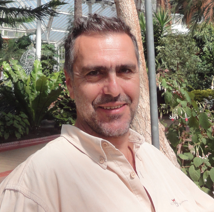
Bernd Münzer is a researcher at the Institute of Information Technology at Alpen-Adria-Universität Klagenfurt. His work focuses on medical multimedia, video retrieval systems, and human-computer interaction, particularly in endoscopic and laparoscopic video analysis. He contributes to projects involving deep learning for content identification, interactive exploration tools, and medical data visualization. Medical video analysis and retrieval Human-computer interaction in multimedia systems Endoscopic imaging and surgical skill assessment Dynamic content descriptors for video processing Collaborative video search frameworks Temporal analysis of clinical multimedia data His research includes developing tools like ECAT for endoscopic annotation, diveXplore for interactive exploration, and datasets such as Cataract-101 for surgical analysis. Projects emphasize medical multimedia applications, efficient video encoding, and augmented interfaces for clinical workflows.
Dr. Maria Rita Nogueira is a Lecturer & Researcher in Digital UX and Web Design at the School of Digital Arts (SODA) at Manchester Metropolitan University. She bridges art, design, and technology through interactive installations that explore movement-based interactions and artificial intelligence. Her work emphasizes democratizing art through audience participation and creating accessible experiences. BA & MA in Design and Multimedia (University of Coimbra) PhD in Contemporary Art (University of Coimbra, with Institute of Systems and Robotics) Her research focuses on real-time human-machine dialogue, producing dynamic visual compositions in performances like FORMS and Move In Tempo . She has exhibited globally, including at MIT (2023) and CICA Museum (2022). Her work intersects computer science, digital art, and health technology, particularly in chronic pain management via the iACTwithPain platform. Recent publications analyze machine learning's role in dance, movement-based interaction design, and AR applications for art education. She has received scientific accolades including the Best Performance award at Technarte Bilbao (2023) and Best Artwork award at CRIATECH (2021). Best Performance & Presentation, Technarte Bilbao (2023) Best Artwork Award, CRIATECH Artistic Residences (2021) Nogueira integrates creative coding and augmented reality into participatory art, while her industry background informs practical UX design approaches.
Valery Adzhiev is a Professor at Bournemouth University's National Centre for Computer Animation (NCCA), part of the Faculty of Media & Communication. He holds a PhD in Computer Science from Moscow State Engineering Physics Institute (MEPhI) and has extensive experience spanning both industry and academia. His career includes significant contributions to the "Buran" spacecraft program (the Russian equivalent of the Space Shuttle) at the Flight Research Institute in Moscow, followed by an Associate Professor position at MEPhI before joining Bournemouth University in 2000. Adzhiev's research primarily focuses on functionally-based geometric modeling and its applications in computer animation, digital art, and 3D fabrication. He has developed theoretical frameworks for hybrid modeling of time-variant heterogeneous objects and has designed high-level modeling languages including HyperFun and HyperJazz. His work on the international HyperFun open-source project has found applications across education, research, design, art, cultural heritage, and computer animation. He has also applied "Empirical Modelling" principles to computer games with high interactivity. His recent publications (2019-2025) demonstrate continued research activity across multiple domains including cultural heritage visualization, multisensory analytics, mass customization, and advanced geometric modeling techniques. These works show a consistent trend toward interdisciplinary applications of his core expertise in function representation, with increasing focus on cultural heritage applications, multisensory data representation, and practical applications in mass customization. Prize in Dream Centenary Computer Graphics Grand Prix '99 Research Fellowship at University of Aizu, Japan Royal Society Research Fellowship at University of Warwick Adzhiev has supervised PhD students including Ali Abdallah (Web-based Shape Modeling) and Mathieu Sanchez (Distance Functions for Time-variant Heterogeneous Object Modelling). He has been involved in multiple significant research grants including VolComAni (Volumetric Computer Animation Framework), VOLCAN (Next Generation Volumetric Computer Animation Framework), and the SHIVA project (Sculpture for Health-care: Interaction and Virtual Art in 3D). He maintains active roles in the academic community as an editorial board member for several journals, program committee member for international conferences, and has served as Technical Program Committee Co-Chair for Shape Modeling International 2013. His work bridges computer science theory with practical applications in art, education, and industry.
Jose Jesus Castro-Schez is a Full Professor at the University of Castilla-La Mancha (UCLM) , affiliated with the School of Computer Science and the Department of Information Technologies and Systems. He has been a faculty member since 1998 and holds a PhD in Computer Science from the University of Granada (2001). Education: PhD in Computer Science (University of Granada, 2001), Bachelor's and Diploma in Computer Science (University of Granada, 1995/1993) His research focuses on Artificial Intelligence , Intelligent Agents , and Knowledge Engineering , with collaborations at institutions like the University of Southampton and Yat-Sen University. He has led projects such as HESPERIA and ENERGOS, applying agent-based systems to security and energy monitoring. Scientific Awards Special Award from the Department of Education (2024) Premio Solidario (2019) Diploma a la Conservación (2012) Premio Mejor Web Personal (2004) He directed multiple Final Degree Projects and two doctoral theses, emphasizing social impact through technology solutions for nonprofits like AFANION and VivELA. His teaching innovations in Electronic Commerce and Language Processors have been recognized for combining technical rigor with community engagement.
Dr. Donna Therese Gronn is a researcher at the School of Education, Faculty of Education and Arts, Australian Catholic University. Her work focuses on educational technology integration across diverse learning environments, particularly examining technology use in early childhood education and teacher training contexts. Research areas include: Digital technology's role in home-school connectivity ICT implementation in mathematics instruction Remote teacher mentoring through video conferencing Reverse mentoring dynamics between students and teachers Her publications span socio-ecological analyses of digital disparities, pedagogical applications of web conferencing, and innovative uses of video technology for teacher professional development. Collaborative research projects with colleagues like Romeo, Scott, and Henderson highlight her team-based approach to educational technology challenges.
Dr. Alexandra Fiocco is a Professor in the Department of Psychology at Toronto Metropolitan University. Her research focuses on cognitive aging, stress, and biopsychosocial determinants of health in later life. She holds a PhD in Neuroscience from McGill University and has completed postdoctoral training at the University of California San Francisco and Baycrest in Toronto. Education: PhD in Neuroscience, McGill University (2008) MSc in Psychology (Neuroscience specialization), Carleton University (2002) Research Interests: Stress and aging Lifestyle behaviors and well-being Mindfulness-based interventions Cognitive function in residential care settings Labs & Teams: STAR Lab (Study of Aging, Resilience, and Aging Research). The lab investigates preventive strategies for healthy aging, including mindfulness and dietary interventions. Supervision: Dr. Fiocco supervises graduate and undergraduate students in clinical and psychological science. Her advisees focus on topics like stress biomarkers, dietary patterns, and caregiver resilience.
Silas Hsu is an Assistant Professor in the Department of Computer Science at California Polytechnic State University (Cal Poly), affiliated with The Noyce School of Applied Computing. His research focuses on human-computer interaction, particularly improving user control over social media algorithms and advocating for equitable design practices. He emphasizes ethical considerations in technology, ensuring interfaces are accessible to diverse populations, including the visually impaired and culturally varied users. Professor Hsu’s work bridges theoretical and applied research, developing tools like the WashU Epigenome Browser and CNAViz for genomic data visualization. He teaches courses that encourage students to engage with non-student populations to foster inclusive design. His academic contributions span both HCI and bioinformatics, reflecting a commitment to impactful interdisciplinary solutions. In advising and pedagogy, he emphasizes hands-on learning and problem-solving through collaboration. He supports Cal Poly’s DEI initiatives by integrating inclusive design principles into his teaching and research. Despite no explicit mention of grants, his projects suggest active engagement in funded research. His hobbies include classical piano, rock climbing, and video games, reflecting a balanced approach to work and personal interests.
Paulo Alexandre Vara Alves is a Professor in the Informatics and Communications Department at the Polytechnic Institute of Bragança since 1997. He serves as IPB e-learning Coordinator and Vice-Dean of the School of Technology and Management. PhD in Technology and Information Systems (University of Minho) MSc in Multimedia Technology (University of Porto) His research focuses on intelligent systems , big data analytics , and their applications to e-learning , web development , and multimedia . Recent publications highlight applications of machine learning in cosmetic dermatology, nutritional health, and biomedical monitoring. Key themes include neural networks, data engineering for education analytics, and biofeedback systems. He currently holds no listed scientific awards but has an extensive publication record (49 total) and participates in collaborative research projects involving teams like CeDRI (Research Centre in Digitalization and Intelligent Robotics).
Mariusz Kleć is a Researcher and faculty member at the Polish-Japanese Academy of Information Technology (PJATK) , affiliated with the Faculty of Information Technology and the Department of Multimedia . He is currently completing his PhD in Computer Science, focusing on music processing with deep neural networks. His work bridges computer science, music engineering, and machine learning, emphasizing practical applications in recommendation systems and healthcare. Education: PhD in progress (2014–present): Research on music classification and organization using DNNs. Postgraduate Sound Engineering (2014–2015): Project on equalizer and dynamic processor usage in music production. MSc in Computer Science (2005–2010): Thesis on sound similarity for music recommendation systems. High School of Visual Arts (2000–2005): Focus on visual identity design. Technical Expertise: Full-stack web development (Java, JavaScript, React, NodeJS, MongoDB), machine learning, graphic design (Adobe Suite), and audio engineering. Research Interests: Mariusz explores intersections of music processing, AI, and multimedia systems. His projects include: Music recommendation systems leveraging personality traits and neural networks. Automated genre recognition using deep learning and wavelet transformations. Applications of AI in healthcare for early symptom detection. Professional Experience: Administrator of Recording Studio (PJATK, 2012–present): Manages equipment and event coordination. Internship at Sony Stuttgart (2013): Developed an audio classification DNN in MATLAB. Web developer (2008–2011): Front-end and WordPress projects, SharePoint system administration. Labs/Teams: Active contributor to the CLARIN-PL project (2019–2021) for speech tool development. Collaborates with the Multimedia Department on sound design and data mining.
Dr. Heather McClelland is a Lecturer in Clinical Psychology at the University of Glasgow, specializing in suicide prevention, self-harm, social connectivity, loneliness, and digital interventions. She holds a PhD in Clinical Psychology from Glasgow (2022) and serves as former Academic Advisor to the Scottish Government’s National Suicide Prevention Leadership Group. Her research examines psychological and social determinants of suicide, with emphasis on loneliness, interpersonal relationships, and youth mental health. Recent projects include usability studies of web-based suicide support systems and meta-analyses on social determinants of suicide. She developed a MOOC on global suicide prevention strategies. Awards include the Scottish Public Service Award for Policy into Practice (2024) and Mental Health Network Travelling Fellowship (2024). She currently advises governmental bodies and supervises PhD students exploring vitamin D's relationship with suicidal behavior. Publications show consistent focus on suicide risk factors across diverse populations, with methodological expertise in systematic reviews, qualitative analysis, and digital intervention design.
Dr. Linsay McCallum is an Honorary Clinical Senior Lecturer at the School of Cardiovascular & Metabolic Health, University of Glasgow. She specializes in hypertension research, cardiovascular health, and clinical trials, with a focus on machine learning applications in medicine. Her work includes studies on long-term effects of SARS-CoV-2 on vascular health, genotype-dependent antihypertensive therapies, and patient empowerment via digital health tools. Research Interests: Dr. McCallum’s studies span hypertension pathophysiology, blood pressure variability, and translational research. She leads initiatives like the LOCHINVAR project examining post-COVID vascular impacts and the OPTIMA-BP trial evaluating web-based patient education. Her work integrates clinical data with machine learning techniques to improve diagnostic accuracy and treatment personalization. Grants & Collaborations: She has secured funding from Heart Research UK (2021–2024) for SARS-CoV-2 vascular effects research and the Mason Medical Research Foundation (2018–2020) for studies on hypospadias-related cardiovascular risks. Collaborations include teams at the University of Glasgow and international clinical centers. Labs/Teams: Affiliated with cardiovascular research groups within the School of Cardiovascular & Metabolic Health, focusing on translational hypertension research and clinical trial coordination.
Saman Zonouz is an Associate Professor at Georgia Institute of Technology with joint appointments in the School of Electrical and Computer Engineering and the School of Cybersecurity and Privacy. He joined Georgia Tech in 2022 after prior roles at Rutgers University and the University of Miami. His research focuses on cybersecurity and privacy in cyber-physical systems, particularly critical infrastructures such as power grids and industrial control systems. Zonouz holds a Ph.D. in Computer Science from the University of Illinois at Urbana-Champaign (2011) and a B.Sc. from Sharif Institute of Technology (2006). His work bridges theoretical computer science with practical engineering challenges, emphasizing resilience, attack detection, and physical-layer security. His research interests include attack detection in cyber-physical systems, embedded systems security, side-channel attacks, and resilient distributed control strategies. Recent trends in his publications highlight advancements in hardware implant detection, stealthy supply chain attacks, and cross-domain resilience frameworks for modern power systems. Zonouz has received prestigious awards including the Presidential Early Career Award for Scientists and Engineers (PECASE), NSF CAREER Award, and NSA Significant Research Recognition. His work often involves collaborations with industry and government agencies to address real-world cybersecurity challenges. He has led projects funded by NSF, AFOSR, and Google, focusing on topics like trustworthy additive manufacturing, privacy-preserving IoT systems, and cyber-informed engineering education. His lab develops tools such as OpenConduit for power system simulation and Guide-Guard for bioengineering applications.
Anastasios A. Economides is a Professor at the University of Macedonia in Thessaloniki, Greece, and Director of the SMILE (Smart Mobile Interactive Learning Environments) laboratory. He holds a Fulbright Fellowship and earned his Ph.D. in Computer Engineering from the University of Southern California. His expertise spans educational technology, smart systems, and digital competence, with over 300 publications and 7,000 citations. He has directed the Postgraduate Program in Information Systems and served as a Visiting Professor at institutions like Pompeu Fabra University and the Technical University of Denmark. Educationally, he holds a Dipl.Eng. in Electrical Engineering from Aristotle University (1984), followed by an M.Sc. (1987) and Ph.D. (1990) from USC. His research focuses on personalized learning, user experience in smart systems, and open educational resources (OER). He has led numerous funded projects and received multiple awards, including Best Conference Paper accolades and Greek Fellowships. Dr. Economides teaches courses in Educational Technology, E-Business, and Information Systems. He emphasizes cross-cultural studies in fake news, telepresence robots in education, and gender-sensitive pedagogy. His SMILE lab explores AR applications in cultural heritage and interactive learning environments. He actively contributes to international conferences, editorial boards, and initiatives like the OPENLang Network for language education. Awards: Fulbright Fellowship, Greek Fellowships Foundation Awards, Best Conference Papers Grants: Principal investigator in multiple funded projects Labs/Teams: SMILE Lab, OPENLang Network
Henry Pratt is a faculty member at the Yale School of Medicine, affiliated with the Department of Genetics. He holds a PhD in Bioinformatics and Computational Biology (UMass Chan Medical School, 2024) and a BA in Chemistry (Bowdoin College, 2015). His research focuses on genomic and epigenomic regulation, non-coding elements, and their roles in health and disease. Key areas include cross-ancestry gene regulation, functional mapping of gene regulation, and leveraging epigenetic data for understanding complex traits like primary sclerosing cholangitis. He collaborates extensively with researchers such as Joel Rozowsky, Mark Gerstein, and Alexander Urban, contributing to projects like the ENCODE and EN-TEx consortia. Recent work includes developing the Factorbook catalog of transcription factor motifs and advancing tools like LogoJS for genomic visualization. His presentations highlight interdisciplinary approaches to integrating genomic data across species and tissues. Dr. Pratt's publications span high-impact journals like Science and Nature , emphasizing functional genomics, regulatory element analysis, and computational methods. His activities include oral presentations at conferences like the Plant and Animal Genome Conference and poster sessions at the AASLD Liver Meeting, showcasing his work on AI models for NAFLD and epigenetic studies in liver disease.
Henning Olesen is an Associate Professor at the Department of Electronic Systems within the Technical Faculty of IT and Design at Aalborg University. His research focuses on cybersecurity, digital transformation, IoT, and user privacy in smart environments. He has contributed to projects addressing cybersecurity strategies for SMEs in the Baltic region, smart home surveillance ethics, and voice assistant privacy challenges. Key projects include DINNOCAP (digital innovation capacity building), Caught in the Web (voice assistant privacy), and CAMMP (mobile media platforms). He has supervised three PhD students, including work on identity management systems and smart home architectures. His research spans 101 publications, with recent emphasis on cybersecurity frameworks and IoT ethics. Media engagements include discussions on user data privacy and cybersecurity awareness. Collaborations involve industry stakeholders and transnational policy initiatives to enhance digital security resilience.