José María Gutiérrez Martínez is an Associate Professor in the Department of Computer Science at the University of Alcalá. He is part of the PMI (Intelligent Mobile Platforms) research group, focusing on mobile computing, AI, and educational technology. His work integrates interdisciplinary approaches, including IoT, gamification, and healthcare IT. He holds a Doctorate from the University of Alcalá with a thesis on intelligent agents for internet-based learning systems (2006). His academic contributions span over 50 publications since 2017, addressing challenges in accessibility, mobile applications, and sustainable technologies. Research interests include: 1) Developing accessible mobile applications for diverse users, 2) AI-driven solutions for healthcare and education, 3) Optimizing lighting systems for energy efficiency, and 4) Gamification strategies in university environments. Recent projects include ESCOGPT (AI-powered search tools) and μDevOps (cybersecurity microservices). His work bridges theory and practice through collaborations with industry partners. Ongoing efforts focus on applying machine learning to environmental conservation and improving workplace ergonomics via IoT systems.
Vera Pospelova Pospelova is an Assistant Professor in the Computer Science Department at the University of Alcalá, Spain. She holds a PhD from the same institution with a thesis on digital professional competency analysis. Her research focuses on e-learning sustainability, IT professionalism, smart cities, and digital accessibility. She actively contributes to the TIFyC research group, exploring Information Technologies for Training and Knowledge. Her academic work bridges theory and practice, addressing challenges in: Educational technology for remote learning environments Workforce analysis for smart city projects Cybersecurity threats in AI applications Sustainable IoT implementations Data literacy initiatives in industry and academia Recent publications highlight trends in: Teacher preparedness for hybrid education systems AI-driven cybersecurity risks Environmental impact of digital infrastructure Public awareness campaigns on digital pollution Her research demonstrates strong interdisciplinary focus, integrating computer science with education, environmental studies, and professional ethics frameworks. No scientific awards are explicitly mentioned in the provided materials.
Raphaël Akamavi is an Associate Professor in Marketing at the Birmingham Business School, University of Birmingham. He has over two decades of academic experience, previously serving as a Senior Lecturer at Leeds Beckett University and the University of Hull before joining the University of Birmingham in July 2017. He holds a PhD in Financial Service Innovation and Organisational Capabilities from the University of Leeds, an MBA, and a PgDMS. Education: PhD in Financial Service Innovation and Organisational Capabilities, University of Leeds MBA PgDMS FHEA, PGCHE Raphaël's research centers on innovation, particularly product and service innovation, co-creation, service quality, customer satisfaction, CRM, social capital, organizational performance, and the tourism and travel industry. His work explores both theoretical and applied dimensions of innovation in service sectors, with a focus on value creation and destruction, disruptive models, and institutional change. He has published extensively in leading journals such as Tourism Management , Journal of Travel Research , European Journal of Marketing , and International Business Review . The recent trends in his publications reveal a sustained focus on innovation and performance across industries, particularly in tourism, aviation, and financial services. His research integrates cross-cultural consumer behavior, strategic alliances, and digital transformation, often employing empirical and comparative methodologies. He has also contributed to understanding non-profit performance and ethical business practices. Scientific Awards: Award for Best Paper at the 6th International Services Management Conference, Cyprus, 2013 Raphaël has supervised multiple PhD students to completion and currently mentors two doctoral candidates at the University of Birmingham in innovation-related topics. He has served as an external examiner at the University of Salford, Portsmouth, and Huddersfield, and as an internal examiner and chair at the University of Hull and the University of Birmingham. He contributes to the academic community as a member of the editorial advisory board of Afro Eurasian Studies and the editorial board of EuroMediterranean Journal of Business , and as an ad hoc reviewer for numerous high-impact journals including Tourism Management , Annals of Tourism Research , and European Journal of Marketing . He has also delivered keynote speeches and chaired conference tracks on sustainable and disruptive innovation. Labs and Research Teams: While no specific lab is mentioned, Raphaël is actively involved in research networks related to service innovation, marketing, and international business, collaborating with scholars globally and contributing to major academic conferences and publications.
Xue Liu is a Professor and William Dawson Scholar at McGill University's School of Computer Science, affiliated with the Department of Mathematics and Statistics (courtesy appointment) and the Department of Electrical and Computer Engineering. He holds positions as Vice President R&D and Chief Scientist at Samsung AI Center Montreal, and serves as Chair (2021-2023) of ACM SIGBED. His research focuses on intelligent computing, cyber-physical systems, sustainable computing, AI/ML applications, IoT, and blockchain technologies. Dr. Liu has received multiple Best Paper Awards from conferences such as IEEE GLOBECOM, IEEE HPCC, and IEEE/ACM IWQoS. He is a Fellow of the Canadian Academy of Engineering (FCAE) and IEEE (FIEEE). His work bridges academia and industry, with entrepreneurial ventures including advisory roles at Infinity Stones Inc., TandemLaunch, and Aerial Technologies. He co-edits the Journal of Blockchain Research and serves on editorial boards of major journals like ACM Transactions on Cyber-Physical Systems and IEEE Transactions on Networking. Key research contributions include innovations in blockchain infrastructure, smart grid optimization, and AI-driven systems. His labs, including the Cyber-Physical Intelligence Lab and MILA affiliation, advance interdisciplinary research in machine learning, robotics, and networked systems. Dr. Liu mentors startups and advises initiatives like Learnable Inc., integrating AI into education and healthcare. Education Affiliations: McGill University School of Computer Science (prestige rankings include top 25 globally per QS 2023) Awards: Multiple Best Paper Awards, FCAE & FIEEE Fellowships Labs: Cyber-Physical Intelligence Lab, MILA, CIM, SYTACom Publications: Over 150 peer-reviewed articles, including books on cloud computing, smart grids, and cyber-physical systems
Øyvind Hanssen is an Associate Professor at the Department of Computer Science, UiT The Arctic University of Norway. His work focuses on digitalization, IT professionalism, database systems, and technology's societal impact. He teaches courses like INF1800 (Digitalisation and IT-professionality) and contributes to projects such as TechWatch and the Open Distributed Systems (ODS) research group. Current Affiliations: UiT Department of Computer Science Research Interests: Education Technology, Position Tracking Systems, GIS Applications, IT Ethics, and Regional Development. His research includes optimizing GPS tracking in search and rescue operations, developing smart campus technologies, and analyzing digitalization's ethical implications. He actively engages in regional education policy debates, advocating for expanded technology education in Northern Norway. Awards and grants are not explicitly listed in the provided texts, but his involvement in collaborative projects like TechWatch highlights his role in applied research. He advises on curricula and infrastructure development, particularly in Helgeland region. Labs/Groups: Member of Open Distributed Systems (ODS) group and TechWatch initiative.
Randal Burns is a Professor and Chair of the Department of Computer Science at Johns Hopkins University, where he leads the Hopkins Storage Systems Laboratory. He is also affiliated with the Kavli Neuroscience Discovery Institute, the Institute for Data-Intensive Science, and the Science of Learning Institute, reflecting his interdisciplinary research in data systems and neuroscience. His research focuses on building scalable data systems for big data exploration and analysis. Key areas include storage system performance, delta compression, distributed file systems, and data-intensive computing. He has made significant contributions to reliable storage, file access prediction, caching strategies, and in-place data reconstruction. The analysis of his recent publications shows a strong trend in optimizing large-scale storage systems, with emphasis on efficiency, scalability, and reliability. His work bridges theoretical algorithm design with practical system implementation in mass storage, distributed environments, and web-scale infrastructures. Dr. Burns has not been listed with any specific scientific awards in the provided text. He advises students and leads research projects through the Hopkins Storage Systems Laboratory, where he mentors advisees in storage systems and data-intensive computing. While no specific grants are mentioned, his lab leadership and publication record suggest active external funding and collaborative research. He directs the Hopkins Storage Systems Laboratory, a research group focused on advancing the design and performance of storage systems for modern data challenges, including big data, neuroscience applications, and distributed environments.
Dr. Amal Alhosban is an Associate Professor of Computer Science and the Director of the Computing Division at the College of Innovation & Technology, University of Michigan-Flint. She holds a PhD in Computer & Information Science from Wayne State University and has been a faculty member at UM-Flint since 2014. Research Interests: Dr. Alhosban specializes in Service Computing, Semantic Web Services, Cloud Computing, Enterprise Architecture, Data Mining, and AI applications in education and digital systems. Her interdisciplinary work bridges computer science with real-world applications in e-commerce, cybersecurity, sustainability, and digital marketing. Recent Research Trends: Her recent publications (2021–2025) reflect a growing focus on artificial intelligence in education (e.g., ChatGPT for EFL writing), usability and refactoring in mobile apps, cybersecurity threats in digital marketing, green technologies, and digital twins in industrial systems. She integrates AI, cloud, and data mining techniques to solve complex societal and technical challenges. Scientific Awards: Lucinda Hinsdale Stone Senior Faculty Award MWIN Fellowship (2024) Generative AI Award (2024) Teaching Cycle Award (2024) Internationalization Award (2025) Advising and Grants: Dr. Alhosban is the Principal Investigator for the ongoing research grant The Impact of Algorithmic Bias on Social Equity funded by the Institute for Society and Technology (IST) in 2025. She has also served as Co-PI on the START grant (2023). While no formal advisees are listed, she supervises independent graduate studies (CSC 591) and mentors students through research projects and conference publications. Labs and Teams: As Director of the Computing Division, she leads academic and research initiatives in computer science at UM-Flint. She collaborates with national and international researchers and contributes to interdisciplinary teams in AI, cybersecurity, and sustainable technology development.
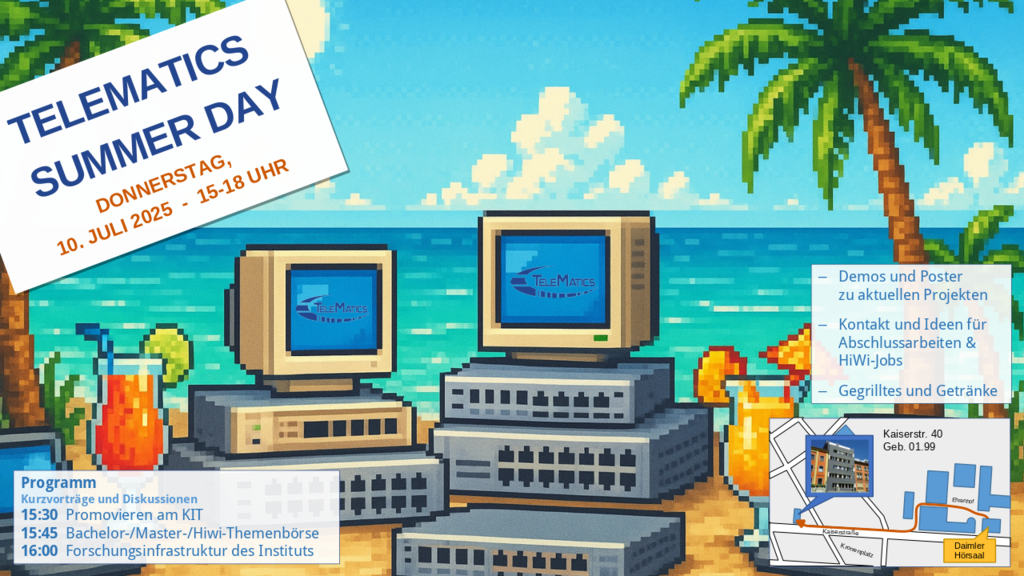
Martina Zitterbart is a Professor of Computer Science at the Karlsruhe Institute of Technology (KIT) , with a career spanning over 30 years in telematics research. She leads the Institute of Telematics , focusing on multimedia communication systems , mobile networking , and wireless sensor networks . Current C4 Professor at KIT since 2001 PhD in Computer Science (University of Karlsruhe, 1990) Visiting scientist at IBM Research (USA/Switzerland, 1989-1992) Her research now integrates artificial intelligence into network security and 6G automation . Key projects include: KIWI : Federated machine learning for cross-domain attack detection Open6GHub : 6G infrastructure development (€66.8M BMBF grant) 6G-ANNA : Network automation for next-gen mobile systems Recent publications focus on: DDoS attack detection through machine learning QUIC protocol performance in long-term use energy packet transmission for smart grids autonomic network management She has received multiple awards including: Alcatel SEL Research Prize (2002) Best Paper Awards (EI.A 2024, NoF 2023) Teaching Excellence Recognition (2003, 2008) As a member of IEEE, ACM, and the German Society for Informatics, she actively contributes to academic discourse through conferences like SIGCOMM and workshops on blockchain technology.
Stephan Thesmann is a Professor of Business Informatics at Pforzheim University, specializing in multimedia application systems. He holds a doctorate in business administration and has been active in academia since the 1990s. His career includes roles as a visiting professor at ESC Clermont Graduate School of Business and leadership in e-learning initiatives. Focus areas: E-Business, AI applications, human-computer interaction, and SEO/SEM Key projects: University-wide e-learning implementation (2003-2007), international Digital Enterprise Management program (2016-2019) Leadership roles: Dean of Studies for Business Informatics (2013-2020) His research explores digital business process optimization, accessible web design, and search engine strategies. He has authored textbooks including 'Interface Design' and 'Wirtschaftsinformatik für Dummies'. Scientific awards include the 2018 Teaching Award from the Faculty of Business and Law. He actively contributes to program accreditation and serves on Pforzheim University’s IT Advisory Board.
Reza Rahaeimehr serves as Assistant Professor in the Department of Computer & Cyber Sciences at Augusta University's School of Computer and Cyber Sciences, teaching courses including Operating Systems, Web Development, and specialized cybersecurity topics. His educational credentials feature: Ph.D. in Computer Science, University of Connecticut, 2019 Dr. Rahaeimehr's research centers on practical cybersecurity vulnerabilities , with pioneering work in acoustic side-channel attacks that exploit keyboard sounds to extract sensitive data. His investigations extend to machine learning security (particularly backdoor attacks in intrusion detection systems) and cryptographic protocols for cloud infrastructure and supply chain management, revealing critical weaknesses in real-world systems. Publication trends (2018-2023) demonstrate evolving focus from foundational cryptographic security toward AI-driven threat analysis, with recent work emphasizing transfer learning vulnerabilities and acoustic eavesdropping techniques. This trajectory highlights growing industry relevance in hardware security and adaptive defense mechanisms. No scientific awards are documented in current institutional records. Dr. Rahaeimehr actively contributes through departmental service as Faculty Advisor for the Undergraduate Courses & Curricula Committee (2023-2028) and professional service on technical program committees for major security conferences including the International Conference on Cryptology and Network Security (2023).
Darion Cassel is an Applied Scientist at Amazon Web Services Automated Reasoning Group , focusing on improving the reliability of Large Language Models (LLMs) through formal methods. He completed his PhD at Carnegie Mellon University's CyLab under the advisement of Limin Jia , where his research centered on practical analysis of security properties for software systems using program analysis and type system design. His research interests span Security Analysis , Program Analysis , Type System Design , Formal Methods , Web Privacy , and Secure Computation . He has contributed to various high-impact publications in conferences like NDSS , EuroS&P , PETS , and CCS , with a notable PETS Best Artifact Award (2022) . His work includes tools like NodeMedic-FINE for vulnerability detection and MIRAI , an abstract interpreter for Rust. He has served on program committees for CCS and MADWeb , and as an Artifact Evaluation Committee member for PETS and ISSTA . His professional experience includes internships at AWS , Facebook Research , and NASA Goddard , among others.
Florentin Rochet is a researcher at the Namur Digital Institute , Faculty of Computer Science, focusing on cybersecurity, anonymity, and transport protocol design. He actively contributes to the CYBEREXCELLENCE project (2022-2027) under the Walloon Region plan and has participated in international workshops like Privacy Enhancing Technologies Symposium (2024) . Research Interests : Cybersecurity, Tor network optimization, topological defense mechanisms, and secure transport protocols (TCP/TLS integration, QUIC). Key Projects : CYBEREXCELLENCE (co-investigator), REPHRAIN (2022 EU project). Scientific Contributions include 15+ publications on anonymity systems, path selection in Tor, and secure execution environments. His work aligns with UN Sustainable Development Goals (SDG 9, 16, 17). Notable awards: Alan Berman Research Publication Award (2020) Best Community Award (2021) Usenix Security Noteworthy Reviewer (2023)
Rafael Mestre is a Lecturer at the School of Electronics and Computer Science, University of Southampton, and a Turing Fellow at the Alan Turing Institute. He leads multiple interdisciplinary research projects at the intersection of computer science, political science, and bioengineering. He is co-director of the Centre for Democratic Futures, Ethics & Governance lead at the Centre for Robotics, Associate at the Digital Humanities hub, and member of the Institute for Life Sciences. Research Interests: Responsible Research and Innovation of emergent technologies Multimodal machine learning and Natural Language Processing Computational social science and argumentation mining Bio-hybrid robotics and nanorobotics Digital tools for democratic innovation and public deliberation Ethics and governance of AI and robotics His recent publications reveal a strong trend in interdisciplinary research combining machine learning with societal and biological applications. He works on multimodal AI for analyzing political debates, ethical implications of bio-hybrid systems, and responsible deployment of distributed sensing in urban environments. His work integrates methods from computer science, social sciences, and engineering. Scientific Awards: Alan Turing's Postdoctoral Enrichment Award (PDEA), 2022 Turing Fellow, 2024 Advising and Grants: Supervises PhD students in MINDS and Web Science programs Principal Investigator (PI) of ESRC New Investigator Award: 'Biohybrid Futures' PI of RAI UK International Partnership: 'RAI4MH – Fairness in NLP for Mental Health' PI of £1.2M UKRI Cross-Council Grant: SOUNDSCALE (responsible sensing in smart cities) Previously held postdoctoral fellowships including New Frontiers Fellow and role in 'Rebooting Democracy' project Labs and Research Groups: Centre for Democratic Futures (Co-Director) Centre for Robotics (Ethics & Governance Lead) Agents, Interaction and Complexity Research Group Institute for Life Sciences (IfLS) Digital Humanities (DH) Hub (Associate) Collaborates with Institute for Experiential AI (Northeastern University, US) and National Oceanography Institute (NOC)
Winnie Ng Picoto is an Associate Professor of Information Systems and Operations Management at ISEG - Higher Institute of Economics and Management , part of the University of Lisbon . She holds a PhD in Management from the Technical University of Lisbon (2011), a Master's in Information Systems Management from ISEG, and a degree in Industrial Engineering and Management from Instituto Superior Técnico. As a member of the Advance Research Center, she focuses on digital innovation and its organizational impact. PhD in Management (2011), Technical University of Lisbon Master's in Information Systems Management (2005), ISEG BSc in Industrial Engineering and Management (2003), Instituto Superior Técnico Her research explores digital transformation , sustainable information systems , and emerging technologies . Key areas include cloud computing adoption, IOT applications in commerce, and CRM systems driving organizational innovation. Recent work examines digital nativity, data-driven marketing regulation, and psychological factors in IT security compliance. She has supervised 45+ Master's students since 2007, with thesis topics spanning blockchain in food supply chains , AI chatbots in e-commerce , BI dashboards , and mobile app success factors . Her professional roles include Associate Dean at ISEG (2022) and coordination of the Master in Management Information Systems (2011-2019) and Bachelor in Management (2019).
Josef Noll is a Professor at the Department of Technology Systems, University of Oslo, specializing in digital transformation and societal security. His research bridges wireless networks (2G-6G), IoT security, and sustainable development, with a focus on reducing the global digital divide through initiatives like the Basic Internet Foundation. Education & Background: PhD from Ruhr-Universität Bochum with industry experience at Siemens (Germany), European Space Agency (Netherlands), and Telenor (Norway). His technical expertise spans integrated circuit design, satellite remote sensing, and mobile service innovation. Research Focus: Digital inclusion strategies for emerging economies Measurable security frameworks for IoT and autonomous systems 6G network development for societal sustainability Wireless sensor networks in extreme environments (Arctic) Mobile applications for health monitoring and environmental sensing Publications: Research demonstrates strong cross-disciplinary trends, with recent work emphasizing privacy-preserving energy systems (23%), digital health interventions (20%), IoT security metrics (18%), 6G infrastructure (15%), and sustainable development frameworks (12%). Collaborations & Projects: Leads the CPS Lab for Cyber-Physical Systems and co-founded the Basic Internet Foundation. Key projects include the European SCOTT initiative (57 partners) and Gemini Centre for IoT. Collaborates globally with institutions like FFI, NILU, and industrial partners (Kongsberg, ABB). Advising: Mentors international PhD students from Bangladesh, Pakistan, Hungary, and other regions where Telenor operates mobile networks.







%20/jnoll/josefnoll-web.jpg)