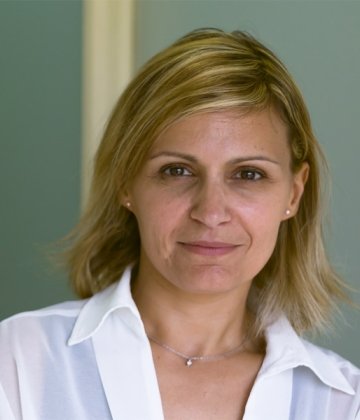
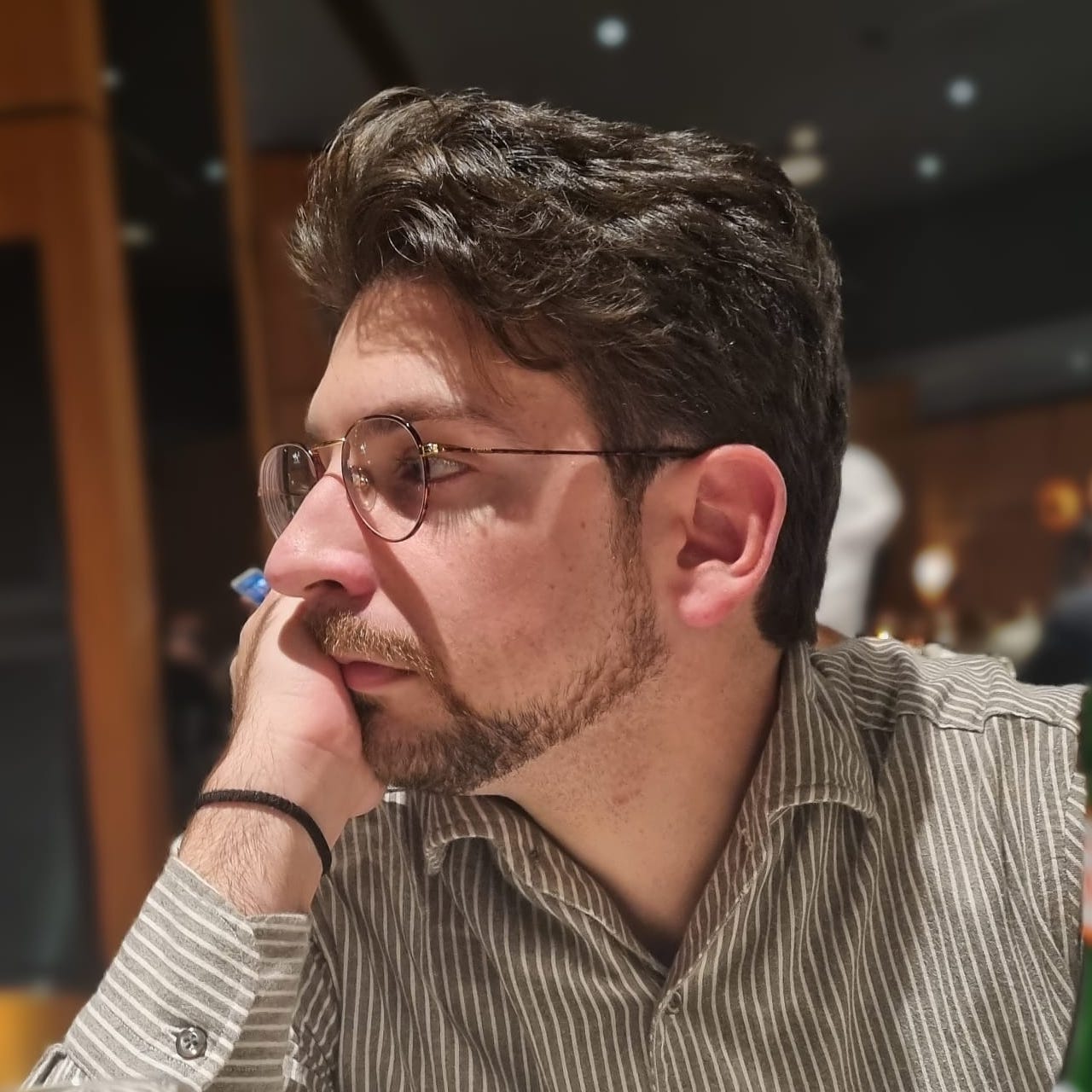
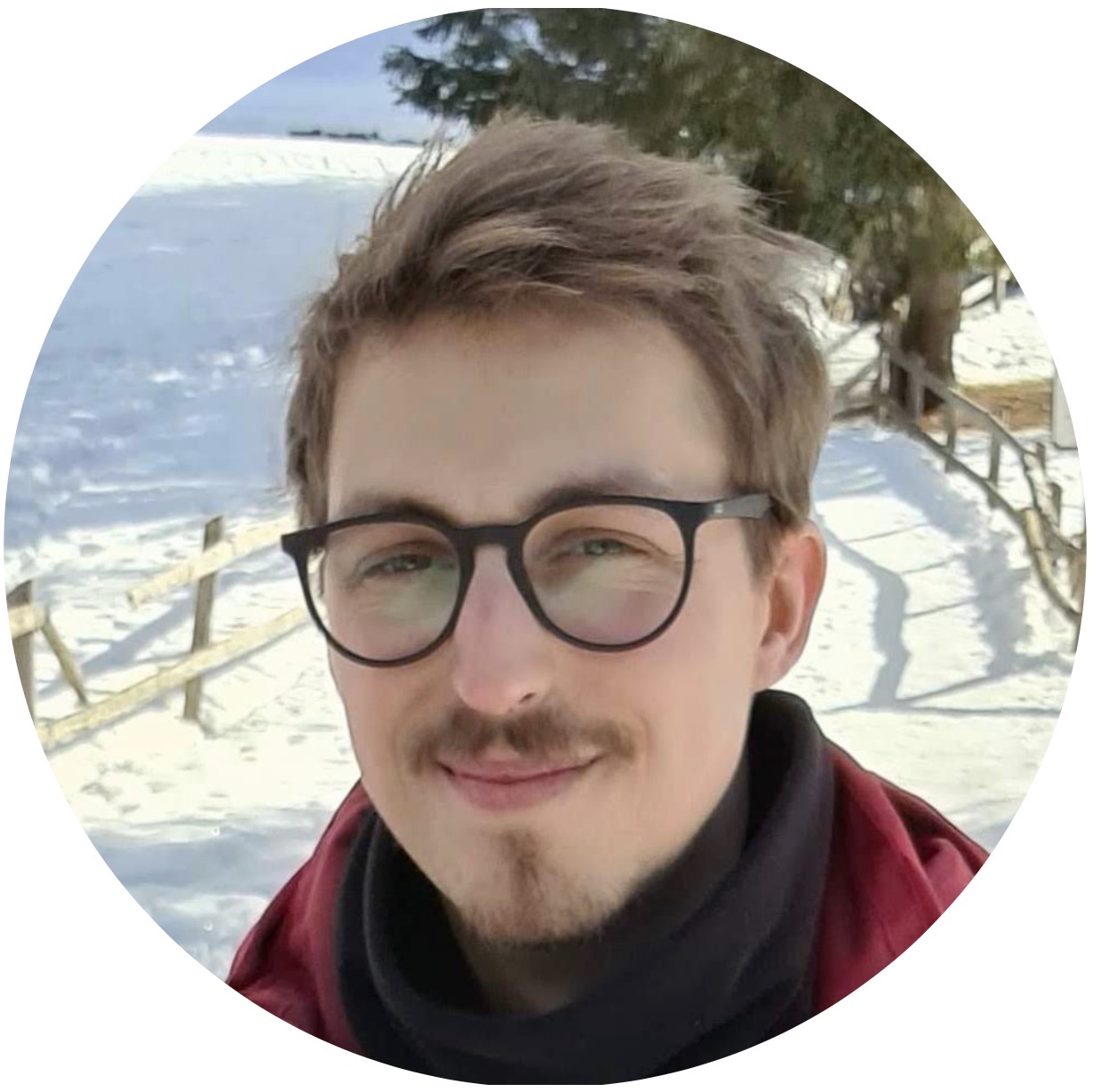
Antonio Ferrara is an Assistant Professor at Politecnico di Bari, affiliated with the Information Systems Lab (SisInf Lab). His research focuses on Artificial Intelligence (AI), Cybersecurity, Recommender Systems, and Trustworthy AI. Key contributions include frameworks like Elliot for reproducible AI evaluation, federated learning approaches for privacy, and knowledge graph integration in recommendation systems. He has organized conferences such as ICWE 2022 and workshops on Critical Infrastructures Security, SWEET Semantic Web, and CyberChallenge.IT. His work addresses AI fairness, privacy in recommendation systems, and adversarial attacks on ML systems. He actively contributes to interdisciplinary research at the intersection of software engineering, big data analysis, and ethical AI. Recent publications emphasize reproducibility in AI research, bias mitigation, and application of AI in healthcare (e.g., Alzheimer's diagnosis, cancer radiotherapy). His lab's activities span semantic technologies, cyber-physical systems security, and user-centric data control mechanisms.
Andrea Giglio is a Lecturer at the Department of Enterprise Engineering, Faculty of Engineering, Università degli Studi di Roma Tor Vergata (Italy). His research spans acoustic engineering, simulation modeling, and software systems, with a focus on sustainable materials, 3D textile technologies, and distributed simulation frameworks. Academic Affiliation: Department of Enterprise Engineering, Università degli Studi di Roma Tor Vergata Email: andrea.giglio@uniroma2.it Research Interests: Andrea Giglio’s work integrates acoustic engineering with simulation modeling and digital fabrication . His publications highlight innovations in: Acoustic Systems : Hybrid noise control materials, sound-responsive 3D spacers, and eco-friendly composites (wood/cork, hybrid bricks). Software Engineering : Model-driven approaches for distributed simulations, BPMN extensions, and cloud-based frameworks like E-MDAV for data-intensive applications. Sustainable Design : Decarbonization of architectural acoustics, patient-specific biomedical devices, and natural oxygen systems in landscape ecology. Publications Trends : His recent articles (2020–2024) emphasize the convergence of acoustic ecology , smart materials , and model-driven systems engineering , with applications in both industrial and healthcare domains.
Deborah Carolina Raccagni is a Lecturer in the Marketing Department at Bocconi University and Affiliate Lecturer at SDA Bocconi School of Management, where she serves as Program Director for the Diploma Program in Major Event Management in Qatar. She holds a PhD in Business Administration and Management from Bocconi University and is a Visiting Scholar at UCLA. Additionally, she has served as an Adjunct Professor of Marketing at Franklin College University in Lugano, Switzerland. Currently, she is Assistant Director of the Master of Science in Marketing Management. Her academic roles span teaching, program leadership, and visiting scholar collaborations. Education: PhD in Business Administration and Management, Bocconi University Research Interests: Her work focuses on event management, innovation, and digital technologies' impact on value creation. Key areas include content management, e-commerce omnichannel strategies, and experiential marketing. She explores how social media and new media reshape event strategies and consumer engagement. Teaching: She teaches courses such as Event and Mega Event Management, E-Commerce, Digital Marketing Lab, Strategic Marketing Analytics, and B2B Marketing. Her courses emphasize practical applications in digital transformation and event legacy creation. Awards: No specific scientific awards mentioned in the provided texts. Advising & Grants: While no specific grants or advising roles are detailed, her program directorship and curriculum design roles highlight her leadership in marketing education and event management training programs.
Gerardo Canfora is a Professor at the University of Sannio, holding his position in the Department of Engineering (DING). He currently serves as Rector of the University of Sannio, having assumed this leadership role as evidenced by his position in December 2024. His academic journey began with a degree in Electronic Engineering from the University of Naples 'Federico II' in 1989, followed by research positions at CNR and the University of Durham before joining academia. Professor Canfora's research focuses primarily on software engineering, with specializations in software evolution and secure software development. His work spans mobile computing, particularly Android applications, and the application of NLP techniques to software requirements. He has maintained a consistent research output for over two decades, with recent publications addressing contemporary challenges in AI security and software behavior analysis. His recent publications demonstrate a clear trajectory from foundational work in database security and software maintenance toward cutting-edge research in AI security, mobile application analysis, and social media manipulation detection. This evolution reflects the changing landscape of software engineering challenges, with Canfora maintaining relevance through adaptation to new technological paradigms while building on his core expertise in software quality and security. Professor Canfora has held significant leadership positions beyond his university role, including membership on the Executive Boards of multiple research consortia (ASI, ICT-SUD, CINI, CeR-ICT) and service on ANVUR's expert panel for research evaluation. His editorial work as Editor-in-Chief of the Journal of Software - Evolution and Process since 2011 further demonstrates his standing in the academic community. As Rector of University of Sannio, he has championed initiatives promoting gender equality, including the implementation of gender-sensitive language guidelines, the 'alias career' protocol for student identity recognition, and signing the 'No Women No Panel' memorandum with RAI. His leadership extends to community engagement through events like CO-SCIENZE and educational initiatives focused on software engineering.
Giuseppe Antonio Di Lucca is an Associate Professor at the University of Sannio, Department of Engineering. His research focuses on software engineering, reverse engineering, web applications, and aspect-oriented programming. He teaches courses including Databases and Elements of Computer Science for engineering students. Research Interests: His work spans model-driven engineering, design pattern detection, aspect mining, software maintenance, and web application testing. Key areas include: Reverse engineering methods for aspect mining in object-oriented systems Model-driven approaches for rapid prototyping of web applications Queue theory applications in software maintenance staffing Aspect-oriented frameworks for measurement systems Publication Trends: Di Lucca's 136+ publications emphasize software engineering innovations, with recent works focusing on model-driven design pattern detection (2013), aspect-oriented fault detection (2010), and web application testing techniques (2006). His research demonstrates consistent contributions to improving software quality through reverse engineering and aspect-oriented paradigms.
Marco Scotti is a Researcher at the National Research Council of Italy's Institute of Biosciences and BioResources (Florence division). With a Ph.D. and habilitation in Ecology, he specializes in ecological network analysis, marine ecosystem modeling, and climate change impacts on biodiversity. His career spans roles at GEOMAR Helmholtz Centre for Ocean Research Kiel and the Microsoft-University of Trento Centre for Computational and Systems Biology. Current affiliation: Institute of Biosciences and BioResources (IBBR-CNR), Florence Academic habilitation: Associate Professor in Ecology His research focuses on ecological network theory , marine biodiversity modeling , and climate change impacts on trophic systems . He develops computational tools for ecosystem-based fisheries management and has pioneered applications of network analysis in sustainability assessment. Recent work includes 15 high-impact publications on topics ranging from Baltic Sea fisheries to microbial community dynamics. Key methodological contributions involve qualitative loop analysis and stochastic food web simulations . Scientific Awards Young Researcher Special Prize, Italian Society of Ecology (2010) Roberto Marchetti Prize, Italian Society of Ecology (2007) Ph.D. Scholarship, Italian Ministry of University and Research (2005-2007) Supervises multiple PhD and M.Sc. students in ecological network analysis. Currently co-supervises projects on western Baltic Sea carbon sequestration and pelagic food web dynamics . Active in international panels including ICES/HELCOM Working Group and MODIV Working Group.
Stefano Lambiase is a researcher in Computer Science currently affiliated with Aalborg University in Denmark, where he holds an institutional email address (stla@cs.aau.dk). He earned his PhD in Computer Science from the University of Salerno at the Software Engineering Laboratory (SESA Lab), with a doctoral project titled "Longitudinal Data-Driven Software Project Management" focusing on the social and human aspects of Software Development and Management. His educational background includes: PhD in Computer Science from University of Salerno (2019-present) Master's Degree in Computer Science from University of Salerno (2019-2021), with thesis on "Cultural and Geographical Dispersion Impact on Communication and Collaboration of Software Development Teams" Bachelor's Degree in Computer Science from University of Salerno (2015-2019), with thesis on "Test Smell Detection and Suggestions (TESEUS)" Stefano's research interests center around the human and social dimensions of software engineering , with particular focus on cultural and geographical dispersion in software development teams, community smells (socio-technical anti-patterns), and their impact on productivity and software quality. His work bridges theoretical frameworks with practical applications, developing tools like CADOCS (a conversational agent for community smell detection) and DARTS (a test smell detection and refactoring plugin). He has also explored emerging areas including quantum software communities, metaverse development, and the integration of large language models in software engineering practices. His publication record demonstrates a consistent focus on socio-technical aspects of software development, with recent work examining cultural dispersion effects, community smells in various contexts (including machine learning systems and quantum computing), and educational applications in the metaverse. His research employs diverse methodologies including empirical studies, surveys, interviews, and tool development. Stefano has received recognition for his work, including a Best Paper Award at the 25th Euromicro Conference on Software Engineering and Advanced Application (SEAA 2022) for his paper "'There and Back Again?' On the Influence of Software Community Dispersion Over Productivity". He has been actively involved in the software engineering research community, serving on program committees for major conferences including ICSE-SEET 2024, SANER 2024, ICSEA 2023, MSR 2023, and SCAM-NIER 2023. Additionally, he served as Social Media and Web Chair for the Third Workshop on Gender Equality, Diversity, and Inclusion in Software Engineering (GE@ICSE 2022). Stefano has developed several research tools and projects: DARTS (Detection And Refactoring of Test Smells): An IntelliJ plugin for detecting and refactoring test smells CADOCS : A conversational agent for community smell detection and refactoring in Slack Erwin Bot : A chat bot for management support built with Azure Cloud Services BiblioNet : A Spring Boot Web App for library support QuantuMoonLight : A low-code platform to experiment with quantum machine learning SENEM : A software engineering-enabled educational metaverse SERGE : A serious game for risk management education in software project management
Andrea Facchinetti is an Assistant Professor in Bioengineering at the Department of Information Engineering, University of Padova, Italy. His research focuses on developing advanced algorithms for continuous glucose monitoring systems and diabetes management technologies, with significant contributions to both academic research and commercial applications through technology transfer to Dexcom Inc. Dr. Facchinetti received his Laurea Quinquennale (summa cum laude) in Information Engineering from the University of Padova in 2005, followed by a Ph.D. in Bioengineering from the same institution in 2009. After serving as a Postdoctoral Fellow from 2009 to 2014, he was appointed Assistant Professor in 2014. His primary research interests center around processing data from continuous glucose monitoring (CGM) sensors, with specific focus on: Algorithms for signal denoising using Kalman filters and Bayesian smoothing techniques Strategies to reduce or eliminate calibrations in CGM sensors Real-time detection of hypo/hyperglycemic events using neural networks and statistical approaches Modeling of CGM data error and transient faults Development of type 1 diabetes simulators for testing decision-making systems Retrospective retrofitting methods to improve glucose concentration profiles Analysis of Dr. Facchinetti's recent publications (2023-2025) reveals an expanding research scope beyond traditional diabetes management. His work now encompasses post-bariatric hypoglycemia, neonatal glucose monitoring, integration of AI in clinical decision support systems, and applications of continuous glucose monitoring in novel populations including multiple sclerosis and amyotrophic lateral sclerosis patients. His research demonstrates a clear trajectory from foundational algorithm development toward practical clinical implementation and user-centered design of diabetes technologies. Dr. Facchinetti has been involved in significant technology transfer activities, with multiple patents optioned by and transferred to Dexcom Inc., a leading continuous glucose monitoring company. His work has contributed to commercial CGM systems including the Dexcom G4. He has co-authored over 70 international conference papers and numerous journal publications in high-impact diabetes and biomedical engineering journals. His research group maintains active collaborations with clinical partners and industry stakeholders to translate algorithmic innovations into practical diabetes management solutions. Current projects include developing decision support systems for pediatric type 1 diabetes, addressing post-bariatric hypoglycemia through forecasting algorithms, and creating modular platforms for real-world data acquisition in clinical trials.
Francesco Tommasi is an Associate Professor at the Department of Innovation Engineering, University of Salento, where he teaches Operating Systems, System and Network Programming, and System Security courses for both undergraduate and graduate Computer Engineering programs. His academic affiliation spans multiple departments within the School of Engineering, focusing on the intersection of computer science, networking, and security. His current research interests center on computer security, with specific focus on authentication systems, web security, and mobile security. His past research includes Quality of Service for computer networks, IP mobility, satellite internetworking, and satellite distance learning technologies. Tommasi has made significant contributions to the field of cybersecurity, particularly in identifying and analyzing novel attack vectors including Browser-in-the-Middle attacks and MobileApp-in-the-Middle attacks. His recent publications (2021-2025) demonstrate a strong focus on cybersecurity challenges, particularly authentication vulnerabilities, web security threats, and mobile security issues. The research shows progression from fundamental network security concepts to more sophisticated attack methodologies targeting modern authentication systems and mobile platforms. His work bridges theoretical security concepts with practical attack demonstrations, contributing significantly to the understanding of security vulnerabilities in contemporary systems. Co-author of the first Internet Proposed Standard signed by an Italian university (RFC 2961) Co-author of attack #701 included in the CAPEC database of dangerous cyber attacks Scientific director of the Laboratory for Internetworking and Interoperability between Systems (LIIS) Co-scientific director of the Cybersecurity Research Lab Responsible for the Unisalento node of the CINI Cybersecurity National Lab Tommasi has directed numerous research projects funded by MIUR, European Space Agency, and regional authorities, including satellite distance learning initiatives, cybersecurity projects, and technology transfer initiatives. He created the Salento Satellite Campus and has been instrumental in developing satellite-based educational infrastructure. His laboratory work focuses on practical security testing and developing defensive mechanisms against emerging cyber threats. He leads the Laboratory for Internetworking and Interoperability between Systems (LIIS) and co-directs the Cybersecurity Research Lab, which focuses on practical security testing, vulnerability analysis, and developing defensive security mechanisms. These labs collaborate with national and international partners on cutting-edge cybersecurity research and implementation projects.
Paolo Liberatore is an Associate Professor in the Department of Computer, Control and Management Engineering at Sapienza University of Rome. His research focuses on knowledge representation and reasoning in artificial intelligence, with expertise in belief revision, abduction, computational complexity, and compilability. His educational background includes a Laurea in Computer Engineering (1994) and a PhD in Computer Engineering (1998) from Sapienza University of Rome. Liberatore's research spans several key areas of artificial intelligence. He has made significant contributions to belief revision, including the development of commutative operators for integrating information from multiple sources and efficient algorithms for knowledge revision. His work on abduction addresses diagnostic problems and the minimization of tests for identifying abductive explanations. In computational complexity, he has analyzed the complexity of reasoning about actions, belief update, and model checking. Additionally, he has pioneered work on compilability and compact representations of knowledge, showing how precompilation can reduce the complexity of AI problems. His recent publications (2015-2022) reflect a continued focus on belief merging, integration, and revision, with an emphasis on handling uncertainty and reliability of sources. The work spans theoretical foundations and practical applications in multi-agent systems and knowledge fusion. Liberatore has been recognized with several awards: CNR scholarship for new graduates (awarded twice) ECCAI Award for best European doctoral thesis in Artificial Intelligence (1998) Best Paper Award at the International Conference on Principles of Knowledge Representation and Reasoning (KR 2004) He has led and participated in numerous research projects, including the Italian-French coordinated project "Knowledge fusion and planning in multi-agent decision making" and the university project "Applications of artificial intelligence techniques to web services composition". His project portfolio also includes significant contributions to model checking, satisfiability, mobile robotics, multi-robot systems for emergency response, and verification of web services. Although not explicitly mentioned in the provided text, his extensive involvement in program committees (e.g., KR, ECAI, IJCAI) and editorial boards (e.g., Journal of Artificial Intelligence Research) underscores his active role in the AI research community.
Biagio Lenzitti is a Researcher at the Department of Mathematics and Computer Science , University of Palermo, School of Basic and Applied Sciences. He has taught courses like Programming and Laboratory , Computer Networks , and Educational Planning of Information Systems since at least 2015. Current Office Hours: Monday 9:00-11:00, Studio 201 Contact: biagio.lenzitti@unipa.it | +3909123891101 His research focuses on medical text simplification , patient empowerment , and interactive educational tools , including the development of systems like: MED-VTD: Multilingual Medical Dictionary SimpleHealth Platform: Medical Text Simplification Tools U-MedSearch: Meta Search Engine for Medical Content ETN-FETCH Project: Future Education in Computing Recent publications address AI-driven health information systems , IoT data sharing , and conversational agents for medical education. Key collaborations include the Anghelos Communication Studies Center and European networks like ETN-FETCH . He has supervised theses on topics spanning semantic web applications , open data , and network security since at least 2005.
Annamaria Bianchi is an Associate Professor of Economic Statistics at the University of Bergamo , specializing in web surveys, online panels, composite indicators, and social media data analysis. She holds a double PhD in Mathematical Statistics from the University of Milan and University Paris VI. Key affiliations: Member of the International Statistical Institute (ISI) , European Master in Official Statistics (EMOS) board member, and research associate at the Institute for Social and Economic Research (ISER) (University of Essex) and Carleton University Current role: Reference Professor for EMOS program at University of Bergamo Research Interests focus on: Improving representativity in non-probabilistic data collection Developing composite indicators for social and economic analysis Methodological innovations in web survey design Machine learning applications for social media data Economic statistics for local development and policy planning Scientific Awards : 2022: Italian Scientific Qualification (ASN) as Full Professor in Economic Statistics Current Research Initiatives : 2023: PRIN Project MYPEOPLE (NRRP) - Measuring inequality, poverty, and living conditions for local strategies
Valeria Caruso is a fixed-term researcher in the field of Modern Language Teaching (10/GLOT-01/B) at the University of Naples L'Orientale, Department of Literary, Linguistic and Comparative Studies. She teaches Multilingual Lexicology and Lexicography and Teaching Languages and Cultures in both undergraduate and graduate programs. Her research focuses on theoretical and applied linguistics, particularly lexicology, lexicography, lexicon-grammar interface, and phraseology. She has published extensively in these areas, including the 2025 monograph 'Tra lessico e grammatica: i verbi procomplementari' on procomplement verbs in Romance languages from a lexicalist perspective. Her recent work involves developing multimedia linguistic atlases on food vocabulary, particularly the ALMA project. Caruso has developed several digital lexicographic resources, including a meta-lexicographic portal and a multilingual Wikibase resource, with attention to educational applications like dictionaries of idiomatic expressions. She also researches educational technologies for linguistic education, Italian L2 teaching, and accessibility, with specific interest in inclusion processes related to deafness. She serves as the university representative for school activities within the European Researchers' Night (Marie Skłodowska-Curie Actions) and is a member of the editorial committee of AION - Linguistica and the scientific committee of the Studi AItLA series. Her research methodology emphasizes authentic data from surveys, tests, and corpora. Premio di Cultura 'Luigi Casati' (2005), conferred by O.N.A.O.S.I. and Accademia dei Lincei Caruso actively participates in Master's programs and qualification paths, focusing on technologies for linguistic education and lexical competence development. She has collaborated on innovative teaching projects at the University Linguistic Center and was a classroom tutor for the Apple Foundation Program for many years.
Leonardo Pellegrina is an Assistant Professor (RTT) at the Department of Information Engineering (DEI) of the University of Padua, where he joined in March 2023 and advanced to a tenure-track position in March 2025. He is a member of the AIDA Lab and previously completed his Ph.D. at the same institution under Prof. Fabio Vandin, with a visiting research period at Brown University's Department of Computer Science under Prof. Eli Upfal from December 2018 to July 2019. His research focuses on developing practical and theoretically sound algorithms for Data Mining and Computational Biology, with particular expertise in pattern mining, graph algorithms, and cancer phylogenetics. His work bridges theoretical computer science with real-world applications in biology and healthcare, emphasizing statistical rigor and computational efficiency. Analysis of his recent publications reveals a strong trend toward statistically-sound pattern mining with applications in computational biology. His research combines advanced sampling techniques, Rademacher averages, and hypothesis testing to develop efficient algorithms for large-scale data analysis, with significant contributions to cancer evolution modeling and metagenomics. His scientific achievements include: Teaching Award of Merit from University of Padova (November 2024) Honorable mention for 2021 SIGKDD Dissertation Award Best PC member of ACM The Web Conference 2023 Best PC member of ACM The Web Conference 2022 RECOMB 2019 Travel Fellowship Dr. Pellegrina has secured significant research funding including a Senior type B grant (December 2022) and a Junior type B grant (December 2020) from the Department of Information Engineering. His collaborative work includes supervision of students like Sijing Tu and extensive collaboration with researchers including Fabio Vandin, Matteo Riondato, and Diego Santoro. As part of the AIDA Lab at the University of Padua, he contributes to a vibrant research environment focused on data science and artificial intelligence applications, with particular emphasis on biomedical data analysis and algorithm development.
Walter Didimo is a Full Professor of Computer Engineering at the University of Perugia, with a career spanning over two decades. His expertise lies in Graph Drawing, Network Visualization, and Algorithm Engineering, contributing to advancements in Computational Geometry and Big Data. Researcher in Graph Algorithms (1996-2000) Assistant Professor (2001-2004), Associate Professor (2005-2024), Full Professor (2024-) Director of Research Unit CINI (2019-2022) His research focuses on hybrid graph visualization models (e.g., ChordLink), distributed graph processing (e.g., GiViP), and practical applications in cultural heritage (e.g., CHIP) and web analytics (e.g., COWA). Recent work includes scalable algorithms for heterogeneous networked data and visual analytics for genomics (GGB Consortium). Scientific Awards: Best Paper Award - Track 2, Graph Drawing 2021 He has been instrumental in technology transfer, co-founding Vis4 Srl (2009) and contributing to the GGB Consortium. His editorial roles include Associate Editor of IEEE Access and guest editorships for CGTA and JGAA.