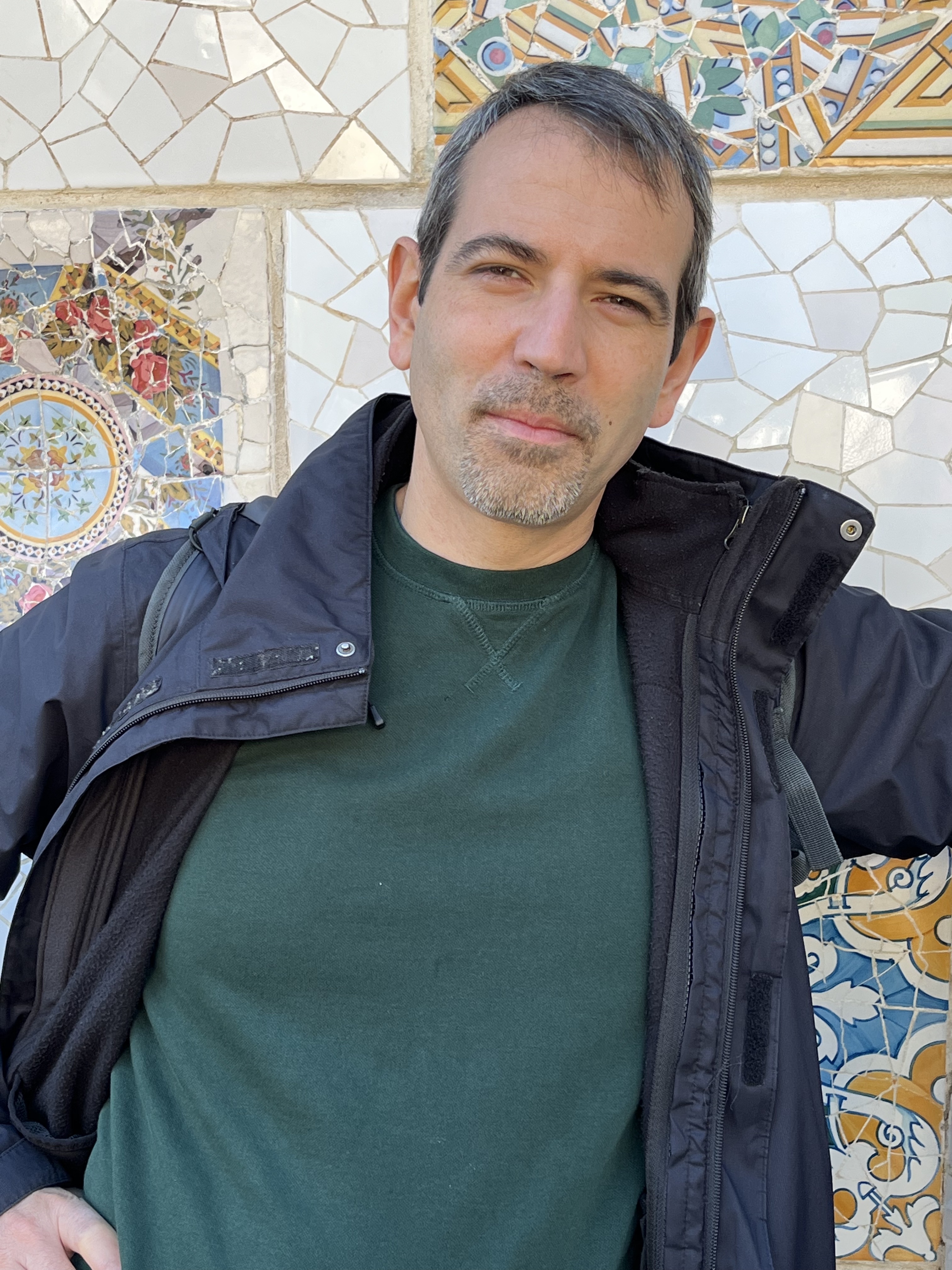
معرفی
Paolo Liberatore is an Associate Professor in the Department of Computer, Control and Management Engineering at Sapienza University of Rome. His research focuses on knowledge representation and reasoning in artificial intelligence, with expertise in belief revision, abduction, computational complexity, and compilability.
His educational background includes a Laurea in Computer Engineering (1994) and a PhD in Computer Engineering (1998) from Sapienza University of Rome.
Liberatore's research spans several key areas of artificial intelligence. He has made significant contributions to belief revision, including the development of commutative operators for integrating information from multiple sources and efficient algorithms for knowledge revision. His work on abduction addresses diagnostic problems and the minimization of tests for identifying abductive explanations. In computational complexity, he has analyzed the complexity of reasoning about actions, belief update, and model checking. Additionally, he has pioneered work on compilability and compact representations of knowledge, showing how precompilation can reduce the complexity of AI problems.
His recent publications (2015-2022) reflect a continued focus on belief merging, integration, and revision, with an emphasis on handling uncertainty and reliability of sources. The work spans theoretical foundations and practical applications in multi-agent systems and knowledge fusion.
Liberatore has been recognized with several awards:
- CNR scholarship for new graduates (awarded twice)
- ECCAI Award for best European doctoral thesis in Artificial Intelligence (1998)
- Best Paper Award at the International Conference on Principles of Knowledge Representation and Reasoning (KR 2004)
He has led and participated in numerous research projects, including the Italian-French coordinated project "Knowledge fusion and planning in multi-agent decision making" and the university project "Applications of artificial intelligence techniques to web services composition". His project portfolio also includes significant contributions to model checking, satisfiability, mobile robotics, multi-robot systems for emergency response, and verification of web services.
Although not explicitly mentioned in the provided text, his extensive involvement in program committees (e.g., KR, ECAI, IJCAI) and editorial boards (e.g., Journal of Artificial Intelligence Research) underscores his active role in the AI research community.