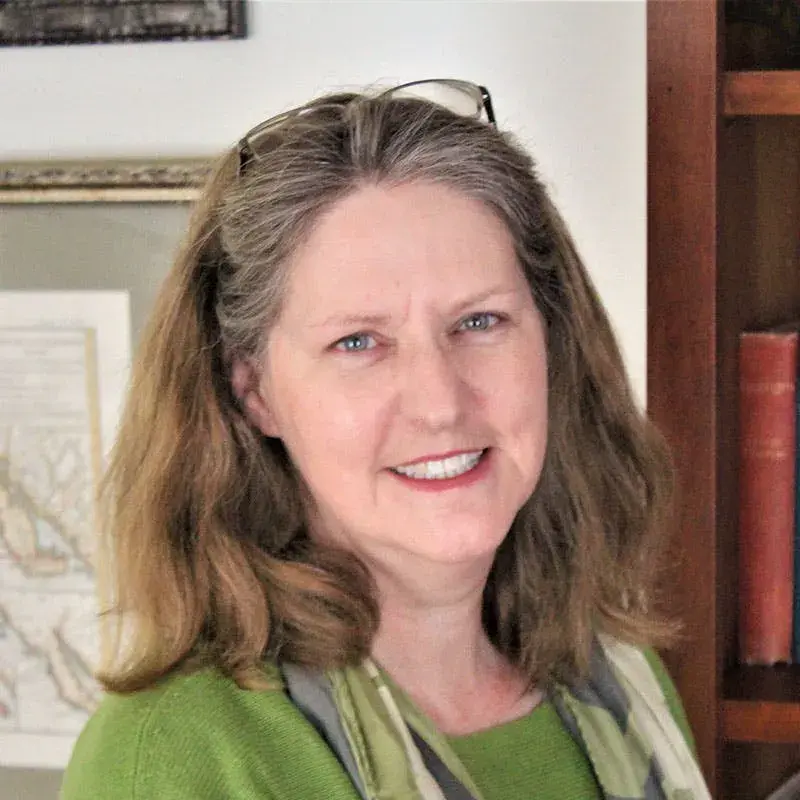
Alison Louise Bailey is a Professor and Division Head in Human Development & Psychology at UCLA's Graduate School of Education and Information Studies. She specializes in developmental psycholinguistics, focusing on multilingual education, academic language pedagogy, and assessment practices for English learners. Education: Ed.D. and Ed.M. from Harvard University; B.A. (Hons) in Linguistics with a minor in American Literature from The University of Hull, England Her research explores language learning progressions, equity in educational assessment, and the intersection of language with STEM disciplines. She leads two U.S. Department of Education-funded ExcEL Peer Network projects and collaborates on NSF and W.T. Grant Foundation grants. Recent publications emphasize translanguaging, automated language assessment, and bias mitigation in educational technologies. Her work integrates Bayesian modeling for dual-language immersion outcomes and examines racial injustices in assessment systems. Awards: Bobbie and Mark Greenfield Distinguished Faculty Award, Haynes Foundation Faculty Fellow, Harold and Lois Haytin Award, Ann C. Rosenfield Distinguished Community Partnership Prize She contributes to national assessment policy as a NAEP Reading Standing Committee member and NCME Classroom Assessment Task Force Co-Chair, advocating for culturally responsive assessment frameworks.
Elvis Wagner is an Associate Professor in the Department of Teaching and Learning at Temple University's College of Education and Human Development, specializing in second language oral communicative competence and listening comprehension assessment. His research examines how L2 listeners process spontaneous spoken language versus scripted classroom materials. Research interests include: Assessment methodologies for language proficiency Bilingual/bicultural education dynamics Language comprehension and development in second language acquisition Authentic spoken text applications in testing His publication trends reveal sustained focus on language testing innovation (2020-2025), with 5 of 7 recent articles addressing L2 listening comprehension, pandemic-era testing adaptations, and technology-driven assessment tools like the Duolingo English Test. Key journals include Language Assessment Quarterly and Journal of Asia TEFL. Scientific recognition includes: International Language Testing Association's 'Best Article in Language Testing' award (2008) for 'Video Listening Tests: What are They Measuring?' Dr. Wagner actively advises TESOL and world languages students while teaching courses spanning undergraduate methods (MGSE 4427/4428) to graduate assessment (TESL 8636). His work demonstrates significant grant activity in language testing validation and pandemic-responsive assessment design, though specific grants aren't detailed in the source text. Current research addresses evolving challenges in language assessment, including AI-driven testing platforms and cross-cultural validation of listening comprehension metrics.
Gabriel Cipriano is a Visiting Professor in the Department of Social Research Methods at the School of Sociology and Public Policy (ESPP), Iscte – Instituto Universitário de Lisboa, and a researcher at CIES-Iscte (Center for Research and Studies in Sociology). He is currently a PhD Scholarship Holder, with a doctorate in School Administration and Management Policies expected in 2025. Educational Background: PhD in School Administration and Management Policies, Iscte (2025) Postgraduate in Data Analysis in Social Sciences, Iscte (2022) Master’s in School Administration, Iscte (2019) Bachelor’s in Teaching in Music Education, ESELx (2007) His research centers on educational assessment, learning evaluation, research data management in social sciences, and public education policy evaluation. He investigates school administration policies, mobility policies, and the impact of crises—particularly the COVID-19 pandemic—on assessment systems. His work emphasizes equity, digital transformation, and teacher professional development. The trends in his scholarly publications reflect a strong focus on the transformation of educational assessment during and after the pandemic, the integration of technology (including AI), and teacher beliefs. His recent work explores the readiness of national systems for digital assessment, the ethical and practical implications of AI in classrooms, and the perceptions of school leaders regarding policy changes. Scientific Awards: No awards explicitly mentioned. Research and Advising: Gabriel is actively involved in research projects such as the Research Data Management Center for the Social Sciences and Humanities (RDMC-SSH) and Re.Data , focusing on infrastructure for SSH data. He has worked under the supervision of Susana da Cruz Martins on pandemic-related assessment impacts. While no formal students are listed, his role suggests potential mentoring within research teams. Labs and Research Groups: He is affiliated with CIES-Iscte, a leading sociology research center, contributing to projects on educational policy and data governance.
Anthony Green is a Professor of Language Assessment and Director of the Centre for Research in English Language Learning and Assessment (CRELLA) at the University of Bedfordshire. He has over 15 years of leadership in CRELLA and extensive experience in test development, validation, and educational research. Research Interests: Assessment of written language, washback effects, CEFR alignment, and relationships between assessment, learning, and teaching Professional Roles: Fellow of the Academy of Social Sciences (2023), former ILTA President (2015-16), ALTE Quality Management Working Group co-chair Editorial Service: Language Testing, Assessing Writing, Language Assessment Quarterly, and other journals Contact: tony.green@beds.ac.uk | +44 (0)1582 489086 His research focuses on how language assessment influences pedagogy, with particular emphasis on writing evaluation and the ecological impacts of testing frameworks. Current supervision areas include washback effects, CEFR-aligned assessments, and reading/writing test development. Recent publications examine test design trends, washback theories, and practical applications in language assessment. He has supervised 13 PhD students to completion and currently mentors three active researchers.
Liying Cheng is a Professor in the Faculty of Education at Queen's University. She specializes in language assessment, second language testing, and the impact of large-scale testing on education systems. Her work emphasizes washback effects and the academic integration of international students. She holds a PhD in Language Assessment from the University of Hong Kong and an MA in Teaching English as a Foreign Language from the University of Reading. Education History: PhD (1997): Language Assessment, University of Hong Kong MA (1993): Teaching English as a Foreign Language, University of Reading Research Interests: Global impact of standardized testing Educational equity and assessment fairness Language acculturation of immigrant professionals Classroom assessment practices in multilingual contexts Her landmark studies on washback theory have reshaped understanding of how testing influences teaching and learning. Notable contributions include analyzing the TOEFL iBT, CELPIP, and Gaokao systems. Scientific Awards: TOEFL Award for Outstanding Dissertation (1998) TESOL Leadership Mentoring Award (2002) Advising & Grants: Over 1.8M CAD in research funding since 2000, with over 230 conference presentations and 150+ publications. Current roles include Faculty Director of the Assessment and Evaluation Group at Queen's. Labs/Teams: Lead researcher in language assessment at Queen's, collaborating with institutions globally on testing policy and implementation.
Slobodanka Dimova is a Professor of Multilingualism and Language Assessment at the Centre for Internationalisation and Parallel Language Use (CIP) , University of Copenhagen. Her work bridges language policy, assessment literacy, and English-medium instruction (EMI) in higher education. Faculty: Faculty of Humanities Department: Department of English, Germanic and Romance Studies Research Focus: Dimova investigates EMI's impact on teaching practices, test development (e.g., TOEPAS validation), and language assessment literacy for multilingual educators. She emphasizes holistic rating scales and multilingual pedagogy. Grants & Collaborations: Leads projects funded by the Independent Research Fund Denmark (2023-2027, 2014) and ERASMUS+ Strategic Partnerships (2017-2020, TAEC project). Serves as President of EALTA (2023-present) and Editor for Language Testing and Journal of English as a Medium of Instruction . Scientific Awards: Nominated for University of Copenhagen's Innovation Prize 2017 (TOEPAS test)
Kwangmin Lee is an Assistant Professor in the Department of Special Education and Literacy Studies at Western Michigan University, where he specializes in TESOL and language assessment. His research integrates quantitative methodologies with applied linguistics to advance understanding of second language reading and writing assessment. Research Interests: Dr. Lee's work centers on language testing and assessment, particularly using statistical and psychometric approaches to analyze second language learners’ performance. His expertise includes educational measurement, research methods in TESOL, and the validation of assessment tools. He investigates areas such as automated writing evaluation, rater reliability, test motivation, and the cognitive aspects of reading and writing in EFL contexts. The recent publications highlight a strong trend in psychometrics, validity, and the application of advanced quantitative techniques—including item response theory, confirmatory factor analysis, and machine learning—to problems in language assessment. His work frequently appears in top-tier journals such as Language Testing , Assessing Writing , and System . Scientific Contributions: Published in leading journals in applied linguistics and language assessment Focused on improving the validity and reliability of language tests Developed and validated assessment instruments for writing self-efficacy and critical thinking Explored technological and cognitive dimensions of language learning and testing Advising and Grants: While specific students or funded grants are not mentioned in the available text, Dr. Lee’s research profile suggests active mentorship potential in quantitative research methods and language assessment. His methodological rigor positions him to lead or contribute to large-scale research initiatives, particularly those involving data-driven evaluation of language programs. Labs and Research Teams: There is no explicit mention of a lab or research team in the provided information. However, his interdisciplinary focus on measurement, statistics, and language learning suggests potential collaboration with educational research centers or language technology initiatives.
Leonardo Veliz is an Associate Professor in Learning, Teaching and Inclusive Education at the University of New England (UNE), Australia, affiliated with the School of Education within the Faculty of Humanities, Arts, Social Sciences and Education. He holds the administrative role of Head of Department – Curriculum and has over 15 years of academic experience across international contexts including the UK, South America, and Australia. His educational background includes a Cert. IV in TESOL, B.A., BEd (Secondary), M.A., and Ph.D. He teaches in key areas such as Inclusive Education, Teaching for Cultural Diversity, Planning and Assessment, Language and Literacy, and TESOL. Leonardo's research focuses on multilingual and multicultural education, with emphasis on culturally responsive pedagogies for EAL/D learners, multiliteracies, translanguaging, and initial language teacher education. His work bridges theory and practice in diverse educational settings. The 15 most recent publications demonstrate a consistent focus on equity, inclusion, and innovation in language education. His research spans teacher preparedness, assessment practices, multimodality, metaphor in teaching, and the academic experiences of international and migrant students. Key trends include the use of translanguaging for social justice, technology integration in EAL/D classrooms, and critical analysis of assessment and pedagogy in Chilean and transnational contexts. He has supervised Master’s and Ph.D. students in areas including language assessment, teacher readiness, multimodality, differentiated assessment, and intercultural competence. While no formal scientific awards are listed, his extensive editorial work—including forthcoming edited volumes with Brill, IGI Global, Springer, and special issues—reflects significant scholarly contribution and leadership. Leonardo is actively engaged in research and supervision, with no indication of retirement or part-time status. He is a member of the International Association of Multilingualism and maintains scholarly profiles on Google Scholar and ORCID. His work continues to influence inclusive and equitable practices in multilingual education globally.
Dr. Khaled El Ebyary is a Lecturer in Language Education at the University of York (since 2015) and a member of the Centre for Advanced Studies in Language and Education (CASLE). He serves as MA Language Pathway Deputy Director, StAMP Team Leader, and International Theme Lead in the Department of Education. BA in Education Diploma in Curriculum Design MA in TESOL PhD in Education and Applied Linguistics (Newcastle University, UK) His research focuses on language testing, integration of Computer-Assisted Language Learning (CALL) and AI technologies, automated feedback systems, and teacher training. He has presented work at international conferences in the UK, USA, UAE, France, Spain, Sweden, Japan, Iceland, Austria, and Egypt. Dr. El Ebyary has acted as a subject-matter expert and consultant for universities in the UK, Saudi Arabia, and Egypt, supporting professional development in education. His roles include leadership in the StAMP Team and as International Theme Lead at York.
Professor Ying Zheng serves as a Professor in Languages, Cultures & Linguistics at the University of Southampton , where she also holds the position of Director of Postgraduate Recruitment & Admissions within the School of Humanities. Additionally, she is the UK Director of the Confucius Institute , contributing to Chinese language education initiatives. Specializes in psychometrics, test validation, and statistics in applied linguistics Previously worked as Psychometrician and Director of Research at Pearson (2009-2013) PhD and MEd from Queen's University, Canada Her research focuses on human vs. machine scoring, comparative judgment in language testing, Mandarin exams in the UK system (A-Level/GCSE), ESL/EFL learner characteristics, and teacher professional development. She leads projects with AHRC and University of Southampton funding, including automated scoring models and AI applications in essay assessment. Recent scientific publications examine CEFR alignment, PTE Academic revisions, and global language scale development. Current work explores AI-integrated feedback systems and psychometric models for English and Chinese language assessment. Awarded UK Higher Education Academy Fellow (2015) Supervises PhD students in iPhD Applied Linguistics/ELT and PhD Modern Languages programs
Bruno D. Zumbo is a Distinguished University Scholar and Professor at the University of British Columbia (UBC), holding the Tier 1 Canada Research Chair in Psychometrics and Measurement. He is affiliated with the Faculty of Education, specifically within the Department of Educational and Counselling Psychology, and Special Education (ECPS), where he leads the Measurement, Evaluation, and Research Methodology (MERM) Program. Additionally, he is a member of the Institute of Applied Mathematics at UBC. Professor Zumbo is on sabbatical from September 1, 2025, to August 31, 2026. Professor Zumbo's scholarly work spans mathematical science, statistics, and psychometrics, with a focus on understanding the mathematical and conceptual nuances of measurement, test theory, and social surveys. His academic journey began as an Assistant Professor in 1990 at the University of Ottawa, with subsequent professorships at the University of Northern British Columbia before joining UBC in 2000. His educational background includes training in mathematical sciences, with his first peer-reviewed publication appearing in 1987. Dr. Zumbo's research interests center on psychometrics and statistical methods, with particular emphasis on validity theory and validation practices, measurement invariance and item bias, robustness of statistical methods to assumption violations, and development of nonparametric, Bayesian, and adaptive alternatives. His work bridges mathematical science with practical applications in international assessment, language testing, and quality of life research. His core research program explores mathematical formulations of mental test theory using measure theory, probability theory, and functional analysis, along with geometry of multivariate statistics, Bayesian analysis, and various test theories. Professor Zumbo's extensive publication record includes over 400 scholarly works, with recent research focusing on validity frameworks, measurement theory, statistical methods, and applications in health psychology and educational assessment. His work demonstrates a consistent integration of mathematical rigor with practical measurement concerns across diverse domains. Elected full member of Sigma Xi, The Scientific Research Honor Society (2022) Canada Research Chair in Psychometrics and Measurement – Tier 1 (2020) Paragon UBC Professorship in Psychometrics & Measurement (2015-2024) Centenary Medal of Distinction (2019) Pioneer in the Psychometrics of Quality of Life by the International Society for Quality of Life Studies (2018) Distinguished University Scholar, UBC (2017) Killam Research Prize, UBC (2017) UBC Killam Teaching Prize (2012) As director of the Edgeworth Laboratory for the Mathematical Sciences of Psychometrics and Measurement, Professor Zumbo leads research on cross-disciplinary topics in psychometrics. His grant funding totals approximately $9.9 million since 2000, with recent highlights including $2.8 million from the Canada Research Chairs Program and $3.3 million from the UBC-Paragon Research Agreement. His research has practical applications across education, health, and social sciences, with particular emphasis on ensuring measurement validity and fairness in diverse contexts.
Miss Jingwen Wang is a researcher at the University of Southampton specializing in L2 pronunciation assessment, Adaptive Comparative Judgment, and statistics in applied linguistics. Her work focuses on language testing methodologies, particularly within the CEFR framework and Pearson Test of English (PTE) Academic. Her research explores: Speech intelligibility evaluation AI-driven speaking assessment tools Test validity and washback effects Comparative judgment methodologies Recent publications analyze PTE Academic test revisions, peer feedback mechanisms, and CEFR phonology descriptors. She has presented at international conferences on these topics since 2022. Her external roles include speaking engagements on assessment frameworks: 2024: Forum on washback effects 2024: Speech intelligibility constructs 2023: Adaptive Comparative Judgment for peer marking 2023: CEFR phonology descriptors 2022: Comparative judgment for L2 speech
Bekir Ateş serves as a Lecturer in the English Preparatory Division at Bogazici University's Anadolu Hisari Campus, Istanbul, specializing in English language instruction for academic preparation. His role bridges teaching and research in language assessment methodologies. His educational qualifications include: M.A. in Foreign Language Education, Bogazici University (2018) B.A. in Foreign Language Education, Bogazici University (2008) Research centers on text difficulty validation for English for Academic Purposes (EAP), where automated analysis tools are cross-verified with expert judgments. His work addresses critical gaps in assessment literacy, washback effects in speaking tests, and non-visual listening exam design, emphasizing practical applications for curriculum development. Recent presentations reveal an evolving trajectory from specific test modalities (2013-2014) toward integrated frameworks combining human expertise with computational methods (2017-2019), particularly in text suitability determination for EAP contexts. Key recognition includes: British Council 2018 Research into Reading Grant for validating text analysis indices across contexts His grant-funded research demonstrates commitment to evidence-based assessment practices, though no student advisement or laboratory affiliations are documented. Collaborative projects with colleagues like Ünaldı, Weir, and Akıncı highlight team-based scholarship in language testing.
Lambrini Loumbourdi is a Senior Lecturer in Teaching English as a Foreign Language (TEFL) at the English Department of Justus Liebig University Giessen . She specializes in inclusion, teacher professionalization, and assessment in primary and secondary English education. Education: MA in TEFL/TESL (University of Birmingham, 2000), PhD (Goethe University Frankfurt, completed 2014) Key Roles: Supervising teacher practicums, conducting seminars on inclusion, and leading research on standardized testing impacts Her research focuses on inclusive educational practices for students with Special Educational Needs (SEN), the washback effect of standardized exams on pedagogy, and task-based language teaching . She has developed assessment frameworks through the PEAK1 project and collaborates with international academic networks (DGFF, EALTA). Recent publications analyze inclusive teacher mindsets, speaking assessment in primary schools, and standardized testing impacts. Her work bridges classroom practice with policy-level educational reforms. She is a member of the Deutsche Gesellschaft für Fremdsprachenforschung (DGFF) and EALTA, with extensive teaching experience across elementary, high-school, and vocational settings.