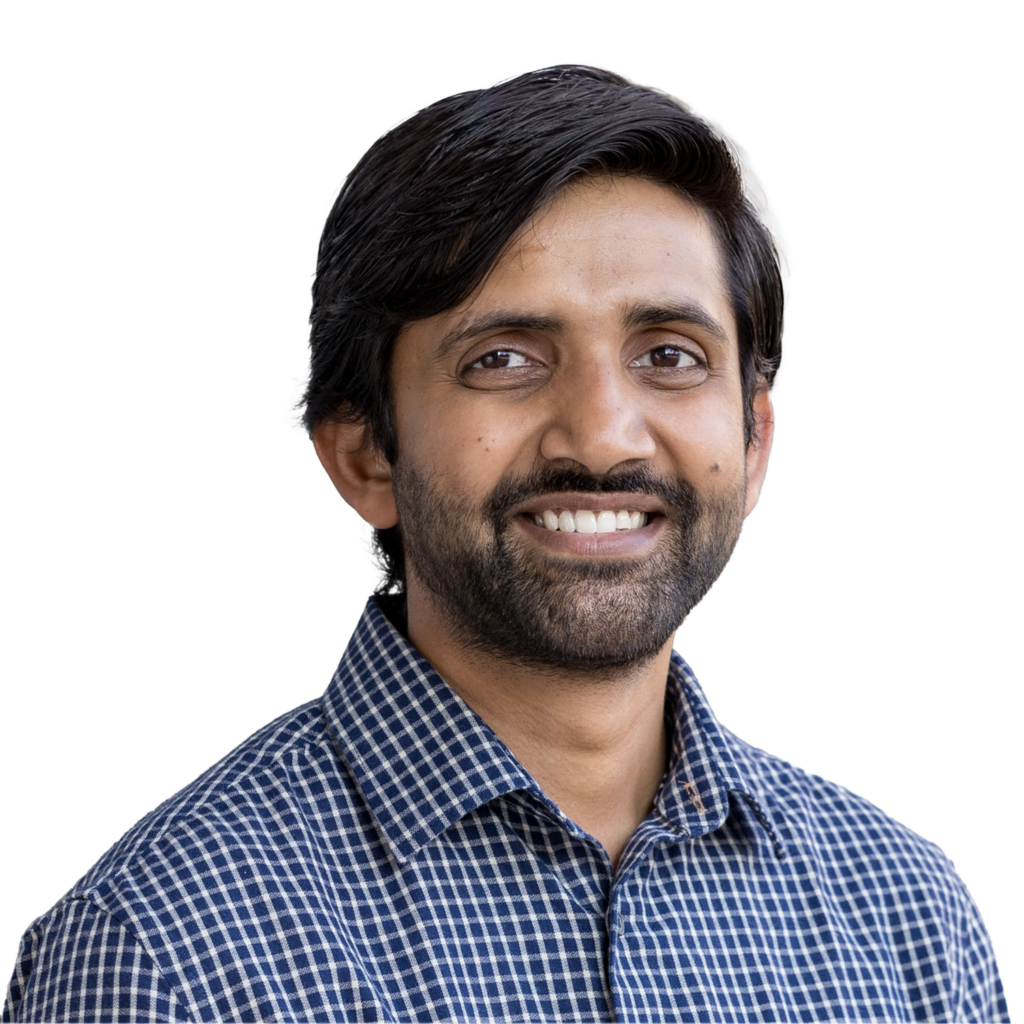
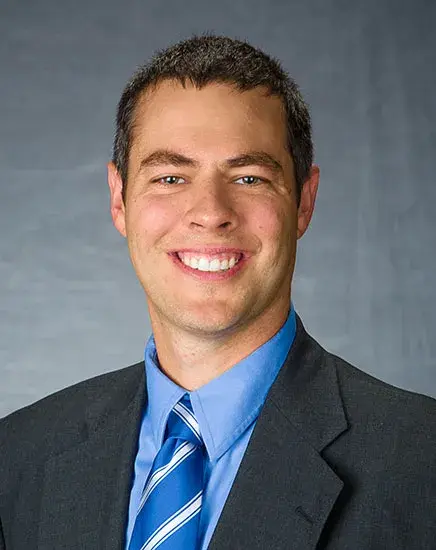
Robert Bass is a Professor in the Department of Electrical & Computer Engineering at Portland State University , where he established and directs the Power Engineering Research Group. His work addresses critical challenges in utility-sector power systems and distributed energy resources. Research Focus: DER aggregation, grid cybersecurity, EV charging impacts, and distribution system optimization Industry Partnerships: Collaborations with Portland General Electric, Bonneville Power Administration, Pacific Northwest National Labs, and others Courses Taught: EE 347/348 Power Systems I/II, EE 4/530 Analytical Methods for Power Systems, ECE 411-413 Senior Project sequence Education: Ph.D. in Electrical Engineering from the University of Virginia.
Manish Singh is an Assistant Professor in the Department of Electrical & Computer Engineering at the University of Wisconsin-Madison. His work focuses on advancing power systems and energy networks through the integration of optimization, control theory, and machine learning. He holds a PhD from Virginia Tech (2021), MS from Virginia Tech (2018), and BS from IIT Varanasi (2013), with prior industry experience in the power sector (2013–2016). Research Interests: Modeling, optimization, and control of power systems; data-driven methods for energy networks; and interdisciplinary approaches for natural gas and water systems. Notable contributions include physics-informed machine learning for voltage stability, grid-forming inverter dynamics, and topology-aware control strategies for distributed energy resources. Education: PhD in Electrical Engineering, Virginia Tech (2021) MS in Electrical Engineering, Virginia Tech (2018) BS in Electrical Engineering, Indian Institute of Technology, Varanasi (2013) Recent work emphasizes smart grid resilience, low-frequency oscillation mitigation, and self-supervised learning algorithms for system modeling. His research has been recognized with awards such as the ABB Research Award (Top 5 Finalist, 2022) and the Blackwell Graduate Research Award (Second Prize, 2022). Notable Awards: 2022 ABB Research Award Finalist 2022 Blackwell Graduate Research Award 2019 INFORMS ‘Frame that Problem’ Winner 2007 KVPY Fellowship (Government of India) Teaching Activities: Courses include Signals and Systems (E C E 330), Electric Power Systems (E C E 427), and Advanced Independent Study (E C E 699). His academic contributions extend to collaborative projects on grid-forming inverters and energy network interoperability through the UNIFI Consortium.
Aaron Cramer is a Professor and Department Chair at the University of Kentucky 's Stanley and Karen Pigman College of Engineering , holding the TVA Professorship in Electrical and Computer Engineering. His work focuses on simulation, control, and optimization of power and energy systems , with applications in electric vehicles, renewable energy integration, and fault-tolerant design. PhD: Purdue University (Electrical Engineering, 2007) BS: University of Kentucky (Electrical Engineering, 2003) His research spans: Advanced axial flux permanent magnet machines for EV traction Smart grid control with Volt-Var optimization Power electronics for wide bandgap (WBG) semiconductor devices Electric ship systems modeling and optimization Capacitive deionization energy recovery Recent work trends include non-linear modeling of vernier machines, multi-period power flow analysis for shipboard systems, and chance-constrained optimization for solar PV integration. Articles also address sensorless control for coreless AFPM machines and hybrid energy storage architectures .
Dionysios Aliprantis is a Professor of Electrical and Computer Engineering at Purdue University's Elmore Family School of Electrical and Computer Engineering. His research focuses on electric machines and drives, power systems, integration of renewable energy sources, electric transportation, and smart grids. He holds a Diploma in Electrical and Computer Engineering from the National Technical University of Athens (1999) and a PhD from Purdue University (2003). His work emphasizes advancing dynamic wireless power transfer technologies, microgrid stability, and optimal power flow methodologies. Recent contributions include full-scale testing of pavement-embedded charging systems and predictive control strategies for grid resilience. Dr. Aliprantis' research bridges computational electromagnetics with practical energy systems, addressing challenges in electric vehicle infrastructure and renewable energy integration. He leads projects on real-time charging control, fault detection, and robust grid operations under high uncertainty. Notable projects include pilot implementations of dynamic wireless power transfer lanes and agent-based modeling for smart grid functionality. His collaborations span academia, industry, and government, aiming to enhance grid resilience and support sustainable transportation systems. Dr. Aliprantis' work is supported by grants focusing on energy-transportation system interdependencies and advanced power electronics curricula.
Dr. Li Li is an Associate Professor in the School of Electrical and Data Engineering at the University of Technology Sydney (UTS). She holds a Ph.D. from the University of California, Los Angeles (UCLA), with prior research roles at the University of New South Wales and National ICT Australia. Her expertise spans control theory, power system control, and renewable energy integration. Dr. Li’s research focuses on advancing smart grid technologies, electric vehicle infrastructure, cybersecurity in microgrids, and sustainable energy systems. Education: B.S., Huazhong University of Science and Technology M.S., Tsinghua University Ph.D., University of California, Los Angeles Research Interests: Dr. Li’s work addresses challenges in power system stability, renewable energy deployment, and grid resilience. Key themes include optimizing EV charging infrastructure, integrating hydrogen storage, and developing advanced control frameworks for microgrids. Her recent contributions highlight predictive maintenance using deep learning, cybersecurity mitigation strategies, and stochastic scheduling in multi-microgrid systems. Publications: Over 300 peer-reviewed articles, with a focus on high-impact journals like Applied Energy and Energies . Key trends include EV charging optimization, microgrid cybersecurity, and renewable integration strategies. Grants & Supervision: Actively supervising Masters and PhD students. Available for collaborative projects, industry partnerships, and academic leadership roles. Specializes in guiding research on sustainable energy systems and grid technologies. Labs/Teams: Core member of UTS’s Electrical Engineering research groups, contributing to interdisciplinary projects on smart grids and energy resilience.
Guido Cavraro is a Researcher at the National Renewable Energy Laboratory (NREL) within the Power Systems Engineering Center. His work focuses on control and optimization of networked energy systems, particularly addressing grid modernization challenges. PhD in Information Engineering from University of Padua Master's and Bachelor's in Automation/Information Engineering from University of Padua Research interests include: Control and optimization of networked systems Asynchronous control and estimation for energy systems Resilient power system operations Recent publications examine decentralized energy markets, dynamic pricing models, feedback control for climate systems, and ML-based grid controllers. Collaborations span institutions like Virginia Tech and IEEE organizations.
Akihisa Kaneko is an Assistant Professor at Waseda University's Faculty of Science and Engineering and a Junior Researcher at the Advanced Collaborative Research Organization for SmartSociety. His research focuses on power systems engineering with particular emphasis on integrating renewable energy sources into electrical grids. Dr. Kaneko received his Doctor of Engineering from Waseda University in 2021, following his studies in Electrical Engineering and Bioscience at the Graduate School of Advanced Science and Engineering. His academic journey at Waseda spans from his undergraduate studies (2012-2016) through his doctoral work (2018-2021). Dr. Kaneko's research interests center around power engineering, with specific focus on energy management systems, photovoltaic power generation, smart grid technologies, and voltage control in both transmission and distribution systems. His work addresses critical challenges in modern power systems, particularly the integration of renewable energy sources and the development of advanced control strategies for maintaining grid stability and reliability. He has made significant contributions to understanding how photovoltaic systems, electric vehicles, and other distributed energy resources impact power system operations, and has developed innovative solutions for voltage regulation, congestion management, and optimal system configuration. His publication record demonstrates a strong focus on practical applications of power system research, with numerous papers addressing real-world challenges in Japanese distribution networks. Recent work shows increasing integration of machine learning techniques with traditional power system engineering to develop more adaptive and intelligent grid control methods. His research spans both theoretical development and practical implementation, often validated using actual distribution network models from Japan. Young engineer Oral presentation Competition (YOC) Excellent Presentation Award, The Institute of Electrical Engineers of Japan (2022) Young engineer Oral presentation Competition Encouragement Award, The Institute of Electrical Engineers of Japan (2020) Encouragement Award, The Institute of Electrical Engineers of Japan (2020) Young engineer Poster Competition (YPC) Encouragement Award, The Institute of Electrical Engineers of Japan (2016) Dr. Kaneko is actively involved in several research projects, including "Systematization of cooperative next-generation distribution system operation method for mass introduction of photovoltaic power generation" funded by the Japan Society for the Promotion of Science. His work bridges theoretical power system analysis with practical implementation considerations, focusing on solutions that can be deployed in existing infrastructure. He collaborates extensively with industry partners and other academic researchers to address the pressing challenges of modernizing electrical grids for renewable energy integration. As a member of the Advanced Collaborative Research Organization for SmartSociety at Waseda University, Dr. Kaneko works within a multidisciplinary team focused on developing smart society technologies. His research group specializes in power system analysis, grid integration of renewable energy, and development of advanced control algorithms for maintaining grid stability in the face of increasing distributed energy resources.
Prof. Zbigniew Nadolny is a Professor at Poznań University of Technology's Faculty of Environmental and Energy Engineering, specializing in high-voltage engineering and power systems. His research spans: Transformer diagnostics : Thermal modeling, insulation aging, and partial discharge analysis Energy sustainability : Biomass combustion emissions and harmonic mitigation in renewable grids Advanced materials : Nano-enhanced insulating fluids and dielectric properties He leads doctoral research on transformer efficiency and electromagnetic safety, with industry collaborations addressing grid reliability. Recent publications in Energies focus on optimizing power equipment performance and reducing environmental impacts.
Dr. Mohammad Taufiqul Arif is a Senior Lecturer in the School of Engineering at Deakin University's Faculty of Science Engineering and Built Environment. With a PhD in Electrical Engineering from Central Queensland University, he has established himself as a leading researcher in sustainable energy systems, power grid integration, and smart grid technologies. Research Interests Dr. Arif's research focuses on several critical areas in modern power systems: Sustainable energy applications including renewable energy, energy storage, and electric vehicle integration Microgrid and smart grid design, operation, and management Power system protection and voltage management Waste-to-energy conversion technologies RFID and IoT applications in power systems His work addresses fundamental challenges in the transition to cleaner, more resilient energy systems, with particular emphasis on the integration of renewable resources, hydrogen technologies, and electric vehicles into existing power infrastructure. Recent publications demonstrate his leadership in virtual power plants, energy market participation strategies, and advanced control systems for microgrids. Scientific Awards Outstanding service performance award from School of Engineering (2018) Early career teaching award from School of Engineering (2015) Supervision and Professional Activities Dr. Arif has supervised numerous PhD students, serving as both principal and associate supervisor. He has published over 80 high-quality journal, book chapter, and conference papers. Professionally, he is: A Chartered Professional Engineer (CPEng) listed in the National Engineering Register (NER), Australia Treasurer of IEEE Industry Applications Society (Victorian chapter) Advisor of IEEE Industry Applications Society student branch chapter at Deakin University Member of Engineers Australia, IEEE, and Higher Education Research and Development Society of Australia As Associate Editor of the Australian Journal of Electrical & Electronics Engineering and Guest Editor for Sustainability/MDPI, Dr. Arif actively contributes to advancing scholarly communication in his field. Research Groups Dr. Arif is involved with the Centre for Smart Power and Energy Research (cSPER) at Deakin University, where he serves as Publicity & Promotion Lead, helping to disseminate research findings and connect with industry partners.