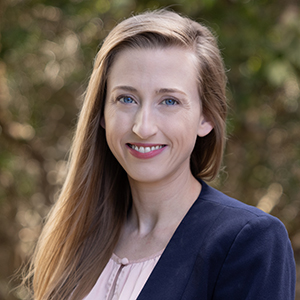
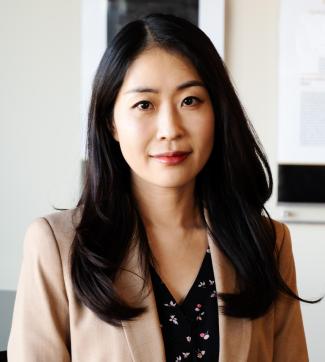
Megan Ken, MD, PhD is a Research Fellow in the Department of Integrative Structural and Computational Biology at Scripps Research, with joint appointments in Immunology & Microbiology and the Skaggs Graduate School of Chemical and Biological Sciences. Her work bridges RNA structural biology, computational modeling, and drug discovery, focusing on understanding RNA dynamics in cellular contexts. Dr. Ken holds a B.A. in Biology and Chemistry from Washington University in St. Louis (2013), an M.D. and Ph.D. in Biochemistry from Duke University School of Medicine (2022–2023). Her research emphasizes RNA conformational propensities, ensemble behavior, and their implications for therapeutic targeting. Her notable achievements include the 2025 Andy Kaplan Prize and the NIH Director’s Early Independence Award (2024). Her lab develops predictive models of RNA function and explores nonspecific drug-RNA interactions. She has pioneered methods for high-performance virtual screening targeting RNA dynamic ensembles. Dr. Ken advocates for inclusive excellence in STEM, co-developing curricula on health disparities and cultural determinants of health. Grants include NIH/NIAID funding for MD/PhD training and the Ellen Browning Scripps Foundation Award.
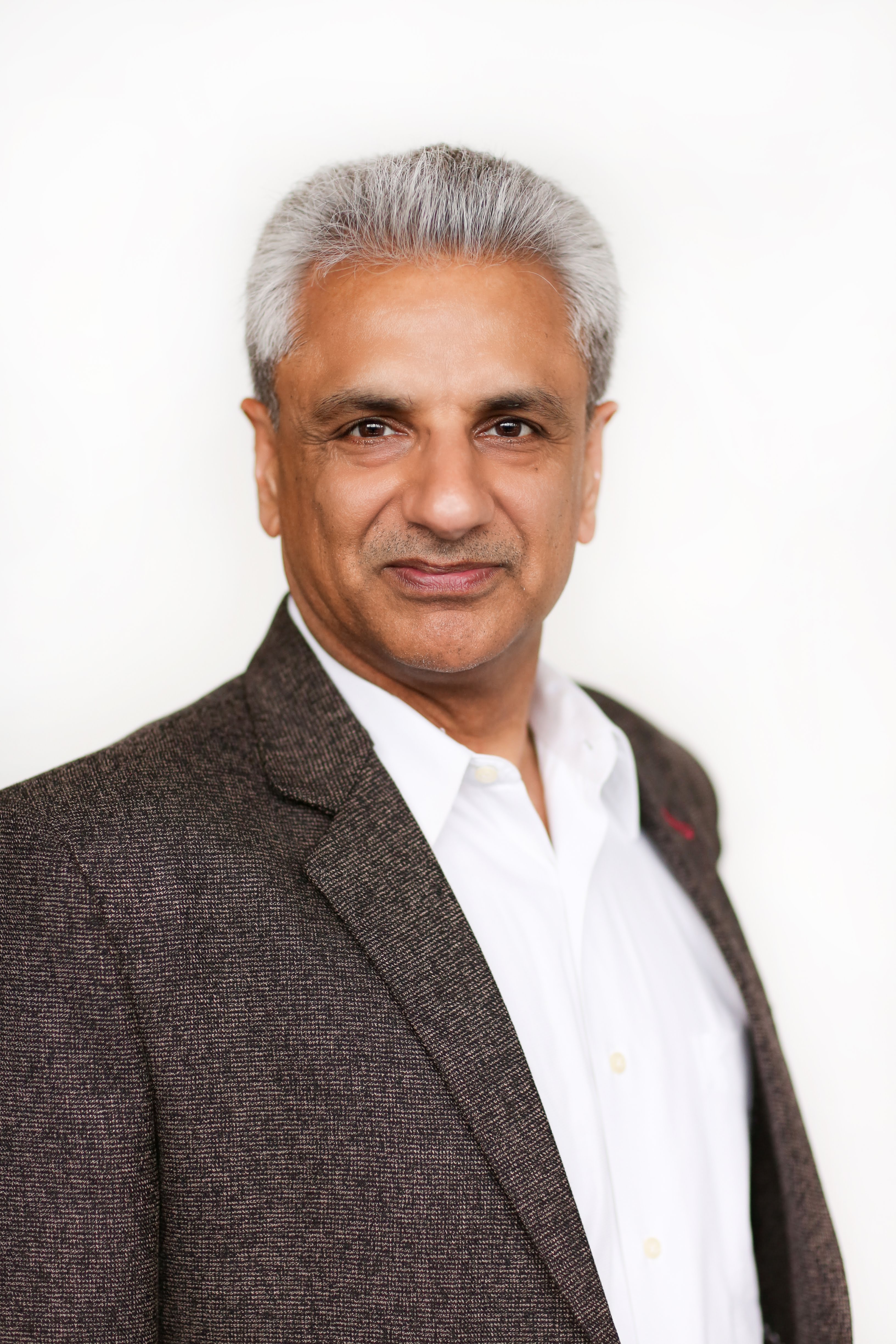
Milton Boyd is a Professor in the Department of Agribusiness and Agricultural Economics at the University of Manitoba, Faculty of Agricultural and Food Sciences. He also serves as an Adjunct Professor in Risk Management and Actuarial Science at the Asper School of Business. His research and teaching focus on quantitative finance, risk management, derivatives, and international business. PhD, Purdue University, United States MA, Washington State University, United States BA, Seattle Pacific University, United States His research interests center on quantitative finance and agricultural risk management , with a strong emphasis on derivatives, portfolio strategies, and market behavior. He applies statistical and financial modeling to real-world agricultural and commodity markets, often integrating international and policy perspectives. His work bridges academic rigor with practical application in agribusiness and government sectors. His recent publications reflect a consistent focus on financial risk modeling, commodity pricing, and market efficiency. Themes include hedging strategies, volatility analysis, and the role of futures markets in price discovery and income stability. His work spans both developed and emerging markets, with increasing attention to Asia and global trade dynamics. Two University of Manitoba Awards for Research and Outreach Fellow of Seattle Pacific University Best Conference Presentation Award Outstanding Journal Paper Award Dr. Boyd has advised numerous graduate students and contributed to academic service through editorial roles, conference committees, and keynote presentations. He has secured research funding through university and external grants, though specific grants are not listed. His outreach includes media commentary, industry training, and policy advising, particularly in commodity market development. He has been actively involved in professional development and public service, including teaching short courses at the Winnipeg Commodity Exchange (ICE), Canadian International Grains Institute, and Canadian Securities Course. He has served as a Policy Advisor for the Frontier Center for Public Policy and as a columnist for Grainews , contributing to public understanding of financial and commodity markets.
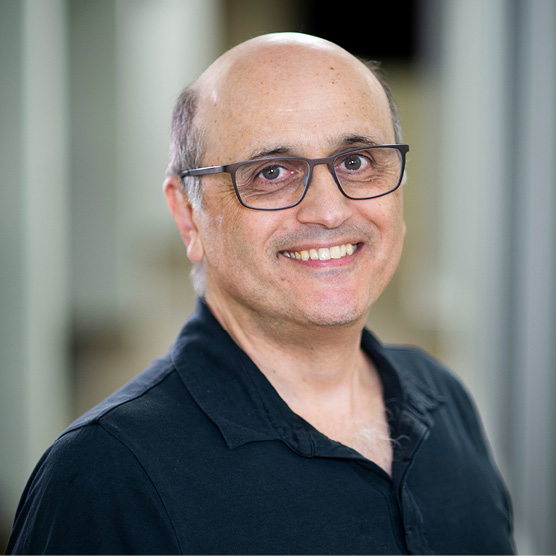
Pankaj Mehra is an Adjunct Professor in the Department of Computer Science and Engineering at the Jack Baskin School of Engineering, University of California, Santa Cruz (UCSC). He is affiliated with the Storage Systems Research Center (SSRC), now succeeded by the Center for Research in Storage Systems (CRSS). Alongside his academic role, he is the Founder and CEO of Elephance Memory, Inc., and serves as Workstream Lead for Computational x Programming (x = Memory or Storage) at the OpenCompute Project. Ph.D. in Computer Science, University of Illinois at Urbana-Champaign Former Faculty, IIT Delhi Adjunct Faculty, University of California, Wright State University Computer Scientist, NASA Ames Research Center Founder, HP Labs Russia Executive Roles: SVP & WW CTO at Fusion-io; VP at Samsung, SanDisk, Western Digital Pankaj Mehra's research centers on next-generation memory and storage systems. His work explores disaggregated memory architectures, computational storage, non-volatile memory (NVM), and data-centric operating systems. He investigates how to optimize data placement, improve system performance through intelligent caching, and restructure computing models around emerging memory technologies like CXL and persistent memory. His recent publications focus on far memory, tiered memory systems, and offloading computation to storage devices. His recent publications demonstrate a strong focus on memory disaggregation, computational storage, and non-volatile memory systems. Themes include rethinking data and pointer management in distributed memory environments, resource allocation in tiered systems, and designing operating systems that treat data as a first-class citizen. His work bridges academic research and industrial innovation, often involving collaboration with leading researchers at UCSC. Samsung R&D Award (2019) CES R&D Innovation Award (2021) Terabyte Sort Trophy by Jim Gray (1998) TPC-C Cluster Performance Records (1997) Pankaj Mehra has advised and collaborated with numerous researchers and engineers across academia and industry. His work has been supported by affiliations with HP Labs, Fusion-io, Samsung, and now Elephance Memory, Inc. He has led major research and development initiatives, including SmartSSD at Samsung and foundational work on persistent memory at HP. He has also contributed to standards efforts through the InfiniBand Trade Association. He has been a key contributor to the UCSC Storage Systems Research Center (SSRC/CRSS), collaborating with faculty and researchers including Ethan L. Miller, Heiner Litz, and Daniel Bittman. His industry leadership at Elephance Memory, Inc. and involvement in the OpenCompute Project further extend his influence in shaping future data infrastructure technologies.
Maik Schmeling is a Visiting Professor of Finance at Bayes Business School, City, University of London , and a full-time Professor of Finance at Goethe University Frankfurt . He is also a Research Fellow at the Centre for Economic Policy Research (CEPR) and the Bank for International Settlements (BIS) . His academic work spans empirical finance, international markets, and monetary economics. His research focuses on empirical asset pricing, international finance, macro-finance, and investments , with a strong emphasis on how central bank communication—particularly tone and textual content—affects financial markets. He explores topics such as currency risk premia, monetary policy transmission, and information flows in foreign exchange markets. His recent publications reveal a consistent trend in analyzing high-frequency market reactions to policy communication, using textual analysis to extract sentiment and tone from central bank statements. These works span top journals such as the Journal of Finance , Journal of Financial Economics , and Review of Financial Studies , demonstrating interdisciplinary rigor at the intersection of finance, macroeconomics, and data science. Research Fellow, Centre for Economic Policy Research (CEPR), Nov 2016 – present Research Fellow, Bank for International Settlements, Dec 2016 He advises PhD research students and has received research grants from the German Science Foundation (DFG) . His professional activities include consultancy roles with the IMF, Deutsche Bundesbank, and BIS, and he regularly presents at major finance conferences including the American Finance Association (AFA) , Western Finance Association (WFA) , and European Finance Association (EFA) . His academic and professional engagements reflect a deep integration with central banking institutions and global financial policy debates, particularly in the area of communication and market expectations.
Jan Baumbach is a Professor in the Department of Mathematics and Computer Science at the University of Southern Denmark (SDU), where he leads cutting-edge research at the intersection of computer science, bioinformatics, and biomedical data science. His work integrates machine learning, network biology, and systems medicine to address complex challenges in health and disease. His research interests include Bioinformatics , Machine Learning , Gene Regulatory Networks , Drug Repositioning , Biomedical AI , and Computational Biology . He applies advanced computational methods to analyze large-scale biological data, with applications in cancer, metabolic diseases, dermatology, and infectious diseases. The 15 most recent publications highlight a strong trend toward biomedical artificial intelligence , network-based analysis , and translational bioinformatics . His work spans from foundational machine learning in healthcare to clinical applications in osteoarthritis, bone regeneration, and skin biology. A consistent theme is the integration of multi-omics data and the development of privacy-preserving federated learning frameworks for distributed healthcare systems. Jan Baumbach has been principal investigator on several major research projects, including: EU Horizon2020: Privacy-preserving federated machine learning in distributed healthcare Danish National Research Foundation: ATLAS Center for Functional Genomics of Tissue Plasticity Villum Foundation: Big Data Bioinformatics (Young Investigator Programme) Carlsberg Foundation: Computational profiling of bacterial volatile metabolomes (ProVol) He has supervised 13 PhD students and has an extensive publication record of 262 works. His research has been featured in high-profile media outlets, emphasizing the societal impact of drug repositioning and AI in medicine. He leads a research group focused on computational systems biology , with strong collaborations across Europe in the fields of genomics, metabolomics, and clinical data science.
Andrew J. Patton is the Zelter Family Distinguished Professor and Professor of Economics at Duke University's Trinity College of Arts & Sciences, holding these roles since 2016 and 2013 respectively. Previously, he served as Associate Professor of Economics at Duke from 2009 to 2013. Patton holds a Ph.D. and M.A. from the University of California, San Diego (2002 and 2000), and a B.Bus. from the University of Technology Sydney (1998). His research focuses on financial econometrics, particularly volatility forecasting, dependence modeling, high-frequency financial data analysis, and hedge fund dynamics. He has published extensively in top journals such as the Journal of Finance , Journal of Financial Economics , and Econometrica . His recent work includes advancements in realized semicovariances, k-means clustering for unobserved heterogeneity, and risk price variations. Patton’s 2016 Distinguished Professorship reflects his scholarly impact. His research emphasizes practical applications, such as improving volatility forecasts and addressing market anomalies’ trading costs.
Edmond D Shenassa is a Professor in the Department of Epidemiology and Biostatistics at the University of Maryland School of Public Health. His research focuses on social determinants of health, developmental origins of health and disease, and prenatal/perinatal epidemiology. He has led major studies such as the Rhode Island Birth Cohort and co-led the New England Family Studies. Key areas include breastfeeding, smoking, environmental toxin exposure, and maternal-child health disparities. Education: Dual Sc.D. in Epidemiology and Maternal & Child Health from Harvard University, MA in Social Research Methods from UCLA. Awards include 2016 Graduate Mentor of the Year from UMD and leadership roles in the Association of Teachers of Maternal and Child Health. His work is funded by agencies like CDC, HRSA, and EPA. He has published over 100 peer-reviewed articles and edited works on public health topics. Current roles include editorial board memberships and former directorship of UMD's Maternal and Child Health doctoral program. Research integrates social, environmental, and biological factors influencing health outcomes across lifespans.
Noah D Drezner is a Professor of Higher Education and Vice Dean of Academic Success and Strategy at Teachers College, Columbia University. He also serves as Principal Investigator of The Tzedakah Lab and Program Director for Higher and Postsecondary Education. His expertise spans philanthropy, LGBTQ+ issues in education, leadership in nonprofits, and race/ethnicity dynamics in higher education. Dr. Drezner holds a Ph.D. in Higher Education from the University of Pennsylvania, an M.S.Ed. in Higher Education Management from the same institution, and a B.S. in Earth and Environmental Sciences from the University of Rochester. He has additional certificates in higher education management, university teaching, professional writing, and nonprofit leadership. His research focuses on identity-based philanthropy, alumni engagement, and institutional advancement strategies. Key areas include LGBTQ+ donor behavior, minority-serving institutions' fundraising practices, and the intersection of race/gender with nonprofit leadership. He has authored/co-authored over 30 books and journal articles, including seminal works on HBCU endowment management, queer alumni giving, and identity-based fundraising frameworks. Notable contributions include pioneering the concept of 'philanthropic mirroring' and developing culturally inclusive approaches to alumni relations. His work emphasizes the role of sense of belonging in driving institutional loyalty and giving behaviors, particularly among marginalized communities. Dr. Drezner leads The Tzedakah Lab, which explores Jewish philanthropy and social justice in education. He advises on strategic initiatives related to academic success, institutional strategy, and equity-driven advancement practices. Current projects include global comparative studies on educational giving patterns and DEIJ implementation in philanthropy.
Macarena Farcuh is an Assistant Professor in the Department of Plant Science and Landscape Architecture at the University of Maryland, College of Agriculture and Natural Resources. Her research focuses on enhancing fruit quality, nutritional value, and shelf-life through systems biology, physiology, and molecular approaches. She aims to reduce postharvest waste and promote sustainable agriculture while improving consumer satisfaction. Education: Ph.D., University of California, Davis (2017): Horticulture and Agronomy M.S., University of Chile (2007): Agricultural Sciences (Fruit Production) B.S., University of Chile (2005): Agricultural Sciences (with Distinction) Research Interests: Her work integrates systems biology, sensory science, and biochemistry to study fruit ripening, ethylene regulation, and postharvest storage solutions. Key areas include optimizing apple and peach quality, reducing food waste, and developing sustainable horticultural practices. Article Trends: Recent publications emphasize the use of reflective groundcovers, UV treatments, and genetic modifications to enhance fruit quality and mitigate pre/postharvest challenges. Studies often explore ethylene signaling pathways and their impact on pigmentation, shelf-life, and consumer preferences. Awards & Honors: Keller Pathway Fellowship Program Fellow (2016-2017) Trellis Fund Award (2014-2015) Henry A. Jastro Graduate Research Award (2012-2014) Best Student in Agricultural Sciences, University of Chile (2007) Advising & Grants: Her research has been supported by grants from the Horticulture Innovation Lab and UC Davis Child Institute. She collaborates with industry partners to bridge academic and commercial applications in fruit production. Labs/Teams: Leads the Fruit Quality Lab , focusing on interdisciplinary approaches to horticultural challenges.
Henock Louis is the KPMG Professor and Head of the Accounting Department at the Smeal College of Business, The Pennsylvania State University. He holds dual PhDs in Accounting (Ohio State University, 2001) and Finance (University of Mississippi, 1998), as well as an MBA from Andrews University (1992). His research focuses on accounting standards, financial reporting quality, artificial intelligence applications in accounting, ESG disclosures, and corporate governance. He has received the 2005 Excellence in Research Award from the American Accounting Association Diversity Section. Dr. Louis serves as an editor for The Accounting Review , Accounting Horizons , and International Journal of Accounting , and has held editorial roles across major journals. His work bridges theoretical frameworks (e.g., agency theory) with practical implications in audit quality, revenue recognition (ASC 606), and technology-driven forecasting. Recent research explores AI’s impact on earnings accuracy and ESG reporting trends in global markets. Key contributions include studies on managerial discretion in accruals, post-merger performance dynamics, and the relationship between audit clauses and firm value. His scholarship emphasizes transparency in financial disclosures and regulatory compliance, with implications for investors, auditors, and corporate policymakers.
Kelly Vierck is an Assistant Professor in the Department of Animal Science at the University of Arkansas, affiliated with the Dale Bumpers College of Agricultural, Food and Life Sciences. She holds a Ph.D. in Meat Science from Texas Tech University, an M.S. in Meat Science from Kansas State University, and a B.S. in Food Science from Oklahoma State University. Her research focuses on meat quality, beef flavor development, cooking methodologies, and the impact of packaging and aging techniques on product characteristics. Key areas include carcass quality assessment, sensory evaluation of meat products, and optimizing beef production systems through feedlot finishing methods and microbial processes. Publications highlight her work on dry-aging mechanisms, sous-vide safety, and the effects of packaging on beef tenderness. Research emphasizes practical applications for the meat industry, including flavor enhancement strategies, microbial risk mitigation, and improving consumer acceptance through texture and color retention. Her contributions address both technical and sensory aspects of meat science, bridging laboratory findings with real-world agricultural practices.
Yilu Zhou is an Associate Professor and Area Chair in Information, Technology, and Operations at Fordham University's Gabelli School of Business. She joined Fordham in 2013 and serves as Program Director for the MS in Artificial Intelligence in Business. Her research focuses on artificial intelligence applications in business, including text mining, social media analytics, and financial technology. Research interests include: AI-driven business intelligence systems Text mining for financial market analysis Social media trend forecasting Knowledge graph applications in finance
Prof Shampa Roy-Mukherjee is Vice Dean at the School of Business & Law , University of East London. Her research spans Political Economy , Globalization , Economic Development , and Gender Studies , with a focus on systemic inequalities, Brexit implications, and labor dynamics in the gig economy. Her recent work explores Racial and Gender Disparities in Policing , Practice-Based Learning for Employability , and Neo-liberal Globalization Effects . Collaborations include studies on Turkey's geopolitical shifts, US-China economic relations, and critiques of Ordoliberalism. She has published extensively in journals like Gender, Work and Organization , SAGE Open , and Journal of Balkan and Near Eastern Studies , employing methodologies such as GMM Panel VAR and Endogenous Growth Models .
Cole Cerrato is an Assistant Professor in the Department of Food Science and Technology at Oregon State University, where he leads the Smoke, Wine, and Grapes Analytical Chemistry Lab. His research focuses on wildfire smoke effects on wine grapes and viticulture, utilizing advanced analytical techniques like NMR and MRI to address chemical challenges in the wine industry. Education B.A. in Chemistry (2012) from the University of South Florida Ph.D. in Chemistry (2019) from the University of South Florida Research Interests Dr. Cerrato specializes in wildfire smoke chemical characterization, particularly using 13C-labeled smoke to track volatile phenol interactions in wine grapes. His work addresses smoke taint mitigation through functional spray coatings and environmental chemistry impacts on viticulture. Earlier research explored peptide folding, polyimide materials, and Alzheimer's disease intervention strategies. The lab at Oregon State University, funded by a $2.7 million state grant after the 2020 wildfires, aims to protect Oregon's wine industry from climate-related smoke exposure. His publications span analytical chemistry, agricultural science, and molecular biology, with recent studies focusing on chemical adsorption in grapes and collaborative enology research. Advising and Collaborations Dr. Cerrato accepts graduate students for the Food Science and Technology Department and serves on graduate committees. He collaborates with enologists like Elizabeth Tomasino and chemists like Ming Lab on interdisciplinary projects. Labs and Media The Smoke, Wine, and Grapes Analytical Chemistry Lab at Oregon State University is a state-funded initiative addressing wildfire impacts on wine quality. His work has been featured in national media outlets discussing solutions to smoke taint in wines.
Mi Youn Paek serves as a Senior Lecturer in the Finance Department at the University of Colorado Denver Business School, having joined the institution in Fall 2023. Prior to her position at CU Denver, she was an Assistant Professor of Finance at Georgetown College and previously worked as a research fellow and instructor at the University of Cincinnati. Before transitioning to academia, Dr. Paek spent six years as a financial effects analyst and international trading specialist in a multinational corporation. Dr. Paek earned her PhD in Finance and MA in Finance from Pusan National University, establishing a strong academic foundation for her career in finance education and research. Her educational background has directly informed her expertise in multiple finance domains. Dr. Paek's research program centers on mutual fund markets and public/private pension systems, with additional exploration of behavioral finance and empirical corporate finance. She investigates investment decision-making processes, which are essential for effective portfolio management and risk mitigation strategies that ensure post-retirement income security. Her work spans multiple international contexts, with particular attention to Asian financial markets including China, Korea, and the broader Asia Pacific region. She has published extensively on fund flow-performance relationships, pension fund management, and comparative analyses of equity fund performance across different market environments. Dr. Paek demonstrates a strong commitment to student development, actively engaging with students through mentoring, academic advising, and career guidance throughout their educational journey and beyond graduation. Her industry experience combined with academic expertise allows her to provide practical insights that bridge theoretical finance concepts with real-world applications in the finance profession.