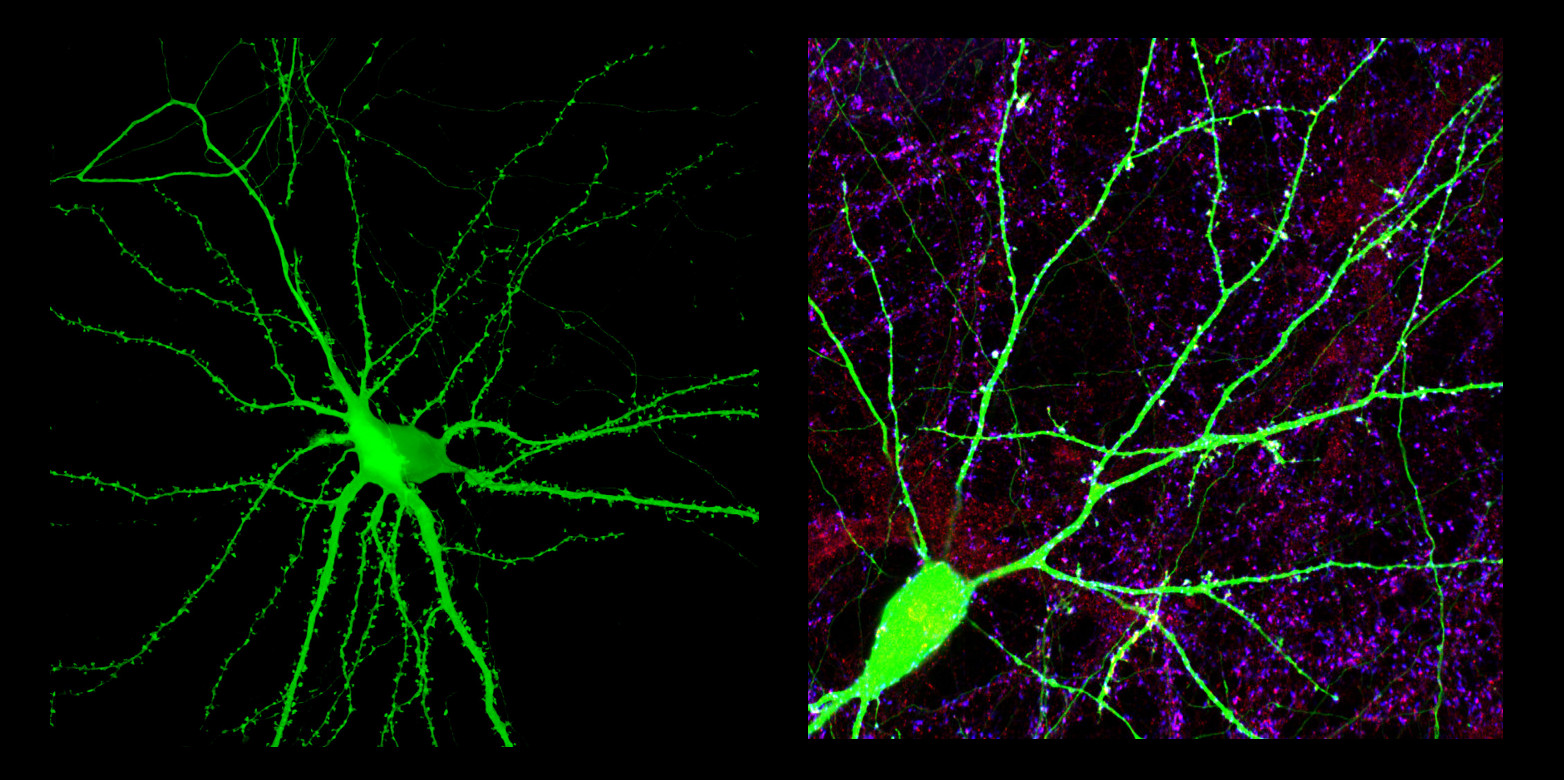
Gerhard Schratt is Full Professor and Head of the Institute for Neuroscience at ETH Zürich. His laboratory investigates molecular mechanisms of synapse development and plasticity, with emphasis on non-coding RNA regulation in neurological disorders. Research integrates molecular neurobiology with computational approaches to study microRNA functions in neuronal development, synaptic homeostasis, and stress responses. Current projects examine RNA-based therapies for neurodegenerative conditions and computational pathology platforms for digital histology. Professor Schratt's group develops AI frameworks for neurological assessment including multimodal dementia diagnosis, voice-based cognitive testing with privacy protection, and digital pathology for kidney disease. Collaborative projects with the Chan Zuckerberg Initiative explore mitochondrial regulation by microRNAs. He teaches molecular neurophysiology and neuroscience courses, supervising doctoral candidates in systems neuroscience approaches.
A/Prof. Brendon Hyndman serves as Associate Dean (Academic) in Charles Sturt University's Faculty of Arts and Education, with roles spanning teaching, research, and leadership in health/physical education and school wellbeing. His career includes senior academic positions, system leadership roles, and policy development in education systems. Education: PhD in Education (2014) Former roles: Associate Dean Research, Sub-Dean Graduate Studies, and Course Director for Postgraduate Education Research focuses on school playground design, bullying prevention, outdoor recreation, and policy development. He co-authored over 150 publications including peer-reviewed articles and books, and serves as Sport and Physical Education Section Editor for Springer's Sport Sciences for Health journal. His work aligns with UN SDGs on Quality Education (#4) and Good Health (#3). Awards: 5-Year Service Milestone (2022), IKEA Australia Grant (2019) Professional roles: Academic Advisory Board member for ACHPER National, Global Recess Alliance Australian rep Advocates for play equity and heat protection policies in schools, leading national campaigns to enhance outdoor play opportunities. Supervises research projects and advises on educational technology integration in teacher training programs. Labs/teams: Involved in the Children's Voices Centre and the Innovative Schools for Impact Program, contributing to policy piloting and educational strategy development.
Mads Græsbøll Christensen is a Full Professor and Head of the Department of Electronic Systems at Aalborg University's Technical Faculty of IT and Design. He has held visiting positions at Philips Research Labs, ENST, UCSB, and Columbia University. Dr. Christensen earned his M.Sc. in 2002, Ph.D. in 2005, and dr.techn. in 2022, all from Aalborg University. He is a Senior Member of IEEE, a Member of EURASIP, a Fellow of the Danish Academy of Technical Sciences, and a Villum Fellow. His research focuses on audio and acoustic signal processing , with expertise in microphone arrays, noise reduction, signal modeling, speech analysis, and spatial audio. His work spans theoretical developments to practical applications in speech enhancement, hearing technology, and medical diagnostics using voice analysis. Dr. Christensen has authored 4 books and over 300 peer-reviewed papers, with recent publications focusing on speech enhancement, Parkinson's disease detection from speech, and advanced audio processing techniques. His research shows a clear trend toward applying signal processing to real-world problems, particularly in healthcare and human-computer interaction. IEEE best paper awards Spar Nord Foundation's Research Prize Danish Independent Research Council Young Researcher's Award Statoil Prize EURASIP Early Career Award (2016) Villum Foundation Young Investigator (2012) Member of the Danish Academy of Technical Sciences (2017) Dr. Christensen has supervised 13 PhD students and secured major research grants from the Independent Research Fund Denmark, the Villum Foundation, and Innovation Fund Denmark. He has served as Chairman of the EURASIP Acoustic, Speech, and Music Processing TAC and Editor-in-Chief of the EURASIP Journal on Audio, Speech, and Music Processing. He leads the Audio Analysis Lab at Aalborg University, which focuses on cutting-edge audio signal processing research with applications in healthcare, communication, and human-computer interaction.
Tin Doan is an Assistant Professor at Northumbria University's Leadership and Human Resource Management Department. He holds academic positions at Nguyen Tat Thanh University (since 2023) and Duy Tan University (since 2021). His research focuses on Equality, Diversity, and Inclusivity (EDI), social sustainability in hospitality and tourism, disability inclusion, and employee wellbeing. He has collaborated with UNESCO, ILO, and UNDP on projects like New Zealand Tourism Workforce and Inclusive Auckland Events. Education: PhD (Auckland University of Technology, 2022), MSc in Tourism Management (Monash University, 2014), Diploma in Sustainable Development (Portland State University, 2014), and BA (Dalat University, 2009). Research interests emphasize EDI's role in hospitality, disability inclusion, and sustainable tourism. His work addresses pandemic impacts on employee wellbeing, chef mental health, and service interactions involving disabled employees. He uses mixed methods to explore these themes, contributing to top journals such as the International Journal of Hospitality Management. Recent articles highlight pandemic-era challenges, chef wellbeing, and disability inclusion strategies. He has received awards including the British Academy of Management Education Practice Award for Early Career (2023) and the Australian Development Awards (2012). Supervises PhD students in HRM, Social Sustainability, and DEI. Collaborates on projects like Professional Chefs Wellbeing and Mental Health. Future work aims to advance inclusive practices and sustainable development goals in hospitality and tourism.
Sarah Soppitt is an Associate Professor in Criminology at Northumbria University, holding roles including Associate Pro Vice Chancellor for Teaching and Learning in the Faculty of Arts, Design and Social Sciences. Her work focuses on social enterprise, cooperatives, and desistance strategies for individuals with criminal histories. She leads interdisciplinary research on serious youth violence, child exploitation, and community-based interventions. Key partnerships include collaborations with Police, Probation, and third-sector organizations, such as the Northumbria Police partnership and the Safer Children Network (NE). Education: MA Criminology (1994), BSc Applied Social Science (1991), Fellow of the Higher Education Academy (2005). Research interests span juvenile justice policy, youth violence prevention, and criminal justice system reform. Her projects address territorialism, threat assessments for minors, and community safety strategies. Recent work includes evaluations of violence prevention programs and digital methodologies for online safety. Scientific contributions include foundational studies on child-first approaches to serious youth violence and innovative design-led solutions for safe spaces. Funded initiatives include a British Academy project on desistance and Durham PCC grants for community support.
Tim Polzehl is a Senior Researcher at the German Research Center for Artificial Intelligence (DFKI) in Berlin's Speech and Language Technology (SLT) Department. He holds a PhD in technical communication sciences from TU Berlin (2014), focusing on automatic personality prediction from speech/user data. Previously, he led the Next-Generation Crowdsourcing group as a postdoc at TU Berlin's Quality and Usability Lab, overseeing projects like the Crowdee crowdsourcing platform. His current research spans speech anonymization, disinformation detection, deepfake analysis, and AI ethics. He actively supervises doctoral students and collaborates on EU-funded projects. Education: PhD in Technical Communication Sciences, TU Berlin (2014) Studies in Technical Communication Sciences, TU Berlin Research Interests: Focuses on applying AI to speech technology, privacy-preserving systems, and combating disinformation through machine learning. Specializes in multimodal systems, ethical AI deployment, and human-AI collaboration frameworks. Publications: Recent work emphasizes regulatory challenges of AI (e.g., EU AI Act compliance), privacy in clinical speech data, and personality-aware chatbots. Key areas include disinformation detection via LLMs and technical cybersecurity for speech systems. Grants & Awards: Participated in BMBF-funded leadership programs and EIT-Digital EU projects. Current projects involve developing frameworks for ethical AI integration in critical applications like elections. Labs/Teams: Leads SLT Department initiatives on autonomous AI agents and voice cloning at DFKI. Collaborates with TU Berlin's Quality and Usability Lab on ongoing research.
Joan M Blakey is a Professor and Director in the School of Social Work at the University of Minnesota, Twin Cities. She is actively engaged in research, teaching, and leadership, with a strong focus on social justice, trauma, and equity in social work practice. Research Interests: Her work centers on trauma-informed care, mental health in Black and African American communities, child and family welfare, adoption and guardianship support, racial trauma in educational settings, and HIV disclosure in marginalized populations. Her research integrates race, equity, and systemic barriers in health and social services. Recent Research Trends: Her recent publications (2024) emphasize interdisciplinary approaches, focusing on conceptual frameworks for health disparities, qualitative studies on HIV disclosure, and evaluations of family support programs. The work spans public health, clinical social work, gerontology, and community psychology, with a consistent emphasis on equity and marginalized voices. Scientific Awards: No specific awards are mentioned in the provided text. Advising and Grants: Dr. Blakey is Principal Investigator on two active grants: (1) Exploring Engagement Strategies for Teaching Race, Diversity, Equity, and Social Justice in Higher Education (2025–2026), and (2) Health Professional Clinical Training Expansion Grant Program (2024–2026). These projects reflect her leadership in curriculum development and clinical training reform. While student advisees are not named, her role as Director and PI suggests active mentorship. Labs and Teams: She leads collaborative research teams across disciplines, including public health, psychology, and social work, with recent work involving researchers in the U.S. and international contexts such as China. Her projects involve structured assessments, community engagement, and policy-relevant interventions.
Jana Lasser is Professor for Data Analysis at the University of Graz and leads the Complex Social & Computational Systems research group at the interdisciplinary IDea_Lab. She is also Associate Faculty at the Complexity Science Hub Vienna (CSH), reflecting her deep engagement with complex systems research across institutions. Her educational background includes a PhD in Physics from Georg-August-University of Göttingen, based on research at the Max Planck Institute for Dynamics and Self-Organization. She held postdoctoral and visiting positions at the Medical University of Vienna, Graz University of Technology (as a Marie Curie Fellow), and RWTH Aachen (as interim professor) before joining the University of Graz in 2024. Her research centers on emergent phenomena in complex social systems, using machine learning, data science, NLP, and computational modeling. Key interests include misinformation, counterspeech, social media algorithms, mental health in academia, and pattern formation in geophysical systems. She is a leading voice in open science, data literacy, and reforming academic culture. Her recent publications (2023–2025) reveal a strong interdisciplinary trend, bridging computational social science, public health, political communication, and geophysics. Many papers focus on misinformation, political discourse, and algorithmic governance, often using large-scale social media data. Others explore mental health, academic labor, and foundational geophysical processes, demonstrating her wide-ranging analytical expertise. ERC Starting Grant 101160928 (DeSiRe) FWF standalone project P 37280-N netidee SCIENCE prize Open Knowledge Fellow of the Wikimedia Foundation (2019/2020) Marie Curie Fellow Jana Lasser actively mentors and advises through her leadership of major research projects and initiatives. She leads the Survey Special Interest Group in the COST Action on Researcher Mental Health and co-founded the Network Against Abuse of Power in Science. Her research has been supported by prestigious grants including an ERC Starting Grant and FWF funding. She has developed and taught numerous open-access courses in computational social science, Python, and data literacy, emphasizing reproducibility and educational outreach. She leads the Complex Social & Computational Systems research group at IDea_Lab and is a key figure in the Complexity Science Hub Vienna. Her work on the Schwurbelarchiv and agent-based models for healthcare resilience demonstrates her leadership in building and utilizing large-scale data infrastructures for societal benefit.
Carmen Maria Abreu Fernandez is a full-time researcher affiliated with the Materials Engineering, Applied Mechanics and Construction department at the University of Vigo . She works within the CI11 ENCOMAT (Corrosion and Materials Engineering) research group under the Research Center in Technologies, Energy and Industrial Processes . Doctorate in Materials Science (University of Vigo, 1996) for research on zinc-rich paints Doctorate in Industrial Engineering (University of Vigo, 1999) for work on voice transmission over data networks Her research focuses on materials protection , corrosion engineering , and industrial process optimization , with significant contributions to understanding material degradation mechanisms and protective coatings. As part of the School of Industrial Engineering, she advances applications in metallurgical engineering, construction materials, and industrial technologies. Her work spans both fundamental studies and practical solutions for industrial challenges. Her academic collaboration includes supervision of doctoral theses in materials science and industrial engineering domains.
Lauren Labrecque serves as Professor of Marketing and Director of Ph.D. Programs and Research at the University of Rhode Island, specializing in sensory marketing (particularly color psychology) and digital marketing domains including consumer privacy, social media engagement, and parasocial interactions. Her research appears in premier journals such as Journal of Marketing and Journal of Marketing Research, where she also serves as Associate Editor for Journal of Interactive Marketing. Her academic background includes: Ph.D. in Marketing, University of Massachusetts Amherst (2006-2010) MBA Coursework, University of Massachusetts Amherst (2005-2006) M.A. in Digital Media Studies, University of Denver (2001-2003) Post-Graduate Studies in Art History & French, American University of Paris (2000-2001) B.A. in Communications, Worcester State University (1997-1999) Labrecque's research program bridges sensory and digital frontiers, examining how color saturation influences product efficacy perceptions and how digital empowerment reshapes consumer-brand dynamics. Her work consistently explores the psychological mechanisms behind consumer responses to sensory cues and digital interfaces, with recent emphasis on AI privacy concerns and data breach consequences in both B2C and B2B contexts. This dual-focus approach reveals how fundamental sensory principles translate into complex digital environments. Analysis of her publication trajectory shows increasing concentration on digital privacy challenges since 2020, alongside sustained contributions to sensory marketing. The 2024-2025 output demonstrates methodological diversity spanning experimental design (color studies), field research (data breaches), and scale development (DCAS), with strong emphasis on practical managerial implications across all work. As Director of Ph.D. Programs and Research at URI, she oversees doctoral training while maintaining active research collaborations evident in her multi-author publications. Her prior role as Associate Professor at Loyola University Chicago contributed to foundational work in parasocial interactions and sensory marketing before her current leadership position.
Xinyu Lei is an Assistant Professor in the Department of Computer Science at Michigan Technological University (MTU) , where he joined in Fall 2021. He earned his PhD in Computer Science and Engineering from Michigan State University (MSU) , advised by Prof. Guan-Hua Tu. Prior to MTU, he worked as a Research Assistant at Texas A&M University at Qatar (2013) and a Research Intern at Ford Motor Company (2017). University: Michigan Technological University Department: Computer Science Academic Rank: Assistant Professor PhD Institution: Michigan State University His research focuses on distributed computing , mobile systems , data science , and trustworthy machine learning , with particular emphasis on privacy-preserving protocols for IoT and blockchain technologies. His publications span top venues like ACM MobiCom , IEEE TDSC , and IEEE TIFS , addressing vulnerabilities in cellular IoT, secure blockchain protocols, and federated learning systems. Recent work includes privacy-preserving federated learning in 2023 (TIFS), secure redactable blockchain (TDSC), and IoT data heterogeneity handling (IoT-J). Earlier contributions in 2020-2021 explored Wi-Fi security for smart homes (MobiSys), encrypted geodata queries (ICDE), and Bitcoin payment protocols (CODASPY). Research Grants: NSF CRII: CNS-2153393 ($175K, Sole-PI) Professional Activities: Program Committee: CVPR'24, INFOCOM'24 TPC: BigDataService'20, Workshop Mobicom'19 Dr. Lei teaches graduate and undergraduate courses in applied cryptography (CS 5090), network security (CS/EE 4723), and computer security (CS 4471/5471) at MTU. He also contributes to academic community service through program committee roles at conferences like CVPR, INFOCOM, and WSDM.
Dr. Sam Manuela is a Senior Lecturer in Psychology at the University of Auckland's Faculty of Science, serving as Associate Dean Pacific in the Faculty of Science Administration. They hold a PhD in Psychology from the University of Auckland (2017). Their research focuses on Pacific peoples' psychological well-being, cultural identity, and societal impacts of discrimination. They've developed key assessment tools like the Pacific Identity and Wellbeing Scale (PIWBS) and PIWBS-R, which are foundational for culturally-appropriate research. Recent work addresses climate migration's psychosocial effects, Pacific LGBTQ+ health equity, and institutional barriers for Māori/Pacific students. Key Research Themes: Pacific cultural identity & discrimination impacts Climatic migration psychology Mental health disparities Indigenous methodologies in academia Engagement & Leadership: Co-chair of Māori and Pacific Psychology Committee (2017-2022) Member of Psychology Equity Committee & Pasifikology Expert witness for Royal Commission on Abuse in Care regarding Pacific cultural identity & wellbeing Academic Impact: Over 40 peer-reviewed articles in top journals like Higher Education Research & Development and Climate and Development , with work cited in policy reports and media. Active in educational reform to center Pacific voices in pedagogy and institutional structures.
Murtaza Mohiqi serves as an Assistant Professor in the Department of Law at the University of Agder, Norway, affiliated with the Comparative and Public Law and Education Law research groups. His scholarship centers on human rights law in conflict zones, with specialized focus on Afghanistan, and examines technology's role in advancing rights for marginalized communities including women, girls, and persons with disabilities. His research interests span digital human rights, women's educational rights under Taliban rule, disability inclusion through technology, and climate change impacts on vulnerable populations. He investigates systemic injustices in healthcare access, intellectual property barriers to online education, and deepfake threats to human rights documentation, advocating for interdisciplinary human rights-centric solutions that merge legal frameworks with technological innovation. Analysis of his 2022-2024 publications reveals a cohesive interdisciplinary trajectory where law, technology, and social justice converge. Key trends include leveraging AI for educational equity in conflict zones, using digital archives for human rights advocacy, and developing rights-based strategies against health disparities. His Afghanistan-focused work consistently addresses urgent challenges like Taliban restrictions on girls' education, climate vulnerability of women, and digital empowerment amid academic isolation.
Mihailis Diamantis is a Professor of Law at the University of Iowa College of Law, where he maintains an active research agenda focused on the intersection of corporate law, criminal law, and emerging technologies. With 57 scholarly publications that have garnered over 14,500 downloads and 62 citations according to SSRN rankings, he has established himself as a leading voice in corporate criminal law and AI regulation. Professor Diamantis specializes in the legal frameworks governing artificial intelligence, corporate crime, and white-collar criminal law. His research explores how traditional legal concepts apply to modern technological challenges, particularly focusing on corporate liability for AI systems, the philosophical underpinnings of corporate personhood, and innovative approaches to corporate punishment. He has developed novel theories such as the 'Extended Corporate Mind' and 'Character Theory of Corporate Punishment' that have reshaped academic discourse in these areas. His recent publications demonstrate a clear trajectory toward increasingly sophisticated analyses of AI's legal implications, with a growing emphasis on practical regulatory frameworks for emerging technologies. Diamantis has pioneered approaches that bridge philosophical inquiry with concrete legal solutions, particularly in the areas of algorithmic accountability, privacy law, and corporate liability structures for AI harms. His work often challenges conventional wisdom, as seen in his provocative arguments about the 'Monster Within' corporations and the need to reframe how we conceptualize corporate criminality. Professor Diamantis frequently collaborates with scholars across disciplines, as evidenced by his co-authored works with experts from Princeton University, Cambridge University, and the University of Pennsylvania. His interdisciplinary approach draws from cognitive science, philosophy of mind, and business ethics to develop comprehensive frameworks for understanding and addressing corporate misconduct in the digital age.
Regina Joice Cordy is an Associate Professor in the Department of Biology at Wake Forest University , where she leads the Cordy Lab. Her research focuses on malaria pathogenesis, host-parasite interactions, and the human microbiome, integrating laboratory, computational, and field-based approaches. Education: B.A., University of Virginia (2006) Ph.D., Harvard University (2013) Postdoctoral Training, Harvard School of Public Health (2015) Postdoctoral Training, Emory University (2018) Dr. Cordy’s research investigates the multifactorial process of severe malaria development, with a focus on host factors such as the microbiome, metabolism, and diet . She employs histology, molecular biology, metabolomics, and computational modeling to study host-parasite interactions and identify physiological perturbations during infection. Her work spans Plasmodium falciparum, P. vivax, and P. knowlesi , using both human and non-human primate models. Her recent publications reveal trends in host metabolomics, microbiome disruption during infection, and immune responses in malaria. She has contributed to understanding how oxygen tension, amino acid supplementation, and sickle cell trait influence malaria biology and transmission. Her work combines experimental parasitology, systems biology, and public health perspectives . Scientific Awards: No awards listed in the provided text. Dr. Cordy mentors students and collaborates extensively, particularly with the Galinski and Kissinger labs. She is involved in grant-funded research through projects like MaHPIC (Malaria Host-Pathogen Interaction Center) and has contributed to large-scale data sharing in malaria systems biology. She also advocates for diversity and inclusion in parasitology , centering voices of Black scientists in her field. She leads the Cordy Lab at Wake Forest, which conducts interdisciplinary research at the intersection of infectious disease, metabolism, and microbiome science . The lab uses cutting-edge techniques in molecular biology, bioinformatics, and metabolomics to advance understanding of malaria pathogenesis.