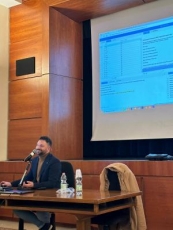
Fabio Ciambella is a Researcher at the Department of European, American, and Intercultural Studies of Sapienza University of Rome . His academic work focuses on Corpus Linguistics , Shakespeare Studies , Translation Studies , and Early Modern English pragmatics. Teaches Second Language Acquisition (first semester) and English Language 3 (second semester) Specializes in dance lexicon analysis, historical translation reception, and CLIL methodology His publications demonstrate interdisciplinary connections between: Shakespearean language and modern media (ads, news, memes) Italian Renaissance dance manuals and English theatrical practices AI-assisted translation of historical varieties Eco-discourse pragmatics in food columns Office hours available via individual scheduling through fabio.ciambella@uniroma1.it
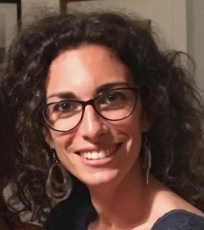
Dr. Ilaria Vidotto is a Researcher at the Department of European, American and Intercultural Studies (Sapienza University of Rome). Her work focuses on French literature , particularly Proustian and Balzacian studies , with expertise in stylistics , narrative theory , and intercultural analysis . Key research themes include: Stylistic analysis of À la recherche du temps perdu Comparative study of 19th-century literary discourse Temporal structures in modernist literature Intertextual relationships between French and Italian authors Recent publications examine: Stylistic evolution from juvenilia to mature works Epistolary practices in Proustian narrative Metaphorical use of screens in literary contexts Comparative techniques in 19th-20th century French literature
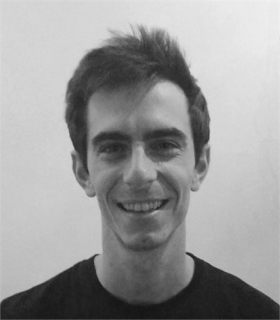
Gioacchino Cafiero is an Associate Professor at the Department of Mechanical and Aerospace Engineering (DIMEAS), Polytechnic University of Turin. His research focuses on data-driven experimental fluid mechanics, particularly applying machine learning techniques like deep reinforcement learning and genetic algorithms to control turbulent flows and optimize fluidic actuators. As a member of the Fluid Dynamics research group, he leads projects such as GREENER (drag reduction via sinusoidal riblets) and WINDED (drone wind investigation), while also directing commercial research on friction stress measurement methodologies. Specializes in turbulent flow control and machine learning applications Teaches PhD courses on Machine Learning for Flow Control Supervises students in aerospace engineering programs Recent publications analyze jet turbulence with explainable AI, heat transfer fluctuations in channel flows, and riblet-induced drag reduction. His work bridges aerospace engineering and fluid dynamics, contributing to SDG goals 9 (Industry Innovation) and 13 (Climate Action). Scientific awards include the Learning to Teach (L2T) Open Badge from Politecnico di Torino.
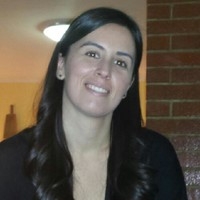
Carlo Casali is an Associate Professor in the Department of Medical-Surgical Sciences and Biotechnologies at Sapienza University of Rome's Faculty of Medicine and Pharmacy. His career spans over three decades in neurology with specialized expertise in neurogenetics, mitochondrial disorders, and hereditary ataxias. He directs the Neurogenetics Outpatient Clinic and coordinates the Neurological Diseases Course at the Latina campus. His research focuses on molecular mechanisms of neurodegenerative disorders, particularly mitochondrial cardiomyopathies, Friedreich's ataxia, and hereditary spastic paraplegias. Casali pioneered the characterization of mitochondrial DNA mutations (A4300G, G8363A) and developed the hematopoietic stem cell transplant protocol for MNGIE. His current work integrates AI-driven gait analysis with exoskeleton rehabilitation for cerebellar ataxia. Casali's publication portfolio includes 118 papers (h-index 20, 1140 citations), with recent work emphasizing biomarker discovery and digital phenotyping. His research is supported by Telethon Foundation grants and national projects including the SPG4 epidemiology study. He actively collaborates with Columbia University's Neurology Department, maintaining a 30-year research partnership. As an educator, he coordinates multiple degree programs including Physiotherapy at Latina and teaches Neurology across medical and healthcare curricula. His clinical work bridges molecular diagnostics with patient-centered rehabilitation, focusing on improving functional outcomes in rare neurological disorders.
Paolo Zatelli is an Associate Professor at the University of Trento , Department of Civil, Environmental and Mechanical Engineering. His academic career spans over two decades, with research expertise in geomatics, photogrammetry, and open-source GIS applications. Department of Civil, Environmental and Mechanical Engineering (since 2001) Researcher in ICAR06 (Topography and Cartography) International collaborations in geospatial projects Education includes a degree in Environmental and Territory Engineering (1993, 110/110 with honors) and a PhD in Topographic and Geodetic Sciences (1998). He has taught courses in GIS, Digital Cartography, and GPS surveying. Research Interests focus on geospatial technologies and their applications. Key areas include digital photogrammetry , wavelet applications in geodesy , GPS survey planning , and open-source GIS development . His work extends to environmental monitoring, historical cartography analysis, and sustainable forest management systems. Publication Trends show sustained contributions to FOSS4G (Free and Open Source GIS) applications, with recent work covering topics like landscape metrics , EV charging infrastructure , beta diversity analysis , and historical map digitization using GRASS GIS and QGIS. Scientific Contributions include: Member, IAG Special Study Group 4.187 on Wavelets in Geodesy Organizing committee, IV Hotine-Marussi Symposium Key developer of GRASS GIS applications Contributor to GOCE satellite geodesy projects Teaching and Mentorship highlights his role in both academic and professional GIS training, with over 20 theses supervised. His Technical Contributions involve developing open-source tools for spatial database management, statistical analysis, and georeferencing workflows.
Simone Lenti is an Assistant Professor (Ricercatore RTDa) at the Department of Computer, Control, and Management Engineering of Sapienza University of Rome. He is an active member of the A.WA.RE research group , which specializes in visual analytics. Lenti obtained his Ph.D. in 2021 with a dissertation on visual analytics techniques for cybersecurity. His research bridges cybersecurity , visual analytics , and human-computer interaction , focusing on: Developing computational methods for vulnerability analysis (e.g., NLP for CVE relevance, smart contract taxonomies) Designing visual tools for threat detection (e.g., attack graphs, firmware fuzzing) Enhancing interpretability in data-driven systems (e.g., partial dependence analysis, process mining) Lenti's publications (2019–2025) demonstrate a consistent focus on applying visual analytics to cybersecurity challenges , with recent expansions into bioinformatics and education. Key trends include automated vulnerability management, human-centered explainability, and scalable threat modeling. Awards: IEEE VizSec 2018 Best Paper for contributions to cybersecurity visualization. He contributes to academic infrastructure through tools like easyDeclare (declarative process modeling) and BUCEPHALUS (business-centric cybersecurity analysis), emphasizing practical applications of his research.
Jlenia Toppi is an Associate Professor at the Department of Computer, Control and Management Engineering, Sapienza University of Rome. With a background in Biomedical Engineering (B.Sc. and M.Sc. summa cum laude from University of Rome, Ph.D. from University of Bologna), she leads research at the Neuroelectrical Imaging and BCI Laboratory, IRCCS Fondazione Santa Lucia, focusing on EEG signal processing, brain connectivity modeling, and graph theory applications in cognitive and clinical neuroscience. Education: B.Sc. Clinical Engineering (2006), M.Sc. Biomedical Engineering (2009), Ph.D. Biomedical Engineering (2013) Awards: IEEE EMBC Student Paper Finalist (2012), Young Bioingegneria Award (2012), IEEE EMBS Best Poster (2011) Her research develops advanced EEG methodologies for brain mapping and dynamic connectivity estimation , applied to disorders of consciousness, stroke rehabilitation, and social neuroscience. She pioneered hyperscanning EEG for interpersonal brain-to-brain analysis and contributed to BCI systems like RECOM and The Promotoer. Recent publications highlight her work on hybrid BCI rehabilitation , muscle synergy extraction , and multi-modal assessment of therapeutic interventions . She serves as editor for Computation and Mathematical Methods in Medicine and collaborates with international projects including Horizon 2020.
Jiri Matas is a Professor at the Center for Machine Perception, Faculty of Electrical Engineering, Czech Technical University in Prague. He holds a PhD from the University of Surrey (UK, 1995) and has published over 200 peer-reviewed papers, accumulating ~34,000 Google Scholar citations (h-index 65) and ~13,000 Web of Science citations (h-index 43). Education: PhD in Computer Science (University of Surrey, 1995) His research spans computer vision, image processing, and artificial intelligence, focusing on visual tracking, object recognition, image matching and retrieval, sequential pattern recognition, and RANSAC-type optimization methods. His work has been recognized with multiple best paper awards at premier conferences like BMVC, ACCV, and ICDAR. Academic Leadership: He has co-chaired major conferences (ECCV 2004/2016, CVPR 2007), served on the editorial board of the International Journal of Computer Vision (IJCV), and acted as Associate Editor-in-Chief for IEEE Transactions on Pattern Analysis and Machine Intelligence (PAMI). Additionally, he contributed to the European Research Council (ERC) computer science panel. Scientific Awards: Best paper prize at British Machine Vision Conference 2002 Best paper prize at British Machine Vision Conference 2005 Best paper prize at Asian Conference on Computer Vision 2007 Best paper prize at International Conference on Document Analysis and Recognition 2015
Onofrio Rosario Battaglia serves as an Associate Professor in the Department of Physics and Chemistry at the University of Palermo, Italy, where he teaches Applied Physics for Biotechnology and Physics for Elementary and Kindergarten Schools. His academic profile centers on innovative physics pedagogy with emphasis on accessible experimental methods. His research expertise spans Physics Education , Science Education , and Educational Technology , specializing in inquiry-based learning frameworks and technology integration. Battaglia develops research-based teaching sequences using smartphone sensors and computer simulations to demystify complex phenomena including surface tension, thermally activated processes, and rotational dynamics. His work targets conceptual understanding across educational levels from primary schools to engineering programs, with notable focus on cluster analysis for evaluating student reasoning patterns and growth mindset development. Analysis of his publication trajectory reveals consistent innovation in making abstract physics tangible through low-cost experimentation, particularly in surface phenomena and thermodynamics education. Recent work integrates pandemic-era teaching adaptations and historical instrument studies, demonstrating responsiveness to evolving educational challenges while maintaining rigorous pedagogical validation. Within the Department of Physics and Chemistry, Battaglia contributes to curriculum development for teacher training programs and STEM laboratory initiatives, supporting the department's mission through evidence-based educational design and cross-disciplinary collaboration in science-mathematics integration projects.
Giuseppe Ruscica is an Associate Professor in the scientific disciplinary sector ICAR/11 (Building Production) at the Department of Engineering and Applied Sciences of the University of Bergamo. He has been with the university since 2012, initially serving as a Researcher until 2023 before being promoted to his current position. Dr. Ruscica earned his PhD in "Architectural, Urban, and Environmental Design and Restoration" from the University of Catania in 2009 and a Degree in Building Engineering with highest honors (110/110 cum laude) from the same institution in 2004. His research focuses on innovative approaches to architectural design and construction, with particular emphasis on responsive and shape-shifting architectures, tensegrity systems, reciprocal structures, and origami-like operations. He also investigates automation for self-supporting masonry shells and develops building components with electromagnetic radiation shielding capabilities using sustainable materials like biochar. His work extends to low-cost IoT sensor systems for environmental monitoring in construction contexts. Dr. Ruscica's publications reveal a strong trend toward integrating sustainable materials with advanced construction technologies, particularly focusing on electromagnetic shielding applications using biochar composites. His research bridges traditional construction methods with cutting-edge digital technologies including Building Information Modeling (BIM), augmented reality, and virtual reality applications for construction sites. He serves as Lecturer for courses including "Technology of Construction Elements and Building Information Modeling" and "Building Ergonomics" for the Building Technologies Engineering program, and co-teaches "Building Information Modeling (BIM)" for the Master's Degree in Construction Engineering.
Brancucci Alfredo is an Associate Professor at the University of Rome Foro Italico, working within the Department of Human and Health Sports Sciences. His position as Associate Professor - Level II reflects his standing in the academic community with expertise in PSIC-01/B - Neuropsychology and Cognitive Neuroscience. His research interests span a diverse range of neuroscience topics including hemispheric functional and behavioral asymmetries, neural correlates of consciousness, neuroscience of music, various neuroimaging techniques (EEG, MEG, fMRI), perception systems, psychobiology of nutrition, motor system analysis, and non-invasive brain stimulation methods. His work uniquely bridges sports science with neuroscience, creating interdisciplinary connections that inform both fields. Professor Brancucci's publication record demonstrates consistent contributions to cognitive neuroscience, with recent work focusing on transcranial stimulation techniques, consciousness studies through ambiguous figure perception, hemispheric asymmetries in auditory processing, and innovative computational methods for neuroimaging data analysis. His research shows a clear trajectory from foundational work on pain perception and motor systems to more recent explorations of consciousness and brain stimulation techniques. He actively teaches courses related to lifelong healthy habits, sport psychology, and developmental educational psychology, while serving on multiple university committees that shape sports science education. His international collaborations with institutions in Denmark and Germany demonstrate the global recognition of his research expertise. Professor Brancucci participates in significant research projects including studies on neurophysiological correlates of perception with the CNR/Institute of Cognitive Sciences and Technologies and leads work at UniRoma4's Laboratory of Sport and Applied Medical Technical Sciences on the relationship between microbiota, brain function, and sports performance.
Francisco Matias Yarur serves as a Research Fellow within the NanoChemistry research group at the CCT@Morego Research Center, Indian Institute of Technology, focusing on advanced nanoscale chemistry and materials science applications. His interdisciplinary research spans critical areas in nanotechnology: Nanochemistry: Synthesis and characterization of novel nanomaterials Biomedical Applications: Development of nanomaterials for drug delivery and diagnostic imaging Optoelectronics: Engineering nanomaterials for light-based electronic devices Electron Spectroscopy: Utilizing advanced spectroscopic methods to analyze electronic properties Nanoscopy: Applying high-resolution imaging techniques for nanostructure visualization Dr. Yarur collaborates within a dynamic team of postdoctoral researchers and PhD students at the CCT@Morego Research Center, leveraging specialized facilities for nanomaterials characterization including electron spectroscopy and nanoscopy equipment to advance innovations in nanotechnology.
Barbara Marana is a Researcher in Topography and Cartography at the University of Bergamo, School of Engineering, Department of Engineering and Applied Sciences (DISA). She has maintained an active academic career since 2003, progressing from Research Fellow to Confirmed Researcher in 2008, while also serving as an Adjunct Professor for Information Systems for the Territory and Topography courses from 2015-2023. Her educational background includes a Doctorate in Geodetic and Topographic Sciences from the Polytechnic University of Turin (1993-1997) and a Degree in Electronic Engineering with specialization in Automatic Control from the Polytechnic University of Milan (1991). She possesses strong English language skills and has authored over 60 scientific publications throughout her career. Dr. Marana's research focuses on the application of Geomatics technologies to cultural heritage preservation, environmental monitoring, and urban planning. Her work demonstrates particular expertise in GIS applications, LIDAR technology, 3D scanning, and photogrammetry for documenting and analyzing historical sites, military landscapes, and natural environments. She has developed innovative approaches for integrating these technologies to create detailed spatial analyses that support conservation efforts and sustainable development initiatives. Her recent work shows increasing emphasis on interdisciplinary applications, particularly in environmental monitoring and cultural heritage documentation. Analysis of her publication record reveals consistent thematic development across multiple domains: Early work focused on 3D modeling and documentation of archaeological sites in Central Sicily Mid-career publications expanded into military archaeology and LIDAR visualization techniques Recent research demonstrates sophisticated integration of multiple geospatial technologies for environmental applications, including air pollution analysis and climate change impact assessment Dr. Marana has received recognition for her contributions to geospatial science education through innovative teaching methods including challenge-based learning approaches to digital mapping instruction. Her educational work aligns with Sustainable Development Goals 4 (Quality Education) and 11 (Sustainable Cities and Communities). She leads research projects focused on cultural heritage documentation, particularly using 3D scanning and BIM technologies for historical structures, and maintains active collaborations on projects involving the Grotto of Saints in Enna and the Necropolis of Realmese in Calascibetta. Her methodology consistently combines traditional surveying techniques with advanced technologies including terrestrial laser scanning, UAV systems, and multispectral imagery.