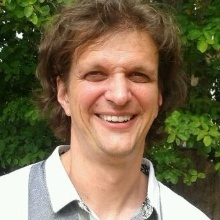
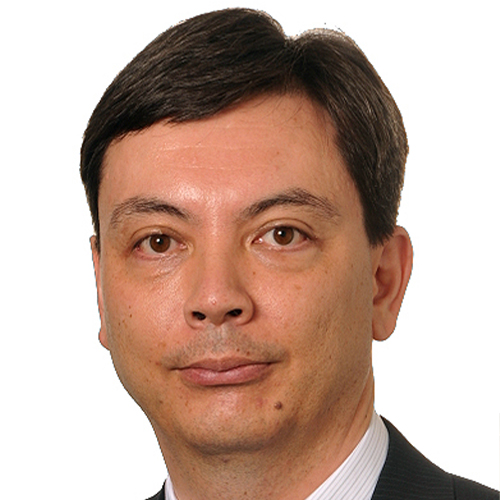
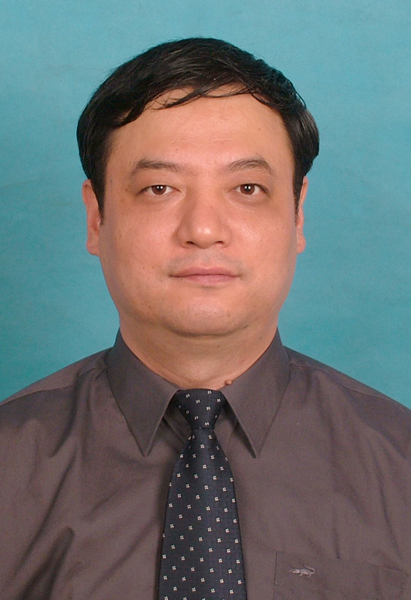
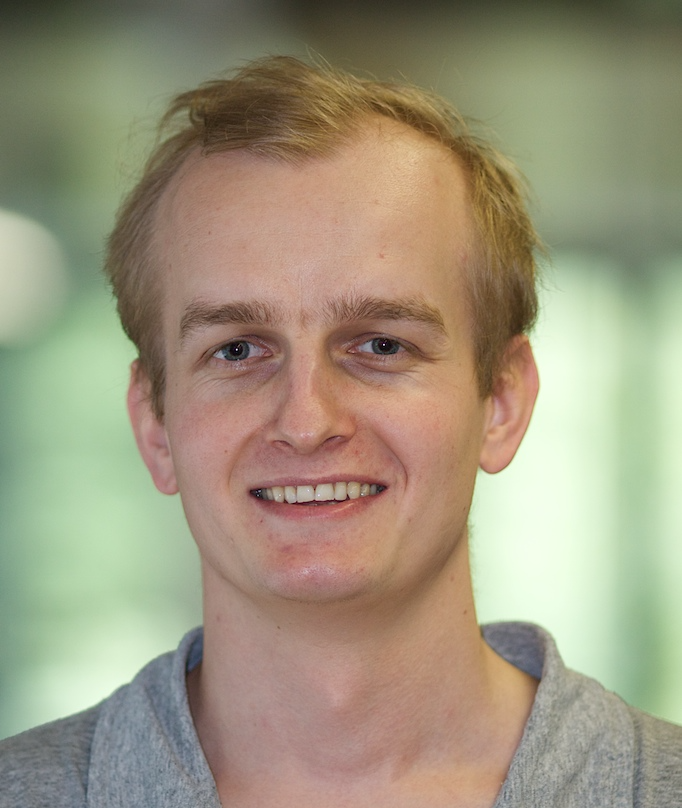
Prof. Dr. Bernd Skiera is a leading Marketing Professor at Goethe University Frankfurt since 1999 and a member of the managing board of the efl - The Data Science Institute. His work bridges information systems and marketing, with a focus on data-driven decision making and digital transformation.
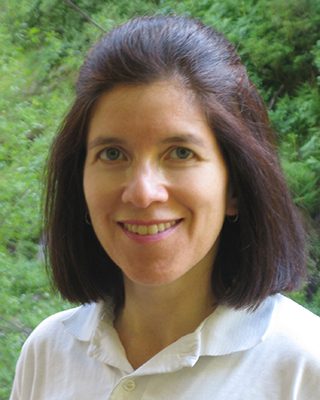
Cecilia R. Aragon is a Professor in the Department of Human Centered Design & Engineering at the University of Washington, where she also serves as an Adjunct Professor in Computer Science & Engineering, Electrical and Computer Engineering, and the Information School. She is additionally a Senior Data Science Fellow at the eScience Institute. Aragon directs the Human-Centered Data Science Lab and has made significant contributions at the intersection of human-computer interaction and data science. Her research interests focus on human-centered data science, human-centered artificial intelligence, human-centered machine learning, human-computer interaction (HCI), computer-supported cooperative work (CSCW), visual analytics, aviation and astronautics sociotechnical systems, and emotion in informal text communication. Aragon's work bridges technical and social aspects of data science, particularly examining how humans interact with and gain insight from large datasets through both quantitative and qualitative methods. Aragon's recent publications demonstrate a strong focus on understanding online communities, sentiment analysis, distributed mentoring systems, and the ethical implications of AI. Her work spans multiple disciplines including social computing, data visualization, and astrophysics data analysis, showing her interdisciplinary approach to human-centered data science. Presidential Early Career Award for Scientists and Engineers (PECASE) 2008 Fulbright Fellowship 2017-18 HCDE Faculty Innovator in Research Award, University of Washington, 2015 Distinguished Alumni Award, Computer Science, University of California, Berkeley, 2013 Top 25 Women of the Year, Hispanic Business Magazine, 2009 Aragon has secured over $28 million in research funding from organizations including the National Science Foundation, National Institute of Standards and Technology, Department of Energy, Gordon and Betty Moore Foundation, Alfred P. Sloan Foundation, Washington Research Foundation, and industry partners like Microsoft and Intel. Her educational background includes a Ph.D. in Computer Science from UC Berkeley (2004), an M.S. in Computer Science from UC Berkeley, and a B.S. with Honors in Mathematics from Caltech. She leads the Human-Centered Data Science Lab and is affiliated with the eScience Institute, the Nearby Supernova Factory, and various research groups focused on data-intensive scientific collaborations. Her work on collaborative visual analytics systems like Sunfall has had significant impact in both academic and applied settings.
Jonas Kuhn is a professor at the Institute for Natural Language Processing (IMS) at University of Stuttgart. He is working at the interface between language and computers, combining linguistics and computer science. Kuhn's research interests span a wide range of computational linguistics topics including: Language models and spatial reasoning Analysis of large language models (LLMs) through linguistic theories Political text analysis and discourse networks Computational approaches to literature and cultural studies Retrieval-augmented language modeling Semantic change detection Dependency parsing and syntactic analysis His recent publications (2023-2025) focus on the intersection of neural language processing with fields as diverse as spatial reasoning, literary analysis, and political discourse. This reflects his interdisciplinary approach that bridges fundamental language research with practical technology development. As a faculty member at one of Germany's largest computational linguistics centers, Kuhn contributes to both fundamental research and technological development in language processing systems.
Masayuki Goto is a Professor in the Department of Industrial Systems Engineering, School of Creative Science and Engineering at Waseda University, Japan, where he has served since 2011. He earned his Doctor of Engineering from Waseda University and leads research integrating statistical science, machine learning, information theory and management engineering to solve business-analytics, marketing, AI ethics and industrial optimisation problems. Education: Doctor of Engineering, Waseda University Research Interests: His work spans data science, machine learning, business analytics, statistical learning theory, generative AI, deep neural networks, natural language processing, network analysis and information theory, with recent emphasis on trustworthy AI and synthetic data generation. Publication Trends: Over 2024-2025 his group has published extensively on deep learning for tabular data, vision-language models, recommender systems, causal inference and ethical AI, demonstrating a shift toward generative-AI-driven business analytics and interpretable models. Scientific Awards: Best Paper Award, CIE51 2024 Outstanding Paper Award, APIEMS 2023 Best Paper Award, APIEMS 2022 Best Paper Award, 20th ANQ Congress 2022 2022 PC Conference Best Paper Award Best Paper Award, JASMIN 2021 Best Paper Award, 19th ANQ Congress 2021 Encouragement Award, AAMSA 2021 IDR User Forum 2020 Enterprise & DBSJ Special Awards Best Paper Award, APIEMS 2019 Best Paper Award, ANQ Congress 2018 World CIST'18 Best Paper Award Best Paper Award, ANQ Congress 2017 JSPS Grant Review Commendation 2016 JIMA Distinguished Research Award 2015 Best Paper Award, Journal of JIMA 2015 IPSJ National Convention Best Paper Awards (2015 & 2012) Advising & Grants: He has mentored a large cohort of graduate students evidenced by co-authorship on over 100 recent papers. He has served as PI on numerous JSPS KAKENHI grants and industry projects focused on data-driven management, AI marketing and ethical AI frameworks. Labs & Teams: He heads the Goto Laboratory within the Waseda Institute for Advanced Study, leading interdisciplinary projects on business AI, data-ethics education and industrial optimisation.
Joerg Sander is a Professor and Chair of the Department of Computing Science at the University of Alberta's Faculty of Science. His research focuses on knowledge discovery in databases, particularly density-based clustering (e.g., DBSCAN, OPTICS, HDBSCAN*) and outlier detection (e.g., LOF). He is a leading contributor to foundational algorithms in data mining, including the DBSCAN paper which received the 2014 SIGKDD Test-of-Time Award. Education: M.A., Philosophy of Science (University of Munich, 1989) Diploma in Computer Science (University of Munich, 1996) Ph.D., Computer Science (University of Munich, 1998) Research Interests: Design and theoretical analysis of clustering algorithms Outlier detection methodologies Spatial and high-dimensional data mining Algorithm scalability and visualization Key Contributions: DBSCAN (density-based spatial clustering of applications with noise) OPTICS (ordering points to identify the clustering structure) LOF (local outlier factor) Awards: SIGKDD Test-of-Time Award (2014)
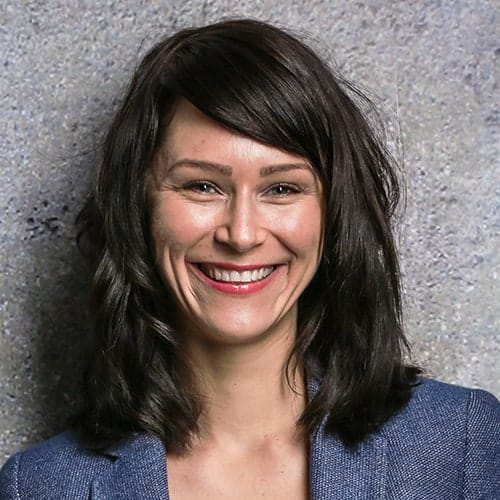
Claudia Wagner is a full professor for Applied Computational Social Sciences at RWTH Aachen University and the Scientific Director of the Computational Social Science department at GESIS—Leibniz Institute for the Social Sciences. She is also an External Faculty member at the Complexity Science Hub Vienna. Her work bridges computer science and the social sciences to study algorithmic systems and their societal impacts. Her research focuses on socio-technical phenomena such as inequality, sexism, and perception bias in algorithmically infused societies. She investigates methodological challenges in using digital behavioral data to study human behavior, attitudes, and group dynamics. Her interests span computational social science, algorithmic fairness, network science, and AI ethics. The analysis of her recent publications reveals a strong emphasis on bias, fairness, and methodological rigor in digital data analysis. Her work spans AI psychometrics, gender inequality in online platforms, and validation frameworks for digital traces. She frequently publishes in top-tier venues such as Nature , Science , and AAAI conferences. DOC-fFORTE fellowship from the Austrian Academy of Sciences Four best paper awards at international conferences (ICWSM, CSCW, WWW, AAAI) Associate Editor, EPJ Data Science Steering Committee Member, International AAAI Conference on Web and Social Media Board Member, International Society for Computational Social Science Claudia Wagner has led and co-led substantial research projects funded by national and international agencies. She mentors a diverse group of PhD students working on topics like algorithmic bias, data quality, and dehumanization. She has organized training events such as the CSS Methods Summer School and delivered keynotes globally on inequality and computational social science. She leads the Computational Social Science department at GESIS and collaborates with interdisciplinary teams at RWTH Aachen and the Complexity Science Hub. Her group develops tools for measuring algorithmic impacts and visualizing disparities in socio-technical systems, such as the 'Planets of Disparity' dashboard.
Dr. Lin Wang is a Lecturer in Applied Data Science and Signal Processing at Queen Mary University of London (QMUL), affiliated with the School of Electronic Engineering and Computer Science. He leads the Machine Listening Lab and is a member of the Centre for Multimodal AI, Centre for Intelligent Sensing (CIS), and Institute of Coding (IoC). His research focuses on audio-visual signal processing, robotic perception, and machine learning, with applications in healthcare, drone-based sensing, and human activity recognition. Dr. Wang holds a PhD from Dalian University of Technology and has held postdoctoral positions at QMUL, the University of Sussex, and the Alexander von Humboldt Foundation in Germany. Education and Roles: PhD in Signal Processing, Dalian University of Technology (2010) Postdoc at Queen Mary University of London (2014–2017) Postdoc at University of Sussex (2017–2018) Alexander von Humboldt Fellow at University of Oldenburg (2011–2013) Fellow of the Higher Education Academy (UK) Research Interests: Audio-visual signal processing for drones and wearable devices Machine listening and robotic perception Machine learning for healthcare and environmental monitoring Human activity recognition using multimodal sensors Awards and Grants: Early Career Champion on AI&Data, UK Acoustics Network Outstanding Article Award, Frontiers in Computer Science (2022) EPSRC grant: Bioacoustic Monitoring Using Drones (£46,821, 2022–2023) Innovate UK grant: Music Source Separation (£48,144, 2024–2025) Teaching and Students: Dr. Wang teaches Applied Statistics , Website Design and Authoring , and Machine Learning for Visual Data Analysis . He supervises PhD students including Ashish Alex (speech separation), Michael Clayton (drone audition), and Dmitrii Mukhutdinov (audio-visual processing). Labs and Teams: He co-leads the Machine Listening Lab and is part of the Centre for Multimodal AI, focusing on interdisciplinary projects in robotics, acoustics, and AI.
Jennifer J. Baker is an Associate Professor in the Department of English at New York University's College of Arts and Science. Holding a Ph.D. in English from the University of Pennsylvania (2000), her academic focus spans 18th- and 19th-century American literary, cultural, and intellectual history. Key research areas include literature and science, environmental literature, transatlantic Romanticism, and Civil War literature. She is currently working on a reception history of Herman Melville’s Moby-Dick , examining its rise to canonical status through Cold War politics and academic culture. Education: Ph.D. in English, University of Pennsylvania (2000) Her upcoming book American Romanticism and the Evolutionary Idea (Stanford UP, 2026) investigates how evolutionary theories intersected with Romantic concepts in 19th-century American literature. Previous publications include Securing the Commonwealth: Debt, Speculation, and Writing in the Making of Early America (Johns Hopkins UP, 2006). Recent research includes articles on Herman Melville, Emerson, Nathaniel Hawthorne, and Judith Sargent Murray, reflecting her interdisciplinary approach combining literary analysis with financial history, scientific thought, and cultural studies. Faculty Fellowship, NYU Center for the Humanities (2014-15) Heyman Prize, Yale University (2004) Morse Fellowship, Yale University (2005) Andrew W. Mellon Dissertation Fellowship (1997-98) She serves on the Board of the Melville Society Cultural Project and has held academic appointments at Yale University and the McNeil Center for Early American Studies.
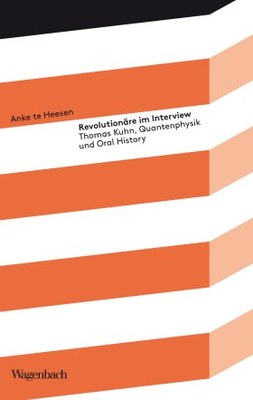
Professor Anke te Heesen is Chair of the History of Science with a focus on the history of education and the organization of knowledge in the 19th and 20th centuries at Humboldt-Universität zu Berlin. She has held this position since 2011 and is also the spokesperson (since 2024) of the DFG Center for Advanced Studies 'Applied Humanities – Politics and Genealogy,' alongside Professor Viktoria Tkaczyk. Previously, she served as Professor for Empirical Cultural Studies at the University of Tübingen (2008-2011) and founding director of the Museum of the University of Tübingen (2006-2008). Her academic career includes research positions at the Max Planck Institute for the History of Science in Berlin (1999-2006), the German Hygiene Museum Dresden (1998-1999), and the Research Center for the European Enlightenment (1996-1997). Professor te Heesen's research spans multiple interconnected fields including the history of humanities, natural history in the early modern period, museum and exhibition history, organization and notation methods of sciences, and the relationship between science and art. She has a particular interest in how knowledge is formed, organized, and presented through various material and institutional practices. Her work often examines the intersection of academic knowledge production with material culture, focusing on objects, collections, and exhibition practices as sites of knowledge formation. Her recent publications reveal a strong focus on the history of interviews as research methodology, the development of exhibition catalogs as scholarly monographs, and the material history of knowledge practices. The analysis of her 15 most recent articles shows consistent engagement with themes of materiality, the organization of knowledge, and the historical development of scholarly practices, particularly in the humanities. Her work frequently bridges historical analysis with contemporary scholarly concerns about knowledge production and dissemination. Spokesperson of the DFG Centre for Advanced Studies 'Applied Humanities: Genealogy and Politics' (since 2024) Senior Fellow, Collegium Helveticum, Zurich (WS 2023/24) Visiting Scholar, Max Planck Institute for History of Science (since 2021) Dibner Research Fellowship, Huntington Library (2020) Senior Research Fellowship, Lichtenberg Kolleg (2020) Professor te Heesen has held significant leadership roles including Ombudsperson of Humboldt University of Berlin (since April 2024) and Head of the Commission for Studies and Teaching at the Institute of History (since April 2024). She serves on multiple advisory boards including the Scientific Advisory Board of the project 'Serious Donations' at the Museum of Natural History in Berlin (since 2020), the DFG Review Board for History (2020-2024), and the Robert K. Merton Center for Science Studies at Humboldt University (since 2019). She is also a member of the editorial boards of several scholarly journals including Reports on the History of Science and History of Science and Humanities. Her work extends to museum practice and curation, with significant contributions to understanding how universities can leverage their collections to create meaningful educational experiences that connect historical context with contemporary research. She has initiated important publication series including 'Sonderdruck' (since 2016) and 'Minima Literatur- und Wissensgeschichte kleiner Formen' (since 2020).
Christopher G. Healey is the Goodnight Distinguished Professor of Analytics in the Institute for Advanced Analytics and a Professor in the Department of Computer Science at North Carolina State University. His research spans visualization, data analytics, text analytics, sentiment analysis, machine learning, cognitive psychology, computer graphics, and social media analytics. He has graduated 15 Ph.D. and 26 master's students and secured over $6 million in research funding from agencies including the National Science Foundation, Department of Defense, National Security Agency, Army Research Office, and various industry partners. He has published over 100 peer-reviewed articles and is a senior member of both IEEE and ACM, as well as a member of the NC State Academy of Outstanding Teachers. His research focuses on developing visualization techniques that leverage visual perception to support rapid, accurate, and effective analysis of large, complex datasets. More recently, he has been investigating machine learning for natural language processing and text analytics. His work includes projects on visualizing election results, sentiment estimation for social media, and wildfire narratives using large-scale social media data. His publications demonstrate a strong trend toward integrating machine learning with visualization, particularly for text analytics and social media analysis. He has made significant contributions to visualizing deep neural networks, cyber situation awareness, and pandemic response analytics, showing how visualization can enhance understanding of complex systems and large datasets across multiple domains. IBM Faculty Award (2007, 2008, 2010, 2011, 2012) Senior member, Association of Computing Machinery (ACM) (2007) Senior member, Institute of Electrical and Electronics Engineers (IEEE) (2007) NC State Academy of Outstanding Teachers inductee (2003) National Science Foundation Faculty Early CAREER Award (2001) He has successfully mentored numerous graduate students and secured significant research funding across multiple projects. His work with the Laboratory for Analytic Sciences, National Science Foundation, and Department of Defense demonstrates strong industry and government partnerships. His recent projects focus on visualizing social media narratives, deep neural networks for text understanding, and predictive analytics for large document collections. He leads research groups focused on visualization and analytics, working with teams to develop innovative approaches for data exploration and analysis. His current work continues to push the boundaries of how visualization can be used to enhance understanding of complex data across domains including public health, cybersecurity, and social media analysis.
Prof. Maosong Sun is a Professor at the Department of Computer Science and Technology, Tsinghua University, China. He holds additional leadership roles including Executive Vice Dean of the Institute for Artificial Intelligence and Deputy Director of the National Engineering Laboratory for Cyberlearning and Intelligent Technology. His research focuses on natural language processing (NLP), artificial intelligence, machine learning, and computational education. He leads interdisciplinary projects in computational humanities, knowledge graphs, and MOOC platforms like XuetangX, which has over 58.8 million registered learners. Key contributions include pioneering work in Chinese NLP tools, poetry generation systems like Jiuge, and large-scale research initiatives funded by Chinese and Singaporean programs. Awards include the Tsinghua University Education Award (2019) and the National Outstanding Practitioner Award (2007). Established NLP and Computational Humanities & Social Sciences Lab (2008) Co-director of the Joint Research Center for Extreme Search (2011-present) Over 200 publications with 11,000+ citations (h-index 47)
Przemyslaw Grabowicz is an Assistant Professor of Computer Science at University College Dublin and an Adjunct Professor at the University of Massachusetts Amherst. He leads the SIMS (Socially Intelligent Media and Systems) Lab and the EQUATE initiative, and is actively involved in the Knowledge Discovery Lab (KDL). His work bridges computer science, social science, and public policy, focusing on responsible AI and digital society. Research Interests: Fair and Explainable Machine Learning Computational Social Science Social Media and Network Science Public Opinion Modeling Algorithmic Bias and Discrimination Prevention Open-World Learning His research develops statistical and machine learning methods to understand and augment public opinion in digital environments, ensuring fairness, transparency, and societal benefit. He emphasizes legal compliance and ethical design in AI systems. Recent Research Trends: His recent publications focus on social media polls, political bias, misinformation, and fairness in machine learning. He investigates how algorithmic systems shape public discourse, especially during elections and global crises, and develops methods to detect and mitigate bias in data and models. Scientific Awards and Recognition: Best Paper Honorable Mention, ICWSM’25 WICI Data Challenge Main Prize (2013) Arnold O. Beckman Research Award Multiple UMass Amherst Interdisciplinary Research Grants Volkswagen Foundation Grants (over €900k total) Advising and Grants: Dr. Grabowicz supervises several PhD students in the SIMS and KDL labs and collaborates with MS students. He has secured significant funding from the Volkswagen Foundation, UMass Amherst, and the University of Illinois, supporting research on political misinformation, media bias, and global agenda setting. He is currently recruiting a postdoc at UCD. Labs and Initiatives: He heads the SIMS Lab and the EQUATE initiative, and contributes to the KDL. His project socialpolls.org explores public opinion through social media, and he maintains an active presence through the Uncommon Good blog on responsible AI.
Meeyoung Cha is a Professor at KAIST and Scientific Director of the Max Planck Institute for Security and Privacy (MPI-SP) in Bochum, Germany. Her research focuses on Data Science for Humanity, encompassing computational social science, misinformation dynamics, and human-machine interaction. She holds a PhD in Computer Science from KAIST (2008) and previously served as Chief Investigator at the Institute for Basic Science and Visiting Professor at Facebook. Her work addresses societal challenges such as poverty mapping, fraud detection, and AI ethics. Key achievements include best paper awards and recognition like the Hong Jin-Ki Creator Award (2024) and Test-of-Time Awards (ACM IMC 2022, AAAI ICWSM 2020). Research interests span AI ethics, social media analysis, and interdisciplinary applications of machine learning. Notable projects include modeling climate risks via satellite imagery and analyzing chatbot interactions' societal impacts. She leads the MPI-SP's Data Science for Humanity Group, mentoring over 20 students across PhD and postdoc programs. Education: PhD in Computer Science (KAIST, 2008) Affiliations: MPI-SP (Germany), KAIST Key Awards: Hong Jin-Ki Creator Award, Korean Young Information Scientist Award, Test-of-Time Awards Her publications bridge computational methods with societal issues, including climate modeling, protein engineering, and algorithmic fairness. Current projects explore geospatial AI for economic development and ethical AI design frameworks.
Dr. Jeffrey Morgan is a Researcher at Cardiff University's School of Social Sciences, specializing in multidisciplinary research at the intersection of computer science, social science, and geography. His work emphasizes human-computer interaction, visualization, and big data analytics. He holds a Research Software Engineer role, combining technical expertise with academic inquiry. Key research interests include AI-driven patent analysis, IoT applications in rural citizen science, and geospatial Twitter demographics. He has contributed to studies on Hadoop infrastructure optimization and social media conflict detection, often collaborating with institutions like Xiamen University and the University of Bremen. His publications span topics like energy-efficient big data processing, digital geography of Welsh identity, and scalable social media analysis frameworks. Notable projects include COSMOS (a cloud-based social media analysis platform) and studies on post-devolution cultural narratives in Wales. Award-winning work includes computational Twitter analysis for detecting online community tensions and geotagging behavior patterns. His research often bridges technical innovation with societal impact, addressing challenges in rural technology deployment and digital sociology.
Malvina Nissim is a leading researcher in computational linguistics and NLP at the University of Groningen's Department of Artificial Intelligence, with a focus on multilingual modeling, bias mitigation, and human evaluation frameworks. Key Contributions : Developed CALAMITA (Italian LLM benchmark), IT5 models for Italian language processing, and ReproHum framework for NLP evaluation reproducibility Research Pillars : Multilingual reasoning consistency, perspective-based text analysis, and figurative language modeling Her work spans activation steering techniques, cross-lingual transfer learning, and the creation of specialized language resources like the EurekaRebus dataset and MAGPIE idiom corpus. She pioneered methods for gender bias measurement in BERT and developed the SocioFillmore tool for perspective visualization. Recent publications explore model uncertainty as MCQ difficulty proxy, Italian headline generation benchmarks, and multilingual multi-figurative language detection. She actively participates in teaching initiatives like the "NLP with Bracelets" workshop for Italian high school students. Scientific Awards : ACL Best Paper Award (2025) EMNLP Outstanding Reviewer (2023) EVALITA Leadership Recognition (2024) She advises PhD students in model bias analysis and has contributed to the development of the Dutch Abusive Language Corpus (DALC) and the ReproNLP reproducibility framework. Her collaborations span institutions in Italy, Netherlands, and international NLP communities.