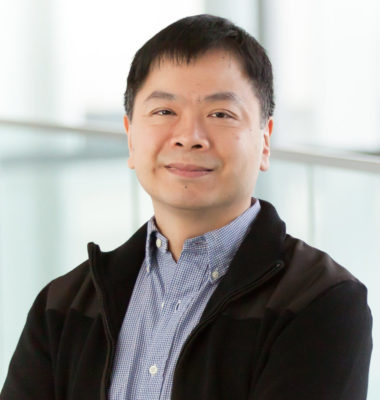
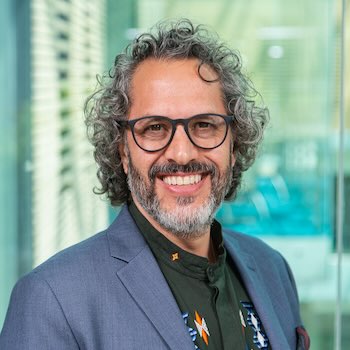
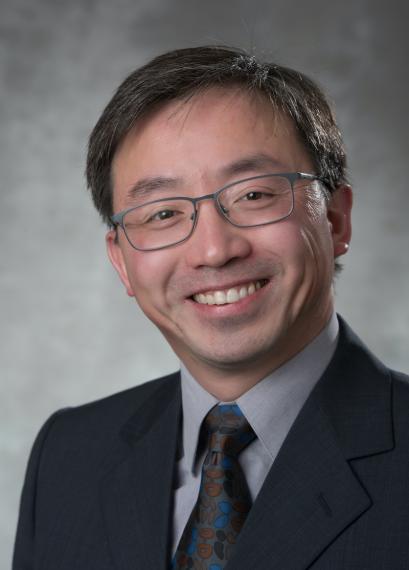
Kyros Kutulakos is a Professor in the Department of Computer Science at the University of Toronto, where he leads research in computational imaging and 3D sensing. His affiliations include the Toronto Computational Imaging Group, Computer Vision Group, Dynamic Graphics Project (DGP), and Vector Institute Group. He teaches graduate and undergraduate courses such as CSC320 (Introduction to Visual Computing) and CSC2530 (Computational Imaging & 3D Sensing). His research interests span computational imaging, non-line-of-sight imaging, single-photon detectors, 3D sensing, and neural rendering. Notable contributions include advancements in structured-light imaging, time-of-flight systems, and super-oscillatory microscopy. He has advised numerous PhD and MSc students, fostering cutting-edge research in imaging technologies. Kutulakos has received prestigious awards, including the Dean’s Research Excellence Award (2023) and multiple best paper prizes (e.g., Marr Prize at ICCV 2023). He has served as program chair for ICCV 2013, ICCP 2010, and CVPR 2003, contributing to academic leadership in computer vision. His work bridges optics, photonics, and computation, with applications in autonomous systems, medical imaging, and astronomy. Current research focuses on extreme imaging scenarios, such as imaging in pitch-black environments and around corners, leveraging novel sensor designs and computational techniques.
Ian Frigaard is a Professor in the Department of Mechanical Engineering at the University of British Columbia (UBC), affiliated with the Faculty of Applied Science. He also holds an appointment in the Department of Mathematics. His research group operates in UBC's Complex Fluids Lab, focusing on interdisciplinary studies combining mathematical, experimental, and computational approaches. Education: B.Sc. (University of Wales) M.Sc. (University of Oxford) D.Phil. (University of Oxford) C.Math. (Certificate in Mathematics) Research Interests: Professor Frigaard specializes in non-Newtonian fluid mechanics, particularly the mechanics of visco-plastic (yield stress) fluids. His work addresses industrial challenges in petroleum engineering, including well cementing, leakage prevention, and abandonment techniques related to GHG emission control and environmental protection. Research methodologies span theoretical modeling, experimental validation, and computational simulations. Publication Trends: Recent work (2021–2023) emphasizes bubble dynamics in complex fluids, displacement flows in annular geometries, wellbore integrity modeling, and stochastic risk assessment for oil/gas operations. Publications frequently appear in top-tier journals like the Journal of Fluid Mechanics and Journal of Non-Newtonian Fluid Mechanics . Awards & Honors: CSME Fluid Mechanics Medal (2024) Stanley G. Mason Award, Canadian Society of Rheology (2022) Killam Research Prize, UBC (2019) Academic Leadership: Leads a research group of 10+ graduate students and postdocs. Provides summer internships and collaborates extensively with the petroleum industry. Research is supported by industrial partnerships and institutional grants. Facilities: Conducts experiments in UBC's Complex Fluids Lab, equipped for advanced rheological measurements and flow visualization.
Kwang Moo Yi is an Assistant Professor in the Department of Computer Science at the University of British Columbia (UBC), where he conducts research in computer vision and machine learning. He is affiliated with the Computer Vision Lab, CAIDA (Centre for Artificial Intelligence Decision-making and Action), and ICICS (Institute for Computing, Information and Cognitive Systems) at UBC. Education: B.Sc. from Seoul National University Ph.D. from Seoul National University under Prof. Jin Young Choi Post-doctoral researcher at École Polytechnique Fédérale de Lausanne (EPFL) with Prof. Pascal Fua and Prof. Vincent Lepetit Dr. Yi's research focuses on Visual Geometry with the goal of understanding local environments, adapting to them, and acting within them. His work spans applications in autonomous vehicles, drones, robots, and Augmented/Mixed Reality systems. He employs machine learning, particularly deep learning, as the primary tool for advancing computer vision capabilities. His recent publications demonstrate a strong focus on neural rendering techniques, especially 3D Gaussian Splatting and Neural Radiance Fields (NeRF). The research trends show increasing sophistication in handling occlusions, improving rendering quality, and developing more efficient training methods for neural fields. There's also significant work connecting computer vision with practical applications in industrial settings and energy systems. Dr. Yi serves as an area chair for top computer vision and machine learning conferences including CVPR, ICCV, ECCV, NeurIPS, ICML, and AAAI. He was part of the organizing committee for CVPR 2023. He supervises graduate students including Eric (who recently completed his PhD), Gopal (now at Samsung Research), and Jeong-Gi (joining as a postdoctoral fellow). His teaching includes CPSC 425: Computer Vision and CPSC 533Y: 3D Computer Vision with Deep Learning. Dr. Yi is actively involved with the Computer Vision Lab at UBC, collaborating with researchers across CAIDA and ICICS. His work bridges theoretical computer vision with practical applications in various domains including astronomy, industrial automation, and energy systems.
Elizabeth (Lisa) Alexandrin is an Associate Professor in the Department of Religion at the Faculty of Arts, University of Manitoba . Her academic work bridges Islamic Studies , Sufism , and gender theory , with a focus on visual and textual representations of mysticism. Education: PhD in Islamic Studies, McGill University (2006) MA in Anthropology, University of Toronto (1993) BA in Anthropology, Boston University (1993) Research Interests: Islamic intellectual history Sufism Ismaili thought Body histories Visual piety Key Themes in Publications: Apocalyptic narratives in Fāṭimid Ismāʿīlī thought Qurʾanic calligraphy as spiritual practice Symbolism of walāyah (sainthood) in Sufi texts Intersection of dreams and mystical exegesis Awards: SSHRC Insight Development Grant (2018-2022) Explore SSHRC/University of Manitoba grant (2021-2022) SSHRC standard research grant (2011-2012)
Dr. Ting Hu is an Associate Professor in the School of Computing at Queen's University, affiliated with the Faculty of Arts and Science. She leads the Machine Intelligence & Biocomputing (MIB) Laboratory, focusing on bio-inspired AI and bioinformatics. Her research bridges evolutionary computing, machine learning, and biomedical data analysis. Dr. Hu holds a PhD in Computer Science from Memorial University and completed postdoctoral training at Dartmouth College. She teaches courses with strong student evaluations, winning the Howard Staveley Teaching Award (2019-2020) and recognition as a Mental Health Champion (2023). Education: B.Sc. in Computational Mathematics, Wuhan University M.Sc. in Computer Science, Wuhan University PhD in Computer Science, Memorial University Postdoctoral Fellowship, Geisel School of Medicine, Dartmouth College Research Interests: Evolutionary algorithms and genetic programming Interpretable and explainable AI Biomedical data mining (metabolomics, genomics) Complex network analysis Applications in precision medicine and disease prediction Awards & Recognition: Queen's AMS Undergraduate Mentorship Award (2025) IEEE CIBCB Best Student Award (2022) Howard Staveley Teaching Award (2019-2020) NSERC Discovery Grant Reviewer (2019) Memorial University's Best Professor Award (2016) Lab & Collaborations: MIB Lab develops tools like geneDRAGNN (graph neural networks for gene-disease prioritization) Active roles in IEEE Computational Intelligence Society and EuroGP Advances include vaccination strategies via graph-RL and interpretable clustering methods
Reza Farivar-Mohseni is an Associate Professor at McGill University , affiliated with the Faculty of Medicine and Health Sciences and the Department of Ophthalmology and Visual Sciences . He serves as a Scientist at the RI-MUHC (Montreal General Hospital site), contributing to the Brain Repair and Integrative Neuroscience (BRaIN) Program and the Centre for Translational Biology . Research Interests: Dr. Farivar-Mohseni’s work focuses on cortico-cortical communication, information processing in the brain, and disruptions in neurological disorders like traumatic brain injury. He specializes in advancing non-invasive brain imaging (MRI) for both fundamental and clinical applications, particularly improving concussion detection and diagnosis. Publications: His research spans high-resolution MRI, visual perception, and functional imaging. Key themes include depth-cue invariance in object recognition, gamma-band neural representations, and cortical deficits in amblyopia. Recent studies (2025–2022) address computational neuroscience, vision screening tools, and neural imaging techniques. Labs & Collaborations: He collaborates with the MGH-MRI Research Platform and works within the Centre for Translational Biology , focusing on translating imaging advancements into clinical tools.
Robert S. Allison is a Professor in the Department of Electrical Engineering & Computer Science at York University's Lassonde School of Engineering. His research focuses on human perceptual responses in virtual environments, stereoscopic vision, and eye movement analysis. He is affiliated with the York Centre for Vision Research, Sensorium (Digital Arts & Technology), and the Centre for Innovation in Computing at Lassonde. His research interests include depth perception in natural and virtual environments, human-computer interface design for VR, machine vision applications, and the measurement of human motion. He has supervised multiple graduate students and contributed to over 260 publications. His work spans topics like cybersickness mitigation, display lag effects, and perceptual adaptation in VR. Key grants include NSERC-funded projects on perception in virtual environments and collaborations with institutions like the Australian Research Council. His teaching includes courses on human perception in human-computer interaction and digital logic design. Recent articles highlight advancements in understanding motion perception, VR-induced sickness, and multisensory integration. He collaborates widely, with affiliations including the VISTA program and York's Connected Minds initiative.
Robert Laganière is a Professor at the School of Electrical Engineering and Computer Science at the University of Ottawa, where he has been actively contributing to the fields of computer vision and image analysis. He is a member of the VIVA research laboratory and holds a Ph.D. and M.Sc. from INRS-Telecommunications in Montreal, as well as a bachelor's degree in Electrical Engineering from École Polytechnique de Montréal. Bachelor's in Electrical Engineering: École Polytechnique de Montréal (1987) Master's Degree: INRS-Telecommunications (1990) Doctorate: INRS-Telecommunications (1996) Professor Laganière's research focuses on computer vision, with particular expertise in image and video analysis, visual surveillance, embedded vision systems, and deep learning applications. His work spans fundamental research in feature detection and matching to practical applications in autonomous driving, human recognition, and real-time object tracking. He has made significant contributions to the development of algorithms for pedestrian detection, age and gender recognition, and 3D object localization. His publication trends reveal a consistent focus on practical computer vision applications with a strong emphasis on real-time performance and embedded implementation. Over the past decade, his research has evolved from foundational work in feature matching and homography estimation toward more complex applications in action recognition, human-computer interaction, and intelligent surveillance systems. His work consistently bridges theoretical computer vision with practical engineering constraints, particularly for mobile and embedded platforms. Best Paper Award, IEEE International Conference on Computer and Robot Vision (CRV 2014) Best Paper Award, CVPR Embedded Vision Workshop, Providence, RI, June 2012 Best Real-time Tracker, IEEE International Conference on Computer Vision (ICCV) Workshop on Visual Object Tracking (VOT2015) Professor Laganière has supervised numerous graduate students through the years, with a particular focus on practical applications of computer vision in surveillance, human recognition, and embedded systems. His research has been supported through industry partnerships with companies including CogniVue Corp, NXP, iWatchLife.com, Solink Corp, CBSA Canada, Ross Video, Thales, Habitat Seven, and YouI Labs. He has successfully translated his research into commercial applications through his founding of Visual Cortek (acquired by iWatchLife in 2009) and Tempo Analytics (founded in 2016). As a member of the VIVA research laboratory, Professor Laganière collaborates with colleagues on advanced computer vision projects, particularly those involving intelligent video analytics for security and commerce applications. His work on NAVIRE (Virtual Navigation in Remote Environments) demonstrates his commitment to developing practical solutions for real-world navigation challenges using image-based representations of real environments.
Roger Tam is an Associate Professor in the School of Biomedical Engineering (SBME) at the University of British Columbia (UBC), with a joint appointment in the Department of Radiology. He is also the Associate Director of Graduate Studies. His research focuses on machine learning and computer vision applied to medical imaging, particularly in personalized medicine and quantitative image analysis. Tam earned his PhD in computer science from UBC in 2004, specializing in computational geometry and visualization. Education: PhD in Computer Science, UBC (2004) MSc in Computer Science BSc (Honors) Research Interests: Medical imaging biomarkers Machine learning applications in healthcare Quantitative image analysis Personalized medicine His work bridges computer science and clinical medicine, emphasizing translational approaches to improve diagnostic accuracy and patient outcomes. Recent Research Trends: Focus on myelin content analysis in neurological disorders (e.g., multiple sclerosis) Development of efficient machine learning models for medical image classification Impact of physical activity on white matter health Labs & Programs: Directs the Engineers in Scrubs program, which integrates engineering principles into biomedical education. Active in collaborative research initiatives like the Centre for Brain Health and the Canadian Prospective Cohort Study (CanProCo).
Dr. Kevin J. Deluzio is an Associate Professor in the Department of Mechanical and Materials Engineering at Queen's University and serves as Dean of Smith Engineering. He holds a cross-appointment in the Centre for Health Innovation and is affiliated with the Canadian Orthopaedic Research Society and multiple biomechanics societies. His research focuses on musculoskeletal health, biomechanics of human locomotion, and knee osteoarthritis treatment evaluation. Dr. Deluzio earned his BSc (1988), MSc (1990), and PhD (1997) from Queen's University, followed by postdoctoral training at Harvard University. He previously held a faculty position at Dalhousie University, establishing the Dynamics of Human Motion Laboratory. Education: Bachelor of Science (Honours) in Mathematics and Engineering, Queen's University (1988) Master's of Science in Mechanical Engineering, Queen's University (1990) Doctor of Philosophy in Mechanical Engineering, Queen's University (1997) Post-doctorate in Orthopaedic Biomechanics, Harvard University (1999) Research Interests: Dr. Deluzio investigates biomechanical factors of musculoskeletal diseases (e.g., knee osteoarthritis), non-invasive therapies, and surgical treatments like total knee replacement. His work involves markerless motion capture systems and collaborations between engineering and medicine through the Human Mobility Research Centre at Kingston General Hospital. Grants & Awards: While no specific awards are listed, his research has been supported through academic appointments and institutional affiliations. Labs & Teams: Directs the Dynamics of Human Motion Laboratory and collaborates at the Human Mobility Research Centre, integrating engineering and medical expertise to advance musculoskeletal health solutions.
Paul Tupper is a Professor in the Department of Mathematics at Simon Fraser University (SFU), part of the Faculty of Science. He holds a Ph.D. in Scientific Computing from Stanford University (2002). His research focuses on applied mathematics with emphasis on mathematical modeling in epidemiology, speech perception, neural networks, and computational linguistics. He teaches advanced courses in probability, numerical linear algebra, and calculus for social sciences. His work bridges theoretical mathematics and real-world applications, particularly in understanding complex systems like disease transmission dynamics and cognitive processes. Recent studies include modeling the transition of pandemics to endemic states, genomic analysis of viral spread, and audio-visual perception mechanisms in speech. He actively contributes to public health policy discussions through epidemic modeling research. Professor Tupper's research has been published in high-impact journals and conferences, with notable contributions to diversity metrics in biology and geometry, stochastic differential equations, and connectionist models of linguistic phenomena. His courses reflect interdisciplinary interests, integrating mathematical rigor with practical computational methods.
Ignacio Castillo is a Professor and Associate Dean of Business (Graduate Academic Programs) at the Lazaridis School of Business and Economics, Wilfrid Laurier University. His expertise spans facility location optimization, supply chain management, and sustainable operations. He holds a leadership role in graduate academic programming and teaches courses in operations and statistics. Research focuses on optimizing facility layouts, material handling systems, and closed-loop supply chains. He has developed frameworks for multi-objective facility design and advanced packing optimization algorithms. His work bridges theoretical models with real-world applications in manufacturing and retail sectors. Publications emphasize nonlinear optimization techniques, packing problems, and supply chain coordination strategies. Recent work explores irregular object configurations and retail category space optimization. His textbooks include Business Statistics for Contemporary Decision Making and Operations Management , emphasizing practical decision-making tools. Office: LH4001M | Languages: English, Spanish
Dr. Minglun Gong is a Professor and Director of the School of Computer Science at the University of Guelph (since 2019). Previously, he served as Professor and Head of the Department of Computer Science at Memorial University of Newfoundland. He holds a Ph.D. from the University of Alberta (2003), M.Sc. from Tsinghua University (1997), and B.Engr. from Harbin Engineering University (1994). His research focuses on visual computing, including computer graphics, computer vision, visualization, image processing, and pattern recognition. He has authored over 150 referred papers and holds patents in the field. He is an Associate Editor for Pattern Recognition and IEEE Signal Processing Letters , and has received awards such as the Izaak Walton Killam Memorial Award and multiple best paper awards. Dr. Gong has advised numerous students, including Ph.D./M.Sc. candidates and visiting scholars. His lab's recent work includes UAV path planning for urban reconstruction, image stylization techniques, and 3D human pose estimation. He actively participates in academic service, including editorial roles, conference program committees, and administrative roles at multiple institutions. His teaching spans courses in image processing, computational photography, and technical communication. He is also involved in administrative committees, such as Graduate Studies and Promotion at Memorial University. Key research contributions include advancements in transparent object modeling, underwater 3D reconstruction, and image-to-image translation. His work emphasizes practical applications in fields like medical imaging, autonomous systems, and environmental modeling.
Golnoosh Farnadi is an Assistant Professor at McGill University's School of Computer Science , an Adjunct Professor at Université de Montréal , and a Visiting Faculty Researcher at Google Research . She holds the Canada CIFAR AI Chair and is a core academic member of Mila – Quebec AI Institute . Her research focuses on algorithmic fairness , responsible AI , and optimization . She founded the EQUAL Lab (EQuity & EQuality Using AI and Learning algorithms) to address bias and discrimination in AI systems. Key publications explore fairness in kidney exchange programs, generative model geometry, multilingual LLM de-biasing, and prototype-based recommender systems. Her work bridges causal inference, adversarial robustness, and ethical AI. Google Award for Inclusion Research (2023) Women in AI Awards North America Finalist (2023) Facebook Privacy Enhancing Technologies Award (2021) IVADO Postdoctoral Fellowship (2018–2021) She has supervised over 15 PhD and Master's students, including Prakhar Ganesh (McGill) and William St-Arnaud (Université de Montréal). Her teaching includes Responsible AI and Machine Learning courses at McGill and HEC Montréal.
Melanie Campbell is a Professor at the University of Waterloo, cross-appointed to the School of Optometry and Department of Systems Design Engineering. Her research focuses on the optical properties of the eye, developing imaging systems for diagnosing Alzheimer's disease and diabetic retinopathy through polarization techniques and adaptive optics. PhD in Physics from Australian National University (1982) MSc in Physics from University of Waterloo (1977) BSc in Chemical Physics from University of Toronto (1975) Research interests include: Retinal amyloid detection for Alzheimer's diagnosis Adaptive optics for high-resolution imaging Polarimetry in ocular pathology Presbyopia and ophthalmic corrections Her publications (2012-2019) demonstrate interdisciplinary applications of optics in neuroscience and diabetes research, with key contributions to: Retinal polarization imaging Two-photon therapy systems Cone photoreceptor analysis Animal models of neurodegeneration Scientific honors include: 2019 Laird Lecturer 2014 CAP-INO Medal 2004 Rank Prize in Optoelectronics Fellow of Optical Society of America As director of Campbell Labs, she leads research on retinal imaging techniques and their applications in neurological disease diagnosis.