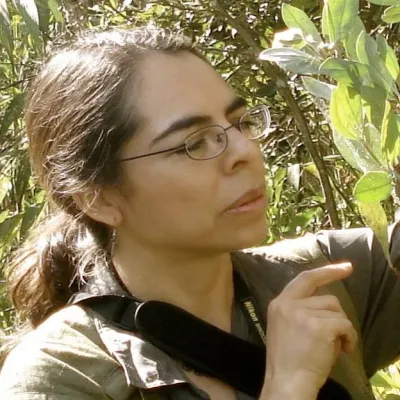
Fumihiro Kano is a comparative psychologist at the Centre for the Advanced Study of Collective Behavior, University of Konstanz, and an Affiliated Scientist at the Max Planck Institute of Animal Behavior. His research focuses on the evolutionary origins of social intelligence, using cutting-edge technologies like eye-tracking, motion-capture, and thermal imaging to study social cognition in great apes, monkeys, and birds. Education: PhD in Biological Sciences (Primate Research Institute, Kyoto University) Key Collaborations: Max-Planck Institute for Evolutionary Anthropology, University of Oxford, Kumamoto Sanctuary (Kyoto University) Kano’s work spans comparative analysis of gaze behavior, emotional processing, and collective decision-making. He has developed wearable sensors for free-flying pigeons and non-invasive methods for studying primates in sanctuaries. His studies on the human eye’s uniformly white sclera have provided experimental support for the gaze signaling hypothesis . Recent research integrates large-scale motion-capture systems with gaze-tracking to analyze interspecies interactions in pigeons, crows, and humans. He specializes in quantifying attention dynamics during collective behavior, including vigilance in birds and social cognition in apes. Scientific Awards: Heidelberg Academy of Sciences Manfred Fuchs Preis (2023) APA Division 6 Early Carrier Investigator Award (2020) Japanese Psychological Association International Award (2018) Kano leads interdisciplinary teams combining computer vision, psychology, and behavioral ecology. His work bridges evolutionary biology and technological innovation, with applications for understanding human uniqueness and animal cognition.
Gerald Borgia is a Professor in the Department of Biology at the University of Maryland's College of Computer, Mathematical and Natural Sciences, with affiliations at the Brain and Behavior Institute. His office is located in the Biology-Psychology Building (4239). He earned his Ph.D. in 1978 from the University of Michigan, specializing in the evolution of mate choice, social structure, and sociobiology. Borgia leads the Borgia Lab, which studies the evolution of mate choice and male display in nonresource-based mating systems, using bowerbirds as a model system. His research focuses on sexual selection, lek mating systems, complex male displays, female mate choice strategies, threat reduction in courtship, and the co-option of display traits. The lab maintains a long-term field site at Wallaby Creek in Australia for studying satin bowerbirds. Analysis of Borgia's recent publications shows consistent themes in sexual selection and animal communication. His work demonstrates increasing sophistication in experimental approaches, including robotic females, chemical manipulation of bowers, and cognitive testing. Recent articles focus on the role of cognitive ability in mating success, chemical signaling through bower paint, dynamic adjustment of male displays, and the relationship between aerobic capacity and sexual performance. Borgia actively advises graduate students and maintains a substantial research team. He recruits field assistants for Australian fieldwork and laboratory volunteers for video analysis. His NSF-funded research supports graduate students working on diverse projects including mate searching, juvenile display development, male-female signaling dynamics, and aerobic capacity studies. The lab collaborates with molecular systematists at the Smithsonian Institution and National Zoo.
James Magnuson is a Professor in the Department of Psychological Sciences at the University of Connecticut, where he leads the Computational Cognitive Neuroscience of Language Lab (CCNLL). He serves as Principal Investigator for multiple NSF-funded initiatives, including the Neurobiology of Language graduate training program and the Science of Learning and Art of Communication research training program, and co-directs the Cognitive Science Shared Electrophysiology Resource Lab (CSSERL). His research investigates the neurobiological and psychological foundations of language processing, development, and disorders using computational modeling, eye-tracking, and neuroimaging techniques. Key interests include neural-network models of spoken word recognition (e.g., EARSHOT and TISK frameworks), real-time language processing across the lifespan, prosody in Specific Language Impairment, phonological competition dynamics, and cross-modal integration of linguistic information. Educational background includes a Ph.D. in Brain & Cognitive Sciences from the University of Rochester (2001). Current teaching responsibilities include undergraduate Cognitive Psychology (PSYC 2501) and graduate seminars on language plasticity and time-course methodologies (EEG, eye-tracking). Magnuson actively advises doctoral students in projects spanning computational modeling of speech recognition, neural bases of language processing, and individual differences in language acquisition. He has secured significant NSF funding for interdisciplinary training programs bridging cognitive science, neuroscience, and genetics.
Caleb Kemere is an Associate Professor in the Departments of Electrical and Computer Engineering and Bioengineering at Rice University. His work bridges neuroscience, engineering, and computer science, focusing on neuroengineering, neural decoding, and real-time brain-computer interfaces. He holds a B.S. in Electrical Engineering (with Honors) and a B.A. in Economics from the University of Maryland, College Park, and a Ph.D. in Electrical Engineering from Stanford University. Before joining Rice in 2011, he was a postdoctoral fellow at the Keck Center for Integrative Neurosciences at UCSF. His research explores hippocampal function in spatial navigation and memory, signal processing for neural interfaces, and developing technologies like miniature microscopes and low-power sensors. He has pioneered frameworks such as Spyglass for reproducible neuroscience research and RealtimeDecoder for online neural decoding. Kemere has received prestigious awards including the NSF CAREER Award (2013), HFSP Young Investigator Award (2014), and BRAIN: EAGER Award (2015). His grants include a five-year NSF grant to study Deep Brain Stimulation (DBS) and a neural engineering IGERT grant. His lab, the Realtime Neural Engineering Lab (RNEL), develops tools for understanding and modulating neural activity. Ongoing work addresses closed-loop brain stimulation, environmental uncertainty modeling in foraging behavior, and sleep-based memory consolidation.
Priyadarshini Chakrabarti Basu serves as an Assistant Professor in the Department of Horticulture within Oregon State University's College of Agricultural Sciences. Her research program integrates molecular entomology, apiculture, and ecotoxicology to address critical challenges in pollinator health. Her research focuses on honey bee nutrition , pesticide impacts , and molecular mechanisms underlying bee health. She employs advanced techniques including proteomics, metabolomics, and lipidomics to investigate how nutritional stressors, pesticides, and pathogens affect honey bee physiology and behavior. Her work spans laboratory investigations to field studies across diverse agricultural landscapes. Analysis of her 15 most recent publications reveals strong emphasis on nutritional biochemistry (particularly sterol metabolism), sublethal pesticide effects , and molecular response mechanisms in honey bees. Her research bridges fundamental molecular biology with practical apicultural applications, generating insights relevant to both managed and wild pollinator populations. Excellence in Undergraduate Research Mentoring by a Postdoc Award, Oregon State University, 2021 Excellence in Early Career Award, Pacific Branch of Entomological Society of America, 2020 Postdoctoral Excellence Award, Oregon State University, 2019 Royal Society Newton International Post Doctoral Fellowship, 2016 DST-INSPIRE Fellowship, Department of Science & Technology, Government of India Dr. Chakrabarti Basu has secured significant research funding including USDA-AFRI grants ($500,000) and multiple awards from the California State Beekeepers' Association and Project Apis m. She serves as Principal Investigator on several active projects investigating pesticide impacts and nutritional requirements in honey bees. Her extension work includes the popular OSU Pollination Podcast and numerous outreach publications aimed at beekeepers and agricultural professionals. She leads research initiatives within OSU's Pollinator Health & Apiculture Lab, which emphasizes diversity, equity, and inclusion in its scientific community. Her work connects molecular mechanisms to field applications, providing actionable insights for improving pollinator health in agricultural ecosystems.
Yusan Yang is an Assistant Professor at the University of South Florida's Department of Integrative Biology, within the College of Arts and Sciences. His research focuses on evolutionary ecology, animal behavior, and visual ecology, particularly examining the evolution of animal coloration and mating strategies in poison frogs and Trinidadian guppies. He holds a Ph.D. in Ecology & Evolution from the University of Pittsburgh (2020) and a B.S. in Biology from National Taiwan University (2013). Dr. Yang's lab investigates how mating behaviors, sexual ornaments, and social learning influence sexual selection, speciation, and diversification. Key projects include studying light's impact on guppy mating tactics, transcriptomic mechanisms of color production, and the role of learning in speciation. Recent publications highlight work on brain morphology evolution, foraging strategies, and eco-evolutionary dynamics. Education: Ph.D., Ecology & Evolution, University of Pittsburgh, 2020 B.S., Biology, National Taiwan University, 2013 His lab includes multiple undergraduate researchers, a master's student, and a PhD student, with active recruitment for diverse roles. Notable collaborations include work with Dr. Diego Santiago-Alarcon. Lab highlights include a featured article in Animal Behaviour and a focus on interdisciplinary approaches combining field experiments, comparative studies, and mathematical modeling.
Gerhard J. Gries is a Professor and NSERC-Industrial Research Chair in Multimodal Animal Communication Ecology in the Department of Biological Sciences at Simon Fraser University. His research focuses on insect, spider, and tick communication ecology, emphasizing semiochemical, sonic, visual, infrared, and bacterial signals, as well as pest management solutions. The Gries Lab collaborates with industry partners (e.g., BASF Canada, Scotts Canada) to develop eco-friendly pest control strategies. The lab’s facilities include analytical chemistry labs, electrophysiology setups, and advanced imaging systems. Research Themes: Animal communication, chemical ecology, pest behavior, and multimodal signaling. Funding: NSERC-IRC, industrial partnerships. Key research interests include understanding how pests like mosquitoes, ants, and spiders use environmental cues and developing sustainable control methods. The lab has trained numerous students (over 100 undergraduates and graduates) and published extensively in entomology and ecology journals. Notable achievements include the 2004 NSERC-IRC award, which supports industry-academic collaboration for triple-win outcomes: scientific advancement, societal benefits, and industrial innovation. The lab’s work on spider-ant interactions and insect pheromones has gained media attention (e.g., NewScientist, National Geographic). Lab facilities include gas chromatography, thermal imaging, and sound/vibration analysis tools, enabling cutting-edge research. Future work focuses on expanding eco-friendly pest solutions and exploring insect communication systems.
Dr. Leticia Avilés is Professor of Zoology at the University of British Columbia, investigating the evolutionary forces driving social organization and their population-level consequences. Her research employs multilevel selection theory to examine social evolution, metapopulation dynamics, and cooperative systems, with emphasis on spider sociality as model systems. Key research areas: Origins and maintenance of cooperation in social spiders Evolution of skewed sex ratios in subdivided populations Metapopulation ecology and life history evolution Antipredator strategies and extended phenotypes Mutualistic interactions across environmental gradients Her work integrates field experiments across elevational gradients in the Andes, theoretical modeling, and genomic approaches to study convergent social evolution. Recent publications explore kleptoparasite impacts on spider colonies, energetics of group living, neural investment patterns, and mutualism mediation mechanisms. Experimental manipulations test how environmental factors like precipitation and predation shape social evolution.
Mary Stoddard is Professor in Princeton University's Department of Ecology and Evolutionary Biology. Her research explores animal coloration, avian vision, and evolutionary processes using multidisciplinary approaches combining computer science, optics, physiology, and genomics. Fieldwork is conducted at the Rocky Mountain Biological Laboratory (Colorado) and Mountain Lake Biological Station (Virginia). Research investigates visual communication, color perception in hummingbirds, pattern recognition in eggshells, and the biomechanics of structural coloration. Develops open-source optical tools and software for quantifying animal coloration. Leads the Princeton Better for Birds Project to reduce bird-window collisions through community engagement and architectural solutions.
Dr. Chris Bone is an **Associate Professor in Geography** at the **University of Victoria**, affiliated with the **Faculty of Social Sciences**. His research focuses on geospatial technologies, spatial simulation modeling, and human-environment interactions, particularly in relation to climate change and forest policy. He holds a PhD from Simon Fraser University and teaches advanced spatial analysis and geostatistics (GEOG 418/518). **Research Interests**: Dr. Bone’s work integrates computational methods like agent-based modeling and network modeling to study climate-driven natural disturbances (e.g., mountain pine beetle outbreaks), wildfire management, and human-wildlife interactions. He emphasizes geovisualization tools for environmental decision-making and has collaborated with Indigenous communities on biocultural stewardship projects. **Publications**: His recent work explores topics such as wildfire-beetle interactions, grizzly bear translocation success, and the role of federal air quality standards in prescribed fire practices. Over 50 peer-reviewed articles span environmental science, GIS applications, and policy analysis. **Awards**: No specific scientific awards listed in the provided texts. **Grants & Labs**: Active in interdisciplinary projects funded by organizations like the National Science Foundation (NSF CNH). Leads research on geospatial tools for managing invasive species and optimizing forest governance networks.
Christina Grozinger is a Professor in the Department of Entomology at Pennsylvania State University and serves as the Director of the Huck Institutes of the Life Sciences. Her research integrates genomics, molecular biology, and ecology to understand social behavior, chemical communication, and health in honey bees and other pollinators. She leads a highly collaborative and interdisciplinary research program focused on improving pollinator conservation and management. Her research interests include: Genomic and molecular basis of social behavior in insects Chemical communication and pheromone signaling in honey bees Host-parasite interactions and immune responses in pollinators Landscape genomics and environmental stress responses Pollinator conservation and sustainable beekeeping practices The recent articles (2024–2025) reflect a strong focus on applying cutting-edge molecular tools—such as transcriptomics, DNA metabarcoding, and machine learning—to address urgent conservation challenges. Themes include climate change impacts on bee fertility, viral infections in insect hosts, landscape-level pathogen dynamics, and the use of citizen science for monitoring firefly populations. Her work bridges fundamental biology with applied solutions for pollinator decline. Scientific awards and recognitions include: Distinguished Professor at Pennsylvania State University Publius Vergilius Maro Professor of Entomology Appointment to the National Academies Committee on Insect Declines Dr. Grozinger leads major research initiatives, including Scialog grants on environmental impacts on animal behavior, and advises numerous graduate students and postdoctoral researchers. She has secured significant funding for interdisciplinary projects, such as those combining ecological modeling with decision support systems for land managers. Her leadership extends to directing the Huck Institutes, where she fosters innovation across life sciences. She is actively involved in science communication and education, including courses on pollinator conservation that assess cognitive impacts on students. She leads research teams focusing on: The Grozinger Lab at Penn State, which studies molecular mechanisms of social behavior Interdisciplinary collaborations in landscape ecology, genomics, and conservation Citizen science and machine learning applications in pollinator monitoring Development of spatial decision support tools for ecological management
Joy Geng is a Professor of Psychology at the University of California, Davis, and Principal Investigator of the Geng Lab (Integrated Attention Lab), with additional affiliation at the Center for Mind and Brain. She teaches advanced courses in Cognitive Neuroscience, Perception, and Current Research in Psychology. Education: Ph.D. in Psychology from Carnegie Mellon University B.A. in Psychology from Cornell University Her research investigates how goal-directed and sensory-driven information integrate to shape perception, focusing on attentional control mechanisms that balance target selection and distractor suppression. Using fMRI, eye-tracking, and behavioral measures, she examines neural and cognitive processes underlying visual attention, with emphasis on template flexibility, distractor learning, and multisensory integration. Current work explores how attentional templates dynamically adapt to distractor contexts and how cross-modal expectations influence sensory processing. Recent publications (2024-2025) reveal strong trends in template-based visual search, distractor suppression strategies, and neural correlates of attentional guidance. Key themes include learned target-distractor relationships, alpha oscillation dynamics in multisensory processing, and boundary effects in object-based attention during scene perception. As Director of the Integrated Attention Lab, Professor Geng leads research combining computational modeling with neuroimaging to decode attentional priority maps. The lab investigates how real-world contexts like virtual shopping environments and navigation tasks shape attentional allocation, with growing emphasis on translational applications for attention disorders.
Professor James A.R. Marshall is a Professor of Theoretical and Computational Biology at the University of Sheffield's School of Computer Science, where he also serves as Director of the Centre for Machine Intelligence. He leads the Behavioural and Evolutionary Theory Lab (BET Lab), an interdisciplinary research group focused on understanding behavior through mathematical and computational approaches. His academic journey includes previous positions at the University of Bristol before joining Sheffield in 2010. Marshall's research spans collective social insect behavior, evolutionary theory, decision theory, robotics, and theoretical neuroscience. He applies mathematical and computational approaches to understand how and why behaviors evolve, with particular interest in social insect colonies, swarm intelligence, and biomimetic applications for robotics. His work often bridges biology and computer science, developing algorithms inspired by natural systems. He has made significant contributions to understanding confidence-weighted decision-making, quorum sensing in swarms, and magnitude-sensitive reaction times in multi-alternative choices. His recent publications reveal a strong trend toward applying insights from biological systems to robotics and AI, particularly through projects like Brains on Board and Opteran Technologies. His work increasingly focuses on neuromorphic control systems that mimic insect brains for autonomous navigation, demonstrating how constraints in biological systems can lead to robust engineering solutions. The interdisciplinary nature of his research is evident in publications spanning computational neuroscience, robotics, animal behavior, and theoretical biology. EPSRC Peer Review College Member (2010-present) Member of the UKRI Future Leaders Fellowship Panel College (2019-present) Editorial Board, Swarm Intelligence (2017-present) Associate Editor, PLoS Computational Biology (2020-present) Marshall has successfully mentored numerous researchers including HaDi MaBouDi, Andreagiovanni Reina, and Alexander Cope, while securing substantial research funding including EPSRC grants totaling over £4 million. His lab has produced the spinout company Opteran Technologies, which has secured over £12 million in funding to develop natural intelligence technology for autonomous systems. The BET Lab maintains strong connections with Sheffield Robotics and focuses on testing theoretical models in physical robotic systems while developing computational models of biological processes.
Professor Paul Blackwell is a faculty member at the University of Sheffield within the School of Mathematical and Physical Sciences . His academic work focuses on Bayesian statistics , statistical ecology , and inference for stochastic processes , applied to disciplines including environmental science, archaeology, and marine biology. His recent research involves animal movement modeling using continuous-time Bayesian frameworks , radiocarbon calibration for archaeological dating, and ecological uncertainty quantification . Publications span Bayesian computation , habitat selection , and ecosystem dynamics , with applications in reindeer behavior , coral reef resilience , and fisheries management . He contributes to Bayesian methodology for ecological and environmental modeling , integrating stochastic processes with real-world data . His projects often involve interdisciplinary collaboration, particularly with marine and climate scientists .
Dominik Deffner serves as a Qualifikationsprofessur (W1, Tenure Track W2) for Computational Modeling of Behavior at the Department of Psychology, Philipps University of Marburg. His research group, Computational Modeling of Behavior (AG Deffner), is housed in the Institute Building at Gutenbergstraße 18 in Marburg. Deffner's work bridges cognitive science, evolutionary anthropology, and social psychology through interdisciplinary approaches combining dynamic group experiments, cultural evolution studies, and computational modeling. Deffner's educational background includes a PhD (Dr.rer.nat.) from the Max-Planck-Institute for Evolutionary Anthropology in Leipzig (2018-2021), an MSc in Evolutionary and Comparative Psychology from the University of St Andrews, UK (2016-2017), and dual undergraduate degrees in Psychology and Comparative Cultural and Religious Studies, Philosophy from Philipps-University Marburg (2012-2016). Prior to his current position, he worked as a postdoc at the Max-Planck-Institute for Human Development and Science of Intelligence Cluster in Berlin (2021-2024). His research interests focus on understanding how individuals and collectives adapt to changing and uncertain environments through cognitive processes and social/cultural dynamics. Deffner's work primarily investigates collective dynamics and cultural evolution, cognitive modeling and Bayesian statistics, causal inference, cross-cultural comparative methods, and collective foraging. He combines immersive computer games, field research, and statistical modeling to study social cognition in naturalistic groups, particularly examining how visual-spatial dynamics drive adaptive social learning in complex environments. Analysis of Deffner's recent publications reveals a strong emphasis on interdisciplinary research that bridges theoretical frameworks with empirical data. His work spans computational approaches to cultural evolution, collective decision-making processes, risk-sensitive learning strategies, and causal inference methodologies. A notable trend is his integration of Bayesian statistics with agent-based modeling to understand social learning dynamics across different contexts, from human groups to animal behavior studies. His research increasingly focuses on developing statistical workflows that enable robust causal inferences in cross-cultural research. As an academic advisor, Deffner offers thesis opportunities in both empirical work (interactive group experiments, data analysis) and statistical/theoretical modeling (cognitive modeling, collective behavior, cultural evolution). His research group welcomes students interested in social learning, decision research, cultural evolution, group processes, and advanced Bayesian data analysis methods. While specific grant information isn't detailed in the provided texts, his affiliation with the Max Planck Society and publication in high-impact journals suggest successful funding acquisition for his research program. Deffner leads the Computational Modeling of Behavior research group, which investigates cognitive decision-making processes in groups interacting in natural and complex environments. The group combines immersive computer games and field research with statistical modeling to better understand collective dynamics in real-world contexts. Current research directions include social cognition in naturalistic groups, social learning and cultural evolution, causal inference and statistical workflows, and flexibility and adaptation in both human and non-human animals.