معرفی
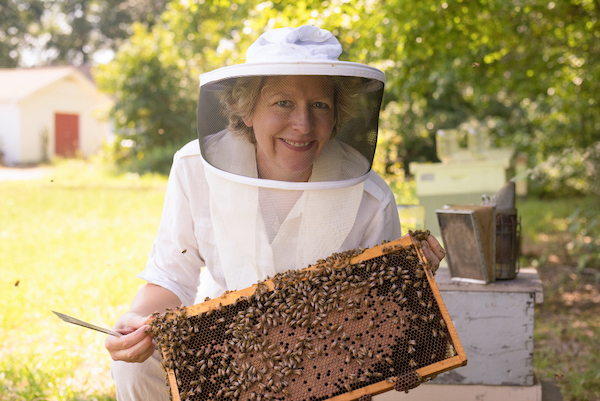
Priyadarshini Chakrabarti Basu serves as an Assistant Professor in the Department of Horticulture within Oregon State University's College of Agricultural Sciences. Her research program integrates molecular entomology, apiculture, and ecotoxicology to address critical challenges in pollinator health.
Her research focuses on honey bee nutrition, pesticide impacts, and molecular mechanisms underlying bee health. She employs advanced techniques including proteomics, metabolomics, and lipidomics to investigate how nutritional stressors, pesticides, and pathogens affect honey bee physiology and behavior. Her work spans laboratory investigations to field studies across diverse agricultural landscapes.
Analysis of her 15 most recent publications reveals strong emphasis on nutritional biochemistry (particularly sterol metabolism), sublethal pesticide effects, and molecular response mechanisms in honey bees. Her research bridges fundamental molecular biology with practical apicultural applications, generating insights relevant to both managed and wild pollinator populations.
- Excellence in Undergraduate Research Mentoring by a Postdoc Award, Oregon State University, 2021
- Excellence in Early Career Award, Pacific Branch of Entomological Society of America, 2020
- Postdoctoral Excellence Award, Oregon State University, 2019
- Royal Society Newton International Post Doctoral Fellowship, 2016
- DST-INSPIRE Fellowship, Department of Science & Technology, Government of India
Dr. Chakrabarti Basu has secured significant research funding including USDA-AFRI grants ($500,000) and multiple awards from the California State Beekeepers' Association and Project Apis m. She serves as Principal Investigator on several active projects investigating pesticide impacts and nutritional requirements in honey bees. Her extension work includes the popular OSU Pollination Podcast and numerous outreach publications aimed at beekeepers and agricultural professionals.
She leads research initiatives within OSU's Pollinator Health & Apiculture Lab, which emphasizes diversity, equity, and inclusion in its scientific community. Her work connects molecular mechanisms to field applications, providing actionable insights for improving pollinator health in agricultural ecosystems.