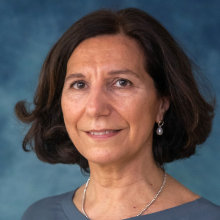
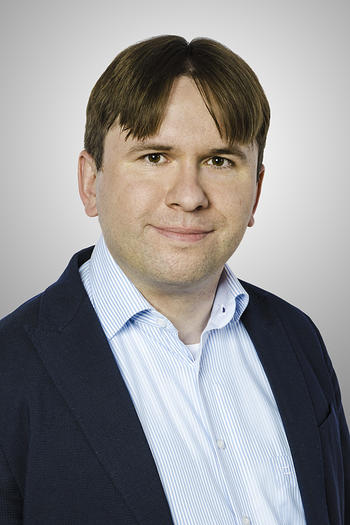
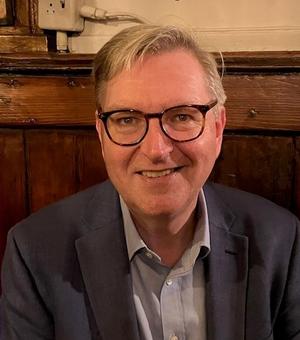
Dr. Juliette Calvarin is a researcher at the Institute for Art and Visual History (HU Berlin) since July 2021. She earned her BA in European and North-American history from Yale University (2013) and her PhD in Art History from Harvard University (2021), supervised by Jeffrey Hamburger and Evelin Wetter (Abegg-Stiftung). Her research focuses on East-Central Europe in the late Middle Ages, medieval textiles, liturgical symbolism, and material culture reuse. Supervised dissertation: Ornamenta Sacerdotum: Marian Chasubles for Priestly Bodies in pre-Hussite Prague Current role: Researcher in the Bildkulturen des Mittelalters group led by Prof. Kathrin Müller Her publications address topics like bishops’ rings, altarpieces, and textile semiotics, with fellowships from Munich’s Zentralinstitut für Kunstgeschichte and Mainz’s Institut für europäische Geschichte. She explores how liturgical objects shape clerical identity and medieval theological discourse.
Dr. Anne Rogerson is a Senior Lecturer in Classics and Ancient History at the University of Sydney, affiliated with the Vere Gordon Childe Centre. She holds a BA and BSc from the University of Sydney and a PhD from the University of Cambridge. Her research centers on Virgil’s Aeneid , its cultural reflections, and its reception in art and literature across eras, including analyses of late antique to modern commentaries. Current projects include a book exploring how female novelists like George Eliot and Margaret Atwood engage with Latin learning, and an Australian Research Council-funded study on Vandal North African Latin literature. Education: BA and BSc, University of Sydney PhD, University of Cambridge Research Interests: Virgil’s Aeneid and its narrative dynamics Commentary traditions on Virgil Classical reception in modern literature and art Gender studies in classical contexts Grants: ARC-funded project: The Vandal Renaissance: Latin Literature in Post-Roman Africa (435-534CE) Media Engagement: Regular contributor to ABC Radio’s Self Improvement Wednesday and This Week in History , discussing topics such as ancient Roman culture, classical literature, and historical parallels. Labs/Teams: Member of the Vere Gordon Childe Centre Editor of Classicum (Classical Association of NSW journal)
Reidar Hvalvik is an Adjunct Professor at MF University College of Theology, Religion and Society, contributing as an external academic member. His work bridges theology, religious studies, and art history, focusing on early Christian contexts and interdisciplinary research. He has authored a scientific monograph (2025) and encyclopedia entries, while also publishing technical analyses of biblical texts and their intertextual connections with Greco-Roman literature and art. His research interests span Pauline studies, the New Testament’s Greco-Roman setting, reception history, and the role of art in early Christian communities. He examines topics like Jewish-Christian relations, apocryphal writings, and the theological implications of classical influences on early Christian thought. Across over 146 publications, Hvalvik’s recent articles (2021–2025) highlight trends in analyzing motifs in Christian art, reinterpreting New Testament texts through historical and cultural lenses, and exploring connections between Paul’s writings and classical traditions. No scientific awards or grants are explicitly noted in the text. While no formal advisees or lab affiliations are listed, his external role suggests collaboration with academic teams in theology and biblical studies. His contributions emphasize scholarly synthesis between textual analysis and visual/ artistic expressions of early Christian ideas.
Emanuele Coccia is an Associate Professor at the École des Hautes Études en Sciences Sociales (EHESS) in Paris, affiliated with the Center for the History and Theory of the Arts (CEHTA) and the Centre de Recherches sur les Arts et le Langage (CRAL). He concurrently serves as Professor of History of Arts at the School for Fashion and Applied Arts Duperré. Previously, he was Assistant Professor at the University of Freiburg (2008–2011) and held visiting positions at the University of Tokyo, Buenos Aires, Düsseldorf, and Columbia University. His research traverses medieval philosophy, theology, aesthetics, and metaphysics, with emphasis on normativity , sensibility , and visual culture . Key works explore the metaphysics of images, moral philosophy in urban spaces, and theological anthropology. His scholarship reinterprets historical concepts like angelology and monastic law through contemporary philosophical frameworks. Coccia's publications demonstrate consistent focus on medieval epistemology , political theology , and cultural semiotics , with recent expansions into fashion theory and labor sociology. His 2017 book The Life of Plants: A Metaphysics of Mixing earned the Monaco Philosophical Meetings Prize, highlighting his interdisciplinary approach to ontology. Awards: Monaco Philosophical Meetings Prize (2017) He collaborates with research teams at CEHTA and CRAL, focusing on art theory and historical anthropology, and participates in cross-disciplinary projects like EARTHSCAPE with filmmaker Frédérique Aït-Touati.
Maria Amalia Barchiesi is an Associate Professor in Spanish Language and Translation (L-LIN/07) at the University of Macerata's Department of Humanistic Studies. She holds a European Doctorate in Information and Communication Theory (2004) and has been a researcher and academic in Hispanic Studies since 1993. Her research focuses on semiotics of Hispanic American literature, cultural imaginaries, translation theory, and political discourse analysis. She has authored monographs like Borges y Cortázar lo fantástico bilingüe (2009) and edited volumes such as Arti in traduzione. Semiotica Linguistica Antropologia (2023). She currently leads research in transmediality in Panhispanic poetry within a PRIN 2022 project. Education: Licentiate in Letters with Linguistics focus from Buenos Aires University (Argentina) European Doctorate in Information and Communication Theory (University of Macerata) Research Interests: Semiotics of narrative and cultural imaginaries in Hispanic America Translation studies (interlinguistic and intersemiotic) Analysis of political, advertising, and museum discourses Landscape aesthetics in literature Postmodern rhetoric in Zapatista discourses Recent Scholarly Contributions: Her 2025 works explore Borges' translation paradoxes and Cortázar's museum imagery. Recent projects analyze transmedial poetic forms and post-dictatorship testimonial theatre. She contributes to editorial boards of Heteroglossia and Lingue e Linguaggi . Awards: National Scientific Qualification as Full Professor (2020) Academic Service: Director of Spanish Language and Civilization courses Member of PhD boards in Information Theory and Humanities Chair of the Language Mediation Program admissions committee
Professor Ben Quash is the inaugural Professor of Christianity and the Arts at King’s College London, part of the Department of Theology & Religious Studies. He holds a dual academic background in English Literature and Theology, with a PhD focusing on Hans Urs von Balthasar’s theological dramatic theory. Previously, he served as Dean and Fellow at Peterhouse, Cambridge, and Academic Director of the Cambridge Inter-Faith Programme (2004-2007). His research bridges Christian theology, the arts, and interfaith dialogue, emphasizing how visual, literary, and musical forms engage biblical and theological themes. Key roles include founding and directing the Centre for Arts & the Sacred (ASK) and leading the Visual Commentary on Scripture project. He teaches undergraduate and postgraduate modules on theology, art, and liturgy, including courses like Salvation and the City and Art as a Theological Medium . His work explores modernity’s impact on theology, the role of liturgy in shaping ethics, and the intersection of art with scriptural interpretation. Professor Quash’s media engagements include BBC broadcasts on topics like sacred spaces, Christian art’s legacy, and theological aesthetics. He has authored/co-edited over 60 publications, including Theology, Modernity and the Visual Arts (2024) and Visualising a Sacred City: London, Art and Religion (2016). Awards include the King’s Award for Excellence and Innovation in the Arts (2012).
Jean-Marc Vercruysse is a Lecturer in Latin language and literature at the University of Artois , specifically within the College of Letters and Arts . He serves as the academic director of the master's program in "Teaching, Education and Training Professions" and as Director of Artois Presses Université since 2019. His research focuses on patristic hermeneutics, Donatism, and biblical intertextuality, with particular interest in figures like Tyconius, Paulinus of Nola, and Leo the Great. He has co-edited and directed the Graphè collection, publishing works such as La Résurrection de Lazare (2017) and Les Tentations du Christ (2021). His scholarly activities include organizing international colloquia and serving as a substitute member of the 8th section (Ancient Languages and Literatures) of the Conseil National des Universités (CNU). Current affiliations include membership in the International Association of Patristic Studies , the Institute for the Study of Religious Facts , and associate membership at HALMA UMR 8164 . He co-directs the Graphè collection and has contributed to the Brill Encyclopedia of Early Christianity with entries on Cresconius and Tyconius.
Alexandre Roberts is an Associate Professor of Classics and History at the University of Southern California's Dornsife College of Letters, Arts and Sciences. A specialist in Byzantine and medieval Middle Eastern intellectual history, Roberts bridges the scholarly traditions of the Byzantine Empire and the Islamicate world with particular focus on scientific and philosophical exchanges. His research spans Byzantium and the Middle East , Greek and Arabic philology , classical traditions , intellectual history , history of science and religion , and history of chemistry . Roberts' scholarly work demonstrates how Byzantine scholars engaged with Arabic scientific and philosophical texts, particularly in the realm of alchemical traditions and technical literature. Roberts' publication record shows consistent scholarly output since 2011, with particular productivity in recent years focusing on alchemical traditions, scientific exchange between Byzantine and Islamicate cultures, and intellectual history. His research reveals patterns of cross-cultural knowledge transmission and adaptation that challenge traditional narratives of scientific development. His significant recognition includes the National Endowment for the Humanities Fellowship (2022-2023) and the Alexander von Humboldt Fellowship (2020-2021) , highlighting the importance of his interdisciplinary work at the intersection of Byzantine and Islamicate studies. Roberts actively contributes to the academic community through conference organization, including the 2024 workshop on 'Chrysopoetic Recipes and Chemical Theory in Medieval Greek and Arabic Texts' at Freie Universität Berlin, demonstrating his commitment to advancing collaborative scholarship in his field.
Sara Kipfer is a Professor of Protestant Theology with a focus on Old Testament Studies at TU Dortmund University, effective February 1, 2023. She holds a Licentiate (2007), Doctorate (2013), and Habilitation (2021) from the University of Bern and Heidelberg. Her research spans extreme climate events in the southern Levant, political power dynamics in ancient Israel and Judah (10th–9th centuries BCE), and body/emotion concepts in the Hebrew Bible and ancient Near Eastern iconography. Key research projects include 'Emotions in the Old Testament' (Bern) and a visiting scholar stint at the University of Chicago (2015–2016). Her work bridges biblical exegesis, environmental humanities, and reception history. Recent publications (2021–2024) address famine narratives, fear in ancient texts, and geopolitical interpretations of Samuel's narratives. She has held academic positions at Heidelberg University (2017–2022) and collaborated with institutions like Oxford's Centre for Reception History of the Bible (2011).
Prof Philip Esler is an Honorary Professor at the School of Divinity, University of St Andrews. He holds the Portland Chair in New Testament Studies at the University of Gloucestershire. Previously, he served as Professor of Biblical Criticism at St Mary's University College Twickenham (2010–2013) and as Chief Executive of the Arts and Humanities Research Council (2005–2009). His research focuses on applying social-scientific methods to biblical and ancient legal texts, particularly the Babatha archive, and explores New Testament theology and the intersection of the Bible with visual arts. Education: BA (University of Sydney), LLM (University of Sydney), DPhil (University of Oxford) Administrative Roles: Litigation solicitor and barrister in Sydney (pre-1992), Principal of St Mary’s University College (2010–2013) Research Interests: Prof Esler analyzes social values in ancient texts, Judean family structures via papyri, and collaborates on projects like the visual interpretation of 1 Enoch. His work bridges legal history, cultural anthropology, and biblical studies. Grants and Projects: Recipient of Carnegie Trust funding (2005–2006) for research on late medieval Spanish altarpieces. Organized major conferences like the St Andrews Conference on Old Testament Interpretation (2004). Collaborations: Works with Angus Pryor on visual arts interpretations of biblical texts, exemplified by the Book of Enoch project.
Emma Sdegno is an Associate Professor of English Literature (L-LIN/10) at the Department of Comparative Linguistic and Cultural Studies , Ca' Foscari University of Venice . She is also affiliated with the Interdepartmental School of Economics, Languages and Entrepreneurship for International Exchanges (SELISI). Academic Background : 1989: Degree in Foreign Languages and Literatures, Ca' Foscari University 1991-1992: MA in Literature and the Visual Arts (1840-1940), University of Reading Research Focus : Her work centers on John Ruskin , his influence on Victorian and Modernist art criticism , and his reception in France and Italy . She explores travel literature through the lens of Venetian and Alpine mythmaking , examines the intersections between literature and visual arts (especially Ruskin's critiques of Jacopo Tintoretto ), and investigates Victorian biblical exegesis . Her projects include Enacting Fors: Ruskin and 21st Century Venice , collaborating with English artists The Poly-Technic. Academic Contributions : She co-organized international conferences on Ruskin (2008, 2019), Dickens (2012), and Victorian culture (2013). She serves on the editorial board of Scritture Migranti and as a referee for The Eighth Lamp: Ruskin Studies Today . Her institutional roles include Erasmus coordinator for four universities and leadership in academic committees since 2008. Teaching Portfolio : Courses on Victorian essays , Victorian novel , Romantic poetry , travel literature , Modernist novel , and literary translation .
Pekka Lindqvist is a University Lecturer in Exegetics and Jewish Studies at Åbo Akademi University, affiliated with the Faculty of Humanities, Psychology and Theology, Department of Theology and Religious Studies. He serves as Director of Institutum Judaicum Aboense and Chief of Education in the Bachelor’s Program in Theology, demonstrating leadership in both academic administration and Jewish-Christian dialogue. His research centers on Jewish Studies , with a focus on early Judaism , interfaith relations , and the dialogue among Abrahamic faiths . He explores topics such as early Jewish outreach to Gentiles, the reception of biblical figures like Moses, and the historical development of Finnish Oriental Studies in Palestine. His work also addresses modern Jewish perspectives and the legacy of Finnish missionary activity in the Middle East. Lindqvist’s recent publications reflect a strong engagement with biblical exegesis, reception history, and minority theological voices. His scholarly output spans peer-reviewed articles, book chapters, and public-facing contributions, indicating a commitment to both academic rigor and public dialogue. He has contributed to journals such as Studia Theologica and Dialogue , and his work intersects with UN Sustainable Development Goals related to peace, justice, and inclusive societies. University Lecturer in Exegetics and Jewish Studies Director, Institutum Judaicum Aboense Chief of Education, Bachelor Program in Theology Active researcher in early Judaism and interfaith dialogue Contributor to Holocaust education and antisemitism research Lindqvist is actively involved in public scholarship, having delivered keynote speeches on Holocaust Memorial Day and participated in discussions on Jewish law in contemporary Finland. He leads and contributes to externally funded research projects, including Nordic antisemitism and conspiracy thinking and From Awareness to Action: Educating Finland's Future Generations on the Holocaust . His academic service includes curatorial and photographic work for institutional memory projects, reflecting a multidisciplinary approach to religious studies. While no formal list of advisees is provided, his leadership roles suggest significant mentorship and educational impact.
Christian Mauder is Professor of Islamic Studies at Freie Universität Berlin’s Institute of Islamic Studies, Department of History and Cultural Studies. His research focuses on premodern Islamic religious, intellectual, and social history, particularly the Mamluk Sultanate (1250–1517), Islamic court cultures, historical semantics, Arabophone Christianity, Christian-Muslim relations, and Quranic discourses. He has published extensively on Mamluk military education, legal riddles, Persian and Circassian ethnic identities, and Ottoman-Mamluk transitions, emphasizing transregional interconnectedness. PhD in Arabic and Islamic Studies, University of Göttingen (2017) Postdoctoral research at Yale, Princeton, NYU Abu Dhabi, and University of Bonn Associate Professor at University of Bergen (2018–2023) Mauder’s scholarly work bridges Islamic history and cultural studies, exploring how concepts like mujaddid (renewer) shaped religious authority. His publications include monographs on Mamluk court culture and edited volumes on Quran reception, legal knowledge transmission, and Islamic eschatology. Recent articles analyze Persian identity construction, Hanafi riddles, and Mamluk-Ottoman entanglements. His awards include the 2018 Malcolm H. Kerr Dissertation Award and Christian Gottlob Heyne Award. He supervises doctoral students and participates in international seminars, including the Balzan Seminar on Muslim state formation. His office hours (Tue 4:15–6:00 PM) are open for academic consultation at Fabeckstr. 23/25, Berlin.
Dr. Ian Boxall is a Senior Tutor and Tutor in New Testament at St Stephen's House, University of Oxford. He holds a BA (Hons) in Theology from Oriel College, Oxford (1990), an MPhil in New Testament (1992), and a DPhil from St Stephen’s House (2011). His research focuses on the Gospel of Matthew, the Book of Revelation, reception history, and visual exegesis. Previously, he served as Associate Professor of New Testament at the Catholic University of America (2013–2022). He currently leads the International Critical Commentary on the Book of Revelation and serves on the editorial board of Wiley Blackwell Bible Commentaries . His work bridges biblical scholarship, art history, and theology, emphasizing the interplay between text and visual representation. Boxall’s publications include Christ in the Book of Revelation (2021), Matthew Through the Centuries (2019), and Patmos in the Reception History of the Apocalypse (2013). His scholarship explores themes such as apocalyptic imagination, early Christian exegesis, and the cultural reception of biblical narratives. He has contributed to interdisciplinary projects like The Art of Biblical Interpretation , analyzing how visual arts shape theological understanding. His recent work, including studies on Revelation’s place names and Renaissance apocalyptic imagery, highlights his commitment to historical and contextual analysis. His editorial roles and research projects reflect a deep engagement with both academic and practical dimensions of biblical studies. Boxall’s work is characterized by rigorous historical-critical methods combined with insights from art and cultural history, making him a key figure in contemporary New Testament studies.
Ellen F. Davis serves as the Amos Ragan Kearns Distinguished Professor of Bible and Practical Theology at Duke Divinity School , Duke University. Her scholarship bridges biblical interpretation with pressing public concerns through theological reflection. Specializes in Hebrew Bible/Old Testament studies Focuses on ecological theology and interfaith engagement Integrates agrarian ethics with scriptural analysis Explores arts as modes of scriptural interpretation Educational Background: A.B., University of California, Berkeley Cert. Theo., Oxford University M.Div., Church Divinity School of the Pacific Ph.D., Yale University Her research spans biblical ecology, prophetic literature, and homiletics, evident in publications like Scripture, Culture, and Agriculture (2009) and Biblical Prophecy (2014). Recent work examines arts as scriptural interpretation tools. Scientific Recognition: 2004 Academy of Parish Clergy Top Ten Books (4th place) for The Art of Reading Scripture As a lay Episcopalian, she contributes theological consultation within the Anglican Communion. She teaches courses including Anatomy of the Soul: The Psalms in Christian Life and Isaiah in Christian Theology , while actively engaging media discussions on faith and climate crises.