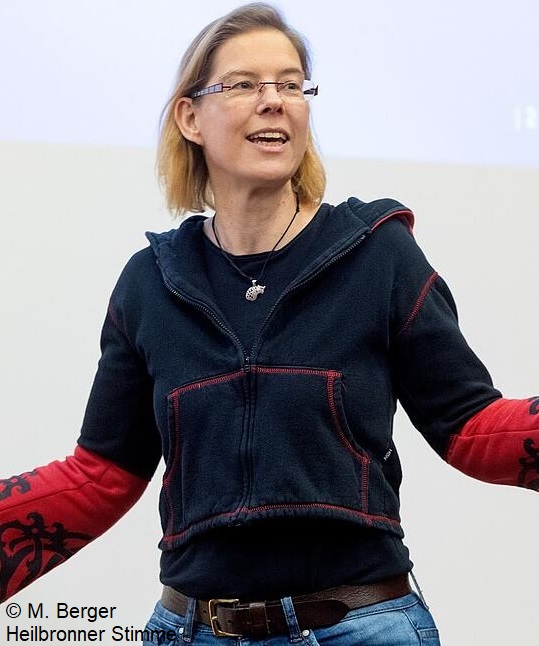
Prof. Dr. rer. nat. Alexandra Reichenbach is a Research Professor for Neuroinformatics at Heilbronn University of Applied Sciences and an Associate Professor at Heidelberg University's Medical Faculty . As Director of the Center for Machine Learning (ZML) , she leads the "Motor Control & Artificial Intelligence in Mental Health" research group and chairs HHN's Ethics Board. Her research bridges cognitive neuroscience and artificial intelligence , focusing on: Human sensorimotor function and its neural basis AI-driven biomarker development for psychiatric disorders (depression, schizophrenia) EEG and fMRI-TMS multimodal neuroimaging Robot-assisted motor rehabilitation technologies Neuroethics of AI in clinical diagnostics Recent work includes GAN-based schizophrenia classification , EEG biomarker optimization , and Alzheimer's disease stratification models . She advocates for interdisciplinary AI education , co-developing HHN's Applied AI bachelor's program and planning its master's/doctoral expansion. Key collaborations include: Heidelberg Medical Faculty Human Robotics Group at Imperial College National Hospital for Neurology and Neurosurgery Medical Informatics Master Seminar (Heidelberg/HHN partnership) Her lab (ZML) integrates virtual AI experimentation environments for both research and public education, including interactive AI & Society installations.
Janne Kananen is a Clinical Researcher at the University of Oulu , affiliated with the Faculty of Medicine and the Clinical Neurophysiology department. Holding dual expertise in medicine and technology, he investigates neurological disorders through interdisciplinary approaches, supported by the Research Council of Finland. His work bridges clinical neurophysiology with computational methods, focusing on physiological brain activity across various states. Education: Ph.D., M.D., and M.Sc.(Tech.) from University of Oulu Research Focus: Epilepsy, Narcolepsy, Sleep Disorders, Dementia Techniques: Magnetic Resonance Encephalography (MREG), EEG, NIRS Harnessing fast functional MRI and multimodal scanning environments, his research aims to establish baseline brain activity patterns for improved disease markers and treatments. Key topics span brain physiology, glymphatic system dynamics, and neurovascular coupling mechanisms. Scientific publications demonstrate consistent contributions to journals like Scientific Reports and Frontiers in Neuroscience , addressing physiological brain pulsations, their interactions with BOLD signals, and implications for neurological conditions.
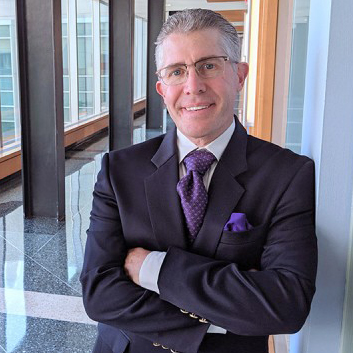
Dr. Alain Dagher is a Professor in the Department of Neurology and Neurosurgery at McGill University's Faculty of Medicine and a core faculty member at the Montreal Neurological Institute (The Neuro). He leads the Dagher Lab within The Neuro's Neuroimaging and Neuroinformatics Research Group and provides clinical care through the Movement Disorders Programme. His research focuses on basal ganglia function in appetitive behaviors, employing PET and fMRI to study dopamine dynamics in Parkinson's disease, addiction (smoking, gambling), obesity, and stress responses. Key interests include reward processing, motivation mechanisms, and neural correlates of decision-making, with emphasis on how dopamine mediates responses to food, drugs, and psychological stressors. His publication record (2000-2009) reveals consistent innovation in neuroimaging methodologies and translational applications, particularly in dopamine system quantification during behavioral tasks. Major themes include addiction neurobiology, obesity mechanisms, and Parkinson's disease pathophysiology, characterized by interdisciplinary approaches bridging clinical neurology, cognitive psychology, and advanced imaging. Dr. Dagher secures funding from CIHR, FRSQ, NIDA, Parkinson Society of Canada, and industry partners including Unilever PLC. Recent recognition includes CIHR grants awarded in February 2025 as one of six principal investigators at The Neuro. His lab trains graduate students in neuroimaging techniques and behavioral neuroscience methodologies. The Dagher Lab operates within The Neuro's Neuroimaging and Neuroinformatics Research Group, collaborating with the Azrieli Centre for Autism Research and contributing to open science initiatives through the Tanenbaum Open Science Institute. His team integrates PET/fMRI with psychological paradigms to investigate real-time neural responses to rewards and stressors.
Neil L. Kelleher is the Walter and Mary E. Glass Professor of Molecular Biosciences at Weinberg College of Arts and Sciences and Professor of Medicine (Hematology & Oncology) at Feinberg School of Medicine, Northwestern University. He also serves as Director of the Chemistry of Life Processes Institute and Northwestern Proteomics . His research focuses on top-down proteomics , chromatin biology , and natural product discovery . He leads the global Human Proteoform Project (HPfP) to map 250,000 human proteoforms across 4,000 cell types. His lab developed the ProSight software suite , used by over 1,000 labs worldwide. His publications span computational proteomics, cancer epigenetics, and mass spectrometry applications. Recent articles address automated top-down proteomics , histone methylation dynamics , and non-ribosomal peptide synthesis in Molecular Biosystems , Journal of Biological Chemistry , and Chemistry & Biology . Biemann Medal (2009) Pittsburgh Conference Achievement Award (2008) Pfizer Award in Enzyme Chemistry (2006) Presidential Early Career Award for Scientists and Engineers (2005) Kelleher has mentored ~50 Ph.D. students and postdocs. He co-founded startups like Nativetdms.org and IntegratedProteinTechnologies.com . His lab combines Fourier-Transform Mass Spectrometry with intact protein analysis to study proteoforms and their role in disease.
Hillel Adesnik serves as Associate Professor in the Department of Molecular and Cell Biology at the University of California, Berkeley, with additional affiliation in Neuroscience. His research program centers on deciphering how cortical microcircuits transform sensory input into perceptions and behaviors, utilizing cutting-edge approaches in awake behaving mice to bridge cellular mechanisms with cognitive functions. Adesnik's research investigates the neural basis of perception through three integrated pillars: (1) dissecting horizontal and vertical connections in cortical layers for sensory feature extraction, (2) developing high-resolution optical tools like 3D-SHOT for single-neuron manipulation in intact brains, and (3) analyzing cross-cortical communication for percept synthesis. His lab combines two-photon imaging, optogenetics, electrophysiology, and computational modeling to study tactile processing in barrel cortex and visual perception, revealing how specific neuron types and synaptic mechanisms generate perceptual codes. Key discoveries include layer-specific inhibitory control, supra-linear feature summation, and gamma-band synchronization mechanisms. Analysis of Adesnik's publication record shows consistent focus on cortical microcircuit dynamics across sensory modalities, with increasing emphasis on tool development since 2017. His work demonstrates how precise neural manipulations can establish causal links between circuit activity and perception, particularly through innovations in holographic optogenetics. Recurring themes include the role of somatostatin interneurons in layer-specific processing, cross-laminar interactions in feature coding, and the development of quantitative frameworks for neural population decoding. Scientific recognition includes: Chan Zuckerberg Biohub Investigator (2022 cohort) Adesnik mentors a robust research team comprising postdoctoral fellows (Lamiae Abdeladim, Janine Beyer, Conor Dorian, Will Hendricks, Uday Jagadisan, Mora Ogando, Masato Sadahiro, Kevin Sit, Savitha Sridharan, Andrea Zazzi) and graduate students (Genesis Ferrer Imbert, Courtney Kim, Madi McCloud, Ravi Srinivasan). His lab operates through structured collaboration with engineering groups for optical tool development and maintains active partnerships for disease-model applications. Funding sources include the Chan Zuckerberg Biohub and NIH grants supporting neurotechnology innovation. The Adesnik Lab maintains three core research thrusts through an integrated experimental pipeline: in vivo circuit interrogation in behaving animals, in vitro synaptic analysis, and novel optical instrument development. Current work emphasizes translating high-resolution manipulation techniques to disease models including autism and epilepsy, while expanding into multi-area cortical dynamics during complex behavioral tasks.
Dr. Avril Holt is an Associate Professor in the Department of Ophthalmology, Visual and Anatomical Sciences at Wayne State University. She holds a Ph.D. in Neuroscience from the University of Michigan and an undergraduate degree in Biology from Stillman College. Her postdoctoral training included fellowships at West Virginia University and the University of Michigan. Dr. Holt's research specializes in auditory neuroscience, focusing on: Anatomy, physiology, and neurochemistry of the central auditory system Deafness-related changes in gene expression and neurotransmitter production Neuronal correlates of tinnitus and vestibular disorders Impacts of noise exposure on hearing/balance using imaging, optogenetics, and gene transfer techniques She teaches Medical Histology and Embryology to first-year medical students. Her recent publications (2013–2024) demonstrate interdisciplinary work spanning neuroimaging, molecular biology, ototoxicity, dementia mechanisms, and orthopedic immunology. Common themes include auditory/vestibular pathophysiology, experimental models (e.g., rat studies), and innovative diagnostic/therapeutic approaches. Dr. Holt leads the Holt Laboratory, which investigates noise-induced auditory/vestibular damage using advanced neurochemical and gene-expression analysis methods.
Jean Bullier is a renowned neuroscience researcher affiliated with Grenoble Alpes University , focusing on the visual system and neural mechanisms in macaques. His work bridges neuroscience, anatomy, and electrophysiology, with a particular emphasis on visual cortex dynamics and information processing. His research explores visual cortex , receptive field modulation, and extrastriate cortex interactions. By integrating computational models and physiological studies, he investigates how feedforward and feedback connections shape visual perception and neural coding in primates. Scientific awards include the 2023 Research.com Neuroscience in France Leader Award . His publications highlight cortical feedback mechanisms, signal integration in primary visual cortex, and the role of axons in neural activation. Collaborations span institutions like McGill University and Chinese Academy of Sciences .
Eyiyemisi Damisah, MD , is an Assistant Professor of Neurosurgery at Yale School of Medicine , specializing in Epilepsy and Functional Neurosurgery . She leads the Center for Brain and Mind Health and directs the Division of Epilepsy and Functional Neurosurgery . Bachelor's in Religious Studies, Biola University (2006) MD, Residency, and Fellowship, Yale School of Medicine (2011–2018) Her research explores threat-processing neural mechanisms and interoceptive feedback in anxiety/PTSD, using single-neuron recordings , intracranial EEG , and computational modeling . She investigates memory impairments in epilepsy and develops direct electrical brain stimulation therapies for neurodegenerative and psychiatric disorders. Recent publications focus on epilepsy surgery innovations , threat avoidance neural correlates , and statistical learning in cognition . Collaborations span Neurology , Psychiatry , and Psychology departments. Hypothesis Fund Seed Award (2023) Spector Award (2020) Academy Award, American Academy of Neurological Surgeons (2017) NREF Grant (2014) Swebilius Award (2014) She directs the Damisah Lab , combining engineering , psychiatry , and neurosurgery to advance circuit-level therapeutics . Her clinical practice includes DBS , RNS , and VNS for seizure and movement disorder management.
Olli Gröhn is a Professor at the A.I. Virtanen Institute for Molecular Sciences, Faculty of Health Sciences, University of Eastern Finland. His research focuses on biomedical MRI , neuroimaging, traumatic brain injury (TBI), and epileptogenesis. He leads projects including Neuro-Innovation (2021–2026) and the NOVEL MSCA Postdoctoral Programme (2024–2029), advancing preclinical MRI methodologies. Dr. Gröhn's work emphasizes the development of novel MRI techniques—such as zero-echo-time fMRI and multi-coil TMS—for studying brain function, neurodegeneration, and injury biomarkers. His research spans: Functional and structural brain mapping in rodent models Biomarker discovery for post-traumatic epilepsy Advanced neurostimulation integrated with ultra-high-field MRI Sensory processing and neural circuit analysis His recent publications (2022–2025) demonstrate strong trends in quantitative MRI validation, multi-modal biomarker development, and innovative neuroimaging protocols for awake animal studies. Research frequently addresses TBI mechanisms, Alzheimer's pathology, and translational neurotechnology refinement. Dr. Gröhn collaborates extensively in multicenter consortia (e.g., EpiBioS4Rx) to standardize preclinical neuroimaging and enhance reproducibility in biomarker studies.
Emmanuel A Stamatakis, PhD, is Group Leader in the Division of Anaesthesia, Department of Clinical Neurosciences, University of Cambridge, and a Fellow of Queens’ College. His work sits at the intersection of cognitive neuroscience, computational biology and clinical neuroimaging, with a central mission to understand and predict states of consciousness and their disruption after brain injury. Education & Training: While explicit degree details are not provided, Dr Stamatakis’s extensive publication record in high-impact journals and his role as Group Leader at Cambridge indicate advanced doctoral and post-doctoral training in cognitive neuroscience and neuroimaging. Research Interests: Neural correlates of consciousness and unconsciousness across pharmacological (anaesthetics, psychedelics) and pathological (TBI, DoC) states. Multimodal neuroimaging: ultra-high-field 7 T MRI, PET, EEG, fMRI. Computational approaches: network science, machine-learning classifiers, integrated information decomposition, fractal and harmonic analysis. Clinical translation: predicting long-term cognitive and affective outcomes after traumatic brain injury, neurorehabilitation strategies, biomarker discovery. Neuromodulation: role of the Ascending Reticular Activating System and monoaminergic pathways in shaping macro-scale brain networks. Research Trends from Recent Articles (2022-2024): A pronounced shift toward integrative, multi-centre clinical studies is evident. Recent work leverages large trans-European cohorts (CENTER-TBI) to link acute thalamic connectivity with chronic post-concussive symptoms, validates prognostic models for TBI recovery, and explores pharmacological enhancement of executive function using methylphenidate. Concurrently, theoretical papers introduce information-theoretic frameworks to quantify consciousness, while empirical studies combine receptor-informed network control theory with psychedelic neuroimaging to reveal global-to-local shifts in functional organisation during altered states. Scientific Awards & Recognition: While specific named awards are not listed, continuous publication in NEJM , Nature Communications , eLife , Trends in Neurosciences , and Brain attests to sustained international recognition. Grants, Students & Mentorship: Dr Stamatakis is actively seeking prospective PhD students and post-docs. Collaborative grants include CENTER-TBI, the Cambridge NeuroCOVID programme, and the BioCog consortium, supporting multi-disciplinary teams spanning anaesthesia, neurology, psychiatry and computational biology. Mentorship emphasis is placed on open science, reproducible neuroimaging pipelines, and widening participation in neuroscience. Laboratory & Teams: He leads the Consciousness & Cognition Group within the Division of Anaesthesia, hosting cross-species projects that integrate rodent molecular imaging with human ultra-high-field MRI. Core facilities include 7 T MRI, PET-MR hybrid systems and high-density EEG suites, fostering collaborations across Cambridge Neuroscience, the MRC Cognition and Brain Sciences Unit, and global partners.
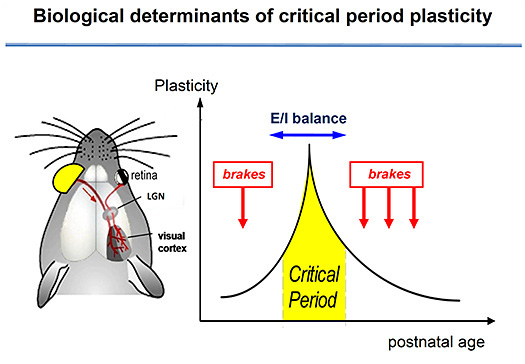
Takao Hensch is a distinguished Professor of Neurology at Harvard Medical School/Boston Children's Hospital and Professor of Molecular and Cellular Biology at Harvard University's Center for Brain Science. He serves as Director of the International Research Center for Neurointelligence (IRCN) at the University of Tokyo and leads the NIMH Silvio Conte Center for Mental Health Research at Harvard. His groundbreaking work focuses on critical periods in brain development—windows of heightened plasticity when neural circuits are most responsive to environmental input. Hensch's research has revealed how specific inhibitory (GABA) circuits trigger the onset of critical periods and how 'brake'-like factors actively prevent circuit rewiring when these periods close. His laboratory integrates molecular, cellular, and systems neuroscience to understand how early life experiences shape brain function from motor skills to language and emotions. This work has profound implications for understanding and treating neurodevelopmental disorders including autism spectrum disorders, epilepsy, and amblyopia. Analysis of Hensch's recent publications shows a consistent focus on critical period mechanisms across multiple brain systems. His work demonstrates how molecular interventions can reopen plasticity windows in adulthood, with particular emphasis on GABAergic circuits, perineuronal nets, and oxidative stress mechanisms. Recent studies examine anesthesia effects on infant brain development, sex-specific responses to early adversity, and novel pharmacological approaches for restoring neural plasticity. Order of the Rising Sun, Gold Rays with Neck Ribbon (2024) NIH Director's Pioneer Award (2007) Mortimer D. Sackler, M.D. Prize for Distinguished Achievement in Developmental Psychobiology (2016) Society for Neuroscience Young Investigator Award - Japan (Tsukahara Prize, 2001) Society for Neuroscience Young Investigator Award - US (2005) Hensch has trained numerous PhD students and postdoctoral fellows who have gone on to successful careers in neuroscience. His laboratory receives substantial funding from the National Institute of Mental Health and other sources to investigate the biological basis of critical periods and their clinical applications. Current research focuses on translating basic findings into therapeutic approaches for neurodevelopmental disorders through collaborations with clinicians at Boston Children's Hospital and computational modelers. The Hensch Lab, housed in Harvard's Northwest Building and the F.M. Kirby Neurobiology Center at Boston Children's Hospital, maintains active collaborations with researchers at the University of Tokyo, RIKEN Brain Science Institute, and other international institutions. The lab employs state-of-the-art techniques in mice to explore neural circuit development from sensory systems to prefrontal cortex, with particular emphasis on translating findings into real-world applications for pediatric care and mental health treatment.
Vincent Breton-Provencher is an Assistant Professor in the Department of Psychiatry and Neuroscience at Laval University, where his research centers on the neuronal correlates of learning and attention with emphasis on catecholaminergic systems. His educational background includes: Undergraduate: Engineering Physics (optics and photonics) PhD: Université Laval (adult neurogenesis under Dr. Armen Saghatelyan) Postdoctoral training: Massachusetts Institute of Technology (noradrenergic circuits under Dr. Mriganka Sur) Dr. Breton-Provencher employs optogenetics , two-photon functional imaging , electrophysiology , and computational approaches to dissect spatiotemporal dynamics of neuromodulators during behavior. His work investigates how catecholamines (noradrenaline and dopamine) regulate cortical processing during learning and how their dysfunction contributes to neuropsychiatric disorders, with key contributions in reinforcement learning and arousal control mechanisms. Analysis of his 2018-2025 publications reveals a dominant focus on noradrenergic signaling in learned behavior, with increasing exploration of astrocyte interactions and cross-species neural circuit comparisons. His research consistently bridges molecular techniques with behavioral paradigms to establish causal links between neuromodulator dynamics and cognitive functions. No scientific awards are mentioned in the provided information. Dr. Breton-Provencher actively recruits students for his VBP Lab (vbplab.com) at the CERVO research center, emphasizing hands-on training in advanced neuroscience methodologies. While specific grants are not detailed, his work leverages institutional resources from Laval University and likely receives support from Canadian neuroscience funding bodies. The VBP Lab operates within Quebec City's CERVO research ecosystem, collaborating with interdisciplinary teams to translate mechanistic insights about catecholamine function into understanding neuropsychiatric disorders. Current projects integrate circuit-level manipulations with behavioral analytics to develop novel therapeutic frameworks.
Sang Hong is an Associate Professor in the Charles E. Schmidt College of Science at Florida Atlantic University, Boca Raton, specializing in visual perception research. His work bridges cognitive science and neuroscience to investigate how sensory inputs shape perceptual experiences and cognitive behaviors. Ph.D. from University of Chicago Dr. Hong's research focuses on neural mechanisms of color vision, motion perception, and visual awareness, with particular emphasis on facial expression processing and binocular rivalry phenomena. Using psychophysics and fMRI methodologies, he examines how color representation occurs in the lateral geniculate nucleus (LGN), how color and motion interact, and how emotional expressions are processed under conditions of visual suppression. His work reveals fundamental principles of sensory integration and perceptual organization. Analysis of his 2013-2021 publications shows consistent exploration of visual awareness mechanisms, with increasing attention to multisensory integration (audio-visual interactions) and individual differences in perception. Key trends include investigations of sex differences in emotional processing, neural correlates of color-motion interactions, and clinical applications examining visual context processing in bipolar disorder and schizophrenia. His research demonstrates how low-level perceptual phenomena inform higher cognitive functions. Dr. Hong actively contributes to scholarly discourse as an ad hoc reviewer for major journals including Journal of Vision, Vision Research, and Frontiers in Psychology. His service supports rigorous evaluation of research in visual neuroscience and cognitive psychology. His laboratory employs advanced techniques including continuous flash suppression, binocular rivalry paradigms, and fMRI to probe the neural basis of visual awareness. Current projects investigate how feature binding occurs during perceptual organization and how emotional content modulates sensory processing under conditions of limited awareness.
Paul Dassonville is an Associate Professor in the Department of Psychology at the University of Oregon's College of Arts and Sciences. His research employs behavioral techniques and functional magnetic resonance imaging (fMRI) to investigate neural mechanisms underlying spatial perception and sensorimotor processing. His research interests include: Mental representations of the world via sensory cues Spatiotemporal neural patterns in perceptual awareness Frames of reference for 3D spatial mapping Sensorimotor processes for eye/hand movement accuracy Visual phenomena (masking, figure-ground segregation, binocular rivalry) Analysis of his 2006-2022 publications reveals sustained focus on spatial perception, particularly the Roelofs effect and its variants. His work integrates cognitive neuroscience, vision science, and psychology to explore egocentric reference frames, attentional modulation, and perception-action dissociations using fMRI, behavioral paradigms, and transcranial magnetic stimulation. No scientific awards were mentioned in available sources. While advising and grant details were not specified, Dr. Dassonville directs a laboratory conducting human subject experiments to investigate sensorimotor processes and spatial perception mechanisms, with recent work examining crossmodal effects and neural latency in contextual processing.
Professor Zoe Kourtzi is a cognitive neuroscientist affiliated with the University of Cambridge as Professor of Experimental Psychology and a Fellow in Cognitive Neuroscience at Downing College. Her research bridges sensory experience, neural function, and adaptive behavior across the lifespan.