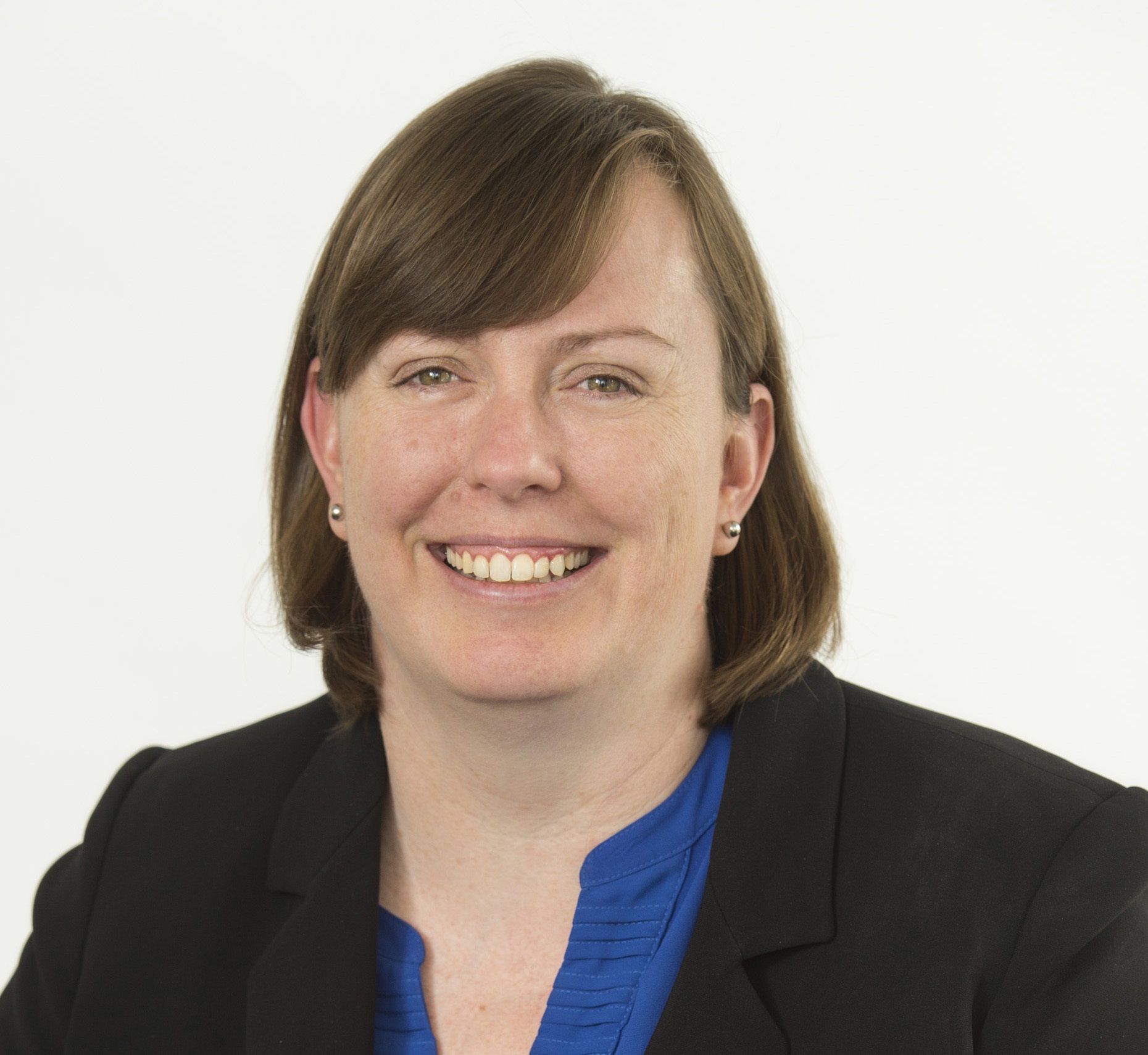
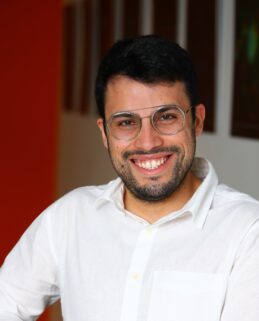
Emmanuel A Stamatakis
عضو هیئت علمی · Consciousness and unconsciousness
University of Cambridgeمعرفی
Emmanuel A Stamatakis, PhD, is Group Leader in the Division of Anaesthesia, Department of Clinical Neurosciences, University of Cambridge, and a Fellow of Queens’ College. His work sits at the intersection of cognitive neuroscience, computational biology and clinical neuroimaging, with a central mission to understand and predict states of consciousness and their disruption after brain injury.
Education & Training:
While explicit degree details are not provided, Dr Stamatakis’s extensive publication record in high-impact journals and his role as Group Leader at Cambridge indicate advanced doctoral and post-doctoral training in cognitive neuroscience and neuroimaging.
Research Interests:
- Neural correlates of consciousness and unconsciousness across pharmacological (anaesthetics, psychedelics) and pathological (TBI, DoC) states.
- Multimodal neuroimaging: ultra-high-field 7 T MRI, PET, EEG, fMRI.
- Computational approaches: network science, machine-learning classifiers, integrated information decomposition, fractal and harmonic analysis.
- Clinical translation: predicting long-term cognitive and affective outcomes after traumatic brain injury, neurorehabilitation strategies, biomarker discovery.
- Neuromodulation: role of the Ascending Reticular Activating System and monoaminergic pathways in shaping macro-scale brain networks.
Research Trends from Recent Articles (2022-2024):
A pronounced shift toward integrative, multi-centre clinical studies is evident. Recent work leverages large trans-European cohorts (CENTER-TBI) to link acute thalamic connectivity with chronic post-concussive symptoms, validates prognostic models for TBI recovery, and explores pharmacological enhancement of executive function using methylphenidate. Concurrently, theoretical papers introduce information-theoretic frameworks to quantify consciousness, while empirical studies combine receptor-informed network control theory with psychedelic neuroimaging to reveal global-to-local shifts in functional organisation during altered states.
Scientific Awards & Recognition:
While specific named awards are not listed, continuous publication in NEJM, Nature Communications, eLife, Trends in Neurosciences, and Brain attests to sustained international recognition.
Grants, Students & Mentorship:
Dr Stamatakis is actively seeking prospective PhD students and post-docs. Collaborative grants include CENTER-TBI, the Cambridge NeuroCOVID programme, and the BioCog consortium, supporting multi-disciplinary teams spanning anaesthesia, neurology, psychiatry and computational biology. Mentorship emphasis is placed on open science, reproducible neuroimaging pipelines, and widening participation in neuroscience.
Laboratory & Teams:
He leads the Consciousness & Cognition Group within the Division of Anaesthesia, hosting cross-species projects that integrate rodent molecular imaging with human ultra-high-field MRI. Core facilities include 7 T MRI, PET-MR hybrid systems and high-density EEG suites, fostering collaborations across Cambridge Neuroscience, the MRC Cognition and Brain Sciences Unit, and global partners.