معرفی
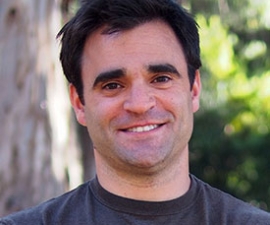
Hillel Adesnik serves as Associate Professor in the Department of Molecular and Cell Biology at the University of California, Berkeley, with additional affiliation in Neuroscience. His research program centers on deciphering how cortical microcircuits transform sensory input into perceptions and behaviors, utilizing cutting-edge approaches in awake behaving mice to bridge cellular mechanisms with cognitive functions.
Adesnik's research investigates the neural basis of perception through three integrated pillars: (1) dissecting horizontal and vertical connections in cortical layers for sensory feature extraction, (2) developing high-resolution optical tools like 3D-SHOT for single-neuron manipulation in intact brains, and (3) analyzing cross-cortical communication for percept synthesis. His lab combines two-photon imaging, optogenetics, electrophysiology, and computational modeling to study tactile processing in barrel cortex and visual perception, revealing how specific neuron types and synaptic mechanisms generate perceptual codes. Key discoveries include layer-specific inhibitory control, supra-linear feature summation, and gamma-band synchronization mechanisms.
Analysis of Adesnik's publication record shows consistent focus on cortical microcircuit dynamics across sensory modalities, with increasing emphasis on tool development since 2017. His work demonstrates how precise neural manipulations can establish causal links between circuit activity and perception, particularly through innovations in holographic optogenetics. Recurring themes include the role of somatostatin interneurons in layer-specific processing, cross-laminar interactions in feature coding, and the development of quantitative frameworks for neural population decoding.
Scientific recognition includes:
- Chan Zuckerberg Biohub Investigator (2022 cohort)
Adesnik mentors a robust research team comprising postdoctoral fellows (Lamiae Abdeladim, Janine Beyer, Conor Dorian, Will Hendricks, Uday Jagadisan, Mora Ogando, Masato Sadahiro, Kevin Sit, Savitha Sridharan, Andrea Zazzi) and graduate students (Genesis Ferrer Imbert, Courtney Kim, Madi McCloud, Ravi Srinivasan). His lab operates through structured collaboration with engineering groups for optical tool development and maintains active partnerships for disease-model applications. Funding sources include the Chan Zuckerberg Biohub and NIH grants supporting neurotechnology innovation.
The Adesnik Lab maintains three core research thrusts through an integrated experimental pipeline: in vivo circuit interrogation in behaving animals, in vitro synaptic analysis, and novel optical instrument development. Current work emphasizes translating high-resolution manipulation techniques to disease models including autism and epilepsy, while expanding into multi-area cortical dynamics during complex behavioral tasks.