معرفی
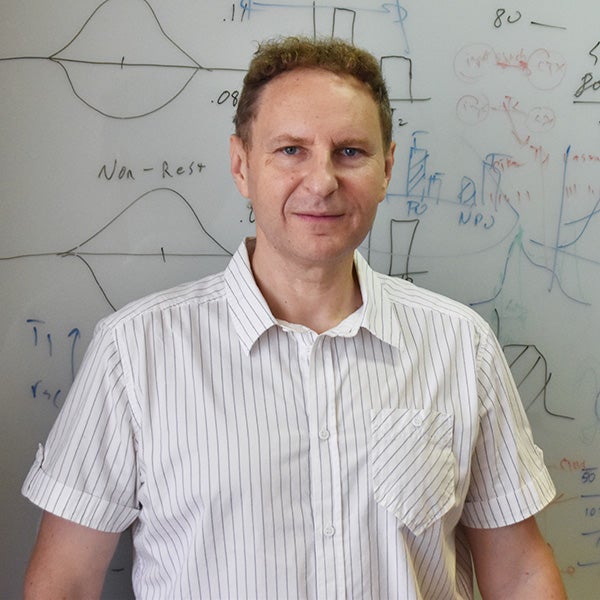
Eyal Seidemann is a Professor in the Department of Neuroscience at the University of Texas at Austin, affiliated with the College of Liberal Arts and the Center for Perceptual Systems. His research focuses on understanding how perceptual decisions and motor plans are represented in the primate cerebral cortex. He employs advanced imaging, genetic, and electrophysiological techniques in awake, behaving primates to study neural mechanisms of visual perception and decision-making.
Seidemann earned his Ph.D. in Neuroscience from Stanford University. His work integrates experimental and computational approaches, including optogenetics, calcium imaging, and computational modeling. He is supported by grants from the NIH-NEI, BRAIN Initiative, and DARPA, and leads the Seidemann Lab, which develops cutting-edge neuroimaging tools like the Bio-FlatScopeNHP lensless microscope for non-invasive cortical monitoring in primates.
Key research areas include neural population dynamics in V1, cortical topography, and the interplay between sensory inputs and behavioral outputs. His lab's innovations in microscopy and optogenetic stimulation enable real-time visualization and manipulation of neural activity during perceptual tasks. Recent findings highlight the role of fluctuating internal states and nonlinear dynamics in shaping sensory processing and decision-making.
Seidemann’s contributions bridge experimental neurophysiology and theoretical neuroscience, with applications in understanding neural coding mechanisms and advancing brain-computer interfaces. His work has been published in high-impact journals and presented at international conferences in neuroscience and neuroengineering.