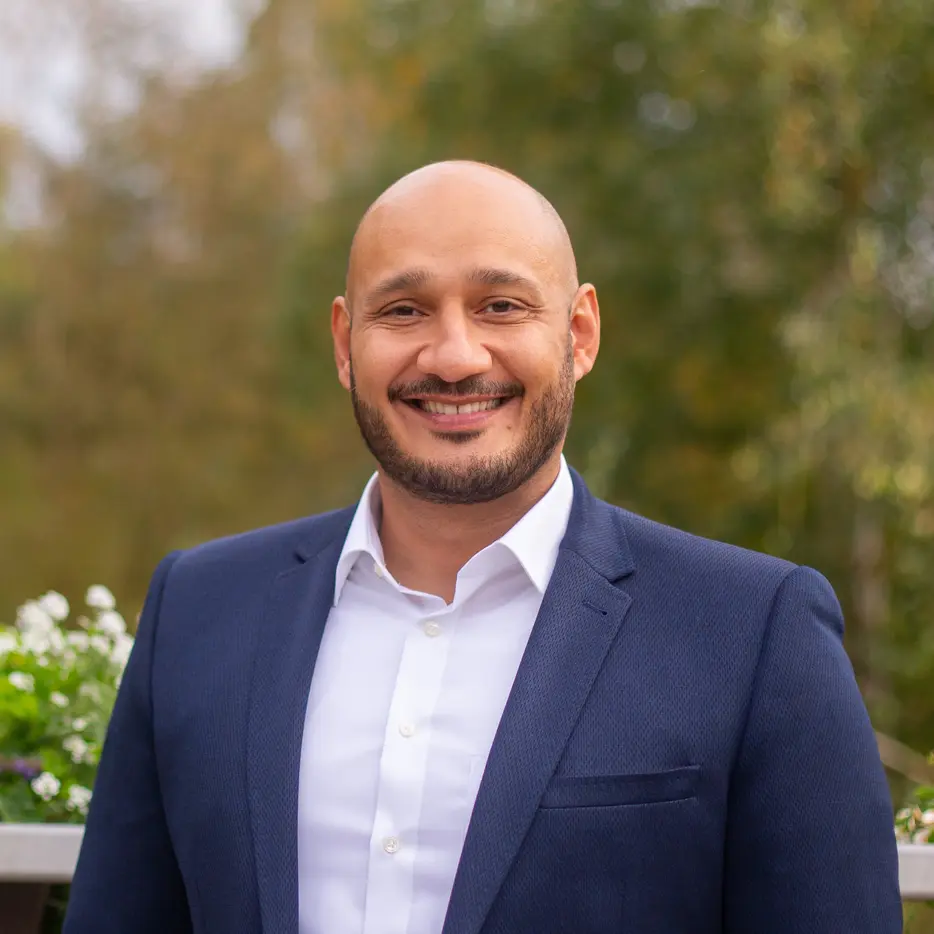
Orit Shaer is a Professor and co-Chair of Computer Science at Wellesley College , where she founded and directs the Human-Computer Interaction (HCI) Lab . Her work bridges tangible interaction, human-AI collaboration, and mixed-reality interfaces, focusing on transforming work and learning environments through embodied technologies. Education : B.A. from Academic College of Tel-Aviv, M.S. and Ph.D. in Computer Science from Tufts University Research interests center on novel human-computer interaction paradigms : Human-AI collaboration frameworks Tangible and embodied interface design Mixed-reality applications for productivity Genomics collaboration tools STEAM education technologies Recent publications highlight human-AI co-creation (CHI 2024), temporal dynamics in automated work (CHIWork 2024), and pandemic-era remote interaction studies (IEEE Pervasive Computing 2021). Awarded: NSF CAREER Award Agilent Technologies Research Award Google App Engine Education Award Pinanski Prize for Excellent Teaching Best Paper Honorable Mention (ACM CHI 2014) Honorable Mention (CHIWork 2022) She co-founded the international CHIWork Symposium and chairs the ACM TEI conference. Her NSF IRES grant (2022) supports US-German collaboration on human-automation interaction.
Maja Adamska is an Associate Professor and ARC Future Fellow at the Australian National University (ANU) in the Research School of Biology. She serves as Associate Director of Education and Head of the Biology Teaching and Learning Centre. Her primary research affiliation is with the Division of Biomedical Science and Biochemistry, where she leads the Adamska Group focused on the genomic and evolutionary basis of animal development. She is based in Room 2.022, Level 2, Linnaeus Building at ANU. Dr. Adamska studied biology with a focus on embryology and evolutionary biology at Jagiellonian University in Krakow, Poland. She completed her PhD in Germany working with Eva Bober and Thomas Braun on homeobox genes in inner ear development using vertebrate models from medaka fish to mice. Her postdoctoral work included research at the University of Michigan in Miriam Meisler's laboratory studying mouse mutants for limb patterning, followed by work at the University of Queensland with Bernie Degnan analyzing developmental signaling pathways in the sponge Amphimedon queenslandica. She was a group leader at the Sars International Centre for Marine Molecular Biology in Bergen, Norway from 2007-2015 before joining ANU in 2015. Her research addresses fundamental biological questions about how complex animals develop from single cells and how the first multicellular animals evolved from single-cell ancestors. She uses calcareous sponges to investigate the evolutionary origins of key developmental processes including germ layer segregation and axial patterning. Her work spans multiple areas including evolutionary developmental biology, comparative genomics, and the study of major transitions in animal evolution such as the emergence of multicellularity and morphological complexity. Her research has revealed surprising similarities between sponge and higher animal embryonic development, challenging traditional views of animal evolution. Analysis of Dr. Adamska's recent publications shows a strong focus on sponge and coral biology, with increasing attention to conservation and sustainability issues related to marine ecosystems. Her work combines molecular, genomic, and evolutionary approaches to understand fundamental biological processes, with particular emphasis on gene regulatory networks, developmental signaling pathways, and the genomic basis of morphological complexity in early-branching animals. ARC Future Fellow (since 2017) h-index of 32 with 3,990 citations according to Scopus Multiple research grants including ARC Centre of Excellence for Integrated Coral Reef Studies (2014-2021) Dr. Adamska supervises research on multiple projects including coral regeneration, molecular mechanisms of developmental signaling pathways in sponges, identification of target genes for developmental transcription factors, skeleton formation in corals and sponges, and sponge and coral microbiomes. She also serves as Convenor for BIOL2174 and has developed innovative educational approaches including the Digital Marine platform for blended learning in marine biology. Her research group, the Adamska Group, focuses on the genomic and evolutionary basis of animal development, using calcareous sponges as model organisms to gain insights into the evolutionary origins of complex developmental processes. The group collaborates with international researchers across multiple institutions to advance understanding of early animal evolution and development.
Prof. Dr. rer. nat. Rainer Leupers is a faculty member at RWTH Aachen University, chairing the Department of Software for Systems on Silicon. His research focuses on embedded systems, hardware-software co-design, virtual prototyping, and security in computing-in-memory architectures. He has published extensively on RRAM accelerators, logic locking, and neuromorphic security. Chair of Software for Systems on Silicon Research in hardware security and deep learning accelerators Recent publications on cross-tool virtual frameworks and thermal side-channel attacks His work bridges system-level modeling with practical security implementations, emphasizing reliability and performance in heterogeneous computing environments. Key trends in his 2025-2023 articles include compute-in-memory optimization, neural network inference efficiency, and security vulnerabilities in emerging hardware. Awards and formal recognitions are not explicitly detailed in the provided materials. He has not directly mentioned advising students or research grants in the given text fragments. The chair's contact information includes an office at ICT Cube 1, Electrical Engineering, Aachen, with direct email and website links.
Owais Khan serves as an Assistant Professor in the Department of Biomedical Engineering at Toronto Metropolitan University, where he leads research in cardiovascular biomechanics to improve heart disease diagnosis and treatment through engineering-driven approaches combining computational simulations, medical imaging, and biomechanics. His research program focuses on three interconnected pillars: developing physics-based computational models for blood flow simulation in patient-specific anatomies; advancing medical imaging techniques like dynamic CT myocardial perfusion and vessel wall MRI for quantitative physiological assessment; and conducting fundamental biomechanics studies to optimize prosthetic valve designs. This work directly addresses critical clinical challenges including heart surgery complications, aneurysm rupture prediction, and vein graft failure in coronary bypass patients. Khan's publication record demonstrates consistent innovation in cardiovascular computational modeling, with recent work emphasizing personalized medicine through physics-informed neural networks, multi-fidelity uncertainty quantification, and integration of CT perfusion imaging for coronary hemodynamics. His research bridges engineering principles with clinical cardiology to enable virtual treatment planning and risk stratification without additional patient risk. His scientific contributions have been recognized with prestigious awards including the American Heart Association Postdoctoral Fellowship, NSERC Postdoctoral Fellowship, Baxter Young Investigator Award, and MITACS Globalink Research Award. As director of the Cardiovascular Imaging and Modeling Biomechanics Lab (CIMBL), Khan maintains active collaborations with clinicians and radiologists at major hospitals, facilitating direct translation of engineering solutions to clinical cardiovascular medicine through a multi-disciplinary approach focused on personalized treatment strategies.
Waldemar Celes Filho is an Associate Professor in the Department of Computer Science at Pontifical Catholic University of Rio de Janeiro (PUC-Rio) and serves as Director of the Tecgraf Institute/PUC-Rio. With a career spanning over three decades, he has established himself as a leading researcher in computer graphics and scientific visualization. His educational background includes a Civil Engineering degree from UFRJ (1986), a Master's in Civil Engineering from PUC-Rio (1990), a Doctorate in Computer Science from PUC-Rio (1995), and postdoctoral studies in Computer Graphics at Cornell University (1995-1997). Dr. Celes Filho's research focuses primarily on Computer Graphics with special emphasis on Scientific Visualization, Numerical Simulation, Distributed Visualization, and Real-Time Rendering. He is particularly known for his work on visualization techniques for black oil reservoir models and as a co-creator of the Lua programming language. His research has resulted in over 50 publications spanning nearly three decades, with consistent output continuing through 2025. His recent publications demonstrate a strong trend toward applying advanced visualization techniques to complex industrial problems, particularly in petroleum engineering and construction informatics. His work bridges theoretical computer graphics with practical applications in engineering domains, showing particular strength in volume rendering, CAD model visualization, and distributed rendering systems. As Director of the Tecgraf Institute, he leads research initiatives that connect academic work with industry applications, fostering collaborations that translate visualization research into practical tools. Dr. Celes Filho has mentored numerous students who have become co-authors on his publications, including Paulo Ivson, Fábio Markus Miranda, and Lucas Caracas de Figueiredo, among others. His work continues to be influential in both academic and industrial settings.
Kenneth Wertheim is a Lecturer in the Data Science AI and Modelling Centre (DAIM) at the University of Hull, part of the Faculty of Science and Engineering. They hold a PhD in bioengineering from the University of Southampton and have held roles at the University of Nebraska-Lincoln and the EU-funded PRIMAGE project. Their research focuses on systems biology, computational oncology, and applied artificial intelligence. Education: MEng in Chemical Engineering (Imperial College London), MS in Chemical Engineering (Columbia University), and PhD in Bioengineering (University of Southampton). Notable international experiences include internships in Argentina and Hong Kong, and an exchange year in Australia. Research emphasizes mathematical modelling of biological systems, particularly neuroblastoma and immune responses. Recent work includes developing therapeutic strategies for childhood cancers and AI-driven facial recognition systems. Key achievements include the 2020 Mensa Foundation award for a virtual immune system project impacting over 140,000 global members. Active in advocacy and yoga instruction, they teach courses in artificial intelligence, data science, and numerical methods. Supervises projects and collaborates on interdisciplinary initiatives like the PRIMAGE oncology research consortium.
Daniel J. Stilwell is a Professor in the Bradley Department of Electrical and Computer Engineering at Virginia Polytechnic Institute and State University (Virginia Tech), and Co-Director of the Center for Marine Autonomy and Robotics. He holds affiliations including the Seale Coastal Observatory Faculty Fellow role. His research focuses on autonomous underwater vehicles (AUVs), marine robotics, control systems, and sensor networks. He earned his Ph.D. in Electrical Engineering from Johns Hopkins University (1999), M.S. from Virginia Tech (1993), and B.S. in Computer Engineering from the University of Massachusetts (1991). His notable contributions include advancements in AUV control, underwater acoustic communication, multi-agent systems, and sensor network optimization. Key projects include the "Unconventional Marine Platforms" funded by the Office of Naval Research and collaborative subsea mapping initiatives. His work bridges theoretical control systems with practical robotic applications in marine environments. Dr. Stilwell has received prestigious awards such as the NSF CAREER Award and ONR Young Investigator Program Award. His research emphasizes robust control strategies, adaptive systems, and decentralized learning algorithms. He leads efforts in experimental validation of AUV control systems and underwater sensor networks, contributing to both academic and military applications.
Leonora Kaldaras is an Assistant Professor in the Department of Curriculum & Instruction at Texas Tech University College of Education. Her research focuses on equitable personalized learning, AI-driven assessment systems, and cognitive development in STEM education. She holds a dual Ph.D. in Curriculum, Instruction and Teacher Education and Measurement and Quantitative Methods from Michigan State University (2020) and has worked with Nobel laureate Carl Wieman on AI-guided feedback tools. Education: Dual Ph.D. (2020), Michigan State University Science Education Certificate, BGSU B.S. in Chemistry (2009), BGSU Research Interests: Personalizing learning through technology, equity in blended/personalized learning, and fostering knowledge transfer via self-guided strategies. She specializes in NGSS-aligned assessments and AI-enhanced feedback systems for STEM education. Article Trends: Her recent work (2023-2025) emphasizes AI-driven assessment design, NGSS-aligned learning progressions, and cognitive frameworks for math-science integration. Earlier publications (2012-2016) focus on biophysics but transitioned to education post-2020. Scientific Awards: New and Noteworthy Invited Symposium by American Chemical Society Top Downloaded Article (JRST, 2019) Top Cited Article (JRST, 2021-2022) Grants: NSF DrK-12 Co-PI (2022-2026) for AI feedback systems in NGSS classrooms. Labs & Collaborations: Formerly at Stanford University Graduate School of Education and University of Colorado Boulder PhET Interactive Simulations Project, working closely with Nobel laureate Dr. Carl Wieman.
Prof. Damaris Zurell is a Full Professor of Ecology/Macroecology at the University of Potsdam, leading an interdisciplinary research group focused on biodiversity responses to global change. She holds a PhD in Geoecology (2011) and MSc in Geoecology (2007), both from the University of Potsdam. Her career includes roles as a junior research group leader (2018–2023), postdoctoral researcher (2011–2018), and awards such as the 2024 Henriette-Herz Scout and 2008 Junior Scientist Award. Research Interests: Bridging theoretical ecology, conservation science, and predictive modeling, Prof. Zurell explores how biodiversity adapts to climate change, focusing on terrestrial ecosystems (birds, mammals, plants). Her work emphasizes spatial eco-evolutionary dynamics, species distribution modeling (SDMs), and invasive species management. Collaborative initiatives include ISIMIP (Terrestrial Biodiversity Sector Lead) and GEOBON’s biodiversity modeling working group. Publications & Trends: Recent work highlights SDM methodological advances, climate-driven range shifts, and niche dynamics in birds and plants. She prioritizes open science, co-developing tools like RangeShifter 2.0 and the ENM2020 course. Key Projects: DEBTs (detecting biodiversity drivers), NichePac (alien plant spread in the Pacific), BirdWatch (Copernicus-based habitat monitoring). Grants: DFG, HORIZON, and Swiss National Science Foundation-funded projects totaling over €10M. Labs & Teams: Her lab at the University of Potsdam collaborates globally, hosting postdocs, PhD students, and international fellows. Current openings include Humboldt Postdoc/Sabbatical positions focused on global change ecology.
Dr. Hafizul Asad serves as a Lecturer in Dependability at City St George's, University of London, leveraging his PhD in Electrical Engineering (City University of London, 2016) and MS in Aerospace Engineering (University of Belgrade, 2008) to advance cybersecurity and formal verification research. His expertise bridges critical infrastructure protection and cyber-physical systems security, with significant contributions to IoT/IIoT security frameworks. His educational journey includes: PhD in Electrical Engineering, City, University of London (2012-2016) MS in Aerospace Engineering, University of Belgrade, Serbia (2007-2008) BSc in Electrical and Electronics Engineering, University of Engineering and Technology Peshawar, Pakistan (1999-2003) Asad's research centers on formal verification of hybrid systems and verifiable intrusion detection mechanisms for interconnected environments. He pioneers provably robust security architectures for IoT/IIoT systems, emphasizing mathematical verification to ensure system resilience against cyber threats. His work integrates diversity principles to create defense-in-depth strategies for critical infrastructure, with recent focus on wind turbine cyber-safety and industrial control system protection. Analysis of his 15 most recent publications (2014-2025) reveals an evolution from aerospace applications and analog circuit verification toward cutting-edge cybersecurity for cyber-physical systems. His 2023-2025 work demonstrates increasing specialization in IoT security and formal methods, while maintaining foundational contributions to diversity-based security architectures established in his 2015-2018 research. No scientific awards or prizes are documented in the provided materials, though he maintains professional standing as a British Computer Society member and Higher Education Academy Associate Fellow. Details regarding doctoral student supervision or specific research grants are not disclosed in the source text. His professional trajectory indicates significant project involvement, including the D3S security project at City University of London (2015-2018) and Rolls-Royce-funded Future Systems Simulator development at Cranfield University (2018-2019), though current laboratory affiliations remain unspecified.
Eva Hammar Chiriac is a Professor in the Department of Behavioural Sciences and Learning at Linköping University, specializing in the Division of Psychology. Her research focuses on group processes within educational systems, emphasizing cooperative learning, problem-based learning (PBL), and interprofessional problem-based learning (iPBL). She explores how group dynamics influence learning outcomes, particularly in contexts like classrooms and higher education settings. Her work also addresses challenges in assessing knowledge and abilities developed through group collaboration, as well as fostering positive school climates. Her academic journey includes a PhD in Psychology (2003) and becoming a full Professor at Linköping University in 2020. She leads research projects on group work assessment, classroom management, and school climate improvement, often employing qualitative methods like group observations and focus groups. Collaborations include national and international researchers in social psychology, pedagogy, and medical fields. Key research areas include: Assessment strategies in cooperative learning Interprofessional education dynamics Student and teacher perspectives on group work fairness School climate and teacher-student relationships Her teaching includes courses on group psychology, social psychology, and group observation techniques. She actively supervises PhD students, including Johan Forsell, and contributes to academic networks like the International Association for the Study of Cooperation in Education (IASCE).
Marinka Zitnik is an Associate Professor of Biomedical Informatics at Harvard Medical School, Associate Faculty at the Kempner Institute for the Study of Natural and Artificial Intelligence, and Associate Member at the Broad Institute of MIT and Harvard. Her research focuses on advancing artificial intelligence for medicine and science, including AI-driven drug design, genomic medicine, and multimodal data fusion. She leads initiatives such as the Therapeutics Data Commons and the International AI4Science initiative, emphasizing AI's role in scientific discovery and personalized healthcare. Research Interests: Dr. Zitnik's work integrates AI with biomedical challenges, developing geometric deep learning and multi-scale models to address therapeutic design, disease prediction, and precision medicine. Her lab pioneers approaches for contextualized AI systems and large pretrained models to analyze genetic, cellular, and molecular data for clinical insights. Labs/Teams: Zitnik Lab (focusing on AI in Biomedicine) and collaborations across institutions like the Broad Institute and Harvard Data Science Initiative. She also contributes to global initiatives like the AI4Science network.
Raymond H. Cuijpers is an Associate Professor at Eindhoven University of Technology in the Human Technology Interaction group. His research focuses on Cognitive Robotics , Human-Robot Interaction , and Artificial Intelligence for cognitive agents, with applications in healthcare robotics and aging population support. PhD in Physics of Man from Utrecht University (2000) Postdoctoral research at Erasmus MC Rotterdam and Radboud University Nijmegen Key research areas include: Developing socially intelligent robots with proper social cue interpretation Hybrid AI approaches for real-world complexity handling Visual-haptic perception integration in human motor control Service robots for COPD patient assistance (KSERA project) Rescue robotics and tele-operation applications Recent research output (2025) includes studies on: Personalization in human-robot communication Optimal lighting for elderly visual perception Human-robot bonding mechanisms Interactive sensorized platforms for homecare (GUARDIAN) Audiovisual temporal integration in virtual environments He coordinates large-scale European projects like GUARDIAN and previously KSERA, contributes to sustainable development goals through healthcare robotics, and serves on editorial boards of leading journals including International Journal of Social Robotics . His work spans both technical robotics development and human-centric interaction studies.
Prof. Jan-Niklas Voigt-Antons is a Professor of Applied Computer Science specializing in Immersive Media at Hamm-Lippstadt University of Applied Sciences. His work focuses on Extended Reality (XR), Virtual Reality (VR), Augmented Reality (AR), and their applications in healthcare, education, and human-machine interaction. He holds a Dr.-Ing (Engineering Doctorate) and has extensive industry experience with organizations like Daimler AG, Telekom Innovation Laboratories, and the German Research Center for Artificial Intelligence (DFKI). Research interests include user experience (UX) design, emotion analysis in virtual environments, and accessibility for aging populations. He has led projects on wearable health tech, AR/VR usability, and immersive training systems. Notable areas of impact include developing guidelines for inclusive XR interfaces and advancing telemedicine through immersive technologies. Prof. Voigt-Antons has collaborated with Charité – Universitätsmedizin Berlin on healthcare applications and has contributed to standardization efforts in telecommunications. His technical competencies include agile project management, statistical analysis, and mobile application development for iOS/Android. He advises on UX evaluations, usability testing, and physiological data analysis for industry partners. Key achievements include creating the Story Time Dataset for video quality research and developing the ColorTable system for flavor perception studies. His work emphasizes real-world deployment, with projects addressing mobility challenges for seniors in rural areas and improving dementia care through tablet-based interventions.
Prof. Dr. Milad Mirbabaie is a University Professor and Chair of Business Informatics (AI Engineering in Companies) at Otto-Friedrich University of Bamberg since December 2023. His academic journey includes roles at the University of Münster (PhD, summa cum laude 2018), University of Duisburg-Essen (postdoc), University of Bremen (visiting professor), and Paderborn University (junior professor). He focuses on AI systems in organizations, human-AI collaboration ethics, future of work dynamics, and digital nomadism. His research integrates insights from business informatics, psychology, and sociology. Education: Bachelor's/Master's: University of Hamburg PhD: University of Münster (2018) Research Highlights: Explores AI ethics, digital workplace transformation, crisis management via social media, and hybrid intelligence applications. Current projects include PREVENT, CYLENCE, and INNO4S initiatives. Collaborates closely with industry and NGOs to bridge academic-practice gaps. Teaching: Offers courses like AI Engineering in Business, Digital Transformation, and Hybrid Intelligence. Emphasizes application-oriented learning through practical projects and seminars. Key Themes in Publications: 2020s work focuses on digital detox frameworks, metaverse workplace dynamics, and identity challenges in AI adoption. Recent 2025 papers address corporate nomadism and distraction management in virtual environments. Affiliations: Active in leading conferences (ICIS/ECIS) and journals (JMIS/JAIS). ResearchGate/ORCID profiles highlight over 100 publications. Engages with industry through collaborative projects and advisory roles.