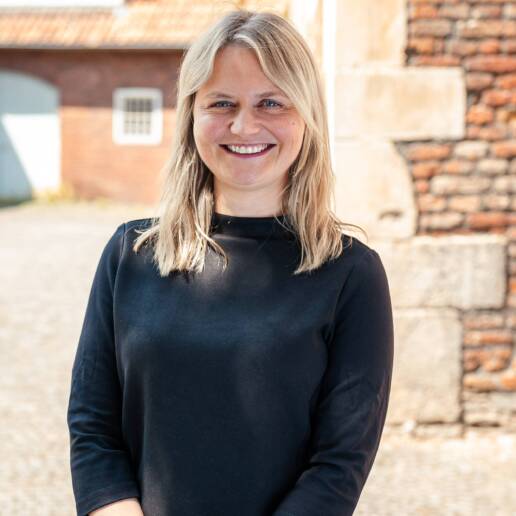
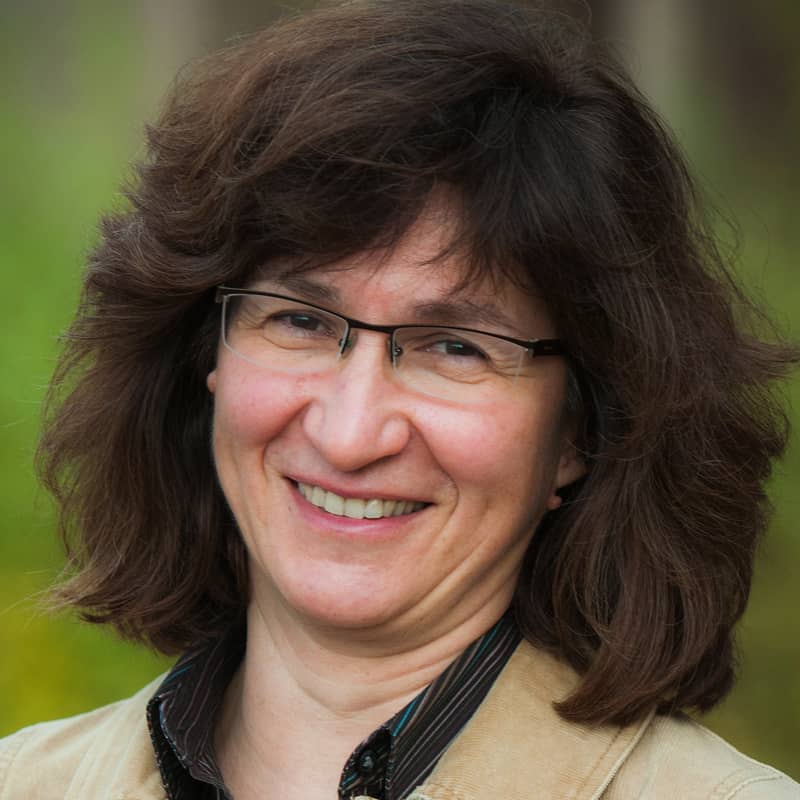
Andrea Kő is a researcher at the Corvinus University of Budapest's Institute of Data Analysis and Informatics, with a focus on artificial intelligence, fintech, and big data applications. She has held positions in the Department of Information Systems until 2022 before transitioning to her current role. Her work emphasizes investment recommenders, Industry 4.0 readiness, and e-government solutions. Her research spans financial technologies, manufacturing optimization, and organizational resilience in SMEs. Notable contributions include hybrid AI models for production systems and frameworks for digital transformation assessment. She actively contributes to international conferences like EGOVIS and BiDEDE, editing proceedings and presenting on topics such as robo-advisors and smart manufacturing. Key projects include the CCMS2.0e maturity model for Industry 4.0 adoption and studies on pandemic impacts on SMEs. Her work integrates machine learning (ANFIS, MMNN) with domain-specific challenges, addressing both theoretical and practical aspects of digital innovation across sectors.
Dr. Davi V. Q. Rodrigues is an Assistant Professor in the Department of Electrical and Computer Engineering at the University of Texas at El Paso (UTEP). His research focuses on microwave/millimeter-wave circuits and signal processing for radar, communication systems, and smart living applications. He holds a B.S. in Communications Engineering from the Military Institute of Engineering (Brazil) and a Ph.D. in Electrical Engineering from Texas Tech University. Prior to academia, he served in the Brazilian Navy and Army, and worked at Uhnder, Inc., Abbott Laboratories, and Dell Technologies. His work emphasizes radar-based smart home, healthcare, and autonomous systems, with contributions in structural health monitoring, human activity recognition, and joint communication-sensing technologies. Dr. Rodrigues has received prestigious awards including the 2022 IEEE MTT-S Tom Brazil Fellowship and the 2023 Texas Tech Horn Distinguished Professors Award. His research group, the Microwave Circuits & Sensing Systems Group, develops algorithms and hardware for biomedical sensing, non-contact health monitoring, and 6G-enabled applications. He actively seeks motivated graduate students interested in radar systems, signal processing, and wireless technologies. Education: B.S., Communications Engineering, Military Institute of Engineering (2017) Ph.D., Electrical Engineering, Texas Tech University (2023) Research Interests: Microwave/mm-wave radar systems Human activity monitoring and gesture recognition Structural health monitoring 6G/ B5G communication-sensing fusion Passive and opportunistic RF sensing His publications span radar-based smart living solutions, biomedical sensors, and reconfigurable intelligent surfaces (IRS). He is an IEEE MTT-S member and has contributed to industry partnerships through collaborations with Uhnder and Dell Technologies. Current projects integrate AI-driven radar signal analysis and low-cost sensor networks for healthcare and infrastructure monitoring.
Enrico Rukzio is a Full Professor of Human-Computer Interaction at the University of Ulm, leading the Human-Computer Interaction group and directing the Institute for Media Research and Media Development. His research spans interactive systems design, focusing on automotive UIs, extended reality, accessibility, and sustainable interaction. He holds a Ph.D. in Computer Science from the University of Munich and has held prior roles at Lancaster University and the Ruhr Institute for Software Technology. Roles: Faculty Dean (2017–2020), Admissions Committee Chairman, Doctoral Committee Chairman Educations: Ph.D., Munich; Lecturer qualifications from Lancaster and Duisburg-Essen Research emphasizes enabling efficient, inclusive, and sustainable interactions through novel interfaces. His work addresses automated vehicles, health-supporting tech, and accessibility for visually impaired users. Recent articles explore Bayesian optimization for UI design, automated vehicle communication, and urban air mobility visualization. Notable awards include best paper recognitions at CHI, EuroVR, and IEEE VR. His grants come from BMBF, DFG, and industry partners like Mercedes-Benz Group. Advises on over 20 funded projects and has mentored award-winning students.
Yu Chen is a Professor in the Department of Electrical and Computer Engineering at Binghamton University, State University of New York. He leads the Ubiquitous Smart & Sustainable Computing (US2C) Lab and serves as Director of the Center for Information Assurance and Cybersecurity (CIAC). His research focuses on Trust, Security, and Privacy in Edge-Fog-Cloud Computing, IoT, and Smart Cities. Dr. Chen holds a PhD from the University of Southern California (2006), with prior research under Professors Kai Hwang and Anthony F. J. Levi. His work has been funded by NSF, DoD, AFOSR, and industrial partners, yielding over 200 publications. He is a Senior Member of IEEE and SPIE, and a member of ACM. Education: PhD in Electrical Engineering, University of Southern California (2006) Affiliations: Director, US2C Lab Associate Director, CIAC Research Interests: Smart Cities, Intelligent Surveillance, Edge-Fog-Cloud Computing, IoT Security, and Privacy-Preserving Technologies. His work emphasizes real-time systems, resilient edge architectures, and decentralized consensus protocols for IoT. Grants & Awards: Funded by NSF, DoD, AFOSR, NYS MDPI Computers 2019 Best Paper Award Best Student Poster Award (IEEE AIPR 2014) Students & Labs: Advised 19 students (PhD/Master’s). Key projects include secure edge video processing, ENF-based authentication, and blockchain for IoT. The US2C Lab explores smart city applications and edge computing resilience.
Mehmet YAVUZ is an Associate Professor at Trakya University's Faculty of Education, Department of Special Education Teacher Training. He has held academic positions since 2011, progressing from Lecturer to Assistant Professor (2018), and Associate Professor (2022). His professional experience includes teaching roles since 2000, primarily focused on special education. He obtained his doctoral degree in 2016 with research on video modeling methods for teaching children with autism spectrum disorder. YAVUZ's work emphasizes inclusive education, teacher well-being, and innovative teaching strategies for neurodiverse populations. Education: Bachelor's Degree in Special Education (2000) Master's Degree in Special Education (2008) Doctoral Degree in Special Education (2016) Research Interests: YAVUZ specializes in special education methodologies, particularly focusing on autism spectrum disorders. His work explores: Technology integration (VR/AR) in teaching sensory and life skills Teacher burnout and professional commitment Sibling relationships in neurodiverse families Inclusive classroom practices Educational assessment for children with learning difficulties Publications Trends: His recent work (2020–2025) emphasizes: Educational technology applications for disability support Teacher well-being and institutional challenges Metodological innovations in special needs pedagogy Advising & Grants: While no specific grants are listed, his extensive publication record indicates sustained research engagement. He has collaborated with co-authors like PINAR SAFAK and DENIZ SERDAL on key studies. Labs/Teams: No dedicated lab is mentioned, but his research often involves partnerships with Trakya University's Special Education faculty and international collaborators from institutions like Kliment Ohridski University (North Macedonia).
Timo Fleischer is an Associate Professor in the Chemistry Didactics Working Group at the University of Salzburg, affiliated with both the Faculty of Natural and Life Sciences and the School of Education. He leads key educational innovation projects including EXBOX-Digital, ChemGerLab-VR, and RECC Salzburg, and plays a significant role in digital science education development. Education: Bachelor of Science in Geography and Chemistry, University of Kiel (2011) Master of Education in Geography and Chemistry, University of Kiel (2013) PhD in Science Education, TUM School of Education (2017) Habilitation in Chemistry Didactics, University of Salzburg (2024) His research focuses on the effectiveness of digital media in teacher education and chemistry classrooms, the development of digital teaching and learning materials, and the integration of experimentation and modeling in science education. He is particularly interested in how digital tools support the learning of chemical language and representations. His work bridges educational theory and practical classroom innovation. His recent publications demonstrate a strong emphasis on digital scaffolding, augmented and virtual reality in chemistry labs, eye-tracking during experiments, and the use of fiction as an anchor in science teaching. These works reflect a trend toward immersive, technology-enhanced, and student-centered learning environments in science education. Scientific Awards: Ehrenurkunde Polytechnik-Preis 2022 – Projekt EXBOX-Digital Kulturfondspreis 2020 für das Projekt MINT:labs Science City Itzling Comenius-EduMedia-Siegel für EXBOX-Digital (2020) Qualitätslabel „Regional Educational Competence Centre“ (RECC) (2018–2021) Junior-Fellowship, Kolleg Didaktik:digital (2016–2017) Timo Fleischer has supervised various research projects and collaborated with numerous colleagues and students, though specific advisees are not listed. He has secured recognition and funding for initiatives such as EXBOX-Digital and MINT:labs, indicating successful grant acquisition. He is actively involved in teacher training, curriculum development, and science communication. He leads several innovative labs and teams, including ChemGerLab-VR (a virtual reality chemistry lab), EdTechAll, and the development of MINT:labs Science City Itzling. These initiatives focus on creating digital, hands-on, and inclusive science learning environments for both students and teachers.
Olaf Kramer is a Professor of Rhetoric and Knowledge Communication at the Department of General Rhetoric, Faculty of Humanities, University of Tübingen. He leads the Presentation Skills Research Center and serves as Managing Director of the Research Center for Science Communication (RCS). Since 2021, he has been the spokesperson for the RHET AI Center, focusing on artificial intelligence in science communication. Kramer is also a key editor of Science Notes magazine and the neue rhetorik / new rhetoric book series. Professor, Department of General Rhetoric, University of Tübingen Head, Presentation Skills Research Center Managing Director, Research Center for Science Communication (RCS) Spokesperson, RHET AI Center Editor, Science Notes and neue rhetorik series Education: Studied General Rhetoric, German Literature, Philosophy, and Psychology in Tübingen, Frankfurt (with Jürgen Habermas), and Chapel Hill, USA (with Lawrence Grossberg) Ph.D. (2008): Rhetoric in Goethe Habilitation (2015): Virtual Reality, with teaching authorization in General Rhetoric and German Literary Studies Olaf Kramer's research centers on science communication , communicative competence , political communication , digital rhetoric , and virtuality . His work bridges classical rhetorical theory with contemporary media and public discourse, particularly in scientific and political contexts. He investigates how knowledge is recontextualized in public communication and how digital platforms reshape rhetorical practices. The recent publications reflect a strong trend in interdisciplinary rhetoric , combining insights from law, theology, education, and digital media. His work explores the rhetorical dimensions of judicial decisions, science slams, social media, and AI, emphasizing the role of narrative, visual design, and audience engagement in shaping public understanding. The integration of virtuality and digital navigation into rhetorical theory highlights his innovative approach to modern communication challenges. Scientific Awards: No specific awards are mentioned in the provided text. Kramer actively supervises a large cohort of students and researchers, many of whom have collaborated on publications and projects. He has secured third-party funding for major initiatives like the Presentation Skills Research Center. His advisory and leadership roles extend to university governance, public engagement, and professional consulting for organizations such as the Max Planck Society and the German Foreign Office. He is deeply involved in public science communication through the Science-Notes lecture series, which he founded and moderates, and through media appearances on ZDF/3sat and RTL. His work also includes designing and leading rhetorical training programs for academic, corporate, and governmental clients, demonstrating a strong commitment to translating academic knowledge into practical applications.
Mark Hancock is a Professor and Chair of the Department of Management Science and Engineering at the University of Waterloo's Faculty of Engineering. He directs the Touchlab research group and holds cross-appointments in Systems Design Engineering and the David R. Cheriton School of Computer Science. His research focuses on designing interactive technologies that leverage human movement and perception to create novel interaction paradigms. Education: 2010: PhD in Computer Science, University of Calgary 2004: MSc in Computer Science, University of British Columbia 2002: BSc in Mathematics & Computer Science, Simon Fraser University Research Interests: Hancock's work centers on human-computer interaction, particularly technologies enabling richer physical interaction through hands, fingers, and body movements. His lab explores tabletop displays, large-screen interfaces, VR/AR systems, multi-touch interaction, 3D interfaces, and collaborative systems. Recent work examines VR applications for productivity, stress reduction through gaming, and gender-inclusive maker spaces. Publication Trends: Recent articles show strong emphasis on virtual reality applications (productivity tools, health considerations), tangible interfaces (card-based systems, physical props), and social computing (collaborative systems, community studies). Methodologies include phenomenological analysis, systematic reviews, and comparative evaluations of interaction techniques. Awards: NSERC Discovery Accelerator Supplement (2016) ACM CHI Golden Mouse Award (2016) ISS 2018 10-Year Impact Award Two ACM CHI Honorable Mentions (2019) Top Ontario Researcher recognition (2016) Teaching: Recent courses include Introduction to Computer Programming (MSCI 121), Algorithms and Data Structures (MSCI 240), Analytics and User Experience (MSCI 543), and Human-Computer Interaction (MSCI 630). Research Infrastructure: Directs the Touchlab, which develops novel interaction technologies. The lab's work bridges physical and digital interaction spaces, with applications in gaming, productivity tools, and collaborative systems.
Prof. Dr. Julia Backmann is a Full Professor and Chair of Transformation of the World of Work at the University of Münster, where she also serves as Co-Director of the Research Center for Business Transformation in Times of Radical Change. Previously, she held positions as Assistant Professor at University College Dublin (2019–2022) and Ludwig Maximilian University of Munich (2014–2018). Her academic journey includes a habilitation (2021) on 'Leadership and Collaboration in Challenging Contexts' and a PhD summa cum laude (2014) from WHU – Otto Beisheim School of Management. Prior to academia, she worked as a consultant at Accenture. Her research focuses on collaboration, leadership resilience, organizational transformation, and the impact of emerging technologies like AI and virtual reality on work structures. Current projects include exploring the four-day workweek in Germany and adaptive strategies for companies in disruptive environments. Her work has been published in top journals such as the Academy of Management Journal and Organization Science . Teaching-wise, she designs MBA programs in Management & Innovation, Sports Management, and Nonprofit Governance, emphasizing interactive learning and critical thinking. Awards include Best Paper Awards, the 2021 Teaching Award, and recognition on UCD’s Dean’s List. Her research trends highlight themes like team boundary management, stress resilience in leadership, and the dynamics of technology adoption in healthcare. She investigates how organizational changes interact to create systemic challenges, and how cultural gaps affect multinational team performance. Awards include multiple Best Paper Awards, the 2021 Teaching Award, and inclusion in the Dean’s List at University College Dublin. Her work bridges academic theory with practical business transformation, addressing modern workplace challenges through interdisciplinary methods.
Dr. Maja Krzic is a Professor at the Department of Forest and Conservation Sciences within UBC's Faculty of Land and Food Systems. Her research bridges soil science with sustainability education through community engagement and digital innovation, focusing on human impacts on soil properties across agricultural, grassland, and forest ecosystems. She develops cutting-edge teaching tools like the Digging into Canadian Soils open textbook and SOILx interactive platform. PhD (University of British Columbia, 1997) MSc (University of Belgrade, 1990) BSc (University of Belgrade, 1986) Her publications (2010-2025) explore greenhouse gas dynamics in agricultural systems, soil carbon sequestration in elevation gradients, and innovative educational approaches including problem-based learning and augmented reality. Recent work addresses climate-resilient soil management in coastal British Columbia and gender parity in soil science academia. Major awards include: 3M National Teaching Fellow (2016) UBC Killam Teaching Prize (2006) Fellow, Soil Science Society of America (2023) Platinum AVA Digital Award for SOILx (2015) She has mentored 28 graduate students and postdocs, including Amy Wells (2024), Clara Roa-Garcia (PhD, 2018), and Preston Cumming (Postdoc, 2015). Current projects focus on climate change adaptation in Delta farmland and regenerative agricultural practices.
Yacine Atif is a Professor of Information Technology at the University of Skövde, affiliated with the School of Informatics and Department of Information Technology. He maintains an active research profile with numerous publications spanning from 2002 to the present, demonstrating sustained academic contribution in his field. His research interests focus on Internet of Things (IoT), Cybersecurity, Cyber-Physical Systems, Digital Transformation, Cloud Computing, and Educational Technologies. Professor Atif's work bridges theoretical research with practical applications, particularly in smart city technologies, critical infrastructure protection, and educational innovations. His research has evolved from early work in e-commerce trust (2002) to contemporary work on metaverse learning experiences (2023) and vehicle collision prediction (2025). Analysis of his recent publications (2018-2025) reveals a strong focus on cybersecurity applications for cyber-physical systems, particularly in critical infrastructure protection. His work demonstrates a progression from foundational IoT concepts toward sophisticated integration of machine learning and cognitive approaches in security analysis. The research portfolio shows consistent collaboration with both academic and industry partners across multiple countries. Professor Atif leads or contributes to significant research projects including the ongoing 'Intelligent Driver Support Systems and Safety Enhancement' (I2Connect) project (2023-2026) focused on developing next-generation Advanced Driver Assistance Systems for trucks, and previously led the 'Infrastructure Resilience – ELVIRA' project (2017-2020) which developed time-based infrastructure dependency analysis for power-grid risk assessment. His teaching responsibilities include multiple courses at both bachelor's and master's levels, with course credits ranging from 3 to 7.5 credits across various technology domains. His office is located in room PA420K at the University of Skövde, and he can be contacted at yacine.atif@his.se or by phone at 0500-448312.
Daniel Telech is a Researcher at the Department of Practical Philosophy , Lund University . He works extensively in the Cognition & Philosophy VR Lab , focusing on interdisciplinary applications of virtual reality in moral philosophy and cognitive science. His contact information includes email daniel.telech@fil.lu.se and office LUX:B521 , Lund. His research spans moral philosophy , ethics , forgiveness , and moral luck , with a particular interest in how aesthetic experiences and communication intersect with moral frameworks. Recent publications analyze teleological ethics , blame theory , and interpersonal normativity , often bridging empirical studies with philosophical inquiry. His work trends toward VR-based experimental ethics , moral sentiment analysis , and pedagogical design in philosophical contexts. Collaborations with technical disciplines and educational institutions highlight his commitment to applied ethics research. Current projects include empirical evaluations of VR technology in physics education and theoretical explorations of virtue ethics in digital environments. He actively engages with The Choice Blindness Lab and ETG (Educational Technology Group) , balancing academic rigor with entrepreneurial innovation.
Susan Land is a Professor of Education and the Associate Dean of Undergraduate and Graduate Education in the Learning, Design, and Technology Program at Penn State University's College of Education. She also serves as the Head of the Department of Learning & Performance Systems. Dr. Land earned her doctorate in Instructional Systems from The Florida State University under Dr. Michael Hannafin. Prior to Penn State, she was a postdoctoral fellow at the University of Georgia's Learning and Performance Support Laboratory and faculty at the University of Oklahoma's Instructional Psychology and Technology Program. Earlier, she worked on instructional design projects with the U.S. Air Force Academy, Citibank, and Hewlett Packard. Her research emphasizes frameworks for technology-enhanced learning environments, particularly focusing on how learners meaningfully engage with technology in student-centered contexts. She has published over 60 manuscripts and co-edited two editions of Theoretical Foundations of Learning Environments with Dr. David Jonassen, which has been reprinted repeatedly, translated into Korean, and achieved notable sales in the Instructional Technology field. Her recent publications demonstrate a clear trajectory toward mobile, context-sensitive learning in outdoor environments using proximity-based technologies like iBeacons. These studies examine children's scientific observations in arboretums, sense-making conversations in botanical gardens, and knowledge sharing in online affinity spaces, revealing patterns in how technology mediates learning experiences across different contexts. Young Scholar Award from Association for Educational Computing and Technology (AECT) Outstanding Article of the Year Award from AECT 2015 SIG-IT Best Paper Award from American Educational Research Association (AERA) Top 10 most-published/frequently-cited authors in Educational Technology Research & Development College of Education 2016 Outstanding Teaching Award Dr. Land advises graduate students and collaborates extensively with researchers including Heather Zimmerman, Priya Sharma, and Chris Millet. Her NSF-funded research with Zimmerman examines how proximity-based computing supports children's scientific sense-making in outdoor environments. She leads the Augmented and Mobile Learning Research Group, which investigates context-sensitive, place-based learning using mobile technologies and augmented reality. Her research has been supported by multiple grants from the National Science Foundation (NSF), Institute of Museum and Library Services (IMLS), and Penn State's Center for Online Innovation in Learning (COIL). Current projects include developing the Penn State Places platform for creating iBeacon-triggered content in public spaces, with applications in arboretums, children's gardens, and community engagement initiatives.
Dr. Robyn J Stiger is a Lecturer at Oxford Brookes University , specializing in Clinical Skills, Simulation & Immersive Technology . She leads a multidisciplinary team in simulation-based education, with affiliations to the Centre for Movement, Occupational and Rehabilitation Sciences (MOReS) and Oxford University Hospitals NHS Foundation Trust . PGcert in Education MSc in Physiotherapy BSc in Health Sciences Research Interests include: Prehabilitation for Upper Gastrointestinal Cancer and Critical Care outcomes Pedagogical applications of Simulation-Based Education to improve Patient Safety and Interprofessional Learning Physiotherapy interventions for Spinal Cord Injuries and Delirium in ICU Publications focus on: Systematic reviews and scoping studies on prehabilitation and critical care Simulation pedagogy in Postgraduate Healthcare Education Virtual reality applications for Muscular Activity Analysis Scientific Awards : Fellow of the Higher Education Academy (FHEA) Professional Roles : External Examiner at Birmingham University (2023–present) Executive Committee Member, Association of Simulated Practice in Healthcare (ASPiH) (2023–present) Honorary Research Physiotherapist at Oxford University NHS Foundation Trust (2019–present) External Examiner at Keele University (2020–2025)
Dag Johansen is a Professor in the Department of Informatics at UiT The Arctic University of Norway, Tromso campus. His work spans multiple research areas at the intersection of computer science, sports science, medicine, health technology, and nutrition science. He leads the interdisciplinary "Corpore Sano" research center and is actively involved in several research groups including the Cyber Security Group (CSG) and Crime Control and Security Law. Professor Johansen's research focuses on developing fundamental software solutions for secure and error-free data processing in heterogeneous distributed systems, ranging from lightweight "Internet of Things" devices and mobile phones to large-scale cloud solutions. His work particularly emphasizes applications in sports technology, edge computing, and compliance technology. His research interests include distributed systems, cybersecurity, sports technology, edge computing, data privacy, AI for sports analytics, multimedia forensics, and compliance technology. His recent publication trends show a strong focus on AI applications for sports video analysis, particularly in soccer and ice hockey, where his team has developed AI-based cropping systems for social media representations. He also has significant work in data privacy and GDPR compliance, especially regarding the "third country problem," as well as applications of AI in sustainable fishing practices. His 2024-2025 publications demonstrate continued work in self-healing microservices, lightweight encryption for video feeds, and virtual reality training environments. Professor Johansen is actively involved in mentoring students and research collaborators, as evidenced by his extensive publication record with numerous co-authors including doctoral students and postdoctoral researchers. His work has received funding through various research projects focused on data analytics, privacy technology, cybersecurity, and sports technology applications. He leads the interdisciplinary "Corpore Sano" center, which brings together researchers from computer science, sports science, medicine, health technology, and nutrition science. His work also involves collaboration with the "Njord" project focused on sustainable fishing through AI applications, and he's involved in developing the "Áika" distributed edge system for AI inference.