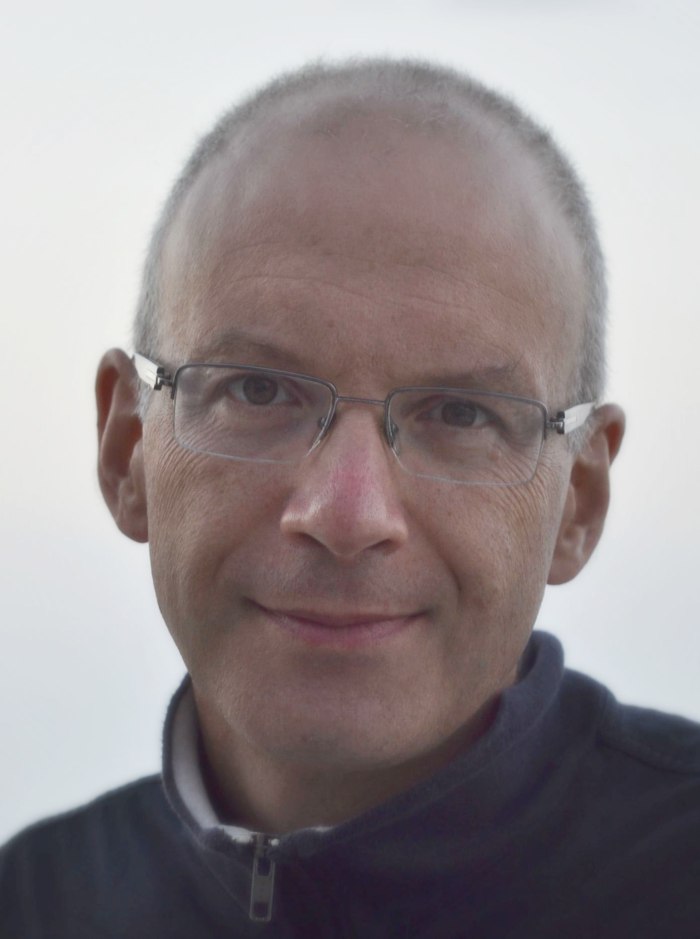
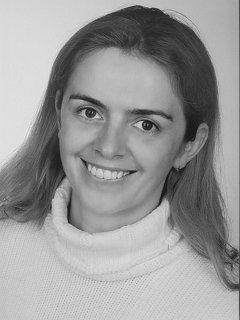
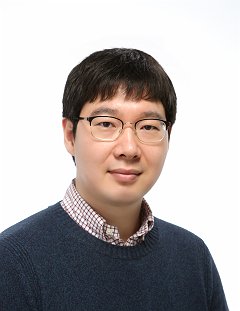
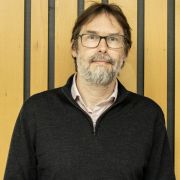
George Drettakis is a Senior Researcher at INRIA Sophia-Antipolis and leads the GRAPHDECO research group. He has held professorial roles at institutions including MIT, University of Reims, University of Toronto, and École Normale Supérieure. His research focuses on rendering for computer graphics and sound, with emphasis on image-based rendering, perceptual rendering, and audio-visual cross-modal effects. He has also explored interactive illumination, shadows, relighting, and generative models. Current Students: G. Kopanas (Neural Rendering), N. Violante (Generative Models), A. Petitjean (co-supervised), Y. Poirier-Ginter (co-supervised), P. Panantonakis (starting fall 2023). Postdoctoral Researchers: A. Gauthier at INRIA. His recent work includes 3D Gaussian Splatting , Diffusion-based Relighting , and Neural Radiance Fields . He has received the Eurographics Outstanding Technical Contributions Award (2007) and was named an Eurographics Fellow . He manages projects like ERC Advanced Grant FUNGRAPH and has participated in H2020 EMOTIVE , ANR SEMAPOLIS , and CROSSMOD . His group collaborates internationally and has hosted researchers from institutions such as UC Berkeley, Imperial College London, and TU Wien.
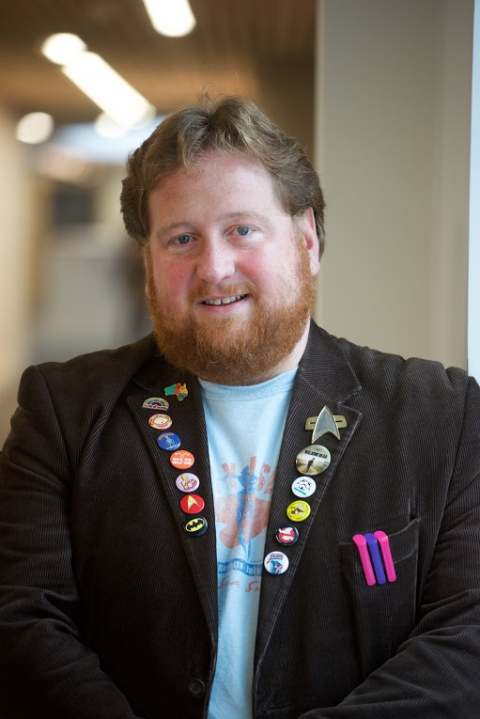
Professor Lincoln Geraghty serves as Professor of Media Cultures at the University of Portsmouth, where he has been affiliated since 2004. He is based in the Faculty of Creative and Cultural Industries and the School of Film, Media and Creative Technologies, specializing in Film and Media within the Media and Popular Culture research group. Geraghty previously held positions as Lecturer in Media Studies (2004), Principal Lecturer in Media Studies (2007), and Reader in Popular Media Cultures (2011) before achieving his current professorship in 2019. As a Fellow of both the Higher Education Academy and Royal Society of Arts, he maintains significant academic standing. Geraghty completed his undergraduate and postgraduate studies at Lancaster and Nottingham universities, culminating in a PhD from the University of Nottingham that focused on Star Trek fans and American culture. His academic journey reflects a consistent engagement with media studies and popular culture, evolving from early teaching positions to his current leadership role in media cultures research. Professor Geraghty's research centers on science fiction, popular culture, American film and television, and fandom studies, with particular focus on the cultural and creative links between audiences and media entertainment industries. His work examines the affective and nostalgic relationships fans develop when collecting media merchandise and children's toys from their past. This research trajectory has produced influential publications including Living with Star Trek: American Culture and the Star Trek Universe (2007), American Science Fiction Film and Television (2009), and Cult Collectors: Nostalgia, Fandom and Collecting Popular Culture (2014). His recent publications demonstrate a sophisticated evolution of his research interests, moving from foundational work on Star Trek fandom to broader examinations of media collecting practices, fan tourism, and the cultural significance of franchises like Pokémon and Star Wars. Geraghty's scholarship increasingly bridges media studies with cultural geography, analyzing how digital technologies transform traditional fan practices while maintaining core elements of nostalgic engagement. Editorial Advisor for The Journal of Popular Culture Editorial Advisor for Journal of Fandom Studies Editorial Advisor for Journal of Popular Television Senior Editor for Cogent Arts and Humanities (Taylor Francis) Editor for Directory of World Cinema: American Hollywood As an active PhD supervisor, Geraghty mentors students in fandom studies, collecting practices, fan tourism, and science fiction media. His supervision has resulted in numerous completed theses, and he actively accepts new PhD students interested in these research areas. Beyond traditional academic work, he engages with public scholarship through The Conversation and co-creates the "Pop Matters" digital series exploring contemporary popular culture phenomena. Professor Geraghty maintains an active research profile with over 124 scholarly outputs, including books, edited collections, journal articles, and digital media productions. His ORCID profile (0000-0001-6624-089X) documents this extensive scholarly contribution to media and cultural studies.
Dr Caroline Gonda is a Lecturer in the Faculty of English and a Fellow at St Catharine's College, University of Cambridge. She has been affiliated with the institution since 1996, serving as Director of Studies in English and contributing to interdisciplinary teaching in Gender Studies. Her research focuses on eighteenth- and early nineteenth-century prose fiction, feminism and gender, history of sexuality, and lesbian literature. She explores topics such as sensibility, domestic fiction, and queer reception theory through both academic and creative writing. Recent publications include interdisciplinary analyses of Anne Lister’s archives, queer interpretations of historical art, and flash fiction works addressing memory and identity. Her creative writing intersects with academic scholarship, particularly in exploring lesbian narratives and cultural memory. Dr Gonda contributes to graduate supervision for the MPhil in English Studies and the interdisciplinary MPhil in Gender Studies. She has co-edited anthologies on queer topics and published extensively in journals like Eighteenth-Century Fiction and Journal of Lesbian Studies .
Thijs Roumen is an Assistant Professor at Cornell Tech within the Department of Information Science . He leads the Matter of Tech Lab , focusing on Digital Fabrication and Human-Computer Interaction (HCI) . His work aims to democratize fabrication technology for non-industrial users. PhD from Hasso Plattner Institute MSc in IT Product Design from University of Southern Denmark BSc in Industrial Design from Eindhoven University Research interests include: Laser cutting portability 3D modeling tools Fabrication error prevention Accessible haptic interfaces Recent publications address asynchronous hardware troubleshooting (SplatOverflow, CHI'25), medical robotics (HRI'25), and fabrication artifact data storage (StructCode, SCF'23). His work has received multiple Best Paper Honorable Mentions at CHI and UIST conferences. Scientific contributions include: Key role in CHI meta (2018-present) Chair of German Networking Events at CHI Subcommittee leadership in DIS, CHI, and UIST Active in lab collaborations and invited talks at institutions like Stanford, MIT, and University of Tokyo. Also a World Major Marathon Finisher (Chicago 2023, Berlin 2019).
Dr. Sam Qorbani is an Associate Professor in the Department of Computer Science at MacEwan University's Faculty of Arts and Science. His expertise spans communication technology, digital media studies, and virtual reality applications in education. Research focuses on human-centered computing and immersive learning environments Key projects: ScienceVR framework, VR medical training systems, and AR chemistry education tools Recent publications highlight his work in developing virtual simulations for STEM, physics, and chemistry education, emphasizing accessibility and cognitive engagement. His research bridges computer science with educational innovation through advanced visualization techniques.
Nima Honarmand is an Assistant Professor in the Department of Computer Science at Stony Brook University, where he co-directs the Computer Architecture Stony Brook (COMPAS) Lab . His research focuses on computer system design , particularly parallel computer architecture and operating systems . Education : Ph.D. in Computer Science from University of Illinois at Urbana-Champaign under Josep Torrellas. His work addresses challenges in deterministic replay of parallel programs to simplify debugging on multi-processor systems. Current research explores memory fencing, consistency models, and architectural extensions for reproducibility. Recent publications span conferences like ASPLOS, ISCA, PACT, and POPL, with emphasis on parallelism constraints , memory hierarchy optimization , and fault-tolerant systems . Awards include Best Paper at PACT 2011 and Best Paper Candidate at VTS 2007 . Teaching : Courses include Computer Architecture (CSE 502) and Operating Systems (CSE 306/CSE 506). Email : nhonarmand@cs.stonybrook.edu
Michael D. Bond is a Professor in the Department of Computer Science & Engineering at Ohio State University's College of Engineering. He leads the Programming Languages and Software Systems (PLaSS) Research Group, which focuses on designing program analyses and software and hardware systems that enhance computing reliability, scalability, and security. His academic service includes general chair for PLDI 2027, program committee membership for multiple top conferences, and committee roles in SIGPLAN Research Highlights (2024-2027). Professor Bond's research spans programming languages, systems, and security, with particular expertise in memory management, concurrency, hardware transactional memory, information flow control, and predictive race detection. His work bridges theoretical foundations with practical implementations, as evidenced by numerous open-source projects accompanying his publications. The PLaSS group has made significant contributions to understanding and improving memory models, developing efficient garbage collection techniques for modern architectures, and creating novel approaches to secure programming in languages like Rust. Analysis of his recent publications reveals a clear trajectory toward addressing security and reliability challenges in modern computing systems, particularly through language-based approaches. His work increasingly focuses on Rust programming language security mechanisms, memory disaggregation for datacenters, and advanced techniques for detecting and preventing concurrency bugs. The research demonstrates strong continuity in exploring memory models and concurrency while adapting to emerging hardware trends and security challenges. Outstanding Teaching Award, Department of Computer Science and Engineering, Ohio State University (2018) Lumley Research Award, College of Engineering, Ohio State University (2016) OOPSLA 2015 Distinguished Paper and Artifact Awards NSF CAREER Award ACM SIGPLAN Outstanding Doctoral Dissertation Award Intel PhD Fellowship Professor Bond actively mentors several PhD students including Chujun Geng, Vincent Beardsley, Chris Xiong, Victor Chen, and Noah Charlton, with external co-advisee Zixian Cai at Australian National University. His research is currently supported by multiple NSF grants including SaTC-2348754 (2024-2027), CyberCorps-2336531 (2024-2029), and CSR-2106117 (2021-2025), reflecting sustained funding for his work in information flow control, security, and systems research. The PLaSS Research Group maintains a strong presence in both academic and industrial communities, with graduated PhD students securing positions at major technology companies like Google, Amazon Web Services, and Huawei, as well as academic positions at institutions like UIUC and IIT Kanpur. The group's work combines theoretical rigor with practical implementation, consistently producing open-source artifacts that enable reproducibility and further research in the systems and programming languages community.
Ruzica Piskac is a Professor of Computer Science at Yale University, where she leads the Rigorous Software Engineering (ROSE) group. She has made significant contributions to the fields of software verification, security, automated reasoning, and code synthesis, focusing on improving software reliability and trustworthiness through formal techniques. Dr. Piskac received her PhD from the Swiss Federal Institute of Technology (EPFL) in 2011, where her dissertation won the Patrick Denantes Prize. Prior to joining Yale, she led an independent research group at the Max Planck Institute for Software Systems in Germany (2012-2013). Her research spans several key areas: symbolic execution for Haskell (G2), privacy-preserving formal methods (PPFM), functional reactive synthesis, verification of configuration files, and analysis of software updates. Her work consistently bridges theoretical formal methods with practical applications in real-world systems. Dr. Piskac's recent publications demonstrate a strong trend toward applying formal verification techniques to emerging challenges including large language models, quantum computing security, legal accountability of automated systems, and cyber-physical systems. Her research increasingly intersects with AI, cryptography, and legal domains while maintaining strong foundations in formal methods. Her scientific achievements have been recognized with numerous prestigious awards: Multiple Amazon Research Awards Yale University's Ackerman Award for Teaching and Mentoring Facebook Communications and Networking Award Microsoft Research Award for the Software Engineering Innovation Foundation (SEIF) Patrick Denantes Prize for her PhD dissertation Dr. Piskac has graduated five PhD students, four of whom have gone on to become assistant professors of computer science. She has served as Program Chair of the 37th International Conference on Computer Aided Verification and is on the Steering Committee of the Formal Methods in Computer-Aided Design conference. She leads the Rigorous Software Engineering (ROSE) group at Yale, which focuses on several key projects including: Symbolic Execution Engine for Haskell (G2) Privacy Preserving Formal Methods (PPFM) Functional Reactive Synthesis Verifications for Configuration Files Analysis of Software Updates and Configuration Files
Mirka Dickel is a Professor and Chair holder of Geography Didactics at the Geographical Institute of the Friedrich-Schiller-Universität Jena since October 1, 2011. Prior to this position, she served as Professor of Educational Science specializing in Geography Didactics at the University of Hamburg (2008-2011) and as Academic Councilor for Geography Didactics at the University of Mainz (2006-2008). Her academic career spans over two decades with significant contributions to geography education, teacher training, and didactic methodology. Dr. Dickel completed her teaching qualification for secondary schools (SII/I) in German, English, and Geography at the University of Münster. She earned her doctorate in 'Didactics of Geography' from the Chemisch-Geowissenschaftlichen Fakultät at the University of Jena in 2004 under Prof. Dr. Tilman Rhode-Jüchtern. Before her university career, she worked for ten years as a teacher of German and Geography at the Goethe-Gymnasium in Stolberg (near Aachen). Her research focuses on geography didactics with an emphasis on phenomenological-hermeneutic lifeworld theory and socially theoretically informed spatial theory. She explores geographical thinking, representation and mediation methods, history of geography education, space theories, socialized human-nature relationships, democracy education, judgment practices in geography education, and the ecology of classroom time. Her work bridges theoretical frameworks with practical classroom applications, emphasizing ethical and aesthetic dimensions of geography teaching. Dr. Dickel's recent publications demonstrate a growing interest in virtuality, visualization, embodiment, and the intersection of geography with other disciplines such as philosophy, ethics, and visual arts. Her work increasingly examines digital media in geography education, intersectionality through comic art, and the temporal dimensions of teaching and learning processes. She has developed a distinctive approach that combines phenomenological inquiry with pedagogical practice, creating innovative frameworks for geography education that emphasize critical reflection and ethical engagement. As an active contributor to academic governance, Dr. Dickel has served as Director of the Geographical Institute (2019-2022), Chair of the Teacher Examination Committee (2011-2023), and leader of the Doktorandenkolleg 'Bildung-Forschung-Dialog' since 2019. She has coordinated several significant projects including the BMBF-funded 'Kompetenzzentren für digitales und digital gestütztes Unterrichten' (2023-2025) and the 'Qualitätsoffensive Lehrerbildung' (PROFJL) initiatives. Dr. Dickel is deeply involved in teacher education through her supervision, coaching, and workshop offerings focused on conflict resolution, team dynamics, and perfectionism in educational contexts. She leads numerous excursions that serve as living laboratories for her research on spatial awareness and human-environment relationships, including recent trips along the Saale River, to Hamburg, Vienna, and various international locations.
Carla Pais-Vieira is an Assistant Professor of Psychology at the Nursing School of the Catholic University of Portugal (UCP) and Coordinator Researcher of the Brain-Machine Interface Research Lab (BMIsLab) at the Center for Interdisciplinary Research in Health (CIIS). Her academic journey includes a PhD from Duke University's Center for Cognitive Neuroscience, where she studied neural mechanisms of memory, perception, attention, and emotions. Dr. Pais-Vieira's research focuses on the application of Brain-Machine Interfaces to healthcare, with particular emphasis on neurorehabilitation for spinal cord injury patients. Her work spans both basic and translational research, developing innovative approaches for detection, prevention, assessment, diagnostics, rehabilitation, and disease management. She has pioneered the development of a thermotactile stimulation device (patented) and created robotic neurorehabilitation protocols tailored for individuals with Spinal Cord Injury. Her recent publications demonstrate a strong trend in applying advanced neurotechnology to rehabilitation challenges, particularly in spinal cord injury recovery and sensory perception. Her work integrates multiple disciplines including neuroscience, engineering, and clinical practice to develop practical healthcare solutions. Dr. Pais-Vieira has received notable recognition for her work: Corruption Prevention Prize from the Portuguese Court of Auditors Prémio de Excelência pela Secção Regional do Norte da Ordem dos Enfermeiros (December 9, 2023) Winner of the European Institute of Innovation & Technology (EIT) Health Jumpstarter Grand Final (2022) As an academic supervisor, Dr. Pais-Vieira mentors MSc and PhD students in psychology and neuroscience. She has secured over €300,000 in competitive research funding and since 2022 has been responsible for Monitoring and Evaluation of €1,240M in European-funded health system investments through Portugal's National Health Service. Dr. Pais-Vieira leads the Brain-Machine Interface Research Lab (BMIsLab), where her team develops cutting-edge technologies including integrated exoskeletons, virtual reality applications, and advanced neuroimaging techniques for healthcare solutions. The lab's work bridges neuroscience, engineering, and clinical practice to address real-world healthcare challenges.
Chung Hwan Kim serves as an Assistant Professor in the Department of Computer Science at the University of Texas at Dallas, where he directs the Software & Systems Security Laboratory (S³ Lab). His research focuses on critical security challenges in cyber-physical systems, embedded devices, and cloud infrastructure, with recognition including the NSF CAREER Award and UT Dallas New Faculty Research Symposium Grant. His expertise spans Computer Systems Security , Cyber-Physical Security , and Software Security and Reliability , emphasizing practical solutions for robotic vehicles, autonomous systems, and trusted execution environments. Current projects address signal injection attacks, resilience testing, and confidential computing through innovative fuzzing frameworks and hardware-assisted protections. Recent publications (2020-2026) reveal three dominant research thrusts: (1) Security for autonomous/robotic systems ( DriveFuzz , IMUFUZZER ), (2) Trusted execution in constrained environments ( Vessels , GEVisor ), and (3) Automated vulnerability discovery ( HFL , TZ-DATASHIELD ), consistently appearing in top venues like IEEE S&P and USENIX Security. Key honors include: NSF CAREER Award (premier early-career recognition) UT Dallas New Faculty Research Symposium Grant Top 10 finalist for CSAW Best Applied Research Paper Award (2018) As principal investigator of the S³ Lab, Kim mentors graduate researchers and secures competitive funding for projects spanning robotic vehicle security, embedded systems hardening, and confidential computing. His teaching portfolio includes Operating Systems, Information Security, and specialized courses on CPS/IoT security. The S³ Lab develops deployable security tools like TZ-DATASHIELD for embedded data protection and IMUFUZZER for resilience testing of aerial vehicles, collaborating with industry partners to translate research into real-world solutions for autonomous systems and critical infrastructure.
Professor Yuan Miao is a distinguished academic at Victoria University (VU), serving as Professor in the College of Arts, Business, Law, Education & IT and Head of the Information Technology Program. With a PhD from Tsinghua University's Automation Department, his academic journey spans prestigious institutions including the University of Melbourne and Nanyang Technological University in Singapore before settling at VU where he has been Professor since January 2010, following his Associate Professorship from August 2004 to December 2009. Education: BSc, Shandong University, China MEng, Tsinghua University, China PhD, Tsinghua University, Automation Department, China Professor Miao's research centers on Large Language Models (LLMs) and Generative AI, where he has identified critical barriers in practical applications including limited memory length in systems like ChatGPT and Gemini, contradictory explanations, lack of local knowledge integration, and significant errors in text-data hybrid reasoning (up to 38%). His innovative solutions involve cognitive map graphs and rational intelligence models to create customized AI systems. His work spans diverse application areas including human knowledge modeling, multimodal interaction, healthcare analytics (particularly dementia detection), cybersecurity, and robotics powered by rational intelligence. Analysis of Professor Miao's recent publications reveals a strong focus on integrating LLMs with specialized knowledge domains across healthcare, cybersecurity, and social media analysis. His research consistently addresses practical limitations of current AI systems while developing novel frameworks for more reliable and context-aware applications. The interdisciplinary nature of his work is evident in publications spanning medical informatics, cybersecurity analytics, and educational technology. Scientific Recognition: Two articles in fuzzy cognitive map modeling ranked among top 10 most cited works since 2000 (Google Scholar 2000-2016) Development of adversarial dataset based on SQuAD 2.0 that reduced BERT and ELECTRA accuracy from ~90% to ORCID identifier 0000-0002-6712-3465 with 138 peer-reviewed publications Professor Miao actively supervises PhD and Master's students across diverse research topics including access control systems, healthcare analytics, cybersecurity, and social behavior analysis. His research has secured substantial funding from both industry giants (Microsoft, Amazon, Oracle, Google) and government bodies (Australia Research Council, Data61, Singapore's NRF), with recent projects including Digital Transformation for Construction Industry ($1.258 million), Western Health SharePoint Development ($68,000), and Big Data Analysis for Domestic Violence Research (US$100,000). His current grant portfolio demonstrates strong industry-academia collaboration addressing real-world challenges. Professor Miao leads research teams focused on rational intelligence systems that overcome current LLM limitations, with particular emphasis on creating practical AI solutions for healthcare, cybersecurity, and smart city applications. His work with Maribyrnong City Council on the Smart City at Footscray Park project ($850,000) exemplifies his commitment to applying advanced AI research to community-level challenges.
Anne Burmeister is a Full Professor of Organizational Behavior at the Faculty of Management, Economics and Social Sciences at the University of Cologne, Germany, where she has been serving since January 2023. Previously, she was an Assistant Professor and then Associate Professor with early tenure at Rotterdam School of Management, Erasmus University in the Netherlands. Her research focuses on social interactions and knowledge exchange in organizational settings, with particular emphasis on aging and age-diverse workforces. PhD in Psychology (summa cum laude), Leuphana University of Lueneburg (2016) Masters in Management and Organizational Analysis (with distinction), Warwick Business School (2011) Bachelors in Business Psychology (with distinction), Leuphana University of Lueneburg (2010) Strategy Consultant, The Boston Consulting Group (2012-2016) Professor Burmeister's research centers on work and aging, age diversity, inclusion, knowledge transfer, interpersonal interactions, workplace friendship, and remote work. Her work examines how social interactions in workplaces can be leveraged to enhance organizational effectiveness, particularly through understanding the dynamics of age-diverse teams and knowledge exchange processes. She approaches these topics through psychological theories and methods, focusing on the positive aspects and opportunities of human connections in work settings. Her recent publications (2020-2024) reveal a strong focus on knowledge sharing from identity-based perspectives, employee responses to diversity initiatives, workplace friendships, and aging in the workplace. These works predominantly appear in top-tier journals like Journal of Management and Journal of Applied Psychology, indicating her research's significant impact in organizational behavior and human resources fields. Her publications demonstrate a consistent trajectory examining how demographic diversity, particularly age diversity, affects workplace dynamics and organizational outcomes. Professor Burmeister has engaged with practitioner audiences through publications in Harvard Business Review, Forbes, and Personalwirtschaft, translating her academic research into actionable insights for managers and organizations. She has also been featured in media outlets including BBC, FAZ, and WDR, discussing topics related to ageism, workplace relationships, and generational dynamics. As a researcher and educator, Burmeister emphasizes the intellectual freedom and autonomy of academic work, which she contrasts with her previous experience in strategy consulting. Her approach to research is characterized by a positivist, psychological, and quantitative perspective, focusing on hypothesis testing and rigorous empirical investigation.
Dr. Daniel Blackburn is a Senior Lecturer at the School of Medicine and Population Health, University of Sheffield, and an Honorary Consultant Neurologist. He completed his undergraduate medical degree in Liverpool in 1998 and did his medical training in London. He worked as a neurology Specialist Registrar in Singapore and Nottingham prior to joining the University of Sheffield as a PhD student in 2005. He served as a clinical lecturer in Neurology from 2010-2013 and has been a senior lecturer since 2018. His primary subspecialty interest is dementia, with a focus on developing non-invasive scalable diagnostic tests for early cognitive impairment. He co-leads the development of CognoSpeak (cognospeak.com) with Professor Heidi Christensen from the University of Sheffield Department of Computer Science, an automated cognitive assessment tool that can be used in people's homes. His research investigates novel mechanisms for diagnosing Alzheimer's disease and post-stroke dementia using automated language assessment and electroencephalography (EEG). Dr. Blackburn has secured substantial research funding including the NIHR i4i grant for CognoSpeak (£1.47M), UKRI ISCF Healthy Ageing Catalyst Award, and Rosetrees Charity INTERDISCIPLINARY PRIZE 2019. His major funding sources include NIHR, MRC, Alzheimer's Research UK, and Wellcome Trust. His work spans EEG processing, speech analysis, and astrocyte function in neurodegeneration. NIHR i4i grant: £1.47M for CognoSpeak development UKRI ISCF Healthy Ageing Catalyst Award: £62,500 for elderly driver safety EPSRC funding: £22,904 for CognoSpeak-eQMS Alzheimer Research UK grants: multiple projects He supervises multiple PhD students working on automated cognitive assessment and neurodegenerative mechanisms, including Dr. Ronan O'Malley (digital doctor project), Dr. Leslie Ing (CognoMND), and Labhpreet Kaur (automated collateral history assessment). His teaching includes the Clinical Neurology MSc course and neurodegeneration modules for medical students. Dr. Blackburn chairs the Special Interest Group in Cognitive Disorders for the Association of British Neurologists and serves on the ARUK Clinical Policy Advisory Panel. He is co-lead for dementia research in the Yorkshire and Humber Clinical Research Network and contributes to the Dementia Translational Research Collaboration panel.
Blake Johnson is an Associate Professor and Honorary Professor at the School of Psychological Sciences, Macquarie University, affiliated with the Hearing CRC. His research focuses on brain mechanisms underlying perception, cognition, motor control, and mental imagery, utilizing advanced neuroimaging techniques like MEG and EEG. He leads projects investigating speech motor control in children with developmental disorders, such as Childhood Apraxia of Speech (CAS), and has pioneered methodologies combining MEG with speech tracking systems. Research Interests: Johnson's work spans cognitive neuroscience, neuroimaging, and developmental psychology. Key areas include speech production mechanisms, neural correlates of motor control, auditory processing abnormalities in disorders like stuttering and autism, and the application of MEG/EEG for understanding brain dynamics. His studies often integrate multimodal data to explore how neural activity coordinates with behavioral outcomes. Recent Projects: Active projects include investigating the neural origins of motor disorders in CAS (2022–2023) and developing MEG-articulography techniques for speech research (2016–2020). He collaborates internationally, focusing on brain mechanisms in speech motor control and developmental neuroplasticity. Articles Trends: His publications emphasize MEG/EEG applications in speech and motor systems, with recent work on beta-band rhythms in speech production, emotional distractor suppression, and lateralized linguistic processing. These studies highlight innovative methods for linking neural activity to behavioral and developmental outcomes. Grants & Collaborations: Leads 29 projects since 2008, including the Bio-semi EEG system (ongoing) and collaborations on childhood apraxia. His lab is part of the Hearing CRC, fostering translational research in auditory and speech neuroscience. Labs/Teams: Based at Macquarie’s School of Psychological Sciences, his team specializes in neuroimaging and developmental neuroscience, contributing to both fundamental and applied research in hearing and speech disorders.