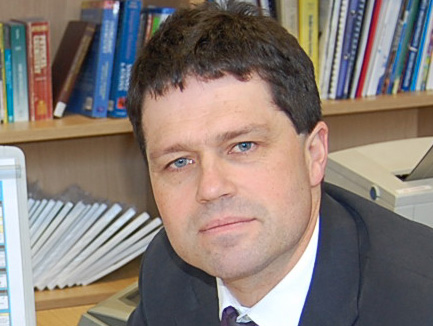
Prof. Dr.-Ing. Stefan Kopp is a faculty member at Bielefeld University's Faculty of Engineering and serves as Research Group Leader of the Cognitive Systems and Social Interaction Group . He also holds administrative roles as Vice Dean and Deputy CITEC Coordinator . His work focuses on Artificial Intelligence , Cognitive Systems , and Socio-Technical World research areas. Research Group Leader: Cognitive Systems and Social Interaction Group Vice Dean: Faculty of Engineering Deputy Coordinator: Center for Cognitive Interaction Technology (CITEC) Project Manager: TRR 318 "Constructing Explainability" subprojects His research explores human-agent interaction , multimodal conversational agents , and social AI through projects like 39-Inf-11 Human-Machine Interaction and 39-M-Inf-VKI Virtual Humans and Conversational Agents . Publications address topics including adaptive explanation generation , gesture synthesis , and social cognition in dynamic environments. Current research topics span cooperative AI , explainable decision-making , and sensorimotor grounding in artificial systems.
Teresa Hirzle is a Tenure Track Assistant Professor at the Department of Computer Science , University of Copenhagen , specializing in Human-Centred Computing . Her research focuses on Human-Computer Interaction (HCI) , Virtual Reality (VR) , Extended Reality (XR) , and Gaze-Based Interaction . Research Interests: Designing interaction techniques for immersive environments Eye movement analysis for educational applications Addressing digital eye strain in interactive systems Evaluating user experience in VR/AR Recent Research Trends: Her recent publications examine AI representation in VR co-creation, VR sickness in locomotion, eye strain in gaze-driven systems, and hybrid applications of comics/AR. She also explores pedagogical implications of eye tracking in remote learning. Contact: Email: tehi@di.ku.dk Office: Sigurdsgade 41, 2200 København N.
Max Hattler is a media artist and Associate Professor at the School of Creative Media , City University of Hong Kong . He previously held Lecturer positions at Goldsmiths, University of London (2006-2014) and the Royal College of Art (2012-2014). His work explores intersections of abstraction/figuration , sound/image relationships , and creative media through experimental animation and audiovisual performance. Current Research Focus: Abstracted moving images as frameworks for rethinking power relations Recent Curatorial Work: Relentless Melt series (2021-2025) showcasing Hong Kong experimental animation Key Publications Trends : Recent articles examine stereoscopic innovation , graphical sound techniques , and abstract animation semiotics . His curatorial research in Hong Kong digital art and VR animation demonstrates technical and theoretical contributions. Major Awards : Cannes Lions (2013) Visual Music Awards (2010, 2011, 2014) CityU Teaching Excellence Award (2021-22) President's Award (2022) for research contributions Best Experimental Film at Reanima Festival (2017) International Presence : Regularly participates in Ars Electronica , Animafest Zagreb , and Society for Animation Studies conferences. Has conducted workshops at CalArts , Geneva University of Art and Design , and Floating Projects Hong Kong .
Gina Bloom is a Professor of English at the University of California, Davis, with affiliations in the PhD programs in Education and Performance Studies. Her research spans Shakespeare, early modern drama, gender theory, and digital humanities, focusing on games, performance, and educational technologies. PhD, MA, and Certificate in Women's Studies from the University of Michigan BA from the University of Pennsylvania Her work includes the award-winning digital game Play the Knave and a decolonial pedagogy curriculum for teaching Shakespeare. She collaborates with UC Davis’s ModLab and DataLab, emphasizing social justice and immersive learning. Awards include Best AR/VR Game (2022) and Shakespeare Publics Award (2025). Her publications blend game studies, theater history, and feminist theory, with recent articles addressing decolonial education and digital embodiment. Winner, Shakespeare Publics Award (2025) Finalist, GEE! Learning Game Award (2023) Winner, Best AR/VR Game Award (2022)
Ben Marder is a Personal Chair in Digital Marketing and Consumer Behaviour at the University of Edinburgh School of Business , where he specializes in the unintended consequences of digital technologies on consumer behavior and service ecosystems. He serves as Director of Research Degrees and teaches Introduction to Business Research online. Education PhD in Marketing/Information Systems (2013), University of Bath MSc in Marketing (Distinction, 2008), University of Leicester BSc in Financial Economics (First Class, 2007), University of Leicester His research bridges social psychological theory with digital marketing, focusing on: Social media surveillance and self-presentation Instagrammability and visual culture AI ethics and human factors Influencer marketing dynamics Augmented/Virtual Reality applications Online reviews and service recovery His recent work explores vertical video formats (TikTok), emoji/GIF communication , and virtual item consumption in gaming/Metaverse environments. He advocates for student and academic wellbeing and has contributed to public discourse via LinkedIn and media outlets like BBC and The New York Times . Ben's 92+ research outputs emphasize mixed-method approaches, prioritizing quantitative experiments . Key trends include: Behavioral impacts of social media surveillance Psychological drivers of digital consumption Algorithmic trust and service innovation Scientific Awards Best Paper Prize (2018) Literati Prize - Commendable contribution (2018) Most Read Article (2025) Ben supervises quantitative research projects and collaborates on digital marketing trends with journals like Journal of Retailing and Journal of Service Research . He has led projects on social media's impact on service workers, consumer self-awareness, and Facebook post engagement metrics.
Melissa Hardesty is an Associate Professor and Director of the BSW Program in the Department of Social Work at Binghamton University, part of the College of Community and Public Affairs (CCPA). Her research focuses on gender, child welfare, parenting, and kinship, with a methodological emphasis on ethnography and qualitative research. She holds a PhD from the University of Chicago, an MSW from Indiana University Northwest, and a BS from Indiana University-Bloomington. Her work explores intersections of gender, digital representations, and state-mediated family structures. Notable projects include an ethnographic study of foster care and adoption agencies, a visual analysis of political selfies on Tumblr, and studies on Vietnamese sexual behavior and mental health. She collaborates with Binghamton University’s Sexualities Research Laboratory. Recent publications address college student communication around consent, digital identity politics, and systemic issues in child welfare. Her research bridges sociological theory with practical implications for policy and practice. Despite no explicitly mentioned awards, her contributions to social work methodology and critical studies of family dynamics are widely recognized in her field.
Nicole M. Nielsen is an Assistant Professor in the Department of Pharmacy Practice at the School of Pharmacy and Health Professions, Creighton University. Her academic role focuses on advancing pharmacotherapy education and clinical practice, particularly in ambulatory care settings. She holds expertise in dermatology, diabetes management, and innovative educational methodologies such as team-based learning and virtual escape rooms. Nielsen holds a PharmD degree and is a Board Certified Ambulatory Care Pharmacist (BCACP), along with certifications in Advanced Pharmacy Practice (APh) and Medical Education in Health Professions (MEHP). Her research interests span dermatological pharmacotherapy, diabetes therapeutic strategies, and improving educational outcomes through active learning techniques. She has contributed to case-based learning resources in atopic dermatitis and explored the use of innovative teaching tools to enhance student engagement and proficiency. Diabetes Management: Presented on SGLT2 inhibitors in kidney disease and evolving diabetes treatments. Educational Innovations: Developed virtual escape rooms and paperless team-based learning frameworks. Awards: Faculty Advisor of the Year West Coast University Outstanding Student Organization Advisor Award California Health Science University Natural Standard Research Collaboration Award Advising & Grants: Advised student projects on mentorship programs and civic engagement in Fresno County. Her work emphasizes interprofessional collaboration and student professional development.
Doug Bowman is the Frank J. Maher Professor in the Department of Computer Science at Virginia Tech and Director of the Center for Human-Computer Interaction. His work focuses on advancing virtual reality (VR), augmented reality (AR), and 3D user interfaces, with a strong emphasis on human-computer interaction and immersive environments. Education: Ph.D., Computer Science, Georgia Institute of Technology (1999) M.S., Computer Science, Georgia Institute of Technology (1997) B.S., Mathematics and Computer Science, Emory University (1994) Research Interests: Bowman explores the design and evaluation of immersive technologies, including VR/AR interfaces, 3D interaction techniques, and the application of these technologies in fields like healthcare, education, and collaborative work. His work often addresses challenges in spatial awareness, gaze-driven systems, and context-aware interfaces. Recent publications highlight trends in collaborative AR/VR systems, glanceable interfaces, and adaptive techniques for immersive analytics. His research emphasizes real-world applications, such as medical training through AR and improving productivity in virtual workspaces. Lab Affiliation: Director of Virginia Tech’s Center for Human-Computer Interaction, which focuses on interdisciplinary research in interactive technologies.
Jessica Roberts is an Assistant Professor in the School of Interactive Computing at Georgia Tech. She holds a PhD in the Learning Sciences and directs the Technology-Integrated Learning Environments (TILEs) Lab. Her work focuses on technology-mediated learning in informal environments like museums and citizen science projects, emphasizing geospatial analysis, data visualization, and accessibility. Prior to academia, she was a middle school teacher. Education: PhD in Learning Sciences (specific institution not listed) Postdoctoral research at Carnegie Mellon University's Human-Computer Interaction Institute Postdoctoral work at Northwestern University's Tidal Lab Research Interests: Dr. Roberts explores how interactive technologies can foster inclusive, socially meaningful learning experiences. Her projects include: Data sonification systems for visually impaired audiences AI literacy frameworks for K-12 classrooms Citizen science platforms that democratize environmental data exploration Embodied interaction designs to enhance public engagement with scientific data Article Trends: Recent work highlights innovations in AI education, climate data visualization, and accessibility technologies. Over half of her 2023-2025 publications address data sonification systems for marginalized audiences or AI literacy challenges in K-12 contexts. Awards: Brook Byers Institute for Sustainable Systems Faculty Fellow Advising & Grants: Leads the TILEs Lab, which collaborates with institutions like the Field Museum of Natural History. Projects have been exhibited at major science museums, indicating significant external partnerships. Labs/Teams: Director of the TILEs Lab, affiliated with GVU Center at Georgia Tech. Collaborates with interdisciplinary teams across education, computer science, and environmental science domains.
Marcelo M. Wanderley is a Professor and Director of the Centre for Interdisciplinary Research in Music Media and Technology (CIRMMT) at McGill University's Schulich School of Music. His academic roles include Area Coordinator for Music Technology and membership on the Executive Committee. He holds a PhD in acoustics, signal processing, and computer science from Université Pierre et Marie Curie (Paris VI). Wanderley's research focuses on novel interfaces for music performance, digital musical instruments (DMIs), and human-computer interaction. He has authored influential works such as New Digital Musical Instruments: Control and Interaction Beyond the Keyboard (2006) and pioneered research in gestural control of music. His work integrates engineering, computer science, and musicology to create innovative performance tools, including the T-Stick and Karlax instruments. He has held visiting professorships at Université de Bretagne Sud, Universidade Federal de Minas Gerais (Brazil), and the University of Mons (Belgium), where he was awarded prestigious chairs. Wanderley's awards include the Inria International Chair (2016–2020) and the Distinguished Visitor Award from the University of Auckland. His research has been widely cited in the International Conference on New Interfaces for Musical Expression (NIME), and he actively contributes to editorial boards (e.g., Computer Music Journal ) and academic leadership roles. Wanderley's lab, the Input Devices and Music Interaction Lab (IDMIL), develops open-source frameworks like Puara and Probatio for DMI design and mapping. Key research areas include haptic feedback systems, motion capture of musical performances, and accessibility in music technology. He emphasizes interdisciplinary collaboration, bridging engineering, art, and cognitive science to advance musical expression and performance practices.
Li Song is a Professor and holds the Lesch Centennial Chair & Lloyd G. and Joyce Austin Presidential Professor at the University of Oklahoma's Aerospace & Mechanical Engineering Department. He leads the Building Energy Efficiency Lab and serves as AME Associate Director for Research. His expertise spans building energy systems, HVAC optimization, and fault detection technologies. Education: Ph.D. (Thermal/Fluid Science, 2004) from University of Nebraska-Lincoln; M.S. (Thermal/Fluid Science, 1996) from Harbin Institute of Technology; B.S. (Thermal Energy Systems, 1993) from Shengyang University of Civil Engineering and Architecture. Research focuses on energy-efficient HVAC systems, fault detection algorithms, and building performance analytics. Notable contributions include the ULEM-FDD system for high-performance buildings and virtual sensor technologies for airflow/water flow measurement. Awards include the ConocoPhillips Energy Prize (2011 finalist) and Bes-Tech Innovation Award (2006). Publications emphasize HVAC control strategies, energy modeling, and IoT-enabled diagnostics. Courses taught include Thermodynamics, Energy Efficient Building Systems Design, and HVAC Systems Engineering.
Ioana Jivet is a Research Professor and Head of the Learning Analytics Research Professorship at FernUniversität in Hagen, Germany. She leads interdisciplinary research focused on leveraging learning analytics to enhance educational practices through data-driven insights. Her role in the CATALPA Graduate School involves collaboration across disciplines to translate research into actionable educational strategies. Educational Background: PhD in Learning Analytics from Open Universiteit Nederland (2021) Postdoc at TU Delft (2019–2021) Research roles at DIPF (2021–2024) and studiumdigitale (2021–2024) Research Interests: Self-regulated learning mechanisms and feedback systems Cultural and ethical dimensions of learning analytics adoption Design of human-centered learning dashboards Privacy concerns in educational technology AI-driven educational decision support systems Her work emphasizes practical applications, such as developing adaptive feedback tools and investigating cross-cultural usage patterns of learning analytics platforms. Professional Contributions: Secretary of the Society for Learning Analytics Research (SoLAR) General Chair for the 2024 European Conference on Technology Enhanced Learning (EC-TEL) Co-editor of Springer volumes on technology-enhanced learning Lab & Teams: Active in the Learning Analytics research group at FernUniversität, focusing on translational research between academic theory and classroom practice.
Chris Harty is the Executive Dean of the College of Technology and Environment and Professor of Technology and Organisation at London South Bank University (LSBU). Previously, he held leadership roles at the University of Reading, including Head of the School of Built Environment. He currently chairs BSRIA and has been a Visiting Professor at institutions like the University of Stuttgart. His research focuses on organisational change, technology adoption in construction, future scenario development, and the interplay between physical spaces and organisational practices. He has secured over £3.5 million in research grants and maintains collaborative research ties globally. Research interests span digital technologies in the built environment, strategic change management, and sustainable design. His work aligns with UN Sustainable Development Goals, emphasizing innovation and equitable development. Notable contributions include studies on immersive virtual reality applications in healthcare design and supply chain integration for small construction firms. Despite leadership roles, he remains research-active, engaging in PhD supervision and interdisciplinary projects. Awards and recognitions are not explicitly listed, but his extensive grant history and visiting professorships highlight his scholarly impact. Advising and grants include over £3.5M in secured funding and collaborations with global built environment organisations. He actively promotes innovation through academic-industry partnerships and has contributed to policy frameworks in construction competitiveness.
Professor Matthew Jonathan Rosseinsky holds the Chair of Inorganic Chemistry at the University of Liverpool, a position he has occupied since October 1999. His career includes significant appointments at the University of Oxford (1992-1999) and Bell Laboratories in New Jersey (1990-1992), following his DPhil at Merton College, Oxford. As a Fellow of the Royal Society and recipient of numerous prestigious awards, Professor Rosseinsky maintains an active research program and leadership roles in the international chemistry community. Professor Rosseinsky's educational background includes a First Class Honours degree in Chemistry with Quantum Chemistry from the University of Oxford (1987) and a DPhil in "Physical Properties of Superconducting Oxides and Radical Cation Salts" completed in 1990 under Professor P. Day FRS. His research focuses on the synthesis of new materials with applications in energy storage and generation, communications, separation, and catalysis. The Rosseinsky Group employs a broad range of synthesis and characterization techniques, including neutron and synchrotron X-ray diffraction, combined with computational methods in collaboration with Dr. George Darling. Current research areas include Dynapore, CO2 fuels, SOLBAT, and CATMAT projects that target specific material challenges. Professor Rosseinsky's publication record is exceptional, with 304 papers including 11 in Nature, 6 in Science, and 3 in Nature Materials, accumulating over 15,000 citations and an h-index of 56 as of 2012. His work demonstrates consistent excellence across materials chemistry, with particular emphasis on porous frameworks, electronic materials, and solid-state chemistry. Among his numerous accolades are the Harrison Memorial Prize (1991), Corday-Morgan Medal (2000), Royal Society Wolfson Research Merit Award (2002), De Gennes Prize (2009), and the prestigious Hughes Medal from the Royal Society (2011). He also holds an ERC Advanced Investigator Grant and has delivered distinguished lectures worldwide. Professor Rosseinsky has served in numerous editorial and advisory capacities, including as Associate Editor for Chemical Sciences, membership on the Royal Society Conference and Travel Grant Committee since 2007, and as a member of the International Advisory Board for the Max Planck Institut for Solid State Research since 2011. His professional activities extend to international review committees for research institutions in France, South Korea, and Saudi Arabia. The Rosseinsky Group operates within the Department of Chemistry at the University of Liverpool, collaborating extensively with researchers including Dr. John Claridge, Professor Andrew Cooper, and Professor Paul Chalker. The group maintains strong international partnerships and utilizes advanced facilities for materials synthesis and characterization to drive innovation in functional materials development.
Hubert Zangl is a Professor at the University of Klagenfurt and Head of the Institute for Intelligent System Technologies . He serves as Chairman of the Information Technology Curricular Commission and participates in the Faculty Conference of the Faculty of Technical Sciences. Key research areas include: Sensor technology Electrical measurement technology Robotics Signal processing Electronics Recent research trends focus on: High-fidelity FMCW radar simulation frameworks Energy-efficient sensor systems Printed electronics for structural health monitoring Uncertainty propagation in measurement science Modular robotics with secure transducer identification Capacitive tactile sensing for robotic grasping Contact: Hubert.Zangl@aau.at