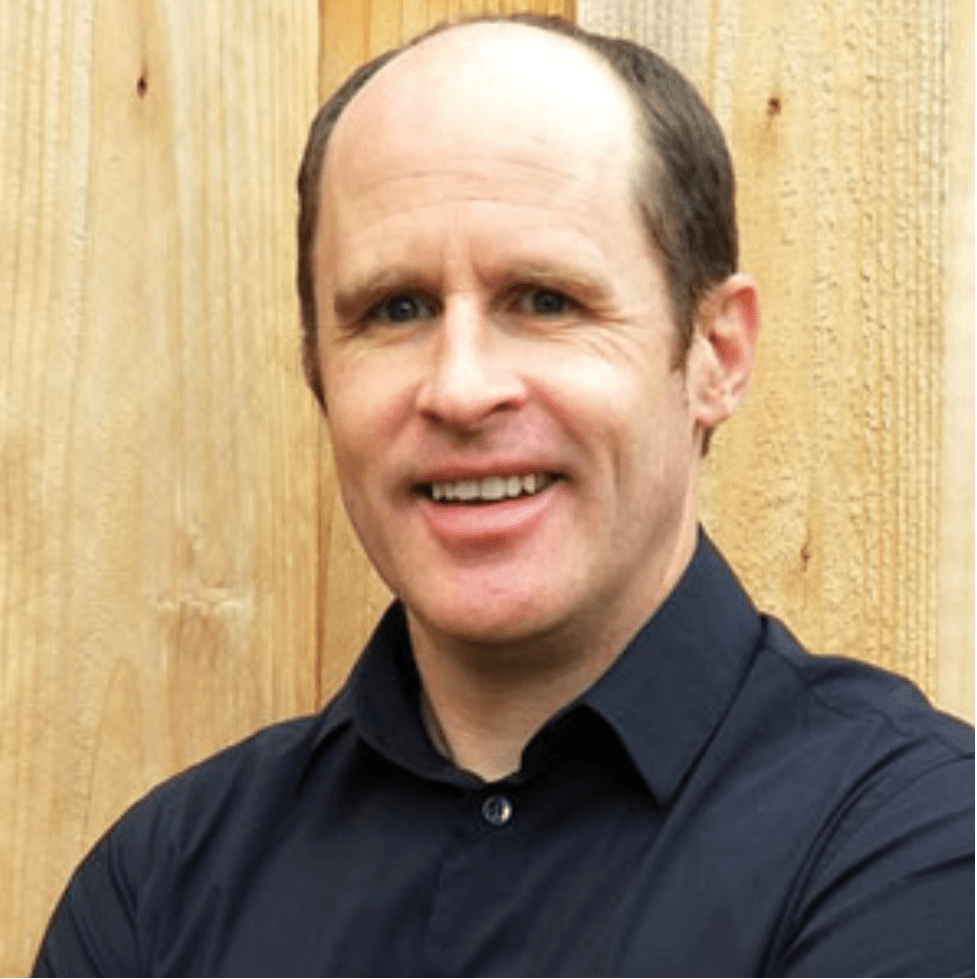
Håkon Kvale Stensland is an Associate Professor in the Department of Networks and Distributed Systems at the University of Oslo (UiO), affiliated with Simula Research Laboratory. His work focuses on multimedia systems, machine learning applications in medical imaging and sports analytics, distributed computing, and GPU optimization. He has contributed to projects like HyperKvasir (a gastrointestinal dataset) and SmartIO (PCIe networking for device sharing). Key research areas include real-time video processing, 3D convolutional neural networks for event detection in soccer, and energy-efficient multimedia workloads. He has co-authored over 50 publications in venues like ACM Multimedia, IEEE Transactions, and Nature Communications. His tools and datasets, such as Saga and Bagadus, emphasize collaborative machine learning and real-time sports analytics. Recent work (2024-2025) explores prompt generation for medical segmentation and multi-host device sharing in high-performance clusters. His research bridges theoretical computer science with practical applications in healthcare, sports, and distributed systems.
Konstantinos Chorianopoulos is an Associate Professor at Ionian University's Department of Informatics, specializing in Human-Computer Interaction and Multimedia Software Technology. PhD in Administrative Science and Technology, Athens University of Economics and Business MSc in Marketing and Communication Diploma in Electronic and Computer Engineering, Technical University of Crete His research bridges computer science and communication, focusing on: Interactive systems for health informatics Video processing algorithms Educational game mechanics Ubiquitous computing interfaces Social media analytics Mobile communication platforms Recent publications demonstrate expertise in interdisciplinary applications combining data science with user experience design , particularly in epidemiological tracking , serious games , and video interaction systems . He teaches advanced courses in: Human-Computer Communication (THE-400) Information Visualization (HY-645) Mobile and Social Media (HY-665)
Lecturer Sarvas Risto is affiliated with Aalto University's Department of Computer Science within the School of Science. His research focuses on digital media studies, human-computer interaction (HCI), and the societal implications of technology. Key areas include social media analysis, digital saturation, metadata creation, and citizenship in the digital age. Risto has contributed to over 20 peer-reviewed publications since 2001, with notable work exploring photography's technological evolution, mobile social interaction platforms, and user-centric design principles. His research activities include organizing academic events like the 2021 Final Seminar of the 'Everyday Media Imagined by Teenagers' project and presenting at international conferences on topics such as digital natives' connectivity experiences and citizenship skills. While primarily focused on academic contributions, his work bridges technical innovation with sociocultural analysis, addressing both practical and ethical dimensions of emerging technologies. Risto has collaborated on projects like the RISE initiative, which explored semantically supported media services, and the DIMAS system for distributing multimedia content on peer-to-peer networks. His ongoing interests span future print media design, metadata systems for digital photography, and the legal aspects of user-generated content.
Rocco Oliveto is a Professor in the Department of Computer Science at the University of Salerno, Italy, with a distinguished research career spanning over two decades in empirical software engineering. His work bridges theoretical software engineering principles with practical applications, with recent expansion into healthcare informatics and machine learning applications. His research interests focus on code quality assessment, software maintenance practices, developer behavior analysis, and empirical studies of software engineering phenomena. He has made significant contributions to understanding code smells, bug prediction, API compatibility issues, and more recently, container technologies and smart contract analysis. His recent work demonstrates a strategic expansion into healthcare applications, leveraging software engineering techniques for medical diagnostics and rehabilitation systems. Oliveto's publication pattern shows consistent productivity with multiple high-impact publications each year across top venues including IEEE Transactions on Software Engineering, ACM Transactions on Software Engineering and Methodology, and Empirical Software Engineering journal. His recent articles (2023-2025) reveal a growing interest in applying software engineering techniques to healthcare domains while maintaining strong contributions to core software engineering topics. The research demonstrates sophisticated methodological approaches combining empirical studies with machine learning techniques. His collaborative network includes prominent researchers such as Simone Scalabrino, Gabriele Bavota, and Andrea De Lucia, with whom he has co-authored numerous high-impact publications. This collaboration spans both traditional software engineering topics and emerging interdisciplinary applications in healthcare.
Luis Torres Urgell is a Professor at the Department of Signal Theory and Communications, Universitat Politècnica de Catalunya (UPC), affiliated with the Higher Technical School of Telecommunication Engineering of Barcelona. His research focuses on multimedia systems, image processing, and signal processing with notable contributions to video compression, audio-visual indexing, and computer vision applications. He has been actively involved in numerous competitive research projects, including initiatives on genomic data compression and multimedia security. His work spans over 410 academic activities, including over 140 conference presentations and 78 scientific documents. Notable contributions include advancements in face recognition algorithms, distributed video coding, and the development of tools for automated video summarization in sports content. Torres has also made significant strides in education through project-based learning in telecommunications and the integration of virtual ethnography in social web platforms. He has been recognized as a Senior Member of IEEE and received institutional recognition from UPC for his research contributions. His research has been supported by grants from the Spanish and Catalan governments, including projects under the RIS3CAT strategy and the National Plan for Scientific Research.
Ian Lane is an Associate Professor in the Computer Science and Engineering Department at the University of California, Santa Cruz's Baskin Engineering school, serving as Program Director for the Natural Language Processing Professional Master's Degree Program. He joined UCSC in Fall 2022 after an extensive career spanning academia and industry. His research centers on computational systems that understand spoken human language, spanning speech recognition, transcription, meaning interpretation, and contextually appropriate responses. Key research areas include: Natural Language Processing for real-world applications Conversational AI systems development Speech-to-speech translation technologies Multimodal interaction (audio-visual integration) Language technologies that learn through real-world interaction His recent publications demonstrate strong focus on hallucination detection in LLMs, tabular data understanding, explainable AI, and robust speech recognition systems. Current work emphasizes "in the wild" language technologies that adapt through user interaction. Dr. Lane has received recognition through impactful industry applications including Jibbigo (the first mobile speech translation app) and military translation systems deployed in Iraq and Afghanistan. He actively mentors students and collaborates across UCSC's Silicon Valley Campus programs including Games and Playable Media and Human-Computer Interaction. His vision includes integrating NLP with virtual environments for language learning and skill acquisition.
Hayder Murad is a researcher with expertise in machine learning, sentiment analysis, and hybrid filtering algorithms, particularly applied to intelligent tutoring systems and medical diagnostics. His work bridges computational methods with practical applications in education and healthcare. He earned his PhD from the University of Portsmouth in 2019 with a thesis titled An integrated approach to recommending online video materials through sentiment analysis and hybrid filtering algorithms . His recent publications focus on knowledge graph construction, large language model applications, and open science initiatives. Notable contributions include enhancing systematic literature reviews, improving dataset interoperability, and advancing FAIR data principles across disciplines. Research Interests Machine learning for healthcare diagnostics Hybrid recommendation systems Knowledge graph development Open science infrastructure Intelligent tutoring systems LLM-based research synthesis
Luca Cagliero is an Associate Professor in the Department of Control and Computer Engineering at Politecnico di Torino (Polytechnic University of Turin), Italy. His research spans multiple domains within computer science, with particular expertise in data mining, machine learning, natural language processing, and multimodal analysis. He has established a prolific research career with over 150 publications spanning from 2009 to the present, demonstrating consistent scholarly productivity. Dr. Cagliero's research interests focus on the intersection of artificial intelligence and practical applications. His work addresses fundamental challenges in data mining, information retrieval, and educational technology, with recent publications showing increasing emphasis on large language models, multimodal analysis, and explainable AI. He has made significant contributions to text summarization techniques, database systems, and applying machine learning to educational contexts. His recent publications (2023-2025) demonstrate a clear research trajectory toward multimodal AI systems, with particular attention to the integration of vision and language processing. His work spans theoretical contributions in machine learning methods as well as practical applications in educational technology, social media analysis, and document understanding. The breadth of his collaborations across different application domains indicates a versatile research profile that bridges theoretical and applied computer science. Dr. Cagliero has mentored numerous researchers who have become his frequent collaborators, including Lorenzo Vaiani, Moreno La Quatra, and Davide Napolitano. His work has appeared in top-tier venues including ACL, IEEE Transactions on Knowledge and Data Engineering, and Expert Systems with Applications, reflecting the high quality and impact of his research contributions.
Nadeen Fathallah is a researcher at the University of Stuttgart, affiliated with the Analytic Computing group at KI. Her work spans AI applications for accessibility, computer vision, and knowledge engineering. Research Focus: Web accessibility, ontology learning, and LLM-based solutions for Deaf/Hard of Hearing communities Projects: Key contributor to the IKILeUS project (Integrated AI in Teaching) at the University of Stuttgart Teaching: Has served as teaching assistant and assistant lecturer at German International University, German University in Cairo, and The Knowledge Hub Her research explores: Automated detection/correction of web accessibility violations (e.g., AccessGuru platform) Improving video captions using large language models Accessibility tools for tabular data (EchoTables) Ontology learning pipelines (NeOn-GPT, LLMs4Life) Recent work shows a focus on combining LLMs with domain-specific challenges across multiple fields, particularly emphasizing inclusive design principles. Contact details: Office at Universitätsstraße 32, Stuttgart, Germany (Room: 2.312b). Available via +49 711 685 88130.
Gloriana Gonzalez Rivera is a Professor in the Department of Curriculum and Instruction at the University of Illinois Urbana-Champaign , with affiliations to the Center for Social & Behavioral Science and the Siebel Center for Design . Her research focuses on problem-based mathematics instruction , analyzing teachers' decision-making processes and strategies for leveraging student prior knowledge in geometry classrooms. Her work has explored interdisciplinary approaches like integrating visual arts contexts into geometry teaching, supported by a $1.38M NSF DRK-12 grant for developing human-centered design modules . She received the 2022 AERA Mid-Career Award and was named University Scholar (2022-2025) , reflecting her impact in mathematics teacher education . NSF CAREER grant recipient Co-PI on cross-institutional projects with University of Puerto Rico Visiting Professor at Design School Kolding, Denmark (2024) She has published extensively on teacher reasoning , discourse analysis , and technology-enhanced professional development , particularly through animations and video clubs in Lesson Study contexts. Her earlier career includes teaching mathematics in Massachusetts and Puerto Rico , and editorial leadership in Mathematics Teacher Educator .
Carlos Guestrin is the Fortinet Founders Professor of Computer Science at Stanford University, Director of the Stanford AI Lab (SAIL), and Senior Fellow at the Stanford Institute for Human-Centered AI (HAI). He also serves as Chief Scientist at Visual Layer and Virtue AI, and is a Member of the National Academy of Engineering. His research centers on Machine Learning Methods, Explainability, Fairness & Ethics of AI, and Machine Learning Systems. He develops interpretable and reliable models, addresses algorithmic fairness, and builds efficient large-scale ML systems through frameworks like XGBoost. His work bridges theoretical rigor with real-world applications in healthcare and human-centered AI. His recent publications (2023–2025) demonstrate leadership in generative AI evaluation, model reliability, and ethical frameworks. Key trends include developing live benchmarks for research synthesis, on-device calibration techniques, multi-objective optimization with constraints, and societal impact assessment tools—showcasing a trajectory from foundational ML systems to responsible AI deployment. Honors include: Member of the National Academy of Engineering Details about his advising and grant activities were not provided in source materials, though his leadership roles indicate extensive mentorship and funding oversight. As Director of SAIL, he shapes one of the world’s premier AI research centers, while his HAI fellowship drives interdisciplinary initiatives ensuring AI advances human welfare. His industry roles at Visual Layer and Virtue AI translate academic research into practical AI solutions.
Dimitrios Kosmopoulos serves as Professor in the Computer Engineering and Informatics Department at the University of Patras, Greece, with extensive experience across multiple academic institutions including National Technical University of Athens (NTUA), Rutgers University, and University of Texas at Arlington. His research bridges theoretical computer science with practical applications in accessibility, agriculture, and cultural heritage preservation. Education: B.Eng. in Electrical and Computer Engineering, National Technical University of Athens (1997) PhD in Electrical and Computer Engineering, National Technical University of Athens (2002) Professor Kosmopoulos' research integrates computer vision, machine learning, and signal processing to solve real-world problems. His primary focus areas include sign language recognition systems for museum accessibility, precision agriculture applications for crop monitoring and disease detection, and digital restoration of ancient scripts like Mycenaean Linear B. His methodological innovations frequently involve geometric analysis, time-series modeling, and multimodal data fusion techniques that advance both theoretical frameworks and practical implementations. Analysis of his recent publications (2023-2025) reveals three dominant research thrusts: accessibility technologies for deaf communities (particularly museum navigation systems), agricultural automation using computer vision (olive grading, tomato disease detection), and computational archaeology (Linear B tablet restoration). His work consistently employs cutting-edge approaches including geometric knowledge distillation, coupled learning architectures, and 3D motion analysis, demonstrating strong interdisciplinary connections between computer science, agriculture, and humanities. No scientific awards were documented in the provided source materials. While specific advising details and grant information were not explicitly stated, his leadership in projects like HealthSign (sign language healthcare systems) and MuseLearn (museum accessibility platforms) indicates substantial research funding and collaborative supervision activities spanning computer vision, robotics, and assistive technology domains. Professor Kosmopoulos operates within the Division of Hardware and Computer Architecture at the University of Patras, collaborating with the Computer Technology and Architecture Laboratory, VLSI Microelectronics Laboratory, Signals and Telecommunications Laboratory, and Computer Communications Networks Laboratory. His current research integrates these facilities to develop systems like the SignGuide project for museum tours and frameworks for early pest detection in greenhouse crops, emphasizing practical implementations of machine learning in constrained environments.
Michael Ryoo serves as a SUNY Empire Innovation Associate Professor in the Department of Computer Science at Stony Brook University while concurrently working as a Research Scientist with Google Brain's "Robotics at Google" team. Previously, he held positions as an Assistant Professor at Indiana University Bloomington and a Staff Researcher at NASA's Jet Propulsion Laboratory. His academic background includes a Ph.D. from the University of Texas at Austin (2008) and a B.S. from Korea Advanced Institute of Science and Technology (KAIST) in 2004. Ryoo's research centers on deep learning and computer vision with specific focus on convolutional neural network (CNN) models for video semantic understanding. His work bridges visual perception and robotic action through applications in robot perception, robot learning, and human-robot interaction. Key innovations involve developing efficient architectures for processing multimodal data and translating visual understanding into robotic control systems. Analysis of his 15 most recent publications reveals strong emphasis on multimodal AI integration, particularly vision-language models applied to robotics. His 2025 work shows significant advancement in token-efficient video representation, motion-controllable diffusion models, and zero-shot learning frameworks specifically designed for robotic control systems. The research trajectory demonstrates consistent focus on making video understanding more accessible and applicable to real-world robotic scenarios. Scientific awards: No awards were mentioned in the provided source material. Regarding academic advising, the source text does not list any students or mentoring activities. Similarly, no grant funding information is provided, though his dual academic-industry role suggests substantial research support. His Google Brain affiliation likely involves industry-sponsored research initiatives. Ryoo maintains active laboratory affiliations through Stony Brook's AI Innovation Institute and Google's Robotics team. His prior work at NASA JPL indicates experience with space robotics systems, while his current Google role focuses on large-scale robot learning infrastructure. The LAM SIMULATOR project represents his current focus on advancing data generation techniques for training large action models.
Paul Newbury is a Professor of Digital Media Systems in the Department of Informatics at the University of Sussex's School of Engineering and Informatics. He holds a BEng in Electrical and Electronic Engineering (Brighton University), MSc in Intelligent Systems (Plymouth University), and PhD (Bradford University). As Chair of the Informatics Board of Studies, he oversees multiple degree programs including BSc Computer Science and MSc Computing with Digital Media. His research specializes in Technology Enhanced Learning systems, with expertise in: Adaptive and collaborative e-learning frameworks Game-based educational applications Assistive technologies for dyslexic students Arabic language learning tools via touchscreen interfaces Universal Design for Learning (UDL) integration His 60+ publications show consistent focus on practical e-learning innovations, with recent works (2015-2023) emphasizing gamification, mobile learning applications for special needs education, and Arabic literacy tools. Notable trends include pilot studies validating educational technologies and cross-cultural implementations in Saudi Arabian schools. He has supervised PhD students now working as academics internationally. His grant leadership includes the EU-funded 'VIRTUAL IP ENVIRONMENT FOR RAPID SILICON' project (2001-2005).
Sylvia Bendel Larcher serves as a Lecturer at the Institute for Communication and Marketing within the School of Business at Lucerne University of Applied Sciences and Arts. With appointments spanning multiple institutions including the University of Bern and University of Innsbruck, her academic career demonstrates deep expertise in linguistic analysis of professional communication. She maintains active research collaborations while contributing to editorial work at the Reformed Church of Uri since 2024. Her educational background includes a Dr. phil. from the University of Zurich and a PD Dr. habil. from the University of Bern, establishing her scholarly foundation in linguistic analysis. These qualifications support her extensive research in conversation patterns across various professional contexts. Bendel Larcher's research focuses on the intersection of linguistic theory and practical business communication. Her work examines conversation structures in agile teams, institutional discourse patterns, and historical advertising rhetoric. Recent publications reveal growing interest in technology-mediated communication, particularly how AI tools like ChatGPT interact with traditional linguistic analysis methods. She investigates how personality manifests in professional interactions and how communication quality can be systematically evaluated in organizational settings. Her 15 most recent publications demonstrate consistent output across multiple formats - books, journal articles, and conference presentations - with increasing attention to digital communication environments. The research shows evolution from traditional discourse analysis toward hybrid methodologies incorporating computational approaches while maintaining core linguistic principles. Her professional activities extend beyond academia to practical applications in organizational settings. She has served as Public Relations Officer for the Evangelical-Reformed Parish of Einsiedeln (2012-2016) and currently edits for the Reformed Church of Uri. Her work bridges theoretical linguistic research with real-world communication challenges in business and institutional contexts. Bendel Larcher leads several research initiatives including 'Videotaped professional practice for the business world,' 'Business book summary using natural language generation,' and 'Interaction profile and personality.' These projects reflect her commitment to applying linguistic analysis to contemporary business communication challenges while exploring the relationship between individual personality and professional discourse patterns.