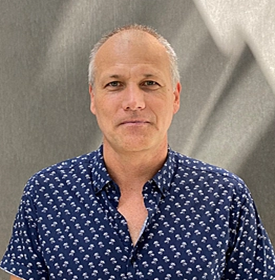
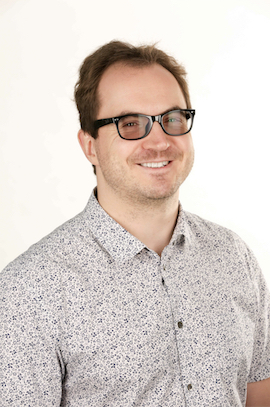
Qinglong Han is the Pro-Vice Chancellor (Research Quality) and a Distinguished Professor at Swinburne University of Technology in Melbourne, Australia. He previously held academic and leadership roles at Griffith University and Central Queensland University. His research focuses on networked control systems, multi-agent systems, time-delay systems, smart grids, and unmanned vehicles. He is a Fellow of IEEE, IFAC, and multiple other institutions, and has received prestigious awards including the IEEE Dr.-Ing. Eugene Mittelmann Achievement Award (2024) and Norbert Wiener Award (2021). His research interests span control engineering, applied mathematics, and artificial intelligence. Notable contributions include secure platooning control for autonomous vehicles, resilient control under cyber-physical threats, and optimization of industrial systems. He leads editorial roles in journals like IEEE Transactions on Industrial Informatics and IEEE/CAA Journal of Automatica Sinica. His work emphasizes interdisciplinary applications in smart grids, robotics, and industrial automation. Dr. Han has supervised numerous PhD students in areas like networked control and vehicle dynamics. He has secured grants from ARC and NSFC for projects on networked control systems and renewable energy integration. His achievements include multiple best paper awards and recognition as a Clarivate Highly Cited Researcher in Engineering and Computer Science.
Dr Sina Vafi is a Senior Lecturer in the Department of Engineering at Charles Darwin University's Faculty of Science and Technology. His research focuses on advancing forward error correction (FEC) codes and their applications in wireless transmission systems, particularly for high-speed broadband and video compression. He leads the Wireless Research Group, developing codes optimized for transmission delay and error correction in noisy environments. Key research projects include the 'Maximum Power Extraction from Hybrid Solar-Wind System by Using Fuzzy Logic Approach' (2021–present). His work addresses sustainable energy systems alongside wireless communication innovations. Research interests span error engineering, FEC code design, video bitstream protection, and low-density parity check codes. His recent publications explore braided block codes, convolutional interleavers, and adaptive error protection schemes for HEVC videos. Dr Vafi has supervised 5 Higher Degree by Research (HDR) projects, including work by student investigator V.S. Borra on hybrid renewable energy systems. He is actively involved in mentoring postgraduate researchers and contributes to CDU’s wireless communication initiatives.
Professor Ingvars Birznieks is a Senior Research Fellow at the Department of Physiology, School of Medical Sciences, UNSW Medicine in Sydney, where he leads the Tactile Research Group at Neuroscience Research Australia (NeuRA). Previously, he held an academic position as Senior Lecturer (Physiology) at the School of Science and Health, Western Sydney University from 2011 to 2014. Dr. Birznieks is a sensory neurophysiologist specializing in sensory information encoding mechanisms, with research spanning tactile perception, neural coding, and bionic applications. His work integrates neuroscience, biomedical engineering, and clinical rehabilitation to understand how touch receptors encode information and how this knowledge can be applied to develop advanced prosthetics and rehabilitation technologies. His research program covers tactile receptors and sensorimotor control of the human hand, with applications in stroke rehabilitation, diabetic neuropathy, and bionic hand development. His recent publications reveal a strong focus on neural coding mechanisms in tactile perception, particularly the burst gap code for frequency perception, friction sensing mechanisms, and intensity coding. These studies consistently bridge fundamental neuroscience with practical applications in bionics and rehabilitation. His interdisciplinary approach connects neurophysiological findings with engineering solutions for artificial touch. Dr. Birznieks has secured significant grant funding, including ARC Discovery Projects and NHMRC Ideas Grants totaling over $2.5 million, supporting research on neural coding, sensorimotor control, stroke rehabilitation, and bionic technologies. His current major project 'The secret of tiny hand movements to feel and manipulate objects' (ARC DP230100048) investigates how humans use micro-movements to extract tactile information during object manipulation. He actively supervises students across neuroscience, biomedical engineering, and computer science disciplines, with recent publications featuring undergraduate and graduate students as first authors. His research group maintains collaborations with institutions in France and Sweden, providing international research opportunities for students. Dr. Birznieks' laboratory has developed unique non-invasive mechanical stimulation technology that allows precise control of neural communication at the single neuron level, enabling unprecedented investigation of how spiking activity influences perceptual experience.
Cameron Edmond is a Lecturer in Game Development (Teaching and Leadership) at the School of Computing, Macquarie University. Specializing in intersections between game design, digital humanities, and creative pedagogy, his work explores how game mechanics can enhance educational and artistic practices. He actively engages with topics such as machine writing, AI-driven creativity, and the application of game jams in learning environments. Research interests include game-based learning methodologies, computational poetics, and the ethical implications of AI in creative fields. His contributions bridge technical and humanistic disciplines, focusing on innovative tools for storytelling and education. Edmond’s publications span conferences like DiGRA Australia and academic chapters exploring creative coding, narrative visualization, and the demoscene’s influence on digital creativity. His work emphasizes collaborative, constraint-based approaches to both artistic and educational outcomes.
Professor Christian Ritz serves as Director of SMART and Professor in the School of Electrical, Computer and Telecommunications Engineering within the Faculty of Engineering and Information Sciences at the University of Wollongong. He has held his professorship since 2017 and served as Associate Dean (Research) in 2022 and Associate Dean (International) from 2016-2021. Professor Ritz's research focuses on signal processing for speech, audio, acoustics and visual information. His current projects include microphone array signal processing for enhancing sound recorded in classrooms, sound scene classification for dementia care environments, spatial audio for Virtual and Augmented Reality, and undersea surveillance. His work spans multiple technical domains including signal processing, audio engineering, computer vision, and communications engineering. His recent publication trends show a strong focus on neural network applications for audio processing, particularly for classroom monitoring and spatial audio reproduction. His work integrates deep learning with traditional signal processing techniques to address challenges in spatial audio synthesis, room impulse response generation, and directional audio reproduction. He has also contributed to applications in mining automation, public safety surveillance, and positioning systems. Professor Ritz is a member of the Centre for Signal and Information Processing (CSIP), part of the Signals, Information and Communications Research Institute (SICOM) at the University of Wollongong. His research is funded by the ARC, overseas research institutes, and defense organizations. His grant portfolio is extensive, including projects such as AI/IoT-powered Airborne System for Monitoring Water Level and Tidal Floods, Multi-Modal Satellite-based Vessel Surveillance, Net Zero Industry and Innovation Program, Smart Eye: Airborne and AI-Driven Assessment Solution of Sugarcane, and numerous projects related to spatial audio and underwater surveillance. He has secured funding from diverse sources including the Australian Research Council, defense organizations, and international collaborations. Professor Ritz maintains an active research laboratory environment focused on signal and information processing. His work spans multiple application domains from classroom monitoring to underwater mine detection, with strong connections to both academic and industry partners. His research group appears to focus on practical applications of signal processing techniques to solve real-world problems across various domains.
Helen Georgiou is a Senior Lecturer in the School of Education at the University of Wollongong, Australia. Her research focuses on enhancing student understanding in STEM disciplines, particularly through the lens of Legitimation Code Theory (LCT). She holds a PhD from The University of Sydney on student misconceptions in thermodynamics. Her work addresses curriculum design, teacher training, and gender representation in physics. Georgiou has led projects such as 'Developing Transferable Skills' (NSW Department of Education) and 'LIFT as we climb' (Department of Industry), focusing on STEM education and entrepreneurship. She supervises multiple higher-degree research students exploring topics like science teacher perceptions, blended learning adoption, and academic literacy in EFL contexts. Her research interests include diagnostic assessment techniques, multimodal learning tools (e.g., makerspaces), and peer observation in professional development. She contributes to policy debates through publications analyzing curriculum reforms and international science assessment outcomes. Key collaborations include the LCT Centre for Knowledge-Building (Associate Member since 2017) and interdisciplinary projects with nursing, architecture, and engineering disciplines. Her teaching focuses on preparing educators to address persistent student challenges in STEM through evidence-based practices.
Rhodora Abadia is an Associate Professor and Associate Dean at UniSA Online, University of South Australia. Her research focuses on integrating innovative technologies like virtual reality (VR) and big data analytics into educational settings to enhance learning outcomes and student engagement. She explores topics such as responsible AI in technical education, immersive storytelling through VR, and the challenges of adopting VR in online learning. Her work emphasizes improving empathy development, reducing barriers to adaptive learning systems, and optimizing predictive analytics for student success in programming courses. Key contributions include studies on VR’s impact on historical empathy, strategies to overcome hardware and cost barriers in VR adoption, and curriculum reforms for ethical AI training. Her research bridges technical and pedagogical challenges, advocating for scalable, inclusive educational technologies. Dr. Abadia’s collaborations span interdisciplinary teams, with funding from the UniSA Online Seed Grant and the Australian Centre for Interactive and Virtual Environment Research. She actively contributes to conferences like Tethics and ICCE, addressing ethical, technical, and pedagogical advancements in digital education.
Dr. Andy Yeh is a Senior Lecturer in the School of Education at Queensland University of Technology (QUT). His primary roles include teaching pre-service teachers in Mathematics and ICT Education and supervising higher-degree research students. He has held academic positions since 2007, focusing on teacher education and innovative STEM education practices. Dr. Yeh's research emphasizes ICT integration in education, particularly through virtual reality (VR) tools like VRMath2 and makerspace learning environments (MLE). His work explores Web 2.0, Web3D, and mobile sensor technologies to enhance STEM education. He advocates for computational thinking and maker culture as integral to 21st-century skills. Key research areas include: Virtual Reality in Education STEAM Integration Makerspace Pedagogy Semiotics in Learning His publications highlight innovative teaching methods, such as using 3D modeling and coding in classrooms. He has conducted workshops for gifted students, trained over 400 teachers in China, and contributed to international conferences on STEM and ICT in education. Dr. Yeh founded MakerClubQUT to foster cross-disciplinary maker projects and leads the development of VRMath2, an online platform for collaborative STEM learning.
Associate Professor Shannon Rutherford is a transdisciplinary researcher at Griffith University’s School of Medicine & Dentistry – Public Health, where she co-leads the Ethos digital heat-health early-warning project and the Queensland Heat-Health Community of Practice. Her work spans climate epidemiology, health-system adaptation and postgraduate teaching in the Master of Public Health. Education & Qualifications: Environmental science foundation with subsequent specialisation in public health and climate-risk translation; detailed CV entries not supplied. Research Interests: Rutherford’s programme integrates three pillars: (i) extreme-heat epidemiology and wearable/digital warning technologies, (ii) climate-sensitive infectious-disease dynamics (dengue, malaria, TB), and (iii) policy-ready adaptation strategies for health services in Australia, Asia-Pacific and Africa. She uses mixed-methods, citizen-science and co-design to move from exposure assessment to implementation. Publication Trends: Her 2023-2025 output reveals concentrated innovation in heat-warning systems for older adults, occupational heat stress in Bangladeshi garment factories, and systematic reviews on ambulance call-outs during Australian heatwaves. A complementary stream addresses social determinants—fast-food marketing to Nigerian adolescents, COVID-19 mental health in Bangladeshi students—demonstrating breadth across NCDs and emergent threats. Scientific Recognition: While named awards are not listed, her research has directly informed Queensland Health’s 2023 Heatwave Management Sub-Plan and produced video resources adopted by Metro South Health and Get Ready Queensland campaigns. Grants & Supervision: She has secured >AUD 5 M since 1999 (Wellcome, DFAT, NEMA, Queensland Government) and supervised 35 postgraduate projects (15 as principal supervisor) on topics from climate-justice heat action plans to TB IPC in Papua New Guinea. Teams & Labs: Rutherford sits within the Griffith Climate Action Beacon, Griffith Institute for Human & Environmental Resilience, and formerly the Cities Research Institute and Griffith Asia Institute, fostering cross-faculty collaborations with engineers, data scientists and social marketers.
Dr Garry Falloon is a Research Professor in Education at Federation University (Mt. Helen Campus) and Honorary Professor at Macquarie University's School of Education. He previously served as Professor of Education and Director of International Engagement at Macquarie University (2017-2023) and held senior roles at Waikato University (2010-2017). With 22 years of primary/secondary school leadership, he has extensive experience in education policy, digital learning innovation, and international partnerships. His research focuses on STEM education, digital technologies in early years learning, and innovative learning environments. Notable projects include the ARC Discovery Project on coding narratives and the Commonwealth Government's Principals as STEM Leaders initiative. He has authored/co-authored over 150 publications, including the Routledge International Handbook of Learning with Technology in Early Childhood and numerous journal articles on mobile learning, app design, and teacher professional development. Falloon's work emphasizes scalable educational solutions: his research bridges theory and practice, with a focus on equitable access to digital tools and curriculum innovation. Key themes include computational thinking in primary education, pedagogical strategies for blended learning, and frameworks for teacher digital competence. His recent projects explore VR applications in teacher education and the impact of iPad integration across K-6 classrooms. Grant-funded initiatives include the $1.4M Y|Sandbox Project (Victoria) and the $442,609 ARC Discovery Project. He leads interdisciplinary teams addressing STEM curriculum design, professional learning ecosystems, and educational technology adoption. Current research explores translingual practices among international students and the role of coding in cross-curricular authorship. Falloon holds a Doctorate in Science Education (Curtin University) and has supervised 16 doctoral completions. He collaborates internationally through roles like NSW lead for the Principals as STEM Leaders program and advisory work for organizations like UNESCO and the Commonwealth of Learning.
Josh Dahmen is a linguist affiliated with Macquarie University and the Australian National University . His primary research focuses on Australian Aboriginal languages , particularly the endangered Jaru language of Western Australia. Specializes in interactional linguistics and conversation analysis Active in documentary linguistics and multimodal communication studies Senior Research Officer at Australian National University Research Interests: His work examines language contact, socialisation processes, and spatial referencing in conversational contexts across Aboriginal and remote Australian communities. Recent projects integrate geospatial technologies with traditional linguistic analysis. Scientific Contributions: His publications explore pronominal recipiency systems, code-switching patterns in bilingual communities, and ecological approaches to conversational analysis. Notable collaborations include research on child-directed speech in Papua New Guinea languages.
Professor Sandra Hale is a distinguished academic at the University of New South Wales (UNSW), serving in the School of Humanities & Languages within the Faculty of Arts, Design & Architecture. As a pioneer in legal interpreting research, she has established herself as a world leader in forensic linguistics and court interpreting studies. Her educational background is impressive, including a Bachelor of Arts (Interpreting & Translation), NAATI Spanish interpreter/translator & Conference interpreter certification, Diploma of Education (Italian & Spanish), Master of Applied Linguistics, PhD in Court interpreting/forensic linguistics (the first of its kind in Australia, awarded in 2001), and a Doctorate Honoris Causa in Interpreting and Translation Studies from the University of Antwerp. Hale's research has fundamentally shaped our understanding of legal interpreting, with particular focus on quality, accuracy, codes of ethics, role expectations, and the impact of interpreters on legal proceedings. She was among the first researchers globally to conduct large data-based studies of court interpreted proceedings, developing innovative research methods that have been widely adopted. Her work bridges interpreting studies, forensic linguistics, cognitive psychology, and legal studies, examining how interpreters affect judicial outcomes through micro-analysis of courtroom discourse and experimental studies. Recent publications demonstrate continued innovation in studying interpreter performance across various settings including police interviews, courtrooms, and legal consultations, with particular attention to interpreter mode, location, and working conditions. Her scholarly contributions have been recognized through numerous prestigious awards including the Andrea Durbach Award for Human Rights Scholarship, election as Fellow of the Australian Academy of the Humanities, multiple Dean's Awards for teaching and research impact, and a Doctor Honoris Causa from the University of Antwerp. Professor Hale actively supervises PhD candidates and has secured substantial research funding through ARC Linkage grants, ARC Discovery grants, FBI grants, and NHMRC grants. Her projects address critical issues in interpreted proceedings, interpreter training methodologies, and communication with culturally and linguistically diverse populations in legal and healthcare settings. She has been instrumental in developing national standards for working with interpreters in courts and tribunals. Her leadership extends to professional organizations where she serves as Immediate Past President of AUSIT (The Australian Institute of Interpreters and Translators), Fellow of the Australian Academy of the Humanities, Advisory Board Member of Multicultural NSW, and member of the Judicial Council on Cultural Diversity subcommittee on the Recommended National Standards for Working with Interpreters in Courts and Tribunals.
Erika Matruglio is an Associate Professor in the School of Education at the University of Wollongong, affiliated with the Faculty of Social Sciences. She specializes in literacy education, disciplinary literacy practices, and the application of Systemic Functional Linguistics and Legitimation Code Theory in educational contexts. Her research focuses on equitable educational outcomes, particularly in writing pedagogy across disciplines. Matruglio holds a Ph.D. in Education from the University of Technology Sydney (2014), alongside earlier degrees in Applied Linguistics, Teaching, and Languages. Her academic journey includes roles as Senior Lecturer (2014–2023) and current Associate Professor (2024–present). Her work addresses literacy demands in school subjects, disciplinary discourse analysis, and supporting diverse student populations. Key publications explore writing in STEM, history, and language education. She has secured grants, including the NSW Department of Education's funding for improving secondary writing outcomes (2020–2023). Awards: Highly Commended in ALEA Doctoral Thesis Award (2016), OCTAL Teaching Award (University of Wollongong). Service: Member of the LCT Centre for Knowledge-Building, reviewer for TESOL Quarterly , and conference presenter on literacy and pedagogy. Matruglio supervises doctoral research in areas like academic writing development and multimodal composition. Her teaching includes courses on pedagogical grammar and discourse analysis, emphasizing practical applications of linguistic theory.
Professor Michael Bruenig is the Head of School for the School of Electrical Engineering and Computer Science (EECS) at The University of Queensland (UQ), a position he has held since 2016, with an interim role as Head of UQ’s Business School from 2019–2021. He previously led the CSIRO’s $140m National Research Flagship on Digital Productivity and co-founded Data61. With a PhD from RWTH Aachen University, his career spans automotive R&D in Germany, Silicon Valley, and Australia. He holds a Master’s and PhD in Science from RWTH Aachen University, Germany. His research focuses on strategic innovation, entrepreneurship, and translating research into industry impact through ventures like UQ Cyber, the National Industry 4.0 Energy Testlab, and the QLD Government AI Hub. He pioneered UQ’s Bachelor of Computer Science, Master of Cyber Security (based on US NICE Framework), and online Master of Business Analytics. His work spans robotics, sensor networks, and terahertz technology, with recent articles addressing lidar-based navigation, terahertz imaging, and cybersecurity. He advises startups and sits on boards, driving commercialization and spin-offs. Key initiatives include UQ Innovate and UQ Ventures, fostering student and faculty entrepreneurship. Labs and teams include collaborations on AI, Industry 4.0, and energy systems. His leadership emphasizes cross-disciplinary projects and curriculum innovation in tech and data fields.
Markus Wagner is an Associate Professor at the Department of Data Science and AI, Monash University. He also serves as an Adjunct Associate Professor at the University of Adelaide and a Visiting Professor at Harbin Institute of Technology. His research spans heuristic optimization algorithms, search-based software engineering, and renewable energy systems. He has been a key figure in sustainability initiatives, including founding the IEEE CIS Task Force on Computational Intelligence in Energy and serving as the first Sustainability Officer at ACM SIGEVO. Education: PhD in Computer Science (University of Adelaide, 2013), Diplom in Computer Science (University of Koblenz-Landau, 2009). Notable awards include the 2024 German IT Security Award and the HUMIES Gold Award. He has attracted over AUD 12M in research funding and led projects like Grid Guru and Australian Research for Global Power System Transformation. Research Interests: Optimizing wave energy converters, algorithm design, and AI-driven sustainability solutions. He has pioneered methods in genetic improvement of software and contributed to smart energy systems through roles at the Monash Energy Institute. Awards: Multiple best paper awards, DECRA Fellowship (2016–2018), and recognition for contributions to evolutionary computation. His work bridges theoretical research with industry applications, funded by Google, Facebook, and defense/mining sectors.