University Medical Center Hamburg-EppendorfGermany
Dr. Dirk von Soosten is a scientific coworker in the Working Group Ruminant Nutrition at the Institute of Animal Nutrition (ITE) in Braunschweig, Germany. His research focuses on ruminant nutrition, methane emissions mitigation, glyphosate effects on cattle, and sustainable livestock production. Key Research Areas: Ruminant nutrition, climate-relevant emissions, feed additives, and sustainable agricultural practices. Major Publications: Recent works include methane reduction via 3-nitrooxypropanol (2024), glyphosate impacts on rumen microbiota (2022), and energy optimization in fattening bulls (2019). Scientific Contributions span from calving prediction technologies to enzymatic studies in dairy cows. His collaborative work with institutions like Max Eyth-Verlagsgesellschaft and MDPI highlights his expertise in animal nutrition and environmental impacts.
Dr. Olaf Bellmann serves as the Institute Veterinarian at the Research Institute for Farm Animal Biology (FBN) in Dummerstorf, Germany, where he works within the Scientific Organization and Service department. With over two decades of publication activity, his work bridges veterinary clinical practice with scientific research in farm animal biology. Dr. Bellmann's research spans multiple areas of animal science with particular emphasis on veterinary surgical procedures, animal nutrition, and welfare assessment. His work investigates postoperative care in sheep, bone regeneration techniques in dental applications, metabolic studies in dairy cattle, and the developmental impacts of maternal nutrition on porcine offspring. He has developed expertise in telemetric monitoring systems for autonomic responses in pigs and catheterization techniques for neurological studies in cattle. Analysis of his publication record reveals a consistent focus on practical applications of veterinary science in agricultural research settings. His interdisciplinary work connects clinical veterinary medicine with fundamental research in animal physiology, with special attention to measurement techniques, surgical innovations, and nutritional programming effects. The collaborative nature of his research is evident through extensive co-authorship networks across German research institutions. Throughout his career, Dr. Bellmann has contributed technical expertise to numerous studies involving pigs, sheep, and dairy cattle. His role as Institute Veterinarian positions him at the critical intersection of animal welfare standards, research methodology, and scientific discovery in livestock biology, ensuring both ethical treatment of research animals and methodological rigor in experimental design.
Dr. Dirk Dannenberger is a researcher at the Research Institute for Farm Animal Biology (FBN) Dummerstorf, leading the Metabolomics and Lipidomics Service Group since 2018. He has held roles at FBN since 2001 and previously worked at the Institute for Baltic Sea Research (1992–1997). His affiliations include the University of Rostock, where he teaches Fat Quality courses. Doctorate in Natural Sciences (University of Rostock, 1989) Diploma in Inorganic Chemistry (University of Rostock, 1985) His research focuses on lipid metabolism regulation in farm animals (cattle, pigs, sheep, mice), emphasizing meat quality, fatty acid composition, and the interplay between feeding strategies (e.g., PUFAs, microalgae, flaxseed) and genetic factors. He employs advanced analytical techniques (GC-MS/MS, MALDI-TOF, Ag+-HPLC) to study de novo fatty acid synthesis and metabolic pathways. Recent publications highlight dietary interventions (CLA, omega-3/6 PUFAs) impacting muscle and adipose tissues, lipid health indices, and oxidative stability across livestock species. Key collaborations include studies on dairy cows, poultry, and murine models for feed efficiency and stress responses. He contributes to Fleischwirtschaft , Agriculture , and Food Science journals, with recurring themes in lipidomic profiling, nutritional programming, and sustainable animal production. His work bridges biochemical analysis with practical applications in livestock farming. At FBN, he leads a multidisciplinary team and collaborates with institutions like the University of Rostock and international researchers. His teaching integrates lipidomics into agricultural curricula, fostering next-generation scientists in animal nutrition.
Prisca Kremer-Rücker is a Professor at the Faculty of Agriculture, Food and Nutrition of the University of Applied Sciences Weihenstephan-Triesdorf (HSWT). Her research focuses on animal welfare, dairy cattle health, swine production, and inflammatory/necrotic lesions in livestock. Affiliation: University of Applied Sciences Weihenstephan-Triesdorf Roles: Animal Welfare Officer, Researcher Key research interests: Tail tip lesions in dairy cows and fattening cattle Hoof health and housing system transitions Swine health and piglet necrosis syndromes Metabolic disorders in dairy cattle Ultrasound and Fish Fatmeter accuracy in aquaculture Development of farm consultation protocols Collaborated on multiple peer-reviewed studies funded by Tönnies Forschung, with methodological work on thermography, histopathology, and cluster analysis of health indicators.
Marcia Ferraz is a Professor at the Ludwig Maximilian University of Munich , leading the Biology of Reproduction research group within the Molecular Animal Breeding and Biotechnology department of the Faculty of Veterinary Medicine . She also holds affiliate professor status at the University of British Columbia, Kelowna , and serves as a Sofja Kovalevskaja Award winner. Her research integrates veterinary science, biotechnology, and molecular biology to develop dynamic reproductive cell cultures using bio-printing and organs-on-a-chip technologies. Research Focus: Ferraz's work addresses declining human fertility, unknown reproductive diseases, and environmental stressors threatening endangered species. Her team creates 3D reproductive tissue models for maternal-embryonic communication studies, IVF optimization, and gamete rescue in wildlife conservation. They also investigate environmental toxicants like microplastics on fertility. Scientific Awards: Sofja Kovalevskaja Award (2020) Marine Biological Institute Scholarship (2016) PhD Fellowship, Utrecht University (2013) Master thesis awarded cum maxima laude (2013) Master Fellowship, INIA Spain (2011) Undergraduate research fellowship FAPESP Brazil (2008) Advising: Ferraz supervises doctoral researchers including Roksan Franko, Yasmin Franko, Giuliana Ferronato, Nicole Grechi, and Eduardo Ribes Martinez. Labs & Teams: The Ferraz Lab at the Gene Center Munich is the first in LMU and second in Germany to achieve My Green Lab certification , emphasizing sustainable scientific practices. Her group explores bio-printing, microfluidics, and extracellular vesicles for reproductive models.
Dr. Marvin Hölper serves as a Scientific Assistant at the Department of Ruminants & Camelids within the Department of Veterinary Medicine at Freie Universität Berlin's Farm Animal Clinic in Berlin. His clinical and research work focuses on reproductive medicine and udder health management for ruminants (including cattle, sheep, and goats) and camelids (such as llamas and alpacas). His primary research domains encompass Reproductive Medicine , Udder Health , Ruminant Medicine , Camelid Medicine , and Farm Animal Health . As an active member of the Working Group on Reproductive Medicine & Udder Health, Dr. Hölper contributes to advancing clinical protocols and research methodologies in these specialized veterinary fields through hands-on clinical practice and collaborative studies. Based at the Farm Animal Clinic (Königsweg 65, Building 34, Room 1.25, Berlin), Dr. Hölper operates within a multidisciplinary veterinary team focused on diagnostic, therapeutic, and preventive care for production animals. His work directly supports the clinic's mission to integrate clinical service with research innovation in ruminant and camelid reproductive health.
Leibniz Institute of Plant Genetics and Crop Plant ResearchGermany
Dr. Qudrat Ullah serves as Assistant Professor at Cholistan University of Veterinary and Animal Sciences, Bahawalpur, Pakistan. His academic foundation includes a DVM, M. Phil, and PhD in Theriogenology from the University of Agriculture Faisalabad, with doctoral research conducted at Germany's IBIZ-Friedrich Loeffler Institute (FLI). His research program spans animal reproduction, genomic livestock improvement, reproductive biotechnology, mastitis mechanisms, and environmental toxicology. Key focus areas include genomic selection for native buffalo breeds in Pakistan, molecular pathways for mastitis treatment, yak breeding optimization in China, food safety assessments of donkey milk, trace element bioaccumulation in aquatic systems, and microplastics ecotoxicology. This work addresses critical agricultural challenges in developing economies through molecular and genetic approaches. Dr. Ullah maintains an active publication record with significant 2024-2025 output demonstrating interdisciplinary integration across veterinary medicine, genetics, and environmental science. His research shows consistent emphasis on practical applications for livestock improvement and food safety in resource-constrained settings. He contributes to scholarly discourse as Review Editor for Frontiers in Veterinary Science (Veterinary Infectious Diseases), Frontiers in Animal Science (Animal Physiology and Management), and Frontiers in Epidemiology (Infectious Disease Epidemiology), reflecting active engagement with the international research community.
Ralf Einspanier is a Professor at the Department of Veterinary Medicine within the College of Veterinary Medicine at Free University of Berlin. His research focuses on genetically modified plants and their feeding, risk assessment of genetically modified food and feed, in vitro systems and diagnostics, RNA and nucleic acid-based techniques, pathogen-host interactions, reproductive biology of animals, and honey bees and beekeeping. Email: einspani@zedat.fu-berlin.de He is affiliated with the Institute of Veterinary Biochemistry at Free University of Berlin, located at Oertzenweg 19b, 14163 Berlin. His work involves developing diagnostic tools and studying molecular mechanisms in veterinary contexts, particularly related to GMO safety and animal reproduction.
Prof. Dr. Jens Tetens is a Professor at the University of Göttingen, where he heads the Department of Genetics and Breeding Improvement of Functional Traits at the School of Veterinary Medicine. He studied veterinary medicine at the University of Veterinary Medicine Hannover Foundation from 1999 to 2005, receiving his doctorate in 2006. After a postdoc period in Hannover and a stay in Switzerland, he joined the Christian-Albrechts-University of Kiel in 2007, where he headed the molecular genetics laboratory for 10 years and completed his habilitation in 2015 with the thesis 'Recent advances in cattle genomics and beyond,' which earned him the H. Wilhelm Schaumann Foundation's award in 2013. His research spans multiple areas of animal genetics and genomics, with particular emphasis on: Genomic selection methodologies and breeding value estimation Genetic analysis of production, health, and functional traits Identification of causal genetic variants through advanced genomic approaches Application of genomic technologies to improve animal breeding programs Mendelian randomization to establish causal relationships between traits Prof. Tetens' publication record shows a strong evolution from traditional quantitative genetics to cutting-edge genomic analyses using sequence-level data. His recent work has increasingly focused on understanding genetic correlations between milk production and health traits in dairy cattle, structural variation in livestock genomes, and the genetic basis of behavioral traits in poultry. His research encompasses multiple livestock species including dairy cattle, beef cattle, horses, and poultry. His notable achievements include the H. Wilhelm Schaumann Foundation's award in 2013 and his leadership in developing single-step genomic evaluation methods that have advanced genomic selection practices across multiple livestock species. Prof. Tetens maintains active collaborations with researchers across Europe and has contributed significantly to both fundamental research in animal genomics and its practical implementation in breeding programs worldwide. Prof. Tetens has supervised numerous graduate students and postdoctoral researchers, contributing to the training of the next generation of animal geneticists. His department at Göttingen focuses on integrating genomic technologies with traditional breeding approaches to develop more effective and sustainable animal breeding strategies that balance production with animal health and welfare considerations.
Prof. Dr. Fiona Schönfeld serves as Professor for Wildlife Management & Hunting at the University of Applied Sciences Erfurt within the Faculty of Landscape Architecture, Horticulture and Forestry. She holds leadership positions as Head of the Bachelor's program in Forestry and Ecosystem Management and Head of the Master's program in Forest Management, while also contributing as Member of the Faculty Council and Senate. Her educational background includes a Doctorate (Dr. rer. silv.) from TU Munich (2014), Master's degree in Ecology (M.Sc.) from Technical University of Munich (2006-2008), and Diploma in Forestry (Dipl.-Ing. (FH)) from Weihenstephan University of Applied Sciences (2002-2006). 2014: Doctorate, TU Munich 2006-2008: Master's in Ecology, TU Munich 2002-2006: Diploma in Forestry, Weihenstephan Prof. Schönfeld's research centers on wildlife management and hunting with specific expertise in habitat selection of hoofed game, wildlife monitoring methodologies, and hunting strategy impacts. Her work integrates field research with technological applications including thermal imaging and camera trap analytics. She examines ecological dynamics in forest conversion projects and wildlife disease management, particularly focusing on red deer, roe deer, and wild boar populations in the Thuringian Forest. Analysis of her recent publications reveals strong emphasis on habitat assessment technologies and wildlife-human conflict resolution. Her work demonstrates consistent focus on practical applications of wildlife ecology in forest management contexts, with increasing integration of machine learning for species detection and thermal imaging for disease control. Key thematic clusters include habitat fragmentation effects, ungulate population dynamics, and technological innovation in wildlife monitoring. Prof. Schönfeld actively supervises doctoral candidates and Master's/Bachelor's students, with recent theses covering Eurasian lynx reintroduction, red deer pregnancy testing, and telemetry-based habitat assessment. She leads the DIALOGUE project addressing communication challenges in forest conversion and provides scientific guidance for Thuringian wildlife management initiatives including drone technology implementation and biosecurity protocols. She maintains significant external engagement through membership on the State Hunting Advisory Board of Hesse, Research Advisory Board of Kellerwald-Edersee National Park, Thuringia Sustainability Advisory Board, and Wild Boar Competence Center Thuringia. At institutional level, she serves on the University Council (2023-2027) and Election Committee.
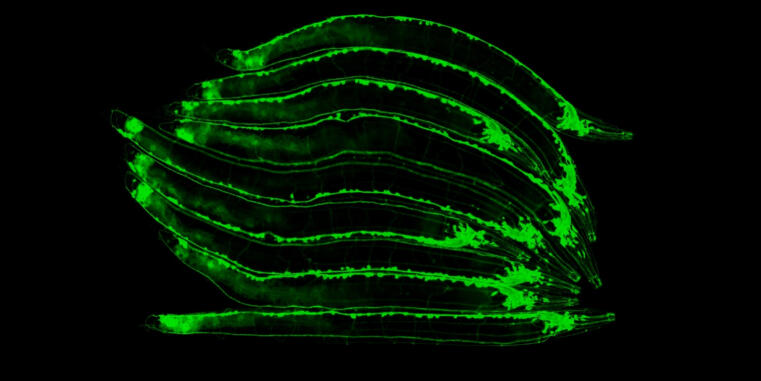
Prof. Dr. Eva Liebau is a Professor and Group Leader at the Institute for Integrative Cell Biology and Physiology, University of Münster, Germany, specializing in Molecular Physiology. She leads an active research group investigating glutathione metabolism, oxidative stress response, and parasitic nematodes, with significant involvement in the SãMBio German-Brazilian double degree program with the University of São Paulo. Her research focuses on the molecular mechanisms of genetic adaptation to xenobiotic compounds and oxidative stressors, using Caenorhabditis elegans as a model organism. Her work spans environmental stress response, thiol-based redox signaling, glutathione-related enzymes, regulation of translation, and the secretome of parasitic nematodes. She has made significant contributions to understanding the UFM1 cascade, a posttranslational modification system highly conserved in multicellular organisms. Prof. Liebau's recent publications reveal a strong trend toward anthelmintic drug discovery using natural compounds and plant extracts, with particular emphasis on understanding the mechanisms of action against parasitic nematodes. Her work bridges basic molecular research with applied parasitology, contributing to both fundamental understanding of stress responses and potential therapeutic applications. She actively supervises PhD and MSc students including Emma Schröder and Luka Ressmann, and collaborates extensively with international partners including the Institute of Biomedical Sciences at the University of São Paulo, the Institute of Pharmaceutical Biology and Phytochemistry at the University of Münster, and the Redox Homeostasis Group at the Institute of Biomedicine of Seville. Prof. Liebau is affiliated with multiple research networks including Cells in Motion, CRC 1009 (Breaking Barriers), CRC 1348 (Dynamic Cellular Interfaces), CRC 1459 (Intelligent Matter), and CRC 944 (Physiology and Dynamics of Cellular Microcompartments), and participates in several PhD programs including CiM-IMPRS, IRTG Graduate School, and SP BioSciences.
Max Planck Institute of Molecular Cell Biology and GeneticsGermany
Dr. Bluma Lesch is an Associate Professor at Yale School of Medicine with joint appointments in Genetics and Obstetrics, Gynecology & Reproductive Sciences. She directs a research program investigating epigenetic regulation in germline development and evolutionary biology, integrating molecular, computational, and developmental approaches. Her research focuses on: Epigenetic bivalency in germ cells Transgenerational inheritance mechanisms Chromatin dynamics in meiosis Evolution of gene regulatory networks Recent publications (2024-2025) demonstrate strong emphasis on: Histone modification mechanics Germline-specific chromatin remodeling Evolutionary transcriptomics Translational studies in fertility and disease models Honors include: Pew Biomedical Scholar (2021) Searle Scholar (2019) Burroughs Wellcome Career Award (2015) NIH Kirschstein Fellowship Hope Funds for Cancer Research Fellowship She leads the Lesch Lab , which employs genomic technologies and computational modeling to study epigenetic inheritance across biological scales.
South Westphalia University of Applied SciencesGermany
Prof. Dr. Marc Boelhauve is Professor and Dean of the Department of Agricultural Economics at the Faculty of Agriculture in Soest. His research integrates animal hygiene, parasitology, and biotechnology to address challenges in livestock health and antimicrobial resistance. He directs the Laboratory for Genetic Engineering, Microbiology and Molecular Biology, focusing on practical solutions for modern agriculture. Research Focus: Prof. Boelhauve's work spans: Prevention of multi-resistant bacteria in livestock environments Reproductive biotechnology for cattle and swine Optimization of animal hygiene protocols Zoonotic disease transmission dynamics Development of digital tools for herd management His recent publications (2020-2022) demonstrate strong emphasis on: LA-MRSA mitigation strategies in pig farming Calf health optimization to reduce antibiotic usage Rodent control for disease prevention Farmer behavioral factors influencing hygiene compliance Molecular characterization of livestock pathogens Active Research Projects: #1HealthPREVENT: Reducing antimicrobial-resistant pathogens in pig farms Aqua-MRE: Zoonotic pathogen surveillance in aquatic ecosystems Digital Cow 3.0: Health management systems for dairy cattle Biosecurity enhancement in cattle operations Thermal stress management during equine transport