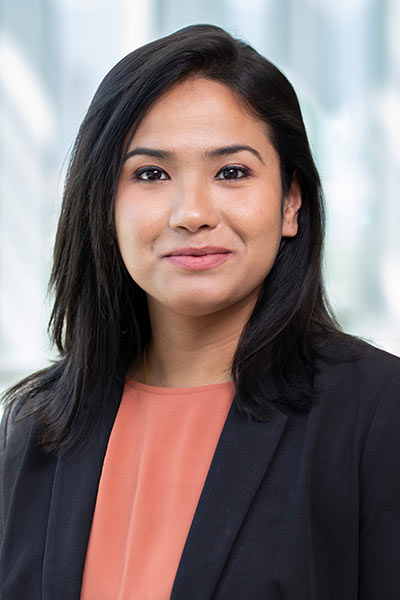
Yelva Roustan is a Lecturer at CEREA (joint laboratory between École Nationale des Ponts et Chaussées and EDF R&D) since 2005, specializing in air quality modeling . Her research focuses on multiscale modeling approaches, source-concentration relationships, and pollutant deposition processes. She teaches at the National School of Bridges and Roads, sharing knowledge from her research in atmospheric transport and environmental science. Her work addresses urban pollution challenges, including the impact of low-emission vehicles on air quality, urban tree effects, and pollutant dynamics in street networks. She has developed the MUNICH street-network model and contributed to projects like EURODELTA for multi-pollutant analysis across Europe. Her methods integrate data assimilation, inverse modeling, and Bayesian techniques to improve emission source reconstruction and model accuracy. Key contributions include studies on radioactive release scenarios (e.g., Fukushima, 106Ru event) and urban infrastructure impacts on pollution. Her research bridges atmospheric science with engineering solutions for sustainable urban environments. She holds a PhD in Environmental Engineering from École Nationale des Ponts et Chaussées (2005) and an HDR in Numerical Modeling of Atmospheric Pollutants (2020).
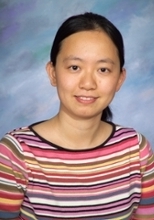
Lin Cai is a Professor in the Department of Electrical & Computer Engineering at the University of Victoria, Canada. She holds prestigious fellowships including NSERC Steacie, IEEE, CAE, and Royal Society of Canada. Her research focuses on wireless communications, networking, and mobile computing, with emphasis on protocols for multimedia and IoT systems. She has led projects in vehicular networks, UAV-assisted systems, and federated learning for edge intelligence. Dr. Cai has advised over 20 students, many of whom have received awards and prominent roles in academia and industry. She has authored numerous high-impact papers, secured grants from NSERC, CFI, and industry partners, and serves in leadership roles at IEEE and educational institutions. Notable contributions include work on congestion control, network security, and autonomous systems. Education: BEng (Nanjing U. of Sci. & Tech.), MASc/PhD (University of Waterloo) Affiliations: IEEE Vehicular Technology Society Board of Governors, IEEE ComSoc Distinguished Lecturer Awards: 2020 IEEE N2Women 'Star in Networking', RSC Fellow 2024, Best Paper Awards (ICC 2008, WCNC 2011) Research Labs: Connected Autonomous Vehicles (CAV) Lab, AI-driven Networking Group Her work integrates networking, AI, and control theory to address challenges in 6G, IoT, and smart transportation. She actively promotes diversity through initiatives like the 'Riko-chan' STEM manga series.
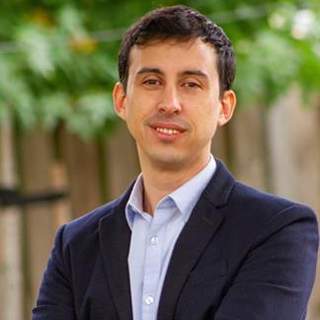
Sohag Kabir is an Associate Professor in the School of Computer Science, Artificial Intelligence, and Electronics at the University of Bradford. He leads the MSc Big Data Science and Technology, MSc Artificial Intelligence and Machine Learning, and MSc Applied Computer Science and Artificial Intelligence programs. He holds a Ph.D. in Computer Science from the University of Hull (2016), an M.Sc. in Embedded Systems, and a B.Sc. in Computer Science and Engineering. Dr. Kabir's research focuses on safety, reliability, and security assurance of cyber-physical autonomous systems. His work includes model-based safety analysis, probabilistic risk assessment, dynamic reliability analysis, and stochastic modeling. Current projects address IoT security, machine learning certification for automotive systems, and dependability frameworks for complex systems. His publications demonstrate consistent focus on developing integrated frameworks for system dependability, with recent work emphasizing IoT security, autonomous vehicle safety, and AI certification challenges. Dr. Kabir has contributed to multiple EU-funded projects including DEIS (Dependability Engineering Innovation for Cyber-Physical Systems) and MAENAD (Model-based Analysis & Engineering of Novel Architectures for Dependable Electric Vehicles).
Erik Prytz is a Senior Associate Professor in Cognitive Science at the Department of Computer and Information Science (IDA) at Linköping University. His research focuses on applying human factors principles to improve safety-critical systems, particularly in emergency response domains such as first aid, disaster medicine, and prehospital care. He holds a PhD in Human Factors Psychology and has served in roles including Director of the Forum Securitatis graduate school and Program Chair for the Cognitive Science BSc program. Education: PhD in Human Factors Psychology (Old Dominion University, 2014), MSc in Cognitive Science (LiU, 2010). Research Interests: Simulation-based training, stress and mental workload, emergency responder teamwork, and human-system interaction in crisis scenarios. His work emphasizes interdisciplinary collaboration, combining cognitive science, computer science, and medicine to enhance emergency response systems. Recent projects explore driver behavior toward emergency vehicles, ad-hoc responder group dynamics, and optimal placement of bleeding control kits in public spaces. He contributes to initiatives like the Center for Advanced Research in Emergency Response (CARER) and the Forum Securitatis graduate school. Erik’s teaching includes courses on human factors, distributed cognition, and emergency response systems. He actively participates in curriculum development and quality assurance committees within the Faculty of Arts and Sciences.
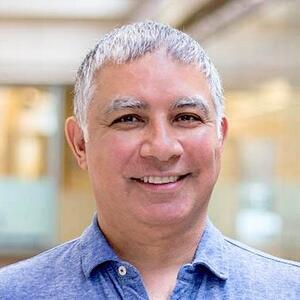
Dr. Md Noor-A-Rahim is an Assistant Professor (Lecturer-Above the Bar) at the School of Computer Science and Information Technology, University College Cork (Ireland). He previously served as a Senior Researcher and Marie Curie Fellow at the same institution. His academic journey includes a PhD from the University of South Australia (2015) and the prestigious Michael Miller Medal for his outstanding thesis on wireless communication systems. His research focuses on Intelligent Transportation Systems, Machine Learning, IoT, Wireless Networks, and DNA-based data storage. He has published extensively on topics like 6G-V2X systems, time-sensitive networking, and error characterization in DNA storage. His work integrates cutting-edge technologies such as intelligent reflecting surfaces (IRS), federated learning, and ultra-reliable low-latency communication (URLLC). Research Interests : Dr. Rahim's research bridges theoretical advancements and real-world applications in vehicular networks, smart manufacturing, and next-generation communication systems. He explores challenges in autonomous driving, edge computing, and bio-constrained data storage. His contributions include novel coding schemes for anytime transmission and frameworks for mitigating big vehicle shadowing in V2X communications. Key Publications : His recent work includes a comprehensive survey on wireless TSN (2025), analysis of 6G-V2X systems (2022), and breakthrough studies on DNA data storage error modeling (2023). These publications highlight his expertise in both foundational research and industry-relevant solutions. Awards : Recipient of the Michael Miller Medal (2015) for doctoral research excellence. Grants & Labs : While specific grants are not listed in the text, his research portfolio suggests involvement in collaborative projects with industry partners and funding bodies. He leads interdisciplinary efforts in smart manufacturing and vehicular communication systems.
Eileen Martin is an Associate Professor in the Department of Geophysics and Applied Math and Statistics at the Colorado School of Mines. Her research focuses on near-surface geophysics, environmental monitoring, and the application of distributed acoustic sensing (DAS) technology. She leads projects involving fiber-optic sensing for permafrost degradation, urban seismic monitoring, and mining safety. Martin has developed open-source tools like DASCore and contributes to scalable computational methods for geophysical data analysis. Education: PhD (2018) in Computational and Mathematical Engineering from Stanford University; MS (2017) in Geophysics from Stanford; BS (2012) in Mathematics and Physics from UT Austin. Research interests include fiber-optic sensing systems, seismic imaging, data-intensive computing, and applications in environmental science. Her work bridges geophysics with computational methods, emphasizing real-world deployment in challenging environments like arctic permafrost sites and underground mines. Her recent work explores DAS for glacier monitoring, mine seismicity detection, and urban infrastructure assessment. Collaborative projects include Arctic permafrost monitoring and developing public datasets for geoscience research (PubDAS repository). Grants and lab activities include NSF CAREER funding for scalable computational seismology and partnerships with industry on fiber-optic monitoring solutions.
Keyvan Hashtrudi-Zaad is a Professor in the Department of Electrical and Computer Engineering at Queen's University, affiliated with the Smith School of Engineering and the Ingenuity Labs Research Institute. His expertise spans robotics and control systems, with a focus on haptics, telerobotics, tele-rehabilitation, autonomous vehicles, and medical robotics. He holds the email addresses keyvan.hashtrudi-zaad@queensu.ca and khz@queensu.ca, and his office is located in Walter Light Hall, Room 427. Research Interests: His research emphasizes human-robot interaction, haptic interfaces, autonomous systems, and mechatronics. Key areas include kinesthetic haptics, collaborative teleoperation systems, energy storage systems for electric vehicles, and medical robotics applications such as needle deflection estimation and rehabilitation robotics. His work bridges theoretical control systems with practical applications in healthcare and autonomous technologies. Publications: His recent work addresses challenges in haptic system stability, energy-efficient inverters for electric vehicles, and teleoperation networks. Notable projects include a cable-driven parallel robot for stroke rehabilitation and a study comparing DC/BLDC actuators for haptic feedback. His research often integrates sensor fusion, nonlinear control, and dynamic modeling to solve real-world problems. Awards and Recognition: While specific awards are not listed, his extensive publication record and leadership in interdisciplinary robotics initiatives highlight his contributions to the field. He is part of the Interactive Robotics and Intelligent Systems (IRIS) Laboratory, advancing innovations in medical robotics and autonomous systems. Grants and Collaborations: His work likely involves collaborations across engineering and medical disciplines, supported by grants focused on robotics, control systems, and healthcare technologies. The IRIS Lab serves as a hub for developing cutting-edge solutions in haptic training systems and assistive robotics.
Haifeng Yu serves as Dean's Chair Associate Professor in the Department of Computer Science at the National University of Singapore's School of Computing. He actively contributes to academic governance as a Member of the Faculty Teaching Excellence Committee (FTEC) and teaches graduate courses including CS4231 Parallel and Distributed Algorithms and CS5223 Distributed Systems. His educational background includes: Ph.D. in Computer Science, Duke University, USA (2002) M.S. in Computer Science, Duke University, USA (1999) B.E. in Computer Science, Shanghai Jiao Tong University, P.R. China (1997) Professor Yu's research centers on Distributed Systems Security —particularly blockchain vulnerabilities like sybil attacks—and Distributed Algorithms for dynamic networks. His work bridges theoretical foundations with practical applications in vehicle-to-vehicle communication and disaster recovery systems, where mobile devices form ad-hoc networks when infrastructure fails. Current projects include BCube and Flint for overcoming blockchain's 50% barrier and Massively Parallel Aggregation in dynamic networks. Analysis of his 2018-2022 publications reveals a dominant focus on blockchain scalability challenges and dynamic network theory. Key trends include developing Byzantine fault tolerance beyond malicious majority thresholds, establishing fundamental lower bounds for network diameter uncertainty, and optimizing sublinear algorithms for T-interval dynamic networks. His work consistently targets top-tier venues like IEEE Security & Privacy (Oakland), JACM, and PODC. His research excellence is recognized through multiple prestigious awards: Best Paper at ACM SPAA (2020) Best Paper at ACM SIGCOMM (2010) Best Paper at ACM/IEEE IPSN (2009) Best Paper at USENIX NSDI (2006) Professor Yu mentors graduate students including Yuda Zhao and Irvan Jahja, with whom he co-authored seminal works on network diameter costs and dynamic network lower bounds. His research is supported by competitive grants enabling participation in premier conferences where he serves on program committees for PODC, DISC, SIGCOMM, CCS, and Oakland. He leads the BCube/Flint research group investigating blockchain security and dynamic network algorithms, with findings having direct implications for vehicle communication systems and post-disaster recovery networks.
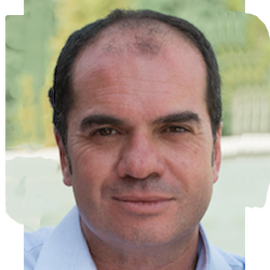
Fernando Sánchez-Figueroa is a Full Professor at the University of Extremadura's Department of Computer Systems Engineering and Telematics. He is a co-founder of Homeria Open Solutions, a spin-off engaged in R&D projects under EU frameworks. His research focuses on Software Engineering, Machine Learning, Data Visualization, and Ambient Intelligence. He has authored over 50 scientific articles and led numerous R&D contracts with public and private entities. Key roles include: Academic: Full Professor at University of Extremadura Entrepreneur: Co-founder of Homeria Open Solutions Research: Participation in EU-funded projects and development of AI-driven solutions for healthcare, smart cities, and education Research Interests: Machine Learning applications in healthcare, predictive analytics for education, and sustainable smart city technologies. His work bridges theoretical advancements with practical implementations, such as medical image segmentation using SAM models and cost-efficient UAV systems. Publications: Recent works include decision support systems for employability analysis, zero-shot learning in medical imaging, and recommender systems for education. He emphasizes data-driven approaches and model-driven engineering in software development. Impact: Developed tools like CompareML for preliminary data analysis and LiveSankey for advanced web visualization. His contributions span academia and industry, addressing challenges in healthcare, urban sustainability, and educational technology.
Haitham Al-Deek is a Professor in the Department of Civil, Environmental, and Construction Engineering at the University of Central Florida's College of Engineering and Computer Science. He leads the Intelligent Transportation Systems and Data Analytics Lab and has over 32 years of experience in transportation engineering, planning, and operations. His work is nationally recognized, particularly in freeway operations and intelligent transportation systems (ITS). Ph.D., Civil Engineering-Transportation Engineering, University of California, Berkeley (1991) M.S., Civil Engineering-Transportation Engineering, University of California, Berkeley (1987) B.S., Civil Engineering (with Honors), University of California, Berkeley (1985) Dr. Al-Deek's research focuses on wrong-way driving countermeasures, connected and automated vehicles, traffic safety, and data analytics. He pioneered innovative ITS solutions for detecting and preventing wrong-way driving, including the development of a high-success-rate detection system in partnership with the Central Florida Expressway Authority (CFX). His work extends to freight transportation, electronic toll collection, and sustainable transportation systems. He has also contributed to safety performance functions and driver behavior modeling. His recent publications highlight advanced methodologies in network screening for crash modeling, the use of crowdsourced data (e.g., Waze) for incident detection, optimization of wrong-way driving countermeasures, and benefit-cost analyses of safety technologies. These works reflect a strong trend toward data-driven, real-time, and cost-effective solutions in transportation safety and operations. Scientific awards and recognitions include: TRB Chairman Award (2018, 2012) Multiple TRB Best Paper Awards (Freeway Operations and Regional TSM&O, 2023–2003) TRB Best Student Paper Awards (2022, 2019, 2018, 2017) UCF Excellence in Research Award (2018) UCF Researcher of the Year (1999) Distinguished Researcher, UCF College of Engineering (2003) Dr. Al-Deek has supervised 15 Ph.D. students and 29 M.S. theses and has secured over $10.3 million in research funding from agencies including FDOT, TRB, USDOT, and CFX. He serves as a technical editor for TRR and associate editor for the Journal of Intelligent Transportation Systems. He also chaired key TRB paper review subcommittees and is an active professional engineer in Florida. He leads the Intelligent Transportation Systems and Data Analytics Lab, which focuses on real-world applications of ITS, data warehousing, and advanced analytics for transportation safety and efficiency.
Eduardo Lalla-Ruiz is an Associate Professor in Logistics and Operations Research at the Department of High Tech Business and Entrepreneurship (HBE) at the University of Twente, Netherlands. He serves as educational director for the Industrial Engineering and Management (IEM) bachelor and master programmes. His academic journey includes degrees from the University of La Laguna (Spain): BSc in Industrial Engineering, MSc in Industrial Automation Engineering, MSc in Computer Science & AI, and a PhD with extraordinary distinction. Previously, he worked as a researcher and lecturer at the University of Hamburg’s Institute of Information Systems, where he became an Alexander von Humboldt Foundation Fellow. His research focuses on logistics optimization, mathematical programming, AI applications, and metaheuristics for scheduling and allocation problems. He has published widely, reviewed for journals, and organized academic sessions globally. Awards include his doctoral distinction and Humboldt Fellowship. He actively contributes to interdisciplinary projects at the Digital Society Institute. No specific labs/teams are explicitly mentioned in the provided text.
Sami Repo is a Professor in Electrical Engineering, focusing on power distribution systems and smart energy technologies. His work spans distribution network automation, flexibility services, and integration of distributed energy resources. Doctor of Science (Technology) in Electrical Engineering (2001) Master of Science (Technology) in Electrical Engineering (1996) His research interests include smart grids, congestion management, and cyber-physical energy systems. Recent publications address challenges in electric vehicle charging, green hydrogen regulation, and photovoltaic revenue optimization. He serves as an examiner and doctoral dissertation opponent, contributing to academic evaluation in electrical engineering programs. Key subtopics include EV charging control, EU energy policy, and renewable energy integration. Examiner for Wenlong Liao (2023): Modelling and optimization of active distribution networks Opponent for Etherden Nicholas (2012): Distributed energy resource hosting capacity
Farshad Arvin is a Professor of Robotics in the Department of Computer Science at Durham University. Prior to this, he held academic positions at The University of Manchester (2018-2022) and worked as a Research Assistant at the University of Lincoln (2012-2015). He holds a BSc in Computer Engineering (2004), an MSc in Computer Systems Engineering (2010), and a PhD in Computer Science (2015). His research focuses on Swarm Robotics , Bio-inspired Swarms , and Autonomous Multi-agent Systems . He pioneered the Swarm & Computation Intelligence Laboratory (SwaCIL) at Durham, leading projects like H2020-FET RoboRoyale (€3.27M), Horizon Europe Sensorbees (€3.2M), and BioDiMoBot (€8M), with total funding exceeding £4M. Recent publications highlight advancements in swarm trajectory optimization (T-STAR), collision-free multi-robot coordination, and bio-hybrid environmental monitoring. His work integrates bio-inspired algorithms with practical applications in autonomous vehicles, aerial drones, and hazardous environments. Scientific Awards: Marie Skłodowska-Curie fellowship Notable Projects: EU H2020-FET RoboRoyale (2021-2026) Horizon Europe Sensorbees (2024-2029) Horizon Europe BioDiMoBot (2025-2030) H2020-FET Robocoenosis (2020-2025) Supervision: Mentors 8 postgraduate students at Durham, including Hanadi Alhamdan, Hang Wang, and Honghao Pan.
Dr. Srishti Banerji is an Assistant Professor in the Department of Civil and Environmental Engineering at Utah State University and Director of the Systems, Materials, and Structural Health (SMASH) Lab. She leads research on advanced construction materials, structural resilience under extreme loads (particularly fire), sustainable infrastructure, and structural health monitoring. Her group focuses on experimental testing, numerical simulations, and developing design solutions for civil infrastructure. Education: PhD in Civil (Structural) Engineering, Michigan State University (2021) MS in Civil (Structural) Engineering, Concordia University (2016) BS in Civil Engineering, National Institute of Technology Silchar (2013) Research Focus: Her work spans: 1) Characterization of high-performance/sustainable materials (e.g., UHPC, recycled glass pozzolan), 2) Structural behavior under fire exposure, 3) Integration of electric charging systems in concrete pavements, 4) Non-destructive testing and structural health monitoring, and 5) Retrofitting techniques for infrastructure strengthening. She employs machine learning, thermo-mechanical modeling, and full-scale experimentation. Publication Trends: Her 13+ journal articles primarily analyze fire resistance of concrete/timber structures, UHPC material properties at high temperatures, sensor-based infrastructure monitoring, and sustainable material development. Recent works increasingly incorporate machine learning and electrification concepts. Awards & Honors: Teacher of the Year (USU, 2025) ASCE ExCEEd Faculty Teaching Fellowship (2023) Top Cited Article Award, Fire and Materials Journal (2023) SHMII-11 Early Career Grant (2022) NSERC Scholarship (2015) Best Conference Paper (SEC 2016) Current Projects & Teams: She leads 5+ funded projects including fire performance of polymer concrete, self-healing concrete for bridges, and Utah-sourced UHPC development. Mentees include 3 PhD students (Abdullah Al Sarfin, Mehrnoosh Nazari, Mahmoud Ali) and alumni working on sustainable materials and additive manufacturing.
Julien Cloarec is a Full Professor of Quantitative Marketing at iaelyon School of Management, Université Jean Moulin Lyon 3, where he also serves as Vice-President for Digital Strategy and Artificial Intelligence. He is an internationally recognized expert in artificial intelligence, with a focus on responsible AI development that balances innovation with privacy protection. His research interests center on Artificial Intelligence , Privacy in AI , Consumer Behavior , and Digital Marketing . He investigates how users perceive and adopt AI technologies, particularly in domains like autonomous vehicles, brain–machine interfaces, and eHealth, emphasizing the psychological and ethical dimensions of trust and privacy. His recent publications (2022–2025) reflect a strong thematic focus on the personalization-privacy paradox , algorithmic aversion , and transparency in AI systems . These works appear in leading journals across marketing, technology, and transportation research, demonstrating interdisciplinary impact. Scientific Awards: Prix AFM - Association Française du Marketing pour la meilleure communication (2022) Julien Cloarec actively collaborates with regulatory bodies, professional associations, and academic institutions to influence public policy and promote responsible AI. He leads research at the Magellan Laboratory @iaelyon and manages educational initiatives such as the Certificate in Artificial Intelligence for Marketing . He advises on doctoral research and has contributed to publications on the doctoral experience in management. Laboratory Affiliation: Magellan Laboratory @iaelyon - Research in Organizational Management