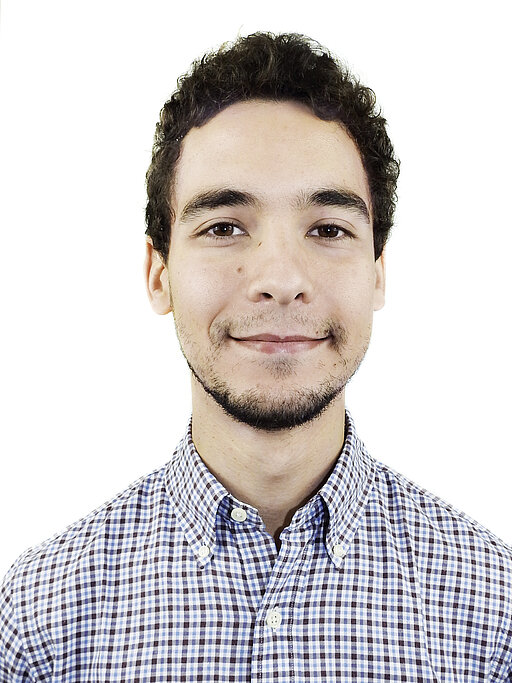
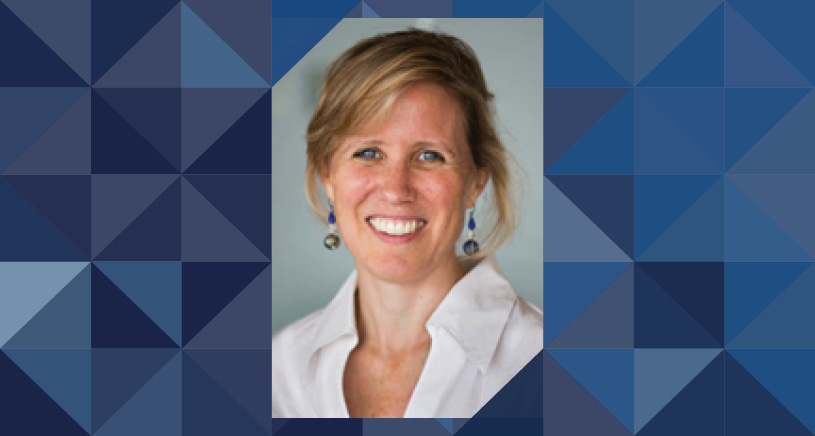
Professor Jean-Rodolphe Roche is a Full Professor at Université de Lorraine , affiliated with the engineering college Polytech Nancy and the Institute Élie Cartan de Lorraine (IECL). His research focuses on numerical methods for partial differential equations, domain decomposition, nonlinear optimization, and scientific computing. Research Fields : Numerical Analysis, Domain Decomposition, Nonlinear Equations, Scientific Computing, Shape Optimization His recent publications emphasize adaptive numerical techniques for nonlinear boundary value problems, domain decomposition in electromagnetic casting, and radiative-conductive heat transfer systems. Collaborations span institutions in Brazil, France, and international conferences.
Martin Eigel is a Researcher at the Weierstrass Institute for Applied Analysis and Stochastics (WIAS) , specializing in numerical methods for stochastic partial differential equations, uncertainty quantification, and machine learning applications in computational mathematics. His work bridges tensor networks, Bayesian inversion, and quantum simulations. Research Interests : Adaptive stochastic Galerkin finite element methods Low-rank tensor approximations for high-dimensional problems Machine learning integration with PDE solvers Quantum circuit simulation techniques Bayesian inverse problems and error control Key Article Trends : His recent publications focus on merging deep learning architectures (e.g., ResNet, CNNs) with stochastic and tensor-based numerical methods for solving parametric PDEs, Bayesian inversion, and quantum systems. Topics include Hamilton-Jacobi-Bellman equations, Langevin dynamics, and risk-averse optimization under uncertainty.
Richard Barke is an Associate Professor in the School of Public Policy at the Georgia Institute of Technology's Ivan Allen College of Liberal Arts. He serves as affiliated faculty in the Institute for Matter and Systems and maintains strong connections across Georgia Tech's six colleges through interdisciplinary teaching collaborations. His career spans academic leadership roles including chairing the creation of the Ivan Allen College and School of Public Policy, serving as school chair, and acting as Associate Dean of IAC. His educational background includes a BS in Physics with minor in Geophysics from Georgia Tech and MA/PhD in Political Science from the University of Rochester. Barke previously taught at the University of Houston before returning to Georgia Tech. Barke's research centers on the regulation of risk, the interplay between politics and science, and long-term policy-making across generations. His work examines how political timeframes interact with policy problem timelines, particularly regarding deep-time consequences. He investigates risk perception differences among scientific communities and the role of uncertainty in research ethics decisions. His scholarship bridges science policy, environmental governance, and intergenerational ethics. Analysis of his recent publications reveals consistent focus on temporal dimensions of policy, with increasing attention to deep-time governance frameworks. His work connects risk analysis with institutional design, showing how policy models often fail to account for long-term consequences. The publications demonstrate interdisciplinary reach spanning political science, science studies, environmental policy, and research ethics. Georgia Tech's Outstanding Service Award IAC Faculty Legacy Award ANAK Faculty of the Year Georgia Tech Student Government Association Faculty of the Year Award (awarded twice) Barke has secured significant research funding including seven National Science Foundation grants and sponsored research from US Departments of Commerce, Energy, and Army; the Alfred P. Sloan Foundation; and the Belgian National Fund for Scientific Research. His consulting work includes companies under federal regulation, the Houston Area Research Center, and the Carnegie Commission on Science, Technology, and Government. He has advised on congressional science budget processes and served as visiting scholar at the University of Ghent. His teaching portfolio spans political processes, intergenerational policy, ethics and risk, and regulatory policy, with extensive team-teaching across Georgia Tech's colleges.
Nicolae STEF is a Full Professor and Coordinator of the Finance-Governance-CSR research axis at Burgundy School of Business (BSB), where he is affiliated with the Finance, Accounting, Law Department within the School of Business. His academic work focuses on the intersection of finance, governance, and sustainability, with particular expertise in bankruptcy, corporate financial distress, and environmental policy. Professor STEF's research interests span multiple interconnected domains including: Corporate finance and bankruptcy proceedings Environmental finance and sustainable banking practices Political economy of financial systems Application of artificial intelligence in financial prediction Climate change impacts on corporate and banking performance Corporate governance and social responsibility His interdisciplinary approach bridges finance, law, and environmental studies, creating novel insights at the intersection of these fields. Analysis of Professor STEF's recent publications reveals a clear research trajectory focusing on the complex relationship between financial systems, environmental challenges, and governance structures. His work increasingly incorporates advanced methodologies like explainable artificial intelligence to address complex financial and environmental problems. A notable trend is the growing emphasis on climate-related financial risks and how institutions respond to environmental challenges, reflecting the evolving priorities in both academic research and practical business applications. Professor STEF actively contributes to academic discourse through conference presentations and collaborations with researchers across multiple institutions. His role as Coordinator of the Finance-Governance-CSR research axis indicates leadership in shaping research directions within his department.
Dr. Chris Goodrich is a Senior Lecturer at the School of Mathematics and Statistics, UNSW Sydney. He holds a PhD in Mathematics from the University of Nebraska-Lincoln. His research focuses on analytical and theoretical aspects of nonlocal differential equations, fractional calculus, and variational problems, with particular emphasis on operator theory and regularity analysis. Education: PhD Mathematics, University of Nebraska-Lincoln Research Interests: Dr. Goodrich specializes in nonlocal operators and fractional calculus applied to differential/difference equations. His work investigates existence theory, monotonicity properties, and topological analysis of solutions. Key areas include convolution equations, (p,q)-growth conditions in PDEs, and applications of Sobolev inequalities to Kirchhoff-type problems. He maintains strong collaborations with international researchers in fractional analysis and discrete calculus. Publications: His recent articles (2023-2025) demonstrate consistent focus on nonlocal operators, fractional differences, and convolution equations. Predominant themes include topological methods for elliptic equations, monotonicity analysis of fractional operators, and existence/nonexistence theorems for Kirchhoff systems. Analytical techniques leverage convexity, variational principles, and asymptotic characterization across both continuous and discrete frameworks.
Mohammed El-Kebir is an Associate Professor in the Department of Computer Science at the University of Illinois at Urbana-Champaign (UIUC) , with affiliate appointments in Electrical & Computer Engineering, the Institute of Genomic Biology, and the National Center for Supercomputing Applications. His research focuses on combinatorial optimization algorithms for fundamental challenges in cancer genomics and computational biology , particularly tumor phylogenetics , single-cell sequencing data analysis , and metastasis migration history modeling . PhD in Computer Science, Centrum Wiskunde & Informatica (Netherlands) and VU University Amsterdam (2015) Postdoctoral training at Brown University and Princeton University (2014-2017) El-Kebir's work addresses intra-tumor heterogeneity by developing mathematical models to reconstruct evolutionary trees of cancer mutations from mixed sequencing data. His lab has pioneered methods like SPhyR and MACHINA for phylogeny inference under data limitations, and PhyDOSE for optimizing single-cell sequencing experiments. His research bridges computational challenges with clinical implications for personalized medicine and therapy resistance prediction . Key contributions include: Theoretical foundations for cancer phylogenetic problems (hardness proofs, algorithm design) Single-cell sequencing algorithms accounting for data sparsity and errors Migration graph frameworks for metastasis analysis Interactive tools like ClonArch and CNAViz for tumor data visualization El-Kebir has received multiple accolades including the NSF CAREER Award (2021) and CRII Award (2019) . His group has produced 15+ peer-reviewed publications since 2020, with student collaborators securing prestigious fellowships like the NSF GRFP . He actively contributes to conference program committees (RECOMB, ISMB, WABI) and teaches graduate-level courses in Bioinformatics and Computational Cancer Genomics .
Ulrike Bücking serves as a Senior Lecturer in the Department of Mathematics and Computer Science at Free University of Berlin, where she is Deputy Head of the Primary School Mathematics Group within the Discrete Methods in Algebraic Geometry & Mathematics for Teacher Training working group. Her academic responsibilities include teaching mathematical professional knowledge courses for primary school teacher candidates since 2019, with recent expansion to advanced specialized instruction for mathematics-focused teacher trainees. Her research spans two interconnected domains: theoretical discrete differential geometry focusing on convergence of discrete conformal mappings, rigidity of planar patterns, and discrete minimal surfaces; and mathematics education specifically tailored for primary school teacher preparation. This dual expertise manifests in publications ranging from pure mathematical investigations of circle patterns and discrete Riemann surfaces to innovative pedagogical frameworks for mathematics teacher education. Analysis of her 15 most recent publications reveals a consistent trajectory in discrete complex analysis with increasing integration of mathematics education research since 2020. Her geometric work demonstrates methodological evolution from foundational circle pattern theory toward sophisticated discrete surface constructions, while her educational publications address practical curriculum development for teacher training programs. The 2023 MatheProfIL paper exemplifies her applied approach to bridging theoretical mathematics with classroom pedagogy. Dr. Bücking maintained continuous research activity through her decade-long participation (2012-2024) in the Collaborative Research Center/Transregio 'Discretization in Geometry and Dynamics' (Project A01: Discrete Riemann Surfaces). Her teaching portfolio shows significant evolution from advanced mathematics courses for physicists at TU Berlin (2002-2018) to specialized mathematics education for primary teachers at Free University of Berlin. She actively contributes to the Primary School Mathematics Group and collaborates within the Discrete Methods in Algebraic Geometry & Mathematics for Teacher Training working group, maintaining an office at Arnimallee 3 in Berlin's mathematics institute where she supervises course development and coordinates teacher education initiatives.
Didem Baş is a Professor at Trakya University’s Faculty of Architecture, Department of Interior Architecture. She previously held academic and administrative roles at Istanbul Arel University, Çukurova University, and Istanbul Kültür University, including Department Head, Vice Rector, and Dean positions. Her career spans over 25 years, focusing on interior architecture, sustainable design, and architectural detailing. High School: Malatya Anatolian High School / Adana College (1991) Bachelor's: Mimar Sinan University / Architecture (1996) Master's: Çukurova University / Interior Architecture (1998) Proficiency in Arts: Mimar Sinan University / Interior Architecture (2001) Her research interests include sustainable architecture, material studies, design education, and creative thinking in architectural detailing. She has contributed to methodologies for adaptive design, ecological material use, and integrating digital tools into architectural practice. Didem Baş has published extensively, including 15 recent works on prefabrication, detail design, and cultural landscapes. Her projects involve TUBITAK-funded research on post-disaster housing and Erasmus+ collaborations in youth education and cultural heritage. She has served as a peer reviewer for journals like ICONARP and Athens Journal of Architecture and edited books on design and urban culture.
Prof. Dr. Gert Lube is a faculty member at the Institute for Numerical and Applied Mathematics (NAM) within the Faculty of Mathematics and Computer Science at Georg-August-University Göttingen. His research focuses on numerical methods for partial differential equations , with emphasis on stabilized finite element methods , turbulence modeling , and magnetohydrodynamics (MHD) . Workshops Organized : Calibration of Viscosity Models for Turbulent Flows (2010), Variational Multiscale Methods (2008), Local Projection Stabilization (2008), BAIL Conferences. His academic contributions include 15+ publications since 2010 on topics like Navier-Stokes simulations , LES/VMS methods , stabilized FEM , and FEM-BEM coupling . Collaborations span institutions like TU Graz, Saarbruecken University, and DLR Göttingen. Key Research Areas : Finite Element Methods, Turbulence Modeling, MHD, Incompressible Flows, Singularly Perturbed Problems, Parallel Computing. Advisees include PhD candidates working on topics such as non-isothermal flows , mass conservation , hybrid RANS/LES , and domain decomposition .
Anima Anandkumar is the Bren Professor of Computing and Mathematical Sciences at the California Institute of Technology (Caltech). She holds a B.Tech from the Indian Institute of Technology Madras (2004) and a Ph.D. from Cornell University (2009). Her research focuses on AI algorithms , Neural Operators , and Tensor Methods for scientific simulations, particularly in climate modeling, flight control, and biomedical applications. Her recent work includes accelerating scientific simulations with Fourier Neural Operators Quantum Chemistry Modeling Climate Forecasting She has received prestigious honors including the IEEE Fellowship Alfred P. Sloan Fellowship NSF Career Award Industry Fellowships from Microsoft, Google, Facebook, and Adobe and is part of the World Economic Forum's Expert Network. Her lab develops AI methods for 45,000x faster weather forecasting Drone landing in extreme winds Drug discovery and protein modeling Quantum chemistry simulations Surgeon performance assessment Robust control systems
Roberta Cuel serves as Associate Professor in the Department of Economics and Management at the University of Trento since 2014. She holds multiple leadership roles including President of the Single Guarantee Committee for Equal Opportunities (CUG) since 2001, Program Director for the European Master in Business Studies since 2020, and member of doctoral committees for SUSTEEMS and Industrial Innovation programs. Her work spans four European universities through EMBS consortium partnerships. Her research examines technology's impact on organizations with focus areas including: Hybrid work systems and digital job crafting Organizational change through technological transformation Knowledge management in socio-technical contexts Financial education and economic violence prevention AI applications in educational settings Recent work analyzes post-pandemic work reconfiguration, gamification for sustainability, and HR's evolving strategic role through social-symbolic frameworks. Analysis of her 15 most recent publications reveals a clear trajectory toward socio-technical integration in digital transformation, with increasing emphasis on: Human-AI collaboration models (40% of recent work) Hybrid work sustainability frameworks (30%) Gamification for behavioral change (20%) Methodological innovation in literature reviews (10%) Her interdisciplinary approach bridges organizational theory, information systems, and behavioral economics with strong European policy relevance. Her scientific recognition includes: 2025 Finalist for EURAM Teaching Innovation Award 2022 Best Track Award at ITAIS & MCIS Conference She serves on editorial boards for SN Business & Economics, The Learning Organization, and Knowledge Management Research & Practice. Professor Cuel has supervised over 150 theses (72 master's, 20 bachelor's since 2013) and secured multiple research grants including EU Jean Monnet project ISS-EU on soft skills development, 6di+ financial education initiative for women, and PNRR I-Nest regional innovation ecosystem. Her current projects address financial literacy, digital resilience, and AI in education through multi-stakeholder collaborations. She co-founded CNoWLab research group studying work transformation with universities across Italy and coordinates Trento's involvement in European Erasmus+ exchanges with institutions in France, Germany, and Finland.
Dr. Francesco De Anna serves as a Lecturer at the Chair of Mathematics VI (Mathematics in the Natural Sciences) at the University of Würzburg. His academic profile centers on the rigorous mathematical analysis of complex fluid systems, with particular expertise in liquid crystal theory and non-isothermal fluid dynamics. Dr. De Anna's research spans several key areas in mathematical fluid dynamics: Analysis of partial differential equations for complex fluids Liquid crystal theory (both director theory and Q-tensor framework) Non-isothermal fluid dynamics with temperature-dependent properties Mathematical modeling using the Energetic Variational Approach (EnVarA) Applications of harmonic analysis techniques to fluid problems His publication record from 2013-2023 demonstrates consistent focus on well-posedness, regularity, and existence of solutions for various fluid models. The research shows strong interdisciplinary connections between pure mathematics, mathematical physics, and materials science, particularly in the domain of anisotropic fluid systems. His work frequently employs advanced analytical techniques including Littlewood-Paley decomposition and paradifferential calculus to address challenging problems in boundary layer theory, plasma physics, and magnetoviscoelastic fluids. Dr. De Anna teaches courses in mathematical analysis, currently offering exercises for Analysis in Several Variables (Fundamentals of Analysis 2) and Analysis 2. Previously, he has taught Analysis in One Variable (Foundations of Analysis 1) and Introduction to Partial Differential Equations, demonstrating his commitment to foundational mathematical education and his expertise in core analytical methods.
Yannick Privat is a Professor at the University of Lorraine, affiliated with the Nancy School of Mines (École des Mines de Nancy) and the Élie Cartan Institute of Lorraine (IECL). He is a member of the INRIA Sphinx project team and a Junior Member of the University Institute of France (2021-2026). His research focuses on shape and topology optimization , control of partial differential equations (PDEs) , and applications of mathematics to biology . He has supervised numerous doctoral and postdoctoral researchers on topics ranging from quantum computing to epidemiological modeling. Research Themes: Shape optimization, Control theory of PDEs, Mathematical biology, Quantum mechanics, Fluid dynamics. Honors: Blaise Pascal Prize (2023), Junior Member of the University Institute of France (2021-2026). Recent Publications: Explore quantum computing, acoustic room reconstruction, and optimal control in epidemiology.
Ioana Ciotir is an Associate Professor (Maître de Conférence) in the Department of Mathematical Engineering at INSA Rouen, France, where she has been employed since 2014. She previously served as an Assistant Professor at the Institute of Mathematics at the University of Neuchâtel, Switzerland (2012-2014) and as an Assistant at the Department of Mathematics at "Alexandru Ioan Cuza" University of Iasi, Romania (2008-2012). Her research focuses on stochastic partial differential equations, homogenization theory, and optimal control problems, with applications to porous media flow, traffic modeling, and financial mathematics. Dr. Ciotir earned her Ph.D. in Mathematics from "Alexandru Ioan Cuza" University of Iasi, Romania in 2010, with a thesis titled "Stochastic Porous Media Equations." She later obtained her Habilitation à Diriger des Recherches (HDR) from the University of Rouen, France in 2022. Her academic journey includes additional training in educational methodologies and summer schools in mathematical finance. Her primary research interests span stochastic analysis and partial differential equations, with a focus on stochastic porous media equations, homogenization of stochastic processes, optimal control theory, and probabilistic representations. She investigates the behavior of stochastic processes with singular diffusivity, including fast and super-fast diffusion equations with various types of noise (Stratonovich, Itô, gradient-type). Her work extends to applications in physics (plasma diffusion), engineering (porous media flow), and social sciences (traffic flow modeling, pandemic economic impacts). Dr. Ciotir's publication record demonstrates consistent contributions to high-impact mathematical journals, with recent work focusing on regularity theory for stochastic diffusion equations, state-constrained control systems for porous media, and non-local models for traffic flow. Her research often involves international collaborations with institutions in Switzerland, Germany, Japan, and China, reflecting the interdisciplinary nature of her work. Among her scientific recognitions are the Thesis Prize for Applied Mathematics from ROMAI (2011) and the Doctoral and Research Supervision Bonus (PEDR) for the periods 2018-2021 and 2022-2025. She has successfully supervised multiple doctoral students through completion of their theses and currently mentors several Ph.D. candidates working on topics related to stochastic PDEs and control theory. Dr. Ciotir has secured significant research funding through projects such as Scale Op (2024-2028, with Siemens Gamesa Renewable Energy), DEFHY3GEO (2022-2025), M2SiNum (2018-2021), M2Num (2015-2019), and the ANR Project QUantum Turbulence Exploration by High-Performance Computing (ANR-18-CE46-0013). She serves as the Sustainable Development Representative for the LMI laboratory and the GM Department since May 2020, and has been elected to the LMI laboratory council (2017-2021 and 2021-2025). She is actively involved in the Mathematics Laboratory (LMI) at INSA Rouen, where she serves as the SMAI correspondent and Mathrice correspondent via FR CNRS 3335. Her international collaborations include partnerships with Siemens-Gamesa, ENSTA Paris, universities in Romania, Switzerland, Germany, and Japan, demonstrating her position within a broad academic network focused on applied mathematics and stochastic analysis.
Amy Cohn is a Professor at the University of Michigan School of Public Health and College of Engineering, with appointments in the Department of Health Management and Policy and Industrial and Operations Engineering. Her work focuses on applying operations research methodologies to healthcare systems optimization. Education PhD in Operations Research from Massachusetts Institute of Technology (2002) AB in Applied Mathematics from Harvard University (1991) Research Interests Dr. Cohn's research centers on improving healthcare delivery through operations research and systems engineering approaches, particularly for patient scheduling , resource allocation , and health information technology . She has developed simulation models for chemotherapy deferrals, surgical training efficiency, and glaucoma clinic wait times. Scientific Awards Arthur F Thurnau Professorship - recognizing excellence in teaching and research Publications Trends Her publications demonstrate a consistent application of discrete-event simulation , stochastic programming , and optimization techniques to address healthcare challenges including telehealth scheduling , residency training logistics , and patient safety improvements through engineering-clinical collaborations. Leadership Roles As Associate Director of the Center for Healthcare Engineering and Patient Safety, she leads multidisciplinary teams in developing practical solutions for complex healthcare operations problems.