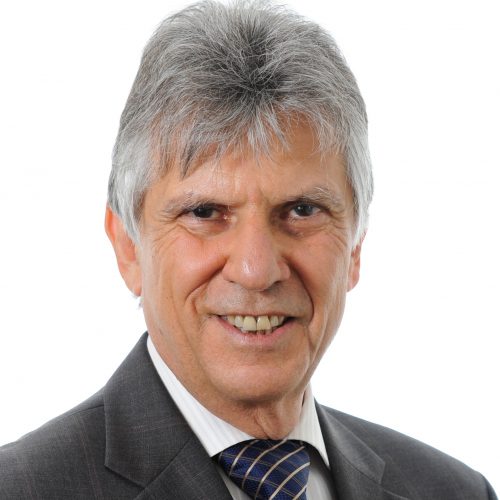
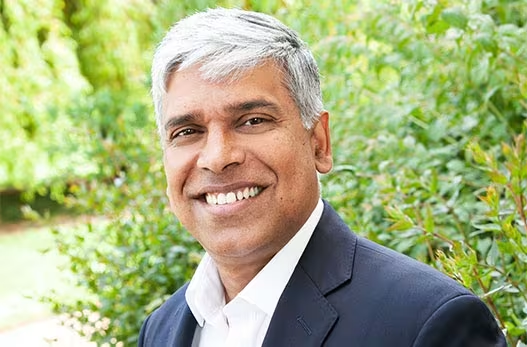
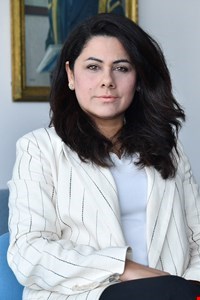
Sam Rawsthorne is a Researcher and PhD candidate in Accounting and Finance at Lancaster University Management School (LUMS). He holds a Bachelor's and Master's from Lancaster University, with academic excellence recognized by multiple awards. His research focuses on corporate narrative disclosure, strategic communication, and regulatory impacts. Currently, he interns at Railpen's Quantitative Strategies team and collaborates with institutions like the Financial Reporting Council (FRC) and Pensions and Life Savings Association (PLSA). Professional qualifications include completing CFA Levels I and II. Education: Bachelor's in Accounting and Finance, Lancaster University Master's in Advanced Financial Analysis, Lancaster University Teaching: Teaching Assistant for Programming and Databases for Financial Applications (2019–Present) Senior Writing Mentor, Academic Writing Zone (2020–Present) Engagement: Workshops on textual analysis with INQUIRE UK Research projects with FRC and PLSA His thesis examines how firms align strategic disclosures with stakeholder expectations and regulatory mandates, analyzing both drivers and outcomes of disclosure policies. Recent activities include presenting at the BAFA Doctoral Colloquium and participating in IASB public meetings.
Dr. Ira Weiss is a Professor of Strategic Management at North Carolina State University, affiliated with the Department of Management Innovation & Entrepreneurship. His expertise spans Global/International Management, Corporate Strategy, Higher Education Management, and Business Accreditation. He holds a Ph.D. in Management from UCLA (1976). His research focuses on strategic frameworks, organizational systems, and accreditation processes, as evidenced by his thought leadership in AACSB articles advising institutions on accreditation strategies. His academic contributions include over four decades of publications on IT management, risk mitigation, and professional certification. Notable works address end-user computing strategies, cost control in software development, and auditability of systems. Though no specific grants or advising roles are detailed, his influence extends through academic discourse and institutional best practices. He remains active in North Carolina State’s initiatives related to management innovation and entrepreneurship.
Chris Adrian is a Senior Lecturer in the Department of Accounting at Monash University, specializing in corporate governance, financial accounting, and auditing. His research explores intersections between environmental factors (e.g., climate change, natural disasters) and corporate financial practices, alongside political influences on capital markets. Prior to Monash (since 2017), he held a Lecturer position at Macquarie University. Chris earned his PhD in 2015, focusing on corporate governance stakeholder perceptions. His work has been published in journals like Journal of Business Ethics and International Journal of Auditing , with recent studies examining audit fee dynamics during natural disasters, political connections in audit committees, and pandemic resilience through sustainability disclosures. Education: PhD (2015) Professional Affiliations: American Accounting Association (AAA), European Accounting Association (EAA), Accounting and Finance Association of Australia and New Zealand (AFAANZ) His research projects include applying large language models to sustainability reporting standards and analyzing charity performance during climate disasters. He is currently accepting PhD students and serves as an ad-hoc reviewer for multiple accounting journals. Key themes in his articles include audit risk mitigation during political shifts, disaster-driven corporate tax behaviors, and pandemic impacts on firm valuation. His work consistently bridges financial reporting practices with broader socio-environmental challenges.
Nina Lager Vestberg is a Professor of Visual Culture at the Norwegian University of Science and Technology (NTNU), affiliated with the Department of Art and Media Studies. She leads the Media, Data, Museums research group, focusing on labor, systems, and infrastructures in visual culture. Her research examines photographic technologies and digitization processes, particularly their roles in archives and cultural memory. Education Bachelor’s in Photography and Multimedia (UK) Master’s and PhD in Art History (Birkbeck, University of London) Research Interests Digitization’s impact on visual archives Photographic technologies from pre-photography to post-digital eras Labour and intermediation in visual culture Cultural memory and national imagery Teaching Media Theory and Media Culture Research Design in Film and Media Studies Visual Culture across BA and MA programs Awards & Recognition Notable for her 2023 monograph Picture Research (MIT Press) Recipient of grants and fellowships for interdisciplinary projects Outreach & Advocacy Founded campuslivet.substack.com , a Norwegian academic newsletter Public lectures on digital museums, platformization, and ecological media impacts Labs & Teams Leads the Media, Data, Museums research group at NTNU Collaborates internationally on projects like the Oxford Photo Archives initiative
Prof. Dr. Gudrun P. Kiesmüller is a full professor of Operations Management at TUM Campus Heilbronn since 2019. Previously, she held full professorships at Kiel University (Supply Chain Management) and Otto von Guericke University Magdeburg (Operations Management). She studied mathematics at Julius-Maximilians-University of Würzburg and later worked as a postdoc and assistant professor at Eindhoven University of Technology. Her research focuses on supply chain management, inventory management (particularly spare parts), maintenance process planning, and manufacturing system design. She develops optimization approaches for decision support, with publications in journals like IISE Transactions and Production and Operations Management . Key awards include an Honorary Doctorate (2023), ISIR Service Award (2022), and multiple teaching and reviewer awards. She has contributed to advancing stochastic inventory models and operational efficiency in complex systems. Her work integrates theoretical rigor with practical applications, addressing challenges in inventory routing, buffer allocation, and component reliability optimization. Current research emphasizes dynamic maintenance planning and capital goods design.
Prof. Tijani CHAHED is a Professor at Telecom SudParis, part of Université Paris-Saclay, affiliated with the SAMOVAR laboratory and the NeSS research group. His work focuses on network optimization, edge computing, machine learning applications in telecommunications, and game-theoretical frameworks for distributed systems. He holds a position in the Department of Computer Science and Telecommunications. His research spans resource allocation in 5G/6G networks, energy efficiency strategies for mobile infrastructure, reinforcement learning for dynamic systems, and coalitional game theory for multi-agent systems. Key contributions include optimization of cache allocation in edge computing, latency-critical traffic management (URLLC), and strategic investment models for distributed computing infrastructures. Selected articles highlight advances in edge computing resource management, metaverse data transport over 5G, and energy-efficient sleep mode control for base stations. His work often intersects with industrial applications in green networks and smart grid integration for mobile infrastructure. Collaborations involve institutions like École Polytechnique, INRIA, and industry partners in telecommunications. Current projects include 6G network architectures, metaverse-enabled edge services, and decentralized resource allocation frameworks. Labs/Teams: SAMOVAR Lab (Signal and Media Access Networks, Optical and Radio Networks), NeSS Group (Networked Systems and Services).
Sendil Ethiraj is a Professor of Strategy and Entrepreneurship at London Business School (LBS) and serves as Deputy Dean (Faculty). Originally from India, he earned his PhD in Management from The Wharton School at the University of Pennsylvania. Prior to joining LBS, he spent over a decade as faculty at the Ross School of Business, University of Michigan. His research focuses on strategic management, covering innovation processes, competitive strategy, organizational design, human capital management, and technology-driven industry transformation. He has extensively studied innovation in complex systems across sectors like oil and gas, mutual funds, and healthcare insurance. His work addresses organizational structures for capability development, employee goal alignment, and platform governance in digital ecosystems. At LBS, he contributes to academic leadership as a member of the Governing Body since 2022. His initiatives emphasize designing reward systems to attract global research faculty and advancing diversity, inclusion, and belonging through the LBS Advisory Board. He teaches core courses in LBS's Master's, Executive Education, and PhD programs. Key research areas: Innovation in unconventional industries Human capital dynamics Platform governance Strategic response to technological disruption Organizational design for complex systems Contact: sethiraj@london.edu
David Tindall is a Professor in the Department of Sociology at the University of British Columbia's Faculty of Arts. His research examines environmental contention, social movements, and climate change, with a focus on British Columbia and Canada. He investigates the interplay between social networks, movement identification, and participation, covering topics like forestry conflicts, wilderness preservation, and media representation of environmental issues. Research Interests: Tindall's work spans: Environmental movements and activism Social network analysis in conservation contexts Climate change perceptions and justice Gender dimensions of environmentalism Media framing of ecological conflicts His current SSHRC-funded project analyzes sociological aspects of climate change contention in Canada. Publications: Tindall's recent articles (2010-2002) focus on environmental networks, activism dynamics, and forest value conflicts, demonstrating consistent emphasis on social structural analyses of ecological issues in British Columbia. Grants: Holds active funding from the Social Sciences and Humanities Research Council (SSHRC) for research on personal networks and movement participation.
Dr. Asieh Hosseini Tabaghdehi is a Senior Lecturer in Strategy & Business Economy at Brunel Business School, Brunel University of London. She serves as Programme Lead for the BSc International Business Programme and Trade2Grow Executive Education Programme. Additionally, she is Impact Lead at the Brunel Centre for AI: Social and Digital Innovation, where she leads the capability area in the Future of Work. Dr. Tabaghdehi is also an economist and social impact advisor for the independent NGO, Social Innovation Movement. Dr. Tabaghdehi earned her PhD in Economics and Finance (2008) and MSc in International Money, Finance, and Investment (2015), both from Brunel University London. She also holds a BA in Theoretical Economics from University of Mazandaran. She completed the Postgraduate Certificate in Academic Practice and is a Fellow of the Higher Education Academy. Dr. Tabaghdehi is internationally recognized for her research on digital transformation, with particular expertise in the ethical integration of artificial intelligence and digital technologies. Her work focuses on how emerging technologies shape industries, labor markets, and society, with emphasis on enhancing SME growth through technological innovation. She explores applications across critical sectors including social care, supply chain management, and environmental sustainability. A central theme in her research is smart data governance, ensuring ethical, transparent, and responsible use of data in decision-making processes. Her research portfolio demonstrates a consistent focus on the intersection of technology, ethics, and business strategy. She has developed frameworks like the Digital Business Auditing Framework, which has been adopted internationally for smart city initiatives. Her work connects academic research with practical policy applications, as evidenced by her presentations as oral and written evidence to the House of Commons Select Committee. Her publications span AI ethics, digital footprint implications, fertility economics, and healthcare cost analysis, showing interdisciplinary breadth while maintaining thematic coherence around digital transformation's societal impact. Scientific Awards and Recognition Semi-finalist: Research Impact Award at Brunel University London, 2023 Staff Award: Exceptional in Collegiality and Supportive to Colleagues at Brunel University London, 2022 Exceptional Performance at Regents University London, 2018-19 Staff Award in Teaching, Learning and Assessment at Regents University London, 2016 Best Lecturer Award at London Brunel International College, 2014 Best Lecturer Award at London Brunel International College, 2013 Dr. Tabaghdehi actively supervises PhD students researching areas including Smart Data Governance, Ethical AI Governance, Digital Innovation Impact, Responsible AI Adoption Strategies, Sustainability, and Future of Labour Market. She has secured research funding from multiple sources including the Economic & Social Research Council (ESRC), Brunel University London, and Brunel Business School. Her current projects include research on AI Adoption and Governance, Youth digital addiction, Algorithm Reliability Framework, and SMEs digital footprints. She has also co-designed the "Digital Adoption" module for the UK Government's Help to Grow Management program, demonstrating the practical application of her research. As a member of multiple professional organizations, Dr. Tabaghdehi serves as an associate practitioner at Social Value International, associate member of the Big Innovation Centre, and member of the All-Party Parliamentary Group on AI. She is also a member of the ESRC Review College, British Academy of Management Review College, and Energy Institute UK, contributing to the broader academic and policy communities through these roles.
Kristian Lasslett is a Professor of Criminology at Ulster University , affiliated with the School of Applied Social and Policy Sciences and the Faculty of Arts, Humanities & Social Sciences . He serves on the Executive Board of the International State Crime Initiative and co-founded UzInvestigations , a research center focused on transnational crime analysis. Research Focus: Criminogenic intersections of state and corporate power, elite criminality, land-grabbing, and decolonial theory Media Collaborations: BBC, The Guardian, Radio Free Europe Recent Research Trends include anti-corruption enforcement in Uzbekistan's telecommunications sector, land rights resistance in Bangladesh, and public value creation in forensic science. His work bridges criminology, political economy, and media activism. Scientific Awards: Distinguished Research Fellowship Award (2017) Justice Prize (2017) Editorial & Media Contributions: Joint Editor-in-Chief of State Crime Journal , producer of Ophir documentary, and director of The Colonial Syndrome web-documentary series.
Bonnie Keeler is an Associate Professor at the University of Minnesota's Humphrey School of Public Affairs, where she co-directs the Center for Science, Technology, and Environmental Policy (STEP). She is affiliated with the Institute on the Environment, the Natural Capital Project, and serves as a co-director of the CREATE Initiative. Her research bridges sustainability science and environmental economics, focusing on water management, policy, and equity. PhD in Natural Resources (University of Minnesota, 2013) MS in Ecology, Evolution, and Behavior (University of Minnesota, 2007) BA in Biology (Colorado College, 2001) Keeler's work centers on water policy, environmental economics, and sustainability science. Her lab specializes in ecosystem services, food-water-energy policy, conservation, biodiversity protection, and environmental justice. Current projects address climate change impacts on water resources, green gentrification mitigation, and quantifying water's economic value. Her publications highlight interdisciplinary approaches to sustainability challenges, with a focus on water equity, ecosystem valuation, and policy analysis. Articles span environmental economics, urban ecology, and regulatory frameworks, emphasizing stakeholder engagement and geospatial methodologies. McKnight University Professor Fellowship Earth Leadership Fellow Fellow of the Institute on the Environment University of Minnesota Award for Excellence in Academic Unit Service (2023) McKnight Presidential Fellowship (2021) Keeler advises state and federal agencies on water planning and serves on the EPA's Board of Scientific Counselors. She leads the Great Lakes Technical Assistance Center and co-founded the Beyond the Academy network to reform academic models for sustainability research. Labs and teams include the CREATE Initiative for water equity and her research lab integrating economics, conservation science, and geospatial analysis to address natural resource management challenges.
Assoc. Prof. Dr. Matilda Karamatić Brčić is a dedicated academic at the Department of Pedagogy, Faculty of Philosophy, University of Zadar, where she has been employed since 2004, progressing from junior researcher to her current position as Associate Professor. She teaches courses including Basic Knowledge of Education, Introduction to Pedagogy, Theory of Education, and Theory of Education in Practice across undergraduate, graduate, and teacher competency programs. Her research focuses on inclusive education , educational integration , and curriculum development , with particular emphasis on implementing inclusive practices in Croatian primary schools. Her doctoral dissertation examined the organization, content, and methodology of inclusive education implementation in primary schools. She has been actively involved in the scientific research project 'Education and Education for Entrepreneurship' since 2007. Dr. Karamatić Brčić has participated in numerous international conferences across Europe, with her most recent publications (2013-2015) analyzing sociodemographic factors in inclusive education, bilingual education implications, and models for quality inclusive practices. Her scholarly work demonstrates a consistent trajectory toward understanding and improving inclusive educational systems in Croatia. She maintains active professional engagement through memberships in: Croatian Pedagogical Society NGO 'Interkultura' in Zagreb European Association for International Education (EAIE) since 2005 Young SIETAR (Young society for International Education, Training and Research) since 2005 Dr. Karamatić Brčić has participated in extensive professional development, including working visits to Swiss teacher training universities focusing on inclusive education, and various international seminars on educational innovation and entrepreneurship.
Dr. Juan Adolfo Chica Ruiz is a Professor at the University of Cadiz, Spain, affiliated with the Department of History, Geography and Philosophy, and the Marine Research Institute (INMAR). His research focuses on coastal planning and management within the HUM117 Research Group on Coastal Planning and Management. With a career spanning over 15 years, Dr. Chica Ruiz has established himself as a leading expert in coastal geography and environmental management. He earned his PhD from the University of Seville in 2005 with a thesis titled "Conservation and development in the Spanish and Andalusian coast planning and management of protected areas," supervised by Dr. Juan Manuel Barragán Muñoz. This foundational work set the stage for his subsequent research on integrated coastal zone management. Dr. Chica Ruiz specializes in Urban Geography, Climate Change, Coastal Management, and Integrated Coastal Zone Management. His research addresses critical issues of coastal vulnerability, socio-ecological conflicts, and sustainable tourism development. He has conducted significant fieldwork in diverse geographical contexts including the Galapagos Islands, Chiloé (Chile), the Mediterranean Sea, and the Bay of Cadiz Natural Park in Spain. His work often examines the intersection between cultural heritage and environmental management, particularly in coastal settings. His recent publications (2020-2025) demonstrate a strong focus on climate change adaptation in coastal areas, marine protected area governance, and the socio-economic dimensions of coastal tourism. He has developed methodological approaches for evaluating coastal scenic value, assessing ecosystem services, and creating indices for heritage tourism potential. His research bridges theoretical frameworks with practical applications for coastal zone management. Dr. Chica Ruiz actively contributes to multidisciplinary research projects, including the European H2020 InnovaConcrete project focused on preserving 20th century concrete heritage. His work with the HUM117 research group has produced significant insights into participatory governance models for protected areas and the impacts of climate change on coastal communities.
John Driessnack is a nationally recognized expert in Systems and Portfolio/Program/Project Management, currently serving as a Professor at the Naval Postgraduate School, Defense Acquisition University (DAU), and American University (AU). He has also taught at the University of Maryland’s Project Management Center of Excellence. His career spans over a decade of collaboration with federal agencies, focusing on leadership, organizational strategy, and cost analysis in high-reliability endeavors. His research centers on federal government portfolio/program management, optimization of governance structures, and expansion of Integrated Product and Process Development (IPPD) and Integrated Product Team (IPT) frameworks. Notably, he led the strategic review of a major federal health organization in 2019 and co-authored the Guide to Lean Enablers for Managing Engineering Programs (2012). He contributed to the ANSI standard for Earned Value Management and the Section 809 Panel Report Volume III on Portfolio Management. Driessnack holds advanced certifications in defense acquisition (DAWIA Level IIIs) and industry credentials (PMI PMP, PfPM, ICEAA, Scrum CSM). He previously served as a military officer overseeing major defense programs and has since 2004 led senior consulting groups. His patented CREST framework (US Patent Pending 2012/0215574 A1) provides a novel approach to program analysis.
Abayomi Baiyere serves as an Associate Professor in the Department of Digitalization at Copenhagen Business School (CBS), where he conducts cutting-edge research at the intersection of digital technologies and organizational transformation. His work significantly contributes to UN Sustainable Development Goals through digitally-enabled societal impact initiatives and has yielded 69 research outputs including high-impact publications in premier journals like Information Systems Journal and Information Systems Research . His research program focuses on: Digital transformation frameworks (notably the MIND framework for capability assessment) Platform design and governance mechanisms Smart service systems development Workplace transformation through digital subtraction logic Digital strategy implementation challenges Analysis of his 15 most recent publications (2024-2025) reveals a strong theoretical grounding in institutional and practice-based perspectives, with increasing emphasis on ethical dimensions of digital transformation, AI implementation constraints, and methodological innovations in computational research. His work consistently bridges conceptual rigor with practical applicability for organizational leaders. Dr. Baiyere actively shapes academic discourse through editorial roles including co-editing The Routledge Companion to Management Information Systems (2025) and organizing key events like the African IS Paper Development Workshop (2020). His public engagement includes 6 media contributions discussing digital workplace transformation and strategic implementation challenges, demonstrating commitment to translating research into practical insights for broader audiences. Within CBS, he has supervised 8 academic works while contributing to the department's international recognition in digitalization research. His activities reflect deep engagement with both theoretical advancement in information systems and practical solutions for organizational digital maturity.