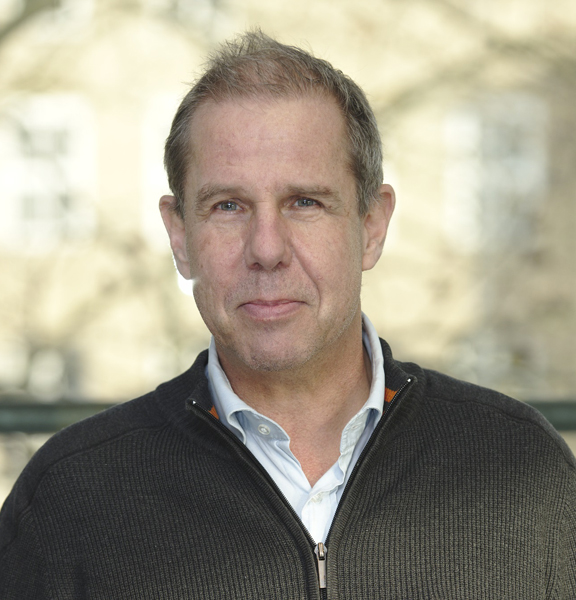
Dr. Thinh Le is a Postdoctoral Research Fellow at the School of Computer Science , University of Technology Sydney , where he works at the Centre for Quantum Software and Information (since 2023). His academic journey includes research fellowships at the Institute for Quantum Optics and Quantum Information Vienna (2020-2023) and Leibniz University Hannover (2019-2020). He earned his PhD in Physics (2015) and BSc in Physics (2011) from the National University of Singapore . Thinh's research focuses on quantum information science , bridging theoretical foundations and experimental implementations. His work addresses critical challenges in quantum computing (error correction, fault tolerance), quantum tomography (device-independent characterization), and quantum software stack development. He investigates quantum randomness generation, Bell nonlocality, and entanglement distillation for quantum networks, with applications in quantum cryptography and secure communication. His recent publications examine advanced topics like trapped-ion lattice surgery (2025), quantum correlation boundaries (2025), and quantum backflow phenomena (2023). Earlier work established foundational limits for real quantum theory (2021) and developed practical entanglement distillation protocols (2018). Scientific awards include the Lise Meitner Postdoctoral Fellowship (2020-2023) and Humboldt Postdoctoral Fellowship (2019-2020). His funded research projects focus on quantum computing error correction and device-independent quantum tomography , aligning with his theoretical expertise guided by experimental applications.
Dr. Sarah Wagner is a Lecturer in Politics and International Relations at Queen's University Belfast's School of History, Anthropology, Philosophy and Politics. She specializes in political parties' strategic behavior, particularly radical left parties' cultural policy positioning and electoral outcomes. Her research employs quantitative methods like surveys and text analysis. She holds a PhD from the University of Essex and an MSc from LSE. Research Focus: Strategic behavior of political parties; cultural vs. economic policy stances; radical left parties in Western Europe; voting behavior and electoral dynamics. She examines issues like European integration, identity politics, and foreign policy's impact on party appeal. Teaching: Courses include 'Introduction to Politics,' 'Quantitative Methods for Non-Specialists,' and 'British Politics in Crisis.' She organizes the weekly Politics and International Relations Seminar at Queen's. Recent Work: Includes studies on Germany's Bündnis Sahra Wagenknecht (BSW), Euroscepticism, and voter shifts. Over 15 articles since 2019 explore radical left strategies, electoral behavior, and comparative politics. Awards: Best Paper Award 2023 (PSR), Teaching Prize 2022/23, ECPR Best PhD Prize nomination Grants: Fully funded PhD scholarship from Stiftung der Deutschen Wirtschaft (sdw) Labs/Teams: Active in cross-national research collaborations, organizing conferences on left-wing radicalism and electoral integrity.
B. E. Van Kuiken is an active researcher at DESY, specializing in advanced X-ray spectroscopy techniques with a focus on the European XFEL facility. Their work centers on developing and applying cutting-edge X-ray methods to investigate electronic structures and ultrafast dynamics in materials. Van Kuiken's research interests span multiple areas of X-ray science, with particular emphasis on Resonant Inelastic X-ray Scattering (RIXS) , time-resolved X-ray spectroscopy , and computational modeling of X-ray spectra . Their work bridges experimental physics and theoretical chemistry, focusing on ultrafast processes in transition metal complexes and quantum materials. The research portfolio demonstrates expertise in both hard and soft X-ray techniques, with applications ranging from fundamental electronic structure studies to solar energy materials. The publication record reveals a consistent focus on pushing the boundaries of X-ray techniques, with recent work centered on instrument development for the European XFEL facility. The research shows progression from fundamental studies of metal complexes to more complex instrumentation development for next-generation X-ray sources. Key themes include electronic structure determination, ultrafast dynamics, and the development of novel X-ray methodologies that combine high energy and temporal resolution. Van Kuiken has made significant contributions to the instrumentation at European XFEL, particularly in the development of the Heisenberg-RIXS instrument and soft X-ray monochromators. Their work enables new scientific capabilities for studying quantum materials and ultrafast processes at unprecedented time scales.
Dr. Anna Borghi investigates how concepts are grounded in sensory-motor and social experiences through the lens of embodied cognition. Her Words As social Tools (WAT) theory proposes that abstract concepts rely more heavily on linguistic and social experiences than concrete concepts. Central research themes: Neural and behavioral foundations of abstract concepts Role of language and inner speech in conceptual processing Social dimensions of conceptual representation Cross-cultural differences in concept formation Development of abstract thought in children Recent work employs multimodal methodologies including thermal imaging, motion tracking, and computational modeling. Publications demonstrate growing interest in real-world applications such as autism interventions and AI communication systems. Current projects examine conceptual processing during the COVID-19 pandemic and politeness strategies in human-chatbot interactions.
Julia Merrill serves as Adjunct Professor at the University of Kassel's Institute of Music and Senior Research Fellow in the Music Department at the Max Planck Institute for Empirical Aesthetics since 2014. Her academic journey includes a Habilitation in Musicology (2018, University of Kassel), PhD in Cognitive Science (2013, University of Potsdam), Diploma in Speech Science (2010, Martin Luther University Halle-Wittenberg), and Diploma in Church Music (2004, University of Church Music Heidelberg). Habilitation in Musicology, University of Kassel (2018) PhD in Cognitive Science, University of Potsdam (2013, summa cum laude) Diploma in Speech Science, Martin Luther University Halle-Wittenberg (2010) Diploma in Church Music, University of Church Music Heidelberg (2004) Merrill's research centers on the psychological and physiological dimensions of musical aversion, with groundbreaking work on disliked music's emotional and bodily impacts. Her concert research examines physiological synchrony during live performances, while vocal studies explore the speech-song boundary and aesthetic evaluation of voices. Current projects include investigating perceived versus felt emotions in music and analyzing pandemic-era shifts in musical engagement. Her publication trends reveal a methodological evolution from lesion studies and fMRI toward ecological concert research and psychophysiological measurement. Recent work emphasizes mixed-methods approaches combining self-report with cardiac/respiratory monitoring, particularly regarding musical dislikes and live audience experiences. No scientific awards are explicitly documented in available materials. Merrill has served as guest professor at Martin Luther University Halle-Wittenberg (2015-2016) and edited conference proceedings for the International Association for the Study of Popular Music. Current externally funded work includes the INHABIT Artist-in-Residence program at the Max Planck Institute. She collaborates extensively on interdisciplinary projects spanning music cognition, neuropsychology, and empirical aesthetics. Her laboratory work focuses on the Music Department at the Max Planck Institute for Empirical Aesthetics, where she leads research on disliked music and concert experiences. Current team initiatives include the Musicovid international research network examining pandemic impacts on musical behavior and projects studying physiological synchrony during ensemble singing.
Eunhee (Emily) Ko serves as Assistant Professor of Marketing at Pace University's Lubin School of Business in New York City, specializing in digital consumer behavior and data-driven marketing analytics. Previously, she taught Marketing Research and Marketing Models at Northwestern University's Medill School of Journalism and IMC program from 2019 to 2023. Education PhD in Marketing, Emory University, Atlanta, GA MS in Analytics, Northwestern University, Evanston, IL BA in Psychology and Sociology, Yonsei University, Seoul, South Korea Research Focus Her scholarship centers on user-generated content (UGC) across text, image, and video formats, examining how semantic features drive business outcomes through machine learning and econometric frameworks. She investigates UGC's role in asset acquisition—both tangible (sales) and intangible (brand equity)—with particular attention to platform-specific dynamics in e-commerce and social media environments. Publication Trends Her 2018-2023 publications reveal an evolving trajectory from executive marketing roles to contemporary digital phenomena. Early work analyzed CMO tenure economics, while recent studies dissect emoji-driven engagement, suspicious review patterns on Amazon, and crisis communication strategies. This progression demonstrates increasing methodological sophistication in blending computer science techniques with traditional marketing theory, particularly in unstructured data analysis. Professional Engagement Teaches graduate/undergraduate Marketing Research and Modeling courses Published in interdisciplinary venues including Computers in Human Behavior and International Journal of Research in Marketing Regular presenter at Academy of Management and IEEE conferences
Yin Li is a Research Assistant at the Chair of Theoretical Information Technology at Technische Universität München (TUM). The research group focuses on quantum communication, information-theoretic security, interference modeling, and signal processing, with affiliations to the ACES Lab and Research Hub 6G-life. Their research spans condensed matter physics and quantum materials, particularly investigating electron correlations in kagome lattices, spin-orbit-coupled systems, Kitaev materials, and frustrated magnets. Key subfields include topological quantum computing, magnetic exchange interactions, and ultrafast magnetometry techniques. Recent publications emphasize ab initio modeling of quantum spin systems (2015–2025), with trends in Kagome and honeycomb lattice materials, half-metallic ferromagnets, and phonon-mediated magnetism. Collaborative projects align with 5G/6G wireless technologies and quantum communication security. Research is supported by grants from the Cluster of Excellence MCQST, BMBF initiatives (6G-life, MAMOKO, SEKOM), and DFG funding programs (Leibniz Prize, CoSIP).
Professor Brendan Kennedy is a distinguished academic in the field of Chemistry at The University of Sydney, where he has been a faculty member since 1998. He holds the position of Professor of Chemistry within the School of Chemistry, Faculty of Science, and is also a member of The University of Sydney Nano Institute, reflecting his interdisciplinary research approach that bridges chemistry, materials science, and nanotechnology. His educational background includes: B.Ed. Melbourne SC Ph.D. from Monash University Postdoctoral Fellow positions at Oxford University and ANU Professor Kennedy's research focuses on Solid State and Materials Chemistry, with particular expertise in Crystallography using X-ray and Neutron Scattering techniques. His work centers on the Structure and Bonding in Metal Oxides, investigating complex phenomena such as structural phase transitions in perovskite oxides, heavy metals in inorganic hosts, valence states in mixed 3d and 4d oxides, and oxides for solid state memory devices. His research aligns with the Faculty of Science Research Strengths in Molecules to Materials, Critical Minerals and Materials, and Next Generation Materials. He has made significant contributions to understanding the delicate balance of ionic size and covalency in cations that leads to rich behavior in metal oxide systems. Analysis of Professor Kennedy's extensive publication record reveals a sustained focus on advanced materials characterization, particularly using diffraction techniques to understand structure-property relationships in complex oxides. His work spans from fundamental studies of crystal structures to applied research on materials for energy applications, catalysis, and electronic devices. There's a clear progression toward more sophisticated structural analysis techniques and a growing interest in functional materials with specific technological applications, particularly evident in his recent publications on photocatalysis, energy storage, and ferroic properties. His notable scientific achievements include: AINSE Gold Medal for Research Excellence (2003) ANZAAS 2005 Liversidge Lecturer Professor Kennedy actively mentors the next generation of researchers, currently supervising students working on projects including "Oxides for Energy Application," "Rare earth-free high-performance magnets," and "Bi-functional catalyst synthesis and water management system in unitised regenerative fuel cells (URFCs)." His research program is supported by significant grants that enable advanced materials characterization using synchrotron and neutron facilities, providing students with access to world-class instrumentation and collaborative networks. As a member of The University of Sydney Nano Institute, Professor Kennedy collaborates with researchers across disciplines to develop novel materials with applications in energy, electronics, and environmental technologies. His laboratory utilizes state-of-the-art diffraction and spectroscopy techniques to probe materials at the atomic level, contributing to fundamental understanding that informs technological innovation. His extensive publication record spanning over two decades demonstrates consistent productivity and leadership in the field of solid-state chemistry and materials science.
Livio Gaeta is a Full Professor of German Language and Linguistics at the University of Turin, Italy. His academic career includes roles such as Associate Professor (2012–2016) and Visiting Professor at Humboldt-University of Berlin (2009–2010). He specializes in contrastive linguistics, theoretical morphology, and the study of linguistic minorities, particularly Walser German dialects. Gaeta holds a PhD in Linguistics from the University of Rome Three (1998). Educational Background: PhD in Linguistics, University of Rome Three (1998); Guest Researcher at the Center for General Linguistics, Berlin (1998–1999). His research focuses on morphological theory, language contact in Alpine regions, and the documentation of minority languages. Notable projects include CLiMAlp (PRIN 2020–2024) and ArchiWals (PRIN 2017–2020), which digitize and preserve Walser linguistic heritage. Gaeta has authored monographs like Lineamenti di grammatica tedesca (2017) and edited volumes on German linguistics. His awards include the Alexander von Humboldt Research Grant (2009) and Fellowship (2010), and he served as President of the Societas Linguistica Europaea (2025). Key research themes include grammaticalization, derivational paradigms, and the interplay between syntax and morphology.
Nikolaus Himmelmann is a Full Professor (W3) in General Linguistics at the University of Cologne since 2010. Previously, he held professorial positions at Westfälische Wilhelms University Münster (2007-2010), Ruhr-University Bochum (1999-2007), and has been actively involved in linguistic research through funded projects like the DoBeS framework (2004-2005) and SFB 1252 projects (2017-2020). He is a founding member and past president of the German Society for Endangered Languages, and serves on multiple editorial boards including Language Documentation & Conservation and Studies in Language . 2018 Honorary Member, Linguistic Society of America 2017 Leo Spitzer-Preis, University of Cologne 2014 Best Paper in Language Award His research spans typology, grammaticalization, language documentation, and prosody-syntax interfaces. He has secured significant grants from DFG, VW Foundation, and BMBF for collaborative projects on language documentation, articulation speed variation, and prosodic prominence. His administrative roles include chairing linguistics institutes at Münster and Cologne universities.
Stephen Ritchie is a Professor in the Department of Science and Mathematics Education at Queensland University of Technology's School of Teacher Education and Leadership. With over 67 publications spanning two decades, his scholarship focuses on the intersection of emotional dimensions and science education, particularly examining how emotional climates shape learning experiences and teacher development. His work bridges theoretical frameworks with practical classroom applications across diverse educational contexts. Ritchie's research interests center on emotional dynamics in science learning environments , context-based curriculum development , and collaborative teacher education methodologies . He has pioneered approaches for measuring emotional climates in classrooms, developed innovative writing techniques for scientific literacy, and explored cross-cultural emotional experiences in teacher education programs. His work frequently examines how metaphors, analogies, and real-world contexts facilitate deeper science understanding while navigating emotional challenges. Analysis of his 15 most recent publications reveals consistent focus on emotional climate measurement across international contexts (including Bhutan), temporal dynamics of learning emotions , and context-based assessment design . His methodological approach combines qualitative depth with multimodal analysis, particularly examining physiological correlates of emotion and longitudinal emotional patterns in both students and teachers. The work demonstrates increasing sophistication in measuring emotional transitions and their relationship to cognitive outcomes. Ritchie has made significant editorial contributions as lead editor of The World of Science Education: Handbook of Research in Australasia (2009) and co-editor of multiple special journal issues. His research collaborations span international networks, with frequent partnerships with Donna King, Alberto Bellocchi, and Kenneth Tobin. Mentorship forms a core dimension of Ritchie's academic practice, evident through sustained collaborations with doctoral students who have become prominent researchers in science education. His projects often involve designing and evaluating professional development programs for pre-service and in-service science teachers, with particular attention to emotional resilience and context-based pedagogy. Ritchie's research teams typically employ multi-method approaches, combining classroom ethnography with physiological measurements and longitudinal narrative analysis to understand the complex interplay between emotion and cognition in science learning.
Dr. Hans Haans is an Associate Professor at the Department of Marketing, Tilburg School of Economics and Management (TiSEM), Tilburg University. He serves as Academic Director Premaster and Chairman of the University Council. Research Focus: Services Marketing, Internet Marketing, Food Waste, Retail Marketing External Role: Member of the Supervisory Board, Stichting Best Onderwijs (Netherlands), 2021-2024 His research explores crisis management in food service supply chains during pandemics, digital platform strategies for food waste reduction, and the relationship between Net Promoter Scores (NPS) with electronic word-of-mouth (eWOM) behavior. He investigates cross-side network effects in two-sided markets and analyzes advertising effectiveness in search engines. Recent publications examine: Qualitative supply chain resilience during the early COVID-19 pandemic phase Quantification of cross-side network effects in food waste reduction platforms Valence heterogeneity in eWOM messages from passive consumers
Decky Aspandi is a Researcher at Universitat Stuttgart in the Analytic Computing department. He holds a Ph.D. in Information and Communication Technologies from Universitat Pompeu Fabra, Barcelona, an M.Sc. in Computer Engineering from King Mongkuts University of Technology Thonburi, and a Bachelor in Computer Science from University of Mulawarman. Research Focus: Machine Learning, Deep Learning, Computer Vision, Affective Computing, Temporal Modeling, and Human-Computer Interaction. Teaching Experience: Teaching Fellow at Universitat Stuttgart (2022-2023, 2021-2022), Universitat Pompeu Fabra (2017-2020), and University of Mulawarman (2009-2013). Key Publications: 14 recent works on topics including eye-gaze prediction, facial alignment, lie detection, and affective computing applications.
Isabelle Bril is a Senior Researcher (Directrice de Recherche) at the CNRS laboratory, LACITO (Laboratoire des Langues et Civilisations à Tradition Orale) in Paris-Villejuif. Since January 2014, she has served as Director of the CNRS 'Fédération Typologie et Universaux des Langues,' having previously been its Deputy Director from 2012-2013. Her academic career spans multiple prestigious positions within the French research system, including membership on the National Evaluation Committee for Linguistics. Dr. Bril's research focuses on Austronesian languages, with particular expertise in languages of New Caledonia (Nêlêmwa, Zuanga) and Formosan languages (Amis). Her work encompasses morphosyntax, coordination and subordination, complex predicates, valency alignments, and number marking systems. Her publication record demonstrates consistent contributions to linguistic typology, with significant works including a monograph on Nêlêmwa syntax and semantics, and edited volumes on complex predicates in Oceanic languages and cross-linguistic perspectives on coordination and subordination. Her research trajectory shows a clear progression from documentation of specific languages to broader typological investigations. Joint director of Axis 3 of the Labex project 'Langues austronésiennes: reconstruction et syntaxe' (2011) Ranked first in the highly competitive CNRS selection process for Senior Researchers (2006) President of the Joseph Greenberg Award jury (2011) Member of the editorial board for Studies in Diversity Linguistics (2013-present) Dr. Bril maintains an active presence in the international linguistics community through conference presentations, invited courses at institutions like the University of Leipzig and Manchester University, and leadership roles in the Association for Linguistic Typology. Her work bridges theoretical linguistics with detailed language documentation, making significant contributions to our understanding of linguistic diversity in the Austronesian language family.
Edward Vajda is a Professor of Russian and Linguistics at Western Washington University, specializing in historical linguistics, morphology, and the study of Siberian languages, particularly the endangered Ket language. He serves as the Russian and Eurasian Studies Advisor and teaches courses on Russian language, Inner Eurasian nomadic cultures, and linguistic theory. His research focuses on the Yeniseian language family of Central Siberia, exploring genetic links with North American Na-Dene languages. Key contributions include the Comparative-Historical Yeniseian Dictionary and studies on Ket verb structure, tone systems, and language contact processes. Notable awards include the 1992 Excellence of Teaching Award and 2011 Paul J. Olscamp Distinguished Research Award. Recent publications (2022–2024) examine Holocene language connections between Asia and North America, and the broader linguistic landscape of Northern Asia. His work bridges linguistics, anthropology, and archaeology, emphasizing interdisciplinary approaches to language prehistory and cultural continuity among Indigenous Siberian populations.