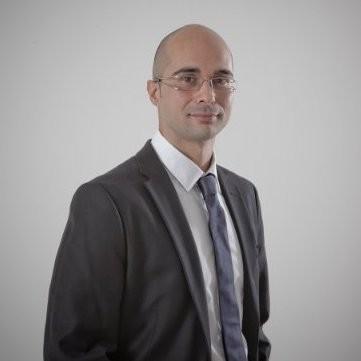
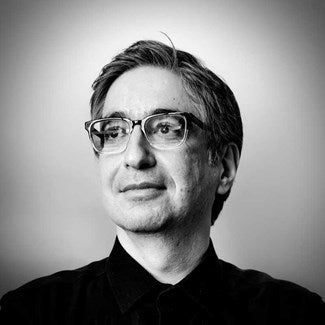
Dr. Diego Casado Mansilla is a Researcher at the MORElab group within the Department of Computing, Electronics and Communication Technologies at the College of Engineering, University of Deusto. His work bridges Sustainable Human-Computer Interaction (HCI), Persuasive Technologies, and Internet of Things (IoT) systems to drive behavior change in energy consumption, urban sustainability, and STEM education accessibility. Education: PhD in Persuasive Technologies for Sustainability and Behavior Change (2016), University of Deusto His research spans two decades, focusing on Sustainable Design , Physical Interaction with Everyday Objects , and Human-Centric IoT Systems . He has led projects like Suggestive Autonomy (2016) and co-led GreenSoul (2017, 2019), which employ IoT for energy awareness in public buildings. Current projects include AmIAire (air quality monitoring) and Urban Adaptation and Alert Solutions (climate resilience, 2024-2028). Key trends in his 20+ publications (2012-2025) include: Energy efficiency in tertiary buildings and smart cities IoT protocols (CoAP, IEC 61850) for industrial and urban systems Behavioral economics and nudging for sustainable decisions Rural STEM education via remote experiments Privacy-preserving smart workplace systems Climate change perception studies across generations His supervised theses and projects address User Diversity , Edge Computing , and Industry 4.0 Adoption . He collaborates with European institutions on grants from the Ministry of Science and Innovation and European Commission , contributing to citizen science initiatives like SOCIO-BEE and educational tools such as EngageMate and Computario .
Massimo Callisto De Donato is an Assistant Professor specializing in Internet of Things, Digital Twin, and Machine Learning applications for real-world systems. His research addresses critical challenges in environmental management, workplace safety, and disaster response through advanced computing solutions. His primary research domains include: IoT infrastructure for real-time industrial and environmental monitoring Digital Twin development for process simulation and prediction Machine Learning frameworks for safety-critical applications Human behavior analysis using community detection algorithms ICT systems for earthquake rescue operations Analysis of his 2020-2025 publications reveals a consistent trajectory toward integrating Digital Twin and IoT technologies with machine learning for predictive capabilities. Key application areas include wastewater management (decanter centrifuge modeling), smart living environments, and earthquake disaster response systems, with increasing emphasis on real-time simulation and human activity recognition. No scientific awards are documented in the available information. Details regarding student supervision, research grants, and laboratory affiliations are not provided in the source materials.
Lisa Engström is a Senior Lecturer and Associate Professor in Information Studies within the Department of Arts and Cultural Sciences at Lund University's Faculty of Humanities and Theology. Her academic work bridges library science and medical humanities, with a particular focus on how public libraries contribute to democratic processes and how wearable medical technologies reshape bodily experience and health perception. Her research interests include: The societal role of public libraries in promoting democracy and pluralistic discourse How inequality and power dynamics affect library accessibility and user experiences Medical humanities with emphasis on wearable medical technology's impact on everyday life How libraries function as safe spaces that promote trust in polarized societies Embodiment studies examining sensory bodily information processed through health technologies The construction of libraries as public spheres capable of hosting agonistic discourse Engström's recent publications reveal a strong thematic focus on library resilience during political crises and the evolving democratic functions of libraries in contemporary society. Her work increasingly examines how libraries navigate exceptional circumstances including pandemics and war rhetoric while maintaining their core democratic functions. She also explores the intersection of technology and embodiment, investigating how wearable medical devices transform our understanding of health, illness, and bodily experience. She actively contributes to the academic community as a member of the editorial teams for both the Nordic Journal of Library and Information Studies and Lund Studies in Arts and Cultural Sciences. Her current research projects include 'Kris och krigsberedskap för alla?' examining libraries as arenas for crisis preparedness discussions (2025-2026), 'NORDREN: The Nordic Disinformation Resilience Network' focused on combating misinformation (2025-2027), and 'LibPrepare' investigating library preparedness for emergencies (2024-present).
Martin Escalona is a researcher at the Department of Telematics Engineering, School of Telecommunications Engineering at Polytechnic University of Catalonia . He is affiliated with the GRXCA research group focusing on wireless communication networks and the ISG-MAK group specializing in Information Security and Applied Cryptography. Researcher in Wi-Fi positioning systems and cellular network optimization Primary focus on IEEE 802.11mc (Wi-Fi RTT) and its applications Active contributor to accessibility tools and assistive technologies His recent publications (2021-2025) reveal expertise in RTT-based positioning, ranging error analysis, and protocol implementation for wireless networks. He received the Best Short Paper Award at the 2023 International ACM Conference on Modeling, Analysis and Simulation of Wireless and Mobile Systems. Scientific committee memberships include: International Conference on Control, Automation & Information Sciences International Conference on Computer Sciences, Networking and Information Security IEEE Wireless Communications and Networking Conference
Enrica Valeria Zola is a Professor Agregat at the Polytechnic University of Catalonia (UPC), affiliated with the Department of Telecommunications Engineering within the School of Telecommunications and Aerospace Engineering of Castelldefels (EETAC). She is an active member of two research groups: GRXCA (Group for Research in Cellular and Ad-hoc Communication Networks) and ISG-MAK (Information Security Group - Mathematics Applied to Cryptography). Her research focuses on wireless networking technologies, with particular expertise in Wi-Fi positioning systems (especially IEEE 802.11mc/RTT), 5G, ad-hoc networks, and mobile networking. With over 100 publications spanning from 2001 to 2025, her work demonstrates consistent contributions to the field. Recent publications (2021-2025) show a strong focus on Wi-Fi positioning technologies, particularly addressing challenges in accuracy, scalability, security, and implementation of the IEEE 802.11mc standard and RTT (Round Trip Time) positioning. Analysis of her 15 most recent publications reveals a cohesive research trajectory centered on improving wireless positioning systems. Her work spans theoretical analysis, practical implementation, security considerations, and performance optimization of Wi-Fi-based positioning technologies. She frequently addresses real-world challenges including NLOS (Non-Line-of-Sight) environments, hardware limitations, scalability issues in dense networks, and the integration of multiple positioning techniques for improved accuracy. Best Short Paper Award - International ACM Conference on Modeling, Analysis and Simulation of Wireless and Mobile Systems 2023 Best paper award - ICNS 2012 Professor Zola has served on scientific committees for numerous international conferences including the International ACM Conference on Modeling, Analysis and Simulation of Wireless and Mobile Systems, IEEE PE-WASUN, and IEEE International Conference on Wireless and Mobile Computing. Her extensive collaboration network includes researchers such as Israel Martin-Escalona, Francisco Barcelo, and Andreas Kassler, reflecting her integration within the international wireless communications research community.
Dr. Andres Colubri is an Assistant Professor at UMass Chan Medical School's Genomics and Computational Biology department and holds affiliations across multiple schools including T.H. Chan School of Medicine and Morningside Graduate School of Biomedical Sciences . His academic credentials include an MFA in Design Media Arts from University of California, Los Angeles and a PhD in Mathematics from Universidad Nacional del Sur, Argentina. Education: MFA Design Media Arts, University of California, Los Angeles PhD Mathematics, Universidad Nacional del Sur, Argentina Dr. Colubri's research focuses on the intersection of machine learning , digital epidemiology , and mobile health applications, with significant contributions to data visualization and infectious disease modeling . His work spans both computational biology and public health domains, particularly addressing viral hemorrhagic fevers (Ebola, Lassa) and pandemic response systems. Recent publications highlight his expertise in real-time outbreak surveillance , rapid diagnostic testing , and agent-based disease modeling . He develops deployable health technologies like CRISPR-Cas13a diagnostics and mobile applications for point-of-care prognosis. While not explicitly listed, his network includes collaborations with public health experts, computational biologists, and epidemiologists across global institutions.
Ainara Larrondo Ureta is a Senior Lecturer in the Department of Journalism at the University of the Basque Country's Faculty of Social Sciences and Communication. She serves as the Director of the Gureiker Research Group, a Type A Consolidated Research Group recognized by the Basque Government, and coordinates the Journalism Grade program. Her academic credentials include a PhD in Journalism, a Master's in New Tendencies and Journalistic Information Media, and a Master in Contemporary History, all from the University of the Basque Country. Bachelor's Degree in Journalism (University of the Basque Country) Master's Degree in New Tendencies and Journalistic Information Media PhD in Journalism Master in Contemporary History Larrondo Ureta's research spans multiple dimensions of digital journalism evolution, with particular focus on online journalism practices, gender representation in media, and the impact of technological innovation on news production. Her work examines how journalistic genres, newswriting formats, and media management strategies are adapting to the hybrid media system. She has made significant contributions to understanding feminist discourse in digital spaces, analyzing hashtag activism movements like #YoSíTeCreo and #NoEstásSola in the Spanish context. Her recent publications reveal a clear trajectory toward examining emerging challenges in journalism, particularly the intersection of artificial intelligence and media practices, transmedia storytelling in public service broadcasting, and the evolving dynamics of social media platforms. The analysis of her 15 most recent articles shows consistent engagement with methodological innovation, frequently employing social network analysis, computational linguistics, and mixed-method approaches to study digital communication phenomena. Director of Gureiker Research Group (Type A, Basque Government) Coordinator of Journalism Grade program Principal investigator on multiple research projects including 'News, networks and users in the hybrid media system' (2019-2021) Collaborator on 'Tools for the analysis of parliamentary discourses' with Guriker-IXA Taldea Larrondo Ureta has developed significant international research collaborations, particularly evident in her work on cross-border journalism education and comparative studies of media systems. Her research group Gureiker maintains active partnerships with institutions across Spain and internationally, focusing on digital journalism transformation, gender representation, and public service media innovation in the digital age.
David Robert Shannon is an Instructor at the Department of Computer Science, University of Copenhagen. He contributes to teaching and research within the Machine Learning section, which participates in the SCIENCE AI Centre. University: University of Copenhagen Department: Department of Computer Science Section: Machine Learning His research interests span theoretical and applied machine learning, focusing on natural language processing, information retrieval, medical image analysis, computational biology, and quantum computing applications. He utilizes the department's powerful compute cluster for projects involving AI's environmental impact, quantum algorithms, and biomedical data modeling. Recent publications highlight work in quantum-inspired neural networks, sustainable AI, medical diagnostics, and cross-cultural computational frameworks. Key themes include ethical considerations in AI, hybrid quantum-classical systems, and multimodal data analysis. David collaborates with the Machine Learning section and SCIENCE AI Centre, leveraging resources like TreeSense for remote sensing and deep learning of global tree resources. The section's activities range from foundational research to applications in sustainability and biological data modeling.
Dr. Tatjana Fischer is a Senior Lecturer at the Institute of Spatial Planning, Environmental Planning and Land Rearrangement, part of the Department of Landscape, Water and Infrastructure at the University of Natural Resources and Life Sciences, Vienna (BOKU). Her work bridges demographic change, spatial planning policy, and social infrastructure, with a focus on aging populations, rural-urban dynamics, and accessibility. Habilitation in Spatial Research and Planning (2023) Doctoral Degree in Environmental Technology (2005) Research Interests: Infrastructure planning under demographic shifts, transdisciplinary methodologies, and accessibility in tourism and urban development Her recent publications explore residential mobility among the elderly, climate change adaptation strategies, and temporary housing solutions, reflecting her commitment to sustainable spatial frameworks. She has secured funding from the Austrian Research Promotion Agency (FFG), European Commission, and national ministries for projects addressing flood risk management, social infrastructure, and return migration patterns. Awards include the Alois Mock-Wissenschaftspreis (2024), BOKU Nachhaltigkeitspreis (2023), and multiple grants from the Austrian Federal Ministry for Science and Research. Fischer actively contributes to public discourse through presentations at global conferences on topics like disability-inclusive planning, regional resilience, and demographic trends. Key Projects: Identification and Assessment of Non-Climate Risk Drivers (2026-2028), Accessible Spaces for All (2023-2026), and Regional Resilience in Ötscher Region (2023-2025) Leadership: Project lead in 12+ research initiatives since 2009
Mimi Ito serves as Professor in Residence and John D. and Catherine T. MacArthur Foundation Chair in Digital Media and Learning at the University of California, Irvine, where she directs the Connected Learning Lab (CLL). The CLL stewards the Connected Learning Alliance—a global network mobilizing technology for youth equity—and she co-founded Connected Camps, a nonprofit providing inclusive online learning experiences for children. Her research pioneers connected learning frameworks that bridge youth interests, social networks, and equity-focused design. Key domains include: Digital youth culture decoding for parents/educators Algorithmic rights and AI impacts on children Social media’s relationship with adolescent wellbeing Affinity space learning (gaming, fandom, anime) Equity-by-design in educational technologies Neurodiversity-informed learning approaches Her work emphasizes real-world application through library partnerships, museum frameworks, and STEM/arts education initiatives. Media coverage of her research spans The New York Times , Wired , The Atlantic , and CNN , with recent focus on AI’s role in youth development (2024–2025). She leads high-impact projects including Youth Connections for Wellbeing, Equitable Futures Innovation Network, and Capturing Connected Learning in Libraries. Ito actively shapes policy through speaking engagements with the National Academies of Sciences, Engineering, and Medicine and advisory roles for organizations like Raising Good Gamers. Her approach integrates cultural anthropology with learning science to transform digital environments into supportive learning ecosystems.
Dr. Prabir Chatterjee is an Assistant Professor of Marketing & Strategy at Cardiff Business School , currently serving as Programme Director for the MSc in Business Management (MBM). He previously held Assistant Professor positions at Sabanci University, Istanbul (2013-2018), and has been at Cardiff University since 2019. Education: PhD in Business Administration (Quantitative Marketing, Economics/Econometrics minors), University of Washington (2013) MSBA, University of Washington (2012) MA in Economics, University of Washington (2007) MA in Economics (World Economy specialization), Jawaharlal Nehru University (2003) B.Sc. (Honors) in Economics, University of Calcutta (2001) Research Focus: Specializes in applying Game Theory and Machine Learning to Digital Advertising , Product Design , and Pricing Strategies . Recent work explores Corporate Social Responsibility and Public Value creation through mathematical modeling and behavioral experiments. Publication trends show expertise in Platform Competition , Algorithmic Advertising , and Behavioral Economics applications. Notable contributions include studies on sponsored content dynamics in two-sided markets and CSR profitability frameworks. Honors & Grants: Cardiff Business School Seedcorn Grant (2019-2020) Erasmus Exchange Fellowships (2014-2020) Learning & Teaching Innovation Grant (2020) Evert McCabe Fellowship (2012) Supervision: Provides PhD mentorship in AI/ML applications in marketing, digital advertising research, pricing strategies, and product development, with a focus on analytical modeling and behavioral experiments. Current supervisee: Andoni Fornio Barusman (E-commerce Shopping Journey). Former: Kerry Hudson (Performance Heterogeneity under Uncertainty).
Jonny Aspen is a Professor at the Department of Urbanism and Landscape Architecture at the Oslo School of Architecture and Design (AHO). His work focuses on urban theory, urban culture, digital urban life , and public space design , with a particular emphasis on the experiential and cultural dimensions of city life. Aspen holds a PhD from AHO (2003) on Norwegian urban planning history and is currently working on a monograph on urbanity. Education : PhD in Urban Planning History, AHO (2003). Jonny Aspen’s research spans urban theory, public space classification, platform urbanism , and cultural mapping . He emphasizes the sensory richness and spontaneity of cities, advocating for mixed-use environments and inclusive design . His recent publications explore digital commons , urban walking , and the degenerative effects of gentrification . Aspen’s 15 most recent articles highlight trends in digital urban life , public space management , and urban experience . Notable subfields include smart city ethics , serendipitous urban design , and sensory urbanism . He often collaborates with Sverre Bjerkeset and Andrew Morrison, focusing on interdisciplinary challenges in urban design. Scientific Awards : None explicitly mentioned. Jonny Aspen’s teaching and research emphasize practice-based design , collaborative urban mapping , and critical urban theory . He co-developed the MAPPA tool for participatory urban mapping and has contributed to debates on age-inclusive public space and urban resilience .
Markus Huff serves as a Full Professor of Applied Cognitive Psychology and head of the Applied Cognitive Psychology group at the Eberhard Karls University of Tübingen since 2020. He concurrently leads the Perception and Action research group at the Leibniz Institute for Knowledge Media (IWM). His research program investigates perception and action processes within digital environments through a perception-oriented framework that examines how media-mediated content influences human cognition and behavior. Dr. Huff earned his academic foundation in psychology, mathematics, and computer science at the University of Tübingen. Following his psychology degree, he completed his doctorate (Dr. rer. nat.) at the IWM and University of Tübingen with groundbreaking research on verbal influence on visual memory, which earned him the prestigious Leibniz Young Researcher Award in 2007. His academic trajectory includes postdoctoral positions at IWM, University of Tübingen, and Washington University in St. Louis, followed by a junior professorship in general psychology at Tübingen before heading the Department of Research Infrastructures at the German Institute for Adult Education. Professor Huff's research spans four primary interconnected domains. His Multimodal Perception research investigates how humans process and mentally organize media content across various formats including texts, images, comics, and videos. The Perception and Interaction in Social Networks focus examines the complex interplay between attitudes, knowledge, and metacognition during information reception and social interaction in digital spaces. His work on Perception and Action with Digital Agents explores human-AI communication dynamics, while his research on Risk Perception of Artificial Intelligence addresses the psychological dimensions of human responses to emerging digital technologies. Additionally, he conducts significant metascientific research examining policy effectiveness in the research process, with notable findings on research data policies. Analysis of Professor Huff's recent publication record reveals a clear trajectory toward increasingly sophisticated investigations at the intersection of cognitive psychology and digital technology. His work demonstrates methodological rigor across visual perception, audio-visual integration, event comprehension, and the cognitive impacts of digital environments. A particularly noteworthy trend is his expanding focus on AI-related perception and risk assessment, reflecting the growing importance of human-AI interaction in contemporary cognitive science. His research consistently bridges theoretical cognitive frameworks with practical applications in educational technology, health communication, and digital media design. Leibniz Young Researcher Award by the Leibniz Association (2007) Professor Huff directs a multidisciplinary research group comprising members from both the Applied Cognitive Psychology group at the University's Department of Psychology and the Perception and Action group at the Leibniz Institute for Knowledge Media. His research program has secured substantial funding, evidenced by his prolific publication record in high-impact journals spanning psychology, cognitive science, human-computer interaction, and educational technology. His grant portfolio reflects strong interest in understanding human cognition in digital contexts, with particular emphasis on educational applications, health communication, and human-AI interaction. His laboratory work employs advanced experimental methodologies including eye-tracking, behavioral experiments, and computational modeling to investigate how people process information across various media formats and interact with increasingly sophisticated digital agents. The research environment fosters collaboration between cognitive psychologists, computer scientists, and educational researchers, creating a rich interdisciplinary context for advancing understanding of human perception and action in our rapidly evolving digital landscape.
Dr. Ehsan Baharlou serves as Assistant Professor of Architecture, Advanced Technologies at the University of Virginia School of Architecture, where he pioneers ecological construction through computational design and robotic fabrication to address climate change challenges. His work shifts design paradigms from material-centric processes toward multispecies integration and sustainable building systems. His academic foundation includes: Dr.-Ing. (Ph.D. Engineering) from the Institute for Computational Design and Construction (ICD), University of Stuttgart, Germany M.Sc. in Architecture from Islamic Azad University, Central Tehran Branch, Iran Baharlou's research spans computational design, digital fabrication, and biomaterial innovation. He develops living architecture through mycelium bioprinting, soil-based 3D printing, and upcycled plastic composites, creating ecologically active structures that integrate biological systems with robotic construction. His work bridges architecture, biology, and cyber-physical systems to establish new tectonic paradigms for sustainable building. Analysis of his publication trajectory reveals accelerating focus on multispecies design and ecological material systems. Recent work emphasizes living building materials (mycelium, soil), waste-stream upcycling, and digital fabrication techniques that merge biological processes with construction robotics. His research increasingly addresses circular economy principles through invasive species utilization and closed-loop material systems in architectural applications. At UVA's Computational Tectonics Lab (ct.lab.virginia.edu), Baharlou leads interdisciplinary research developing mobile robotic systems for in situ soil printing, hybrid timber composites, and adaptive additive manufacturing. The lab serves as an innovation hub for sustainable construction technologies that respond to ecological constraints while maintaining architectural expressiveness.
Professor René Hexel currently serves as Dean (Learning & Teaching) and Pro Vice Chancellor (Sciences) at Griffith University, where he directs the Cyber-Physical Systems Lab. With over 85 peer-reviewed publications, he specializes in safety-critical real-time systems and autonomous system verification. 2022–present: Dean (Learning & Teaching), Griffith Sciences 2016–2022: Deputy Head of School (L&T), Griffith School of ICT 2007–2016: Director for Internationalisation, Griffith School of ICT 1999: PhD from Vienna University of Technology His research focuses on safety-critical systems , time-triggered protocols , and human-in-the-loop AI , with applications in aerospace, automotive, and healthcare robotics. Recent work explores humanoid robots for dementia care and verifiable executable models. Key article trends show expertise in: Formal verification techniques Robotics communication protocols Explainable machine learning Real-time system architectures Embedded system validation Human-robot interaction design Research grants include: Australian Space Manufacturing Network (2023–2025) SPASE STEM program grant (2022) Social media wellness monitoring (2019–2020) Internal Griffith grants (2003–2010) He has supervised 12 PhD candidates across topics including: Autonomous system verification Robotics security VR sickness mitigation Intelligent control systems Distributed real-time architectures Professor Hexel previously held academic positions at Vienna University of Technology and founded an IT consulting firm specializing in safety-critical systems.