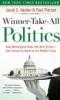
Jacob S. Hacker is the Stanley B. Resor Professor of Political Science at Yale University, Co-Director of the Ludwig Program in Public Sector Leadership at Yale Law School, and a resident fellow at the Institution for Social and Policy Studies. He specializes in American politics, public policy, and inequality, with a focus on health policy, welfare state dynamics, and 'predistribution' strategies. His seminal works include The Divided Welfare State (2002) and Winner-Take-All Politics (2010), which received the APSA's Aaron Wildavsky Award. He has held visiting roles at the Max Planck Sciences Po Center and the U.S. Library of Congress. Education: B.A., Harvard University (1994); Ph.D., Yale University (2000). Research interests span economic inequality, political economy, and policy design. His recent work critiques right-wing populism and explores strategies for equitable economic governance. He co-founded the Consortium on American Political Economy (CAPE) and chairs the APSA's American Political Economy section. Notable awards include the Robert Ball Award (2020) and membership in the American Academy of Arts and Sciences. His policy contributions include the 'public option' concept and advocacy for Medicare expansion.
Dante Fratta is a Professor in the Department of Civil & Environmental Engineering at the University of Wisconsin-Madison, where he has been actively involved in research and teaching since 2000. His work focuses on geotechnical engineering, environmental monitoring, and fiber optic sensing technologies. Education: PhD (1999) – Georgia Institute of Technology M.A.Sc. (1995) – University of Waterloo Diploma (1993) – Universidad Nacional de Córdoba Research Interests: Geomaterial process evaluation using elastic and electromagnetic waves, fundamental physical behavior of soils and rocks, geophysical assessment of near-surface environments, and distributed fiber optic sensing methods. Recent Publication Trends: He has pioneered applications of Distributed Acoustic Sensing (DAS) and fiber optic technologies for geotechnical, environmental, and energy infrastructure monitoring, including wind turbines, geothermal systems, and mining operations. Scientific Awards: Benjamin Smith Reynolds Award for Excellence in Teaching (2012) Chi Epsilon Excellence in Teaching Award (2008) Best Paper Award, GeoCongress Sensing Methods and Devices Track (2006) Distinguished Alum, Universidad Nacional de Córdoba (2013) Multiple keynote and invited speaking engagements Teaching: Fratta teaches graduate and undergraduate courses in geotechnical engineering, including Foundations, Applied Geophysics, and Pre-Dissertator Research, with active involvement in Spring 2025 classes.
Dr. Paulo Miguel Madeira is an Adjunct Assistant Professor at the Institute of Geography and Spatial Planning (IGOT) of the University of Lisbon, holding a PhD in Geography (2019) and a Master's in Population, Society, and Territory (2012). His work spans regional development, urban segregation, environmental policies, and migration studies, with a focus on territorial justice and economic globalization. Education: PhD in Geography (University of Lisbon, 2019), Master in Population, Society, and Territory (University of Lisbon, 2012), BA in Geography (University of Lisbon, 1998) Research interests include regional disparities , climate adaptation policies , transnational migration , and spatial inequality . His recent publications analyze non-territorial governance, wildfire mitigation, and the localization of UN sustainability goals. His academic work intersects political geography , environmental justice , and urban dynamics , with case studies in Portugal, Spain, Sweden, and Brazil. No scientific awards or student advising information were explicitly mentioned in the provided data.
Prof. Alfred Stein is a Full Professor in Spatial Statistics and Image Analysis at the Department of Earth Observation Science, Faculty ITC, University of Twente. He earned his MSc in Mathematics and Information Science from Eindhoven University of Technology and a PhD in Spatial Statistics from Wageningen University. His career spans roles at Wageningen University (1988–2002), ITC (2002–present), including leadership positions as department head, vice-rector research, and portfolio holder for education. Education: MSc (Eindhoven University of Technology), PhD (Wageningen University) Leadership: Department Head (Earth Observation Science), Vice-Rector Research (2008–2012), Portfolio Holder Education (2012–) His research focuses on Spatial and Spatio-Temporal Statistics , emphasizing Bayesian inference , data quality , image analysis , and fuzzy techniques . Key application domains include agriculture, health, urban land use, coastal systems, hazards, and wildlife. He has mentored over 30 PhD students since 1998, with 11 currently under supervision. Recent research trends highlight AI-driven remote sensing for glacier mapping, urban livability, and disease modeling. Publications span Deep Learning for SAR tomography, Bayesian hierarchical models for health data, and multitemporal SAR analysis for environmental monitoring. Awards include the Best Paper Award (2019) and ISARA Founder's Award (2020) . Scientific Awards Best Paper Award (2019) ISARA Founder's Award (2020) As Editor-in-Chief of Spatial Statistics and associate editor for multiple journals, he leads academic discourse. Collaborations include the University of Cape Town and University of Pretoria as Honorary Professor. His work contributes to UN Sustainable Development Goals, particularly in climate action and sustainable cities.
Athanasios D. Panagopoulos is a Full Professor at the School of Electrical and Computer Engineering, National Technical University of Athens (NTUA), specializing in Satellite & Space Communications , Antennas and Propagation , and Quantum Communication . He leads the Division of Information Transmission Systems and Material Technology, with a focus on wireless systems, machine learning, and 5G/6G technologies. Born in Athens (1975), received summa cum laude Diploma and Dr. Engineering from NTUA (1997, 2002). Former roles: part-time Assistant Professor (2003-2007), head of Satellite Division at Hellenic Authority for Information Security (2005-2008). Research Trends emphasize Quantum Key Distribution (QKD) , Reconfigurable Intelligent Surfaces , and Deep Learning Applications in satellite networks. His work bridges atmospheric propagation effects with terrestrial-satellite convergence , including AI-driven excess attenuation prediction and UAV channel modeling. Scientific Awards include URSI General Assembly Young Scientist Award (2002, 2005) Best Paper Awards: IEEE RAWCON 2006, IEEE ISWCS 2015 Grants & Collaborations : Principal Investigator for EU/ESA R&D programs, with editorial roles at IEEE Transactions on Antennas and Propagation, and Elsevier Physical Communication. Member of ITU-R , ETSI Study Groups , and IEEE (Senior) .
Martin Nordin is an Associate Professor in the Department of Economics at Lund University's School of Economics and Management and serves as a Policy Officer at the AgriFood Economics Centre. His academic work focuses on labor market economics with additional expertise in health economics, agricultural economics, and environmental economics. Dr. Nordin's research at AgriFood has evaluated the effects of the Common Agricultural Policy and analyzed labor market issues within agriculture. His current research focuses on income differences between rural and urban areas and changes in incomes for ethnically segregated areas. His work contributes to several UN Sustainable Development Goals related to poverty reduction, environmental protection, and prosperity. His research spans multiple disciplines with a strong focus on labor market economics (62%), profit analysis (49%), higher education (48%), returns to education (42%), employment (39%), and mental health economics (39%). This diverse research portfolio demonstrates his ability to bridge economic theory with practical policy applications across multiple sectors. Dr. Nordin has been involved in significant research projects including 'Socioeconomic Segregation – The Impact of Neighborhoods, Schools and Policy Across the Life Course' funded by the Swedish Research Council (2023-2030), 'Constraints on the expansion of organic farming in Sweden' funded by FORMAS (2018-2022), and evaluation of Sweden's rural development program (2007-2013). His collaborative research network extends across Sweden and internationally, with recent external collaborations spanning multiple countries. This network supports his interdisciplinary approach to economic research that connects academic theory with real-world policy applications.
Dave Armstrong is a Professor and Director of Placement at the University of Western Ontario, holding the Canada Research Chair (CRC). He leads the Centre for Computational and Quantitative Social Science (CCQSS) and earned his PhD from the University of Maryland. His work focuses on statistics, data mining, and political conflict analysis. PhD, University of Maryland Director, Centre for Computational and Quantitative Social Science (CCQSS) His research explores: Non-linearity in statistical models and its impact on effect sizes The Costs of Contention project analyzing political conflict consequences Visualization techniques for pairwise statistical comparisons using Shiny and D3.js Recent publications span urban-rural divides, municipal governance, and statistical methodology. Awards include a five-year Norwegian Social Science Research Council grant (2016), editorial board membership at the American Journal of Political Science (2013), and undergraduate research stipends (2010).
Dr. Chenyang Xiao is a Professor in the Sociology Department at American University. He holds a PhD from Washington State University, an MA from the University of Toledo, and a BA from Peking University. His research focuses on environmental attitudes, beliefs, and behaviors, particularly comparing the USA and China regarding environmental concern and gender differences. Dr. Xiao also specializes in quantitative research methods, including survey design, regression analysis, and structural equation modeling. Education: PhD (Washington State University), MA (University of Toledo), BA (Peking University) Key Research Areas: Environmental Sociology, Child Sexual Abuse in China, Sustainable Development Teaching: Courses include 'Intro to Quantitative Research' and 'Society & Global Environment.' Professional Memberships: District of Columbia Sociological Society (2008–present), Chinese Sociological Association (2015–present) His recent work explores gender disparities in environmental behaviors and child abuse prevention in China. Dr. Xiao has presented widely on topics like ecological modernization and sustainable development, emphasizing interdisciplinary approaches to environmental challenges.
Professor Roy Harrison OBE FRS is the Queen Elizabeth II Birmingham Centenary Professor of Environmental Health at the University of Birmingham and holds an Adjunct Professor position at King Abdulaziz University, Saudi Arabia. With a 45-year academic career, he specializes in air pollution , focusing on emissions, atmospheric transformations, and health impacts of particulate matter. B.Sc. (Chemistry, 1969) Ph.D. (Organic Chemistry, 1972) D.Sc. (Environmental Chemistry, 1989) His research spans airborne particle characterization , chemical aging of aerosols, traffic emission mitigation technologies, and environmental policy development . Recent publications emphasize source apportionment , oxidative potential measurement , and machine learning applications in pollution modeling. Scientific recognition : Officer of the Order of the British Empire (2004) Fellow of the Royal Society (2017) Web of Science Highly Cited Researcher Professor Harrison has supervised 30+ doctoral researchers and serves on numerous advisory boards including DEFRA's Air Quality Expert Group and WHO air quality guidelines committees. He is Editor-in-Chief of Climate and Atmospheric Science (Nature) and maintains active roles in multiple editorial boards.
Dr. Yun Qian is a distinguished Earth Scientist and Lab Fellow at Pacific Northwest National Laboratory (PNNL), where he leads the Earth System Modeling Group with over 80 scientists and staff within the Atmospheric, Climate, and Earth Sciences (ACES) Division. He joined PNNL in 2000 and has established himself as a renowned expert in climate modeling, particularly in regional climate systems, aerosol-climate interactions, and urban climate effects. Dr. Qian is also an AMS Fellow with significant contributions to understanding human influences on the Earth system. Dr. Qian received his academic training in China: Ph.D. in Atmospheric Science from Nanjing University, Nanjing, China B.S. in Atmospheric Science from Nanjing University, Nanjing, China Dr. Qian's research focuses on advancing our understanding of climate systems through sophisticated modeling approaches. His work spans regional and global climate modeling, aerosol-climate interactions, snow and glacier impurities and their climatic impacts, land-atmosphere-water interactions, urban and coastal environment modeling, and uncertainty quantification in climate modeling. His pioneering work on Asian aerosols revealed their dominant role in shaping climatic trends in East Asia, while his research on snow and ice impurities provided new insights into changes in snowpacks in the western United States and the Himalayas. Dr. Qian has also made significant contributions to understanding how atmosphere-land-water interactions modulate the influence of human activities on the environment. Analysis of Dr. Qian's recent publications shows a strong focus on urban climate effects, regional climate modeling, and the impacts of human activities on climate systems. His work increasingly incorporates advanced computational methods including machine learning for weather pattern identification. There's a clear trend toward studying the interactions between urban environments and climate systems, with particular attention to heat stress, precipitation patterns, and regional warming effects. His research also shows growing interest in extreme weather events and their changing patterns under climate change scenarios. Dr. Qian has received numerous prestigious awards and recognitions: Fellow of American Meteorological Society Chair of AMS Coastal Environment Committee Program Chair for Annual AMS Coastal Environment Symposium Editor of JGR-Atmospheres, Atmospheric Chemistry and Physics, and Advances in Atmospheric Sciences Director of international workshop on Uncertainty Quantification in Climate Modeling and Projection Member of Scientific Steering Committee for IPCC CMIP6 Global Monsoons Modeling Inter-comparison Project NSR 2020 Best Paper AAS Esteemed Review Paper Award PNNL Exceptional Contribution Program Award PNNL EBSD Mentor of the Year Editors' Citation for Excellence in Refereeing at AGU (2015, 2019) Contributing Author of IPCC Assessment Report Fellowship Award of International Council for Science (ICSU), 1997 Xue-Du-Feng-Zheng Award in Chinese Academy of Sciences, 1998 With over 200 peer-reviewed articles and 20,000 citations (h-index of 74), Dr. Qian has made substantial contributions to climate science. His work has garnered significant media attention, with features in top-tier scientific publications like Nature and Science, as well as major news outlets including the Associated Press, New York Times, Washington Post, BBC, NBC, and NPR. He has served as chair of the AMS Coastal Environment Committee, Program Chair for the Annual AMS Coastal Environment Symposium, and as a member of the Scientific Steering Committee for the IPCC CMIP6 Global Monsoons Modeling Inter-comparison Project. Dr. Qian has also directed international workshops on uncertainty quantification in climate modeling and served as an editor for three prestigious journals. Dr. Qian leads the Earth System Modeling Group at PNNL, which comprises over 80 scientists and staff. His team focuses on developing and applying atmospheric and land surface models to advance understanding of human influence on the Earth system. The group's work spans regional climate modeling, aerosol-climate interactions, snow and glacier impurities, land-atmosphere-water interactions, urban and coastal environment modeling, and uncertainty quantification. Their research has significant implications for understanding climate change impacts and developing adaptation strategies.
Prof. Dr. Wouter van der Brug is a full-time Professor at the University of Amsterdam 's Faculty of Social and Behavioural Sciences , specializing in democratic representation and electoral behavior. His research focuses on populist parties, voter dynamics, and European integration. Current affiliation: University of Amsterdam Academic rank: Professor Email: W.vanderBrug@uva.nl Research interests include: Generational political alignment and dealignment Populist party support and parliamentary behavior Regional disparities in voting patterns European integration and institutional trust Urban-rural political divides Authoritarian attitudes and far-right voting Recent publications analyze 2024 European Parliament elections, fiscal austerity effects on EU trust, and youth political cognition. His work combines comparative politics, political psychology, and electoral geography across 15 recent articles. Contact: W.vanderBrug@uva.nl | +31 (0)20 000 00000
Colin Jerolmack is a Professor of Sociology and Environmental Studies at New York University, where he also served as Chair of the Environmental Studies Department (2017–2023). His work bridges ethnography, environmental sociology, and human-animal studies. He holds a Ph.D. in Sociology from the City University of New York (2009) and a B.S. in Psychology from Drexel University (2000). Research Interests: - Ethnography of urban and rural communities - Environmental policy and climate change impacts - Human-animal relations (e.g., The Global Pigeon ) - Social theory and qualitative methodologies Key Publications: - Up to Heaven and Down to Hell (2021): Explores fracking's social and environmental impacts in rural Pennsylvania. - The Global Pigeon (2013): Analyzes urban human-animal interactions. - Over 40 peer-reviewed articles on ethnography, climate justice, and animal studies. Media & Outreach: - Featured in The New York Times , Los Angeles Review of Books , and podcasts like Stand Up! with Pete Dominick . - Regular contributor to climate and energy policy discussions. Awards: - PROSE Award Finalist (2021) for Up to Heaven and Down to Hell . - Recognized for interdisciplinary contributions to environmental sociology. Labs & Initiatives: - Co-founded NYU's Animal Studies Master's program and Center for Environmental and Animal Protection.
Aleksandra Kekkonen is a Senior Research Fellow at the Estonian Business School's Center for Management Studies, specializing in sustainable development and green transition. She holds a PhD in Economics from the Russian Academy of Sciences (2013) and has over 11 years of experience in human capital, labor market, and education system research at national/international levels. Current roles: Research Fellow (EBS), Project Lead in sustainability initiatives Prior institutions: Petrozavodsk State University (Senior Researcher, 2014–2019) Research focus: Circular economy, green economy innovation, sustainability policy, and labor market dynamics Teaching includes courses like 'Green Economy', 'Circular Economy', and 'Sustainability Crisis Management' Research Highlights: Her work bridges sustainability theory and practice, with recent studies on corporate green transition barriers, community-driven financial ecosystems, and multi-level stakeholder frameworks for regional transitions. Key publications include Social Inclusion and Community Participation in Driving Sustainable Financial Ecosystems (2025) and Operationalizing Doughnut Economics (2024). Awards: EBS Green Ambassador (2022), 'UMNIK' Youth Innovation Competition Winner (2015), and multiple research recognitions for labor market studies in Karelia. Projects: Leads initiatives such as the COST Action 'Transformations for Sustainable Futures' and an AI-driven green entrepreneurship course. Previously managed EU-funded projects like the Innovative Finance Inclusion initiative. Labs/Teams: Coordinates the Sustainable Circular Economy research group at EBS, focusing on transdisciplinary solutions for green innovation and stakeholder engagement.
Andrea D. Wenzel serves as Associate Professor in Temple University's Department of Journalism within the Lew Klein College of Media and Communication, and holds Faculty Advisory roles at the Center for Community-Engaged Media. Her educational foundation includes a PhD from USC’s Annenberg School for Communication and Journalism, complemented by MA and BA degrees from the University of Chicago. Wenzel's research pioneers community-centered journalism frameworks that address systemic inequities in news ecosystems, with groundbreaking work on antiracist journalism practices and solutions-oriented reporting for marginalized communities across rural, suburban, and urban landscapes. She examines how newsrooms can build cultural competence and trust through inclusive sourcing and collaborative storytelling networks. Her publication portfolio reveals consistent innovation in local journalism models, with recent works analyzing pandemic-era news adaptation, mutual aid networks for news sustainability, and the intersection of food storytelling with racial identity in ethnically diverse communities. Key recognitions include: International Communication Association’s Journalism Studies Division Public Engagement Award (2021) Temple University Faculty Senate Outstanding Faculty Service Award (2021-22) As a Knight News Innovation Fellow at Columbia University’s Tow Center, she led initiatives serving marginalized groups globally. She co-founded the Germantown Info Hub community journalism project and contributes to industry discourse through editorial board service for Journalism Practice and commentary in Columbia Journalism Review and Nieman Lab.
Affiliations & Roles Cornelia Sindermann is an Independent Research Group Leader of the Computational Digital Psychology Team within the Stuttgart Research Focus 'Interchange Forum for Reflecting on Intelligent Systems for Diversity, Demography, and Democracy (IRIS3D)' at the University of Stuttgart. She holds associated roles in the Cluster of Excellence SimTech and the International Max Planck Research School for Intelligent Systems. Previously, she served as a Postdoctoral Researcher and Lecturer at Ulm University (2019–2022) and conducted research at the University of Toledo (2021–2022). She also held a Visiting Professorship at the University for Continuing Education Krems (2023). Education PhD in Natural Sciences (2019), Ulm University MSc in Psychology (2016), Ulm University BSc in Psychology (2014), Ulm University Research Focus Her work investigates the interplay between intelligent systems and human cognition, particularly focusing on how algorithm-driven platforms influence political opinion formation , disinformation spread , and democratic capabilities . Methodologically, she combines experimental designs , survey data , and digital trace analysis to study topics like filter bubbles, microtargeting, and the data economy. Key themes include: — Cognitive processing of online information — Effects of AI-driven content curation — Polarization and echo chambers — Ethical implications of social media business models Publications & Awards With over 80 peer-reviewed papers, her work spans journals in psychology, media studies, and political science. Awards include the 2019 Teaching Excellence Bonus (Ulm University) and grants from the Vodafone Foundation and DAAD . Notable publications address topics like fake news susceptibility, personality-driven social media addiction, and oxytocin’s role in trust and deception. Team & Collaborations Her research group at IRIS3D collaborates with experts in computer science, political science, and ethics. They actively seek to recruit researchers with backgrounds in psychology, computational methods, and digital policy. Current projects include developing tools to enhance democratic literacy and analyzing AI’s role in political discourse.