معرفی
Affiliations & Roles
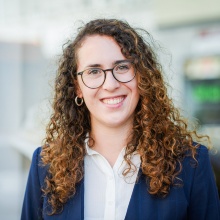
Cornelia Sindermann is an Independent Research Group Leader of the Computational Digital Psychology Team within the Stuttgart Research Focus 'Interchange Forum for Reflecting on Intelligent Systems for Diversity, Demography, and Democracy (IRIS3D)' at the University of Stuttgart. She holds associated roles in the Cluster of Excellence SimTech and the International Max Planck Research School for Intelligent Systems. Previously, she served as a Postdoctoral Researcher and Lecturer at Ulm University (2019–2022) and conducted research at the University of Toledo (2021–2022). She also held a Visiting Professorship at the University for Continuing Education Krems (2023).
Education
- PhD in Natural Sciences (2019), Ulm University
- MSc in Psychology (2016), Ulm University
- BSc in Psychology (2014), Ulm University
Research Focus
Her work investigates the interplay between intelligent systems and human cognition, particularly focusing on how algorithm-driven platforms influence political opinion formation, disinformation spread, and democratic capabilities. Methodologically, she combines experimental designs, survey data, and digital trace analysis to study topics like filter bubbles, microtargeting, and the data economy. Key themes include:
— Cognitive processing of online information
— Effects of AI-driven content curation
— Polarization and echo chambers
— Ethical implications of social media business models
Publications & Awards
With over 80 peer-reviewed papers, her work spans journals in psychology, media studies, and political science. Awards include the 2019 Teaching Excellence Bonus (Ulm University) and grants from the Vodafone Foundation and DAAD. Notable publications address topics like fake news susceptibility, personality-driven social media addiction, and oxytocin’s role in trust and deception.
Team & Collaborations
Her research group at IRIS3D collaborates with experts in computer science, political science, and ethics. They actively seek to recruit researchers with backgrounds in psychology, computational methods, and digital policy. Current projects include developing tools to enhance democratic literacy and analyzing AI’s role in political discourse.