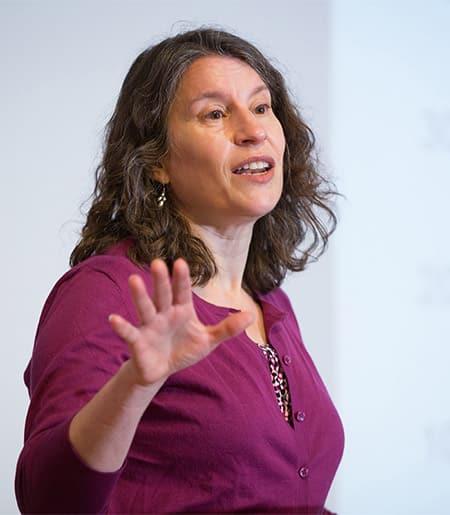
Melvyn R.W. Hamstra is a Full Professor at IÉSEG School of Management in France since 2023. His academic career includes roles as Associate Professor (2021–2023) and Assistant Professor (2020–2021) at IÉSEG, as well as Assistant Professor positions at the University of Maastricht (2015–2020) and the University of Amsterdam (2013–2015). He holds a Ph.D. in Behavioural and Social Sciences from the University of Groningen (2013), preceded by a Master’s (2009) and Bachelor’s (2007) in Psychology from the same institution. Research Interests : His work centers on organizational behavior, leadership, and employee motivation, with a strong emphasis on regulatory focus theory, employee voice dynamics, and knowledge management. Key themes include how leadership styles (e.g., promotion vs. prevention focus) influence team innovation, conflict resolution, and workplace morale. Publication Trends : Recent publications (2025–2024) explore topics such as gender bias in leadership evaluation, financial stress and counterproductive behavior, ethical conflict in teams, and the dual-edged role of humor in workplace negotiations. His longitudinal studies on religious engagement and life satisfaction, as well as theoretical models on knowledge withholding, highlight interdisciplinary breadth. Teaching : He contributes to bachelor and master’s programs at IÉSEG, focusing on leadership development, positive leadership, and organizational learning.
Dr. Omkar Prabhakar Dastane is a Senior Lecturer and Director of Postgraduate Studies at the Malaysia School of Business, Monash University Malaysia. He holds a PhD in Business from Curtin University and certifications including Certified Management and Business Educator (CMBE) from CABS, UK, and HRDF-approved trainer status in Malaysia. His research focuses on technological impacts on businesses, digital consumer behavior, and customer value perception, with publications in A-ranked journals like the Journal of Retailing and Consumer Services and Asia Pacific Journal of Marketing & Logistics . He has secured MYR 157,549 in research grants and received notable awards like the Best Paper Awards (2017/2018) and Emerald Literati Award (2024). Dr. Dastane has held leadership roles including Head of MBA Programs and Head of Postgraduate Studies at top-tier institutions. He actively contributes to editorial roles for journals like Arab Gulf Journal of Scientific Research and reviews for SSCI/SCIE-indexed publications. His teaching emphasizes strategic branding and services marketing, integrating AR/VR tools for immersive learning. He has also led educational visits across ASEAN countries. His research interests span metaverse applications in business, immersive technologies, and contemporary consumer behavior trends. Recent work explores AI-driven services, live-stream commerce, and digital transformation's role in achieving UN SDGs. He has advised on over 200 research projects and secured multiple teaching grants including the 2025 Learning & Teaching Grant.
Prof. Dr. Dr. Fabian Jintae Froese is a Chair Professor of Human Resource Management and Asian Business at the University of Goettingen (since 2012) and holds a Joint Appointment Professor position in International Business at Yonsei University (since 2019). Previously, he served as Assistant Professor at Korea University (2007-2012) and was a Visiting Professor at Keio University (2020-2021). His research focuses on international business, expatriate management, and cross-cultural organizational behavior. Ph.D. in International Studies/Sociology, Waseda University (2009) Dr. oec. in International Management, University of St. Gallen (2007) Diplom-Kaufmann in Business, University of Mannheim (2004) Froese's research explores global talent management challenges in Asian multinational enterprises, expatriate cultural intelligence , and knowledge transfer mechanisms in international contexts. His recent publications analyze the intersection of merit-based rewards with demographics and the impact of embeddedness fit on repatriation success. His work appears in leading journals such as Journal of International Business Studies and Human Resource Management Review . Key themes in his publications include expatriate management, knowledge transfer, cross-cultural adaptation, and HRM in MNCs. Editorial Roles: Editor-in-Chief of Asian Business & Management (since 2018), Associate Editor of International Journal of Human Resource Management (since 2019), etc. Professional Leadership: Chair of Academy of International Business Western Europe chapter (since 2019), President of Association of Japanese Business Studies (since 2019)
Professor Moses Acquaah is a Professor and Department Head of Management at the Bryan School of Business and Economics, University of North Carolina at Greensboro (UNCG). He serves as Director of the PhD Program in Business Administration. His research focuses on strategic management, emerging economies, family businesses, and sustainability in Africa. He holds a Ph.D. in Strategic Management from the University of Wisconsin-Milwaukee and multiple advanced degrees from institutions like Simon Fraser University and the University of Cambridge. Education: Ph.D. in Strategic Management and International Management, University of Wisconsin-Milwaukee M.B.A. in Accounting & Policy Analysis, Simon Fraser University M.A. in Economics (Monetary and International Economics), Simon Fraser University Graduate Diploma in Development Studies, University of Cambridge B.A. (Honors) in Social Sciences, University of Science and Technology, Ghana Research Interests: Social capital and networking in emerging economies Competitive strategy in sub-Saharan Africa Family business management and entrepreneurship Sustainability and green supply chain practices Leadership in Africa and the diaspora Global strategic alliances and institutional pressures His recent work examines pandemic impacts on African businesses, innovation strategy combinations, and leadership effectiveness. He has published extensively in journals like Journal of Cleaner Production , International Business Review , and Africa Journal of Management . Key Contributions: Pioneered studies on family businesses in sub-Saharan Africa Developed the Leadership Effectiveness in Africa and the Diaspora (LEAD) scale Edited special issues on pandemic management and sustainable development in Africa
Sharon Sassler is a Professor in the Department of Policy Analysis and Management at Cornell University's Brooks School of Public Policy. She joined the Cornell faculty in 2005 and holds a Ph.D. in Sociology/Demography from Brown University (1995). Her research examines life course transitions of young adults across education, work, relationships, and parenthood, with critical attention to gender, race/ethnicity, and social class disparities. Education: Post-Doctoral Fellowship, Johns Hopkins University, Department of Population Dynamics (1995-96) Ph.D. in Sociology/Demography, Brown University (1995) M.A. in Sociology/Demography, Brown University (1991) B.A. in English & American Literature and Politics, Brandeis University (1984) Professor Sassler's research spans two interconnected domains: family demography and STEM gender dynamics. In family studies, she investigates cohabitation, marriage, and non-marital childbearing through publications like Cohabitation Nation: Gender, Class, and the Remaking of Relationships (2017), which demonstrates how cohabitation patterns exacerbate family inequality. Her work reveals how union transitions affect maternal health, child educational outcomes, and relationship stability across racial and socioeconomic lines. Concurrently, she examines women's retention in STEM fields, analyzing gender wage gaps, occupational attrition, and the impact of family formation on career trajectories in science and engineering professions. Her 2022-2025 publications reveal intensifying focus on cross-national comparisons of union formation and STEM career dynamics, with growing attention to policy impacts. Notable trends include state abortion policy effects on pregnancy outcomes, the retreat from marriage among college-educated STEM professionals, and intersectional analyses of job search strategies. Her work consistently centers gendered power dynamics within cohabiting relationships while documenting how racial and class inequalities shape family formation and STEM participation. Scientific Awards: No specific awards mentioned in source materials Professor Sassler actively mentors through collaborative research projects like Collaborative Research: Early Career Transitions into STEM Employment (2014), indicating grant-funded work examining structural barriers for women in technical fields. Her extensive co-authorship network suggests significant graduate student supervision, though formal advisee lists aren't documented. She teaches core sociology courses including Population and Public Policy (SOC 2030) and Population Controversies in Europe (SOC 3620), connecting demographic theory with contemporary policy debates. Based in Martha Van Rensselaer Hall, she contributes to Cornell's interdisciplinary research ecosystem through affiliations with both the Sociology program and Policy Analysis and Management department, bridging demographic methods with public policy applications to address pressing social inequalities.
Stephen Humphrey is the Alvin H. Clemens Professor of Management and Organization at the Smeal College of Business, Pennsylvania State University. His research focuses on social relations at work, with a primary emphasis on teamwork dynamics, negotiation theory, and organizational behavior. He holds a PhD in Organizational Behavior and Human Resource Management from Michigan State University and a BS in Psychology from James Madison University. Professor Humphrey's research explores two core areas: (1) the 'bottom-up' formative design of teams (including composition, role allocation, and reward structures), and (2) the 'top-down' management of existing teams (focusing on temporal dynamics, structural adaptation, and conflict resolution). His work on team microdynamics examines multilevel, multi-period, and multi-theoretical aspects of teamwork. His recent publications demonstrate strong research trends in team dynamics, organizational reputation, negotiation pedagogy, and ethical decision-making. Articles frequently employ meta-analytic approaches and focus on contextual factors influencing team performance across diverse settings. The research consistently bridges theoretical frameworks with practical organizational applications. Professor Humphrey teaches negotiation skills across undergraduate, MBA, EMBA, and executive education programs. He has developed several negotiation simulations derived from real-world scenarios and teaches doctoral seminars on organizational research design. As faculty advisor, he mentors PhD and DBA students in research methodology and academic development.
James Burton is a Professor in the Department of Management at the College of Business, Northern Illinois University, where he conducts research at the intersection of organizational behavior and human resource management. His work focuses on workplace dynamics including abusive supervision, employee retention, and fairness perceptions. Education: Ph.D. in Organizational Behavior and Human Resource Management, University of Washington M.B.A. in Management, Illinois State University B.S. in Finance, Marquette University Burton's research investigates how personality traits and fairness perceptions influence workplace behaviors, with particular emphasis on abusive supervision dynamics and employee retention strategies. His studies examine coping mechanisms like mindfulness and exercise in mitigating workplace stress, alongside the role of job embeddedness in preventing turnover during economic uncertainty. Recent work explores self-compassion restoration and spillover effects of work stress into home life. His publication pattern reveals consistent focus on abusive supervision (12 articles since 2006), job embeddedness (9 articles), and stress-coping mechanisms (5 articles), primarily in top-tier journals like Journal of Applied Psychology and Academy of Management Journal . Methodologically, he employs longitudinal designs and integrates personality psychology with organizational theory. No specific scientific awards were listed in the source materials, though recognition for teaching and research excellence was noted. Burton serves as a consultant for major organizations including Boeing and Verizon, applying his research on negotiation effectiveness and workplace behavior. While no formal advising relationships or grant details were specified, his industry collaborations demonstrate applied research impact. His work shows increasing focus on physiological interventions (sleep/exercise) for workplace stress management in recent publications.
Dr. Andrea K. Rorrer is a full-time Professor at the University of Utah's College of Education, Department of Educational Leadership and Policy, and serves as Director of the Utah Education Policy Center (UEPC). With 35 years of education experience, she has held roles as a teacher, principal, policy analyst, and researcher. Her academic career at the University of Utah includes promotions from Assistant Professor (2002-2009) to Associate Professor (2009-2014) and Professor since 2014, alongside serving as Associate Dean for Research from 2014-2023. PhD in Educational Leadership & Policy, University of Texas at Austin (2001) MS in Educational Leadership & Policy, University of Virginia (1995) Dr. Rorrer's research focuses on the intersection of educational leadership, policy implementation, and systemic change with equity as a central theme across early childhood, K-12, and higher education. Her work examines leadership preparation programs, charter school effectiveness, policy mediation, and institutional factors affecting educational outcomes. Recent publications highlight: Leadership preparation program features influencing career intentions (2025) Personalized learning software's impact on teacher-student dynamics (2024) Turnaround reform frameworks (2018) Charter school mobility patterns (2019) Homeschool policy analysis (2012) Scientific recognition includes: UCEA Master Professor Award (2020) College of Education Research Award AERA Dissertation Award (2001) Culbertson Award for early-career contributions Mentorship has been central to her career, with 35 doctoral chairs and 44 committee memberships since 2002. Current teaching activities include Thesis Research and Ed.D. Capstone Project courses.
Veronika Huck-Fries is a researcher at the Technische Universität München (TUM) , affiliated with the Department of Informatics and associated with the KrcmarLab and Wittges Lab . Her work focuses on Agile Information Systems Development , Work Engagement , and IT Workforce dynamics. Educational Background : M.Sc. in Industrial & Organizational Psychology (Ludwig-Maximilians-University Munich), Visiting Graduate Student (University of Alberta), B.Sc. in Psychology (LMU Munich), Entrepreneurship Education via UnternehmerTUM GmbH. Research Interests : Agile Software Development, Work Engagement, IT Workforce Management, Innovation Processes. Projects : ARinFLEX , MACS , Sonderforschungsbereich 768 subprojects. Collaborations : Involved in SAP University Competence Center, OpenPOWER@TUM initiatives, and DIAS project.
Rosemary Morgan, PhD, MSc, is a Research Professor at Johns Hopkins Bloomberg School of Public Health in the Department of International Health. She holds primary affiliations with the International Health Department and is associated with the Johns Hopkins Center for Global Women's Health and Gender Equity and the Johns Hopkins Center for Women's Health, Sex, and Gender Research. Dr. Morgan's educational background includes a PhD from the University of Leeds (2012), an MSc from the University of Edinburgh (2007), and a BA from the University of British Columbia (2006). Prior to joining Johns Hopkins, she served as a Lecturer in Global Health Policy at the University of Edinburgh's Global Public Health Unit and as a Research and Teaching Fellow at the Nuffield Centre for International Health and Development at the University of Leeds. Her research focuses on gender inequities in health systems, women's health and wellbeing, and the impact of gender on public health interventions. Dr. Morgan specializes in qualitative research methods and has conducted extensive work on gender analysis in health systems, reproductive health, and the gendered effects of pandemics. Her work often examines how gender norms and power relations affect health outcomes and system performance, particularly in low- and middle-income countries. Dr. Morgan's publication record shows consistent scholarly output from 2014 through 2025, with a notable increase in productivity in recent years. Her research spans multiple domains including gender-responsive monitoring and evaluation, moral distress among healthcare workers, vaccine hesitancy (particularly among pregnant individuals), and the intersection of gender with various health conditions. She has developed methodologies for gender analysis in health systems research and has contributed significantly to understanding how gender influences health outcomes across diverse contexts. Faculty Advisor of the 2023-2024 academic year award from the Global Health: Policy and Evaluation DrPH Program Concentration, JHSPH Excellence in Teaching, Johns Hopkins Bloomberg School of Public Health Excellence in International COVID-19 Public Health Practice, 2021 Nominated for Canadian Women Leaders in Global Health, 2018 and 2020 Selected for 300 Women Leaders in Global Health, 2014 Dr. Morgan serves as co-Editor in Chief of the journal SSM - Health Systems and is a current board member of Health Systems Global. She has advised numerous major research projects including those funded by the Bill & Melinda Gates Foundation, CIHR, USAID, and TDR. Her current leadership roles include being Principal Investigator on the Monitoring for Action and Learning (MAGE) project supporting the Global Financing Facility for reproductive, maternal, newborn, child and adolescent health initiatives. She also leads the Gender and Health Certificate program at JHSPH and co-directs the Gender and Health Summer Institute. Dr. Morgan teaches courses on Gender Analysis in Health Research and Interventions, Foundations in Gender and Health, and Health Systems in Low- and Middle-Income Countries. Her teaching reflects her research expertise, emphasizing practical applications of gender analysis in global health settings.
Dr. Alice Cheng is an Associate Professor in the Department of Communication at North Carolina State University (NCSU), with an adjunct role at the Poole College of Management. She is also the Director of the Studying Broad Communication Program-China and a University Faculty Fellow. She holds a Ph.D. from the Missouri School of Journalism and an MBA from the Crosby MBA program, recognized with an outstanding academic award. Her research focuses on AI-driven strategic communication, crisis management, and misinformation. Notable projects include leveraging AI chatbots for mental health support, combating misinformation, and ethical AI integration. She has secured over $2 million in grants from NSF, NEH, and others, including a prestigious Arthur Page Center Legacy Grant for ethics in public communication. Dr. Cheng has published over 160 articles in top journals like New Media & Society and Journal of Public Relations Research , and co-edits special issues in Internet Research and Public Relations Review . Awards include the University Faculty Scholar (2023-2024), Top Faculty Paper Award (AEJMC 2024), and the Hong Kong Government Reaching Out Award. She advises numerous graduate students and has led international collaborations, including keynote addresses at MIT, Peking University, and Vienna University of Economics. Her work bridges academia and practice through editorial roles, grants, and community outreach initiatives.
Kenneth DE ROECK is an Associate Professor of Management at SKEMA Business School (Lille, France) and held tenured positions previously at the University of Vermont (USA). He specializes in understanding how employees respond psychologically to organizations' CSR initiatives, focusing on mechanisms like organizational identification, justice perceptions, and ethical leadership. His work bridges CSR theory with practical implications for sustainable business practices. Affiliations: SKEMA Academy, SKEMA Centre for Sustainability Studies Editorial Roles: Journal of Business Research (since 2023), Journal of Business Ethics (Senior/Associate Editor since 2018) Research Interests: Psychological mechanisms behind employee reactions to CSR CSR's impact on organizational identification and ethical behavior Paradoxes and tensions in CSR stakeholder management Key Article Trends: Focus on CSR's dual roles as both value-creating and value-protecting mechanism, with recent emphasis on abusive supervision's impact on CSR behavior and insurance-like effects of CSR during organizational breaches. Awards: SKEMA Research Excellence Award (2024), SAGE Scholarly Impact Award (2023), Best CSR Communication Paper (2019) Grant & Advisory Work: Extensive consulting with ENGIE (CSR/HRM) and ERAMET (Business Analysis). Active in Academy of Management and Louvain CSR Network.
Seth Kaplan is a Professor in the Department of Psychology at George Mason University. His research focuses on employee well-being, team effectiveness, virtual work, and occupational health through projects like NSF-funded emotion regulation interventions and Army Research Institute collaborations on affective forecasting. He directs the KA-Lab, studying team resilience, metaperceptions, and statistical methodologies. Recent publications analyze job boredom, cognitive reappraisal interventions, and personality measurement innovations. His book Crisis-Ready Teams (2024) synthesizes data from high-risk environments. Courses taught include Occupational Health, Organizational Change, Psychometrics, and Multivariate Statistics. Grants: National Science Foundation (Co-PI): Just-in-Time Adaptive Interventions for Emotion Regulation Army Research Institute (PI): Affective Forecasting Errors Recent Presentations: Personality and generative AI use at work (SIOP 2025) Work situation identification via NLP (SIOP 2025) Helicopter helping in teams (SIOP 2025)
Res.Asst.Dr. Samet ÖZDEMİR is a faculty member at the Department of Human Resources Management within Sakarya University's Faculty of Business Administration. He holds a Researcher academic rank and teaches courses such as Social Entrepreneurship, Career Planning, Human Resources Management, and Graduation Project supervision. His research focuses on reverse mentoring, HR risk assessment, workplace discrimination, leadership competencies, and sustainable career development. He has published extensively in national and international journals, contributing to organizational behavior and management science domains. Education & Academic Background: While specific educational details are not explicitly stated, his titles (Res.Asst.Dr.) indicate doctoral-level qualifications in a relevant field such as Business Administration or Human Resources Management. His academic contributions include co-authoring book chapters on topics like digital HR management and sustainable entrepreneurship. Research Interests: His work bridges theoretical frameworks with practical HR applications, emphasizing reverse mentoring case studies (e.g., research assistants-advisors dynamics), ethical recruitment practices, and leveraging digital tools for leadership development. He also explores cross-cultural career perceptions and the role of lifelong learning in managerial roles, as seen in his analysis of historical business figures like Madam C.J. Walker. Publication Trends: Recent works (2022-2023) highlight digital transformation in HR practices, entrepreneurship competency frameworks, and LinkedIn-based executive leadership analysis. Earlier studies (2015-2017) addressed blue-collar workforce underrepresentation in academic research and discrimination in HR job advertisements. Teaching & Supervision: He manages various theses and oversees vocational training programs, integrating practical workplace experiences into academic curricula. Courses like 'Vocational Training in Business' and 'Career Planning' reflect his commitment to bridging educational theory with professional readiness. Awards & Grants: No specific awards are mentioned, though his active publication record suggests contributions meriting academic recognition. Grant details are not provided in the text. Labs & Teams: While no specific labs are noted, his collaborative publications indicate involvement in academic teams focusing on human resources innovation, organizational behavior, and sustainable development initiatives.
Neil Conway is a Professor of Organizational Behaviour at the School of Business and Management, Royal Holloway, University of London . He joined Royal Holloway in 2013, following a lecturing role at Birkbeck, where he also earned his PhD and held a Leverhulme Trust Research Fellowship. He serves as a visiting professor at Dauphine University, Paris. Education : PhD at Birkbeck Professional Roles : Professor, Research Fellow, Editor, Visiting Professor His research focuses on organizational psychology , particularly the psychological contract , work motivation, HRM, part-time work, and daily diary methods. Recent projects include studying furlough impacts, calling in professions, and pay inequality effects. Scientific Awards : Leverhulme Trust Research Fellow Advanced Institute of Management Research Scholar He supervises PhD students in organizational psychology and has contributed to key journals like Human Relations , Journal of Organizational Behavior , and European Journal of Work and Organizational Psychology . His work aligns with UN Sustainable Development Goals related to employee well-being and organizational sustainability .