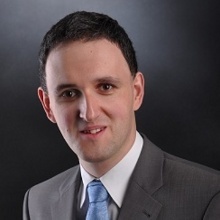
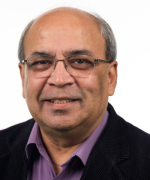
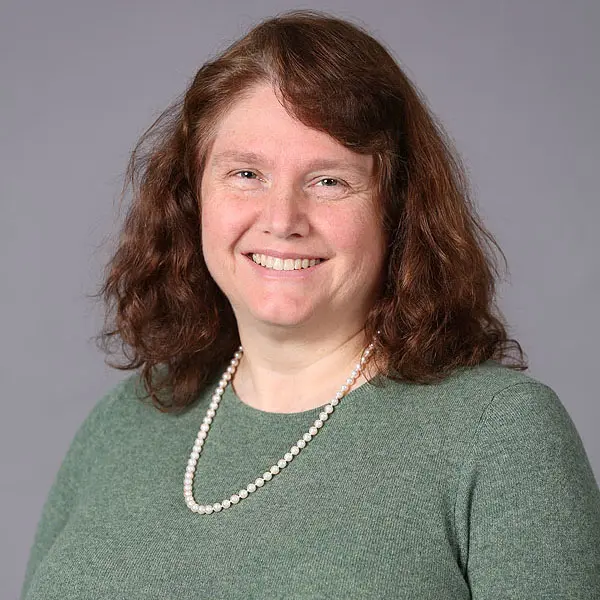
Jan Van Bavel is a full professor at the Faculty of Social Sciences, KU Leuven, with a focus on demography, family dynamics, and climate change impacts. He is a member of LC&Y - KU Leuven Institute for Child and Youth and participates in councils like POC Sociology and POC Master Psychology. Research spans fertility trends, migration, poverty analysis, and adolescent decision-making Active promoter/co-promoter in 8 projects (2021–2028) on climate-family links, migrant deservingness, and wealth inequality Teaches courses on population studies, climate change, and societal transitions His recent work examines climate change's effect on fertility desires, adolescent loyalties, and immigrant integration frameworks, with articles in journals like Demographic Research and Socio-Economic Review . No scientific awards were explicitly mentioned in the provided data.
Professor Isabella Dobrescu is Head of the School of Economics at the University of New South Wales (UNSW) Business School and co-chair of the STEP UP initiative in Education. She serves as an editor for the Journal of Pension Economics & Finance and maintains an active research program spanning labor economics, public finance, health economics, and applied econometrics. Her educational background includes a Ph.D. in Economics with Honors from the University of Padua (2009), an M.Sc. in Economic Mathematical Modeling Summa cum Laude from West University of Timisoara (2005), and dual bachelor's degrees in Economics from Nottingham Trent University and Finance Summa cum Laude from West University of Timisoara (2003). Dobrescu's research has evolved from structural work on consumption and saving dynamics to pioneering applications combining theory, empirical analysis, and randomized controlled trials to improve educational outcomes through technology. Her recent work focuses on financial literacy interventions for high school students through the STEP UP program, while maintaining her longstanding research on aging populations, retirement decision-making, and risk behavior. Her publication portfolio demonstrates consistent output across labor economics, health economics, and applied econometrics, with recent emphasis on educational technology interventions and financial decision-making in retirement contexts. The research shows methodological diversity spanning structural modeling, nonparametric partial identification techniques, and experimental approaches. UNSW Business School Research Impact Award (2021) UNSW President's Award for Building Collaborations (2019) UNSW Scientia Education Fellowship (2017) Australian Government Office of Learning & Teaching Citation (2016) ARC Early Career Research Fellowship (2012) Dobrescu has secured over AU$2.5 million in competitive research funding since 2010, including major ARC Linkage grants and substantial UNSW strategic investments. She leads the STEP UP initiative which has received over AU$650,000 in funding for financial literacy outreach programs. Her collaborative approach is evident in numerous multi-investigator projects with colleagues including Bateman, Thorp, Motta, and Newell across economics, finance, and education domains. As Head of the School of Economics and co-chair of STEP UP, Dobrescu leads research teams focused on educational interventions using technology, retirement decision-making, and the economics of aging. Her Playconomics platform represents a significant innovation in experiential economics education, receiving media coverage from major outlets including The Sydney Morning Herald and The Australian.
Prof. Ilia Polian serves as Head of the Institute of Computer Engineering and Chair of the Hardware-Oriented Computer Science (HOCOS) department at the University of Stuttgart. His leadership spans research, teaching, and institutional coordination across multiple high-impact projects. Prof. Polian's research focuses on developing circuit and system architectures based on both traditional and novel principles, including neuromorphic, stochastic, and approximate architectures. His second major research focus is systematic design methodology and design automation, with particular emphasis on safety and reliability properties of developed systems. Current research directions include quantum computing engineering, secure mixed-signal neural networks, and resource-efficient stochastic circuits for near-sensor computing applications. His recent publications demonstrate strong trends in quantum computing (particularly circuit partitioning and compilation for multi-QPU architectures), hardware security (including memristive cryptographic implementations), and AI-driven approaches to hardware testing and reliability. These works bridge fundamental computer architecture research with practical industrial applications. University of Stuttgart's Publication Prize for Paper on Partitioning of Quantum Circuits Prof. Polian actively supervises doctoral students including Devanshi Upadhyaya, and leads significant research grants such as the DFG Priority Program Nano Security which he coordinates. His department offers numerous thesis and research opportunities for students interested in cutting-edge hardware research. The Hardware-Oriented Computer Science department maintains strong collaborations with industry partners including IBM, Infineon Technologies, and Advantest, as well as academic institutions through the IQST Graduate School and QuantumBW initiatives.
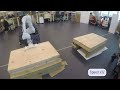
Dikai Liu is a Distinguished Professor and Strategic Research Director at the University of Technology Sydney (UTS), Australia, within the School of Mechanical and Mechatronic Engineering . His work spans field robotics and human-robot collaboration (HRC) , focusing on autonomous systems for infrastructure maintenance, construction automation, and underwater operations. Key research areas: Robotics, Human-Robot Interaction, Bio-Inspired Design, Infrastructure Maintenance Recent publications highlight innovations in trust modeling for HRC, stiffness control in continuum robots, and sociotechnical frameworks for AI-driven robotic systems. His 15 most recent articles emphasize applications in bridge maintenance, construction automation, and ethical AI integration. Awards include the 2019 UTS Medal for Research Impact, ASME DED Leonardo da Vinci Award (USA), and multiple engineering excellence recognitions. His research has generated over $22M in external funding, including 13 ARC grants and industry partnerships.
Tetsuya Sakai is a Professor at the School of Fundamental Science and Engineering within Waseda University's Faculty of Science and Engineering. His work focuses on information access, retrieval, and natural language processing, with a particular emphasis on evaluation frameworks for search systems. Affiliations: Waseda University (Faculty of Science and Engineering, School of Fundamental Science and Engineering) Academic Rank: Professor Research Interests : Dr. Sakai's research spans four key areas: (1) Information Access —designing systems for direct and immediate information delivery, (2) Search Evaluation —developing metrics like Height-Biased Gain and hierarchical intent-based diversity measures, (3) Fairness in IR —pioneering frameworks for group fairness in conversational search, and (4) Statistical Reform —advocating Bayesian methods and robust experimental design. His work also addresses privacy inconsistencies in mobile apps and cognitive biases in LLMs. Scientific Awards : Notable recognitions include induction into the SIGIR Academy (2023) , ACM Distinguished Member (2018) , ACM Senior Member (2016) , and multiple DEIM/FIT/CSS Best Paper Awards . He has received teaching honors like the Waseda Presidential Teaching Award (2016) and WASEDA e-Teaching Award (2018) . Article Trends : Recent publications highlight: Advancements in LLM-assisted relevance assessments and hallucination diagnostics for tool-augmented models Conversational search fairness through multi-level evaluation frameworks and group diversity metrics Innovations in 3D medical reconstruction from clinical data and multimodal uncertainty modeling Statistical rigor via randomization tests , credible intervals , and topic set design Privacy analysis in mobile app descriptions and cognitive bias studies in search interaction
Professor Samuel Fountain is a leading academic in pharmacology at the University of East Anglia, where he serves as Chair of Pharmacology within the School of Biological Sciences. He holds additional leadership roles as Associate Pro-Vice-Chancellor of the UEA Doctoral College and has previously served as Associate Dean for Postgraduate Research and Director of the Biomedical Research Centre. He is actively supervising multiple PhD students and securing major research funding. BSc (Hons) Pharmacology, University of Leeds (1997–2000) MRC-funded PhD, University of Leeds (2000–2004) Wellcome Trust Research Associate, University of Manchester (2004–2008) BBSRC David Phillips Fellow, University of Leeds (2008–2010) Lecturer to Professor of Pharmacology, University of East Anglia (2010–present) His research focuses on the role of ion channels—particularly P2X receptors—in vascular and adipose tissues, with implications for cardiometabolic diseases. His work integrates pharmacology, physiology, and molecular biology to understand neurovascular and neuroadipose communication, receptor-ligand interactions, and drug discovery. He employs techniques such as pressure myography, patch-clamp electrophysiology, calcium imaging, and molecular modelling. The analysis of his recent publications reveals a strong emphasis on purinergic signalling, ion channel pharmacology, and autonomic control of blood vessels and fat tissue. His work bridges basic science with translational applications, particularly in hypertension, obesity, and metabolic syndrome. Collaborations with AstraZeneca, Merck, and the British Heart Foundation underscore the clinical and pharmaceutical relevance of his research. Notable scientific recognition includes the prestigious BBSRC David Phillips Fellowship. He also contributes to the academic community through editorial roles, including as Editor of Purinergic Signalling , and as a member of the British Pharmacological Society and The Physiological Society. Professor Fountain actively mentors postdoctoral researchers and PhD students, several of whom are funded by BBSRC, BHF, and AstraZeneca iCASE awards. His lab is supported by significant grants from the British Heart Foundation, BBSRC, and industry partners, enabling cutting-edge research in vascular and metabolic pharmacology. He leads multiple active projects on neurovascular transmission, purinergic control, and drug discovery for P2X receptors. His research group operates within the Cells and Tissues research theme at UEA and utilizes advanced experimental platforms including human tissue studies, high-throughput screening, and computational ligand docking. The lab fosters interdisciplinary collaboration between pharmacologists, physiologists, and clinicians, positioning it at the forefront of autonomic and metabolic research.
Dr. Felix Härer is a Lecturer and researcher at the University of Applied Sciences FHNW, School of Business, Basel, Switzerland, and also teaches externally at the University of Fribourg. He is affiliated with the Digital Trust Competence Center, where he conducts research and teaching in IT Security, Cybersecurity, Digital Trust, Blockchain, AI, Cloud Computing, and Systems Modeling. His research interests span a broad and interdisciplinary range, including: Digital Trust and Cybersecurity Blockchain and Decentralized Systems AI and Knowledge-based Systems (including LLMs and RAG) Software and Systems Modeling (BPMN, ArchiMate) Data Science and ETL-based Analytics Zero Trust and Secure Architectures His recent publications (2020–2023) demonstrate a strong focus on blockchain interoperability, model-driven engineering, decentralized applications, and the integration of AI with conceptual modeling. He explores scalable architectures, cross-chain query languages, and secure attestation mechanisms, often combining modeling approaches with emerging technologies. His work bridges academic rigor with practical implementation in distributed and cloud environments. Scientific awards include: Best Paper Award at IEEE PKIA 2023 He actively supervises bachelor’s and master’s theses and student projects in digital trust and related domains. He has served on PhD committees externally and is a reviewer and program committee member for journals and conferences such as IEEE Transactions, WWW, CAiSE, and EMISAJ. His professional experience includes industry work at Siemens Healthineers in software engineering. He is a member of the IEEE Blockchain Group (Switzerland) and contributes to UN/CEFACT standards for e-commerce and supply chain data. He is involved in organizing workshops and conferences, including B4ISE 2025, B4TDS 2023–2024, and DESRIST 2023, and has delivered keynotes on Computational Trust and Blockchain Interoperability.
Julien Cloarec is a Full Professor of Quantitative Marketing at iaelyon School of Management, Université Jean Moulin Lyon 3, where he also serves as Vice-President for Digital Strategy and Artificial Intelligence. He is an internationally recognized expert in artificial intelligence, with a focus on responsible AI development that balances innovation with privacy protection. His research interests center on Artificial Intelligence , Privacy in AI , Consumer Behavior , and Digital Marketing . He investigates how users perceive and adopt AI technologies, particularly in domains like autonomous vehicles, brain–machine interfaces, and eHealth, emphasizing the psychological and ethical dimensions of trust and privacy. His recent publications (2022–2025) reflect a strong thematic focus on the personalization-privacy paradox , algorithmic aversion , and transparency in AI systems . These works appear in leading journals across marketing, technology, and transportation research, demonstrating interdisciplinary impact. Scientific Awards: Prix AFM - Association Française du Marketing pour la meilleure communication (2022) Julien Cloarec actively collaborates with regulatory bodies, professional associations, and academic institutions to influence public policy and promote responsible AI. He leads research at the Magellan Laboratory @iaelyon and manages educational initiatives such as the Certificate in Artificial Intelligence for Marketing . He advises on doctoral research and has contributed to publications on the doctoral experience in management. Laboratory Affiliation: Magellan Laboratory @iaelyon - Research in Organizational Management
Jennifer Shang is a Professor of Business Administration and Area Director for Business Analytics and Operations at the Katz Graduate School of Business , University of Pittsburgh. With a focus on healthcare analytics, operations management, and e-commerce, she applies data-driven methodologies to enhance patient care, hospital efficiency, and business productivity. Education: PhD in Operations Management, University of Texas at Austin MBA, University of Iowa Bachelor of International Business, National Taiwan University Her research integrates multi-criteria decision-making techniques (e.g., AHP/ANP, DEA) and combines human judgment with quantitative data to improve organizational outcomes. She has published over 140 papers, with recent trends emphasizing healthcare analytics, big data applications, and supply chain optimization in service industries. Scientific Awards: Distinguished Professor for EMBA class 32 (2004-2005) Excellence in Teaching Award for MBA program (2002-2004, 2009-2010) Excellence in Research Awards (2013-2015, 2017-2020, 2021-2022) Best Paper Award (2010) in Information Systems Research Professor Shang teaches courses in operations management, supply chain, statistical analysis, and multivariate data analysis at undergraduate, MBA, EMBA, DBA, and PhD levels. She serves on editorial boards for journals including International Journal of Revenue Management and International Journal of Productivity and Quality Management .
Ashok Goel is a Professor of Computer Science and Human-Centered Computing at Georgia Institute of Technology and Chief Scientist at Georgia Tech’s Center for 21st Century Universities (C21U). He also serves as Executive Director of the NSF-funded National AI Institute for Adult Learning and Online Education (AI-ALOE). His research spans cognitive systems, artificial intelligence, and education, with a focus on computational design, creativity, and AI-driven educational technologies. Professor, School of Interactive Computing, Georgia Tech Chief Scientist, Center for 21st Century Universities Executive Director, NSF’s National AI Institute for Adult Learning and Online Education Goel’s research explores the intersection of AI and cognitive science, particularly in computational design, creativity, and biologically inspired design. His recent work emphasizes AI in education, including virtual teaching assistants like Jill Watson (powered by ChatGPT) and frameworks for scalable, human-centric AI-augmented learning. He investigates explainable AI, multimodal educational systems, and bidirectional feedback mechanisms to enhance personalized learning experiences. Award highlights include: AAAI’s Outstanding AI Educator Award Fellow of AAAI and Cognitive Science Society University System of Georgia Regent’s Award for Scholarship of Teaching and Learning Goel leads the Design Intelligence Laboratory at Georgia Tech, mentoring a team of graduate and undergraduate researchers. His contributions to AI education include pioneering Georgia Tech’s Online Master of Science in Computer Science (OMSCS) program and developing blended learning frameworks. He also co-founded the AI-based educational startup Beyond Question (LLC) in 2020.
Adam M. Enders is an Associate Professor in the Department of Political Science at the University of Louisville. He also teaches advanced courses on measurement and scaling at the ICPSR Summer Program. His research examines the intersection of political psychology and societal dynamics, focusing on conspiracy theories, core values, partisanship, and polarization. Enders holds a Ph.D. (2016) and M.A. (2013) in Political Science from Michigan State University, and a B.A. (2011) in Political Science and Public Policy from Albion College. His work investigates how conspiratorial thinking influences public opinion, the role of racial prejudice in political behavior, and how subjective perceptions contribute to polarization. Publications appear in top journals like the American Journal of Political Science and Journal of Politics . He has also contributed to The Atlantic and Politico Magazine , analyzing modern conspiracism and its political ramifications. Teaching focuses include political psychology, public opinion dynamics, and quantitative research methods. His methodological expertise in scaling and measurement underpins much of his empirical work, emphasizing rigorous design to explore complex belief systems.
Marten Scheffer is a Full Professor at Wageningen University & Research , specializing in Aquatic Ecology and Water Quality Management . His work bridges ecology, climate science, and mental health, focusing on tipping points in ecosystems and social systems. He has received the prestigious Spinoza Prize 2009 , Netherlands' highest scientific honor. Research Interests: His research explores Anthropocene dynamics , ecological resilience , climate change impacts , and psychiatric disorders through dynamical systems theory . Notable projects include studying boreal forest collapse and trust dynamics in economies. His work also addresses global sustainability and early warning signals for critical transitions in social-ecological systems. Recent Articles: His 2025 publications highlight trust erosion in weak governance , ecological tipping points , and revolutionizing psychiatric diagnosis . 2024 work includes computational models of panic disorders and resilience indicators for disease outbreaks. Advising & Grants: He supervises PhD students including Agrawal (river commons), Capriati (marine protected areas), and Delecroix (infection warnings). Active in projects funded across ecosystem resilience , AI applications , and climate policy . Labs & Collaborations: Collaborates globally on tipping points research and mental health systems. Datasets include boreal forest dynamics and human climate niche models.
Mark Kambites is a Professor of Pure Mathematics at the University of Manchester , affiliated with the Department of Mathematics. His research focuses on semigroup theory, tropical algebra, geometric group theory, and formal languages. He holds roles including membership in the EPSRC Strategic Advisory Team (SAT) and editorial positions in journals like the International Journal of Algebra and Computation. Education: M.Math. Mathematics and Computer Science, University of York (2000) Ph.D. Pure Mathematics, University of York (2003) Research Interests: Kambites explores semigroup structures, tropical algebra's applications, and interactions between algebra and geometry. Key areas include matrix semigroups over tropical semifields, combinatorial group theory, and computational complexity. His work bridges pure mathematics and theoretical computer science. Grants and Collaborations: Leads the Centre for Digital Trust and Society (EPSRC-funded) and collaborates internationally. Serves as central organizer of the North British Semigroups and Applications Network (NBSAN). Affiliations: Active in the Algebra Group, Tropical Mathematics Group, and Data Science Institute at Manchester. Supervises PhD/MSc students in algebraic and computational mathematics.
Dr. Constantin Christof is a Lecturer (Akademischer Rat auf Zeit) at the Department of Mathematics , Technische Universität München , with prior roles as a W2 Stand-in Professor at Universität Augsburg and Research Associate at TUM and TU Dortmund. His research focuses on Optimal Control of PDEs , Variational Inequalities , and Nonsmooth Optimization , with applications in Non-Newtonian Fluids and Neural Networks . May 2015 - July 2018: Dr. rer. nat. in Mathematics, TU Dortmund Oct. 2013 - July 2014: MAST (Part III of Mathematical Tripos), University of Cambridge Oct. 2009 - Sept. 2012: B.Sc. in Technomathematics and Mathematics, TU Dortmund Christof's work bridges Finite Element Error Analysis , Sensitivity Analysis , and Physics-Guided Machine Learning , particularly in problems involving Contact Mechanics and Parabolic PDE Constraints . His recent publications address challenges in Semilinear Elliptic PDEs , Obstacle Problems , and Nonsmooth Superposition Operators , with a focus on theoretical and numerical advancements. Scientific awards include the Dissertation Award and Best Graduate Award from TU Dortmund, and the Award for Academic Excellence by the Minister President of North Rhine-Westphalia. He has supervised 11 theses at the Master's and Bachelor's levels, covering topics from Neural Network Surrogate Models to Bingham Fluid Simulations .
Holly A. Yanco, Ph.D. , is a Professor of Computer Science at the University of Massachusetts Lowell (UML), where she also serves as the Distinguished University Professor and Director of the New England Robotics Validation and Experimentation (NERVE) Center . She founded the Human-Robot Interaction (HRI) Laboratory at UML in 2001, fostering interdisciplinary research in robotics, assistive technology, and artificial intelligence. Education: Dr. Yanco earned her B.A. in Computer Science from Wellesley College , followed by an M.S. and Ph.D. in Computer Science from the Massachusetts Institute of Technology (MIT) . Research Interests: Her work spans human-robot interaction , robotics education , assistive technologies , urban search and rescue (USAR) , and multi-modal interfaces . She has led collaborative initiatives such as Artbotics , integrating art and robotics in K-12 and college curricula, and Pyro , a Python-based robotics platform recognized as Premier Courseware of 2005 . Grants & Funding: Her research has been supported by the National Science Foundation (NSF) , U.S. Army Research Office , Microsoft Research , and National Institute of Standards and Technology (NIST) . Notable grants include an NSF CAREER Award (2005) and leadership roles in DARPA’s Fast Lightweight Autonomy (FLA) program . Awards & Recognition: Dr. Yanco has received teaching awards from UMass Lowell and MIT , served as General Chair of the 2012 ACM/IEEE International Conference on Human-Robot Interaction , and held leadership roles in AAAI’s Executive Council (2006-2009) . Lab & Outreach: The HRI Lab engages students from high school to Ph.D. levels, emphasizing K-12 outreach through Botball tournaments , STREAM teacher workshops , and the Artbotics program in collaboration with The Revolving Museum .