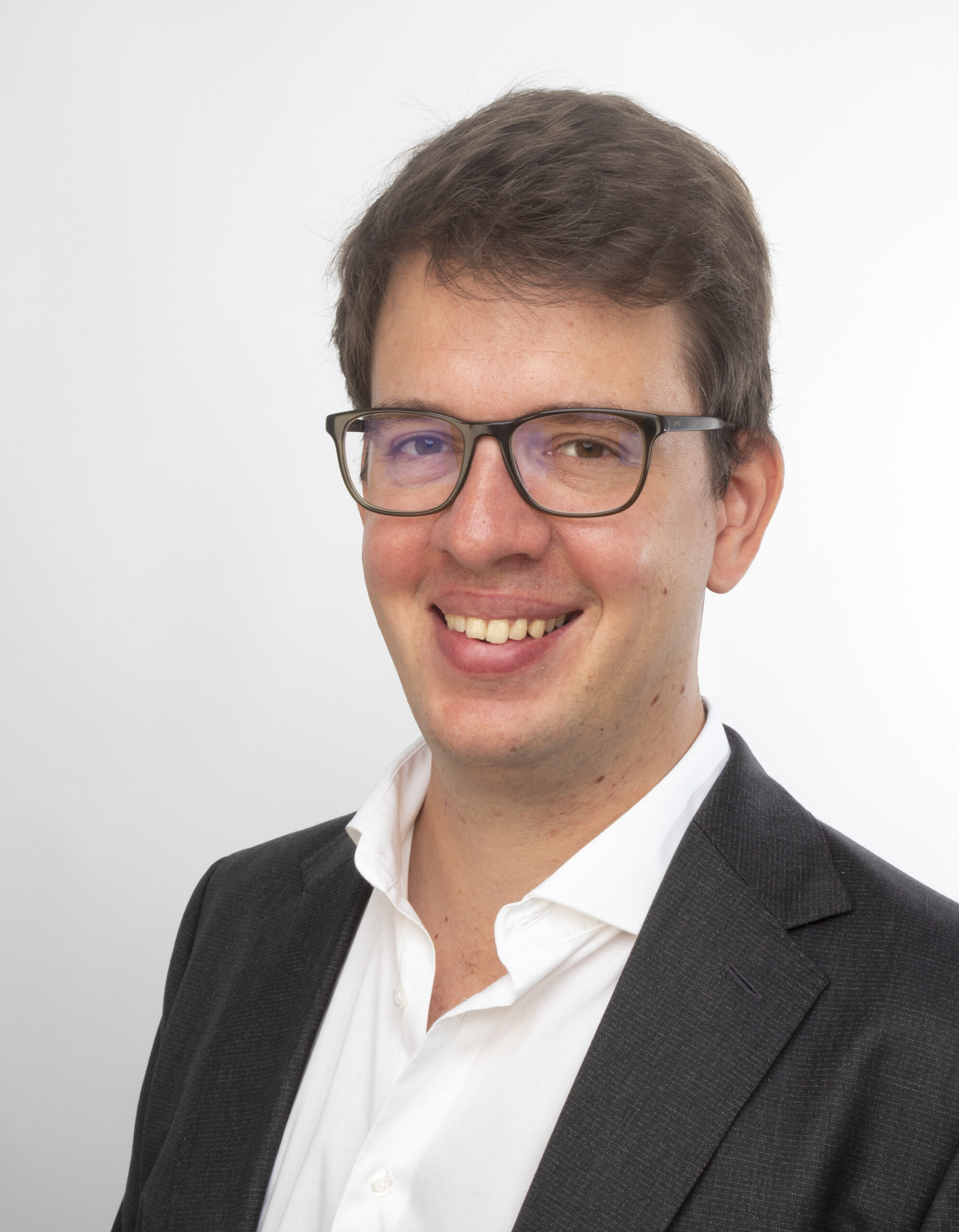
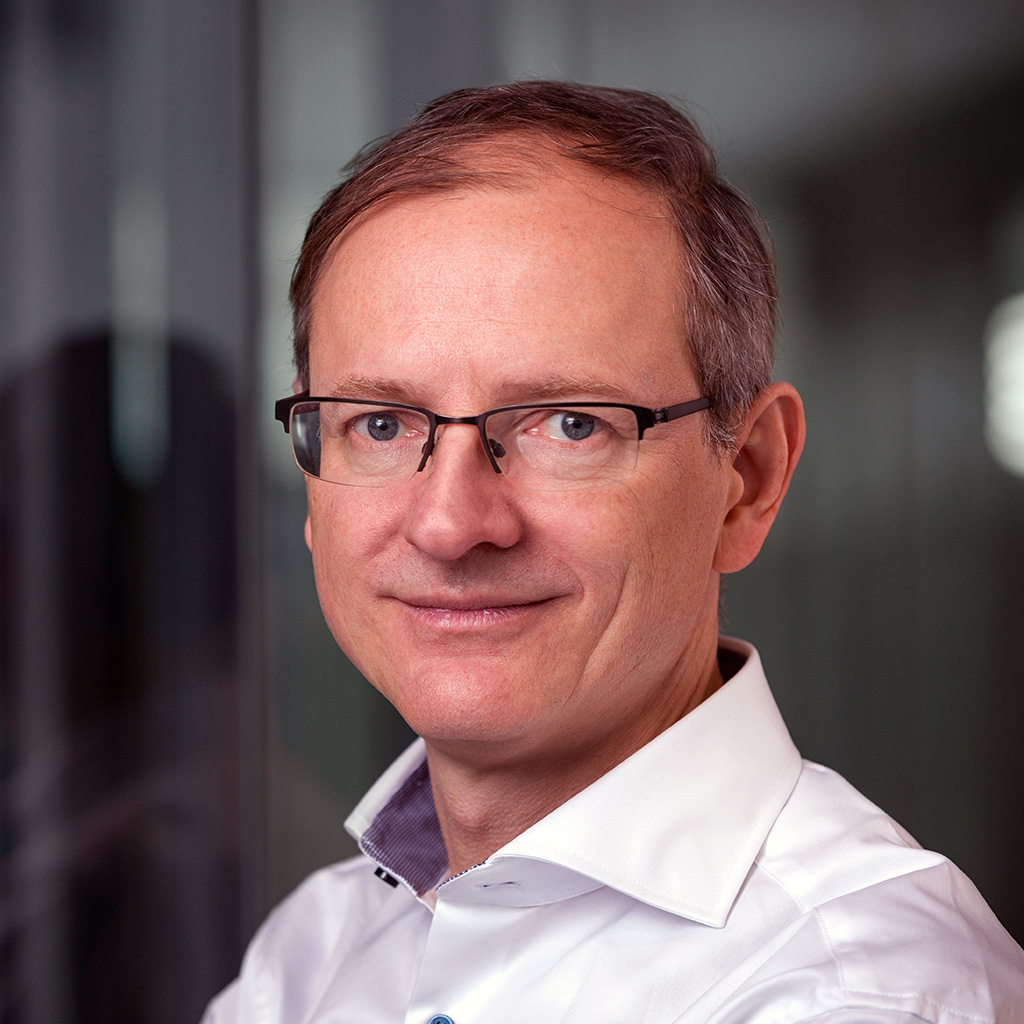
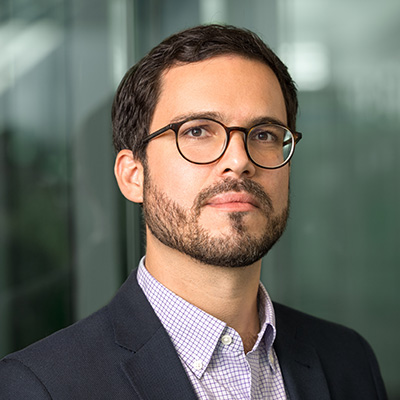
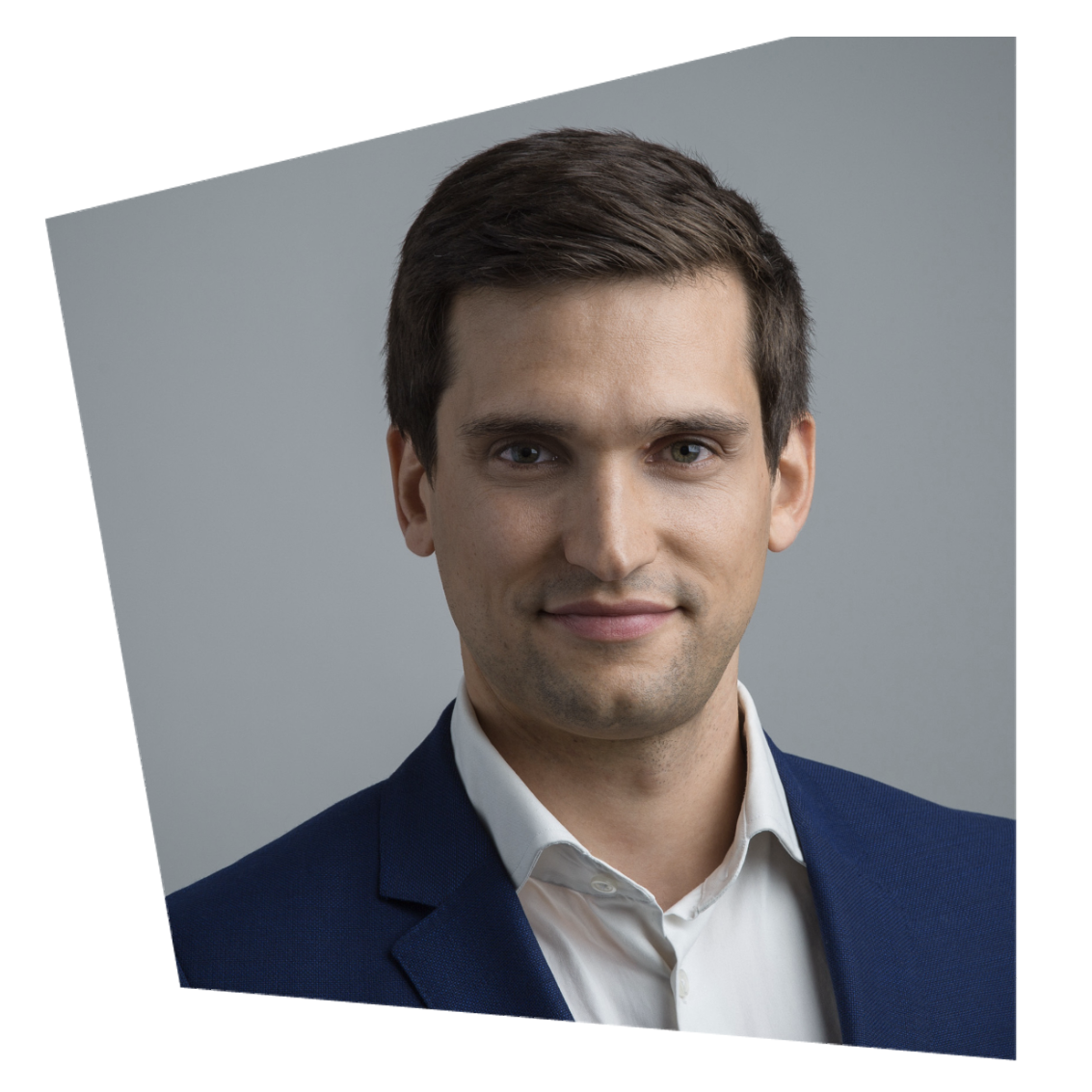
David Manuel Bozzini is a Full Professor at the University of Fribourg , affiliated with the Faculty of Letters and Human Sciences within the Department of Social Sciences . He also serves as a Lecturer in the Department of Computer Science (Faculty of Science and Medicine), indicating interdisciplinary expertise. Joined University: 2017 Research Focus: Bozzini's work examines state surveillance mechanisms in militarized contexts, particularly in Eritrea and its diaspora. His research spans political anthropology, digital security, and cryptography, analyzing how insecurity is socially constructed and resisted through both traditional and technological means. Publications: His recent works explore: Ethnographic analysis of surveillance practices Digital repression in authoritarian regimes Political mobilization among exiles Technological resistance strategies Contact: Email: david.bozzini@unifr.ch Phone: +41 26 300 7840
Swiss Federal Institute of Technology in LausanneSwitzerland
Yuval Noah Harari is a historian, philosopher, and lecturer at the Department of History at the Hebrew University of Jerusalem. Born in Haifa, Israel in 1976, he received his PhD from the University of Oxford in 2002. He is best known as the author of the internationally acclaimed books Sapiens: A Brief History of Humankind (2014), Homo Deus: A Brief History of Tomorrow (2016), 21 Lessons for the 21st Century (2018), Nexus: A Brief History of Information Networks from the Stone Age to Artificial Intelligence , and the Unstoppable Us children's series. Harari's research focuses on macro-historical questions including the relationship between history and biology, the essential difference between Homo sapiens and other animals, justice in history, historical directionality, human happiness throughout history, and the ethical questions raised by science and technology in the 21st century. His work bridges history, biology, philosophy, and economics, taking both macro and micro perspectives to understand not only what happened and why, but also how it felt for individuals. His books have sold over 45 million copies in 65 languages, with Sapiens alone selling 25 million copies since its publication. He is considered one of the world's most influential public intellectuals today. Harari has given keynote speeches at major international forums including the World Economic Forum in Davos and has presented as a digital avatar in a TED talk. Sapiens spent 96 consecutive weeks in the top 3 of the Sunday Times bestseller list Co-founded Sapienship, an international social impact company focused on education and storytelling, with his husband Itzik Yahav Regularly speaks at major international events on topics of technology, history, and the future of humanity Harari's recent work focuses on the challenges of the information age, particularly the crisis of truth and trust in an era of disinformation and artificial intelligence. He explores how humans can navigate the complex ethical questions raised by emerging technologies while maintaining democratic values and human dignity.
Swiss Federal Institute of Technology in LausanneSwitzerland
Sai Praneeth Karimireddy is an Assistant Professor in the Thomas Lord Department of Computer Science at the University of Southern California (USC), with a courtesy appointment in the Ming Hsieh Department of Electrical and Computer Engineering. He previously held an SNSF postdoctoral fellowship at UC Berkeley under Michael I. Jordan and earned his PhD at EPFL advised by Martin Jaggi. He co-leads the Federated Learning and Data Quality working group at MONAI (NVIDIA) and collaborates with researchers at Apple Research. His research lies at the intersection of optimization, machine learning, statistics, and economics, with a strong focus on federated learning, privacy-preserving machine learning, data valuation, and AI for healthcare. He investigates how data quality, privacy, and incentives shape collaborative ML systems, especially in high-stakes domains like medicine. His work has been deployed at companies such as Meta, Google, OpenAI, and Owkin. His recent publications span top-tier venues including NeurIPS, ICML, ICLR, and JMLR, with influential contributions such as the SCAFFOLD algorithm for federated learning. His research shows a consistent trend toward building robust, private, and incentive-compatible collaborative learning systems, with increasing emphasis on real-world deployment in healthcare and decentralized data markets. 2023 SNSF Mobility Fellowship 2022 Patrick Denantes Memorial Prize for best thesis in computer science 2022 EPFL thesis distinction (top 8%) 2021 Chorafas Foundation Prize for exceptional applied research Capitol One Fellow (2025) He is actively mentoring PhD students and leads a research group focused on foundational and applied challenges in federated and privacy-preserving ML. He teaches graduate courses at USC, including CSCI 599 on Optimization for Machine Learning and CSCI 699 on Privacy-Preserving Machine Learning. He serves as an area chair for ICLR 2025 and co-organizes major workshops on incentives in data sharing and federated learning. His lab collaborates with institutions like NVIDIA, Apple, and Argonne National Laboratory, and he is building a research program centered on sustainable, equitable, and trustworthy AI ecosystems.
Swiss Federal Institute of Technology in LausanneSwitzerland
Sylvie Delacroix is the Inaugural Jeff Price Chair in Digital Law and Director of the Centre for Data Futures at King's College London. She is also a Visiting Professor at Tohoku University, focusing on bridging theory and practice in ethics and public policy initiatives. Her research spans Data & machine ethics Ethical agency and habit Social sustainability of data ecosystems Participatory infrastructure for AI systems Uncertainty communication in LLMs Legal theory and digital law Recent publications address LLM interfaces as transitional spaces for democratic revival and sustainable data rivers in generative AI. Her work has attracted significant grant funding from the Patrick J. McGovern Foundation, Wellcome Trust, and Omidyar Network. Scientific awards include the Leverhulme Prize Peter Birks 2d Prize for Outstanding Legal Scholarship Montgomery Fellowship at Dartmouth College She supervises PhD research on large language models and uncertainty communication, as well as habit in ethical lives. Her policy contributions include advising the Law Society of England and Wales on algorithmic justice systems.
Felix Gille is a researcher at the University of Zurich , affiliated with the Institute for Implementation Science in Health Care under the Faculty of Medicine. He leads the DSI-funded project "Data handling, security and protection: reaching conceptual equivalence for the concept of public trust in national electronic health records in Switzerland and neighboring countries," collaborating with Prof. von Wyl (IfIS/DSI, UZH) and Prof. Thouvenin (Faculty of Law, UZH). His work bridges health system and policy research, digital health, data law, and data security. Education: BSc in European Public Health, Maastricht University MMedSc in Health Economics, Policy and Management, Karolinska Institute PhD in Public Trust in Healthcare Systems, London School of Hygiene and Tropical Medicine Research Focus: Gille specializes in public trust dynamics within healthcare systems, particularly examining data governance, health policy, and ethical dimensions of digital health innovations. His projects analyze cross-national trust frameworks, biobanking ethics, AI in healthcare, and pandemic data sharing mechanisms. Scientific Contributions: His publications address critical issues such as GDPR impacts on research, trustworthiness of mHealth apps, and interdisciplinary approaches to health data policy. Articles span 2015–2025, emphasizing conceptual trust models, policy harmonization, and stakeholder engagement in health data systems. Awards & Roles: Fellow of the Swiss School of Public Health Associate Editor for Public Health Reviews
Markus Christen is a researcher and Managing Director of the Digital Society Initiative at the University of Zurich, where he leads the Digital Ethics Lab within the Institute of Biomedical Ethics and History of Medicine. His work bridges empirical ethics, neuroethics, and ICT ethics with a focus on data analysis methodologies. Affiliation: University of Zurich (Faculty of Medicine) Role: Managing Director of the Digital Society Initiative Lab: Digital Ethics Lab Christen’s research explores ethical challenges in AI, cybersecurity, and digital health. He investigates value conflicts in technology design, moral sensitivity training through serious games, and human-AI accountability frameworks . His recent publications address digital twins in medicine , AI accessibility for disabled students , and cross-cultural responsibility gaps in AI systems. Key trends in his work include: Empirical ethics applied to AI and cybersecurity Neuroethical dimensions of technology Responsible AI integration in education and healthcare Data privacy and fairness in insurance Cross-cultural ethical assessments Christen’s lab develops frameworks for value-sensitive design and human-AI collaboration , with projects like "Responsible AI in practice" and "DSI AI-WEEK."
Daniel Vogler is a Senior Research and Teaching Associate and Head of Research at the University of Zurich , affiliated with the Institute of Communication Science and Media Research (IKMZ) . He serves as Deputy Director of the fög – Research Center for Public Opinion and Society , with a career spanning over 15 years in academic communication research. Education: Communication Science, Political Science, and Ethnology at University of Zurich (2003-2013), culminating in a 2020 PhD on Media Reputation of Universities . His research focuses on Journalism Research, Public Relations, Online Communication, Crisis Communication, and Computational Social Science , with notable work on media reputation dynamics, AI's impact on journalism, and crisis-driven norm formation. Recent publications analyze Swiss media ecosystems using automated content analysis and longitudinal studies. Key awards include the 2023 ICA Health Communication Top Paper Award and the 2020 ICA Best Student Paper Award . He contributes to editorial boards of journals like the International Journal of Crisis and Risk Communication Research and co-edits the Yearbook Quality of the Media – Switzerland .
Zurich University of Applied Sciences (ZHAW)Switzerland
Jordan Boyd-Graber is a Professor in the Department of Computer Science at the University of Maryland's College of Computer, Mathematical, and Natural Sciences. He serves as a leading researcher in Natural Language Processing with significant contributions across multiple NLP subfields. His work bridges theoretical advances with practical applications requiring human-AI collaboration. His research interests span Natural Language Processing , Question Answering systems , Human-AI collaboration , Machine Translation , and Topic Modeling . He focuses on developing systems that work effectively with humans rather than replacing them, emphasizing interpretability and user-centered design. His work often involves creating evaluation frameworks that better capture real-world utility rather than just technical metrics. His publication record shows consistent leadership in the field, with numerous papers at top venues including ACL, EMNLP, and NAACL. Recent work (2023-2024) demonstrates strong engagement with LLMs, human evaluation methodologies, and practical applications in health and translation domains. His research often involves student collaborators, indicating active mentorship. ACL Fellow (2021) Program Chair for ACL 2023 Organizer of prompt hacking competition Leader in human-centered NLP evaluation Boyd-Graber has secured substantial funding for his research, particularly in projects involving human-AI collaboration and question answering systems. His work often involves interdisciplinary teams spanning computer science, linguistics, and domain-specific applications. He has mentored numerous graduate students who have gone on to successful careers in academia and industry. He leads research groups focused on developing interpretable NLP systems that work effectively with humans, particularly in high-stakes domains like healthcare and education. His lab frequently develops novel evaluation methodologies that better capture real-world utility rather than just technical metrics.
Prof. Dr. Jochen Menges is a Professor at the University of Zurich , holding the Chair of Human Resource Management and Leadership within the Department of Business Administration under the Faculty of Business, Economics and Informatics . He serves as Director of the Center for Leadership in the Future of Work and contributes to the DSI Community Work. Research Interests: His work bridges leadership studies , emotional intelligence , mindfulness practices , and digital transformation in work environments. Key areas include charismatic leadership attribution , AI-human collaboration , emotion regulation , and future of work dynamics . Recent Publications: Menges explores how anthropomorphic AI affects workplace emotions, develops VR-based organizational simulations , and investigates the role of awe in leadership perception . His 2024 guest editorial on human-centered future of work emphasizes balancing technological and human needs. Emerging Insights: Studies on emotional responses to AI , mindfulness interventions , and gender dynamics in emotional intelligence demonstrate his focus on emotional and psychological dimensions of modern work. His populist support research connects negative affect with global political trends.
Ueli Maurer is a Full Professor of Computer Science at ETH Zurich and heads the Information Security and Cryptography research group. He received his diploma and Ph.D. in Electrical Engineering from ETH Zurich in 1985 and 1990 respectively. After a fellowship at Princeton University, his research focuses on foundational aspects of cryptography and information security. Education Diploma in Electrical Engineering, ETH Zurich (1985) Ph.D. in Electrical Engineering, ETH Zurich (1990) DIMACS Research Fellow, Princeton University (1990-1991) His research spans information security, cryptographic protocols, discrete mathematics, and theoretical computer science. Key areas include provably secure systems design, digital signatures, public-key infrastructures, and trust management. His work bridges theoretical foundations with practical applications in digital security. His publications demonstrate a consistent focus on advancing cryptographic theory and security proofs. Recent works explore anamorphic encryption, blockchain security frameworks, and composable protocol design. Primary trends include privacy-preserving communication, adaptive security models, and information-theoretic approaches to cryptography. Awards & Honors IEEE Fellow ACM Fellow IACR Fellow Member, German Academy of Sciences (Leopoldina) Rademacher Lecturer (2000) Vodafone Innovation Award (2013) RSA Mathematics Award (2016) TCC Test-of-Time Award (2016) He advises doctoral students on cryptographic protocols and security proofs. His research group works on diverse projects including secure multi-party computation and blockchain technologies. He co-founded the Zurich Symposium on Privacy and Security and serves on editorial boards of major cryptography journals.
Jürgen Sauer is a Full Professor at the University of Fribourg , affiliated with the Department of Psychology under the Faculty of Letters and Human Sciences . With over 120 publications, his research focuses on Human-Machine Interaction , Usability Testing , User Experience (UX) , and Automation Design , particularly in high-stakes environments like X-ray baggage screening and spaceflight simulations . Email: juergen.sauer@unifr.ch Phone: +41 26 300 7622 Address: RM 01 bu. C-1.117, Rue PA de Faucigny 2, 1700 Fribourg Orcid: 0000-0003-2105-1694 His research projects, funded by the Swiss National Science Foundation (FNS), include: Improving work design for airport security officers (2019-2024): Developed pictorial scales for measuring psychological constructs in security environments. Social stress and support in hybrid teams (2018-2023): Investigated machine-induced social stressors and mitigation through social support. Automation in visual inspection tasks (2014-2018): Examined adaptable automation for baggage screening and system reliability effects. Usability testing effectiveness (2012-2016): Analyzed cultural background impacts and non-usability product features influencing test outcomes. Key contributions include the Luggage Inspection Simulation (LIS) environment for modeling work environments and the development of pictorial usability scales for multilingual applicability. His work bridges ergonomics , human factors , and applied psychology , with notable collaborations with researchers like Adrian Schwaninger and Andreas Sonderegger . His recent publications (2025-2014) analyze: Human-machine performance under false alarms and miscues Social stressor dynamics in hybrid teams Usability scale animation effects Phubbing behavior in professional contexts Accessible website design for non-disabled users
Western Switzerland University of Applied SciencesSwitzerland
Dr. Alessandro Inversini is an Associate Professor at the EHL Hospitality Business School, part of HES-SO University of Applied Sciences Western Switzerland. His primary role involves teaching and researching in the Department of Global Hospitality Business, focusing on marketing, digital transformation, and sustainability within the hospitality and tourism sectors. Educational Background: No explicit educational details provided in the text. Research Interests: Explores the transformative impact of emerging technologies (e.g., AI, ChatGPT) on hospitality operations and customer experience. Advocates for regenerative and net-positive approaches to sustainability in the hospitality industry. Investigates CSR communication strategies on social media and cross-cultural dynamics in tourism reviews. Analyzes digital media’s role in B2B relationships and customer-centric frameworks. Article Trends: Recent works emphasize AI-driven changes in tourism, ethical digital transformation, and CSR practices. Key themes include regenerative hospitality, cultural review differences, and leveraging social media for transformative learning. Awards: No scientific awards explicitly listed. Advising & Grants: Guided research on regenerative hospitality in Lebanon and transformative homestay experiences in Malaysia. Contributed to international conferences like ENTER2016 and EuroCHRIE 2024. Labs/Teams: Collaborates with interdisciplinary teams on projects involving digital tools for rural development and ethical technology integration in hospitality.
Western Switzerland University of Applied SciencesSwitzerland
Reza Etemad is a Professor at EHL Hospitality Business School (part of HES-SO), specializing in marketing and hospitality technology. His research focuses on human-robot interaction, healthcare technologies in elderly care, and the application of technology in service delivery. He has led multiple projects funded by HES-SO and private partners, including studies on service robots' ethical implications, connected health technologies for seniors, and virtual agents in B2B/B2C contexts. Notable achievements include extending the Technology Acceptance Model (TAM) to healthcare and robotic service contexts, analyzing cultural impacts on online shopping risks, and investigating customer perceptions of revenue management practices in restaurants. He has published widely in journals such as International Journal of Hospitality Management and International Journal of Social Robotics , with a focus on bridging technological advancements and human-centric service solutions. Education: BSc in Hospitality from EHL. Key Projects (2010-2021): Led projects totaling over 298,600 CHF, including studies on robot ethics, smart home healthcare, and virtual agent impacts on B2B platforms. Awards: None explicitly listed, though his impactful research has driven industry-relevant insights. Labs/Teams: Collaborates with researchers like Justine Gentinetta and Valentina Clergue on robotics and healthcare tech. Partnerships include Touchmind for B2B digital solutions. Future Work: Expanding studies on AI ethics in service robots, sustainable healthcare technologies, and post-pandemic digital education strategies. His work emphasizes balancing technological innovation with ethical considerations, particularly in preserving human interaction's role in healthcare and hospitality sectors.
Dr. Felix Härer is a Lecturer and researcher at the University of Applied Sciences FHNW, School of Business, Basel, Switzerland, and also teaches externally at the University of Fribourg. He is affiliated with the Digital Trust Competence Center, where he conducts research and teaching in IT Security, Cybersecurity, Digital Trust, Blockchain, AI, Cloud Computing, and Systems Modeling. His research interests span a broad and interdisciplinary range, including: Digital Trust and Cybersecurity Blockchain and Decentralized Systems AI and Knowledge-based Systems (including LLMs and RAG) Software and Systems Modeling (BPMN, ArchiMate) Data Science and ETL-based Analytics Zero Trust and Secure Architectures His recent publications (2020–2023) demonstrate a strong focus on blockchain interoperability, model-driven engineering, decentralized applications, and the integration of AI with conceptual modeling. He explores scalable architectures, cross-chain query languages, and secure attestation mechanisms, often combining modeling approaches with emerging technologies. His work bridges academic rigor with practical implementation in distributed and cloud environments. Scientific awards include: Best Paper Award at IEEE PKIA 2023 He actively supervises bachelor’s and master’s theses and student projects in digital trust and related domains. He has served on PhD committees externally and is a reviewer and program committee member for journals and conferences such as IEEE Transactions, WWW, CAiSE, and EMISAJ. His professional experience includes industry work at Siemens Healthineers in software engineering. He is a member of the IEEE Blockchain Group (Switzerland) and contributes to UN/CEFACT standards for e-commerce and supply chain data. He is involved in organizing workshops and conferences, including B4ISE 2025, B4TDS 2023–2024, and DESRIST 2023, and has delivered keynotes on Computational Trust and Blockchain Interoperability.
Andreas Hein is an Assistant Professor of IT Management at the University of St. Gallen's Institute of Information Systems and Digital Business (IWI-HSG). His research focuses on digital services, AI literacy, conversational agents, and ethical design in education and business contexts. He holds a PhD (summa cum laude) from the University of Kassel and has led projects funded by SNSF and Innosuisse. Hein is an AIS Distinguished Member Cum Laude and has received numerous awards for research and academic service, including the AIS Best Conference Paper Award (2024) and Best Paper Awards at DESRIST (2023) and HICSS (2020). His work bridges design science and interdisciplinary collaboration, addressing topics like privacy nudges, gamification in learning, and lawful technology development. Hein actively contributes to academic communities, serving as associate editor for ECIS, ICIS, and AOM divisions, and has organized conferences like the Wirtschaftsinformatik-Nachwuchs-Treffen 2023. His teaching spans undergraduate to graduate levels, emphasizing data-driven service innovation and research practices. Hein's research has been published in top journals (ISR, JAIS, EJIS) and frequently recognized for innovation and impact. Education: PhD in Business Information Systems (Kassel University, 2018), Master of Arts in Communication Management, Diplom in Economic Sciences (Kassel University). Key Achievements: Over €2.2m in third-party funding, 60+ co-authors, and impactful contributions to digital education and AI ethics. His work on privacy nudges and conversational agents has been featured in leading conferences and journals.