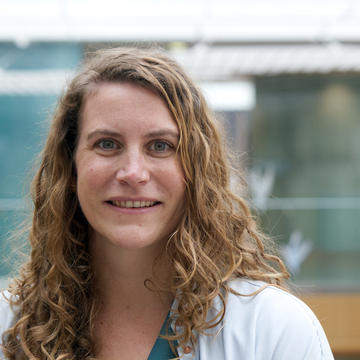
Verena Laupert is a Researcher at the Department of Computational Molecular Biology within the Max Planck Institute for Molecular Genetics (Max Planck Society). Her work bridges computational biology , epigenetics , and genomics , focusing on chromatin organization and gene regulation. Her research explores transcriptional dynamics in evolutionarily rearranged genomes, mechanisms of promoter repression , and enhancer-target prediction using machine learning. She has contributed to studies on germline chromatin structure , regulatory conflicts , and the interplay between DNA methylation and chromatin domains . Her publications highlight interdisciplinary approaches, combining Hi-C , long-read sequencing , and computational modeling . Collaborative projects include developmental gene regulation , retrotransposon activity , and computational tools for epigenetic analysis.
Malte Spielmann is a Researcher at the Max Planck Institute for Molecular Genetics in the Human Molecular Genomics department. His work focuses on structural variants, 3D genome organization, and their role in developmental disorders and rare diseases. Key contributions in Nature , Nature Communications , and Genes & Chromosomes journals Developed frameworks for integrating Hi-C with genome sequencing to resolve complex rearrangements Research Themes : Decoding how structural variants alter gene regulation via chromatin architecture Elucidating phase separation and nucleolar dysfunction in genetic syndromes Pioneering single-cell phenotyping for developmental disease mechanisms Article Trends (2021-2025) highlight interdisciplinary approaches combining: Hi-C and long-read sequencing for TAD analysis Single-cell RNA-seq in limb malformations and neurodegeneration Epigenetic repression and enhancer hijacking in congenital defects
Kathleen Burns, MD, PhD, serves as Chair of the Department of Pathology at Dana-Farber Cancer Institute, Vice Chair of Pathology and Senior Hematopathologist at Brigham and Women’s Hospital, and Professor of Pathology at Harvard Medical School. Her laboratory pioneers research on transposable elements and their impact on human disease, particularly cancer biology and diagnostics. Dr. Burns earned her MD and PhD from Baylor College of Medicine, completed clinical pathology residency and hematopathology fellowship at Johns Hopkins University School of Medicine (serving as Chief Resident), and advanced to Professor with tenure at Johns Hopkins. There, she held leadership roles including Deputy Director for Research in Pathology and Director of the Physician-Scientist Training Program before joining Dana-Farber. Her research program revolutionized understanding of transposable elements, demonstrating their role as major sources of structural variation in human populations (Cell, 2010) and developing the first monoclonal antibody to detect LINE-1 ORF1p. This revealed LINE-1 expression as a hallmark of lethal cancers including lung, prostate, and ovarian malignancies. Current work explores how LINE-1 expression induces interferon responses, promotes cancerous transformation, and creates therapeutic vulnerabilities in DNA repair-deficient cells. Analysis of Dr. Burns' publications from 2010-2020 shows a cohesive trajectory from foundational genomics to translational cancer research. Her work consistently bridges retrotransposon biology with clinical applications, evolving from mapping insertion polymorphisms to uncovering mechanisms of genome instability and identifying biomarker potential in cancer diagnostics. Dr. Burns' honors include: Election to the American Society for Clinical Investigation (2018) Election to the American Association of University Pathologists Election to the Interurban Clinical Club Career Award from the Burroughs Wellcome Fund Scriver Family Visiting Professorship (2019) Daria Haust Lectureship at Queen’s University As Chair of Pathology at Dana-Farber, she leads a department integrating cutting-edge research with clinical pathology. Her laboratory continues investigating transposable element biology with the explicit goal of developing novel cancer diagnostics and therapeutics, particularly leveraging LINE-1 expression for early detection and targeted treatments.
Graydon B. Gonsalvez is currently a Professor at the Medical College of Georgia , Augusta University in the Department of Cellular Biology & Anatomy . His research focuses on the molecular mechanisms underlying cell polarity establishment and maintenance, particularly through mRNA localization and endocytic trafficking pathways. BA - Carthage College, Kenosha, WI (1994-1998) PhD - Medical College of Wisconsin, Milwaukee, WI (1998-2004) Postdoctoral Training - Case Western Reserve University (2004-2007) and University of North Carolina, Chapel Hill (2007-2009) Research in the Gonsalvez lab investigates two fundamental processes: mRNA Localization: Using Drosophila melanogaster oocytes to study oskar mRNA transport, demonstrating the critical role of Kinesin-Dynein motor coordination. Endocytic Trafficking: Revealing Dynein's essential function in endocytic maturation, with abnormal vesicle morphology when motor function is compromised. Recent work explores novel BAR domain protein Sh3px1's role in membrane curvature generation and its implications for tissue morphogenesis. The lab employs Drosophila genetics, mammalian cell biology, and biochemical techniques (RT-PCR, Western blot, immunoprecipitation) to investigate these mechanisms. Current funding includes: National Institutes of General Medical Sciences (NIGMS) R01 Grant (2013-2018) Past American Cancer Society Grant Intramural Augusta University Grant Lab members include: Phylicia Allen (Graduate Student) Jessica Pride (Graduate Student) Hannah Neiswender (Research Associate)
Dr. Diego Villar is a Non-clinical Senior Lecturer at Queen Mary University of London's Blizard Institute, Faculty of Medicine and Dentistry. His laboratory integrates genomics, epigenetics, and bioinformatics to investigate myocardial gene regulation mechanisms and their implications in cardiovascular disease, while also exploring evolutionary adaptations in African mole-rats through comparative genomics. PhD in Molecular Biology Postdoctoral training in neurodegeneration Established BHF-funded independent research group Research focuses on transcriptional dynamics in mammals through: Functional genomics of non-coding elements Cardiovascular epigenetic profiling Evolutionary enhancer analysis Recent publications examine DNA methylation networks in mammalian traits, lineage-specific adaptations in subterranean species, and regulatory element contributions to cardiovascular pathology. Key projects include characterizing myocardial enhancers with disease-associated variants and exploring stress resistance mechanisms in hypoxia-adapted rodents. Scientific recognitions include: British Heart Foundation Basic Science Fellowship (2018) EMBO Short Term Fellowships (2016, 2009) Ramon y Cajal Merit Award (2016) CRUK Travel Award (2012) Current supervision includes: Dr. Stephanie Frost (BHF-funded Postdoctoral Scientist) Mr. Yu Huang (Regenerative Medicine MSc student) Alumni: Daniel Pavon Heredia (CONACYT MSc) and Yiling Wan (undergraduate project)
Luis Lugones is an Assistant Professor in the Department of Biology at Utrecht University's Faculty of Science, specializing in Molecular Microbiology with a focus on fungal biology. His research primarily centers on the molecular mechanisms underlying fungal development, particularly in mushroom-forming fungi like Schizophyllum commune and Agaricus bisporus . Dr. Lugones maintains an active research group within the Molecular Microbiology subsection, contributing significantly to our understanding of fungal genetics and development. Dr. Lugones' research interests span several interconnected areas of fungal biology. His work on gene regulation in fungi has been particularly influential, with numerous publications examining transcription factors involved in mushroom formation and degradation of organic polymers. He has pioneered the application of CRISPR/Cas9 technology in fungal systems, developing high-throughput methods for gene deletion and epigenetic modification in model mushroom systems. His research on fungal cell wall biology and the role of hydrophobins in aerial hyphae formation has provided fundamental insights into fungal development. Dr. Lugones also investigates the molecular basis of lignocellulose degradation, with implications for both natural decomposition processes and potential biotechnological applications. Analysis of Dr. Lugones' publication record reveals a consistent focus on fungal molecular genetics with an evolving technological trajectory. While his earlier work established foundational knowledge about hydrophobins and fungal development, his recent publications demonstrate increasing sophistication in genetic manipulation techniques, particularly with CRISPR-based approaches. The research spans fundamental fungal biology (mushroom formation, gene regulation) to more applied aspects (lignocellulose degradation, potential biotechnological applications). His work frequently involves collaboration with other researchers at Utrecht University and international partners, as evidenced by the multi-institutional authorship on many publications. Dr. Lugones has supervised numerous students and research projects, as indicated by the 'Supervised Work (10)' mentioned in his profile. His research has been supported by various grants that have enabled his team to investigate fungal genetics, development, and applications. The extensive publication record spanning from 1998 to the present demonstrates sustained research activity and productivity in the field of fungal molecular biology. Dr. Lugones maintains an active research laboratory focused on fungal molecular genetics within Utrecht University's Department of Biology. His work frequently involves interdisciplinary collaboration with biochemists, geneticists, and environmental microbiologists. The laboratory appears to specialize in molecular techniques for fungal systems, particularly gene editing and expression analysis in mushroom-forming fungi. Research in the lab spans from fundamental questions about fungal development to more applied aspects of fungal biotechnology and decomposition processes.
Ben Hale is a Full Professor of Medical Virology at the Institute of Medical Virology , University of Zurich, Switzerland. Previously, he held academic positions at the University of Zurich (2015-2025) and the University of Glasgow (2011-2014). Education : PhD in Molecular Virology (2008, University of St Andrews); BSc (Hons) in Cell Biology & Pathology (2004, University of St Andrews). Research Focus : The Hale group investigates molecular mechanisms of the interferon system, interferon deficiencies in viral diseases, and host-virus interactions using multi-omics, molecular virology, and clinical cohort studies. His research spans Molecular Biology , Virology , and Immunology , with a particular emphasis on how viral proteins (e.g., influenza NS1, paramyxovirus V) manipulate interferon signaling and the role of autoantibodies in immunodeficiency. Recent work includes developing AIR cells for interferon detection and proximity proteomics of interferon signaling. Scientific Awards : 2013 - ERC Starting Grant 2012 - Wellcome Trust/Royal Society Sir Henry Dale Fellowship Hale's lab has trained doctoral students Florence Kwaschik and Chau Tran , and collaborates with clinicians and researchers globally. Funding comes from the Swiss National Science Foundation (SNF), Novartis Foundation, Hartmann Müller Foundation, and previous grants from the ERC and UK Medical Research Council (MRC).
Katelyn Mika serves as an Assistant Professor in the Department of Biological Science at the University of Tulsa, where her research investigates the molecular evolution and development of novel traits in marine organisms. She employs cutting-edge genomic techniques on both model and non-model species to uncover genetic mechanisms driving adaptation in ocean environments. Her academic background includes a Ph.D. in Molecular Evolution of Pregnancy from the University of Chicago and dual Bachelor's degrees (B.S. and B.A.) from Indiana University. This foundation supports her interdisciplinary approach to evolutionary questions. Dr. Mika's work spans molecular evolution , evolutionary developmental biology (EvoDevo) , and marine genomics , with specific focus on marine appendage formation (e.g., zebrafish pectoral fins and skate wings), depth adaptation across aquatic ecosystems, and host-microbiome interactions in vertebrates. Her lab pioneers single cell transcriptomics applications in non-model marine organisms to reveal both conserved and novel molecular pathways underlying phenotypic innovation. Analysis of her publication record reveals strong methodological consistency in evolutionary transcriptomics applied to reproductive biology and marine adaptation, with increasing emphasis on non-model systems since 2020. The work bridges comparative genomics with functional validation to address fundamental questions about evolutionary innovation. Her significant recognitions include: National Association of Underwater Instructors (NAUI) Worldwide Dr. Charlie Brown Memorial Award (2022) University of Chicago Biological Sciences Division Postdoc Trainee Diversity, Equity, and Inclusion Award (2021) Women Divers Hall of Fame Instructor Advanced Education Grant (2020) The Microbiome Center Pilot Award (2019) Dr. Mika leads an active research laboratory funded by competitive grants including the Microbiome Center Pilot Award. Her mentorship extends to graduate students in biological sciences, with research collaborations spanning marine genomics and evolutionary developmental biology. Based in Oliphant Hall, the Mika Lab maintains specialized facilities for marine organism handling and genomic analysis. Current projects focus on comparative studies of marine appendage development and host-microbiome coevolution, with future work expanding into environmental adaptation mechanisms in changing ocean ecosystems.
Christopher T. DeFraia is a Professor in the Department of Biological Sciences at Ferris State University's College of Arts, Sciences and Education. His research focuses on plant genetics, epigenetics, and immune response mechanisms at the molecular level. Key research areas include: Epigenetic regulation of transposable elements RNA-mediated gene silencing mechanisms Chromatin remodeling in plant immunity Metabolic pathways affecting plant development Recent publications highlight work on Arabidopsis systems, particularly exploring small RNA dynamics and the Elongator complex's role in defense responses. Collaborations include research on epigenetic inheritance and RNA-directed DNA methylation pathways.
Nicola Neretti is an Associate Professor of Molecular Biology, Cell Biology, and Biochemistry at Brown University and serves as Associate Director for the Center on the Biology of Aging. He is affiliated with the Center for Computational Molecular Biology (CCMB) and leads the Neretti Lab, which combines genomics and computational biology to study the biology of aging and age-associated diseases. His educational background includes: PhD in Computational Biology from Brown University (2001) MS from Brown University (1999) Dr. Neretti's research focuses on the application of high throughput techniques such as RNA-seq to study changes in transcriptional networks caused by genetic and environmental interventions that extend lifespan. His work integrates computational methods with experimental biology to detect age-associated chromatin changes and activation of transposable elements. He develops computational tools to analyze 3D chromosome structure and has made significant contributions to understanding the role of genomic instability in aging. Analysis of Dr. Neretti's recent publications reveals a strong focus on cellular senescence, chromatin remodeling, and transposable element activation in aging. His work spans multiple model organisms and human tissues, with an increasing emphasis on single-cell and spatial transcriptomics approaches. A consistent theme across his publications is the connection between genomic instability, particularly through transposable element activation, and age-related inflammation. Dr. Neretti teaches several courses at Brown University: BIOL 2010 - Quantitative Approaches to Biology BIOL 2010B - Introduction to Data Science in Molecular Biology BIOL 2350 - The Biology of Aging The Neretti Lab has developed several important software tools for genomic analysis: SIMBA3D: Statistical method for inferring 3D chromosome structure from single-cell Hi-C data GINOM: Statistical framework for assessing interval overlap of multiple genomic features RepEnrich: Method to estimate repetitive element enrichment using high-throughput sequencing data CORaL: Software for comparing expression profiles across experiments FISH-MDS: Multidimensional scaling for chromosome structure inference with FISH constraints
John M. Sedivy is the Hermon C. Bumpus Professor of Biology and Director of Brown University's Center for the Biology of Aging. A faculty member since 1996, he holds appointments in the Department of Molecular Biology, Cell Biology and Biochemistry. His career spans groundbreaking work in cell cycle regulation , oncogene biology , and cellular aging . Education: PhD in Molecular Biology (Harvard, 1985), BSc (University of Toronto, 1978) Sedivy's research focuses on cellular senescence , epigenetic regulation , and transposable element dynamics in aging. He pioneered single-cell senescence assays and epigenetic aging studies , notably demonstrating age-associated heterochromatin expansion and transposable element activation in somatic tissues. His 15+ recent publications highlight themes in telomere biology , chromatin changes during aging , Myc signaling , and bioinformatics approaches to gene network analysis. Key contributions include first in vivo quantification of cellular senescence in primates (2006) and epigenetic clocks for aging (2011). Scientific Awards: NIH Merit Award (2009) Glenn Award for Aging Research (2011) Hermon C. Bumpus Chair (2006) Ellison Senior Research Scholar (2007) As an administrator, he chaired Brown's Department of Molecular Biology, Cell Biology and Biochemistry and founded its Genomics and Proteomics Center. He served on NIH CMAD study section (2003-2012) and co-edited Aging Cell (2006-2012). His lab's work has been continuously funded by NIH since 1989, including a 10-year MERIT award (R37 AG016694).
Nikos Tapinos is the Sidney A. Fox and Dorothea Doctors Fox Associate Professor of Ophthalmology, Visual Science, and Neuroscience at Brown University, affiliated with the School of Engineering and Department of Neurosurgery. He leads the Molecular Neuroscience & Neurooncology Lab, focusing on epigenetics, glial cell biology, and neuro-oncology. Research spans myelination mechanisms, glioma stem cell migration, RNA epigenetics, and novel therapies like GliaTrap hydrogels. Collaborations include departments of Pathology, Engineering, and Molecular Biology across Brown University. Recent work emphasizes epigenetic regulation in glioblastoma using machine learning, enhancer RNAs, and HDAC inhibitors. Key technologies include enzyme-free tissue dissociation and electric field therapy platforms. His lab investigates chromatin remodeling via antisense RNAs (e.g., Egr2 regulation) and mechanisms of glioma invasion in 3D models. Publications highlight integrative approaches to targeting glioma stem cells and Schwann cell biology.
Arne Weiberg is a Principle Investigator and Research Group Leader at the Department for Genetics, Biocenter, Ludwig-Maximilians University Munich (LMU), Germany. His work focuses on cross-kingdom RNA interference (RNAi) in plant-pathogen interactions, particularly small RNA effectors from the fungal pathogen Botrytis cinerea and oomycete Hyaloperonospora arabidopsidis . Affiliation: LMU Munich, Germany Research Interests: Pathogen small RNAs, RNAi mechanisms, extracellular vesicles, plant immunity suppression His research employs genomics, transcriptomics, bioinformatics, molecular genetics, and biochemical approaches to uncover the molecular basis of cross-kingdom RNAi, including the role of extracellular vesicles (EVs) in RNA transport and the molecular diversity of small RNA effectors. He investigates how pathogens like Botrytis cinerea (gray mold) and Hyaloperonospora arabidopsidis (downy mildew) exploit host pathways for virulence. Recent work explores EV-mediated RNA delivery and comparative genomics of wild Botrytis isolates to identify selective pressures on small RNA sequences. His lab has established protocols to study EV RNA cargoes in plant-microbe interactions. Research is supported by grants including SFB924, RU5116, and the Cost Action CA20110 (exRNA-PATH). Key publications include foundational studies on cross-kingdom RNAi (Science 2013), reviews on small RNA virulence strategies (Annual Review of Phytopathology 2014), and mechanistic analyses of pathogen EVs (Current Opinion in Plant Biology 2022). Collaborative projects with institutions like University of California, Riverside, and Julius-Maximilians University Würzburg highlight his interdisciplinary approach.
Dr. Michael Lee is an Associate Professor in the Department of Pediatrics at UT Southwestern Medical Center. He actively contributes to clinical education as the course director for The Ambulatory Care Rotation and serves as a continuity attending at Children’s Health Pediatric Group. Medical Degree: UT Southwestern Medical School Pediatric Residency: Children’s Medical Center of Dallas His research spans genomics , chromatin biology , and nano-toxicology , with recent work focusing on: Transposable elements in cancer evolution CRISPR-based chromatin interaction analysis Integrase-independent retrotransposition mechanisms Environmental adaptation via genomic plasticity Carbon nanotube-cell interactions Publications reveal a strong emphasis on genomic instability and non-coding DNA across species, from yeast to mammals. His work bridges fundamental molecular biology with clinical applications in pediatric oncology. Scientific recognition includes: Fellowship in the American Academy of Pediatrics Dr. Lee's career integrates medical education, pediatric clinical practice, and interdisciplinary research at the intersection of genetics and nanotechnology.
Dr. Rebecca Berrens is a researcher focused on elucidating the molecular mechanisms of locus-specific transposable elements (TEs) in developmental gene regulation. Her work investigates how TEs, which comprise half of the mammalian genome, influence gene expression and contribute to developmental disorders through their regulatory sequences. Research Approach: Developed CELLO-seq, a single-cell long-read RNA-seq method, to assess TE expression at individual locus resolution. Utilizes epigenetics, spatial chromosome organization, computational biology, and genome-editing technologies to dissect TE heterogeneity and functional roles in development. Identified 25 key LINE1 loci for functional studies using CELLO-seq. Laboratory: Led the Berrens Lab, which explores fundamental processes linking TE activity to developmental regulation. Lab website: https://sites.google.com/view/berrenslab