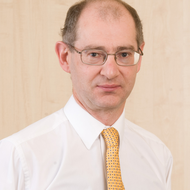
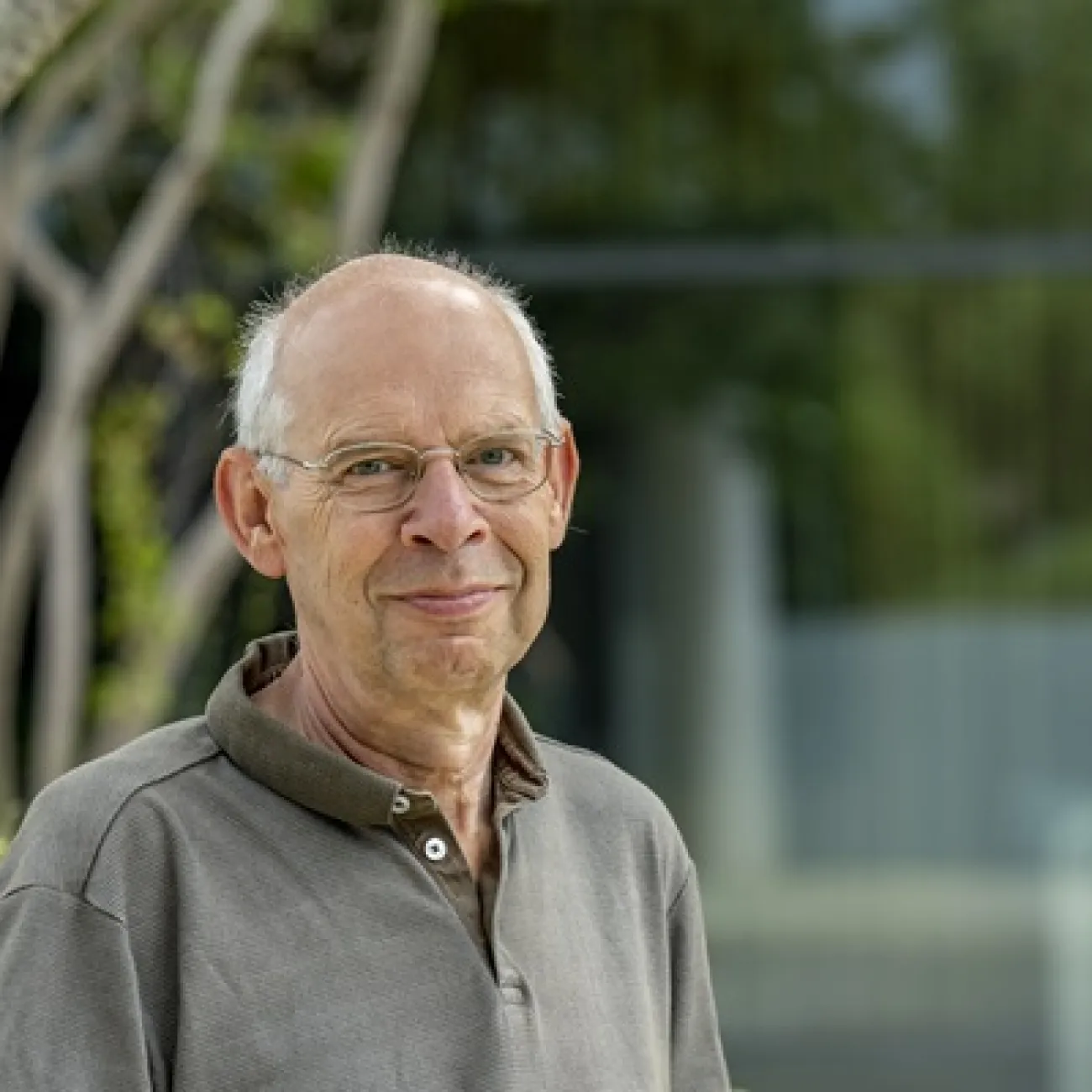
Dr John Longley is a Senior Lecturer in Engineering at the Whittle Laboratory, Department of Engineering, University of Cambridge. He specializes in unsteady and non-uniform flow phenomena in turbomachinery and leakage flow effects on aerodynamic performance. Education: PhD at Cambridge University; BSc in Applied Mathematics Prior Employment: Ruston Gas Turbines (aerodynamic design of transonic turbines); MIT (VSTOL aerodynamic research) Research Focus: His work bridges theoretical and applied fluid dynamics in aerospace and mechanical engineering, particularly in turbomachinery optimization. Publication Trends: Recent research explores stator platform geometry impacts on turbine efficiency and unsteady flow modeling in gas turbines. Awards: ASME 2009 Gas Turbine Award for air-curtain over-tip seal research GPPS 2019 Best Paper Award (with Dr Derek Taylor) Contact: jpl@eng.cam.ac.uk | Phone: 01223 337583
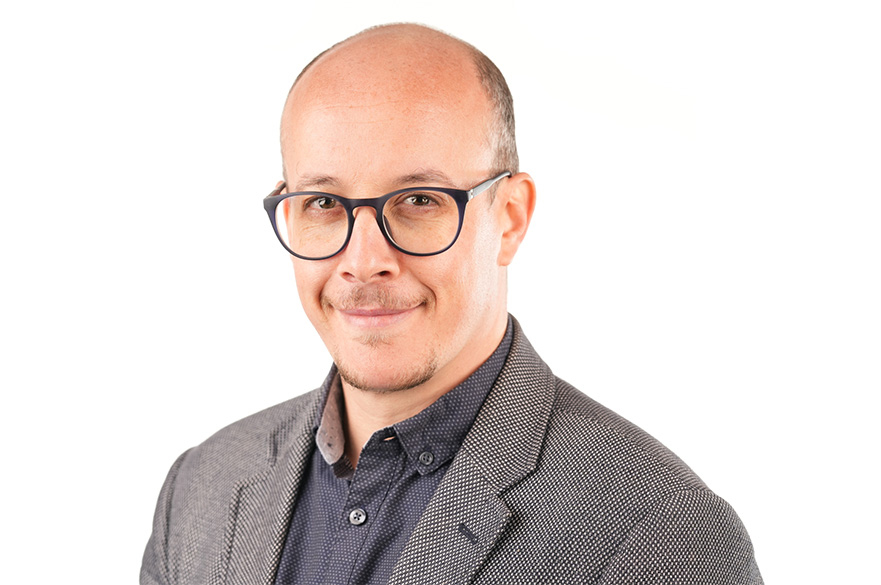
Dr. Zak Mansouri serves as a Senior Lecturer in Aerospace Engineering at Nottingham Trent University's School of Science & Technology, where he acts as Course Director for Aerospace Engineering and leads the Development and Diagnostic of Alternative Fuels (DDAF) Laboratory. A core member of the Imaging, Materials and Engineering Research Centre (IMEC), he oversees critical engineering modules including Solid Mechanics & Dynamics and Advanced Dynamics & Vibration as Module Leader, shaping curriculum for undergraduate and postgraduate aerospace programs. His academic foundation includes a PhD from Algeria's University of Laghouat (2016), doctoral research at France's CNRS, and postdoctoral work at the French Alternative Energies and Atomic Energy Commission. Key milestones: PhD in Combustion Engineering, University of Laghouat (2016) Doctoral Researcher, CNRS France (2013-2016) Postdoctoral Researcher, CEA France (2016-2017) Mansouri's research pioneers net-zero combustion technologies, with current focus on iron fuel systems (funded by The Royal Society), hydrogen combustion dynamics, and aerothermal optimization of gas turbines. His expertise bridges experimental diagnostics and computational fluid dynamics to address combustor-turbine interactions in next-generation aero engines, directly supporting global decarbonization efforts in aerospace and energy sectors through industry-academic partnerships. Analysis of his 2021-2025 publications reveals a cohesive research trajectory centered on turbine performance under non-ideal conditions, with growing emphasis on alternative fuels. His work consistently targets aerothermal challenges in gas turbines—particularly hot-streak and swirl effects—while expanding into micro-combustion systems for hydrogen and metal powders, demonstrating a strategic shift toward scalable net-zero propulsion solutions. His scientific recognition includes: ANR Research Fellowship (2017) for low-carbon combustion technology (€50,000) Mansouri secures competitive funding from The Royal Society and previously from French National Research Agency, with industrial consultancy contributions to €2.5M projects at GE Renewable Energy modernizing hydropower infrastructure. He actively supervises PhD candidates through NTU's Doctoral School, prioritizing projects in sustainable combustion and turbomachinery, and maintains open collaboration channels for industrial R&D partnerships. He directs the DDAF Laboratory's experimental research on alternative fuel diagnostics and leverages IMEC's multidisciplinary facilities for thermal-fluid investigations. His global network integrates industrial partners (Lanemark, ArcelorMittal, TSI) with academic institutions across France and Algeria, driving innovation in turbine cooling systems and zero-emission combustion through shared expertise in computational modeling and experimental validation.
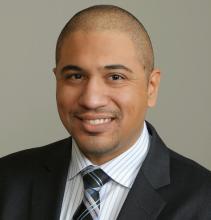
Edward DeMauro is an Assistant Professor at Rutgers University since January 2017, specializing in experimental aerodynamics with a focus on three-dimensional flow physics and active control. He holds a Ph.D. in Mechanical Engineering from Rensselaer Polytechnic Institute (2012), an M.S. in Aerospace Engineering from the University at Buffalo (2008), and a B.S. in Aerospace and Mechanical Engineering from the same institution (2006). His research interests center on the experimental and theoretical study of flow instabilities, particularly in subsonic, transonic, and supersonic regimes. He has expertise in hydrodynamic stability theory, active flow control using synthetic jets, and multiphase flow physics. Key techniques include particle image velocimetry (PIV), pressure-sensitive paint, and shock tube experiments. His work at Sandia National Labs (2015–2016) involved studying cavity flows and multiphase shock dynamics using advanced equipment like pulsed-burst lasers. DeMauro’s academic contributions include teaching roles at Rensselaer Polytechnic Institute (2013–2014), where he instructed courses in flight mechanics, thermal-fluids engineering, and laboratory practices. He is affiliated with the Center for Flow Physics and Control (CeFPaC), established in 2008 under Professor Amitay, where he gained hands-on experience in aerodynamics research and experimental design. His publications span aerodynamic instability control, cavity flow dynamics, and shock-particle interactions, reflecting a strong focus on high-speed and complex fluid dynamics. Collaborations include work with institutions like Sandia National Labs and Rensselaer’s Watervliet Facility, emphasizing experimental rigor and interdisciplinary approaches to flow physics challenges.
Dr. Ilan Kroo Academic Appointments: Thomas V. Jones Professor in Aeronautics and Astronautics at Stanford University's School of Engineering. Active in teaching and research since at least 1983 (PhD Stanford). Education: PhD in Aeronautics and Astronautics, Stanford University (1983). Research Focus: Multidisciplinary optimization and aircraft synthesis Unconventional aircraft configurations (e.g., joined wings, oblique wings) Low-speed aerodynamics: vortex wake analysis, induced drag computation Awards: Elected Member of the National Academy of Engineering (2013–Present). Teaching: Leads courses on aircraft design, applied aerodynamics, and sustainable aviation. Courses include AA 146A/B, AA 241A/B, and independent study modules. Students: Advises master's students William Ho, Sean Lin, Adrian Loekman, and Sebastian Monsalvo. Labs/Teams: Involved in NASA and industry-sponsored projects on computational aircraft design and transonic formation flight. Recent Work: Focus on pilot-induced oscillation mitigation, extended formation flight efficiency, and UAV swarm control. Active in publishing since 2009, with 116+ papers.
Prof. Dr.-Ing. Andrea Beck is a faculty member and Managing Director of the Institute of Aerodynamics and Gas Dynamics (IAG) at the University of Stuttgart. She leads the Numerical Methods in Fluid Mechanics working group, focusing on high-precision numerical methods for supercomputers, particularly discontinuous Galerkin (DG) methods. Her research spans fluid mechanics, aeroacoustics, plasma physics, and multiphase flows, with applications in wind energy, helicopter systems, and environmental aerodynamics. Role: Professor and Managing Director, IAG Committees: Member of the DFG Review Board, Strategy Committee for National HPC, and steering committee of High Performance Center Stuttgart. Her research emphasizes high-order methods, turbulence modeling, and data-driven approaches. She teaches courses such as 'Numerical Methods in Fluid Mechanics' and 'CFD Programming Projects', and has developed open-source software like FLEXI and HOPR for high-performance computing. Recent articles highlight advancements in entropy-stable DG methods, turbulence simulation using graph neural networks, and multiphase flow modeling. Her work integrates machine learning with CFD to enhance simulation accuracy and efficiency.
Gui-Qiang G. Chen is a Professor at the Mathematical Institute , University of Oxford, and a Professorial Fellow of Keble College. He serves as Director of the Oxford Centre for Nonlinear Partial Differential Equations (OxPDE) , focusing on nonlinear PDEs, hyperbolic conservation laws, and their applications to fluid dynamics, geometry, and mathematical physics. His research spans Partial Differential Equations , Nonlinear Analysis , Shock Wave Theory , and Free Boundary Problems , with recent work on stochastic PDEs , geometric PDEs , and numerical analysis . His publications cover topics like transonic shocks , hypersonic flow , and compressible fluid dynamics . Gui-Qiang Chen has co-authored 15+ major publications since 2007, including research monographs on shock reflection-diffraction and Prandtl-Meyer reflection configurations , and his work appears in leading journals like Annals of Mathematics and Communications on Pure and Applied Mathematics . Awards and fellowships include: 2024 Polya Prize (London Mathematical Society) Doctor of Science (Oxford, 2024) Member of Academia Europaea (2022) Member of the European Academy of Sciences (2020) Fellow of the American Mathematical Society (2017) SIAM Fellow (2013) Chinese National Prize of Sciences (1990) He supervises DPhil/PhD students in nonlinear PDEs and related fields, and his research is supported by Oxford's mathematical infrastructure and international collaborations.
Dr Long Wu is a Senior Research Fellow at the University of Southampton specializing in aeroacoustics and computational fluid dynamics, with research focused on high-order numerical methods and design optimization for noise reduction in aerospace systems including aeroengines and turbomachinery. Holding a PhD and BEng degree, his work centers on computational techniques for simulating and mitigating aircraft engine noise through high-fidelity simulations and adjoint-based optimization of fan and compressor components. Key research areas include boundary closure stability, tone noise propagation, and nonlinear acoustic effects in engine intakes. His 2018-2024 publications demonstrate consistent expertise in computational aeroacoustics, bridging theoretical numerical methods with practical noise control solutions for turbomachinery. Recent work emphasizes stable high-order schemes and optimization frameworks for reducing buzz-saw noise and improving aerodynamic-acoustic performance. As a member of the University's Acoustics Group, Dr Wu supervises PhD student Joseph Stephen Paul Binns on aeroengine noise propagation and accepts new PhD applicants. No scientific awards or research grants are documented in his current profile.
Pierre Sagaut is a Professor at Aix-Marseille Université , leading research in the Instabilities, Turbulence and Couplings team. He serves as Editor-in-Chief of the Journal "Computers and Fluids" and holds editorial roles at Journal of Computational Physics , Journal of Turbulence , and Journal of Scientific Computing . His academic leadership extends to roles in the Scientific Council of the AFM (President) and ERCOFTAC (Vice-President). Research Interests focus on Lattice Boltzmann Method (LBM) for compressible/turbulent flows Aerodynamics, aeroacoustics, and aerothermics Uncertainty quantification and data assimilation Immersed boundary techniques for complex geometries Scientific Awards include the 2024 CNRS Bronze Medal Senior Member, Institut Universitaire de France Article Trends highlight LBM applications in nuclear reactor safety, urban pollutant dispersion, helicopter intake dynamics, and transonic flows. Recent works address mass leakage correction, hybrid RANS/LES turbulence modeling, and quantum-inspired lattice gas algorithms. Grants & Collaborations involve partnerships with CNRS, ERCOFTAC, and AFM, focusing on computational fluid dynamics and turbulence modeling.
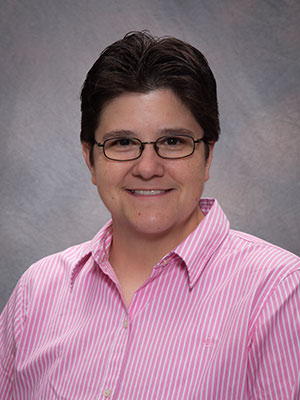
Lesley Wright is an Associate Professor in the J. Mike Walker ’66 Department of Mechanical Engineering at Texas A&M University, holding the Jana and Quentin A. Baker ‘78 Career Development Chair. She serves as ABET Coordinator and leads research in gas turbine cooling, convective heat transfer, and fluid mechanics experimentation. Her work emphasizes experimental methods and advanced measurement techniques like pressure-sensitive paint (PSP) for film cooling effectiveness analysis. Education: Ph.D., Mechanical Engineering, Texas A&M University (2006) M.S., Mechanical Engineering, Texas A&M University (2003) B.S., Engineering with Mechanical Engineering Concentration, (2001) Research Interests: Wright’s research focuses on optimizing turbine blade cooling through jet impingement, serpentine channel designs, and advanced thermal measurement technologies. She collaborates with the Turbomachinery Laboratory to develop solutions for high-temperature applications in aerospace and energy systems. Publications: Her recent work highlights contributions to film cooling performance, heat transfer enhancement in rotating channels, and the application of machine learning for temperature field reconstruction. Over 50 peer-reviewed articles and two textbooks ( Experimental Methods in Heat Transfer and Fluid Mechanics and Analytical Heat Transfer ) reflect her expertise. Awards: Walker Outstanding Service Award (2023) AIAA Associate Fellow (2023) ASME Fellow (2021) SAE Ralph R. Teetor Educational Award (2015) Lab Affiliations: Wright is affiliated with the Turbomachinery Laboratory, advancing research in turbomachinery cooling, heat transfer, and fluid dynamics. Her team employs state-of-the-art facilities for experimental validation and computational modeling.
Jeff Defoe is a Professor in the Department of Aerospace Engineering at the University of Windsor's Faculty of Engineering. His research focuses on advancing aerospace and mechanical engineering through computational fluid dynamics (CFD), turbomachinery optimization, and aeroacoustics. He collaborates with jet engine manufacturers to enhance aircraft efficiency and has pioneered low-cost ventilator designs for global health applications. Defoe is a recipient of the 2016 Medal of Excellence for dedication to the Faculty of Engineering. His work integrates theoretical, numerical, and experimental methods to address challenges in fan/compressor performance, automotive thermal management, and crosswind effects on aerodynamic systems. Defoe has mentored the University of Windsor Rocketry Team, which achieved third place in an international competition in 2017. His research spans applications from aerospace propulsion systems to sustainable automotive engineering solutions. Key contributions include body-force modeling techniques for turbomachinery, nonlinear control systems for automotive air conditioning, and predictive models for gas turbine dynamics. His publications emphasize innovations in CFD algorithms, turbulence modeling, and noise reduction strategies for high-performance systems.
Professor Neil Sandham is a Professor of Aerospace Engineering at the University of Southampton, leading research in transonic and hypersonic aerodynamics. He has held this position since 1999, following roles at Stanford University (PhD 1989), DLR Göttingen, and Queen Mary, University of London. His expertise spans numerical simulations of transitional and turbulent flows, with a focus on high-performance computing and aerodynamic design. Research interests include transonic buffet phenomena, hypersonic flows with thermo-chemical non-equilibrium, and flow over rough surfaces. Current projects involve Exascale computing using OpenSBLI, shocklet dynamics, and space entry systems like MEESST. Teaching includes modules on aerothermodynamics and computational aerodynamics. He supervises PhD students in engineering and environmental systems. External roles include Fellow of the Royal Aeronautical Society (since 2004) and editorial board membership for AIAA Journal (2019–2021). Key collaborations involve EPSRC-funded projects such as the UK Turbulence Consortium and EU initiatives like EXAFLOW. His work bridges academic research and industrial applications in aerospace engineering.
Prof. Rob Miller is the Chair in Aerothermal Technology and Director of the Whittle Laboratory at the University of Cambridge. He co-directs the Rolls-Royce Whittle University Technology Centre and contributes to policy via the UK Department for Transport’s Science Advisory Council and the FlyZero Design Advisory Group. His work bridges academic leadership with industrial innovation.
Alexander F Vakakis is the Donald Biggar Willett Professor of Mechanical Science and Engineering and holds a joint appointment in Aerospace Engineering at the University of Illinois' College of Engineering. His research focuses on nonlinear dynamics, vibration control, and energy transfer in mechanical systems. He has pioneered work on nonlinear energy sinks (NES) and targeted energy transfer (TET) mechanisms, with applications in aerospace, structural engineering, and acoustics. His recent studies explore phenomena like vibro-impact systems, nonlinear metamaterials, and data-driven methods for modal interaction analysis in fighter aircraft. Key research interests include nonlinear oscillators, wave localization, acoustic non-reciprocity, and the design of energy-dissipative structures. He has contributed to understanding energy redistribution in complex systems, such as subsea power cables and seismic mitigation frameworks. His work frequently bridges theory, computation, and experimental validation. Dr. Vakakis has authored over 500 publications, with recent articles addressing topics like topological interface modes in metamaterials, interband energy transfer in phononic lattices, and super-slow hysteresis dynamics. His research emphasizes leveraging strong nonlinearities to achieve novel engineering solutions. Awards: ASME Fellow (2012), Humboldt Research Award (2019) Collaborations: Active in aerospace dynamics, structural health monitoring, and metamaterial design Grants & Labs: Leads projects funded by NSF and industry partners; affiliated with Illinois' Nonlinear Systems Lab
Dimitrios Rozakis is an Assistant Professor of Mechanical and Aerospace Engineering. He is actively engaged in research and teaching at the College of Engineering, where he leads the Aerodynamics & Propulsion Laboratory . Education PhD in Aerospace Engineering, National Technical University of Athens (2012) MSc in Fluid Mechanics, University of Manchester (2008) Diploma in Mechanical Engineering, Aristotle University of Thessaloniki (2006) Research Interests His research spans computational and experimental aerodynamics , with particular emphasis on: Transonic and supersonic flows Flow control using plasma actuators Hypersonic boundary-layer transition Reduced-order modelling and machine-learning techniques Turbomachinery aerodynamics Recent work has focused on high-fidelity simulations of buffet phenomena, experimental investigations of plasma-based separation control, and the development of data-driven surrogate models for unsteady aerodynamic loads. Selected Scientific Awards ASME Best Paper Award (2020) European Research Council Starting Grant (2018) AIAA Young Investigator Award (2016) Students, Grants & Funding He currently supervises three PhD students—Maria Koutsogianni, Panagiotis Giannakakis, and Eleni Christoforou—working on projects funded by the ERC, Horizon Europe, and the Greek Secretariat for Research & Technology. Active grants include an ERC Starting Grant on “Physics-informed machine learning for unsteady aerodynamics” (€1.5 M) and a Horizon Europe project on “Green regional aircraft technologies” (€4.2 M). Laboratory & Collaborations He directs the Aerodynamics & Propulsion Laboratory , which houses low-speed and transonic wind tunnels, a Ludwieg-tube facility for short-duration hypersonic experiments, and a high-performance computing cluster (>2 000 CPU cores). Ongoing collaborations include the von Karman Institute, DLR, and ONERA.
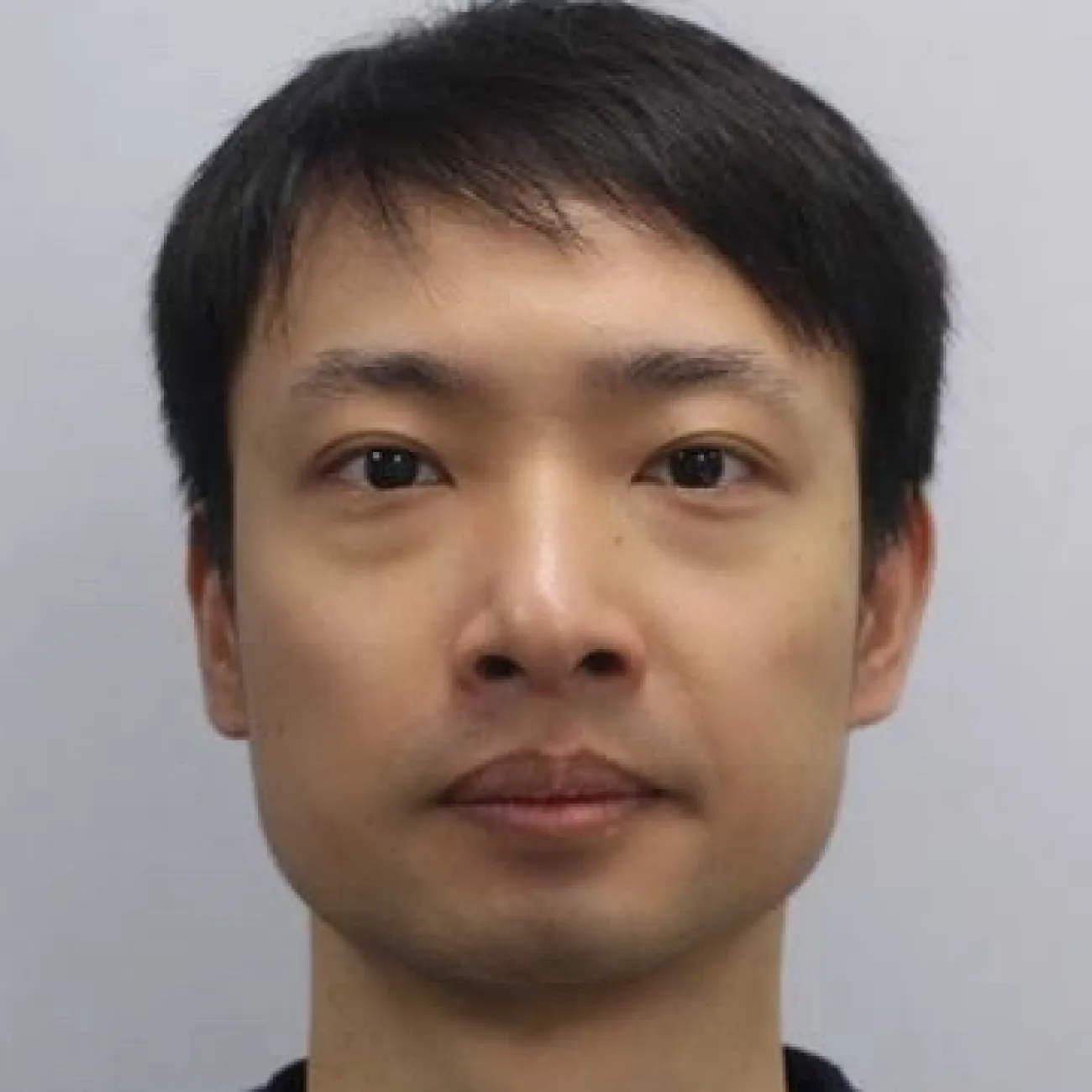
Md Nafiz Chowdhury is a Senior Research Associate and Research Fellow at the University of Oxford, where he leads the Engine Component Aerothermal Test (ECAT) Facility at the Oxford Thermofluids Institute. He holds a College Lecturership in Engineering Science at Lincoln College. His expertise spans turbine aerodynamics, gas turbine heat transfer, and advanced measurement techniques such as Infrared thermography and Pressure-Sensitive Paint (PSP). Nafiz earned his BSc, MSc, and PhD, with his doctoral work at Texas A&M University under Professor Je-Chin Han focusing on cooling technologies and additive manufacturing applications in gas turbines. Education: BSc in Engineering MSc from University of North Dakota (USA) PhD from Texas A&M University (USA) His research interests emphasize novel cooling solutions for turbine components, additive manufacturing (e.g., Direct Metal Laser Sintering), and turbulence measurement techniques. He collaborates with industry leaders including Rolls-Royce, Siemens Energy, and Honeywell Aerospace, driving high-technology readiness research and validation. Nafiz actively reviews for top journals and conferences, contributing to academic rigor in the field. Key awards include the Texas A&M Energy Institute Fellowship (2016), ASME’s International Gas Turbine Institute Student Award (2012, 2016), and the James J. Cain Outstanding Graduate Student Award (2016). His work bridges experimental and computational methods, addressing critical challenges in gas turbine efficiency and thermal management.