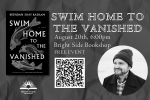
Brendan Shay Basham (Diné) is a Visiting Professor at the University of Nevada, Reno’s Creative Writing MFA Program. He is a writer, artist, and educator born in Alaska and raised in northern Arizona, with a BA in Liberal Arts from The Evergreen State College and an MFA in Creative Writing from the Institute of American Indian Arts. Education : BA in Liberal Arts (Evergreen State College), MFA in Creative Writing (Institute of American Indian Arts) His work explores themes rooted in Indigenous history, magical realism, and the psychological impact of trauma and grief. His debut novel, Swim Home to the Vanished , interweaves Diné creation stories and colonial trauma with a haunting narrative of personal loss and redemption. Scientific & Literary Awards : James Welch Prize for Indigenous Writers Ucross Foundation Native American Literary Award Truman Capote Trust Fellowship Writing By Writers Fellowship Tin House Fellowship Basham’s prose is celebrated for its lush, evocative style and its ability to transmute emotional turmoil into corporeal forms, drawing comparisons to authors like Toni Morrison and Haruki Murakami.
Anatolij K. Prykarpatski is a Professor at the Department of Physics, Mathematics and Computer Science, Tadeusz Kościuszko Cracow University of Technology, Poland, and affiliated with Lepage Research Institute, Slovakia. His research spans dynamical systems theory , nonlinear analysis , and classical/quantum field theory . His work focuses on integrable systems , differential geometry , and mathematical physics , including applications to ergodic theory and Hamiltonian operators. Recent articles explore fractional nonlinear systems , WDVV equations , and transmutation operators , emphasizing algebraic and geometric methods . Collaborations include institutions like The Union of Czech Mathematicians and Physicists , Lodz University of Technology , and International Visegrad Fund . No scientific awards or students are mentioned in the text.
Antoine Moreau is a Lecturer at the University of Franche-Comté, affiliated with the Multimedia Department under the Mediations and Digital Practices pole. His work bridges contemporary art, digital technology, and intellectual property, focusing on copyleft applications beyond software. He co-leads the CCM Center’s Media and Digital Creation program and heads the 'Links between the arts and digital technology' initiative. With a PhD from Nice Sophia Antipolis University (2011) on copyleft and cultural data reformulation, Moreau explores how digital frameworks reshape authorship and artistic production. His research interrogates the tension between ownership and openness, proposing 'hyper-democratic' ecosystems where art serves collective freedom. His publications since 2008 examine digital materiality, networked aesthetics, and the political implications of open-source practices. Articles often analyze the interplay between technical systems and cultural values, emphasizing ethical gestures in digital creation. While no explicit scientific awards are listed, his leadership roles and project involvement highlight institutional recognition.
Tomasz Hanusek is a researcher at the National Centre for Nuclear Research (NCBJ) in Poland, working within the Division of Nuclear Energy and Environmental Studies. He earned his PhD in 2023 with a thesis on transient coupled calculations for the metallic 250 MWth Dual Fluid Reactor (DFRm), supervised by Prof. Rafael Juan-Macian of the Technische Universitaet Munich. His educational background includes advanced coursework in Nuclear reactors, Fundamentals of reactor physics, Numerical methods in high-temperature nuclear engineering, and Reactor physics of High Temperature Reactors (HTRs). These studies provided foundational knowledge for his reactor physics specialization. Dr. Hanusek's research focuses on advanced nuclear reactor systems, particularly transient analysis and coupled neutronics-thermal hydraulics for innovative designs like the Dual Fluid Reactor and Molten Salt Reactor. His work addresses critical challenges in reactivity control, burn-up calculations, and maintaining constant working temperatures in next-generation reactors. He has presented multiple seminars on these topics at NCBJ and external workshops. His publication record centers on nuclear waste transmutation technologies, specifically Accelerator-driven Subcritical Systems (ADS), which falls under the broader disciplines of Nuclear Engineering and Nuclear Physics. His research contributes to sustainable nuclear energy solutions and waste management strategies. Within NCBJ's Division of Nuclear Energy and Environmental Studies, he utilizes computational tools including Park and Trace codes for reactor modeling and simulation, actively contributing to Poland's nuclear research infrastructure.
Jesse J Ring is an Assistant Professor of Art in Ceramics and Sculpture at the University of Florida's School of Art + Art History. Previously, he held the same position at Arkansas Tech University (2017-2020) and was a visiting artist at institutions such as the Central Academy of Fine Arts in Beijing and the University of Cincinnati. His interdisciplinary practice integrates ceramics, sculpture, digital modeling, and mixed media, focusing on material transmutation and philosophical narratives. Education: BFA from Kansas City Art Institute (2006), MFA from Alfred University (2015) Key Residencies: Vermont Studio Center, Zentrum für Keramik, Sitka Center for Art and Ecology Research interests include object-based storytelling, material innovation, and the intersection of art with folklore and landscape. His work has been exhibited nationally and internationally, including at the Aspen Art Museum and venues in China, Germany, and Hungary. Recipient of the 2016 Vermont Studio Center Windgate Artist Fellowship, his projects explore themes like memory, cultural symbolism, and environmental interaction through installations and sculptural artifacts.
Beatrice Fuchs is a Lecturer in Computer Science at the iaelyon School of Management, Jean Moulin University Lyon 3, a position she has held since 1998. She is also a researcher within the TWEAK team (Traces, Web, Education, Adaptation, Knowledge) at the Laboratory of Computer Science in Images and Information Systems (LIRIS), affiliated with CNRS and Lyon 1 University. Her educational background includes academic training in computer science, with a focus on knowledge systems and artificial intelligence, though specific degrees and institutions are not detailed in the provided text. Her research focuses on knowledge engineering , learning analytics , and educational data mining , with a strong emphasis on analyzing digital traces of user interactions to model learning behaviors and improve educational systems. She explores interactive knowledge discovery , trace engineering , and case-based reasoning , aiming to extract meaningful patterns from sequential user data. Her work bridges computer science and educational technology, particularly in understanding how users interact with digital environments. Although no specific articles are listed in the provided texts, her research output centers on trace-based knowledge discovery, as evidenced by her development of software tools and participation in major research projects. Her work consistently explores themes of user modeling, anomaly detection, and interactive data mining, primarily applied in educational and collaborative settings. She has not been mentioned as receiving any scientific awards or fellowships in the provided materials. Advising : There is no explicit mention of students advised by Beatrice Fuchs. She does not hold authorization to direct research (HDR), which may limit her role in supervising doctoral candidates. Grants : She has participated in several funded research projects, including Hubble (ANR, 2014–2018), OFS (Investissements d’Avenir, 2013–2016), Coprat (Région Rhône-Alpes, 2009), Procogec (ANR, 2007–2010), and Dimocode (CNRS, 2007–2009), indicating sustained research funding across a decade. Beatrice Fuchs is a key member of the TWEAK team at LIRIS, where she contributes to the development of trace-based knowledge systems. She has led the creation of software tools such as DisKit (for discovering frequent serial episodes in interaction traces), Transmute (a web application for interactive trace interpretation), and Katie (for interactive knowledge acquisition using formal concept analysis). These tools form an integrated environment for analyzing digital traces, supporting both automated mining and human-in-the-loop interpretation.
Thomas J Dolan is an Adjunct Professor in the Department of Nuclear, Plasma & Radiological Engineering at the University of Illinois Urbana-Champaign, part of the Grainger College of Engineering. He holds a PhD in Nuclear Engineering from UIUC (1970), following earlier degrees from the same institution. His research spans low-energy nuclear reactions, nuclear fusion technology, and thorium-based reactor systems. Notable contributions include authored works on molten salt reactors and fusion technology. Professional roles include leadership at the IAEA (1995-2001) and guest professorships at Seoul National University (2011, 2018), Moscow’s National Nuclear Research University (2014), and India’s Institute for Plasma Research (2010). He contributed to the IAEA’s 2005 Nobel Peace Prize-winning efforts. His teaching includes NPRE 421 Plasma and Fusion Sciences (2007-2013). Research focuses on advancing sustainable nuclear energy solutions through innovations in reactor design, plasma physics, and waste management. Recent work explores molten salt reactors and electron quasiparticle catalysis for transmutation processes. Over 50 publications span fusion safety, reactor economics, and novel nuclear technologies. Awards: IAEA’s 2005 Nobel Peace Prize (as part of the organization) Key Projects: Helical reactor economics studies, HYLIFE-II inertial fusion design Books: Molten Salt Reactors and Thorium Energy (Elsevier, 2017), Magnetic Fusion Technology (Springer, 2013) Grants/Consulting: Idaho National Lab (1989-2006), Phillips Petroleum (1984-1985) His interdisciplinary approach bridges engineering, physics, and environmental science to address global energy challenges.
Associate Professor Nigel Marks is a material scientist at Curtin University, affiliated with the School of Electrical Engineering, Computing, and Mathematical Sciences (EECMS) and the Faculty of Science and Engineering. He also holds a portfolio role in the Office of the Provost. His academic career includes positions at ANSTO, Queen's University Belfast, and the University of Sydney before joining Curtin in 2008. He operates across multiple campuses: Australia (Perth, Kalgoorlie), Dubai, Malaysia, Mauritius, and Singapore. Dr. Marks earned his PhD in 1997 from The University of Sydney. His research focuses on carbon phases (nanodiamond, amorphous carbon, self-assembly mechanisms), nuclear materials (radiation damage, radioactive waste transmutation, beta-decay effects), and semiconductor nanostructures (silicon quantum computing, phosphine interactions). He leads the Curtin Carbone Group, advancing carbon-based materials through computational and experimental methods. His scientific contributions include ARC Future Fellowship (2012-2016) for nanodiamond research and earlier ARC Postdoctoral Fellowship (1999-2002). Teaching responsibilities include the Materials Physics Stream and roles on the Physics Teaching Committee. His work bridges public engagement, addressing nuclear energy policy and environmental risks through outlets like The Conversation and ABC Radio National .
Tobi Kahn is a New York-based painter and sculptor who has taught fine arts at the School of Visual Arts for over 30 years. His work spans painting, sculpture, and ceremonial objects, with more than 70 solo museum exhibitions to his name. His art is held in major collections including the Solomon R. Guggenheim Museum, Phillips Collection, and Jewish Museum. BA, summa cum laude, Hunter College MFA, Pratt Institute Kahn's artistic practice explores the intersection of spirituality, memory, and healing through abstract forms. His work draws from American modernists like Arthur Dove and Georgia O'Keeffe while being deeply rooted in Jewish tradition and spirituality. He creates meditative spaces, Holocaust memorials, and interfaith installations, believing that 'art is a holy act' and serves as a conduit for healing and understanding. His paintings are based on photographs he takes, which he then transmutes into memory-based abstractions. His recent exhibitions show a progression from landscape-based abstraction to figurative work, with his 'FORMATION: Images of the Body' series marking his return to the human figure after thirty years. His work often addresses themes of memory, spirituality, and healing, particularly in response to trauma and loss, including his work for the 9/11 Memorial Museum. Alumni Achievement Award, Pratt Institute Honorary Doctorate, The Jewish Theological Seminary Cultural Achievement Award for the Visual Arts, The National Foundation for Jewish Culture The First Ritualist Award, Lab/Shul Kahn is deeply committed to teaching and artistic mentorship, having taught at SVA since the mid-1980s. He co-founded the Artists' Beit Midrash, a sacred text and art program at Temple Emanu-El in New York City. His work often involves collaborations with institutions on healing spaces, memorials, and interfaith projects. Kahn has created numerous meditative installations including SHALEV in New Harmony, Indiana; EMET for the HealthCare Chaplaincy; Holocaust memorial gardens; and installations for the 9/11 Memorial Museum. His studio functions as a creative refuge where he meticulously crafts works with up to thirty layers of gesso, modeling paste, paint and glaze, sometimes taking years to complete. Kahn's commitment to 'Tikkun Olam' (mending the world) drives his artistic practice and his belief that 'every person should have a way to experience peace in this world.'
Denise Carvalho is a visual artist, anthropologist, and art historian affiliated with the School of Visual Arts (SVA) and the Department of Art History. Her work bridges artistic practice with scholarly research, focusing on themes such as dystopian controlled spaces, the intersection of art and language, and the transformative power of color and abstraction. Education : BFA from the School of Visual Arts, MA from Hunter College, and MA and PhD from the University of California, Davis. Carvalho’s artistic philosophy emphasizes the emotional and energetic transmutation of experiences into visual expression. Her recent work, Les Fleurs du Mal , critiques modern societal control over nature, inspired by ecological degradation and Walter Benjamin’s theories. She also explores synesthesia, spiritual theories, and ancient art techniques to redefine the relationship between abstraction and communication. Her curatorial projects include international exhibitions like AMOR (Rio de Janeiro, 2016) and The Unknown (Meditations Biennial, Poznan), and her scholarly contributions span books and essays on Brazilian contemporary art and interdisciplinary methodologies. Scientific Awards : Prêmio Jabutí Prize in Literature (2016), Andrew W. Mellon Foundation Fellowship, UC Davis Fellowships, and travel grants from the Trust for Mutual Understanding and UC Davis Consortium for Women and Research.
Gokarna Aryal serves as a Professor of Statistics in the Department of Mathematics and Statistics at Purdue University Northwest, where he teaches diverse statistics courses and actively mentors students. His academic journey spans multiple continents with foundational education in Nepal and advanced degrees from U.S. institutions. His educational qualifications include: Ph.D. in Statistics from University of South Florida, Tampa, FL, USA M.A. in Mathematics from University of South Florida, Tampa, FL, USA Postgraduate Diploma in Mathematics from International Center for Theoretical Physics, Trieste, Italy M.S. in Mathematics from Tribhuvan University, Kathmandu, Nepal B.S. in Mathematics from Tribhuvan University, Kathmandu, Nepal Dr. Aryal's research centers on probability distributions and applied statistics , with significant contributions to generalized distribution families (Kumaraswamy-G, Beta-G, Transmuted) for modeling complex real-world phenomena. His work bridges theoretical advancements with practical applications in actuarial science , reliability engineering , healthcare analytics , and financial risk modeling , demonstrating exceptional versatility across disciplines from RFID systems to lung cancer mortality trends. Analysis of his recent publications reveals consistent innovation in distribution theory, particularly through composite and exponentiated models that address limitations of classical distributions. His research shows increasing interdisciplinary reach, with 2023-2025 works extending into nursing leadership, educational technology, and substance abuse treatment – reflecting a strategic expansion into social and healthcare domains while maintaining core statistical rigor. His scientific recognition includes: PNW Outstanding Faculty Award for Teaching (2022) PNW Teaching Incentive Program (TIP) Award for Instructional Excellence (2020) Dr. Aryal maintains an exceptionally active research profile with continuous high-impact publications since 2004, demonstrating sustained scholarly productivity. His collaborative approach is evident in international co-authorships spanning Nepal, Brazil, Italy, and the United States, while his teaching excellence awards confirm effective knowledge transfer to students across statistics curricula.
Dr. Rachid Machrafi is a Professor in the Department of Energy and Nuclear Engineering at Ontario Tech University, part of the Faculty of Engineering and Applied Science. He is affiliated with the Energy Systems and Nuclear Science Research Centre (ERC) and holds the position of Professor. His work focuses on radiation science, nuclear security, and space radiation research. He has been recognized with awards including the Faculty of Energy Systems & Nuclear Science Best Instructor (2013) and ASME awards for contributions to nuclear engineering. Education: PhD in Nuclear Physics, Joint Institute for Nuclear Research, Dubna, Russia MASc in Nuclear Physics, Voronezh State University, Russia BSc in Physics, King M.V. University, Morocco Research Interests: Applied Radiation Science, Radiation Detection for Nuclear Security, Accelerator-Driven Systems (ADS) for Energy Production and Waste Management, Monte Carlo Simulation, Space Radiation Exposure Monitoring, and Educational Technology Integration in STEM. His research bridges theoretical and applied domains, with a focus on advancing neutron detection technologies and space radiation protection. Publications: Dr. Machrafi has contributed to over 10 peer-reviewed articles, with recent work focusing on neutron fields in intense environments (e.g., space stations and neutron generators), bubble detectors for dosimetry, and cross-section measurements in nuclear facilities. His work emphasizes practical applications of radiation science in safety, energy, and space exploration. Awards and Affiliations: Member of the Canadian Nuclear Society (CNS), Health Physics Society (HPS), and European Physical Society (EPS) Consultant for Radiation Services Department at Bubble Technology Industries Consultant with the Canadian Space Agency Teaching and Grants: Teaches courses such as Radiation and Nuclear Technologies, Advanced Radiation Science, and Transmutation of Nuclear Waste. While specific grants are not listed, his involvement in collaborative research (e.g., with Pohang Accelerator Laboratory and Canadian Space Agency) suggests active grant-funded projects. Labs and Teams: Part of the Energy Systems and Nuclear Science Research Centre (ERC), collaborating on projects like neutron detection systems and ADS technologies for sustainable energy solutions.
Daniela Boccassini is a Professor of Italian Studies at the University of British Columbia's Department of French, Hispanic and Italian Studies within the Faculty of Arts. Her research focuses on Medieval and Renaissance Italian and Romance literatures, with particular emphasis on Dante Alighieri, visionary writings, and the intersection of ecology, culture, and spirituality. She holds a DEA from the University of Paris-Sorbonne (1983) and PhD from the University of Milan (1987). Research interests include: Dante Alighieri's Commedia and Vita Nuova C.G. Jung's analytical psychology and the Red Book Henry Corbin's phenomenological hermeneutics Hermetic traditions and alchemical symbolism Ecophilosophy and indigenous worldviews Publications demonstrate transdisciplinary approaches connecting medieval literature with contemporary ecological consciousness and depth psychology. Recent work explores Jungian alchemical symbolism, feminine self-remembering, and Dante's initiatory journeys. She co-edits Quaderni di Studi Indo-mediterranei and leads projects on 'Archetypal Dante, Visionary Jung' and 'Sacred Weavings, Inner Journeys'. Teaching includes courses on Dante's Divine Comedy, Italian literature of the Middle Ages, and Indo-Mediterranean cultural studies. No major scientific awards are documented in the provided text.
Anastasiya Kotova is a Researcher in Human Rights Law and Public International Law, and a Doctoral student in the Department of Law at Lund University. Her research focuses on international corporate criminal responsibility, imperialism, and the theoretical underpinnings of international law. She holds a PhD thesis titled On Corporate Harm, Mute Compulsion, and Ideology: A Marxist Reading of International Corporate Criminal Responsibility (2024), examining how legal frameworks normalize systemic corporate harm. Her work bridges critical legal theory, Marxist analysis, and TWAIL perspectives, addressing topics such as the transmutations of imperialism in international law and the ideological limitations of legal regulation of corporations. Kotova has been awarded the prestigious Oscar II Scholarship (2025) and actively contributes to academic discourse through peer-reviewed articles, invited lectures, and collaborations with institutions globally. Key Research Themes: Corporate accountability, legal imperialism, critical international law, sovereignty, and economic power structures. Recent Activities: Invited talks at conferences (2025) on topics like "Imperial Impunities and International (Criminal) Law" and presentations on corporate harm and complicity in atrocity. Grants & Funding: Supported by the Oscar II Scholarship for her doctoral research (2019–2024). Her interdisciplinary approach integrates historical analysis, political economy, and legal critique, challenging mainstream narratives in international law.
Magne Guttormsen is a Professor Emeritus at the University of Oslo's Department of Physics, affiliated with The Faculty of Mathematics and Natural Sciences. His research focuses on experimental nuclear physics, particularly quantum order and chaos in nuclei. He leads the Oslo Cyclotron Laboratory (OCL), known for pioneering methods like the Oslo method for studying level densities and gamma-ray strength functions. His work has revealed critical insights into nuclear structure, including BCS pair correlation breakdown and enhanced low-energy gamma radiation in light nuclei. He holds a Cand.real (1975) and Dr. philos (1980) from the University of Oslo. His career includes roles as a researcher, associate professor, and full professor before transitioning to emeritus status in 2020. Guttormsen has contributed to advancements in detector technology, including the SiRi particle telescope, and promotes proton therapy in Norway. Research interests span astrophysical applications like element distribution in the solar system and radioactive waste transmutation. Awards include the Fridtjof Nansens belønning (1982). Collaborations involve international teams studying neutron capture cross sections, fission dynamics, and nuclear thermodynamics.