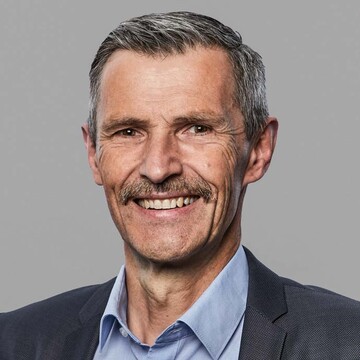
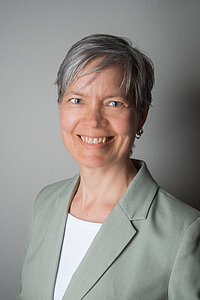
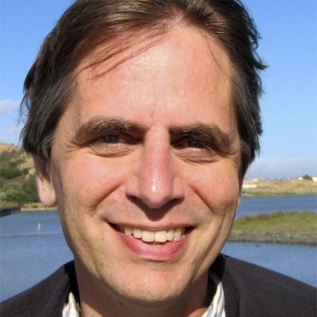
Rahul Mukherji is a Professor at the Department of Political Science, South Asia Institute, Heidelberg University. He has held visiting positions at institutions including the University of Goa, Tata Institute of Social Sciences, and Fudan University. His research spans Indian politics, political economy, international relations, and climate policy. Education: PhD in Political Science, Columbia University (1999) M.Phil and MA in South Asian Studies, Jawaharlal Nehru University (1992, 1990) Bachelor in Economics (Honours), Delhi University (1988) Mukherji examines democratic backsliding , climate governance , and political economy of reforms in India. His recent work explores the intersection of COVID-19 and authoritarian trends , alongside state capacity in welfare delivery. Scientific Awards NUS Award for Research Excellence (2014, 2012) President’s Fellow, Columbia University (1997-1999) Ambedkar Overseas Fellow in International Relations (1993-1996) Mukherji serves on the editorial boards of journals like India Review , Pacific Affairs , and Governance . He is series editor for Oxford Institutions and Development in South Asia and editor of Indian Politics and Policy .
Prof. Dr. Daniel Leese is a full professor of History and Politics of Modern China at the University of Freiburg's Institute of Sinology. He specializes in 20th-century Chinese history, focusing on the Communist Party's legacy and transitional justice. Current research includes a dual biography of Chiang Kai-shek and Mao Zedong, and analysis of PRC information systems. Education: PhD in International History (2006, International University Bremen). Academic roles include ERC grant leadership (2014-2019) and FRIAS Senior Fellowship (2018-2019). Awards include Carl Friedrich von Siemens Fellowship (2022/2023). Key publications: Maos langer Schatten (2021) Justice After Mao (2023) Chinesisches Denken der Gegenwart (2023) Research emphasizes Mao's political impact, historical justice mechanisms, and institutional memory. Maintains a digital archive of Mao-era documents (maoistlegacy.de).
Dr. phil. Andrej Holm is a Researcher at the Institute of Social Sciences , Humboldt University of Berlin, specializing in Urban and Regional Sociology . As a Women's Representative and active academic, he focuses on gentrification, housing policy in international comparison, and European urban policy. His work bridges academia and activism, contributing to housing referendums and social movement analysis. Research Themes : Gentrification dynamics, financialization of housing, socio-ecological housing transformation, and post-socialist urban development. Key Projects : Expert analysis for Berlin housing socialization referendum (2022), comparative studies on Amsterdam/Barcelona/Berlin/Vienna (2022), and social infrastructure reconceptualization (2021). Holm's publications span urban policy critiques and housing justice , with recent 2025 works examining financial investors' impact on Berlin housing and pandemic-era housing conditions. His research integrates political economy with spatial inequality frameworks.
Grzegorz Lechowski is a visiting researcher at the WZB Berlin Social Science Center within the Research Group Globalization, Work, and Production. His work focuses on technological, organizational, and regulatory changes in globalized industrial and digital economies, with expertise in digital sovereignty, geopolitics of tech, and automotive sector transitions. Doctoral candidate at Freie Universität Berlin Co-edited the 2025 book Global Shifts in the Automotive Sector with M. Krzywdzinski, J. Humphrey, and T. Pardi Collaborated with institutions like ETUI, SASE, and Gerpisa Network Research Themes : Lechowski examines the EU's digital sovereignty discourse, geopolitical tensions in tech value chains, and electromobility's impact on automotive labor and production. His studies span state-business dynamics, Industry 4.0, and global production reorganization. Key Trends in Publications : His outputs highlight geopolitical disruptions in automotive and digital sectors, EU industrial policy, green transitions, and reconfiguration of global value chains. Topics include electric vehicle supply chains, labor rights in electromobility, and corporate adaptation to regulatory shifts. Teaching : Lecturer at Helmut Schmidt University Hamburg for courses on globalization of industry and labor (2021) and introduction to sociology (2020). Projects & Collaborations : Co-led a VolkswagenStiftung-funded study on automotive responses to the pandemic (2021–2023). Participated in the Blankensee Colloquium on global digital economies (2022).
Leibniz Institute for Educational TrajectoriesGermany
Claudia Diehl is a Professor of Microsociology at the University of Konstanz, Germany, and co-speaker of the Cluster of Excellence The Politics of Inequality . She is actively involved in research on migration, integration, ethnic discrimination, and educational inequality. Her recent work includes leading the PerFair project on students' perceptions of fairness in schools. She has held visiting positions at the Graduate Center of the City University of New York and the Munk School in Toronto. PhD in Sociology, University of Mannheim (2001) Former Professor, University of Göttingen Former Researcher, Federal Institute for Population Research Her research focuses on social and ethnic inequalities , particularly in education and labor markets. She investigates how immigrants and ethnic minorities experience discrimination, integration, and social mobility in Germany and Europe. Her interdisciplinary work combines sociological theory with empirical data from large-scale surveys and policy-relevant studies. The analysis of her recent publications reveals a consistent research trajectory centered on migration, integration, and inequality . Her work spans topics such as wage fairness, educational tracking, labor market participation, and perceived discrimination. There is a strong emphasis on comparative and longitudinal analysis , often using German and European datasets. Her publications appear in high-impact journals in sociology, migration studies, and social policy. Member, Advisory Board for Family Affairs Appointed to The Standing Conference of the Ministers of Education and Cultural Affairs of the Länder in Germany Claudia Diehl leads major research initiatives and collaborates with national and international scholars. She has contributed to policy discussions on integration, family, and education. While no direct mention of grants or advising is made, her leadership in large projects suggests active grant management and mentorship roles. She has published extensively, including special issues, edited volumes, and numerous journal articles.
Stefan Schaltegger is Professor for Sustainability Management at the Centre for Sustainability Management (CSM) at Leuphana University Lüneburg. With over two decades of research experience, he is a globally recognized scholar in sustainability management, corporate sustainability, and environmental accounting. His work bridges academic research with practical business applications, influencing sustainability practices across multiple industries. Professor for Sustainability Management at Leuphana University Lüneburg Director of the Centre for Sustainability Management (CSM) Extensive publication record in top sustainability journals Regular contributor to policy discussions on sustainability Professor Schaltegger's research focuses on sustainability management systems, corporate sustainability strategy, environmental accounting, sustainable business models, and sustainability transitions. His work examines how organizations can effectively integrate sustainability into core operations, emphasizing stakeholder engagement, sustainability performance measurement, and the development of compelling business cases for sustainability. He has pioneered research on sustainability management accounting, rebound effects in sustainability initiatives, and the role of change agents in corporate sustainability transformations. His research spans both theoretical development and practical application, making significant contributions to how businesses understand and implement sustainability. His recent publications reveal an evolving research trajectory with increasing focus on systemic sustainability challenges. Schaltegger has shifted from foundational work on sustainability management accounting toward more complex issues like environmental rebound effects, sustainability transformations, and regenerative business practices. His 2023-2025 publications show growing attention to climate change responses, biodiversity conservation, and the role of service innovation in sustainability transformations. The interdisciplinary nature of his work is evident in publications spanning business strategy, environmental science, accounting, and policy journals. Ranked among the world's top 2% scientists in the Stanford study (2020) Best Young Researcher of the Year at Leuphana University Lüneburg (2010) IFAC PAIB Committee Research award for "article of merit" (2003) Professor Schaltegger actively mentors doctoral students and early-career researchers, though specific student names aren't listed in the provided materials. His research is supported by numerous projects including "TrICo Subproject: Community Sustainable Production," "Account4GreenEco," and "Hochschulen in Gesellschaft – Realexperimente transformativer Lern- und Forschungsprozesse für eine Kultur der Nachhaltigkeit an Hochschulen." His work demonstrates strong industry engagement through collaborations with businesses implementing sustainability practices. The Centre for Sustainability Management (CSM), which Schaltegger leads, serves as a hub for interdisciplinary sustainability research, education, and practice. The CSM coordinates multiple research projects including the Innovation Network aiming at Sustainable Smartphones (INaS) and works closely with industry partners to develop practical sustainability solutions. The center's activities span research, education, and transfer, reflecting Schaltegger's commitment to bridging the gap between academic theory and business practice in sustainability.
Kristine Andra Avram is a Visiting Researcher at the Center for Conflict Research (ZfK) at Philipps University of Marburg, serving as a Post-doctoral fellow in the BMBF project 'Transformations of Political Violence' (2024-2025). Her work bridges peace and conflict studies, narratology, and social sciences with a focus on meaning-making in contexts of political violence and state repression. Her educational background includes a PhD in Political Science (summa cum laude, 2022) from Philipps University of Marburg, an MA in Peace and Conflict Studies (2010-2013) with study abroad at the University of Haifa, and a BA in Communication Science and Romance Studies (2007-2010) from the University of Erfurt, including Erasmus at Complutense University of Madrid. Avram's research examines how narratives shape interpretations of violence, influence reckoning with traumatic pasts, and inform transitional justice efforts. Using interdisciplinary narrative and (auto)ethnographic methods, she reveals storytelling as a site of agency and resistance—both for processing historical violence and envisioning just futures. Her work centers on concepts like responsibility, truth, and hope within post-communist contexts, particularly Romania. Her recent publications (2023-2025) demonstrate methodological innovation in narrative analysis applied to political violence, with increasing attention to researcher positionality and reparative methodologies. Articles span qualitative frameworks, courtroom narratives, postcolonial critiques of peacebuilding, and ethical dimensions of studying violence. Key scientific awards include: Dissertation Award from Südost-europagesellschaft (2023) Honorable Mention from Gert-Sommer-Award for Peace Psychology (2023) Mobility Grant from EISA (2023) Scholarships from MARA, Friedrich Ebert Foundation, and University of Haifa She has secured significant research funding including a Fritz Thyssen Foundation grant (2017-2022) as co-applicant and has taught courses on narrative reconstructions of the past at Philipps University Marburg and Goethe University Frankfurt. Her advisory work includes designing memory projects and conflict resolution initiatives with pax christi Rhein-Main. Avram actively collaborates within the Center for Conflict Research's interdisciplinary teams, focusing on political violence, transitional justice, and narrative methodologies in post-communist contexts through projects like 'Ascribing Individual Criminal Responsibility' and 'Transformations of Political Violence'.
Prof. Dr. Johanna Heitzer is a University Professor for Mathematics Education at RWTH Aachen University since 2011. She leads the Teaching and Research Area of Mathematics Education within the university's mathematics department. Her office is located in Room 352 of the Kreuzherrenstraße 2 building in Aachen. She serves as co-editor of the journal 'mathematik lehren,' co-author of the 'Mathematics - New Ways' textbook series, and holds numerous committee positions including membership in the Faculty Advisory Board and Structural Commission of the Center Council. 1989: High school diploma 1989-1994: Mathematics and Physics Teacher Training at RWTH Aachen 1994-1996: Traineeship at Aachen Teacher Training College 1997: Research assistant at University of Münster 1998-2007: Mathematics and Physics teacher at Korschenbroich Gymnasium 2007-2010: Scientific assistant and doctorate at RWTH Aachen 2011-present: University Professor at RWTH Aachen Professor Heitzer's research focuses on the training and further education of mathematics teachers, development of contemporary teaching materials, applied and interdisciplinary mathematics, and the transition from school to university. Her work emphasizes concept formation, linguistic communication in mathematics, and the historical development of mathematical ideas as teaching resources. She investigates mathematics-specific learning and cognitive processes through multiple research projects including the Aachen school-university project iMPACt. Her recent scholarly output demonstrates a strong trend toward integrating digital technologies in mathematics education, particularly 3D printing and e-learning tools. She has increasingly focused on the social relevance of mathematics, exploring concepts of fairness, sustainability, and citizen empowerment through mathematical modeling. Her work bridges theoretical mathematics education with practical classroom applications, maintaining a strong connection to both historical perspectives and contemporary educational challenges. Special prize from Sparkasse Bad Hersfeld-Rotenburg for best mathematics Abitur (1989) Borchers Plaque for doctoral examinations passed with distinction (2011) DMV honor as Mathemaker of the Month (2013) Brigitte Gilles Prize 2013 for the MINT-L4 Center Professor Heitzer has supervised numerous doctoral students, serving as primary or secondary advisor for at least nine PhD dissertations between 2016-2021. Her research projects include the School-University Project MathePlus Aachen (iMPACt), e-Learning 'Mathematics for Civil Engineers,' and the development of mathematics items for StudiChecks NRW. She has secured funding through the Quality Initiative for Teacher Education (both phases) and participates in the ComeIn project focused on digitalization in teacher training. Her grants consistently emphasize practical applications of mathematics education research with direct impact on classroom practice. As a founding member of the MINT-L4@RWTH center and initiator of the working group Mathematical Education for Sustainable Development, Professor Heitzer has established significant collaborative structures. She participates in the Subject Didactics Forum at the Teacher Training Center of RWTH Aachen and has served in leadership roles including Chair of the Center Council (2014-2016) and Board member of the Teacher Training Center (2014-2017). Her work connects with national and international networks through her membership in the Society for Mathematics Education (GDM), the German Association for Mathematics and Science Education (MNU), and the German Mathematical Society (DMV).
Bani Gill is a Junior Professor in Urban Futures of the Global South at the Institute of Sociology, Faculty of Humanities, University of Tübingen. She is based in Tübingen, Germany, and her work bridges urban anthropology, migration studies, and postcolonial theory. She has held research affiliations with the University of Oxford, University of Copenhagen, and Utrecht University, reflecting her transnational academic profile. PhD in Social Sciences, University of Copenhagen (2015–2019), funded by the DFF ‘Emerging Worlds’ project MA in Migration and Intercultural Relations, Erasmus Mundus (2011–2013) MA in Modern History, Jawaharlal Nehru University (2008–2010) BA in History, University of Delhi (2005–2008) Her research focuses on South-South migration, particularly the experiences of African migrants in urban India. She explores themes of race, racialization, gender, illegality, and state surveillance through ethnographic methods. Her work critically examines urban governance, migration infrastructures, and the everyday coexistence of marginalized communities in postcolonial cities. She also investigates the transnational trade in human hair between India and Africa, highlighting unexpected connections across the Global South. Her recent publications, including in American Anthropologist and Journal of Ethnic and Migration Studies , analyze migrant illegality, proximity, and urban futures. Her co-edited volume Proximity as Method (2024) advances interdisciplinary approaches to coexistence. The articles reflect a consistent focus on ethnographic depth, critical race theory, and the intersection of migration, urban space, and power. Marie Sklodowska-Curie Postdoctoral Fellowship (2022, to begin 2023) DFF International Postdoctoral Grant (declined, 2022) John Fell Research Fund, University of Oxford (2020–2022) DFF ‘Emerging Worlds’ PhD Scholarship (2015–2018) Erasmus Mundus MA Scholarship (2011–2013) Bani Gill has advised and mentored emerging scholars through her role as editor of Refugee Review and as a member of the Executive Committee of ESPMI. She has secured multiple grants for fieldwork and research, including from Danish and UK-based foundations. Her current work continues to explore the sensory and embodied dimensions of migration, supported by interdisciplinary collaboration and public engagement through policy briefs and podcasts. She is a member of the curatorial board of Majha House, a cultural center in Amritsar, India, and has co-organized academic seminars and workshops on race, migration, and performance at Oxford and Copenhagen. Her research is deeply collaborative, often involving co-authored publications and collective editorial work, reflecting a commitment to building scholarly networks across the Global South.
Rhenish Friedrich Wilhelm University of BonnGermany
Prof. Dr. Lisa Schipper is Professor of Development Geography at the University of Bonn since 2023. Her research focuses on understanding vulnerability to climate change in the Global South and the barriers and enablers for adaptation. She has extensive experience working across Central and South America, East Africa, and South and Southeast Asia. Her educational background includes: BSc in Environmental Science (1997) from Brown University MSc in Environment and Development (2000) from the University of East Anglia PhD in Development Studies (2004) from the University of East Anglia Post-Doctoral Fellowship at the International Water Management Institute in Colombo, Sri Lanka (2005-2007) Post-Graduate Certificate in Teaching and Learning in Higher Education (Oxford, 2021) Prof. Schipper's research centers on socio-cultural dimensions of vulnerability to climate change, including gender, culture, and religion, as well as structural issues related to power, justice, and equity. Her work has demonstrated how understanding underlying development factors driving vulnerability is vital for identifying effective adaptation strategies, yet this knowledge is often absent in adaptation planning. She has made significant contributions to understanding maladaptation - when adaptation efforts inadvertently increase vulnerability rather than reduce it. Her research also explores how religious beliefs influence hazard perceptions and adaptation actions. As Co-ordinating Lead Author of Chapter 18 ("Climate Resilient Development Pathways") for the IPCC Working Group II Sixth Assessment Report, she has helped shape global understanding of how adaptation and mitigation must be integrated with sustainable development efforts. Prof. Schipper's scientific contributions have been recognized with several honors, including: Winner of Emerald Literati Network Award for Outstanding Paper (2017) Selected as one of Climate Policy's "Top 20 Papers" Ida Pfeiffer Visiting Professor appointment (2022/23, declined) She is actively engaged in mentoring and welcomes students interested in supervision, particularly those with research questions related to climate change adaptation and development. Prof. Schipper serves on the editorial boards of Climate and Development (where she is Co-Editor), World Development Perspectives, and Global Transitions - Health. She also participates in several advisory roles including the Science Committee of the Adaptation Futures Conference 2023 and the CLARE Advisors Group. Prof. Schipper leads the AG Schipper research group at the University of Bonn, which focuses on three main areas: Adaptation and Development (examining how development projects can best promote transformative climate change adaptation), Equity and the Politics of Knowledge (understanding how knowledge informs climate resilient development decisions), and Culture and Risk (exploring how clashing worldviews create barriers for policy making and knowledge sharing).
Marit Rosol is a Professor of Economic Geography at Julius-Maximilians-Universität Würzburg (since 2022) and an Adjunct Professor at the University of Calgary's Department of Geography (since 2022). She holds a Canada Research Chair (2016-2022) and has earned international recognition for her work on alternative food networks, urban governance, and critical political ecology. Education: Habilitation in Geography (Goethe-Universität Frankfurt, 2012), PhD in Geography (Humboldt-Universität Berlin, 2006), Dipl.-Ing. in Urban & Regional Planning (TU Berlin, 2001) Her research focuses on Critical Food Studies , exploring alternative economies in urban agriculture, post-political urban governance, and transformative food systems. She examines tensions between environmental and social justice in food initiatives, state-led gentrification, and participatory urban planning frameworks. Recent publications analyze: Urban-rural food system transformations Smart city justice frameworks Commons-based land access models Anthropocene food challenges Scientific awards include: Senior Fellow, Freiburg Institute for Advanced Studies (2022) Canada Research Chair Tier II (2016-2022) 2015 RIBA President's Award for Outstanding Urban Agriculture Research She has supervised: PhD students: Hanna Augustin Master students: Natalie Bakko, Abby Landon, Ricardo Barbosa Jr. Postdocs: Dr. Rebecca Laycock Pedersen, Dr. Charlotte Spring, Dr. Lauren Kepkiewicz Major grants from SSHRC, Hans-Böckler Foundation, and DAAD have supported her work on food insecurity linkages, urban food justice, and global comparative studies of food systems. She co-founded the Food Studies Interdisciplinary Research Group at the University of Calgary and serves on editorial boards for Canadian Food Studies and sub\urban .
Jean Galbraith is a Professor at the University of Pennsylvania Carey Law School . Her scholarship focuses on the intersection of international law , foreign relations law , constitutional law , and human rights . Key areas include treaty design, separation of powers, administrative law, and domestic implementation of international obligations.
Prof. Dr.-Ing. Jörg Knieling (HafenCity University Hamburg) specializes in Urban Planning and Regional Development , focusing on sustainable metropolitan governance, climate resilience, and land use policy. As co-chair of Hamburg's Senate Climate Advisory Board , he drives policy recommendations on net-zero land consumption , climate action plans , and spatial governance reform . Co-chair, Hamburg Climate Advisory Board (2021–present) Member, Advisory Council for Spatial Development, German Federal Ministry Co-leader, DFG Research Training Group 'City Science Lab' Coordinator, EU projects 'SMARTilience', 'RESCUE', 'Area21' His research explores climate-resilient urban governance through comparative studies of cities like Halle (Saale) and Mannheim , emphasizing collaborative planning and smart city technologies . Recent work addresses heat action planning , spatial equity , and digital policy tools for sustainable development. Key publication trends include land consumption reduction (30 ha/day target), urban-rural partnerships , and AI in spatial planning . His Urban Governance Toolbox project (2023) exemplifies solutions for municipal climate resilience. Students under his supervision include: Leon Thümer (B.Sc., 2020 - 'Co-Creation in Real Estate') Laura-Darleen Klein (M.Sc., 2023 - 'Age-Friendly Cities') Charlotte Muhl (M.Sc., 2018 - 'Urban Commons') He leads the Urban Planning and Regional Development department, mentoring 12+ research associates and coordinating interdisciplinary projects with institutions like Goldsmiths University , Leuphana University , and Georgia Tech .
Max Planck Institute for Social AnthropologyGermany
Peter Redfield serves as Professor of Anthropology at the University of Southern California's Dornsife College of Letters, Arts and Sciences, where he bridges anthropology with science and technology studies, postcolonial theory, and humanitarian practice. He previously held the presidency of the Society for Cultural Anthropology (2017-2019) and maintains active affiliations with the LOST Research Network (Law, Organization, Science and Technology), though this network is transitioning to an archive in 2024. His research critically examines transnational expertise and the ethics of humanitarian interventions in contexts of unreliable infrastructure, with current projects including "Beyond Reliable Infrastructure"—which analyzes minimalist life technologies for water, sanitation, and health—and collaborative work with Stellenbosch University on sanitation politics in South Africa. Redfield's scholarship consistently interrogates how humanitarian design navigates utopian ideals of social justice while confronting material constraints and political complexities in global health. His publication trends reveal sustained focus on medical anthropology and humanitarian ethics, particularly through case studies of epidemic response (Ebola), technological fixes (LifeStraw®), and organizational practices (Doctors Without Borders). This work demonstrates evolving attention to material politics and infrastructure, moving from colonial histories (e.g., French Guiana rocketry) toward contemporary crises in global health governance. Redfield's research is supported by institutional affiliations including the Institute for Advanced Study (Princeton, 2016-17) and collaborative partnerships across Africa. He leads interdisciplinary teams examining humanitarian innovation, with recent work emphasizing the material dimensions of aid delivery and the political economies of "dignified living" in marginalized communities.
Dr. Shushanik Margaryan is a Research Fellow at the University of Potsdam's Department of Economics, affiliated with the Berlin School of Economics and IZA. She holds a Ph.D. from the University of Hamburg and specializes in health, education, and labour economics with a focus on applied microeconometrics. Her work addresses societal challenges such as climate policy co-benefits, educational interventions, and healthcare disparities. Education: Ph.D. in Economics, Universität Hamburg (2016-2021) M.Sc. in Economics, Universität Hamburg (2014-2016) B.A. in Labour Economics, Armenian State University of Economics (2009-2013) Research Interests: Her research spans climate policy impacts, educational equity, and labour market dynamics. Notable projects include evaluating low-emission zones' health benefits and the effects of randomized educational interventions on disadvantaged children. Key Contributions: Recent work examines spillover effects of war on adolescents and replicates studies on long-term vaccination impacts. She co-leads a DFG-funded project on labour market transformations. Awards: HCHE Young Researcher Award (2021) Joachim Herz Fellowship (2024-2026) Teaching & Service: Teaches graduate and undergraduate courses on labour/education economics. Organizes seminars like the Potsdam Research Seminar in Economics and serves on hiring committees.