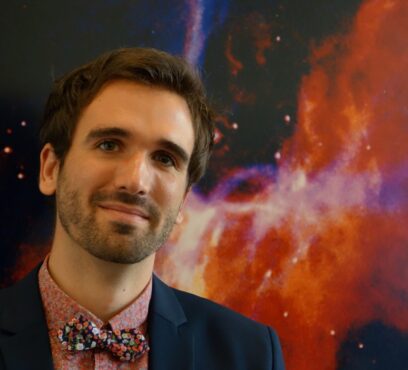
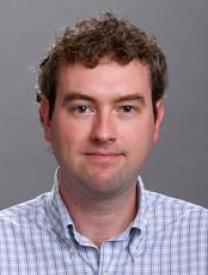
Amy Bonsor is an Official Fellow and Director of Studies in Natural Sciences (Physical) at Queens' College, University of Cambridge. Her academic work focuses on the intersection of astronomy and planetary science, particularly examining the composition and evolution of planetary systems through the lens of white dwarf pollution. Dr. Bonsor's research primarily centers on understanding the composition of exoplanetary material by studying polluted white dwarfs. Her work combines observational astronomy with theoretical modeling to investigate planetary debris disks, tidal interactions, and the geochemical signatures of accreted planetary material. She has made significant contributions to understanding how white dwarfs can serve as cosmic laboratories for studying the bulk composition of exoplanetesimals, including their differentiation processes and volatile content. Her recent publications reveal a strong emphasis on the chemical analysis of planetary material through white dwarf spectroscopy, with particular attention to mineralogy, elemental abundances, and the implications for planetary formation and evolution. She has pioneered approaches combining machine learning with traditional astronomical techniques to categorize and interpret white dwarf spectral data at scale. As Director of Studies in Natural Sciences at Queens' College, Dr. Bonsor plays a key role in undergraduate education within the Physical Sciences track of Cambridge's renowned Natural Sciences Tripos. Her leadership position indicates her standing within the Cambridge academic community and her commitment to nurturing the next generation of scientists.
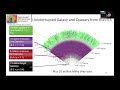
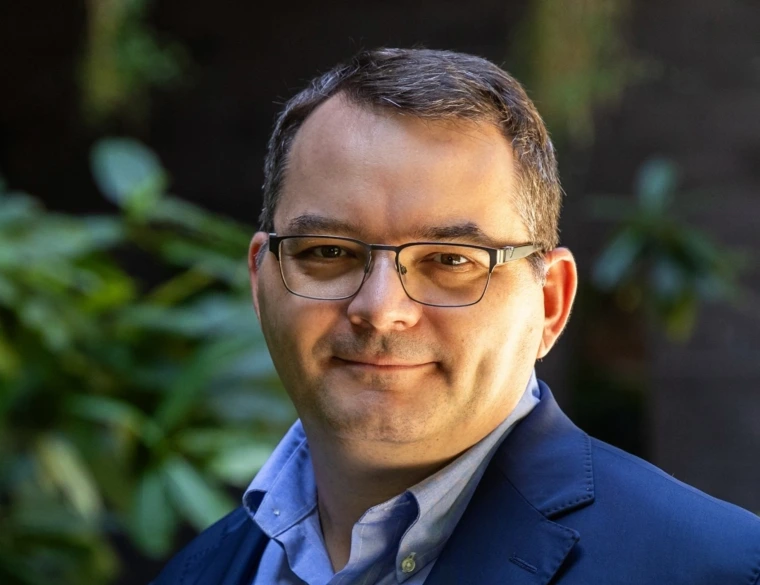
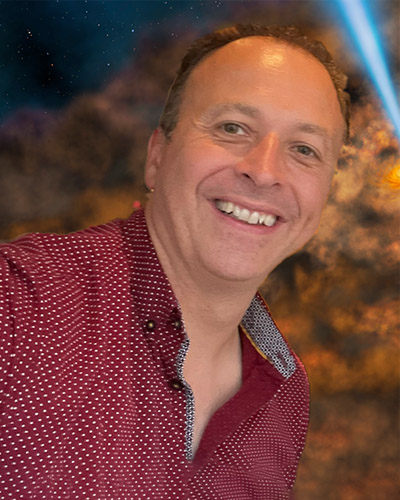
Kyle Dawson is a Professor of Physics and Astronomy at the University of Utah, where he has been employed since 2009. He currently serves as both a full Professor and Director of Graduate Studies in the Department of Physics and Astronomy, having progressed from Assistant Professor (2008-2015) to Associate Professor (2015-2019) before achieving his current position in 2019. His institutional affiliation places him within the College of Science at the University of Utah, a major research university in the western United States. Dawson earned his BA in Physics from Cornell University in 1998, followed by a PhD in Physics from the University of California, Berkeley in 2004. After completing his doctoral studies, he served as a postdoctoral researcher at the Lawrence Berkeley National Laboratory before joining the University of Utah faculty. His educational background in physics provided the foundation for his transition into observational cosmology, where he has made significant contributions through large-scale spectroscopic surveys. Professor Dawson's research focuses on observational cosmology through large spectroscopic surveys designed to measure the fundamental properties of the universe. He is currently the co-Spokesperson for the Dark Energy Spectroscopic Instrument (DESI), a major cosmological survey that has produced numerous high-impact publications in 2024-2025. Previously, he served as Principal Investigator for the Extended Baryon Oscillation Spectroscopic Survey (eBOSS), which concluded in 2020 with final cosmological measurements. His work centers on measuring baryon acoustic oscillations to constrain cosmic expansion history, dark energy properties, neutrino masses, and to test General Relativity. His research group employs techniques including galaxy clustering analysis, quasar astrophysics, and large-scale structure mapping to address fundamental questions in cosmology. The analysis of Dawson's recent publications reveals a strong focus on extracting cosmological constraints from the DESI survey data. His work spans multiple aspects of cosmological analysis, including baryon acoustic oscillation measurements, full-shape power spectrum analysis, imaging systematics mitigation, and cross-correlation studies with cosmic microwave background data. The publications demonstrate collaborative work with large international teams and contribute to increasingly precise measurements of cosmological parameters, with particular attention to dark energy equation of state, neutrino masses, and potential deviations from General Relativity. Professor Dawson has secured significant research funding throughout his career, including multiple grants from the Department of Energy (DOE), NASA, and the National Science Foundation. His grant portfolio includes leadership roles in major cosmological surveys like DESI and eBOSS, as well as support for postdoctoral researchers and graduate students. His research group has mentored numerous students who have gone on to successful careers in academia, industry, and data science fields. Dawson leads a vibrant research group at the University of Utah focused on cosmological data analysis from large spectroscopic surveys. His current team includes two postdoctoral researchers (Angela Berti and Sarah Eftekharzadeh) and a graduate student (Allyson Brodzeller). The group specializes in galaxy clustering analysis, quasar astrophysics, and machine learning applications to spectroscopic data. The research environment fosters collaboration with international teams working on DESI and related cosmological surveys, providing students with opportunities to engage with cutting-edge cosmological research and large-scale data analysis techniques.
Nanna Bach-Møller is a postdoctoral fellow at the Niels Bohr Institute, University of Copenhagen, specializing in astrophysics and planetary research. She completed her PhD in 2024 with a dissertation on exoplanet atmospheres in high-energy radiative environments. Research Interests Exoplanet atmospheres and their interaction with high-energy radiation Microlensing events and brown dwarf characterization Planetary system dynamics and orbital evolution Stellar activity and its impact on exoplanet observations Her work combines theoretical modeling with observational data analysis, focusing on understanding atmospheric processes in extreme environments and the dynamics of planetary systems. Publications Dr. Bach-Møller has published extensively in leading journals such as Astrophysical Journal , Astronomy & Astrophysics , and Monthly Notices of the Royal Astronomical Society . Her recent work includes studies on cloud particle charging, transmission spectroscopy of exoplanets, and precision measurements of brown dwarf masses through microlensing. Collaborations She collaborates with international teams, including the MiNDSTEp Consortium, OGLE Collaboration, and MOA Collaboration, contributing to large-scale surveys and high-impact research projects.
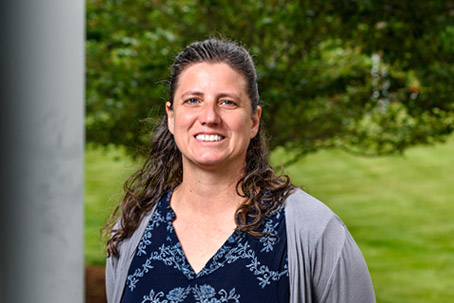
Stephanie Werner is a Professor at the University of Oslo's Department of Geosciences and serves as Co-Centre Leader of the Centre for Planetary Habitability since 2023. She has held various significant positions including Director of the Norwegian Research School for Dynamics and Evolution of Earth and Planets (2016-2024) and Team Leader of Earth and Beyond/Comparative Planetology at the Center for Earth Evolution and Dynamics (2013-2023). Her educational background includes: Dr. rer. nat. (PhD) from Free University of Berlin, Germany (2005) with thesis: "Major Aspects of the Chronostratigraphy and Geologic Evolutionary History of Mars" Diplom in Geophysics from the University of Kiel, Germany (1999) Professor Werner's research focuses on comparative planetology, planetary dynamics, exoplanet systems, and planetary geophysics . Her work spans the formation and evolution of planets and planetary systems, cratering chronology and processes, remote sensing of Earth and planets, and potential field data interpretation. She has made significant contributions to understanding the geological evolution of Mars, lunar cratering chronology, and the dynamics of planetary systems. Her recent publication trends reveal a strong focus on cratering chronology across solar system bodies , with particular attention to the Moon, Mars, and outer solar system satellites. She has led important revisions to lunar cratering chronology models and has investigated impact rates on Jupiter's, Saturn's, and Uranus' moons. Another major theme is the study of exoplanets around K-dwarf stars , examining their composition and formation processes. Her work also includes significant contributions to Mars exploration , particularly through the Planetary Terrestrial Analogues Library project supporting the ExoMars mission. Professor Werner holds several prestigious appointments: Co-Lead, ESA - Ariel Science Team Norwegian representative and Co-I, ESA - PLATO Consortium Member of the European Space Agency's ExoMars Rover Science Operations Working Group Member of the ESA - NASA Mars Sample Return Science Planning Group EGU Division President of Planetary and Solar System Sciences (2017-2021) She has supervised numerous students through the Norwegian Research School for Dynamics and Evolution of Earth and Planets, which she directed from 2016-2024. Her research has been supported by multiple grants from the European Space Agency and Norwegian research councils, enabling participation in major space missions including ExoMars, PLATO, and Ariel. Professor Werner leads the Planetary Terrestrial Analogues Library (PTAL) project, which provides crucial support for Mars missions by creating a comprehensive database of terrestrial analogues for Martian environments. She also contributes to the Mars Missions Analogue Sample Library (MM ASL) and the CRATER CLOCK project focused on calibrating cratering chronometers for planetary evolution studies.
Scott Diddams is the Robert H. Davis Endowed Chair and Professor of Electrical Engineering and Physics at the University of Colorado Boulder. He leads the Quantum Engineering Initiative in the College of Engineering and Applied Science. His research focuses on precision spectroscopy, quantum metrology, nonlinear optics, and ultrafast lasers, with pioneering contributions to optical frequency combs for applications in optical clocks, fundamental physics tests, and astronomy. He holds over 750 publications and has received prestigious awards including the Department of Commerce Gold Medal and PECASE. **Education**: PhD in Physics from the University of New Mexico (1996). Postdoctoral work at JILA, NIST, and CU Boulder. Former NIST Fellow and Group Leader. **Research Interests**: Frequency comb technology for astrophotonics and metrology Exoplanet detection via advanced spectroscopy Ultrafast laser systems and high-harmonic generation Quantum engineering and integrated photonics **Awards**: Distinguished Presidential Rank Award IEEE Rabi Award C.E.K. Mees Medal (OPTICA) **Grants & Labs**: Directs the Quantum Engineering Initiative and maintains active collaborations with NIST. His lab develops cutting-edge instrumentation for space science and precision measurement. **Current Projects**: Focuses on miniaturized Fabry-Pérot cavities, quantum-enhanced dual-comb spectroscopy, and exoplanet characterization via the GEMS survey.
Julien de Wit is an Associate Professor in the Department of Earth, Atmospheric and Planetary Sciences (EAPS) at the Massachusetts Institute of Technology (MIT), where he leads research in exoplanet detection and atmospheric characterization. He began his faculty appointment in July 2018 after completing his PhD and postdoctoral work at MIT under Professor Sara Seager. His work bridges data science and planetary science to uncover new worlds and understand their physical processes. His research focuses on exoplanets , particularly the development of novel data analysis techniques to map planetary atmospheres, infer mass from transmission spectra, and study planet-star interactions. He has played a pivotal role in the discovery and characterization of the TRAPPIST-1 system, one of the most promising targets in the search for life beyond Earth. His group utilizes data from space telescopes such as Hubble, Spitzer, and the James Webb Space Telescope (JWST), as well as ground-based facilities like TRAPPIST and SPECULOOS. The recent publications highlight a strong trend in atmospheric mapping , transmission spectroscopy , and planet-star interactions , with a focus on terrestrial and hot Jupiter exoplanets. His work spans observational astronomy, theoretical modeling, and data science, aiming to contextualize planetary properties within broader physical frameworks. He is actively involved in proposing and analyzing JWST observations to probe the atmospheres of temperate Earth-sized planets. Innovators Under 35 2017 Innovator of the Year, Belgium Julien de Wit has advised and collaborated with numerous researchers and students, contributing to major discoveries such as the first cloud map of an exoplanet and the detection of stellar pulsations induced by a planet. He is leading the deployment of the SPECULOOS Northern Observatory (ARTEMIS) in Tenerife and is involved in multiple NASA missions including TESS and GPX. His work is supported by institutional and mission-based grants, particularly through MIT and NASA collaborations. He leads a research group focused on exoplanet discovery and characterization , working closely with the SPECULOOS consortium and the TRAPPIST team. His lab develops advanced data analysis pipelines and theoretical models to interpret photometric and spectroscopic observations. The team is preparing for future JWST cycles and expanding ground-based survey capabilities to find the nearest potentially habitable worlds.
Dr. Vangelis Marinakis is an Assistant Professor at the School of Electrical and Computer Engineering (ECE) of the National Technical University of Athens (NTUA). His academic background includes an Electrical and Computer Engineering degree and a PhD in Decision Support Systems for Sustainable Energy Planning from NTUA. PhD in Decision Support Systems for Sustainable Energy Planning (NTUA) Electrical and Computer Engineer (NTUA) His research focuses on designing methodologies for intelligent energy management across Smart Homes, Buildings, Cities, and Districts, leveraging technologies like IoT, AI, and Big Data. He has contributed to over 25 European (Horizon Europe, H2020) and national projects, with more than 50 journal publications and book chapters. Key research areas include Decision Support Systems , Energy Efficiency , and Renewable Energy Integration . He has led research in AI-driven energy forecasting, federated learning for privacy-preserving data models, and blockchain applications in energy markets. His work explores the intersection of Smart Grids , Building Informatics , and Climate Resilience . Dr. Marinakis has developed frameworks for: Decarbonization-as-a-Service in building renovations Scalable Big Data architectures for smart buildings Multi-criteria optimization of EV charging stations Explainable AI in energy decision-making Climate resilience assessment for urban housing
Dr. Philip Carter is a Senior Research Associate at the School of Physics, University of Bristol. His work focuses on astrophysics, planetary science, and cosmochemistry, with a particular emphasis on giant impacts, exoplanet formation, and collisional processes in protoplanetary disks. Current affiliation: University of Bristol Academic rank: Researcher Research interests include the thermodynamics of planetary collisions, atmospheric loss in exoplanets, formation of chondritic mixtures via impact vaporization, and the role of debris disks in planet evolution. His work combines computational modeling with observational data analysis from surveys like SDSS and TESS. Recent publications (2023-2025) explore topics such as the IVANS model for chondrule formation, super-Mercury creation via impacts, and atmospheric loss mechanisms in Super-Earth collisions. These studies highlight his expertise in impact physics and planetary composition. He has contributed datasets to Harvard Dataverse, including replication data for "Did Earth eat its leftovers?" and "Colliding in the shadows of giants." Dr. Carter collaborates internationally, with research themes centered on protoplanet collisions and nebular shocks.
Lisa Kaltenegger serves as Associate Professor in the Department of Astronomy within Cornell University's College of Arts and Sciences, and is the Founding Director of the Carl Sagan Institute (CSI). Her interdisciplinary work bridges astrophysics and astrobiology, focusing on modeling habitable worlds and developing techniques to detect life beyond Earth. She maintains affiliations as Research Associate at Harvard-Smithsonian Center for Astrophysics and the American Museum of Natural History. Her research centers on exoplanet atmospheric modeling , biosignature detection , and habitable zone characterization . Kaltenegger pioneered methods for analyzing light fingerprints of alien worlds, creating evolutionary spectra of Earth through geological time to identify life indicators. Her work with NASA's TESS mission and JWST's NIRISS instrument drives observational strategies for future telescopes. She leads the CSI's development of a forensic toolkit for life detection across diverse planetary environments. Notable publications trends show increasing focus on machine learning applications for exoplanet characterization, temporal biosignatures through Earth's evolutionary history, and specialized detection techniques for challenging environments like volcanic exoplanets and icy worlds. Recent work emphasizes practical observational strategies for JWST and future missions. Award highlights include: Heinz Maier-Leibnitz Prize for Physics (Germany) Doppler Prize for Innovation in Science (Austria) Beatrice Tinsley Lecturer (Royal Astronomical Society of New Zealand) IAU Invited Discourse lecture at General Assembly Selection as pioneering woman scientist by Annual Reviews Kaltenegger mentors numerous graduate students in exoplanet research, with current advisees including Li, Payne, and Gomes-Barrientos. She serves on NASA senior review panels and NSF's Astronomy and Astrophysics Advisory Committee, securing significant research funding for exoplanet science. As CSI Director, she leads interdisciplinary teams developing spectral libraries and observational frameworks for life detection. Her upcoming book 'Alien Earths' (April 2024) synthesizes decades of research on finding life in the cosmos, reflecting her commitment to science communication through IMAX films, TED talks, and public lectures reaching six continents.
Dan Wik is an Associate Professor in the Department of Physics & Astronomy at the University of Utah . His research focuses on observational X-ray astronomy, particularly galaxy clusters, inverse Compton scattering, X-ray binaries, and the X-ray background. He has extensive experience in data calibration, analysis tool development, and mission collaborations such as NuSTAR, Chandra, and XRISM. Wik holds a PhD in Astronomy from the University of Virginia (2010) and a BS in Astrophysics from Ohio University . His research interests span galaxy cluster mergers, nonthermal emission processes, high-energy astrophysics, and cross-calibration studies between X-ray observatories. Recent articles highlight his work on NuSTAR observations of galaxy clusters, X-ray binary populations in M31 and M33, inverse Compton emission constraints, and stray light background analysis techniques. His studies often integrate multiwavelength data and address cosmological implications of X-ray observations. Wik has received multiple grants from NASA for projects like Time Domain X-ray Studies of AGN and Hard Bandpass Extension of XRISM Cluster Observations . He supervises undergraduate and graduate researchers and teaches courses from general education to advanced graduate levels, including Foundations of Astronomy and High Energy Astrophysics .
Daniel Apai is Professor of Optical Sciences and Professor of Astronomy & Planetary Sciences at the University of Arizona, where he also serves as Associate Dean for Research in the College of Science. His core appointments span the Department of Optical Sciences and the Department of Astronomy & Planetary Sciences, reflecting a dual expertise in instrumentation and astrophysical research. He earned a MSc from the University of Szeged, Hungary (2000) and a PhD from the University of Heidelberg, Germany (2004). Research Interests Space telescopes and next-generation instrumentation Infrared spectroscopy of exoplanets and brown dwarfs Habitability assessment of terrestrial and sub-stellar worlds Atmospheric dynamics and weather patterns in ultracool atmospheres Advanced optical systems including multi-order diffractive Fresnel lenses Across his 2022–2025 publication record, Apai’s work reveals a consistent focus on leveraging JWST, HST, and forthcoming missions such as NASA’s Pandora SmallSat to characterize exoplanet atmospheres, map brown-dwarf weather, and refine habitability metrics. Studies span from detecting the faintest brown dwarfs in globular clusters to building quantitative frameworks for biosignature assessment, illustrating a trajectory that couples cutting-edge observations with theoretical modeling. Awards & Honors No specific awards are listed in the provided text; the narrative is limited to appointments and scholarly output. Students & Grants The supplied text does not enumerate graduate students or funding details. Laboratories & Teams While no formal lab names are given, Apai’s leadership in space-telescope instrumentation and participation in large JWST and HST programs suggest active involvement in multi-institutional collaborations centered on exoplanet characterization and infrared instrumentation development.
Elaine Kirkpatrick is an Associate Professor of Physics and Optical Engineering at Rose-Hulman Institute of Technology. Her research focuses on nanomagnetic materials, nanostructured thin films, and magnetic nanoparticles. She has pioneered collaborative undergraduate research projects in planetary science, establishing advanced laboratory facilities for student experimentation. Education: PhD in Applied Physics, Carnegie Mellon University (1997) MS in Physics, Carnegie Mellon University (1994) BS in Physics, University of Dayton (1992) Her work bridges nanotechnology and astrophysics, with recent emphasis on asteroid lightcurve analysis and photomagnetic effects in cobalt ferrite systems. Notable contributions include seminal studies on magnetic nanoparticle behavior and asteroid rotational dynamics. Awards: NASA/American Society of Engineering Education’s Summer Faculty Fellow (2002) Best Poster Award at Nano ’98 Conference (1998) National Science Foundation Travel Grant (1996) Teaching emphasizes foundational physics concepts with hands-on labs in X-ray diffraction and semiconductor physics. She mentors students through Rose-Hulman's Oakley Observatory and advanced materials labs, integrating research into undergraduate education.
Cullen Blake is an Associate Professor in the Department of Physics and Astronomy at the University of Pennsylvania School of Arts & Sciences. His primary research focuses on exoplanet detection around low-mass stars and the astrophysics of low-mass stars and brown dwarfs. He is deeply involved in observational astronomy, developing techniques to detect Earth-like planets and improving stellar characterization through precision radial velocity measurements and synoptic surveys. Blake plays a key role in projects like the NEID Earth Twin Survey and the Brown Dwarf Kinematics Project, leveraging instrumentation such as the NEID spectrograph and robotic telescopes. Education: Ph.D. (Astronomy) Harvard University (2009), A.M. (Astronomy) Harvard University (2006), A.B. (Astrophysics) Princeton University (2003). Research Interests: Search for Earth-like planets around low-mass stars Stellar astrophysics of low-mass stars and brown dwarfs Instrumentation development for exoplanet surveys Robotic telescopes and synoptic survey strategies Stellar activity mitigation in radial velocity data He has contributed to major collaborations including the APOGEE survey, the MINERVA telescope array, and the design of the NEID spectrometer. His work emphasizes bridging observational techniques and theoretical models to advance our understanding of planetary systems and stellar evolution. Key projects include the NEID Sun-as-a-Star program and the development of algorithms to reduce noise from telluric and stellar variability. Blake's research also extends to brown dwarf kinematics and the analysis of transient phenomena in stellar systems.
Prof. Yann Alibert is an Affiliated Professor of Astrophysics at the University of Bern's Faculty of Science, based at the Center for Space and Habitability (CSH). His research focuses on exoplanet science, planetary formation mechanisms, and space missions like CHEOPS and PLATO. He leads observational campaigns analyzing exoplanet atmospheres, orbital dynamics, and planetary system architectures using high-precision photometry and spectroscopy. Key areas of expertise include: Characterization of exoplanet atmospheres via CHEOPS and ESPRESSO Studying resonant planetary systems and compact multi-planet configurations Development of mass-radius modeling tools (e.g., mr-plotter) Investigating planet formation pathways through streaming instability and pebble accretion Recent work emphasizes ultra-short-period planets, hot Jupiters, and water-world candidates. He collaborates extensively with international teams on TESS, PLATO, and ground-based radial velocity surveys. His research contributes to understanding planetary system evolution and the search for habitable worlds.
Chris Packham is a Professor in the Department of Physics and Astronomy at the University of Texas at San Antonio (UTSA), within the College of Sciences. He also holds a visiting professorship at the National Astronomical Observatory of Japan, reflecting his international research collaborations. His primary research interests include active galactic nuclei (AGN), infrared instrumentation, and stellar discs. He co-leads a global group of astronomers (GATOS) utilizing data from cutting-edge facilities such as the James Webb Space Telescope (JWST), ALMA, and 8-meter-class telescopes. His work focuses on the structure and dynamics of the dusty torus surrounding supermassive black holes, with recent findings pointing to dusty disk winds and polar emission revealed by mid-infrared observations. He is deeply involved in the development of next-generation instruments like MICHI for the Thirty Meter Telescope and contributed to the Habitable Worlds Observatory through the Science, Technology, Architecture Review Team (START). The most recent articles reflect a strong emphasis on JWST-enabled discoveries, particularly in AGN physics and black hole environments. There is also a recurring theme of public engagement, especially around astronomical events such as solar and lunar eclipses, and exoplanet research. His work integrates observational astrophysics, instrument development, and science communication. James Webb Space Telescope reveals mystery about the energy surrounding a black hole (2024) James Webb Space Telescope finds a shock near supermassive black hole (2024) UTSA researcher awarded rare time with JWST to study black holes, galaxies (2024) Chris Packham actively mentors students, currently advising Mr. John Schneider and collaborating with former student Dr. Lindsay Fuller. He has led or co-advised several graduate students and is involved in interdisciplinary projects, including climate change outreach with environmental student Alex Roush. He has served on committees for NASA, NSF, and the Gemini Board, and is Chair of the JSPS Alumni Association of the USA and Canada, fostering international scientific ties. He leads community engagement initiatives, including educational events at the Witte Museum and Scobee Planetarium, eclipse outreach with local officials and organizations, and fundraising for La Palma volcano relief. He is a member of Leadership San Antonio and the Canary Islands Descendants Association, reflecting his commitment to public science and cross-cultural collaboration.