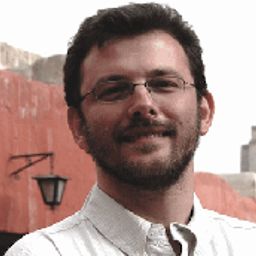
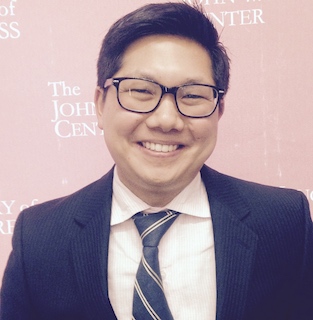
Deborah Boehm, Ph.D., is a Foundation Professor of Gender, Race, and Identity and Anthropology at the University of Nevada, Reno, where she also serves as Graduate Director for the Gender, Race, and Identity Program. Her research explores intersections between immigration, gender, family dynamics, and state control mechanisms, with a focus on transnational Mexican communities. Education: Ph.D. in Anthropology from the University of New Mexico Her work examines: Gendered family relations in immigration contexts Transnational youth experiences 21st-century immigration control systems Detention and deportation practices Borderlands studies Intersectionality in migration narratives Recent research trends include analyzing spaces of invisibility in immigration detention and collaborative studies on undocumented migrant children categorized as 'unaccompanied' by the U.S. government. Scientific Awards & Fellowships: American Council of Learned Societies Fellowship Fulbright-Garcia Robles Award School for Advanced Research residency University of Arizona School of Anthropology residency Center for the Study of Law and Society (UC Berkeley) residency
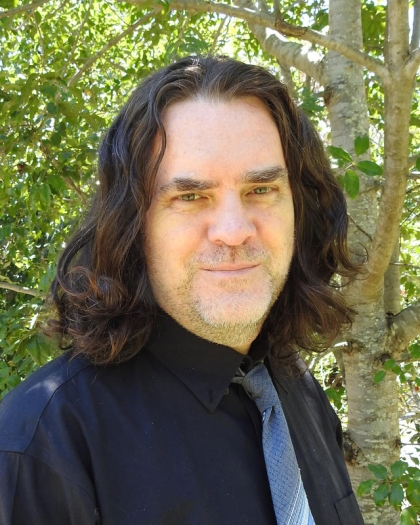
Jason Nelson is a Professor of Digital Culture in the Department of Linguistic, Literary and Aesthetic Studies at the University of Bergen, Norway. He is a creator of digital poems and fictions, builder of surrealist and politically focused art games and digital creatures. His work is exhibited widely in galleries and journals around the globe at FILE, ACM, LEA, ISEA, SIGGRAPH, ELO and numerous other venues. Nelson serves on organizational boards including the Australia Council Literature Board and the Electronic Literature Organization. Nelson's research focuses on the intersection of digital technology, creative writing, and artistic expression. He explores how AI and machine learning can be harnessed for creative purposes, developing new forms of digital literature and interactive art. His work often involves building expansive visual worlds through collaborative AI processes, creating interactive digital poetry, and developing novel approaches to digital narrative. Nelson's research spans digital humanities, electronic literature, AI-generated art, and interactive media, with particular emphasis on how these technologies transform creative processes and experiences. Over the past decade, Nelson's work has increasingly focused on the creative potential of AI technologies, especially in the areas of text-to-image generation and multimodal authorship. His projects often blend game engines with poetic expression, creating immersive experiences that challenge traditional boundaries between human and machine creativity. Recent works explore themes of multispecies futures, time perception, and the transformation of physical spaces through augmented reality. Nelson has received numerous scientific awards and fellowships including: Fulbright Fellowship at the University of Bergen Moore Fellowship at the National University of Ireland Winner of the Digital Writing Prize, Queensland Literary Awards (15,000 AUD) Winner of the Woollahra Library Digital Poetry Prize (5,000 AUD) Runner-Up Prize at the Videomedeja digital art exhibition Finalist for the Turn-on Literature Prize Finalist for the Queensland Literary Awards, Digital Writing Category Multiple finalist nominations for the New Media Writing Prize Nelson actively participates in academic advising and has secured significant research funding, including a 125,000 AUD grant from the Australia Council of the Arts, Literature Board for his project "Cube Cryptext and Nomencluster," which was recognized as the world's largest interactive art-game. His work "Nine Billion Branches" received multiple awards including the Digital Writing Prize from the Queensland Literary Awards. He has also received a 75,000 NOK grant for the "Flood Mosaic Artwork" project featured in the Floodlines Exhibition at the State Library of Queensland. Nelson is affiliated with the Center for Digital Narrative at the University of Bergen, where he collaborates with researchers like Scott Robert Rettberg and Alinta Krauth. Together they form EphemerLab, exploring new creative processes that move beyond simple "ask and generate" AI methods. Their work involves stitching together hundreds of individual image fragments and components into cohesive visual and narrative concepts, pushing the boundaries of what's possible with current AI technologies.
Dr. F. Jerry Reen serves as a Senior Lecturer and Principal Investigator in the School of Microbiology at University College Cork (UCC), Ireland. With over two decades of academic experience since joining UCC's Department of Microbiology in 2002, he has established himself as a leading researcher in microbial communication systems and host-pathogen interactions. His research group operates within the BIOMERIT Research Centre, and he maintains active collaborations across multiple institutions in Ireland and internationally. Dr. Reen earned his BSc in Biochemistry at the National University of Ireland Galway (NUIG), followed by a PhD in the Molecular GlycoBiotechnology Group at NUIG, supported by an Enterprise Ireland Scholarship and an NUI Teaching Fellowship. His academic journey includes a postdoctoral position in the lab of Dr. E. Fidelma Boyd at UCC, during which he was a visiting scientist at the Sidney Kimmel Cancer Center in San Diego and received an IRCSET Postdoctoral Fellowship for bacteriophage-host interactions research. Dr. Reen's research focuses on deciphering communication systems underpinning polymicrobial-host interactions for human and ecosystem health, with particular emphasis on small molecule signaling in microbial communities. His work bridges fundamental microbiology with translational applications, targeting antimicrobial resistance through chemico-biological therapeutics and developing sustainable pharmaceutical production methods using marine biocatalysts. His research has evolved from early work on Vibrio species to current investigations of Pseudomonas aeruginosa signaling systems, bile acid interactions in cystic fibrosis, and marine enzyme applications in green chemistry. His laboratory's publication record demonstrates consistent productivity with over 80 peer-reviewed papers (h-index 26), spanning from foundational studies on LysR-type transcriptional regulators to recent innovations in virtual reality educational tools. The research trajectory reveals an expanding scope from molecular microbiology to systems-level understanding of microbial communities, with increasing emphasis on sustainable solutions for the pharmaceutical industry. Bronze LEAF Award (2022) - Green Campus University College Cork The Disciplinary Excellence in Learning, Teaching and Assessment (DELTA) Award (2021) - National Forum for the Enhancement of Teaching and Learning Purdy-Lucey UCC Life Sciences Invention of the Year 2015 (2016) Best Poster Exhibition (2012) - Royal Irish Academy National Researcher of the Year, Silver Medal (2011) - Roche BioSciences Researcher of the Year, Gold Medal (2011) - Roche Dr. Reen has successfully secured significant research funding from multiple sources including Science Foundation Ireland (SFI), Health Research Board (HRB), Enterprise Ireland, and Irish Research Council. His current projects include 'BioBloc' enhanced Contact LEns solutioNS (BBCLENS), HEACOVID19, SSPC3 Pharm5, and investigations into novel macrolides for cystic fibrosis management. He has mentored numerous graduate students, including Stephanie Flynn (PhD, 2019), Noelle McCarthy (PhD, 2009), and David Woods (MSc, 2008), with two doctoral students currently completing their research. His educational innovations, particularly student-partnered virtual reality simulations, have transformed how challenging molecular concepts are taught. Dr. Reen leads an interdisciplinary research group that combines microbiology, chemistry, bioinformatics, and education technology. His team collaborates with internal UCC colleagues including Dr. Gerard McGlacken and Prof. Anita Maguire, as well as external partners from institutions like the University of Warwick, Medical University of Graz, and University de Porto. The laboratory maintains strong connections with clinical researchers studying cystic fibrosis and has developed novel approaches for detecting bacterial signaling molecules using boron-doped diamond electrodes.
Professor Rob Dwyer-Joyce is a leading academic in Tribology and Lubrication Engineering at the University of Sheffield , School of Mechanical, Aerospace and Civil Engineering. He serves as Director of the Centre for Doctoral Training in Integrated Tribology and manages the Leonardo Centre for Tribology. A Fellow of both the Royal Academy of Engineering and the Institution of Mechanical Engineers, his work focuses on developing ultrasonic sensors for real-time lubrication and wear monitoring in industrial systems. Academic Affiliation: University of Sheffield (since 1994) Education: BEng Mechanical Engineering (Imperial College), PhD Tribology Industry Experience: Former British Gas engineer (Rough gas field) His research interests center on industrial wear problems , lubrication metrology , and acoustic sensor development . Key applications include wind turbine bearings, marine diesel engines, and automotive systems. His team’s innovations in tribo-acoustic sensors have enabled non-invasive oil film thickness and viscosity measurements in challenging environments. Recent scientific contributions span lithium-ion battery monitoring, wind turbine bearing dynamics, and marine engine lubrication, with over 30 publications since 2020. Awards include the EPSRC Advanced Career Fellowship in Tribo-Acoustic Sensors and recognition as a Royal Academy of Engineering Fellow . Contact: r.dwyer-joyce@sheffield.ac.uk
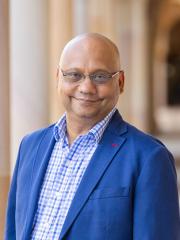
Professor Ashish Sinha is a leading academic in Marketing at the UQ Business School, holding concurrent roles as Visiting Professor at the Indian School of Business and Research Fellow at the Hong Kong Polytechnic University. His career spans senior leadership in academia (e.g., Academic Dean of Executive Education at ISB, Interim Dean at UTS Business School) and industry (Vice President at IRI, Chicago). His research bridges theory and practice, focusing on digital transformation, AI-driven strategies, ESG impact analysis, and marketing analytics. He has pioneered frameworks for retail optimization, category management, and B2B innovation adoption, with over 30 journal articles in top-tier outlets like Journal of Marketing and Marketing Science . Research Impacts: Sinha’s work has transformed executive education programs (e.g., ISB’s #38-ranked custom programs) and driven research excellence at UTS. He is a serial entrepreneur, having founded two analytics firms acquired for their practical impact. His $240M Food Agility CRC participation highlights his role in agribusiness innovation. Awards include the Davidson Award and twice runner-up for the Gary Lilien Practice Award for applied marketing science. Key Research Themes: AI in Marketing, Digital Transformation, ESG Strategies, Consumer Sentiment Analysis Leadership Roles: Academic Dean (ISB), ADR (UTS), Head of Marketing (UNSW) Industry Experience: Analytics leadership at IRI, strategic consulting across sectors Grants/Partnerships: CI in Food Agility CRC ($240M), multiple ERA-recognized research collaborations. Advises on AI ethics, sustainable marketing, and global business strategy.
Mark Mazower is the Ira D. Wallach Professor of History at Columbia University, where he has established himself as a leading historian specializing in modern Greece, 20th-century Europe, and international history. He also serves as the Stavros Niarchos Foundation Director of the Columbia Institute for Ideas and Imagination in Paris, which brings together scholars with leading artists, writers, composers and filmmakers from around the world to foster innovative interdisciplinary collaboration. His educational background includes a D.Phil. from Oxford University (1988), an M.A. from Johns Hopkins University (1983), and a B.A. from Oxford University (1981). This strong academic foundation has positioned him as a preeminent historian with expertise spanning multiple historical periods and geographical regions. Mazower's research focuses on modern Greek history, 20th-century European history, and international history, with recent work examining the historical evolution of the Greek islands over the very long term. His scholarship bridges academic rigor with public engagement, as he frequently contributes commentary on international affairs and book reviews to major publications including the Financial Times , The Nation , the London Review of Books , and the New York Review of Books . In 2016, he expanded his public engagement through the film Techniques of the Body , a meditation on the refugee crisis in Greek history created with director Constantine Giannaris. His publications reveal a consistent focus on understanding the complex interplay between national histories and broader international frameworks. Mazower's work often examines how local experiences intersect with global forces, particularly in the context of war, occupation, state formation, and the development of international institutions. His approach combines deep archival research with conceptual innovation, making significant contributions to our understanding of European history, Greek history, and international relations. Mazower's scholarly achievements have been recognized with numerous prestigious awards: Gennadius Prize (2023) Honorary Citizenship from the Republic of Greece (2022) Fellow of the British Academy (2019) D. Litt., honoris causa , Catholic University of Leuven (2019) D. Litt., honoris causa , University of Athens (2015) Dido Sotiriou Award of the Hellenic Authors Society (2012) Society of Columbia Graduates Great Teacher Award (2011) Fellow, American Academy of Arts and Sciences Hitler's Empire: Trilling Award and LA Times Book Prize for History (2009) Salonica, City of Ghosts: Duff Cooper Prize (2005) As an educator at Columbia University, Mazower has mentored numerous students in the Department of History, guiding research in modern European history, Greek history, and international history. His leadership extends to directing the Columbia Institute for Ideas and Imagination in Paris, which has received significant funding from the Stavros Niarchos Foundation to support interdisciplinary collaboration between scholars and creative artists from around the world. At the Columbia Institute for Ideas and Imagination, Mazower has created a unique intellectual environment where historians work alongside artists, writers, and filmmakers to explore new approaches to understanding complex historical and contemporary issues. This innovative space reflects his commitment to bridging academic scholarship with creative expression and public engagement, fostering dialogue across disciplinary boundaries to address pressing global challenges.
Professor Dian Tjondronegoro is a leading academic at Griffith University's Department of Management within the Griffith Business School. He holds roles such as Acting Head of Department and Deputy Head (Research), and is affiliated with the Centre for Work, Organisation and Wellbeing, Griffith Asia Institute, and the Griffith Inclusive Future Beacon. His research focuses on AI ethics, eHealth systems, and digital governance, with over $9M in grants from bodies like the ARC and NHMRC. He has published 145+ peer-reviewed papers and leads initiatives like the 'Governing in the Digital Age' program. A Fellow of the Australian Computer Society and Senior Member of IEEE/ACM, he has won the Gold Disrupters Award (2019) and multiple teaching accolades. Education: PhD in Information Systems (Deakin University, 2005), BIS (QUT, 2001). Research Interests: AI, machine learning, healthcare innovation, responsible AI, workplace design, and digital economy strategies. His articles emphasize AI applications in healthcare monitoring, workplace productivity, and ethical surveillance. Recent work explores post-COVID workplace trends and AI-driven public health solutions. He advises on government policy and innovation through roles like Gold Coast Health's Digital Innovation Advisory Committee. His teaching includes courses on digital strategy and innovation management.
Roy CHUA is a Professor of Organisational Behaviour & Human Resources and Associate Dean for Post-Experience Postgraduate Programmes at the Lee Kong Chian School of Business, Singapore Management University. He holds a Ph.D. in Management (Organizational Behavior) from Columbia University and has held academic positions at Harvard Business School and Singapore Management University since 2008. His research focuses on creativity, cross-cultural management, leadership, and innovation in organizational contexts, particularly in Asian business ecosystems. Education: Ph.D., Management (Organizational Behavior), Columbia University (2008) M.A., Philosophy, Columbia University (Year not specified) B.Sc., First Class Honors, Computer and Information Services, National University of Singapore (1998) Research Interests: Dr. Chua's work examines how cultural factors influence creativity and innovation, including studies on cultural tightness, intercultural collaboration, and trust dynamics in global business environments. He has conducted groundbreaking research on gender disparities in creative processes and the impact of cultural diversity on organizational outcomes. His empirical studies often combine quantitative analysis with qualitative insights from multinational corporations and institutional data. Awards: Best Reviewer Award - Academy of Management Journal (2017) Multiple teaching awards including 'Mind Opener' MBA Award (2016) Academic excellence scholarships including Asia Life Gold Medal (1997) Research grants from Columbia University CIBER and other institutions Advising & Grants: Supervises doctoral candidates in General Management and DBA programs Lead researcher on projects funded by Singapore Management University and international grants Collaborations with institutions like MIT Sloan and Harvard Business School Labs/Teams: Leads research initiatives in organizational creativity and cross-cultural management at Lee Kong Chian School of Business, with active participation in global academic networks focused on Asia-Pacific business strategies.
Stephan Nüesch is a Professor and Director of the International Institute of Management in Technology at the University of Fribourg, affiliated with the Faculty of Management, Economics and Social Sciences. His research focuses on innovation management, artificial intelligence, sharing economy dynamics, organizational behavior, and technology leadership. He holds a prominent role in bridging academic research with practical business applications, particularly in digital transformation and healthcare systems. His work explores topics such as CEO-TMT shared cognition, human-AI collaboration, and value creation in emerging economic models. He teaches courses in management and technology strategy and actively contributes to interdisciplinary research initiatives. His recent articles address nonlinear relationships in economic systems, toolkit-driven innovation, and the impact of crises on organizational identity. Nüesch is a leading voice in leveraging technology for strategic advantage, with a strong emphasis on empirical analysis and policy implications.
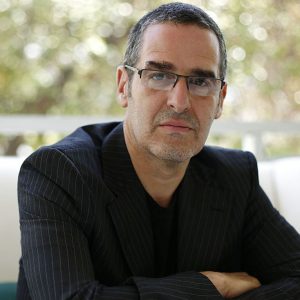
Mathieu Dormaels, Ph.D., is an Associate Professor at the University of Quebec in Montreal , specializing in Heritage Studies , Urban Planning , and Cultural Tourism . He actively participates in academic events focused on civic heritage engagement , landscape approaches , and community-based heritage . Current Role: Associate Professor at Université du Québec à Montréal Research Focus: Built heritage regulation, wind energy landscapes, participatory heritage management, and the interplay between universal/local heritage values. Event Moderation: He has moderated sessions on Engaged communities, civic heritage and participated in discussions about heritage and social change . Key Themes: Heritage policy, cultural landscapes, stakeholder dynamics, and sustainable development in urban and regional contexts. Academic Contributions: Dormaels has published extensively on topics including World Heritage site management in Peru, impacts of industrial heritage, and the role of museums in mediating cultural narratives. His work bridges theoretical frameworks with practical case studies in heritage conservation. Event Participation: Active in conferences addressing renaming/removal of heritage , industrial boom/bust , and cultural mediation , with a focus on balancing preservation, community needs, and economic development.
Leah Macfadyen is an Associate Professor of Teaching in the Department of Language & Literacy Education at the University of British Columbia (UBC), Faculty of Education. She serves as Coordinator for Curriculum & Instruction in the Master of Educational Technology (MET) program. With interdisciplinary training in experimental sciences and humanities, she bridges analytical rigor with cultural theory in her research on digital education and learning analytics. Her research spans learning analytics , digital literacies , and critical intercultural communication . Key projects include developing UBC’s Introduction to Global Citizenship online course (2005) and co-authoring MET program courses like ETEC 542. She explores ethical dimensions of ‘big data’ in education and data literacy challenges. Recent publications (2020–2023) focus on institutional learning analytics frameworks, curriculum NLP analysis, and ethical codes for practitioners. Collaborative work with Shane Dawson and others has been published in journals like Journal of Learning Analytics , Computers & Education , and Journal of Genetic Counselling . Key Themes : Intercultural communication in digital spaces, systems thinking for educational analytics, ethical implications of data-driven learning Courses Developed : ETEC 500, 520, 542, 543, 581, and 590
Melissa Feinberg is a Professor of History at Rutgers, The State University of New Jersey, where she has been a faculty member since 2008. She earned her Ph.D. from the University of Chicago and specializes in modern Eastern European history, with particular focus on Czechoslovakia, gender history, Cold War politics, and human rights. Her work examines political culture, feminism, and everyday experiences under communist regimes. Research Focus: Her scholarship centers on gender equality debates in interwar Central Europe, truth politics during Stalinism, and the societal transformations under communism. She employs ordinary voices to analyze historical change, with recurring themes including: Gender citizenship in democratic and socialist systems Cold War propaganda and information warfare Emotions as political tools Post-1989 legacies of communism Publication Trends: Feinberg's 15 most recent works (2017-2025) predominantly explore Eastern Europe's communist era through lenses of gender, dissent, and daily life. Her 2022 book Communism in Eastern Europe reexamines socialist governance through civilian experiences, while earlier works like Curtain of Lies (2017) analyze truth manipulation during Stalinism. Recurrent keywords include Cold War propaganda, women's activism, state surveillance, and post-socialist transition. Teaching: Regularly teaches undergraduate courses on 20th Century Europe, Communism, Human Rights, and Cold War seminars. Graduate instruction includes Women's/Gender History and Eastern European studies.
Prof. Dr. Philipp A. Rauschnabel serves as Professor of Digital Marketing and Media Innovation at the University of the Bundeswehr Munich's Faculty of Business Administration. Recognized as one of the world's leading scientists in augmented reality, virtual reality, and metaverse research, he bridges academic theory with practical business applications across multiple industries. His educational background includes: Habilitation, Dr. habil; PD, Otto-Friedrich University of Bamberg Dr. rer. pol. (psychological brand management, 2014, summa cum laude), Otto-Friedrich University of Bamberg M.Sc. in Marketing and Distribution Management, Georg-August University of Göttingen (best of class) BA in Business (Marketing and Business Information Systems), Merseburg University of Applied Sciences (Top 10% graduate) Rauschnabel's research centers on the practical implementation of spatial computing technologies in marketing contexts. He has developed influential frameworks including the XR framework that redefines the relationship between augmented reality, virtual reality, and mixed reality. His work examines how these technologies transform consumer-brand relationships, workplace operations, and marketing strategies across retail, manufacturing, and service industries. He particularly investigates the psychological mechanisms through which AR/VR experiences influence consumer behavior, brand love, and purchasing decisions. Analysis of his recent publications reveals a clear progression from basic AR applications toward more sophisticated spatial computing environments and persistent metaverse experiences. His research demonstrates increasing sophistication in understanding contextual factors, emotional responses, and long-term consumer engagement with these technologies. The work consistently bridges theoretical marketing concepts with practical implementation challenges faced by businesses. His significant scientific recognition includes: Top 1% Scientist (Clarivate Highly Cited Researcher, 2023) Top 2% Scientist (Stanford List 2023) Microsoft Academics listed as one of the top 5 AR researchers worldwide based on citation output (2021) Named one of the top 15 AR marketing researchers worldwide (Kumar, 2021) Prof. Rauschnabel serves as Associate Editor for the Journal of Business Research and chairs the bdvb research institute. He has provided expert consultation to the German Federal Government on XR/Web3/Metaverse (2022) and regularly advises major corporations across multiple sectors including food, home appliances, insurance, automotive, and telecommunications across Germany, USA, Switzerland, China, and Austria. His practical consulting work complements his academic research, creating a valuable feedback loop between theory and practice. He leads multiple research initiatives on augmented reality marketing and spatial computing, collaborating with industry partners to develop practical applications of these emerging technologies. His work emphasizes the importance of understanding both the technological capabilities and human factors that determine successful implementation of AR/VR in business contexts.
Kevin Y. Kim serves as an Assistant Professor in the Department of History at the University of California, Los Angeles (UCLA), specializing in U.S. global history with emphasis on Korea and Northeast Asia. His scholarly work bridges diplomatic history, Cold War studies, and critical examinations of capitalism within international contexts. Kim holds a B.A. from Columbia University and earned both his M.A. and Ph.D. from Stanford University, establishing foundational expertise in American history and international relations. His research investigates the interplay between U.S. political power and global transformations, particularly focusing on dissenting perspectives during the Cold War era. Current projects analyze alternative visions of American foreign policy through figures like Henry Wallace and Herbert Hoover, challenging narratives of U.S. exceptionalism while exploring connections between anti-racism movements, imperial dynamics, and economic systems. This work reveals how Third World decolonization movements critically shaped American diplomacy and capitalist development. Kim's publications demonstrate consistent engagement with transnational frameworks, examining Pacific economic collisions, Korean American experiences, and Cold War alternatives. His scholarship appears in leading journals including Pacific Historical Review and Diplomatic History , alongside public commentary in The Nation and The Progressive . Major recognitions include: Glenn Campbell and Rita Ricardo-Campbell National Fellowship (Hoover Institution, 2022-23) Charles Warren Center Faculty Fellowship (Harvard University, 2018-19) Silas Palmer Research Fellowship (Hoover Institution, 2018) William Appleman Williams Junior Faculty Research Grant (2015) Gilder Lehrman Institute Fellowship (2014) J. Franklin Jameson Fellowship (American Historical Association, 2013-14) Supported by the American Historical Association, Society for Historians of American Foreign Relations, and Andrew W. Mellon Foundation, Kim's research program examines how marginalized perspectives reshaped Cold War geopolitics and capitalist globalization. His writing for broader audiences connects historical analysis to contemporary international affairs and popular culture. No institutional labs or dedicated research teams are documented in available materials.
Li Lingyan serves as an Associate Professor at Tongji University's School of Art and Media, specializing in urban-rural communication systems and national image strategy development through architectural and media interfaces. Education: PhD in Architectural History and Theory, Tongji University (2009-2015) Master of Engineering in Architectural History and Theory, Tongji University (2004-2007) Bachelor of Architecture, Harbin Institute of Technology (1999-2004) Research Focus: Her scholarship examines how media platforms—from print to smart technologies—mediate urban spatial production, architectural criticism, and national branding. She investigates the symbiotic relationship between iconic structures and cultural identity formation, particularly through China's urban renewal projects and media representations. Publication Trends: Analysis of her 2012-2019 articles reveals a consistent trajectory from historical studies of architectural criticism (1980s print media) toward contemporary analyses of digital media's impact on urban spatial transformation and national image construction, with Shanghai serving as a primary case study for cultural branding mechanisms. Scientific Awards: No major scientific awards were documented in the source material. Research Leadership: Professor Li directs significant national research initiatives while mentoring students in international communication and new media literacy courses. Her grant portfolio demonstrates sustained institutional trust in her interdisciplinary approach to media-urbanism studies. Active Projects: National Social Science Fund Youth Project 16CXW020 (2016-2019); National Social Science Fund Art Project 17BH164 (2017-2019); National Natural Science Fund Youth Project (2018-2021) Completed Projects: National Natural Science Fund Project 51278342 (2013-2016); National Natural Science Fund Project 51108322 (2012-2014); National Science & Technology Support Program 2012BAJ22B03 (2012-2015) Research Ecosystem: As a core member of Tongji University's Omnimedia Research Institute, she contributes to experimental media pedagogy through the Media Experiment and Practice Teaching Center while advancing theoretical frameworks for understanding media's role in shaping urban identities.