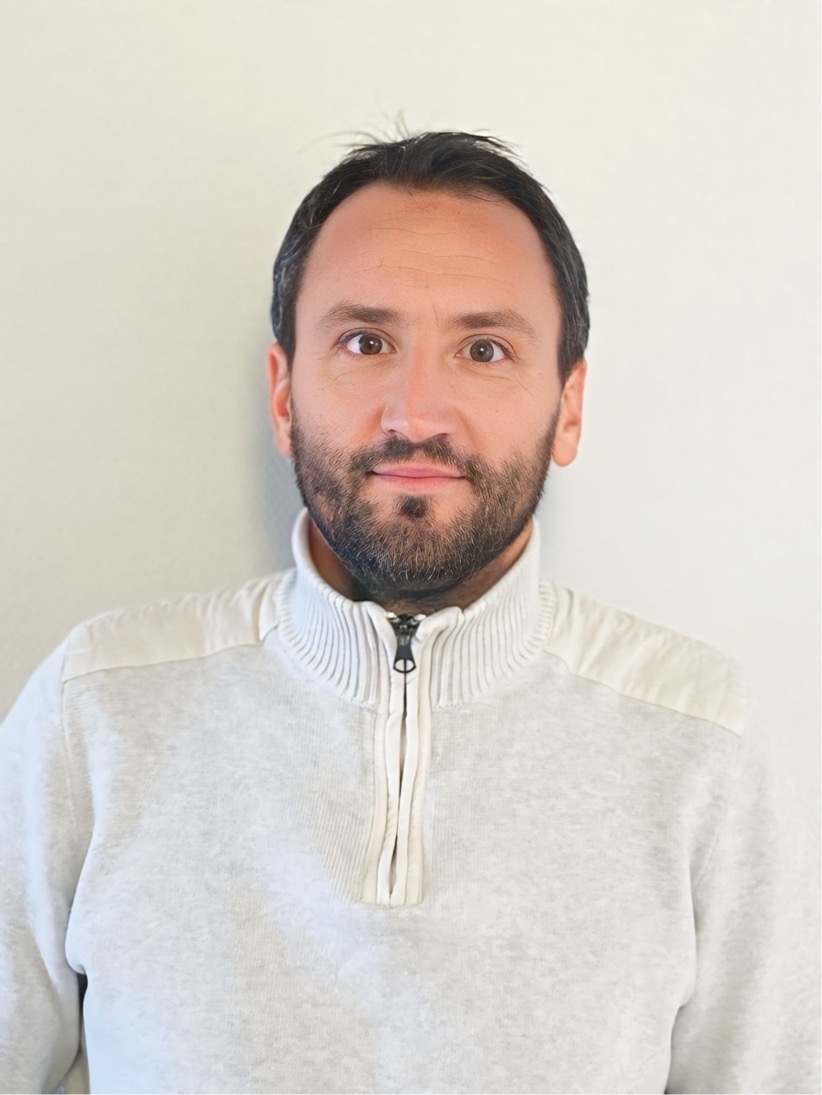
Hervé Le Hir is a Professor at the Department of Biology of École Normale Supérieure (ENS), leading a research team focused on post-transcriptional regulation of gene expression, particularly the Exon Junction Complex (EJC). His work integrates biochemistry, biophysics, and transcriptomics to study EJC assembly, dynamics, and roles in mRNA transport, translation, and quality control. He has contributed to resolving the EJC core structure, identifying its role in NMD and translational activation, and mapping its genome-wide binding sites in human cells. Research Themes: RNA-protein interactions, molecular motors, mRNA metabolism, EJC function, NMD pathway. Key Methods: Protein reconstitution, single-molecule biophysics, CLIP-seq, high-throughput sequencing. Recent studies include exploring EJC-dependent mRNA localization in ciliogenesis and characterizing UPF1 helicase activities. His lab actively recruits researchers and can be contacted directly for collaboration.
Charlotte LECUREUIL is an Associate Professor at the University of Tours, affiliated with the Insect Biology Research Institute (IRBI, UMR CNRS 7261) and the ESORE team (Evolution Sociale et Réponse à l'Environnement). She co-heads the Professional Master 2 'Sustainability and Quality in Animal Production Sectors' (DeQPA). Her research focuses on environmental impacts on male reproductive functions in vertebrates and invertebrates, with applications to public health, agronomy, and biodiversity conservation. Education: HDR (Habilitation à Diriger des Recherches) from University of Tours (2015) PhD in Life Sciences (2004), INRA Nouzilly (supervised by Florian Guillou) Research interests include testicular physiology, endocrine disruptors, transcriptomic analysis, and the influence of chemical/thermal stressors on spermatogenesis. She uses ecotoxicogenomic, phylogenetic, and endocrine pathway characterization approaches. Current positions include roles at IRBI and teaching in professional master programs. Labs/Teams: Member of IRBI and ESORE team (Faculty of Sciences and Technology, Tours).
Florence Fountain is an Associate Professor at the University of Reims Champagne-Ardenne (URCA), affiliated with the Faculty of Exact and Natural Sciences. She works within the Research Unit on Grapevine and Wines in Champagne (EA 4707) and has been active in academia since 2002. Her research focuses on grapevine trunk diseases, plant-pathogen interactions, and biocontrol strategies. Biology and physiology of grapevine Plant-pathogen interactions Biocontrol strategies Molecular mechanisms in plant stress responses Her work spans proteomic and transcriptomic analyses of grapevine diseases like esca proper , apoplexy , and Botryosphaeria dieback . She has led national research programs (CASDAR) and coordinated the COST Action FA1303 on sustainable GTD control, while collaborating on projects like WINETWORK (H2020). She teaches courses in grapevine physiology, plant biotechnology, and phytopathology at URCA.
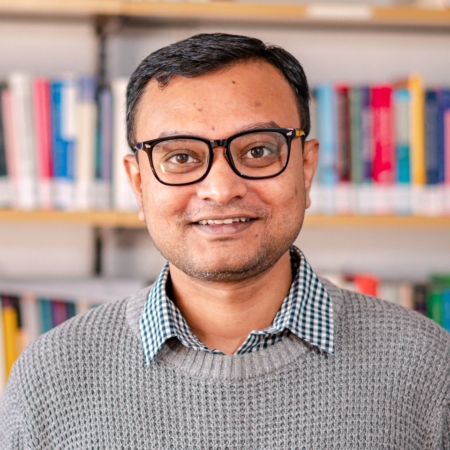
Dr. Saptarshi Bej is an Assistant Professor in Data Science at the Indian Institute of Science Education and Research Thiruvananthapuram (IISER-TVM), India. With a PhD in Machine Learning from the University of Rostock, Germany, and a Master’s in Mathematics specializing in graph theory from IISER-Kolkata, his research bridges computational methods with biomedical applications. He leads the iDEALab.ai research group. Clinical and Biomedical Data Science Machine Learning for Healthcare Synthetic Data Generation Multi-Modal Data Integration Data Privacy in Clinical Settings Graph Theory Applications His work focuses on overcoming challenges in clinical datasets including imbalanced data and data scarcity through novel algorithms like LoRAS and ConvGeN . Recent publications highlight applications in gastrointestinal disease diagnosis , peptide analysis , and cross-disease genetic studies . Current projects emphasize collaborative approaches to data-driven medicine, aiming to empower clinicians with interpretable machine learning tools. He actively welcomes research inquiries from students interested in data science and biomedical informatics.
Philippe Bastin is a full Professor and Director of the Trypanosome Cell Biology Unit at Institut Pasteur and INSERM U1201, Paris. He also chairs the Labex IBEID program (Integrative Biology of Emerging Infectious Diseases) and leads multiple international collaborations. University Paris-Descartes (HDR, 2005) Université Catholique de Louvain (PhD, 1993; Degree, 1989) His research focuses on Trypanosoma brucei and Toxoplasma gondii , with specific interests in: Flagellar assembly and intraflagellar transport (IFT) Tubulin post-translational modifications Centrosome and basal body biology Motility mechanisms of vector-borne pathogens Microfluidic tools for parasite imaging Recent work includes Tryp-Chip microfluidic devices for longitudinal parasite imaging, LRRC56 roles in dynein docking, and glutamylation studies in flagellum construction. His 2025 publications explore IFT selectivity and tubulin dynamics. Awards include: Fondation pour la Recherche Médicale Team (2022, 2015) Honorary Christoffel Plantin Award (2021) Pasteur-Vallery-Radot Prize (2013) He has trained 10 PhD students and 13 postdocs, with 1/3 of former trainees in academia, 1/3 in industry (including a startup CEO), and 1/3 in international postdocs.
Jeremie Kalfon is a researcher at the Pasteur Institute in Paris, France, specializing in computational biology and gene regulatory network inference. His work focuses on leveraging machine learning and large-scale single-cell data analysis to unravel complex biological systems, particularly in cancer and immune diseases. Notably, he is a key contributor to the development of scPRINT , a transformer-based model for gene network prediction, batch correction, and denoising in genomics. Primary Affiliation : Pasteur Institute (Institut Pasteur) Research Themes : Computational biology, bioinformatics, leukemia genomics, single-cell RNA-seq modeling Research Trends : Kalfon’s publications demonstrate expertise in: Designing AI-driven tools for gene network inference Uncovering transcriptional plasticity in leukemia Mapping synthetic lethal interactions in cancers Decoding codon usage patterns and metabolic vulnerabilities Grant Support : ANR-16-CONV-0005 (French National Research Agency) European Research Council H2020 grant #101115618 Collaborative Networks : He collaborates with interdisciplinary teams at Pasteur Institute and contributes to educational workshops on AI in life sciences, reflecting his commitment to training the next generation of computational biologists.
Laurent Debarbieux is a Researcher at the Pasteur Institute in Paris, France, affiliated with the Microbiology department. His work focuses on bacteriophage biology , phage therapy , and host-pathogen interactions . Current projects include: PHAGESAFETY (blood marker identification for phage toxicity) VHRdb (Viral Host Range database development) Phage-host molecular dynamics in Pseudomonas aeruginosa and Escherichia coli Research highlights: His studies explore phage therapy optimization through automated potency assays , biofilm disruption , and genotype-dependent resistance mechanisms . He investigates phage-plasmid coevolution , archaeal virus-host equilibrium , and spatio-temporal infection dynamics using gnotobiotic mouse models and high-throughput sequencing . Collaborative networks: Key collaborations with Jean-Marc Ghigo , Jean-Daniel Lelièvre , and Joshua S. Weitz Partnerships with Genoscope and MicroScope/MaGe platforms Methodological expertise: Cryo-electron tomography for virion assembly visualization RNA-Seq and NGS variant detection Development of automated pipetting protocols for phage testing
Nicolas Vergne is a University Lecturer at the University of Rouen, where he has been actively teaching mathematics, statistics, and bioinformatics courses since at least 2010. His academic affiliation centers around the Laboratoire de Mathématiques Raphaël Salem (LMRS) at the University of Rouen, where his office is located (M.2.10, 2nd floor). His educational background includes: Doctorate in Applied Mathematics (2003-2008) from University of Evry-Val-d'Essonne DEA AMIB (Application of Mathematics and Computer Science to Biology) (2002-2003) Dual Masters in Mathematics and Mathematical Engineering (2001-2002) Bachelor's degree in Mathematics (2000-2001) DEUG MIAS (Mathematics and Computer Science Applied to Science) (1998-2000) BAC S (Scientific, Specialty Mathematics) (1997-1998) Vergne's research spans the intersection of probability theory, statistics, and biological applications. His primary focus involves developing and applying Markov chain models (including regulated, drifting, and semi-Markov variants) to analyze biological sequences and genomic data. He has made significant contributions to DNA barcoding methodology, Poisson approximation techniques for rare word detection in DNA sequences, and statistical approaches for RNA sequencing data analysis. His work bridges theoretical probability with practical bioinformatics applications, particularly in the areas of reliability analysis, survival modeling, and mixture models for high-throughput genomic data. Analysis of his publication record reveals a consistent trajectory from theoretical probability foundations toward increasingly applied bioinformatics research. His earliest work focused on rigorous mathematical treatments of Markov chains and Poisson approximation theory. Over time, his research evolved to address concrete biological problems including DNA sequence analysis, DNA barcoding, microarray analysis, and RNA-Seq data processing. A notable trend is his development of specialized R packages (SMM, DRIMM'R, WebDRIMM) that translate theoretical models into practical tools for the bioinformatics community. His most recent publications demonstrate expertise across multiple domains including cancer genomics, marine microbiology (diatom research), and rheumatoid arthritis biomarker discovery. Vergne has extensive teaching experience across multiple levels of the French university system, supervising both undergraduate and graduate students. His teaching portfolio includes probability, statistics, real analysis, biostatistics, and specialized bioinformatics courses. He has served as an apprenticeship supervisor for CNRS apprentices in bioinformatics and supervised multiple third-year interns. His laboratory affiliations include the LMRS at University of Rouen, the Bioinformatics Unit 900 of the Curie Institute, and the MIA unit of INRA in Jouy-en-Josas, reflecting his interdisciplinary approach spanning mathematics, statistics, and biology.
Julian Sanchez is a Research Fellow with expertise in Autoimmunity , Immunopathology , and Bioinformatics . His research focuses on muscle-resident immune cells and their role in skeletal muscle autoimmunity , particularly in myositis using advanced "omics" methodologies. Education: Doctorate in Immunology and Bioinformatics from Sorbonne University His work bridges immunology and bioinformatics , emphasizing high-resolution transcriptomics to uncover pathophysiological mechanisms in myositis disorders.
Maxime Culot is a Professor at the Faculty of Sciences, University of Artois in Lens, France. He earned his Ph.D. at the same institution in 2007 and has since specialized in pharmaceutical and toxicological applications of cell and tissue culture. His research focuses on studying xenobiotics transport across biological barriers using human stem cell-derived in vitro models, particularly the blood-brain barrier (BBB). He has contributed to developing innovative BBB models for drug screening and collaborated with pharmaceutical companies and organizations like AstraZeneca. Dr. Culot coordinates the Master Tox & Ecotox program (MENACE), emphasizing New Approach Methodologies (NAMs) for toxicity assessment. He has led or participated in EU-funded projects, including FP7 Predict iv, H2020-ITN BtRAIN, and others, advancing in vitro toxicology and BBB modeling. His work integrates proteomics, cellular models, and computational tools to address neurovascular protection, drug permeability, and adverse outcome pathways. Culot’s lab develops strategies for predicting human neurotoxicity, improving drug delivery systems, and enhancing in vitro-to-in vivo extrapolation methods. His research spans interdisciplinary topics such as stem cell-derived BBB models, extracellular vesicle standardization (MISEV guidelines), and the impact of differentiation protocols on transcriptomic signatures. He also investigates challenges in oral biologic delivery and the application of NAMs to reduce animal testing reliance. Culot’s contributions bridge basic science and translational research, with a focus on advancing safer and more effective pharmaceutical and toxicological practices.
Mickaël Ménager is the team leader (chef d'équipe) of the SCInflaNet: Single-Cell Inflammatory Responses and multi-OMICs Networks research group at the Imagine Institute. His work focuses on understanding inflammatory diseases and HIV-1 pathogenesis through cutting-edge single-cell transcriptomics, network inference, and computational biology. His research integrates genomic, proteomic, and cellular approaches to dissect mechanisms of autoinflammatory diseases like Aicardi-Goutières Syndrome (AGS) and HIV-DC interactions. Research Interests: Ménager’s lab investigates: 1) regulatory networks driving type I IFN dysregulation in autoinflammatory diseases, and 2) HIV-1 sensing, transfer to T-cells, and host immune responses. Key projects include: Single-cell network analysis to identify molecular drivers of IFN overproduction in AGS Actin dynamics and HIV transfer mechanisms in dendritic cells (DCs) Computational modeling of transcriptional networks using tools like the Inferelator Collaborations & Tools: Collaborates with Richard Bonneau’s lab (Simons Foundation) to develop dynamic gene regulatory networks. Uses bulk RNA-seq, ATAC-seq, and shRNA screens to study DC maturation, HIV endocytosis, and actin nucleation pathways. His team pioneered insights into TSPAN7’s role in HIV transfer and RARA’s regulation of DC activation. Labs & Teams: Leads SCInflaNet within the Imagine Institute, a premier center for genetic disease research. Active in multi-omic platforms and translational medicine, with a focus on developing therapies to replace immunosuppressive treatments in autoinflammatory disorders.
Pierre Chauvet is a Professor at the Catholic University of the West (UCO), serving as Deputy Director of the Institute of Applied Mathematics within the Faculty of Sciences. He holds HDR accreditation to supervise research and has a multidisciplinary background in Automation, Applied Mathematics, and Systems Engineering. Education: Doctorate/HDR: University Paris 8, 2001 Doctorate: University of Angers (Automation), 1993 DEA in Automation: École Centrale de Nantes, 1990 Master's in Applied Mathematics: University of Nantes, 1989 Research Interests: Chauvet’s work focuses on simulation of dynamic systems, biological systems modeling, artificial neural networks, and biomedical applications. He explores classification, prediction, and recognition techniques in neural networks, with applications in healthcare (e.g., EEG analysis, medical imaging) and environmental systems (e.g., forest fire prediction). Key Contributions: Developed the BB-EEG platform for EEG analysis in neonatal care. Conducted research on fall detection systems for elderly care and intrusion detection mechanisms. Investigated prognostic models for ovarian cancer using transcriptomic data. Grants & Labs: Led projects like BB-EEG (ANR-funded), HARMONY, and Domus Prévention. Collaborates with institutions like CHU d'Angers and companies such as ETIAM and 4SH. His work emphasizes interdisciplinary approaches in systems engineering and AI.
Nisrine Jrad is a Lecturer (HDR) at the Catholic University of the West (Angers), serving as Deputy Director of the Institute of Applied Mathematics (IMA) and Vice-Dean for Professionalization. She is affiliated with the Angevin Systems Engineering Research Laboratory (EA7315). Her research focuses on Machine Learning, Deep Learning, and Signal Processing, with applications in biomedical domains like epilepsy, EEG signal analysis, and Brain-Machine Interfaces. Education: PhD in Machine Learning, University of Technology of Troyes (2009) Research Master, National School of Electricity and Mechanics (ENSEM), Nancy (2006) Electrical-Electronics Engineering Diploma, Lebanese University (2005) Research Interests: Supervised/unsupervised learning, deep clustering, EEG signal processing, epilepsy biomarkers, and high-frequency oscillations analysis. She has pioneered methods for seizure detection, cross-subject generalization, and medical data analysis using advanced neural networks and complexity measures. Teaching: Algebra, Data Analysis, Linear Models, and Automatic Classification across academic levels (Bac+1 to Bac+5). Students: Supervised PhD/MSc students include Rayane Chmaycem (spatio-temporal GNNs), Gaëlle Milon-Harnois (scalp HFO detection), and Elie Karam (graph-based clustering). Labs/Teams: Leads research in MAI (Medical Applied Informatics) team and collaborates with interdisciplinary groups on ovarian cancer transcriptomics and environmental toxicology.
Jessica Bryant is a Research Fellow in the Biology of Host-Parasite Interactions Unit within the Department of Parasites and Insect Vectors at the Institut Pasteur, Paris. She conducts cutting-edge research on epigenetic and transcriptional regulation in Plasmodium falciparum , the deadliest malaria parasite, focusing on the var multigene family and antigenic variation. Ph.D. in Cell and Molecular Biology, University of Pennsylvania (2008–2014) B.S. in Cellular Biology, University of Georgia (2004–2008) Her research expertise lies in chromatin biology, gene regulation, and CRISPR-based technologies in parasitology. She investigates how epigenetic mechanisms control virulence gene expression and immune evasion in malaria parasites. Her work integrates molecular biology, genomics, and functional assays to dissect transcriptional networks in Plasmodium . The recent publications highlight a strong focus on CRISPR applications, m6A mRNA methylation, noncoding RNA regulation, and chromatin remodeling in Plasmodium . These studies reveal complex regulatory layers controlling antigenic variation and stage-specific gene expression, with implications for malaria pathogenesis and therapeutic development. Scientific Awards and Fellowships: EMBO Long-term Postdoctoral Fellowship (2015–2017) Institut Pasteur Roux-Cantarini Postdoctoral Fellowship (2015–2016) Goldwater Scholar (2008) Biomedical Graduate Studies Travel Grant (2012, 2013) University of Pennsylvania Genetics T32 Training Grant (2010–2012) Jessica Bryant has contributed significantly to mentoring and scientific community building, having served as Departmental Postdoc Representative at the Institut Pasteur. She has taught epigenetics and next-generation sequencing courses at Sorbonne University and the University of Bern. She co-organized the international CRISPR in Parasitology Symposium, fostering collaboration across the field. Her research is supported by prestigious grants and conducted within a leading parasitology research unit, with no indication of retirement or former status.
Daniele Capocefalo is a bioinformatician at the Bioinformatics HUB of Institut Pasteur in Paris, France. He joined the institute in October 2023 and is currently working in the ML4IG lab under Dr. Laura Cantini. His educational background includes: Bachelor's degree in Cell and Molecular Biology from Tor Vergata University, Rome (2010) Master of Science in Bioinformatics from Tor Vergata University, Rome (2014) PhD in Life Sciences and 'omics' from Sapienza University, Rome (2014-2019) Capocefalo has extensive expertise in the analysis of omics data, particularly transcriptomics, genomics, and epigenetics, both single-cell and bulk. His research focuses on graph-based approaches and network analysis to tackle biological challenges in developmental biology and cancer research. He previously worked as a bioinformatician at Ospedale Casa Sollievo della Sofferenza in Rome (2014-2019) and as a postdoctoral researcher at the University of Milan, Human Technopole, and European Institute of Oncology in Milan (2019-2023). His recent work includes the development of methodologies to integrate multiple sources of information from single-cell and bulk omics data, particularly in the context of fetal brain development and craniofacial development. In 2025, he co-authored a significant paper in iScience on IL-23 signaling in mucosal-associated invariant T cells, which demonstrates his ability to bridge computational methods with immunological research to understand chronic inflammatory diseases. Capocefalo's research demonstrates strong integration of biological knowledge with advanced computational techniques, with applications spanning developmental biology, cancer research, and immunology.