Simon Asquith is an Associate Professor and Programmes Director for Postgraduate Programmes in Educational Leadership at the School of Education, University of Birmingham . He has held leadership roles in teacher education and education partnerships at Liverpool Hope University and the University of Cumbria, and previously taught in schools in Leeds, Bradford, and Cumbria. His work focuses on school leadership, system change in education, and teacher training partnerships. Doctorate, University of Birmingham MA Human Geography, University of Leeds PGCE, University of Leeds BA Geography, University of Lancaster His research explores school leader positioning under government policy, challenges in Multi Academy Trusts , and school-to-school support within self-improving systems. He has led fieldwork modules in Romania and France and developed teacher education placements abroad. Recent publications analyze evidence use in education, geography curriculum equity, and partnership dynamics. His work intersects with educational policy , leadership identities , and cross-sector collaboration . Member, British Educational Leadership, Management and Administration Society Affiliate Member, Chartered College of Teaching Past National Chair, Association for Partnership in Teacher Education Contributor to Ofsted’s ITE inspection methodology He leads modules on Education, Policy and Society and Education, Policy and Social Justice , and has contributed to national educational reforms and teacher training frameworks.
Sara Svensson is a Senior Lecturer and Associate Professor at Halmstad University's School of Education, Humanities and Social Sciences. She serves as Programme Director of the Transformation, Innovation and Norm Sciences (TRAINS) Research Programme. Her academic work focuses on European cross-border regions, policy formation, and governance structures, with publications appearing in prestigious journals including Eurasian Geography and Economy, Journal of European Integration, and Journal of Borderlands Studies. She holds editorial positions as Associate Editor of the Peace and Democracy Section of Frontiers in Political Science and Regional Editor of Journal of Borderlands Studies. Education: PhD in Public Policy/Political Science from Central European University (Budapest, Hungary) MA in Political Science from Central European University (1999) BA in Journalism from Stockholm University (1997) Sara Svensson's research interests center on policy formation and governance structures in European cross-border regions, with particular attention to border dynamics, European integration, and democratic governance. Her work explores how cross-border regions navigate challenges of integration, re-bordering, and democratic backsliding, particularly in Central and Eastern Europe. She has developed significant expertise in the functioning of European Groupings of Territorial Cooperation (EGTCs) and cross-border governance mechanisms. More recently, her research has expanded to include disinformation and conspiracy theories, as well as the impacts of climate change on cross-border regions. Sara Svensson teaches in the 'Samhällsanalys och Kommunikation' program, which combines political science approaches to public policy with communication studies. She also teaches courses on European integration, public policy, qualitative methods, and regional development at BA, MA, and PhD levels. She currently serves on the supervision committee for Dimitra Kiousi's split-site PhD cooperation with Portsmouth University. Research Projects: B-Shapes: Border shaping perceptions of European Societies Transformation Innovation and Norm Sciences (TRAINS) Research Programme Intercambio: Interventions to promote mental and physical health in changing working environments RE-DACT – Research on Disinformation and Conspiracy Theories Democratic and intercultural dialogue Local food for a better climate
Dr Imogen Aujla is a Senior Lecturer in Dance and Course Coordinator for the MSc Dance Science at the University of Bedfordshire, UK. Originally trained as a dancer, she pivoted to dance science and psychology, focusing on inclusive and health-oriented research within dance education and professional practice. Research Interests Dance psychology and its application to talent identification and development pathways. Inclusive dance practices for individuals with disabilities, emphasising accessibility and wellbeing. Psychological and physical health of professional and pre-professional dancers. Her scholarly work explores how psychological constructs such as passion, motivation, and self-efficacy influence dancers’ career trajectories and mental health, particularly within independent and inclusive contexts. Across her publications, a clear trend emerges toward mixed-methods investigations that combine quantitative assessments with rich qualitative narratives. Fields span dance medicine, inclusive education, and performer wellbeing, with sub-fields including disordered-eating risk factors, evaluation tool development, and the lived experiences of dancers with disabilities. Editorial Role Associate Editor, Performance Science, Frontiers in Psychology (open for submissions) No students, grants, or scientific awards are explicitly listed in the provided material, and no contact email address is available.
Harsha Parmar is a Senior Lecturer in Pharmacy Practice at the University of Manchester. Her work focuses on curriculum development, interprofessional education, and student-led health initiatives. She co-leads the Prescribing Curriculum and General Practice/Social Care placements for the MPharm program, contributing to graduate employability and pharmacy education reform. University Affiliation: University of Manchester External Roles: Editorial Board Member (NHSE & Pharmacy Schools Council), External Examiner (Salford University), and National Pharmacy Education Conference Chair. Her research interests include preparation for practice, cultural competency, and health promotion. She supervises MPharm research projects and led a peer assessment tool for professionalism in coursework. Her work aligns with UN Sustainable Development Goals (SDG4: Quality Education). Recent publications address interprofessional education, student-led health clinics, and social care placements, emphasizing authentic assessment and patient-centered care. These works span pharmacy education, public health, and collaborative healthcare training. Scientific Awards: Pharmacy Teacher of the Year (2013) University of Manchester Distinguished Achievement Medal - Teacher of the Year (2014) University of Manchester Student Union Inclusive Teaching Practice Award (2022) She mentors students through academic programs, leads the Manchester Access Programme, and contributes to national pharmacy education policy via the Royal Pharmaceutical Society and General Medical Council. Current projects include student-led health screening clinics and e-portfolio development.
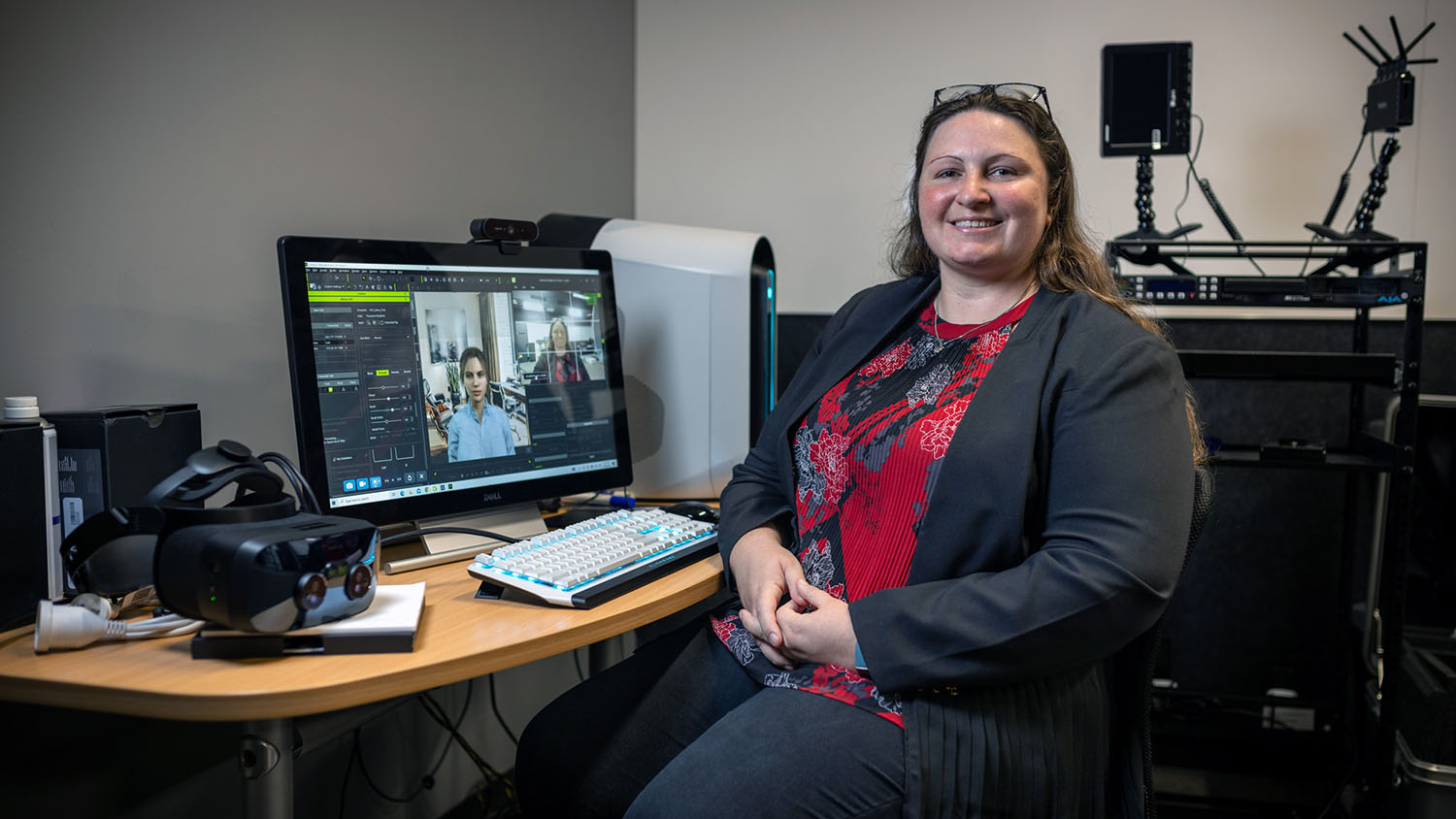
Dr. Jacqueline Bailey is a Lecturer in Computing and Information Technology at the University of Newcastle, Australia, specializing in Mobile App Development within the School of Information and Physical Sciences, part of the College of Engineering, Science and Environment. Her work focuses on human-centered computing with particular emphasis on avatars and immersive technologies for serious applications beyond entertainment. PhD in Information Technology, University of Newcastle Bachelor of Information Technology (Honours), University of Newcastle Dr. Bailey's research centers on human-avatar interactions, particularly examining the uncanny valley phenomenon, gender differences in avatar perception, and the use of virtual and augmented reality for serious gaming applications in healthcare, military, and education sectors. Her work employs quantitative analysis of human perceptions, often using the human startle reflex as a measure of affective processing. She also investigates mobile interface design for older users through the Older Persons Mode (OPM) project. Analysis of Dr. Bailey's publication record reveals a consistent focus on avatar perception, with particular attention to gender differences and the uncanny valley effect. Her research has evolved from foundational studies on avatar facial fidelity to more complex investigations incorporating biofeedback and AI in XR training scenarios. The work demonstrates strong interdisciplinary connections between computer science, cognitive psychology, and human factors engineering. 2024 Industry Engagement (Highly Commended), CESE, University of Newcastle 2016 Best Paper Award, Australasian Simulation Congress 2012 Faculty Commendation List, Faculty of Science and Information Technology 2024 INFT6009 Course Redevelopment Award Dr. Bailey currently co-supervises four research students across PhD and Masters programs, with projects spanning user interface design, AI in visual storytelling, healthy food choice interfaces, and educational data visualization. Her grant portfolio includes six projects totaling $118,809, with significant funding from Meta ($97,036) for research on avatar emotions and a WTUN Exchange Programme grant. She has established the Interactive Intelligent Virtual Agents (I2VA) international collaboration and is developing the NUGamesTech student team for VR competitions. Dr. Bailey leads the Older Persons Mode (OPM) research initiative, collaborating with researchers across all three University of Newcastle colleges to develop smartphone interfaces for older users. She also participates in Professor Karen Blackmore's i3Lab and has formed international collaborations through the Interactive Intelligent Virtual Agents (I2VA) network spanning Australia, Belgium, Japan, and Portugal.
Sarah Parry is a Senior Clinical Lecturer at the University of Manchester's Division of Psychology & Mental Health, where she serves as the Academic Director for the Clinical Psychology Doctorate (ClinPsyD), an NHS England commissioned training programme. She is also a Consultant Clinical Academic/Psychologist and Strategic Research Lead for the Young People's Mental Health Research Centre at Pennine Care NHS Trust, where she conducts the majority of her research. Additionally, she is a Senior Fellow of Advance HE and serves on the committee of the Faculty for Children, Young People, and their Families within the British Psychological Society. Dr. Parry's research focuses on children and young people's mental health, with particular expertise in qualitative methods and participatory approaches. Her work centers on enhancing mental health services for children, young people, families and caregivers, with a focus on tackling health inequalities and developing preventative brief psychological interventions. She has secured over £5.5 million in funding from the National Institute for Health and Care Research for multiple clinical research projects including The ChUSE Trial, The Care Responders Study, The NEST Study, My Voice Matters in Research, and The ECHOES Study. Her research spans several key areas including mental health interventions for children and young people, hearing voices experiences, dissociative identity disorder, multiplicity spectrum experiences, and work-related stress among practitioners in children's homes. She employs qualitative methods and community engagement approaches to ensure research is inclusive and accessible to underrepresented groups. Dr. Parry is particularly interested in co-production with young people and families to develop more responsive mental health services. Dr. Parry's extensive publication record demonstrates a strong focus on understanding lived experiences of mental health challenges, developing interventions for young people experiencing psychosis spectrum symptoms, and improving mental health services through co-production with service users. Her work frequently addresses health inequalities and aims to develop accessible, preventative psychological interventions that can be implemented in real-world settings. May Davidson Award 2024 As Academic Director for the ClinPsyD programme, Dr. Parry supervises ClinPsyD trainees in their research projects. She has secured substantial funding for her research, totaling over £5.5 million, primarily from the National Institute for Health and Care Research. Her current projects include several major studies addressing critical gaps in children and young people's mental health services, with a focus on feasibility, acceptability, and implementation of novel interventions. Dr. Parry leads the Young People's Mental Health Research Centre at Pennine Care NHS Trust, where she serves as Strategic Research Lead. She is actively involved in developing trauma-informed care approaches and co-produced research that centers the voices of young people and families in mental health service development. Her work with the Centre focuses on enhancing mental health services with children, young people, families and the people who care for them, particularly through developing preventative brief psychological interventions.
Kirsteen Watson serves as a Consultant in Public Health and Academic Staff member within the Department of Public Health and Primary Care (PHPC) at the University of Cambridge, holding dual affiliations with the Primary Care Unit (PCU) and PHPC Teaching Staff. She directs the East of England Public Health Training Programme as Training Programme Director while leading faculty development initiatives and serving as Assistant Director of Public Health Teaching. Her educational credentials include a medical degree from the University of Cambridge and GKT London, a Masters in Public Health from Harvard University (2008) specializing in child public health, and a Masters in Medical Education with distinction from the University of Bedfordshire (2009). These qualifications underpin her expertise in health systems improvement and educational leadership. Dr. Watson's professional focus integrates Public Health and Medical Education, with specialized emphasis on child public health, healthcare for older populations, and faculty development strategies. She pioneered an Outcomes Framework for older people's healthcare at Cambridgeshire County Council and expanded public health training for GP trainees across the East of England region, demonstrating commitment to workforce development. Her significant recognitions include: Fellowship in the Higher Education Academy Distinction in Masters-level Medical Education studies As Training Programme Director, she oversees quality assurance and curriculum development for public health trainees while facilitating leadership courses. Her tutoring extends to the University of Cambridge Institute of Continuing Education's PGDip and MSt Medical Education programs, shaping next-generation medical educators. Dr. Watson operates within the Primary Care Unit ecosystem, contributing to teaching frameworks that bridge public health principles with primary care delivery, particularly through the East of England training consortium and GP education initiatives.
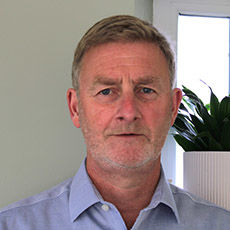
David Scott is a Senior Lecturer at York St John University's School of Education, Language and Psychology. He has taught Key Stage 1, Key Stage 2, and Early Years education across northern England, coordinating art, MFL, and literacy programs. Since joining York St John University in 2012 (seconded from a partnership school), he teaches English and professional modules to undergraduate and postgraduate student teachers. Primary PGCE School Direct Programme Lead Collaborates with Yorkshire/North East school alliances Focuses on contextualized grammar teaching and reading comprehension His work includes parent workshops to enhance reading engagement and partnerships with teaching schools for CPD development. Contact: d.scott2@yorksj.ac.uk
Dr. Caroline Elbra-Ramsay serves as Deputy Head of School and Associate Professor at York St John University within the School of Education, Language and Psychology. With extensive experience in both higher education and primary school settings, she focuses on Initial Teacher Education, working alongside Associate Heads, Programme Leads, lecturers, academics, and school partners to ensure student teachers become professional, reflective practitioners who are "classroom ready." She teaches across undergraduate and postgraduate programs, particularly within English and Professional subject teams, covering modules such as Philosophy for Children, Maths, Art, and Drama. Dr. Elbra-Ramsay brings valuable practical experience to her academic role, having previously served as Deputy Headteacher at a local primary school where she taught across Foundation Stage, Key Stage 1, and Key Stage 2. During this time, she completed her Master's degree focused on different approaches to teaching English and achieved the National Professional Qualification in Headship (NPQH). She holds a Postgraduate Certificate in Academic Practice and is a Senior Fellow of the Higher Education Academy. Notably, she returned to classroom teaching for Year Five during academic leave to refresh her practice and conduct research projects. Her research explores Philosophy for Children, assessment practices, and feedback mechanisms in teacher education. Dr. Elbra-Ramsay's work investigates the complex interplay between pedagogical, relational, and moral dimensions of assessment, particularly regarding student teachers' understanding of feedback. Her innovative approach draws connections between unexpected domains (like reality television) and educational practices, revealing insights about feedback processes. Her PhD thesis was titled 'Navigating the Pedagogical, Relational and Moral Economies of Assessment: An Exploration of the development of Student Teachers' Understanding of Feedback.' Dr. Elbra-Ramsay's publications demonstrate a consistent focus on feedback literacy and teacher development, with recent work examining children's philosophical dialogue experiences and the implications of reality TV for educational feedback practices. Her research trajectory moves from practical classroom applications toward more theoretical explorations of assessment economies in teacher education. Senior Fellow of the Higher Education Academy Multiple SAPERE Philosophy for Children certifications (Levels 1, 2a, and 2b) Mental Health First Aider award National Professional Qualification in Headship (NPQH) As Deputy Head of School and Ofsted Lead, Dr. Elbra-Ramsay plays a significant leadership role in shaping teacher education programs. Her return to classroom teaching demonstrates her commitment to maintaining strong connections between theory and practice. She serves as module director for the undergraduate year 3 Professional Studies module 'The Emerging Professional' and acts as both a Lead Mentor and Academic Tutor for teacher education students.
Dr. Jane Woodin is a Senior University Teacher at the University of Sheffield's School of Languages, Arts and Societies, where she serves as Programme Leader for the MA in Intercultural Communication and has made significant contributions to teaching and research in intercultural studies. With over 30 years of academic experience since joining the university in 1993, she has developed influential postgraduate programs and received multiple teaching excellence awards including the Senate Award for Sustained Excellence in Learning and Teaching (2018). Education: BA in French and Hispanic Studies (Bristol) PGCE (Liverpool) MA in Applied Linguistics (Sheffield) PhD focusing on Interculturality and Tandem Learning (Sheffield) Dr. Woodin's research centers on intercultural communication, with particular expertise in discourse analysis, tandem learning methodologies, and internationalization processes in higher education. Her work explores how language creates and contests relationships of respect across cultural boundaries, with applications in educational settings, professional contexts, and international development. She has developed dialogic approaches to intercultural development that emphasize practical application beyond academic environments. Analysis of her recent publications reveals a clear evolution from specific tandem learning research toward broader applications of intercultural dialogue in international higher education contexts. Her work increasingly addresses institutional internationalization strategies while maintaining focus on individual intercultural competence development. The publications demonstrate interdisciplinary reach across linguistics, education, international development, and translation studies, with growing attention to democratic competences and sustainable development goals. Scientific Awards: Senate Award for Sustained Excellence in Learning and Teaching (2018) Supervisionary Award from Graduate School (2019) Exceptional Contribution Awards (2011, 2010, 1995) Dr. Woodin has successfully supervised numerous PhD students through prestigious funding schemes including WRoCAH and AHRC, with research spanning refugee camp ethnography, intercultural competence in Japanese contexts, and trans-cultural mental health work. Her grant portfolio includes significant projects such as the $20,000 International Baccalaureate Research Office project on 'international-mindedness' (2011) and the £8,000 Knowledge Transfer project with Gripple UK (2003), demonstrating her ability to secure competitive research funding across diverse contexts. She is an active member of the Centre for Linguistic Research and the Migration Culture and Community research clusters within the School of Languages and Cultures, and serves as a founding member of the British Association of Applied Linguistics Special Interest Group in Intercultural Communication. Her professional network extends globally through CULTNET and the International Association of Language and Intercultural Communication.
Dr Clare Bentall is an Associate Professor at University College London's Institute of Education (IOE), within the Department of Curriculum, Pedagogy and Assessment. With over 25 years of experience in educator training across UK and international contexts, she currently serves as co-Academic Head of Learning and Teaching for her department (2023-present). Her work spans development education, global learning, and professional development of educators in higher and professional education settings, with significant contributions to UCL's sustainability initiatives through SDG-focused teaching frameworks. Clare holds a PhD in Education from the Institute of Education (2003) and is fluent in German with conversational Indonesian proficiency. Her research centers on global citizenship education, development education, and the pedagogical training of educators, particularly examining blended learning models in police education, third-sector CPD provision, and international volunteering impacts. Recent publications demonstrate strong interdisciplinary connections between educational technology, social justice, and professional development across diverse sectors. As Editor of the International Journal of Development Education and Global Learning and Series Editor for Advances in Global Citizenship Education Policy and Practice , she has shaped scholarly discourse in the field. Her 2022 recognition as a UKCGE Recognised Research Supervisor underscores her supervisory excellence. Clare actively collaborates with international partners across Pakistan, China, Slovenia, and Poland, notably leading a European-funded program (2018-2022) to enhance Polish university lecturers' teaching capabilities. Her leadership extends to directing UCL's Global Citizenship Programme (2017-2020), co-leading the Development Education Research Centre, and serving on UCL's sustainability steering groups. Current projects include police education research on blended learning effectiveness and advancing global learning frameworks within UK further education colleges.
Emily Marron is a Senior Lecturer in Simulated Learning and Clinical Skills at Kingston University's School of Nursing, Allied and Public Health. She co-leads the final year practice module and develops clinical skills curricula for BSc/MSc pre-registration nursing programmes. Previously, she served as a Senior Sister in emergency nursing at St Thomas Hospital and transitioned to education via a part-time role at King's College London. Education: MA in Clinical Education (KCL) Registered Nurse Teacher (NMC) FHEA, Fellowship (HEA) PgCert, Academic Practice (King's College London) BSc(Hons), Critical Care (King's College London) Advanced Trauma Nursing Course (King's College Hospital) Advanced Life Support Course (NHS) Registered Nurse (University of Brighton) Research Focus: Her work emphasizes simulation pedagogy, communication skills, and interprofessional education. Current projects explore student engagement in scenario writing to enhance communication competencies in clinical simulations. Publications: Her conference presentations (2011–2014) analyze simulation-based training in critical care, self-assessment methodologies, and interprofessional education for healthcare trainees, consistently highlighting innovation in clinical pedagogy. Awards: Fellow of the Higher Education Academy (FHEA) Teaching & Leadership: She oversees simulated learning across nursing programs and has developed curricula integrating clinical skills and interdisciplinary collaboration. No specific grants or student advisees are documented.
Jo Finch is a Professor of Social Work and Post Graduate Research at the University of Suffolk , affiliated with the School of Health, Sciences and Society . She is internationally recognized for her work on practice learning , student assessment , and POLICY ACTIVISM related to PREVENT , digital advocacy , and disability rights . BA (Hons) Politics, Newcastle University (1993) Diploma in Social Work & MSc in Social Policy and Social Work, London School of Economics (1997) Professional Doctorate in Social Work, University of Sussex (2010) Her research interests include practice learning, assessment in placements, learning disability advocacy, and the intersection of social work with security policies like PREVENT. She also explores domestic violence , child sexual abuse , and critical self-reflection in social work education . Recent publications examine how [un]popular culture (e.g., TOWIE , Katie Price ) can be used pedagogically to discuss class , gender , and social inequality . Her work highlights systemic barriers faced by marginalized students in social work education , particularly those from racially minoritised backgrounds . Principal Fellow – Higher Education Academy Registered Social Worker (Social Work England) Jo supervises PhD projects on topics such as disability benefits , child maintenance , age assessments for disputed-age children , and person-centered care for profound disabilities . She is actively involved in external examining for undergraduate, postgraduate, and professional doctorate programs. Her current research focuses on fitness to practice in universities , confidence in practice learning , and evaluations of Restitute (a service for well-being and confident parenting). She collaborates with Sarah Corrie and David McKendrick on projects related to social work and counter-terrorism , as well as student retention .
Sarah Corrie is a Professor of Cognitive Behavioural Therapy and Counselling at the University of Suffolk’s School of Health, Sciences and Society. She is a Joint Head of the Counselling, Psychology, and Social Work division and also holds a Visiting Professor role at Middlesex University. With over 20 years in higher education, she specializes in learning and teaching for psychological professions, decision-making in complex environments, supervision, and formulation. BSc (Hons) in Psychology and Counselling Psychology, University of Surrey (1993) Doctorate in Clinical Psychology, South Thames (Salomons) Clinical Psychology Training Scheme (1997) Postgraduate Diploma in Cognitive Therapy, Oxford University (2000) Doctorate in Psychotherapy, Metanoia and Middlesex University (2020) Master Coach Programme, Professional Development Foundation (2023) Her research focuses on professional practice learning, formulation in therapy and coaching, supervision, workforce wellbeing, and decision-making. Recent work explores antifragility, inclusivity in CBT training, and formulation in coaching. She has authored 15+ articles on these topics, emphasizing evidence-based practices and realist evaluations. Scientific Awards: British Psychological Society’s Achievement Award for Distinguished Contributions to Coaching Psychology (2016) Fellowship of the British Association for Behavioural & Cognitive Psychotherapies (2017) She has supervised numerous projects and led initiatives on student fitness to practice procedures, perinatal experiences of neurodivergent parents, and coaching’s role in mental health care. Her work bridges academia and practice through training, advocacy, and knowledge exchange.
Pedro Miguel Rodrigues da Silva Martins is a Full Professor of Economics at Nova School of Business and Economics (Nova SBE), where he serves as Scientific Director of the Economics for Policy Knowledge Center and Co-Director of the Public Administration Leadership Programme. He previously held professorships at Queen Mary University of London (2004-2021) and served as Portugal's Secretary of State for Employment (2011-2013), implementing major labour market reforms including changes to severance pay, fixed-term contracts, and active labour market policies. His career bridges academic research and policy implementation, with additional advisory roles for the Greek government and European Commission on labour market reforms. His research focuses on labour economics and public policy , particularly examining causal relationships in collective bargaining, employment services, training programmes, and employment law. Using large datasets and advanced econometric methods, his work investigates how institutional frameworks affect employment, productivity, and wages across diverse contexts including Portugal, Brazil, China, and Mozambique. Recent projects analyze vocational education impacts, labour market concentration effects, and gender gaps in social benefits. His publication record includes over 40 refereed journal articles in top outlets such as Journal of Labor Economics , Journal of Human Resources , European Economic Review , and British Journal of Industrial Relations , with significant media coverage in The Economist , Financial Times , and BBC . His 2021 article on collective bargaining extensions won the EALE prize for best paper in Labour Economics . EALE prize for best article published in Labour Economics (2021) Conselho para a Produtividade/Banco BPI award UTL/Santander Totta award (Economics/Management) Netspar award As an advisor and policy implementer, he has directed counterfactual evaluations of active labour market policies exceeding €1.5m in research funding since 2014. He supervises numerous PhD and Master's students while leading executive education programmes like LEAP (Public Administration Leadership). His work demonstrates consistent integration of rigorous academic research with real-world policy design and implementation challenges.


/prod01/yorksjacuk/media/content-assets/staff-profile-images/David-Scott.jpg)
/prod01/yorksjacuk/media/content-assets/staff-profile-images/Caroline-Elbra-Ramsay.jpg)

/prod01/channel_2/media/uniofsuffolk/website/content-assets/images/staff-profile-photos/ssh/Jo-Finch-1.jpg)
/prod01/channel_2/media/uniofsuffolk/website/content-assets/images/staff-profile-photos/ssh/Sarah-Corrie-1-(1).jpg)