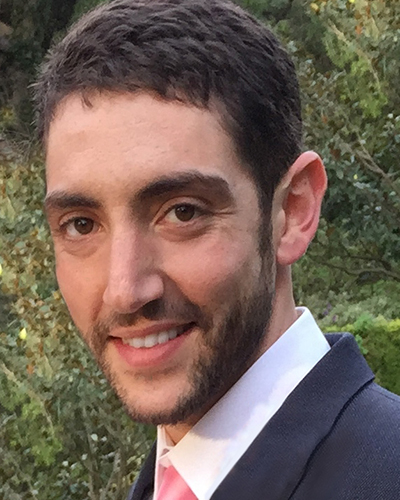
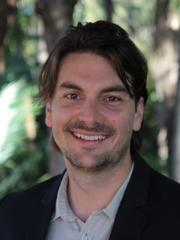
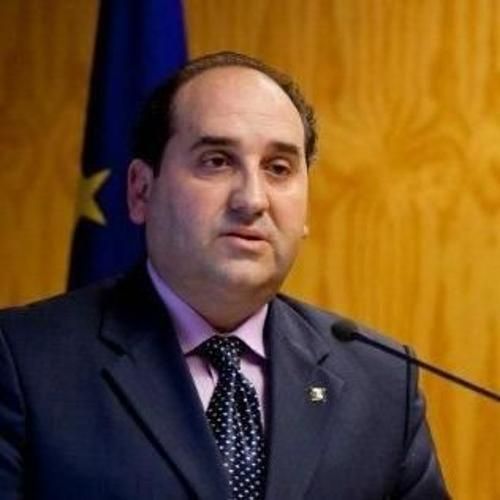
Thijs Roumen is an Assistant Professor at Cornell Tech within the Department of Information Science . He leads the Matter of Tech Lab , focusing on Digital Fabrication and Human-Computer Interaction (HCI) . His work aims to democratize fabrication technology for non-industrial users. PhD from Hasso Plattner Institute MSc in IT Product Design from University of Southern Denmark BSc in Industrial Design from Eindhoven University Research interests include: Laser cutting portability 3D modeling tools Fabrication error prevention Accessible haptic interfaces Recent publications address asynchronous hardware troubleshooting (SplatOverflow, CHI'25), medical robotics (HRI'25), and fabrication artifact data storage (StructCode, SCF'23). His work has received multiple Best Paper Honorable Mentions at CHI and UIST conferences. Scientific contributions include: Key role in CHI meta (2018-present) Chair of German Networking Events at CHI Subcommittee leadership in DIS, CHI, and UIST Active in lab collaborations and invited talks at institutions like Stanford, MIT, and University of Tokyo. Also a World Major Marathon Finisher (Chicago 2023, Berlin 2019).
Dr Weiwei Chen is a Lecturer (Assistant Professor) at the Bartlett School of Sustainable Construction (BSSC), University College London, specializing in Building Information Modelling (BIM) and Digital Twins. She serves as Deputy Director of Research at the departmental level and contributes to the MSc Digital Engineering Program as Deputy Program Leader at UCL's BSSC. Dr Chen's research encompasses key areas including BIM, Digital Twins, the Internet of Things, 3D Reconstruction, Information Interoperability, Augmented and Virtual Reality (AR/VR), and Facility Management across roads, bridges, buildings, and other infrastructure. Her recent publications demonstrate a strong focus on applying digital technologies to construction engineering and infrastructure management, with particular emphasis on digital twin development, sensor integration, and machine learning applications. Dr Chen is currently Principal Investigator for three major projects: Improving Construction Safety Training through AI-enabled visual Attention Monitoring (British Council, 2025-2026) D-HYDROFLEX - Digital solutions for improving sustainability of HYDROpower assets (Horizon Europe, 2023-2026) INHERIT - Next Generation Solutions for Sustainable Cultural Heritage (Horizon Europe, 2023-2027) Her scientific recognition includes: Marie Skłodowska-Curie Fellowship Prestigious postgraduate scholarship from HKUST Research award for overseas research at Carnegie Mellon University Dr Chen actively contributes to the academic community as a reviewer for leading journals including Automation in Construction, Computer-Aided Civil and Infrastructure Engineering, Advanced Engineering Informatics, and Computing in Civil Engineering. She serves on committees for the American Society of Civil Engineers (ASCE), European Council on Computing in Construction (EC3), and Association of Researchers in Construction Management (ARCOM).
Dr. Ian Thacker is an Associate Professor of Educational Psychology at the University of Texas at San Antonio, focusing on STEM education, teacher bias, and conceptual change. His research explores mathematical skills in science learning, technology-enhanced STEM pedagogy, and systemic disparities in STEM education linked to gender and race. Education: B.A. in Mathematics & Physics, University of Colorado at Boulder (2005) M.A. in Science and Mathematics Education, University of California at Berkeley (2010) M.S. in Statistics, University of Southern California (2018) Ph.D. in Urban Education Policy, University of Southern California (2020) His research spans data literacy for climate change education, implicit bias in teachers, and technology-driven learning. Recent publications emphasize climate change pedagogy, equity in STEM, and teacher dispositions. Funded by NSF, Gates, SSHRC, and internal awards, his work addresses systemic barriers in education. Scientific Awards: 2020 USC Ph.D. Achievement Award 2020 USC Student Recognition Award: The Order of Arête Dr. Thacker has received grants from the National Science Foundation, Gates Foundation, SSHRC, and APA Division 15. His media contributions include USA Today and The Conversation, discussing STEM equity and climate change education.
Dietrich Kammer serves as Professor of Technical Visualization at Dresden University of Applied Sciences' Faculty of Computer Science/Mathematics, holding Germany's first dedicated professorship in this field established to address growing demands for innovative visualization methods in human-computer interaction. His teaching emphasizes project-based learning grounded in solid theoretical foundations, focusing on virtual/augmented reality technologies and comprehensible user interfaces across programs including Media Informatics and Geomatics. His research centers on transforming abstract data into interactive visual representations through technical visualization, employing creative techniques like metaphor production and morphological analysis. Key focus areas include tangible user interfaces, elastic displays, and multimodal interaction systems designed to enhance user experience with complex datasets. He explores how customized graphical interfaces can make otherwise unmanageable data volumes visually interpretable and actionable. Analysis of his 2021-2025 publications reveals dominant research themes in elastic display technology, tangible interaction, and information visualization. Notable trends include adaptive visual assistance systems for smart factories (AVISAR), dynamic vibrotactile feedback mechanisms, and AI applications in metadata acquisition and learning analytics. His work consistently bridges theoretical frameworks with practical industrial and educational implementations. No specific details regarding student advising or research grants appear in available materials, though he advocates for student-led project development in his pedagogical approach. He directs the Technical Visualistics Working Group, which functions as an interdisciplinary platform for developing innovative interaction and visualization solutions through collaborative research and development initiatives.
Professor Christian Ritz serves as Director of SMART and Professor in the School of Electrical, Computer and Telecommunications Engineering within the Faculty of Engineering and Information Sciences at the University of Wollongong. He has held his professorship since 2017 and served as Associate Dean (Research) in 2022 and Associate Dean (International) from 2016-2021. Professor Ritz's research focuses on signal processing for speech, audio, acoustics and visual information. His current projects include microphone array signal processing for enhancing sound recorded in classrooms, sound scene classification for dementia care environments, spatial audio for Virtual and Augmented Reality, and undersea surveillance. His work spans multiple technical domains including signal processing, audio engineering, computer vision, and communications engineering. His recent publication trends show a strong focus on neural network applications for audio processing, particularly for classroom monitoring and spatial audio reproduction. His work integrates deep learning with traditional signal processing techniques to address challenges in spatial audio synthesis, room impulse response generation, and directional audio reproduction. He has also contributed to applications in mining automation, public safety surveillance, and positioning systems. Professor Ritz is a member of the Centre for Signal and Information Processing (CSIP), part of the Signals, Information and Communications Research Institute (SICOM) at the University of Wollongong. His research is funded by the ARC, overseas research institutes, and defense organizations. His grant portfolio is extensive, including projects such as AI/IoT-powered Airborne System for Monitoring Water Level and Tidal Floods, Multi-Modal Satellite-based Vessel Surveillance, Net Zero Industry and Innovation Program, Smart Eye: Airborne and AI-Driven Assessment Solution of Sugarcane, and numerous projects related to spatial audio and underwater surveillance. He has secured funding from diverse sources including the Australian Research Council, defense organizations, and international collaborations. Professor Ritz maintains an active research laboratory environment focused on signal and information processing. His work spans multiple application domains from classroom monitoring to underwater mine detection, with strong connections to both academic and industry partners. His research group appears to focus on practical applications of signal processing techniques to solve real-world problems across various domains.
Dr Christopher Papic is a Research Fellow at The University of Queensland's RECOVER Injury Research Centre within the Faculty of Health, Medicine and Behavioural Sciences. He is also an Affiliate of the Centre for Innovation in Pain and Health Research (CIPHeR) and holds an honorary academic position at the University of New England as a Lecturer in Clinical Exercise Physiology. With 10 years of clinical experience as an Exercise Physiologist (ESSA), he specializes in musculoskeletal rehabilitation and pain management following traumatic injuries. Education: Bachelor of Exercise and Nutrition Sciences, University of Sydney Masters (Research) of Exercise and Sport Science, University of Sydney Doctor of Philosophy of Exercise and Sport Science, University of Sydney Dr Papic has a dual research focus spanning sports biomechanics (particularly swimming performance) and health outcomes following road traffic injuries. His work in implementation science centers on translating research into practice, notably through the development of Australian whiplash clinical guidelines. He co-leads the 'Knowledge translation, education and implementation' theme for CIPHeR, focusing on optimizing pain management after traumatic injury. His publication record demonstrates expertise across two seemingly disparate fields: swimming biomechanics and rehabilitation medicine. The swimming research focuses on hydrodynamics, drag measurement, and technique optimization, while his clinical work addresses pain management, work incapacity after traffic injuries, and guideline implementation. This unique interdisciplinary approach bridges sports science with clinical rehabilitation. Scientific Recognition: World Physiotherapy Congress 2023 - Best Paper Award Presentations at International Association for the Study of Pain 2024 Workshop presentations at Australian Physiotherapy Association 2023 and Australian Pain Society 2024 Dr Papic is actively involved in knowledge translation, with his whiplash guidelines informing training packages used by insurance claims managers across Australia and the Netherlands. He currently supervises students and has secured funding from the Motor Accident Insurance Commission for projects including 'StressModex' for inpatient care following orthopedic road trauma and the 'RISE' text messaging pilot study for road traffic injury recovery. His clinical background as an Exercise Physiologist informs both his research methodology and practical implementation strategies. Dr Papic leads international guideline development efforts for chronic non-specific neck pain and has created the MyWhiplashNavigator platform with educational resources for healthcare professionals and insurers. His work bridges biomechanical research with clinical application, creating measurable impact in both sports performance and trauma rehabilitation fields.
Mexhid Ferati is an Associate Professor of Informatics at Linnaeus University within the Faculty of Technology, Department of Informatics. He has established an international academic career spanning institutions across the United States, North Macedonia, Norway, and Sweden. Currently, he serves as head of the Interaction Design Research Group and program manager for the Interaction Design program at Linnaeus University. Dr. Ferati's research interests encompass Human-Computer Interaction, Interaction Design, Accessibility, Internet of Things, and STEM Education. His work focuses on inclusive design approaches, digital accessibility for visually impaired users, gender equality in ICT education, and sustainable technology applications. He actively investigates how technology can address societal challenges through applied research that bridges academic theory with practical implementation. His recent publications reveal a strong focus on emerging technologies and their societal impact, with particular attention to augmented reality in education, blockchain applications for sustainability, and gender dynamics in technology fields. The research demonstrates an interdisciplinary approach that combines technical innovation with social considerations, particularly regarding accessibility and inclusion. Dr. Ferati coordinates and participates in numerous research projects including STEFORA (STEM for All), DIGRIS (Implementation Challenges of Digitalisation Rights in Sweden), IDEAL (Interaction Design Program Expansion), Forest 4.0, RAPID (Recasting best practices of European universities), and IGNITE (Transforming Kosovo and Albanian Education System). His teaching portfolio includes User-oriented Design (1IK430), Digital Environments: Information Society and Internet of Things (4IK506), Current Topics within Informatics (2IK300), Methods in Interaction Design (1IK422), Information Systems Methodology (4IK524), and Degree Project in Informatics at Master Level (5IK50E). He has played a significant role in developing and delivering courses in Interaction Design and Accessibility/Inclusive Design across various educational institutions. The Interaction Design Research Group, which he leads, addresses current societal and industrial challenges using ICT solutions through applied research. His work has received funding from diverse sources including the EU, STINT, Crafoord Foundation, Knowledge Foundation (KK-Stiftelsen), EUniWell, Platform eHealth, NSF (US), and Google.
Dr. Eloy Jose Lopez Meneses serves as a Full Professor in the Department of Education and Social Psychology at Pablo de Olavide University in Seville, Spain. He holds leadership positions as Director of the Institutional Chair of Emerging Education and Technology, Gamification, and Artificial Intelligence (EduEmer) and Director of the EduInnovagogía Research Group (HUM-971). He also serves as Editor of the International Journal of Educational Research and Innovation (IJERI), which is indexed in JCR Q2 and SCOPUS Q2. Dr. Lopez Meneses earned his PhD from the University of Seville with a thesis titled 'Analysis of didactic models and teaching strategies in Distance Learning: Design and experimentation of an evaluation instrument for teaching strategies in distance learning courses for university training' in 2008, supervised by Dr. Julio Cabero Almenara and Dr. Pedro Cañal de León. His research spans educational technology, gamification, artificial intelligence in education, and digital competence development. His research interests focus on the integration of emerging technologies in educational contexts, with particular emphasis on gamification strategies, AI applications in education, digital competence development for educators, and innovative teaching methodologies. His work explores how technology can transform learning experiences while addressing social inclusion and accessibility challenges in educational settings. Dr. Lopez Meneses has supervised 19 doctoral theses and participated in over 30 competitive research projects, including 'Evaluation of ICT Policies in Educational Centers (2006-09)', 'Diagnosis and training of teachers for the incorporation of ICT in students with diversity Functional (2016-19)', 'Augmented Reality to Enhance Training (2015-17)', and 'Teacher Training in Inclusive Digital Competencies to Support Students with Autism Spectrum Disorders (2023-26)'. His publications demonstrate a consistent trajectory in educational innovation and technology integration. His scientific recognition includes an extraordinary doctoral thesis award from the University of Seville and recognition of three research sections (six-year periods) by the National Commission for the Evaluation of Research Activity of the Ministry of Education, Culture and Sports. As Director of the EduEmer Chair and EduInnovagogía Research Group, he leads initiatives exploring the intersection of education and emerging technologies. His International Journal of Educational Research and Innovation serves as a platform for disseminating cutting-edge research in educational innovation. His work with the international teaching group Innovagogía demonstrates his commitment to fostering global educational communities focused on pedagogical innovation.
Bernhard Saske serves as a Research Associate at the Chair of Virtual Product Development within Dresden University of Technology, where he has been affiliated since completing his mechanical engineering studies in 2002. Holding a doctorate (Dr.-Ing.) earned in 2008 for research on 'Augmented Reality in Maintenance,' he specializes in virtual and augmented reality applications integrated with product lifecycle management systems. His academic credentials include: Master's degree in Mechanical Engineering from Dresden University of Technology (2002) Doctorate (Dr.-Ing.) from Dresden University of Technology (2008) focusing on Augmented Reality in Maintenance Saske's research centers on digital transformation in engineering workflows, with core expertise in virtual/augmented reality implementation, product lifecycle management (PLM), and model-based systems engineering (MBSE). Recent investigations address generative AI applications in CAD processes, sustainable product development frameworks, and component reuse optimization in industrial plant design. His work consistently bridges theoretical methodologies with practical industry implementation challenges. Analysis of his 2023-2025 publications reveals a strategic shift toward artificial intelligence integration in engineering design, particularly generative models for CAD and computer vision systems. Concurrently, his research maintains strong emphasis on sustainability-driven PLM strategies and MBSE adaptation for circular economy principles, reflecting evolving industry priorities in resource efficiency and digitalization. Scientific Awards: No documented awards, fellowships, or major honors were identified in the source materials. Dr. Saske actively contributes to collaborative research projects within the Chair of Virtual Product Development, frequently co-authoring with Prof. Paetzold-Byhain and interdisciplinary teams. While specific student supervision is unrecorded, his publications indicate mentorship roles in conference papers and journal articles. Project funding appears aligned with German academic-industry partnerships focused on digital engineering solutions, though grant details remain unspecified. As a core member of the Chair of Virtual Product Development, Saske operates within a research ecosystem dedicated to advancing virtual prototyping, digital twin technologies, and immersive maintenance solutions. The chair maintains active industry collaborations to implement VR/AR methodologies in real-world manufacturing and product development contexts across European industrial partners.
Prof. Christos Douligeris is a faculty member at the Department of Informatics of the University of Piraeus. He previously served as an Associate Professor at the University of Miami, USA, and holds a Diploma in Electrical Engineering (1984) from the National Technical University of Athens and a PhD (1990) from Columbia University. His career spans academia, industry, and policy-making, including leadership roles in Greek government agencies like Electronic Government S.A. and the Communications Privacy Authority. Diploma in Electrical Engineering, National Technical University of Athens (1984) MS, MPhil, PhD in Electrical Engineering, Columbia University (1985, 1987, 1990) His research focuses on computer networks, emphasizing security, protocols, and applications in precision agriculture, e-health, and IoT. He also explores the educational potential of information and communication technologies at all levels, from vocational training to higher education. His recent publications address cybersecurity in education, AI-driven threat landscape modeling, and immersive digital tools (AR/VR) for pedagogy and cultural heritage. Prof. Douligeris has received significant recognition, including the State Scholarship Foundation (IKY) award for transferring expertise from Greeks abroad to Greece (1987), a Fulbright scholarship (1988), and multiple honors for best work in telecommunications. His research has been funded by bodies such as the European Commission, National Science Foundation, and Greek General Secretariat for Research and Technology. He has supervised over 15 PhD theses and 100+ MSc theses, contributing extensively to academic training and mentorship. He co-authored the book Network Security: Current Status and Future Directions and edited special issues for the IEEE Communications Magazine. His work extends to policy development, curriculum design, and organizing international conferences in communications and security. Though not explicitly mentioning labs or teams, his activities include developing systems like NERO (Cybersecurity Awareness Ecosystem for SMEs) and ACSIS (Intelligent Medical System for Pre-hospital Healthcare).
Sébastien George is a Full Professor of Computer Science at Le Mans Université , France, since 2013. He teaches at the Computer Science Department of the Institute of Technology of Laval and leads the IEIAH team at the LIUM Laboratory since 2021. Full Professor (2013–present) Head of LIUM Lab (2021–present) Deputy Director of IUT (Research Pole) Member of STICEF Journal Editorial Board Research Interests focus on Technology Enhanced Learning (TEL) , Serious Games , Adaptive Gamification , and Innovative Human-Machine Interfaces for education. His work explores applications of VR/AR , Authoring Tools , and Motion-Based Learning in K-12 and higher education. Article Trends show expertise in serious game frameworks , collaborative learning tools , predictive analytics for student performance , and mixed reality educational applications . Recent publications emphasize adaptive learning systems and low-cost educational technologies . Advisees include 15 thesis students (past and current), with international collaborations in Morocco, Canada, and France. Projects span gamification models , pedagogical scenario design , and motion analysis for training , reflecting interdisciplinary TEL research.
Dr. Erica Kuligowski is an ARC Future Fellow and Principal Research Fellow in the School of Engineering at RMIT University, where she studies evacuation and emergency communications in fire, flood, and other hazards. She holds a Vice-Chancellor's Senior Research Fellow position and previously served as an Adjunct Professor at the University of Maryland, College Park from 2011-2014. Dr. Kuligowski earned her PhD in Sociology along with MS and BS degrees in Fire Engineering, creating a unique interdisciplinary foundation for her work. Her educational background bridges social science and engineering disciplines, enabling her to approach disaster response from multiple perspectives. Her research focuses on applying social science theory and methods to disaster-related engineering problems, with particular emphasis on evacuation behavior during disasters including bushfire, flood, tsunami, and building fires. She specializes in people movement and behavioral data collection and analysis from emergencies, emergency communication systems, evacuation simulation modeling at both building and community scales, and community resilience and disaster recovery. Her work integrates traditional data collection methods with innovative approaches like social media analysis, GPS-based mobile phone signals, and virtual reality experiments. This interdisciplinary approach spans environmental sociology, fire safety engineering, modeling and simulation, community planning, and environmental communication. Dr. Kuligowski's scholarly output demonstrates consistent growth in both fire safety and emergency management domains, with recent publications focusing on wildfire evacuation decision-making, social vulnerabilities during disasters, and the effectiveness of emergency warning messages. Her research increasingly incorporates advanced technologies including machine learning, virtual reality, and social media analysis to understand human behavior in emergencies. Her exceptional contributions to the field have been recognized with numerous prestigious awards: 2025 NFPA's Foundation Medal for the WUI-NITY 4 project 2025 Natural Hazards Research Australia's Research Team Award Shortlisted for 2024 Resilient Australia National Research for Impact Award Co-editor of a Special Issue that won the Applied Communication Division Distinguished Journal Special Issue Award (2024) 2023 Fire Technology's Editor's Choice Award ARC Future Fellowship (2023-2027) Elsevier's Top 2% of scientists in the world for career-long impact (2021-2023) Dr. Kuligowski actively mentors the next generation of researchers and is open to supervising Masters and PhD students. Current supervision projects include Multi-Agent Reinforcement Learning for Wildfire Evacuation Simulations, Using Virtual and Augmented Reality to Better Understand Bushfire Evacuation Behaviour, and Augmented Training and Assistive Systems for Fire Evacuation. She has secured significant research funding, including an ARC Future Fellowship, and collaborates extensively with international partners including Imperial College London, Lund University, National Research Council Canada, CSIRO, and Fire Protection Research Foundation. She plays leadership roles in several key research initiatives including as Co-convenor of RMIT's Disaster Research Network (2023-present), Co-lead of RMIT's Centre for Urban Research Climate Change Transformations Research Program (2021-2024), and Co-Chair of the International Association for Fire Safety Science Working Group on Human Behaviour in Fires (2021-present). She is also part of an international team developing the WUI-NITY simulation platform to model evacuation from bushfire-prone communities.
Edward Sykes serves as an Adjunct Associate Professor in the Department of Computing and Software within the Faculty of Engineering at McMaster University. His academic work bridges computer science with healthcare applications, focusing on innovative technological solutions for real-world medical challenges. Dr. Sykes' research interests span mobile healthcare systems, artificial intelligence applications in medicine, and context-aware computing. His work demonstrates a strong commitment to developing practical mHealth technologies that address critical healthcare needs, particularly in elderly care, remote patient monitoring, and diagnostic support systems. His research trajectory shows a consistent evolution from earlier work in educational technology toward increasingly sophisticated healthcare applications of AI and mobile computing. Analysis of his recent publications reveals a strong emphasis on AI-driven healthcare solutions, with particular focus on fall detection systems, fracture risk assessment, and remote patient monitoring. His work integrates multiple technical domains including machine learning, computer vision, mobile computing, and human-computer interaction to create comprehensive healthcare technology solutions. The interdisciplinary nature of his research demonstrates strong connections between computer science fundamentals and practical healthcare applications. His scholarly contributions include numerous publications in healthcare technology venues, with recent work appearing in Communications in Computer and Information Science, Health Systems, and Digital Health journals. His research has been referenced in patents and has garnered attention across academic platforms. Dr. Sykes has maintained an active research program with consistent publication output, demonstrating particular productivity in recent years with multiple publications in 2023-2025. His work shows strong potential for real-world healthcare impact, particularly in the areas of elderly care technology and AI-assisted medical diagnostics.
Sadaf Gulshad is a Postdoctoral Researcher in Machine Learning and Computer Vision at MultixLab, University of Amsterdam. She completed her PhD (2022) in Computer Science at the University of Amsterdam under Prof. Dr. Arnold Smeulders, and holds a Master's degree in Electrical Engineering from KAIST (South Korea, 2017) and a Bachelor's in Electrical and Computer Engineering from COMSATS Institute (Pakistan, 2015). Research Interests: Sadaf focuses on improving AI transparency and robustness through explainable models. Her work addresses challenges like adversarial examples, medical imaging imperfections, and uncertainty estimation in clinical data. Key contributions include hierarchical prototype explainers (HIPE), transform-augmented networks, and attribute-based reasoning frameworks. Recent Publications: Her research spans explainable AI (CVPR 2023), robustness (NeurIPS 2021), medical imaging analysis (Medical Physics 2023), and uncertainty estimation (European Heart Journal 2021). She develops methods that bridge human cognition with machine learning explainability. Teaching & Supervision: Sadaf has served as Teaching Assistant for courses including "Applied Machine Learning" and "Multimedia Analytics" at the University of Amsterdam. She supervised multiple Master's theses on topics like green roof distribution analysis, semantic segmentation, and interpretable representation learning in collaboration with institutions such as UMC Utrecht and VU Medical Center.
Prof. Dr. Matthias Rosenthal is a Professor of Multiprocessor and Real-Time Systems at the ZHAW School of Engineering, Zurich University of Applied Sciences (ZHAW), where he also serves as Head of the Research/Focus Area Realtime Platforms. He holds a PhD and MSc in Electrical Engineering from ETH Zurich (1993–1997). His research focuses on multiprocessor systems, hybrid multicore architectures, distributed signal processing, embedded GPU computing, and real-time embedded systems. Key projects include In-Flight GNSS Interference Detection, dAIrector (automated multi-camera live production), and novel AFM techniques for industrial quality control. He has led over 15 industry-focused projects, including collaborations with Innosuisse and companies like Harman International. His work emphasizes real-time systems, FPGA-GPU co-design, and embedded AI solutions. Education: PhD (ETH Zurich, 1997), MSc (ETH Zurich, 1993) Awards: CTI Startup Label (2005) Teaching: Lectures on digital systems, real-time computing, and information theory Notable contributions include advancements in embedded machine learning for food waste management, secure boot concepts for Zynq MPSoC, and low-latency wireless video systems. His research bridges theoretical computer engineering with practical industrial applications.