Margarita Martinez Diaz is a researcher at the Departament d'Enginyeria Civil i Ambiental, Polytechnic University of Catalonia, affiliated with the BIT - Barcelona Innovative Transportation research group. Her work focuses on sustainable mobility, autonomous vehicle platooning, and gender equity in transportation systems. Department: Civil and Environmental Engineering University: Polytechnic University of Catalonia Research Group: BIT - Barcelona Innovative Transportation Research interests include: Connected and autonomous vehicle platooning Traffic flow optimization Gender-inclusive mobility solutions Active transportation infrastructure Equitable urban planning Sustainable development policy Recent publications analyze platooning safety, lane management strategies, and gender equity in mobility. Projects include Horizon Europe initiatives and national competitive R+D grants. Scientific awards: XXI Abertis Spain Award for Sustainable Mobility Best Master's Thesis Gerecht mobil Life E.V. Berlin
Markus Oeser is a full professor at the Chair and Institute of Highway Engineering, affiliated with the Federal Highway Research Institute (BASt). His research advances pavement technology, smart infrastructure, and sustainable materials through computational modeling and experimental characterization. Research Focus His work spans: Advanced asphalt materials (self-healing, inductive, nano-enhanced) Digital twins for real-time pavement monitoring Traffic flow modeling and AI-driven infrastructure management Sustainable recycling of construction waste Piezoresistive sensors for smart roads Publication Trends (2024-2025) Recent articles emphasize multi-scale modeling (atomic to structural levels), integration of AI/ML in pavement systems, and sustainability-driven material innovations. Dominant themes include nanomaterial-enhanced composites, digital twins for infrastructure, and traffic microsimulation. Affiliations & Infrastructure Leads research at BASt's highway engineering facilities, leveraging laboratories for materials testing, computational modeling, and full-scale pavement validation.
Professor Alison Heppenstall is a leading academic in Geocomputation and Urban Studies at the University of Glasgow, specializing in AI/ML methods applied to geographical problems. Her roles include being a Professor of Geocomputation and an ESRC-Alan Turing Fellow. She holds affiliations with the Alan Turing Institute and the Leeds Institute for Data Analytics. Education: BA Archaeology (University of Durham), MSc and PhD in Geocomputation/AI (University of Leeds). Research focuses on agent-based modeling, microsimulation, uncertainty quantification, and urban digital twins. She develops AI tools for health policy, transport systems, and sustainable cities. Recent work includes studies on electric vehicle behaviors, housing market dynamics, and pandemic policy simulations. She co-leads the AI4CI Hub for smart cities and contributes to the SIPHER consortium on health policy modeling. Awards include the 2022 Computational Economics Prize and ESRC-Turing Fellowship. Her grants include EPSRC-funded projects on exascale computing and AI for collective intelligence. Advises PhD students in geocomputation and urban analytics. Leads the development of synthetic population datasets for health and policy analysis.
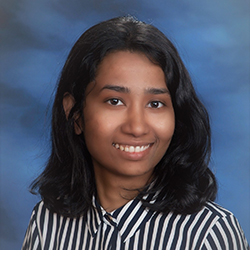
Fahmida Rahman, Ph.D., is an Assistant Teaching Professor in the Department of Civil and Environmental Engineering at Rowan University's Henry M. Rowan College of Engineering. Her expertise lies in transportation engineering with focuses on safety, traffic operations, and data-driven solutions. She holds a Ph.D. from the University of Kentucky (2022), where she developed speed-based Safety Performance Functions (SPFs) for rural highways and applied machine learning for safety assessment. Education: Ph.D., Civil Engineering, University of Kentucky (2022) M.S., Civil Engineering, University of Kentucky (2019) B.S., Civil Engineering, Bangladesh University of Engineering and Technology (2016) Research Interests: Transportation safety engineering, traffic operation optimization, congestion management, big data analysis, and Intelligent Transportation Systems (ITS). She has contributed to tools like the Kentucky Road User Cost and Travel Time Savings models for the Kentucky Transportation Cabinet (KYTC). Professional Contributions: Developed SPF models using speed data, applied machine learning for crash prediction, and pioneered third-party data integration for congestion performance metrics. Her work bridges theoretical models with real-world transportation challenges. Affiliations: Member of ASCE, SWE, and ITE professional organizations.
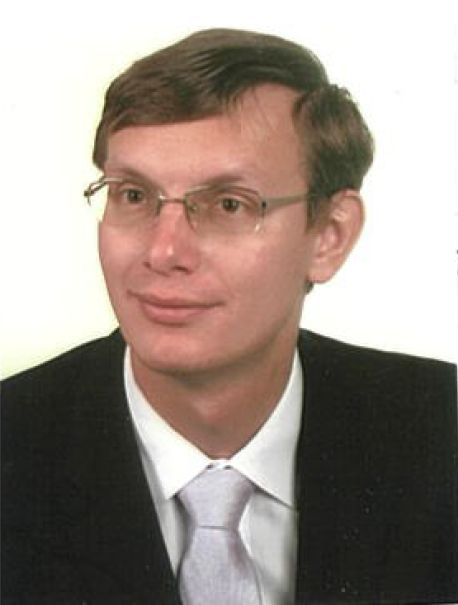
Krzysztof Gasz, PhD, is an academic staff member at the Faculty of Civil Engineering, Wrocław University of Science and Technology, affiliated with the Department of Roads, Bridges, Railways and Airports. He is actively engaged in teaching and research in the domain of transportation engineering, with a focus on traffic systems and infrastructure design. Research Interests: His work spans key areas including traffic engineering, urban transport, traffic modeling, road and intersection capacity, traffic microsimulation, pedestrian and bicycle traffic, and motorway signage. His research addresses practical challenges in traffic management and safety, particularly in urban and highway environments. The recent publications reflect a consistent focus on traffic operations, signage effectiveness, and simulation-based analysis of congestion. Key themes include the impact of traffic signals on unsignalized intersections, motorway lane usage influenced by signage, and the design of junction guidance systems. His studies often combine empirical observation with simulation techniques to evaluate traffic behavior and infrastructure performance. Scientific Awards: No awards or honors mentioned in the provided text. Advising and Grants: No information available regarding student advising, research grants, or funded projects. Labs and Teams: No mention of specific laboratories, research groups, or collaborative teams.
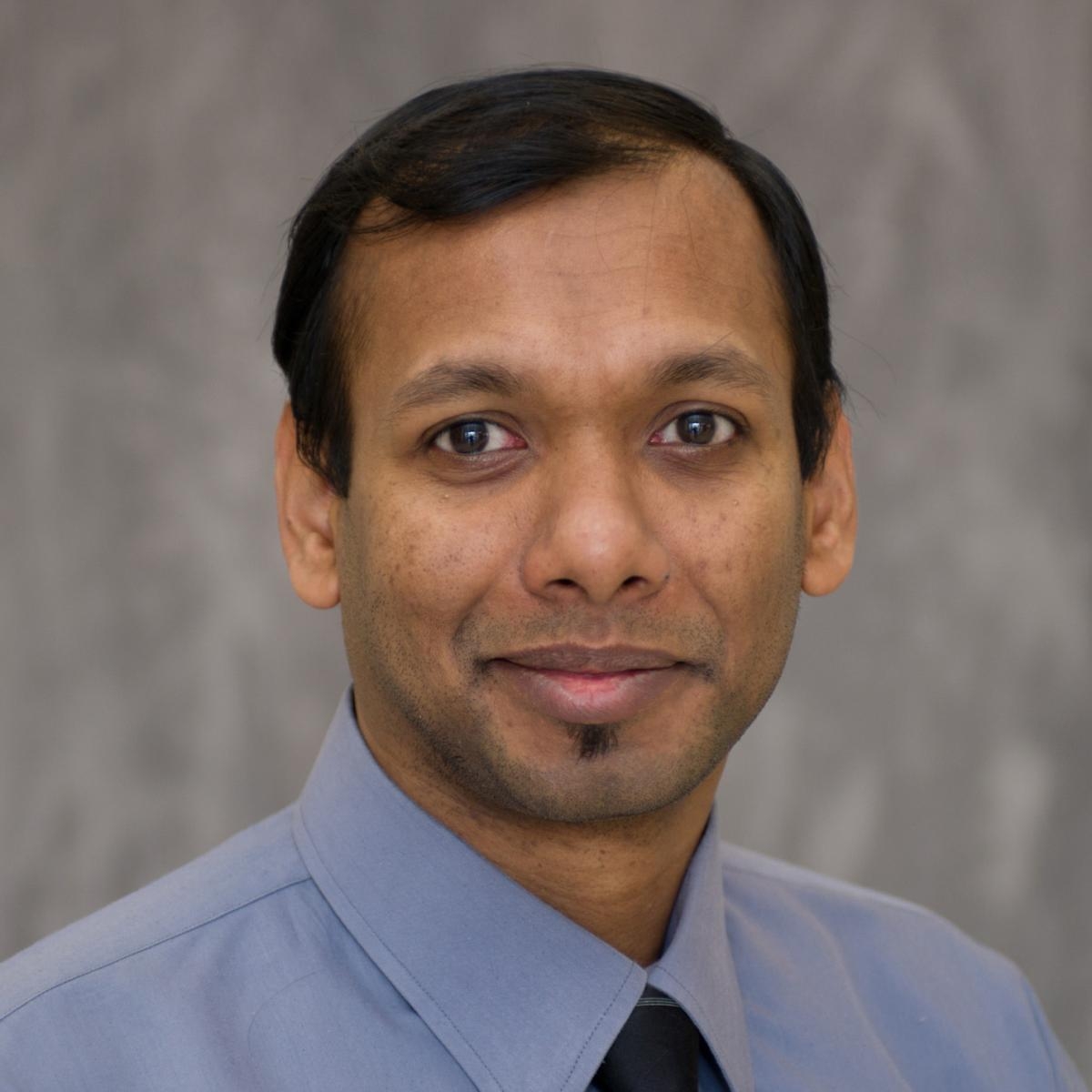
Dr. Angshuman Guin is a Senior Research Engineer at the School of Civil and Environmental Engineering, Georgia Institute of Technology. He returned to Georgia Tech as faculty in 2007 after industry experience. His research focuses on enabling data-driven decisions in transportation systems through innovations in data collection, quality assurance, and processing. Key areas include Freeway Operations, Connected/Autonomous Vehicles, Intelligent Transportation Systems, and Smart Cities. He co-founded InstaData Systems to translate research into practice. Dr. Guin holds a Ph.D. from Georgia Tech and serves on Transportation Research Board (TRB) committees including Information Systems, Human Factors, and Safety Management. He reviews for journals like IEEE Transactions on ITS and ASCE Journal of Transportation Engineering. His work spans 93+ publications, emphasizing simulation, emissions analysis, intersection safety, and digital twin frameworks. Recent projects include optimizing Atlanta’s MLK Smart Corridor using reinforcement learning, evaluating Restricted Crossing U-Turn emissions, and developing tools for autonomous vehicle merging behaviors. He collaborates with Georgia DOT and FHWA on projects like incident detection systems and corridor performance metrics. Dr. Guin’s research bridges theory and practice, contributing to safer, smarter transportation systems through advanced analytics and emerging technologies.
Jasenka Rakas is a Continuing Lecturer in the Civil and Environmental Engineering Department at the University of California, Berkeley, where she teaches courses on airport design and air transportation. She also serves as the Deputy Director of the UC Berkeley National Center of Excellence for Aviation Operations Research (NEXTOR), where she leads aviation research initiatives. Dr. Rakas has pioneered methods and models for analyzing the impact of navigational equipment outages on airspace performance and has conducted significant work in controller-pilot communications. Her contributions to airport operations and planning are substantial, particularly in using high-fidelity data to create new arrival headway distributions. She is the author or co-author of more than 100 publications and has participated in over 200 high-level presentations worldwide. Her research focuses on National Airspace System (NAS) infrastructure performance and investment analysis, air traffic flow management, cost/benefit analysis, simulation modeling, human factors, and cognitive psychology. Current research projects include: Environmental Performance Assessment in Enhancing the Sustainability of Airport Developments Robust Optimization Models for Aviation Infrastructure Investments Impacts of a Mixed Media Air Traffic Control Communication Environment on Aviation Efficiency Dr. Rakas' recent publications demonstrate a strong focus on sustainable aviation, airport operations optimization, and adapting to climate change impacts. Her work addresses critical challenges in modernizing air transportation systems while considering environmental sustainability and operational efficiency. Her scientific awards include: Commendation from the Federal Aviation Administration ATO Technical Operations for NAS Infrastructure Management Conference development (2006) Commendation from the Federal Aviation Administration ATO Technical Operations for NAS Infrastructure Management Conference development (2005) Harkins Group Fellowship (2000) Special Award for Outstanding Performance from CSSI, Inc. (1994) Election as AIAA 2025 Associate Fellow (October 2024) Dr. Rakas actively advises graduate students and has mentored numerous researchers in aviation-related topics. She has founded several educational initiatives including the UC Berkeley Advanced Aviation Educational Program, the Airport Design Studio, and the National Airspace System Infrastructure Conference. Her teaching evaluations consistently highlight her enthusiasm, accessibility, and innovative teaching methods.
Tabea Sonnenschein is a Researcher at Utrecht University , affiliated with the Faculty of Geosciences and Human Geography and Spatial Planning . She is also a PhD Candidate in the Department of Population Health Sciences under the Faculty of Veterinary Medicine . Her work bridges environmental science, urban planning, and public health through advanced computational modeling. Coordinated EU-funded EXPANSE (Horizon 2020) and EXPOSOME-NL (NWO) projects. Research Associate at the MRC Epidemiology Unit at University of Cambridge, contributing to DARe Hub and UBD Policy initiatives. Research Interests Air Pollution and Health: Modeling health impacts of urban pollutants. Agent-Based Simulation: Developing tools like GenSynthPop and CellAutDisp . Urban Sustainability: Assessing interventions for resilient, low-emission cities. Recent Publications highlight her work on urban exposome, synthetic population modeling, and subway expansion impacts. She contributes to journals like Environmental Modeling and Software , Autonomous Agents and Multi-Agent Systems , and Semantic Web .
Professor Charisma Choudhury is a Chair in Behaviour Modelling at the Institute for Transport Studies, University of Leeds. She leads the Choice Modelling Research Group and serves as Deputy Director of the interdisciplinary Choice Modelling Centre. Her expertise spans travel behaviour modelling, discrete choice analysis, and big data applications in transportation systems, particularly in the Global South. Her research focuses on integrating data science, ubiquitous computing, and choice modelling techniques using innovative data sources like mobile phone records, smart cards, and physiological sensors. She has collaborated extensively with Southeast Asian institutions, including projects with Indonesian students and prior traffic microsimulation work in Malaysia. She holds a PhD and MSc from MIT, where her pioneering driving behaviour models were incorporated into commercial tools like AIMSUN and VISSIM. Interests: Behaviour Modelling, Big Data, Developing Countries, Traffic Microsimulation Leadership: Choice Modelling Research Group, Deputy-Director of Choice Modelling Centre Collaborations: Beijing Jiaotong University, Alan Turing Institute Scientific accolades include the Gordon Newell Best Dissertation Prize, Faculty for Future Award, and UKRI Future Leader Fellowship. She supervises PhD students and has previously mentored researchers in Bangladesh, India, and Malaysia, with projects ranging from ride-hailing energy impacts (INFUZE) to agent-based simulations (NEXUS, TOZCA).
Professor Simon Shepherd serves as Institute Director (Head of School) and Professor of Transport Modelling and Policy Design at the Institute for Transport Studies, Faculty of Environment, University of Leeds, where he has held a Principal Research Fellowship since 1989. His academic credentials include: PhD, University of Leeds BSc in Mathematical Engineering, Loughborough University of Technology Diploma in Industrial Studies Shepherd's research pioneers Transport Modelling and Policy frameworks with specialized focus on Road Pricing , Network Design , and Traffic Signal Control under over-saturated conditions. His work integrates System Dynamics for strategic applications including land-use transport interaction modeling (MARS framework) and microsimulation, notably deployed for Greater Jakarta's master planning. Current research initiatives include PATH2ZERO (net-zero transport pathways), TransiT (decarbonizing transport digital twins), U-PASS (urban mobility innovation), and E-Motorcycle adoption studies, alongside supervision of PhD candidate Vanessa Ternes. He leads the master's module on system dynamics applications and contributes to the Spatial Modelling and Dynamics research group within the Institute.
Qian Wang is an Associate Professor of Teaching and Director of Undergraduate Studies in the Department of Civil, Structural, and Environmental Engineering at the University at Buffalo (SUNY). He holds multiple leadership roles including Co-Director of the Lab Expenditure Committee and Director/Principal Investigator of the 2021 National Summer Transportation Institute. His primary affiliation is with the School of Engineering and Applied Sciences. Wang's research focuses on transportation systems engineering, with emphasis on traffic accident analysis, urban freight logistics, and data-driven decision support systems. His work integrates advanced statistical techniques like entropy maximization and machine learning with transportation infrastructure challenges. Key contributions include predictive models for traffic accidents and border crossing delays, as well as innovative approaches to assessing transportation sustainability and community livability. His publication trajectory reflects sustained contributions to transportation engineering since 2003, with recent work emphasizing real-time traffic prediction, freight carrier behavior analysis, and policy evaluation for road pricing initiatives. Over 15 peer-reviewed articles demonstrate methodological rigor and practical relevance to urban transportation challenges. Wang has actively contributed to transportation education through undergraduate program leadership and has led research initiatives funded by transportation authorities including the Port Authority of New York and New Jersey. His work bridges theoretical advancements with applied solutions for smarter, safer transportation systems.
Bahadır Ersoy ULUSOY is a Lecturer and Head of the Civil Engineering Technology Department at Antalya Bilim University. He graduated from Sakarya University's Department of Civil Engineering in 2017 and earned his Master's degree in Transport and Traffic at Akdeniz University in 2022. Since October 2023, he has been pursuing a PhD in Civil Engineering at Yıldız Technical University's Institute of Science and Technology. Current research focuses on traffic analysis and microsimulation modeling using PTV Vissim Investigates integration of image processing techniques with transportation systems Specializes in intersection performance evaluation and environmental impacts of traffic signals His work bridges traditional civil engineering with modern computational methods, emphasizing practical applications for urban mobility optimization. Recent publications explore YOLO-based vehicle detection, manual classification methods, and emission analysis in signalized intersections. Currently working on simulation-based transportation studies while teaching at Antalya Bilim University.
Guilherme Augusto Borges Pereira serves as an Associate Professor at the School of Engineering, University of Minho, and holds the position of Senior Researcher at Centro ALGORITMI. He is actively involved with the IEM R&D Group and SLOTS R&D Lab, contributing to research in industrial engineering and simulation. With a PhD credential and substantial academic output (93 publications, 645 citations, h-index 13), his work appears prominently in Q1/Q2 journals across operations research and industrial engineering domains. His research program centers on discrete-event simulation methodologies applied to complex industrial systems, with particular expertise in supply chain management, logistics optimization, and big data integration. Key application areas include warehouse automation systems, production line control mechanisms, automotive supply chains, cement industry logistics, and healthcare transportation services. His methodological contributions frequently combine simulation with optimization techniques such as genetic algorithms and integer programming to solve real-world operational challenges. Analysis of his publication trajectory reveals a strategic evolution toward integrating big data analytics with traditional simulation frameworks, particularly for supply chain risk management and data validation purposes. His work demonstrates remarkable cross-sector applicability, spanning automotive manufacturing, cement production, cork industry processes, and urban traffic systems. Recent publications emphasize computational experiments with simulation tools in big data contexts, semantic validation techniques, and comparative studies of simulation software platforms. As an academic leader, Pereira has chaired significant conferences including the European Modeling and Simulation Symposium (EMSS) 2019. His research maintains strong industry relevance through case studies addressing material handling systems, warehouse design optimization, production flow control, and non-emergency patient transportation logistics. His technical proficiency extends across multiple simulation environments with particular emphasis on the Simio platform for industrial applications.
Giuseppe Salvo is an Associate Professor in the Department of Engineering at the University of Palermo, specializing in transportation technology and economics. His research focuses on transportation planning, microsimulation, and freight logistics.
Dr. Gudrun Wallentin serves as Associate Professor for Geoinformatics and Ecology at the Department of Geoinformatics (Z_GIS) within the Faculty of Natural and Life Sciences at the University of Salzburg. She is Program Director of the UNIGIS distance learning programs and heads the Research Group "Spatial Simulation". Her academic work bridges ecological theory with advanced spatial modeling techniques. Dr. Wallentin's research focuses on spatial simulation in ecology , individual-based modeling , and complex systems . Her work integrates geographical information science with ecological modeling to understand spatial patterns and processes in natural and urban environments. She has developed innovative approaches to model ecological dynamics, animal behavior, and urban transportation systems using agent-based and hybrid modeling frameworks. Analysis of her publication record from 2008-2017 reveals consistent research themes centered on spatial modeling approaches applied to ecological and urban systems. Her work demonstrates a progression from ecological modeling (particularly alpine tree line dynamics and invasive species) toward urban applications (especially bicycle traffic and safety), while maintaining a strong methodological focus on individual-based and agent-based modeling techniques. The interdisciplinary nature of her work spans ecology, computer science, transportation engineering, and geography. Dr. Wallentin actively contributes to the academic community through service roles including Guest Editor for the ISEM 2019 special issue in "Ecological Modelling" and membership on program committees for major conferences such as AGILE, AGIT, and GI_Forum. As Program Director for UNIGIS, she oversees distance learning programs in Geographical Information Science and Systems, and supervises master's theses across multiple programs including Geography, Applied Geoinformatics, and Ecology. Her teaching portfolio includes courses on Spatial Simulation, Modeling Geographical Systems, and GIS applications in ecological research. She leads the "Spatial Simulation" research group, which focuses on developing and applying individual-based modeling approaches to complex spatial systems, with particular applications in ecological dynamics and urban transportation networks.






.jpeg)