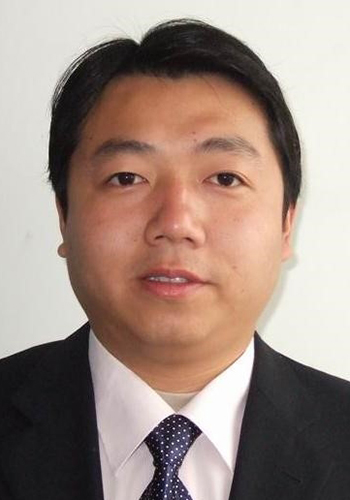
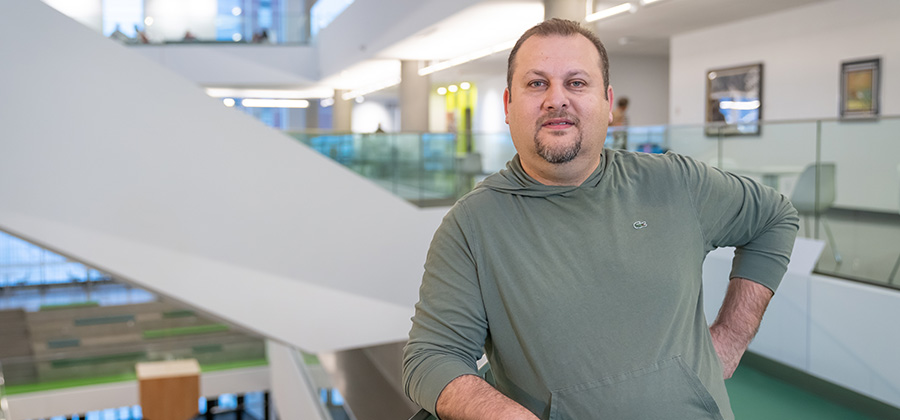
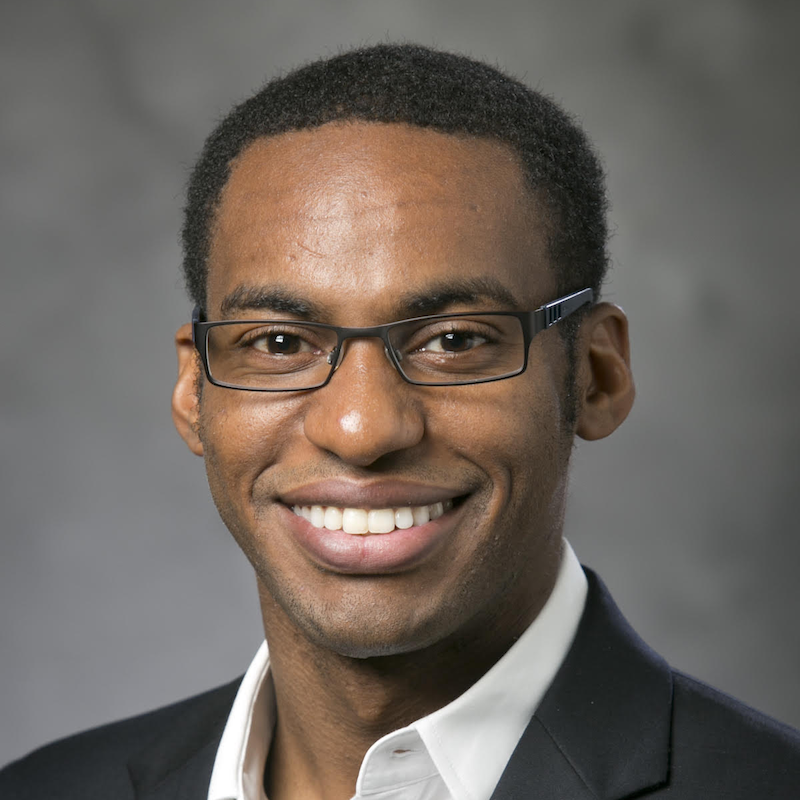
Dr. Yunpeng (Jack) Zhang is an Associate Professor in Information Science Technology at the University of Houston's Cullen College of Engineering. He directs the Network, Software and System Laboratory and serves as Center Director for the USDOT Tier-1 Transportation Cybersecurity Center (CYBER-CARE). His research focuses on cybersecurity foundations for critical infrastructure with emphasis on blockchain, IoT security, and vehicular systems. Zhang has developed novel cryptographic protocols, intrusion detection frameworks, and access control models for transportation networks. Honors: 50-in-5 Major Grant Recipient (2024) IEEE Senior Member Best Paper Finalist (IDSTA2022) New Faculty Award (2015) Education Leadership: Designed courses in Data Science for Cybersecurity, Cryptography, and Intrusion Detection. Supervised 75+ graduate students.
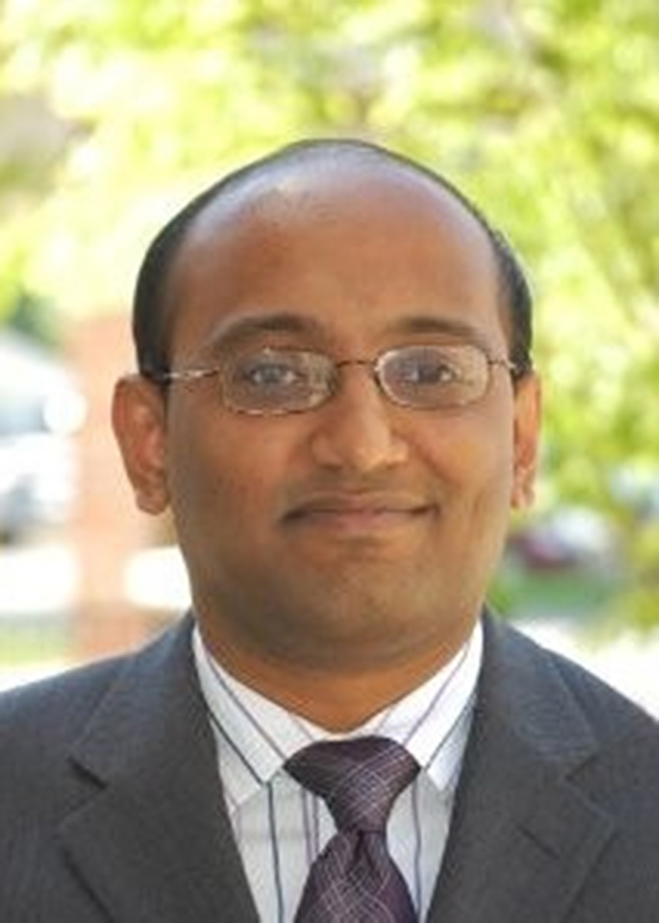
Avinash Unnikrishnan is a Professor and Chair in the Department of Civil, Construction, and Environmental Engineering at the University of Alabama at Birmingham (UAB). He holds a B.Tech. from the Indian Institute of Technology Madras, an M.S. from Vanderbilt University, and a Ph.D. from the University of Texas, all in civil engineering fields. His research focuses on optimizing urban mobility networks, resilient infrastructure systems, and the intersection of transportation with public health and pedagogy. He has contributed to studies on EV charging equity, disaster-related pathogen assessments, and drone-integrated logistics systems. Unnikrishnan's work spans transportation policy, infrastructure resilience under extreme events, and sustainable urban systems. His recent research includes analyses of post-pandemic shopping behavior in New Delhi, risk-based asset management for bridges, and the impact of truck platooning on bridge loading. He has also explored the implications of home deliveries during and post-COVID-19 lockdowns, emphasizing equity and environmental justice. He has advised several research projects funded by state and federal agencies, including studies on speed zoning methodologies, freight flow prediction using weigh-in-motion data, and motor carrier safety in Oregon. His expertise in interdisciplinary methods has led to innovations in transportation modeling, logistics optimization, and infrastructure durability assessment. Labs/Teams: While specific lab names aren’t mentioned, his research involves collaborations with state transportation departments (e.g., ODOT) and interdisciplinary teams focusing on urban systems, environmental health, and infrastructure resilience.
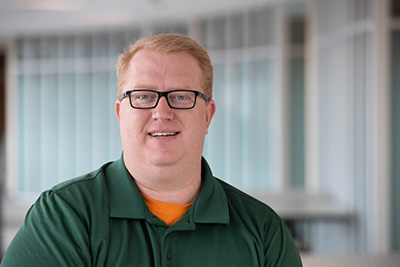
Dr. Jason Kirby is an Associate Professor and Director of the Online Master's in Engineering in Sustainable Smart Cities at the University of Alabama at Birmingham (UAB). He leads a program collaborating with Staffordshire University in the UK. His expertise lies in environmental engineering and sustainable urban development. Education: B.S. in Environmental Science from Auburn University, M.S. and Ph.D. in Civil/Environmental Engineering from the University of Alabama. Research Focus: Environmental sustainability, transportation safety, air/water quality, and green infrastructure. He emphasizes engineering practices that balance ecological preservation with societal needs. Recent work includes studies on highway maintenance safety, autoclaved aerated concrete sustainability, and air pollution impacts on public health. Awards: 2018 UAB President’s Award for Excellence in Teaching. Teaching & Mentorship: Mentor to dozens of graduate students and instructor to hundreds of undergraduates. Advocates for global education through programs like the UAB-Egypt study abroad initiative. Collaborations: Partnerships with state transportation agencies (e.g., Alabama DOT) and international universities. Active in telehealth education strategies for rural regions.
Jaume Comellas is a Lecturer in the Department of Signal Theory and Communications at the Universitat Politècnica de Catalunya (UPC), affiliated with the Barcelona Higher Technical School of Telecommunication Engineering. He is a core member of the Optical Communications Group (GCO) and the Advanced Broadband Communications Center (CCABA). His research focuses on optical communications, network engineering, quantum key distribution, and network security, with emphasis on optimizing elastic optical networks, quantum encryption protocols, and digital twin applications. Key projects include developing secure lightpath systems using quantum keys, improving network scalability via software-defined networking (SDN), and analyzing network traffic patterns in flex-grid and SDM-based infrastructures. He has contributed to over 255 publications, including works on optical encryption scenarios, convolutional neural networks for network blocking prediction, and distributed telemetry systems. His work integrates advanced optical technologies with machine learning, addressing challenges in network resilience, spectrum management, and quantum communication security. Collaborations span institutions like the UPC, European research networks, and industry partners. He actively participates in international conferences and serves on technical committees for conferences such as ICTON and IEEE events. Comellas leads projects funded by Horizon Europe, Spanish Ministry of Science, and industry grants, focusing on 5G/6G networks, quantum communication systems, and high-capacity optical infrastructures. His contributions bridge theoretical research with practical network solutions, enhancing both academic and industrial advancements in telecommunications.
Rahul Simha is a Professor of Computer Science at George Washington University (GW), affiliated with the School of Engineering and Applied Science. He also holds a courtesy appointment as Professor of Educational Leadership in the Graduate School of Education and Human Development. His research spans computational neuroscience, code mining, STEM education innovation, robotics, thermal sensing, and systems security. Simha has been recognized with numerous awards, including the GW-SEAS Engineers' Council Professor of the Year Award (2016-2018) and the CASE U.S. Professor of the Year (2010). Simha earned a PhD in Computer Science from the University of Massachusetts, Amherst (1990), under advisors Jim Kurose and Don Towsley. His academic roles include former Co-Director of GW's Teaching and Learning Center (2011–2017). He has advised over 30 PhD students, with active collaborations in interdisciplinary projects such as computational neuroscience (with neuroscientists and physicists) and robotics (human-in-the-loop interfaces). His research in STEM education focuses on improving teaching methods, integrating computational approaches into science curricula, and aligning education with industry needs. Notable projects include developing literacy apps for adult learners (with Jennifer Hill) and exploring gamified assessment structures (e.g., the Reverse Exam). Simha's publications (15+ recent entries) address topics ranging from neural pathways in mice to secure embedded systems. His work bridges theoretical computer science with practical applications in healthcare, education, and robotics. He teaches courses in quantum computing, algorithms, and linear algebra, reflecting his commitment to both foundational and applied computer science education. Awards and recognitions also include the SEAS Distinguished Teacher Award (2009-10), NSF Research Initiation Award (1991), and multiple teaching accolades from ACM. His research labs and teams have produced tools like Blaise (tablet-based grading), Sython (privacy-preserving programming), and CAPITAL (adult education software).
Dr. Shohel Amin is a Programme Director of BSc Transport Management at Aston University's School of Infrastructure and Sustainable Engineering, part of the Engineering for Sustainable Development research group. He holds a visiting professorship at Xi'an Technological University (China) and is a Fellow of both the Chartered Institution of Highways & Transportation (CIHT) and Advance HE. With over 20 years of experience, his expertise spans transportation planning, asset management, sustainable infrastructure, and machine learning applications. Education: PhD in Civil Engineering from Concordia University (2016), postdoctoral research at Concordia, and a professional certificate in Discrete Choice Analysis from MIT. He has taught at Coventry University and contributed to projects such as Rural Economy Canada as a part-time data analyst. Research focuses on transport infrastructure resilience, climate change adaptation, and sustainable practices. Recent studies include neural network applications for bicycle traffic analysis, automated vehicle adoption barriers, and decarbonization strategies in India. He has authored/co-authored 58 peer-reviewed outputs, integrating machine learning with transportation systems and infrastructure materials. Awards include CIHT Fellowship and membership in the Academy of Urbanism. His advisory work includes supervising PhD students and leading interdisciplinary teams on projects like pavement management systems and metro construction safety. He actively engages in policy development for resilient road networks and sustainable urban mobility solutions.
Nikos Passas is a Professor at the Department of Informatics and Telecommunications, University of Athens, leading the Green, Adaptive and Intelligent Networking (GAIN) research group. He has coordinated numerous national and European research projects, including SMART-NRG,ROSSFIRE,SEOVEREIGN,CASPERS, and SEMANTIC. His research focuses on mobile network architectures, QoS provisioning, wireless protocols, and 5G/6G technologies. He has published over 120 papers and 12 book chapters, with key contributions in MAC protocols, mobility management, and network security. Education: PhD in Informatics & Telecommunications (University of Athens, 1997), Diploma in Computer Engineering (University of Patras, 1992). Teaching: Mobile/Wireless Networking courses at undergraduate and postgraduate levels. Recent roles include guest editor for IEEE Wireless Communications and Wiley's Wireless Communications and Mobile Computing Journal. Research highlights include work on LTE-Advanced networks, D2D communications, and blockchain-based mobile data access. He holds a US patent for wireless traffic scheduling. Active in IEEE and the Technical Chamber of Greece. Current projects emphasize smart energy networks, cognitive radio technologies, and user-centric service provisioning. His lab develops solutions for HetNets, edge computing, and AI-driven network optimization.
Kyungim Baek is an Associate Professor in the Department of Information and Computer Sciences at the University of Hawai'i at Manoa, where she maintains an active research program and teaching schedule through Spring 2023. She serves as co-PI of the Bioinformatics Laboratory (BiL) and previously held roles as Associate Director of the Bioinformatics Core for the Pacific Center for Emerging Infectious Diseases Research (2010-2013). Ph.D. in Computer Science, Colorado State University (2002) M.Sc. in Computer Science, Sogang University (1996) B.Sc. in Mathematics, Sogang University (1994) Her research spans computer vision, machine learning, and bioinformatics, with significant contributions in plant phenotyping systems, protein structure prediction, and neural circuit modeling. Current work focuses on deep learning applications for plant identification (WTPlant system) and UAV autonomy, building on earlier work in visual perception modeling and genomic sequence analysis. Publications show strong interdisciplinary trends, with bioinformatics dominating 2010-2015 output (protein phosphorylation prediction, ncRNA discovery) and computer vision applications increasing post-2015 (plant phenotyping, UAV systems). Recent work demonstrates convergence of computer vision and agricultural technology through deep learning approaches for field applications. Best Cognitive Vision Paper Award (2003 International Conference on Computer Vision Systems) She has supervised numerous graduate research projects through ICS 699/700/800 courses and mentored capstone projects. Current teaching includes ICS 235 (Machine Learning), ICS 434 (Data Science), and ICS 483 (Computer Vision), maintaining a consistent teaching load since 2005 with over 15 distinct course offerings. Baek leads the Bioinformatics Laboratory (BiL) research group, collaborating with the Pacific Center for Emerging Infectious Diseases Research. Her work integrates computer vision techniques with biological applications, particularly in plant identification systems and genomic analysis tools.
Khondker Shajadul Hasan is an Associate Professor of Computer Science in the College of Science and Engineering at the University of Houston–Clear Lake since Fall 2021, after serving as Assistant Professor from 2016. He teaches both undergraduate and graduate courses and directs research in distributed systems, blockchain security, GPU performance modeling, and IoT analytics. Education Ph.D. in Computer Science, University of Oklahoma, Norman, USA (2014) Dissertation: “Prediction Models for Estimating the Efficiency of Distributed Multi-core Systems” M.S. in Computer Science, Wichita State University, Kansas, USA (2001) Research Interests Dr. Hasan’s work bridges theory and practice in distributed computing , blockchain-based security frameworks , and GPU-accelerated high-performance computing . His group designs predictive models for multi-core CPU availability and energy-efficient scheduling, and explores private-blockchain solutions for securing data streams in IoT and aviation domains. Publications & Trends Across 10 refereed papers since 2017, he has advanced the state-of-the-art in secure IoT architectures, smart-farming analytics, and JVM-level concurrency optimization. His research consistently integrates machine-learning techniques with systems-level challenges, yielding practical tools for industry and academia. Awards & Honors Piper Award Semi-Finalist, University of Houston–Clear Lake (2017–2022) Distinguished Alumni Award, North South University (2017) Computer Science Advisory Board Award, University of Oklahoma (2013-14) Industry certifications from Schlumberger and InterSystems (2014-2015) Advising & Service Since 2016 he has mentored numerous graduate and undergraduate researchers and has served as faculty advisor for the Computer Club. He is an active member of editorial boards and technical program committees for IEEE and Elsevier journals/conferences worldwide. Laboratory & Collaborations Dr. Hasan directs the Parallel and Distributed Systems Lab at UHCL, collaborating with industry partners such as Schlumberger and academic groups across the USA and Asia on blockchain security, GPU performance modeling, and smart-IoT systems.
Dr. Katherine Moen is an Associate Professor in the Department of Psychology at the University of Nebraska at Kearney (UNK). Her research focuses on cognitive psychology with particular emphasis on memory, attention, and visual imagery, utilizing eye-tracking technology to explore how real-world factors influence these processes. She regularly teaches courses including General Psychology, Research Methods, Sensation and Perception, and Memory and Cognition. Education Background : Not explicitly stated in text. Awards : Received the 2024 UNK CAS Faculty Mentoring of Student Research Award. Her research interests revolve around intentional forgetting mechanisms, attentional control, and the interplay between visual working memory and environmental factors. Recent work has examined neural correlates of memory suppression, multimedia learning effectiveness, and spatial reasoning development through mental rotation training. Dr. Moen’s publications span cognitive neuroscience, educational psychology, and applied human factors, demonstrating expertise in both basic research and pedagogical innovation. Her lab employs eye-tracking and neuroimaging techniques to investigate cognitive processes in real-world contexts, with findings contributing to improved instructional strategies and safety-related behavioral models.
Dr. Vinod Kumar is a Professor and Chair in the Department of Mechanical and Industrial Engineering at Texas A&M University-Kingsville. He holds a PhD in Mechanical Engineering from Rice University (2005) and has completed postdoctoral research at Princeton University/NOAA/GFDL (2007-2008) and Rice University (2005-2007). His expertise spans computational fluid dynamics (CFD), finite element methods (FEM), and high-performance computing (HPC). Professional roles include Senior Scientist at Calysta Inc. (2019-2020) and prior faculty positions at The University of Texas, El Paso (2008–2023). Research interests focus on fluid dynamics, nanomaterials, and interdisciplinary applications in energy, biomedical engineering, and environmental systems. His work has produced over 50 peer-reviewed articles, including studies on unit commitment optimization, microbial fuel cells, and biomedical device materials. Teaching responsibilities include graduate courses in CFD, FEM, and numerical methods, along with undergraduate fluid mechanics and differential equations. Notable contributions include advancements in computational modeling for renewable energy systems and collaborations on biocontrol agents for agricultural pests. His professional experience bridges academia and industry, emphasizing applied engineering solutions to real-world challenges.
Sean Laraway is Professor of Psychology at San José State University and Director of the SJSU-NASA Human Factors Project at Ames Research Center. His research integrates behavior analysis with human factors engineering to study learning, motivation, and performance in applied settings. Key areas include motivating operations, consumer decision-making, aviation safety, and online education effectiveness. He directs research collaborations with NASA on air traffic control systems, aviation displays, and pilot performance. Educational innovations include studies of Udacity partnerships and self-adapted testing formats. Professional service includes editorial roles for behavior analysis journals and NSF review panels. Honors include the College of Social Sciences Teaching Excellence Award (2014) and Outstanding McNair Scholars Mentor recognition (2009). He holds certification as an Ergonomic Assessment Specialist and affiliations with ABAI, HFES, and APA divisions.
Dr. Abdu Arslanyilmaz is a Chair Professor in the Department of Computer Science, Information, & Engineering Technology at Youngstown State University (YSU). His research focuses on autonomous vehicle safety, inclusive computing education for students with autism spectrum disorders (ASD), and game-based learning methodologies. He holds a Ph.D. from Texas A&M University (2007). His work includes groundbreaking studies on driver readiness in autonomous vehicles, hazard perception systems for young drivers, and accessible computing curricula for neurodiverse learners. Notable contributions include the NSF-funded 'ISAC' project (2020-2023) aimed at involving ASD students in computing, and NVIDIA's DRIVE PX 2 GPU platform collaboration for multi-user driving simulations. Dr. Arslanyilmaz has been recognized with YSU's Distinguished Professor awards (2021, 2022) and the 2020 Best Paper Award at the International Traffic and Transportation Simulation Conference. His research spans computational thinking assessment via eye-tracking, online learning effectiveness, and task-based language learning technologies. Grants: NSF STEM+C Partnership ($286,526), NVIDIA DRIVE PX 2 GPU Platform collaboration Awards: 3 YSU Research Professorships (2011-2019), Best Paper (2020) Key Areas: Autonomous vehicle safety systems, inclusive education technologies, multi-user simulation design His lab develops innovative educational tools and safety systems, bridging gaps between technology, education, and human factors.
Dr. Mohamad El-Hajj is an Associate Professor in the Department of Computer Science at MacEwan University. He holds a PhD from the University of Alberta (2006) and a Master's from the Lebanese American University (1998). His research focuses on applying data mining techniques to real-world domains such as healthcare, engineering, education, and sports analytics. His expertise spans databases, data warehousing, AI, parallel programming, and e-learning systems. Educational Background PhD in Computer Science, University of Alberta (2006) M.Sc. in Computer Science, Lebanese American University (1998) Bachelor's in Computer Science, Beirut Arab University (Lebanon) Research Interests Dr. El-Hajj specializes in leveraging data mining for practical applications. His work bridges computational methods with societal challenges, including health informatics (e.g., predicting user behavior in health apps), sports analytics (e.g., NBA performance modeling), and urban data analysis (e.g., traffic patterns and crime prediction). He also explores parallel computing and database optimization for large-scale datasets. Recent Trends in Publications His recent work emphasizes interdisciplinary applications: 2023–2025 articles address smart grid energy profiling, sports strategy optimization, and pandemic policy analysis. Earlier contributions (2003–2017) focus on foundational data mining algorithms, including parallel pattern mining and constraint-based techniques. Professional Engagement He actively participates in conferences like IEEE ICDM and ACS/IEEE AICCSA. His teaching includes courses on database systems and data mining methodologies. Advising & Collaboration Open to supervising senior student research projects, though no current advisees are listed. No grants or lab affiliations explicitly mentioned.
Theophilus Benson is a Professor of Electrical and Computer Engineering at Carnegie Mellon University's College of Engineering. He holds a B.S. from Tufts University, M.S. and Ph.D. from the University of Wisconsin-Madison, and a post-doctorate from Princeton University. His research focuses on democratizing digital infrastructure access, particularly in the global south, through projects like the 'Democratizing Mobile Web Performance' initiative and KubeKlone/Nimble frameworks. He leads efforts at Carnegie Mellon University Africa to bridge the digital divide via collaborations with Internet Society and local IXPs. Research Interests: Cloud computing and distributed systems Programmable infrastructures (eBPF) Global network equity and policy impacts Mobile web optimization under memory constraints Sustainable development goals (SDG 9) Key Achievements: SIGCOMM Test of Time Award NSF CAREER Award Google/Facebook Faculty Awards Lead DARPA ISAT study group member Recent work includes analyzing subsea cable vulnerabilities in Africa, presenting at ACM Internet Measurement Conference 2024, and developing frameworks like KubeKlone for cloud-native simulations. His research bridges technical innovation with societal impact, addressing both performance and accessibility challenges in global networks.