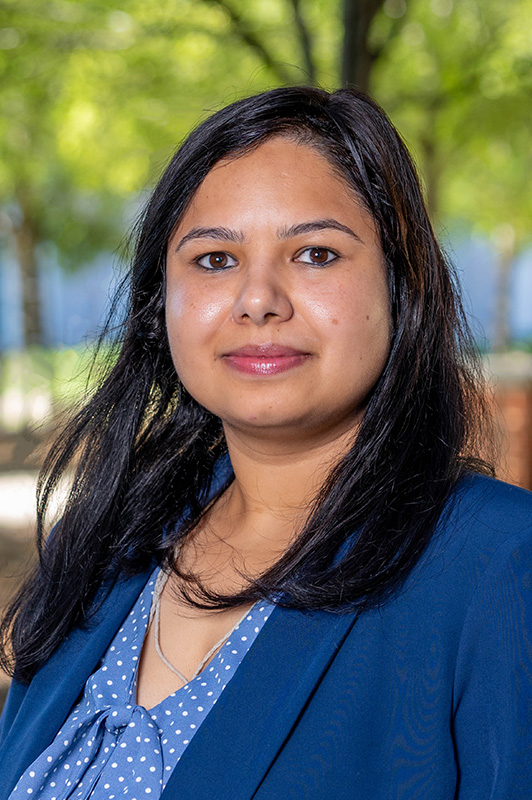
Neha Sharma is an Assistant Professor in the Department of Civil and Environmental Engineering at Auburn University. Her research focuses on nutrient recovery, electrochemical resource recovery, water reuse, trace metal cycling, and pollutant fate and removal.
John F. Rudge is a Professor of Geodynamics at the Bullard Laboratories, Department of Earth Sciences, University of Cambridge , and a Fellow and Dean of Trinity College. His research focuses on the dynamics of Earth's interior, including mantle convection, magma transport, and the geochemical evolution of the planet. He employs continuum mechanics, numerical analysis, and statistical methods to address questions about melt dynamics, mantle heterogeneity, and the surface expressions of geophysical processes. Education includes a mathematics undergraduate degree and a PhD in Earth Sciences and Applied Mathematics from Cambridge. He held postdoctoral positions at institutions like ETH Zürich, Yale, and Columbia University before joining Cambridge as a University Lecturer in 2010 and being promoted to Professor in 2022. Key research areas include: Transport of melts and volatiles in the mantle Evolution of Earth's interior from accretion to present Dynamic topography and inner core dynamics Publications span over two decades, with recent works addressing melt rheology, mantle mineralogy, and interdisciplinary applications in oncology. He has supervised numerous PhD students and postdocs, including David Rees Jones, Isarapong Eksinchol, and Laura Alisic. Awards include the Philip Leverhulme Prize and Geological Society President’s Award. Teaching responsibilities include courses on geophysics, magma dynamics, and supervisions in Natural Sciences at Trinity College. Research tools include finite element modeling and collaborations with computational scientists.
Dr. Nicola Allison is a Reader at the University of St Andrews, School of Earth & Environmental Sciences, where she leads research on biomineralisation. Her work focuses on how marine organisms form calcium carbonate structures, the impact of environmental changes on these processes, and the role of these biominerals in reconstructing past climates. Her research integrates experimental studies using controlled aquaria systems to culture corals and other organisms, alongside geochemical analyses of fossil carbonates. Key areas include the effects of ocean acidification, rising temperatures, and organic matrices on biomineral formation. She collaborates internationally, including through the International Ocean Discovery Program (IODP). Publications highlight advancements in understanding coral skeletal chemistry, aragonite precipitation mechanisms, and the development of climate proxies. She holds grants from NERC, MASTS, and the Leverhulme Trust, supporting projects on coral calcification, biomolecule influences, and climate change impacts. Dr. Allison actively engages in public outreach through workshops and conferences, contributing to climate science communication and policy-relevant research on marine ecosystems.
Professor Andrew Berry is an Associate Professor and Head of the Geochemistry Research Area at the Research School of Earth Sciences, Australian National University (ANU). He holds a D.Phil. from the University of Oxford and a B.Sc. (Hons) from the University of Sydney. His research focuses on experimental petrology, geochemical processes in high-temperature environments, and the use of synchrotron-based techniques like X-ray absorption spectroscopy (XAS) to study element speciation in melts and minerals. Key areas include mantle metasomatism, oxidation state analysis of metals (Fe, Ti, Cr), and the geochemistry of carbonatites and rare earth elements. Education: D.Phil. (University of Oxford, 1997), B.Sc. (University of Sydney, 1991). Employment: Senior Fellow/Associate Professor at ANU (2012–present), Senior Lecturer at Imperial College London (2005–2011), and Research Fellow/Postdoctoral roles at ANU (2000–2005). Research Interests: Experimental studies of melt connectivity, oxidation state controls on element partitioning, and applications of synchrotron techniques. Current projects include investigating Fe³+/Fe²+ ratios in MORB, Ti oxidation states in hibonite, and REE behavior in carbonatites. Scientific Awards: Humboldt Research Fellowship (Universität Frankfurt, 2005). Advising & Grants: Supervised numerous PhD projects on topics like mantle metasomatism and zircon oxy-barometry. Active in collaborative projects on critical metals and carbonate melt geochemistry. Labs/Teams: Leader of the Experimental Petrology group at ANU, contributing to facilities like the Australian Synchrotron.
Dr. Brett J. Borghetti is a Professor of Computer Science in the Department of Electrical and Computer Engineering at the Air Force Institute of Technology (AFIT), Graduate School of Engineering and Management, Wright-Patterson AFB, OH. He was promoted to Professor in July 2022, following prior appointments as Associate Professor (2017) and Assistant Professor (2008/2013). His expertise lies in artificial intelligence, machine learning, deep learning, cybersecurity, and human-machine teaming. Education: Ph.D. in Computer Science, University of Minnesota, Twin Cities (2008) M.S. in Computer Systems, Air Force Institute of Technology (1996) B.S. in Electrical Engineering, Worcester Polytechnic Institute (1992) Dr. Borghetti's research focuses on applying machine learning to physical science sensors (hyperspectral, seismic, RF), cybersecurity, and enhancing human-machine team performance. He teaches graduate courses in machine learning, AI, data security, and algorithm design, and advises numerous MS and PhD students in areas such as sensor exploitation, cognitive workload, and cyber situational awareness. His recent publications demonstrate strong trends in deep learning for multimodal sensor fusion, nuclear security, and neuroergonomics. Scientific Awards: AETC Educator of the Year (2021, Civilian) AFIT Ezra Kotcher Teaching Award (2021) AFIT Teaching Excellence Award (2019) AF STEM Outstanding Science and Educator Award (2015) Multiple Eta Kappa Nu Outstanding Instructor Awards Air Force Meritorious Service Medal and other military honors Dr. Borghetti has advised numerous graduate students and led research projects with significant funding and applications in defense and national security. He has directed research in AI-driven sensor analysis, cyber defense systems, and adaptive automation. His work often involves collaboration with national labs and DoD agencies. He has contributed to major research initiatives in human factors, cyber intruder detection, and machine learning for operational environments. Labs and Research Teams: His work is associated with AFIT's research in cyber security, sensor exploitation, and human-machine systems. He collaborates with teams working on the Cyber Intruder Alert Testbed (CIAT), neuroergonomic modeling, and machine learning for defense applications.
Dr. David Evans is a Royal Society University Research Fellow at the University of Southampton with expertise in paleoclimate reconstruction and marine geochemistry. His research focuses on understanding climate-Earth surface interactions through geochemical proxies, experimental culturing of marine organisms, and numerical modeling. He leads several major projects funded by the Royal Society and UKRI aimed at refining paleoclimate reconstructions. Dr. Evans investigates Cenozoic warm periods (particularly the early Eocene) to evaluate climate model performance and understand climate-biosphere interactions. His work centers on: 1) Reconstructing boundary conditions affecting geochemical proxies, especially seawater composition; and 2) Understanding biomineralization processes in key archives like foraminifera to ensure accurate proxy applications through geologic time. His publications (2024-2025) predominantly focus on marine biomineralization, paleoclimate proxies, and carbonate geochemistry, with frequent applications of isotope techniques and experimental approaches. Research consistently emphasizes methodological improvements in geochemical analyses and proxy validation. He currently supervises four PhD students across biological sciences and oceanography. His research group is part of the Geochemistry unit and Southampton Marine and Maritime Institute. Major active projects include Horizon Europe's AMOEBA initiative and a correlative cryo-analytical center development.
Athanasios Mailis serves as Assistant Professor of Byzantine Archaeology at the Department of History and Archaeology, Faculty of Philosophy, University of Crete. His scholarly work bridges archaeological fieldwork with theoretical analysis of cultural identity, focusing on religious architecture in the medieval Mediterranean. Dr. Mailis's educational background includes: Birth in Athens (1975) Graduation from University of Crete's Department of History and Archaeology (1998) Postgraduate studies at University of Crete Doctoral thesis at University of Göttingen (2005-2010) His research explores Byzantine architecture, medieval urban planning, iconography, and intercultural relations between Byzantium and Western Europe, with special emphasis on Crete during the Venetian period. Mailis examines how architectural elements like templon barriers evolved into iconostases, revealing how material culture expressed religious identity during cultural transitions. His work demonstrates how Orthodox communities used architectural features as 'material proof of cultural identity' during Venetian rule, showing both archaism and modernization in religious spaces. Dr. Mailis's publications reveal consistent methodological approaches combining archaeological evidence with art historical analysis. His research traces the evolution of religious spaces from the 11th to 16th centuries, documenting how physical transformations in church architecture reflected broader social and religious changes. He particularly focuses on transitional spaces like templon barriers, analyzing how their modification served as tangible expressions of religious identity during periods of political change. His scholarly recognition includes: Stanley J. Seeger Fellowship at Princeton University Wolfgang Fritz Volbach Fellowship at WissenschaftsCampus Mainz Dr. Mailis maintains a dual professional trajectory, having served in the Greek Archaeological Service from 2006 to 2022 while simultaneously pursuing academic work. During his tenure at the Archaeological Service, he conducted numerous excavations and restoration projects at Byzantine sites, working initially as an antiquities curator at the 24th Ephorate of Byzantine Antiquities in Lamia, and later as head of the Byzantine Monuments Department at the 28th Ephorate in Chania. Concurrently, he taught Byzantine Archaeology at the University of Crete during multiple academic years. His research connects with multiple international teams, particularly through his affiliation with the Leibniz-Zentrum für Archäologie in Mainz as an Associate Member. This position facilitates collaboration between Greek archaeological work and broader European research networks focused on early medieval and Byzantine archaeology. His fieldwork in Crete has involved close cooperation with local Ephorates of Antiquities, creating productive bridges between academic research and cultural heritage management.
Dr. Marion Schrumpf is a Group Leader in the Soil Biogeochemistry research group at the Max Planck Institute for Biogeochemistry, affiliated with the Department of Biogeochemical Processes. Her work focuses on soil carbon dynamics, mineral-organic matter interactions, and climate change impacts on soil systems. Research areas: Soil biogeochemistry, carbon cycling, mineral-soil interactions, nutrient stoichiometry, microbial ecology, and climate modeling. Email: mschrumpf@... Phone: +49 3641 57-6182 Office: B2.015 Her recent publications address themes like mineral control over soil carbon stabilization, drought effects on soil processes, microbial stoichiometric adaptation, and the Jena Soil Model's role in simulating carbon-nutrient interactions. She leads efforts to disentangle the complex relationships between land use, mineralogy, and soil organic matter turnover across diverse ecosystems.
Scott Johnston serves as Professor (Research Scholar) and Deputy Associate Dean of Education (Students) at Southern Cross University's Faculty of Science and Engineering, where he co-leads the Catchments, Coasts and Communities Research Cluster. His environmental hydrogeochemistry expertise focuses on water quality processes in wetlands, coastal floodplains, and river systems, particularly regarding acid sulfate soils and toxic element cycling. His academic background includes a Bachelor of Applied Science from the University of New England (1990-1993) and a PhD from Southern Cross University. These qualifications underpin his research on redox-sensitive element transformations and contaminant behavior in natural environments. Johnston's research examines iron, sulfur, and carbon cycling alongside toxic trace elements (arsenic, antimony, aluminum) through field studies and mineral-water interface experiments. Recent work addresses climate extremes, bushfire impacts on water quality, and revolutionary findings on tree-mediated methane emissions in wetlands, revealing previously underestimated ecosystem fluxes. Analysis of his 2023-2025 publications shows dominant themes in antimony/arsenic geochemistry within mining-impacted systems and acid sulfate environments, coupled with innovative investigations into wetland methane dynamics from tree stems. These studies integrate advanced spectroscopic techniques and field monitoring to develop practical remediation strategies. His scientific recognition includes: Australian Research Council APDI Fellowship (2008) Australian Research Council Future Fellowship (2011-2015) Outstanding Teaching Award from Southern Cross University (2024) Johnston has secured >$5.1 million in external funding as lead CI, directing large-scale ARC/CRC projects with government and industry partners. He currently supervises 8 PhD and 1 Master's student (with 8 PhD and 1 Master's completions), while teaching undergraduate courses in Earth Systems, Environmental Chemistry, and Hydrodynamics. As founding Co-Lead of the Catchments, Coasts and Communities Research Cluster, he coordinates interdisciplinary teams conducting sub-catchment scale field research and laboratory experiments. His community collaborations include citizen science projects quantifying bushfire impacts on water quality across eastern Australia.
Dorrit Jacob is a Professor and Director of the Research School of Earth Sciences at the Australian National University (ANU), within the College of Science. She holds a Dr. rer. nat. from Georg-August University in Göttingen, with her master's and PhD research conducted at the Max-Planck Institute for Chemistry in Mainz. Recognized nationally, she was awarded the DFG Heisenberg Chair in Biomineralisation in 2012, becoming the first female recipient of this honor in Rhineland-Palatinate and at Johannes Gutenberg University Mainz. In 2013, she relocated to Australia, taking up an ARC Future Fellowship at Macquarie University before being promoted to full Professor in 2016. Since November 2020, she has served as the first female School Director of the Research School of Earth Sciences. Her research focuses on biomineralization, diamond formation, Earth's mantle geochemistry, and advanced analytical techniques like laser ablation ICP-MS and vibrational spectroscopy. She leads interdisciplinary projects, including collaborations on carbon sequestration, material science, and environmental applications. Notable awards include the DFG Heisenberg Professorship and contributions to understanding mantle dynamics through diamond inclusions and mantle xenolith studies. Dr. Jacob's work spans geology, geochemistry, and biomineralization, with over 150 publications. Her research teams investigate topics like nacre growth mechanisms, sulfide-rich continental roots, and deep carbon cycles. She supervises students in these areas and collaborates on grants related to microanalysis, climate proxies, and mantle processes. Her labs and teams at ANU and international institutions advance understanding of Earth's materials and environmental systems.
Eleanor Jennings is a Senior Lecturer at the School of Natural Sciences, Birkbeck, University of London. Her research focuses on Earth's origin and evolution, employing geochemical methods to study planetary differentiation processes. She investigates trace element partitioning between liquid metals and silicates under high pressure, ferropicrite magma origins, and igneous fractionation processes using mineral inclusions. Jennings teaches courses such as Planetary Interiors, Planetary Materials, and Volcanism in the Solar System. Her work integrates experimental petrology, thermodynamic modeling, and analytical techniques to explore core-mantle interactions, mantle melting dynamics, and extraterrestrial materials (e.g., lunar samples). She supervises three doctoral researchers at Birkbeck, focusing on topics like mantle heterogeneity and planetary geochemistry. Jennings' publications span experimental studies on metal-silicate partitioning, mantle melting models, and lunar petrogenesis. Her research outputs emphasize quantitative geochemical analyses and their implications for understanding Earth's formation and internal processes.
Dr. Sami Mikhail is a Reader in Earth Sciences at the University of St Andrews, School of Earth and Environmental Sciences. His research focuses on understanding the interplay between planetary interiors and surface composition, particularly how volcanic degassing influences long-term habitability. He holds roles such as Treasurer of the Volcanic and Magmatic Studies Group and Board Member of the St Andrews Centre for Exoplanet Science. He completed his PhD at University College London (2011) and has held positions including Postdoctoral Researcher at the Carnegie Institution of Washington (2011–2013). His expertise spans geochemistry, petrology, and planetary science, contributing to UN Sustainable Development Goals related to climate action and sustainable cities. Key research interests include the deep carbon and nitrogen cycles, mantle metasomatism, diamond formation, and planetary habitability. His work has been recognized with awards such as the Distinguished Lecturer from the Mineralogical Society (2020) and the Murchison Fund (2017). Dr. Mikhail supervises PhD students (e.g., Fawn Holland, Frederik Märker) and has led major grants like the NERC-funded project on Earth’s nitrogen flux. His lab focuses on experimental and theoretical approaches to trace volatile elements in Earth’s history.
PD Dr. Günter Hoch is a Senior Lecturer in the Department of Environmental Sciences – Botany at the University of Basel , Switzerland. His research centers on the ecophysiology of trees , with a particular emphasis on carbon storage dynamics , drought stress responses , and the resilience of forest ecosystems to climate change. Research Focus: Carbon allocation and storage in trees under carbon limitation Physiological controls of non-structural carbohydrate reserves (e.g., starch, lipids) Drought-induced tree mortality and recovery mechanisms Whole-tree carbon balance and growth under environmental stress Scaling from individual tree responses to ecosystem-level processes Approach: His team integrates field observations , experimental manipulations , and biophysical modeling to understand how trees regulate carbon reserves and water relations under stress. A key goal is to identify biomarkers (e.g., starch concentrations in sapwood) that reflect the carbon status and health of trees. Recent Work: His publications span high-impact journals like Nature Reviews Earth & Environment , New Phytologist , and Global Change Biology , addressing topics such as hydraulic failure, carbon starvation, and the impacts of extreme droughts (e.g., 2018 Central European drought) on forest ecosystems. Collaborations: He contributes to large-scale networks like TreeNet , a Swiss initiative monitoring drought and growth indicators in forests, and collaborates internationally on projects linking plant ecophysiology to biogeochemical cycles. Contact: guenter.hoch@unibas.ch | Tel: +41 (0)61 207 35 14
Chenguang Sun is an Assistant Professor in the Department of Earth and Planetary Sciences at the Jackson School of Geosciences, University of Texas at Austin. His research focuses on understanding the thermal and chemical evolution of Earth and other rocky planets, emphasizing volatile cycling, magma dynamics, and planetary habitability. He employs experimental petrology, thermobarometry, and geochemical modeling to decode planetary processes. Key research areas include deep volatile cycling, magmatic differentiation, and planetary differentiation mechanisms. He has pioneered methods such as Mg-REE coupled geospeedometry to study crustal formation rates and mantle dynamics. His work bridges laboratory experiments with field observations to address questions about Earth’s interior-surface interactions and planetary habitability. Education: Doctorate in Geochemistry/Petrology (not explicitly stated, inferred from career trajectory) Affiliations: Jackson School of Geosciences; Mineralogical Society of America Fellow (2021) Dr. Sun’s recent publications explore topics like CO2-rich melt thermobarometry, nitrogen delivery via giant impacts, and kimberlite magmatism. His awards include the MSA Award (2021) and AGU Outstanding Student Paper Award (2012). He advises graduate student Lucia G. Bellino and teaches advanced courses in thermodynamics of geological processes and solid Earth dynamics. His lab develops novel petrological tools for interpreting magmatic and metamorphic processes, with a focus on volatile cycling’s impact on planetary evolution. Ongoing projects include studying mantle-derived melt systems and their role in Earth’s carbon budget.
Dr. Luke Jeffrey is a Research Fellow at the Faculty of Science and Engineering , Southern Cross University , specializing in wetland biogeochemistry and tree stem methane emissions . He holds a BSc (1st Hons) and PhD from Southern Cross University, where he received the Chancellor's Medal for Outstanding PhD Thesis (2022) and Early Career Researcher Award for Research Excellence (2024) . Current Role: ARC DECRA Fellow investigating tree-mediated methane fluxes in Australian forest biomes Key Research Areas: Greenhouse gas dynamics, carbon cycle, wetland ecology, and groundwater biogeochemistry Publications: 47 peer-reviewed works with >17,000 reads and 987 citations His groundbreaking work on 'Treethane' (tree stem methane emissions) has revealed critical insights into: Microbial controls via bark-dwelling methanotrophs Hydrological and seasonal drivers of methane transport Cryptic carbon loss pathways in mangroves Integration of stable isotopes for methane oxidation analysis Scientific accolades include: Chancellor's Medal for Outstanding PhD Thesis (Southern Cross University, 2022) Early Career Researcher Award for Research Excellence (Southern Cross University, 2024) CSIRO Top-Up Scholarship (2016) APA Scholarship (2016) SCU University Medal (2015) As co-supervisor of five PhD candidates, he advances research on: Automated methane sensing technology (iAMES) Submarine groundwater discharge impacts on coastal nutrients Blue carbon ecosystem dynamics Tree-mediated greenhouse gas transport mechanisms