Ed Stephens is a Principal Research Fellow at the University of St Andrews' School of Earth and Environmental Sciences, elected Fellow of the Royal Society of Edinburgh (1996). His research examines environmental toxin transfer using mineralogical and geochemical approaches, with applications in tobacco harm reduction and sustainable nutrition. Stephens develops analytical methods for aerosol emissions and comparative risk models for tobacco products. His geochemical expertise includes granite petrogenesis, ore deposit formation in Portugal, and isotope systematics. Recent interdisciplinary work includes developing insect-fortified foods in Zimbabwe to address malnutrition. His publications demonstrate dual focus: 1) reducing carcinogens in tobacco/nicotine products through emission characterization and harm reduction strategies; and 2) geological processes in magmatic systems and mineral resources. Stephens maintains collaborations with international health agencies on product regulation.
Diego Moretti is the Head of Research Field 'Nutrition and Dietetics' at FFHS since September 2018. He holds a doctorate in food science from ETH Zurich, focusing on malnutrition prevention with trace elements. Prior to FFHS, he worked as a research associate and senior assistant at ETH Zurich's Laboratory of Human Nutrition (2013–2018). His professional experience includes roles at Unilever Research & Development (Netherlands) and Wageningen University, where he designed and led over 20 clinical studies on human nutrition. Research interests center on translational nutrition science, clinical trials in dietary interventions, and prevention strategies for malnutrition. His work emphasizes trace element bioavailability and their role in health outcomes. Professional contributions include collaborations across academia and industry, bridging fundamental research with applied nutrition solutions. No scientific awards or grants are explicitly listed in the provided text. Advising records or student supervision details are not mentioned. Current lab affiliations are unspecified beyond his leadership role at FFHS's Nutrition and Dietetics research field.
Nigel Roulet is a Distinguished James McGill Professor of Biogeosciences at McGill University's Department of Geography. He also holds a Trottier Institute for Science and Public Policy (TISPP) Fellowship. His research focuses on ecohydrology, biogeochemistry, and the carbon dynamics of peatland ecosystems. He explores how climatic and hydrological changes impact peatland function, particularly in boreal, subarctic, and arctic regions. His work integrates observational, experimental, and modeling approaches. Roulet's education includes a Ph.D. from McMaster University and B.Sc./M.Sc. degrees from Trent University. He teaches courses in environmental systems, hydrology, and biogeochemical cycles. His research group investigates peatland responses to land-use changes (e.g., peat extraction) and climate shifts, emphasizing carbon, energy, and water balances. Key research themes include peatland restoration's climate impact, methane production dynamics, and the role of microbial communities. His work has been recognized with awards like the Royal Society of Canada Fellowship and contributions to the IPCC's 2007 climate report. He actively supervises graduate students and postdoctoral fellows, offering opportunities in biogeochemistry, hydrology, and climate science. Roulet collaborates internationally, with fieldwork in North America and Europe. His lab employs advanced modeling (e.g., McGill Wetland Model) and remote sensing to assess peatland resilience and carbon sequestration potential. Recent studies highlight peatland vulnerability to permafrost thaw and the importance of restoration for mitigating climate impacts.
Jens Jørgen Sloth is a Professor and Head of the Research Group for Analytical Food Chemistry at the National Food Institute, Technical University of Denmark (DTU). His work focuses on trace element speciation analysis, particularly arsenic and cadmium, in food systems using advanced analytical methodologies like ICP-MS and chromatographic separations. PhD: Dr. Scient, Institute of Biology, University of Bergen (2001–2005) MSc: Chemical Engineering, DTU (1989–1995) His research spans food safety, bioavailability of trace elements, and nanoparticle characterization. Current projects include Cadmium-chelating compounds in plant-based foods , clean label cheese processing , and kelp-derived nutrients . Recent publications highlight trends in analytical food chemistry, including SEC-ICP-MS for heavy metal speciation, ultrasound applications in dairy, and sustainable extraction from marine byproducts. His work aligns with UN SDGs for food safety and sustainable ingredient development. Member, CEN TC275 Working Group 10 (1999–2001, 2005) Member, CEN TC327 Working Group 4 (2005) Organizing Committee, Nordic Conference in Plasma Spectrochemistry (2008) As a supervisor, he guides PhD candidates working on food safety and analytical methods. He also consults national/international authorities on trace element dietary exposure.
Wolfgang Kandler is an Assistant Professor at the Institute of Bioanalytics and Agro-Metabolomics within the University of Natural Resources and Life Sciences, Vienna (BOKU) . With a Diploma in Chemistry (1995) and a PhD in Science (1999) from Vienna University of Technology, he specializes in analytical chemistry applications for environmental and food safety. Environmental monitoring of antibiotic resistance genes Mycotoxin analysis in cereal crops Water quality assessment using microbial indicators Trace metal quantification in biological samples His research methodology combines advanced spectroscopy (GFAAS), molecular analysis, and interlaboratory quality control schemes. Current projects focus on climatic impacts on fatty acid synthesis and human wastewater antibiotic resistance tracking in aquatic systems. Kandler serves as a reviewer for journals in Environmental Science , Food Chemistry , and Accreditation & Quality Assurance . He has led 14 research projects since 1999, including European initiatives like RIVAR (antibiotic resistance tracking) and AQUASAFE (drinking water safety protocols).
Manus Carey is a Research Fellow at the School of Biological Sciences, Queen's University Belfast. His work focuses on food safety, nutrient-toxicant interactions, and agricultural chemistry, particularly in rice and cereal crops. Education: Doctor of Philosophy (PhD), Queen's University Belfast (2020), thesis: 'Mitigation of Inorganic Arsenic in Rice' Research spans food safety systems, toxicant contamination in grains, and nutritional enhancement. Key projects include arsenic accumulation in rice, selenium speciation analysis, and parboiling techniques to improve grain quality. Recent work explores turmeric authentication and regional nutrient gradients in Bangladesh rice. Scientific contributions cover environmental toxicology, food processing optimization, and analytical methodology development. Collaborations include KTP partnerships and cross-institutional networks.
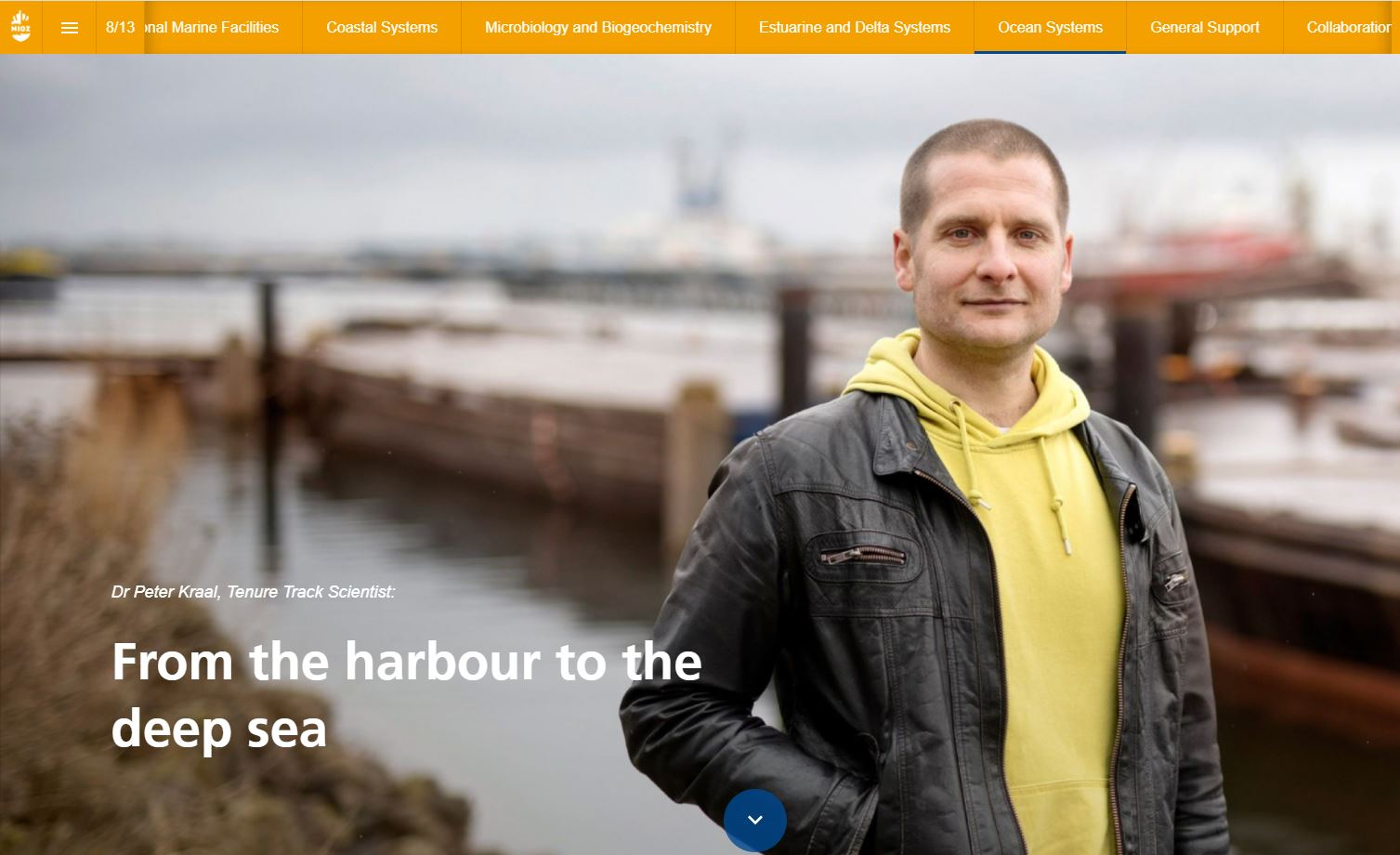
Peter Kraal is a Senior Scientist at the Royal Netherlands Institute for Sea Research (NIOZ) within the Ocean Systems (OCS) department. His research focuses on marine biogeochemistry, particularly the coupled cycling of iron (Fe), phosphorus (P), carbon (C), and sulfur (S) under varying redox conditions. He employs advanced techniques like X-ray absorption spectroscopy and polymer-based passive sampling to study nutrient dynamics in coastal and deep-sea environments. Key research areas: ocean deoxygenation , phosphorus cycling , iron mineral transformations , and applied geochemical solutions for environmental remediation. Recent projects include the NWO-funded PHOSFLUX expedition to the mid-Atlantic Ridge and studies on dredged harbor sediments as carbon-neutral building materials . His work bridges fundamental and applied science, addressing global challenges like eutrophication and nutrient recycling . Notable grants include the NWO-Veni Fellowship (2015-2017) and the NWO Open Competition Domain Science – M Grant (2024) . Scientific Awards: NWO-Veni Postdoctoral Fellowship (2015-2017) NWO Open Competition Domain Science – M Grant (2024) Collaborative NWO Grants for projects on marine nutrient cycling (2020-2027)
Antonio Moreda Piñeiro is a University Professor at the Department of Analytical Chemistry, Nutrition and Bromatology within the Faculty of Chemistry at the University of Santiago de Compostela (USC). He is affiliated with the Materials Institute (iMATUS) and the Strategic Grouping in Materials (AEMAT), and leads the GETEE research group focused on Trace Elements, Spectroscopy, and Speciation. PhD in Analytical Chemistry from USC (1996), thesis: "Characterization of cocaine and heroin through their content and differentiation of drug addicts by the metallic profile of the hair" Specializes in analytical methods for nanoparticle detection, forensic chemistry, and trace element speciation Collaborates with interdisciplinary teams in materials science and environmental toxicology His research focuses on nanoparticle analysis in biological and environmental matrices using techniques like spICP-MS , LA-ICP-MS , and GC-MS . Key areas include: Enzymatic hydrolysis and microextraction techniques for sample preparation Bioaccumulation studies of silver and titanium dioxide nanoparticles in marine organisms Forensic differentiation of cocaine use through hair metal profiling Development of molecularly imprinted polymers for selective analyte extraction Recent publications (2023-2025) highlight trends in nanoparticle environmental fate , forensic toxicology , and green analytical methods . Subfields include biopersistence studies, caco-2 cell models, and advanced spectroscopic techniques. He has collaborated extensively on projects related to: Nanoparticle risk assessment in aquaculture Mercury and arsenic speciation using ionic imprinted polymers Drug-facilitated sexual assault detection via antidepressant analysis Development of quantum dot chemosensors for heavy metals
Henar Urmeneta Martín-Calero is a Professor at the Department of Statistics, Computer Science and Mathematics, Public University of Navarra. She earned her PhD from the same university in 2003 with an Outstanding 'Cum Laude' distinction. Her work bridges soil science and advanced statistical methodologies. Education : PhD in Statistics and Mathematics (2003), Public University of Navarra Research Interests : Her research focuses on soil inorganic carbon dynamics under agricultural practices, irrigation impacts on soil health, and statistical methods for environmental and agricultural data. She also investigates stochastic processes, generalized Pólya urn models, and convergence theorems in Banach spaces. Publication Trends : Her recent work combines environmental science with statistical innovations, including studies on carbon sequestration in Mediterranean soils (2024), numerical integration techniques (2024), and historical sewage sludge effects on calcareous soils (2022). Earlier contributions involve theoretical mathematics, particularly stochastic circuits and convergence rates. Grants and Projects : She participates in projects like 'Balance de carbono inorgánico en suelos mediterráneos' (2023-2026) and 'Investigación y gestión de operaciones para la mejora de servicios de salud' (2016-2020). She has contributed to contracts evaluating soil properties and vineyard carbon management systems. Research Stays and Collaborations : Completed research stays at the University of Regina (2012) and UNED (2003). She collaborates with journals like Acta Applicandae Mathematicae and participates in academic courts for professor nominations.
Carlos Manuel Lourenço Cardoso is a Researcher at the Portuguese Institute for the Sea and Atmosphere (IPMA) with over 20 years of expertise in marine biotechnology and seafood risk-benefit analysis. He holds dual PhDs in Chemical Engineering (1998, Universidade de Lisboa) and Animal Science (2011, Universidade do Porto), focusing on 'Underutilized Fish Species and By-Products Upgrading Strategies'. His work bridges nutritional science and sustainable aquaculture, emphasizing lipid bioaccessibility and contaminant risk modeling. Key projects include: AQUAFISH 0.0 (2023-2026) - Developing sustainable marine food products under zero-waste principles FISHEUTRUST (2022-2026) - Integrating EU technologies for seafood consumer trust NEWFOOD4THOUGHT (2019-2023) - Exploring bioactives for Alzheimer's prevention His research output spans 71 peer-reviewed articles (2007-2024) covering: Seafood lipid bioaccessibility and cardiovascular health Microalgal nutraceuticals (Chlorella, Arthrospira, Isochrysis galbana) Metal contaminant risk assessment (Hg, Se, Cd, Pb) Functional seafood product development with omega-3 enrichment Drying process impacts on seaweed nutritional value Seafood benefit-risk binomial modeling As a scientific advisor, he has supervised: 2024 - PhD thesis on Emiliania huxleyi antioxidant activities 2021 - MSc projects on seaweed drying and Cystoseira abies-marina applications 2018 - BSc work on algal consumption risk-benefit analysis He serves on the editorial board of the Journal of Food Composition and Analysis and participated in the 2023 Joint FAO/WHO Expert Consultation on Fish Consumption Risks and Benefits.
Luis Miguel Laglera Baquer is a full professor in Analytical Chemistry at the University of the Balearic Islands (UIB). He has held postdoctoral fellowships at the Universities of Liverpool and Geneva, and a Ramón y Cajal research position at UIB. His research focuses on biogeochemical cycles of trace metals in natural waters, particularly Fe and Cu, using electrochemical, chemiluminescent, and spectroscopic techniques. Researcher in FI-TRACE group Collaborator in GEOTRACES program Member of LINCC UIB and WEPA groups His work examines how natural organic ligands affect trace metal bioavailability, toxicity, and reactivity. He specializes in voltammetry methods like Competing Ligand Equilibration-Adsorptive Cathodic Stripping Voltammetry. His scientific awards include 5 quinquenios for teaching and 4 sexenios for research, with an h-index of 23. He has authored 52 research papers. Teaching roles include: Instrumental Analysis (BSc Chemistry) Environmental Analytical Chemistry (BSc Chemistry) Methods and Instrumental Techniques in Environmental Chemistry (MSc Chemical Science & Tech) Water Chemistry and Control (MSc Chemical Science & Tech)
Full Professor Zlatko Svečnjak serves in the Division for Plant Sciences at the Department of Field Crops, Forage and Grassland, Faculty of Agriculture, University of Zagreb. His office is located in the 6th pavilion, 3rd floor, room 321, with consultations held every Wednesday from 10 AM to 11 AM. His academic qualifications include: PhD in Agronomy (2000-2003), University of Zagreb Faculty of Agriculture MS in Agronomy (1996-2000), University of Zagreb Faculty of Agriculture BS in Agronomy (1991-1996), University of Zagreb Faculty of Agriculture Professor Svečnjak's research centers on sustainable agronomic practices for Croatia's staple crops, particularly winter wheat and corn. His work bridges applied field research with practical implementation for Croatian farmers, focusing on nitrogen management, crop physiology, and grain quality optimization. He has developed methodologies for sustainable cropping systems that balance productivity with environmental stewardship, with particular expertise in fertilization strategies across diverse production systems. His publication record (2006-2013) reveals consistent research on nutrient efficiency in cereal and oilseed crops. These works span agronomy, plant physiology, and soil science, with recurring themes in nitrogen utilization, yield component analysis, and grain quality parameters. The research demonstrates methodological rigor in field experimentation and direct applicability to agricultural practice. His scientific honors include: Fulbright Visiting Scholar (2017) at University of Lincoln - Nebraska Australia - Europe Scholarship for postdoctoral research at University of Western Australia Professor Svečnjak maintains an active advisory role through field days, extension meetings, and over 100 professional publications for farmers. His grant portfolio features significant projects including the Croatian Science Foundation's 'Biodostupnost karotenoida kukuruza' (2020-2024) and multiple MZOS-funded initiatives on sustainable field crop production (2007-2013). Current Coordinator: Sustainable Corn Carotenoid Bioavailability Project (Croatian Science Foundation) Former Coordinator: Sustainable Field Crop Production Systems (MZOS 2007-2013) University Projects: Sustainable Production of Field Crops (2014-2017) His international research collaborations span Rothamsted Research (UK), INRA Grignon (France), and Long Ashton Research Station, establishing a global framework for his work on integrated farming systems and nutrient management.
Lana Filipović serves as Assistant Professor at the Department of Soil Amelioration, Division for Agroecology, Faculty of Agriculture, University of Zagreb, with office location in 5th pavilion, 2nd floor, room 038. Her academic qualifications include: PhD in Agricultural Sciences, University of Zagreb Faculty of Agriculture (2011-2016) MSc in Agroecology and Microbial Biotechnology in Agriculture, University of Zagreb Faculty of Agriculture (2008-2010) BSc in Agroecology, University of Zagreb Faculty of Agriculture (2005-2008) Dr. Filipović's research centers on critical soil-plant interactions, with emphasis on trace metal bioavailability (particularly copper and cadmium), soil salinity impacts on plant physiology, and rhizosphere dynamics . Her experimental framework integrates soil biological properties, organic matter content, and root-microbial relationships through comprehensive laboratory analyses of soil, water, and plant tissues. This work addresses agricultural contamination and stress adaptation mechanisms in Mediterranean environments. Her publication portfolio (2012-2018) reveals consistent methodological rigor combining field experiments with numerical modeling. Key themes include heavy metal mobility in compost-amended soils, plastic mulch effects on soil hydrology, and salinity-organic matter interactions in faba bean systems. These studies demonstrate her expertise in translating complex soil processes into practical agricultural solutions through both experimental validation and computational simulation. No scientific awards or major honors are documented in the available information. As principal coordinator for multiple nationally and internationally funded projects, Dr. Filipović directs research on subsurface flow processes (Croatian Science Foundation, 2020-2025), agroecosystem monitoring under salinization risks (EU programs, 2020-2023), and biodegradable polymer membrane applications. Her teaching portfolio includes Caninology at the Faculty of Agriculture and Biogeochemistry at the Faculty of Science, reflecting interdisciplinary engagement beyond her core soil science expertise. Her research network spans CSIRO/Australia, UC Riverside, ZALF/Germany, and INRA/France through repeated collaborative visits. Professional affiliations with the Soil Science Society of Croatia (since 2015) and Soil Science Society of America (since 2019) demonstrate active participation in the global soil science community.
Heileen Hsu-Kim is a Professor in the Department of Civil and Environmental Engineering at Duke University , serving as Director of Graduate Studies . She holds joint appointments in the Division of Environmental Natural Sciences . B.S., Massachusetts Institute of Technology (1998) M.S., University of California, Berkeley (1999) Ph.D., University of University of California, Berkeley (2004) Her research focuses on environmental aquatic chemistry and geochemistry , particularly mercury biogeochemistry , trace metal speciation , and nano-scale environmental processes . Current projects address coal ash contamination , trace metal recovery , and health impacts of mining pollution . Recent publications emphasize mercury cycling in wetlands , REE extraction from coal byproducts , and toxicity mechanisms of nanoparticles . Her scientific awards include the Presidential Early Career Award (2011) . She teaches ENVIRON/CEE 666: Aquatic Geochemistry and ENVIRON 899: Master's Project , while leading Bass Connections Energy & Environment Research Teams . Media coverage highlights her work on mercury contamination in Peru , coal ash remediation , and global environmental health risks .
Dr. José Álvarez Rogel is a Full Professor of Soil Science at the Polytechnic University of Cartagena (UPCT) , affiliated with the Higher Technical School of Agricultural Engineering (ETSIA) . He leads the Environmental Soil Science, Chemistry and Agricultural Technology Research Group and co-heads the Soil Ecology and Biotechnology Unit of the Institute of Plant Biotechnology. His work bridges fundamental and applied research, focusing on biogeochemical processes in wetlands and contaminated soils, particularly from mining activities. Key Research Areas Soil-vegetation interactions Metal(loid) contamination and ecotoxicity Phytoremediation and phytomanagement Climate change impacts on soil processes Nutrient cycling in eutrophic systems Denitrification and water treatment His recent publications highlight the role of spontaneous vegetation in rehabilitating mine tailings, the application of biochar and organic amendments for metal stabilization, and bioreactor technology for agricultural effluent treatment. He has collaborated with institutions like VU University Amsterdam and University of Aveiro-CESAM . Scientific Leadership Deputy Director of Academic Planning (2006-2008) Associate editor for Arid Land Research and Management Evaluator for National R&D&I projects Scientific Advisory Committee member for Mar Menor (2016-2019) His teaching merits include directing 7 doctoral theses and mentoring 24 ERASMUS students. He has secured 20 research projects (10 as PI) and executed 48 contracts with public and private entities.